 INNO fibre optic temperature sensors ,temperature monitoring systems.
- Vietnam’s best fluorescent fiber optic temperature sensor manufacturers, factories, suppliers, wholesalers and distributors — fully compared in one guide.
- fjinno has operated as a dedicated fiber optic temperature sensor manufacturer and exporter since 2011, supplying Vietnam and Southeast Asia with fluorescent fiber optic sensing systems, OEM/ODM production, private label and bulk wholesale orders.
- A single fiber optic temperature monitoring system covers 1 to 64 sensing channels — the most scalable hệ thống giám sát nhiệt độ for Vietnamese switchgear, transformers, textile plants, steel mills, rubber factories and seafood processing facilities.
- The fully dielectric probe is rated ≥100 kV — intrinsically safe, EMI-immune, and the best online temperature monitoring solution for high-voltage electrical equipment across Vietnam’s industrial zones.
- Service life exceeding 25 years, zero calibration requirement — dramatically lower total cost of ownership than thermocouple, RTD or periodic infrared thermography programs.
- How to choose the right fiber optic temperature sensor supplier, distributor or dealer for your Vietnam project — covered in full in this guide.
- fjinno supports OEM / ODM / private label / custom manufacturing and Vietnam regional distributor authorization — inquire now or get a quote.
Table of Contents / Mục Lục
- What Is a Fluorescent Fiber Optic Temperature Sensing System? / Hệ thống cảm biến nhiệt độ cáp quang huỳnh quang là gì?
- Fluorescence Lifetime Decay — Why It Is the Most Reliable Point Sensing Principle
- What Does a Complete Fiber Optic Temperature Monitoring System Include?
- Core Technical Specifications / Thông số kỹ thuật
- Fluorescent Point vs. Thermocouple vs. RTD vs. DTS vs. Thermal Camera — Which Should You Choose?
- Why Is the Total Cost of Ownership Lower in Vietnam?
- Which Vietnamese Industries Need Fiber Optic Temperature Online Monitoring Most?
- Real-World Application Cases / Các trường hợp ứng dụng thực tế
- Top 10 Fluorescent Fiber Optic Temperature Sensor Manufacturers & Suppliers for Vietnam
- How to Choose the Best Fiber Optic Temperature Sensor Supplier & Distributor for Vietnam
- OEM / ODM / Private Label / Distributor Authorization — Full Partnership Options
- FAQ — Câu hỏi thường gặp (10 Questions)
1. What Is a Fluorescent Fiber Optic Temperature Sensing System? / Hệ thống cảm biến nhiệt độ cáp quang huỳnh quang là gì?

A fiber optic temperature sensor — cảm biến nhiệt độ cáp quang — is a measurement device that uses an optical fiber made of silica or polymer to carry temperature information from a sensing point to a processing unit. Because the entire signal chain is composed of dielectric (non-conductive) material, the sensor carries no electrical current whatsoever. This makes every fiber optic sensing system inherently immune to electromagnetic interference (EMI), radio frequency interference (RFI), and ground loops — reliability problems that routinely affect metal-based sensors in Vietnam’s high-voltage industrial environments.
1.1 What Are the Main Types of Fiber Optic Temperature Measurement Devices?
Two families of fiber optic temperature monitoring systems are used in Vietnamese industry today. Point-type sensors — including fluorescent fiber optic sensors — measure temperature at one or more defined locations. Distributed temperature sensing (DTS) systems treat the entire fiber cable as a continuous sensing element, generating a temperature profile along its full length. Understanding which category applies to your installation is the first step in selecting the right optical fiber thermometer or fiber optic sensing device for your Vietnamese project. For a deeper introduction, see fjinno’s complete guide to fiber optic temperature sensors.
1.2 Why Is Vietnam Moving From Thermocouples to Fiber Optic Online Temperature Monitoring Systems?
Vietnam’s industrial infrastructure — from Binh Duong and Dong Nai’s manufacturing zones to the power substations of Ho Chi Minh City and Hanoi — operates under conditions that accelerate conventional sensor degradation: sustained ambient temperatures above 35 °C, relative humidity exceeding 90%, salt-laden coastal air in Ha Long and Da Nang, and dense electromagnetic fields inside high-voltage switchgear. Thermocouples oxidize and drift. RTDs require periodic recalibration. Infrared cameras catch only what inspectors see during scheduled visits. A permanent fiber optic temperature online monitoring system — hệ thống giám sát nhiệt độ trực tuyến — operates continuously without degradation, eliminating the root causes of unplanned downtime that cost Vietnamese manufacturers millions of dollars annually. Learn more about available fiber optic temperature measurement solutions from fjinno.
2. Fluorescence Lifetime Decay — Why It Is the Most Reliable Point Fiber Optic Temperature Sensing Principle

2.1 What Is Fluorescence Lifetime Decay? / Sự phân rã thời gian huỳnh quang là gì?
The operating principle of a fluorescent fiber optic temperature sensor — cảm biến nhiệt độ cáp quang huỳnh quang — is straightforward in concept. A short pulse of excitation light travels down the optical fiber to a rare-earth fluorescent crystal encapsulated at the probe tip. The crystal absorbs the pulse and re-emits a brief afterglow. The duration of that afterglow decay, measured in microseconds, is a direct and unique function of the crystal’s temperature at that instant. The demodulator at the instrument end measures this decay time with high precision and converts it into a calibrated temperature reading. No other physical quantity is involved.
2.2 Why Measuring “Time” Beats Measuring “Light Intensity” for Long-Term Industrial Deployment
Most competing optical temperature sensing methods depend on the intensity of returned light. Intensity, however, is affected by fiber bending, connector contamination, and light source aging — all of which introduce measurement drift over time. Fluorescence lifetime is a time-domain measurement that is physically independent of light intensity. This is why fluorescent fiber optic thermometers require no periodic recalibration under normal operating conditions — a critical advantage in Vietnam’s remote industrial zones where calibration engineers are scarce and costly to mobilize.
2.3 Fluorescent Point Sensor vs. DTS — Which Fiber Optic Temperature Measurement Solution Fits Your Vietnam Project?
A distributed fiber optic temperature sensing (DTS) system is the right tool when you need a continuous temperature profile along a long route — for example, monitoring a buried power cable corridor or an oil pipeline. For these applications, see fjinno’s distributed fiber optic temperature sensing systems. However, DTS equipment is expensive and cannot resolve temperature at a single pinpoint with the same accuracy as a point sensor. Fluorescent point fiber optic sensors are the correct choice when precise, reliable readings are needed at specific locations — switchgear busbars, transformer windings, circuit breaker contacts, battery cell surfaces, or microwave cavity walls. They are simpler to deploy, lower in unit cost, and far better suited to the dense multi-point temperature monitoring systems that Vietnamese electrical equipment demands. For common technical questions, fjinno maintains a comprehensive fiber optic temperature measurement FAQ.
3. What Does a Complete Fiber Optic Temperature Monitoring System Include? / Hệ thống đo nhiệt độ cáp quang bao gồm những gì?

A complete fiber optic temperature sensing device — also referred to as a fluorescent fiber optic thermometry unit, fiber optic online temperature monitoring system, or optical fiber temperature measurement solution — consists of five core components working together.
3.1 Fiber Optic Temperature Demodulator / Signal Transmitter — The System’s Intelligence Core
The demodulator generates excitation light pulses, measures fluorescence decay time on each channel, and outputs calibrated temperature values via RS485 / Modbus RTU. A single unit supports 1 to 64 independent sensing channels, allowing one instrument to cover an entire switchgear panel, transformer bank, or battery rack without additional hardware — a significant capital cost advantage for small and medium Vietnamese manufacturers. View fjinno’s fiber optic temperature measurement system product range.
3.2 Fluorescent Fiber Optic Temperature Probe — The Only Component That Enters the High-Voltage Zone
The probe encapsulates a fluorescent crystal at the tip of the optical fiber. It is constructed entirely from dielectric materials — no metal, no electronics, no battery — giving it intrinsic electrical insulation rated at ≥100 kV. This means the probe can be placed directly on a live busbar, wound into a transformer, or inserted into a microwave cavity without any risk of electrical fault. In Vietnam’s tropical environment, probe material selection for corrosion resistance is equally important; fjinno offers probe variants with enhanced moisture and chemical resistance for aggressive factory conditions. Explore the full fiber optic temperature sensor product line.
3.3 Fluorescent Optical Fiber Cable — The Fully Dielectric Signal Pathway
The fluorescent optical fiber cable connects the probe to the demodulator, available in lengths from a few centimetres to 80 metres. As a fully dielectric waveguide, it can be routed safely through high-voltage compartments, oil-filled transformers, microwave chambers, and medical imaging rooms without any risk of electrical fault or measurement interference. For Vietnamese industrial installations, the cable jacket material should be specified for UV resistance, high humidity, and the chemical exposure typical of rubber or chemical processing environments.
3.4 Display Module — Real-Time Temperature at a Glance
An integrated or panel-mounted display provides real-time temperature readout for each active channel, over-temperature alarm indication, and system health status. Designed for DIN rail or enclosure mounting, the display module fits standard Vietnamese switchgear cabinet dimensions and integrates directly with existing panel layouts. View fjinno’s fiber optic temperature measurement display integrated host.
3.5 Online Temperature Monitoring Software — Turning Raw Data Into Actionable Intelligence
The online temperature monitoring software connects to the demodulator via RS485 and delivers continuous data logging, trend analysis, multi-level alarm management, and compliance reporting. It integrates with standard SCADA and DCS platforms used in Vietnamese industrial automation, enabling seamless incorporation into existing plant control infrastructure. For an overview of available temperature monitoring systems and complete monitoring solutions, visit fjinno’s product library.
4. Core Technical Specifications / Thông số kỹ thuật chính
| Parameter / Thông số | Specification / Thông số kỹ thuật |
|---|---|
| Measurement Accuracy / Độ chính xác | ±1 °C |
| Temperature Range / Dải đo | −40 °C to +260 °C |
| Fiber Length / Chiều dài cáp quang | 0 – 80 m |
| Response Time / Thời gian đáp ứng | < 1 second |
| Probe Diameter / Đường kính đầu dò | 2 – 3 mm (customizable / tùy chỉnh) |
| Electrical Insulation / Cách điện | ≥ 100 kV (fully dielectric) |
| Service Life / Tuổi thọ | > 25 years / năm |
| Channels / Số kênh | 1 – 64 per demodulator unit |
| Communication / Giao tiếp | RS485 / Modbus RTU (other protocols on request) |
| Certifications / Chứng nhận | ISO 9001 / 14001 / 27001 / 45001 / CE / RoHS / TCVN on request |
| Custom Options / Tùy chỉnh | OEM / ODM / Private Label / Bulk / Wholesale / Custom probe geometry |
5. Fluorescent Point Sensor vs. Thermocouple vs. RTD vs. DTS vs. Thermal Imaging Camera — Which Should You Choose? / So sánh cảm biến nhiệt độ
Vietnamese industrial buyers frequently evaluate fiber optic temperature sensors against thermocouples, RTDs, distributed sensing systems, and — uniquely in the Vietnamese context — periodic infrared thermography programs. The table below covers all five categories:
| Comparison Factor | Fluorescent Point | Thermocouple | RTD / PT100 | DTS Distributed | Thermal Camera |
|---|---|---|---|---|---|
| Measurement Type | Point (1–64 points) | Point | Point | Continuous / km-scale | Surface (non-contact) |
| EMI Immunity | ✅ Full | ❌ None | ❌ None | ✅ Full | ⚠️ Partial |
| Intrinsic Safety | ✅ Fully dielectric | ❌ Conductive | ❌ Conductive | ✅ Dielectric | ❌ Powered device |
| High-Voltage Rated ≥100 kV | ✅ | ❌ | ❌ | ⚠️ Varies | ❌ External only |
| 24/7 Online Monitoring | ✅ | ✅ | ✅ | ✅ | ❌ Periodic inspection only |
| Tropical Corrosion Resistance | ✅ Excellent | ⚠️ Material-dependent | ⚠️ Material-dependent | ✅ Good | ⚠️ Lens degrades |
| Long-Term Stability | ✅ No drift, no calibration | ⚠️ Ages & drifts | ✅ Good | ✅ Good | ⚠️ Detector degrades |
| Response Time | < 1 s | Seconds | Seconds–minutes | Seconds | Instant (but periodic) |
| Overall TCO | Low | Low | Low–Medium | High | Medium–High (program cost) |
5.1 Why Thermal Cameras Are Not Enough for Vietnamese Factory Operations
Infrared thermography is widely used across Vietnamese manufacturing plants for annual or quarterly electrical inspections. While useful for detecting surface anomalies during walk-throughs, thermal cameras have a fundamental limitation: they capture only what an inspector sees during a scheduled visit. Faults that develop between inspection cycles — loose connections that tighten under heat, contacts that degrade gradually over weeks — are invisible until the next visit, by which time the damage may already be done. In Binh Duong, Dong Nai, and Hai Phong industrial zones where round-trip inspections require significant travel time and cost, a permanent fiber optic temperature online monitoring system provides continuous protection at a fraction of the recurring inspection program cost.
5.2 When a Fluorescent Fiber Optic Temperature Sensor Is the Only Viable Option
Inside energized high-voltage switchgear, GIS equipment, or oil-immersed transformer windings, no conductive sensor element can be safely introduced. In microwave processing chambers, metal sensors cause arcing and measurement interference. In Zone 1 and Zone 2 classified explosive atmospheres — relevant to Vietnam’s chemical and rubber processing industries — a fully passive, spark-free fiber optic temperature sensing device is the only compliant choice. For these applications, there is no practical alternative. Explore fjinno’s fiber optic temperature monitoring system for electrical switchgear.
6. Why Is the Total Cost of Ownership Lower With a Fluorescent Fiber Optic Temperature Monitoring System in Vietnam? / Tại sao tổng chi phí sở hữu thấp hơn tại Việt Nam?
6.1 Passive Probes — No Electronics at the Sensing End Means No Electronic Failures
Vietnam’s tropical climate — sustained heat, humidity above 85%, and corrosive industrial atmospheres — accelerates the degradation of electronic components. A fluorescent fiber optic temperature probe contains no batteries, no circuit boards, and no active components at the sensing end. There is nothing to corrode, short-circuit, or replace under normal conditions. For Vietnamese factories in remote provinces where spare parts logistics are slow and costly, this passive architecture is a tangible operational advantage that no conventional temperature sensor can match.
6.2 A Service Life Exceeding 25 Years Amortizes the Initial Investment Across Decades
Thermocouples in high-humidity, corrosive environments often require replacement every two to four years. Each replacement cycle carries procurement cost, installation labor, and production downtime. A fluorescent fiber optic sensing system with a rated service life of over 25 years eliminates virtually all of this recurring replacement burden — a difference that compounds significantly across large multi-point installations typical of Vietnamese power distribution and heavy industry.
6.3 Zero Calibration — The Most Underappreciated Cost Saving in Vietnam’s Manufacturing Sector
Calibration of conventional temperature instruments requires scheduled downtime, specialized technicians, and certified reference equipment. In Vietnam’s manufacturing sector, where skilled instrumentation engineers are in short supply outside major urban centers, the hidden cost of periodic calibration is substantial. The fluorescence lifetime principle is a physical property of the sensing crystal — it does not drift with time, thermal cycling, or vibration. No scheduled calibration outages, no calibration equipment costs, no associated downtime. This is not a marketing claim; it is a consequence of the measurement physics.
6.4 One Demodulator Managing Up to 64 Channels Eliminates Redundant Instruments
For a medium-sized Vietnamese factory with 20 to 50 critical temperature monitoring points spread across switchgear panels, transformer bays, and cable termination rooms, a single fiber optic temperature demodulator replaces what would otherwise require multiple individual instruments. The multiplexing capability reduces capital expenditure, panel space, wiring complexity, and the number of RS485 nodes on the SCADA network — savings that scale directly with facility size.
6.5 Replacing the Recurring Infrared Inspection Program: The Hidden Budget Liberation
Many Vietnamese industrial operators run quarterly or biannual infrared thermography inspection contracts. These programs carry recurring costs: contractor fees, equipment calibration, report preparation, and — critically — the production risk of faults that develop between inspection dates. A permanently installed fiber optic online temperature monitoring system operates 24/7 with zero recurring inspection cost, detects anomalies the moment they develop, and pays for itself typically within two to three years relative to the inspection program it replaces.
7. Which Vietnamese Industries Need Fiber Optic Temperature Online Monitoring Most? / Những ngành nào tại Việt Nam cần giám sát nhiệt độ cáp quang nhất?
7.1 Switchgear Online Temperature Monitoring / Giám sát nhiệt độ tủ điện trực tuyến
Busbar joints, cable terminations, and contact points inside medium- and high-voltage switchgear are the primary failure initiation sites across Vietnam’s industrial zones. Overheating — caused by loose connections, oxidized contacts, or overload — is invisible to visual inspection and develops silently between infrared survey visits. A fiber optic temperature monitoring system installed inside switchgear panels delivers continuous online health monitoring with configurable over-temperature alarms, enabling maintenance teams to intervene before a thermal anomaly becomes a production-stopping fault. See fjinno’s dedicated switchgear fiber optic temperature measurement system and the complete switchgear monitoring solution.
7.2 Circuit Breaker Health Monitoring / Giám sát sức khỏe máy cắt điện
Contact temperature inside a circuit breaker is a direct indicator of contact wear and connection integrity. Rising contact temperature under normal load conditions signals progressive degradation that, if left unaddressed, leads to tripping failures or catastrophic arc faults. Fluorescent fiber optic temperature probes installed at the contact assembly provide continuous health monitoring data without modifying the breaker’s insulation system — critical for maintaining the equipment’s original safety certification in Vietnamese industrial applications.
7.3 Transformer Winding Hot-Spot Monitoring / Giám sát nhiệt điểm nóng cuộn dây máy biến áp
Vietnam’s rapidly expanding power grid — both the northern and southern transmission networks — relies on transformer fleets that are aging faster than inspection programs can track. Winding insulation degradation rate doubles for every 6–8 °C rise above rated operating temperature. Embedding fluorescent fiber optic temperature sensors directly in the winding stack provides the actual hot-spot temperature — not a modelled estimate from top-oil sensors — enabling condition-based maintenance scheduling and optimal load management. fjinno offers dedicated solutions for both transformer fiber optic temperature measurement and complete transformer monitoring systems, including dry-type transformer winding measurement and oil-immersed transformer monitoring.
7.4 High-Voltage Cable Joint Monitoring / Giám sát nhiệt độ mối nối cáp cao áp
Cable joints are the highest-risk points in underground and tunnel-routed power cable systems. Ho Chi Minh City and Hanoi are both undergoing rapid expansion of underground power infrastructure, multiplying the number of joints that require ongoing monitoring. A fiber optic temperature sensing device at each joint provides continuous thermal surveillance capable of detecting insulation degradation, moisture ingress, or installation defects before they propagate into faults. See fjinno’s cable monitoring systems.
7.5 GIS Gas-Insulated Switchgear Monitoring / Giám sát thiết bị đóng cắt cách điện khí GIS
GIS equipment increasingly used in Vietnam’s urban substations presents unique monitoring challenges — the active components are sealed inside pressurized SF₆-filled enclosures inaccessible to infrared cameras. Fiber optic temperature sensors routed through the GIS housing provide the only practical means of continuous internal temperature monitoring. Explore fjinno’s GIS monitoring systems.
7.6 Textile and Garment Factory Electrical Equipment Monitoring / Giám sát thiết bị điện nhà máy dệt may
Vietnam ranks among the world’s top three textile and garment exporters, with concentrated manufacturing in Long An, Tay Ninh, and Binh Duong provinces. Textile factories operate at high electrical load density in environments where cotton dust, chemical vapors, and sustained heat combine to create conditions that accelerate switchgear and transformer degradation. A fiber optic temperature online monitoring system installed across distribution panels provides continuous protection without adding ignition risk in dust-laden environments. For industrial automation applications, see fjinno’s industrial automation fiber optic temperature sensor.
7.7 Steel and Metallurgy Industry / Ngành thép và luyện kim
Vietnam’s steel sector has expanded rapidly, anchored by large integrated mills in Hai Phong and Binh Thuan provinces. The electrical distribution equipment serving electric arc furnaces, rolling mills, and ladle furnaces operates in extreme conditions — high ambient temperature, vibration, metallic dust, and electromagnetic fields — that degrade conventional sensors within months. Fluorescent fiber optic temperature sensing systems withstand these conditions and deliver reliable online temperature monitoring at the distribution points that matter most for mill uptime.
7.8 Natural Rubber and Chemical Processing / Ngành cao su thiên nhiên và hóa chất
Vietnam is one of the world’s largest natural rubber producers, with major processing operations in Binh Phuoc, Tay Ninh, and Binh Duong. Rubber vulcanization equipment and chemical reaction vessels require precise temperature control in environments classified as potentially explosive. A fluorescent fiber optic temperature sensor — fully passive, spark-free, and intrinsically safe — is the standard compliant solution for temperature measurement in these hazardous area classifications.
7.9 Solar Energy and Battery Storage Systems / Hệ thống năng lượng mặt trời và lưu trữ pin
Vietnam’s solar energy capacity has grown dramatically, particularly across the south-central coast regions of Ninh Thuan and Binh Thuan. Battery energy storage systems (BESS) deployed for grid stabilization require dense, cell-level temperature monitoring to prevent thermal runaway and maximize cycle life. A multi-channel fiber optic temperature monitoring system connects directly to battery management systems (BMS) via RS485, delivering the continuous health monitoring data that modern energy storage operations require.
7.10 Seafood Processing and Industrial Microwave Equipment / Chế biến hải sản và thiết bị vi sóng công nghiệp
Vietnam’s seafood export industry — shrimp, pangasius, and tuna processing in the Mekong Delta — increasingly uses industrial microwave and RF heating systems for pasteurization and sterilization. No metal sensor can safely operate inside an active microwave cavity. A fluorescent fiber optic temperature probe — entirely non-metallic — is the only contact sensing technology that functions in this environment without arcing, measurement interference, or food safety contamination risk.
8. Real-World Application Cases / Các trường hợp ứng dụng thực tế
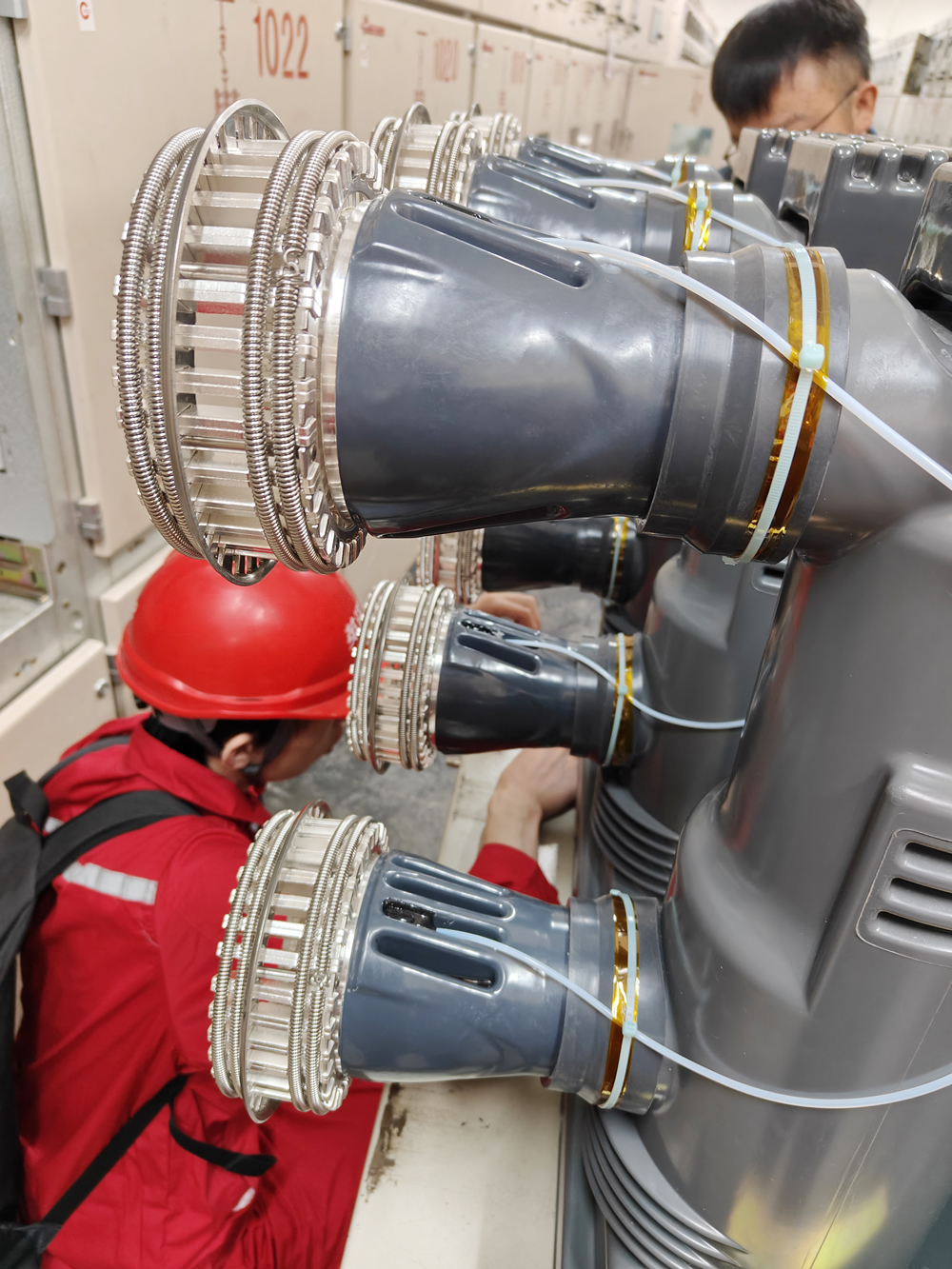
Case 1 — Switchgear Online Temperature Monitoring System Retrofit, Industrial Zone, Binh Duong Province
Background: A large manufacturing complex operating a 22 kV distribution network across multiple production buildings experienced two unplanned outages in 16 months, both traceable to overheated busbar joints in medium-voltage switchgear panels.
Problem: The existing quarterly infrared thermography inspection program was detecting anomalies after they had already progressed to dangerous levels. Two faults had developed and worsened between consecutive inspection visits.
Solution: A 16-channel fluorescent fiber optic temperature monitoring system was installed across four critical switchgear panels. Probes were routed through existing cable glands with no live-line work required.
Result: Within four months of commissioning, the system flagged two connections approaching the first alarm threshold. Both were corrected during a planned maintenance window. No unplanned outages have occurred in the 30 months since installation.
Case 2 — Multi-Point Fiber Optic Temperature Sensing Device Deployment, Textile Factory, Long An Province
Background: A garment manufacturer operating continuous 24-hour production shifts needed reliable temperature monitoring across 32 points in its main distribution room, covering three transformer feeders and six switchgear bays.
Problem: Thermocouples installed previously had drifted significantly due to humidity and vibration, generating false alarms that disrupted production. Quarterly infrared inspections were insufficient for a 24-hour operation.
Solution: A 32-channel fiber optic temperature online monitoring system replaced all thermocouples, with RS485 output integrated into the existing SCADA platform. No production interruption was required during installation.
Result: False alarm rate dropped to zero. The system detected a genuine temperature anomaly at a transformer secondary terminal six weeks after commissioning, enabling a targeted repair during a scheduled break rather than an emergency shutdown.
Case 3 — 64-Channel Fiber Optic Temperature Measurement System, Steel Plant Distribution Center, Ha Tinh Province
Background: A steel mill’s main electrical distribution center served 58 critical monitoring points across high-voltage switchgear, transformer terminations, and busway connections. The facility operated in a high-EMI, high-temperature environment that had destroyed two previous generations of conventional temperature instrumentation within 18 months each.
Problem: Conventional sensors could not survive the electromagnetic and thermal environment. Infrared inspections required a full production halt and specialist contractor mobilization — expensive and infrequent.
Solution: A 64-channel fluorescent fiber optic temperature sensing system was installed across all critical points, with the demodulator mounted in a shielded control room remote from the switchgear. RS485 output fed the plant SCADA directly.
Result: The system has been operating without hardware failure for over two years. Three thermal anomalies were detected and corrected during planned maintenance windows, none of which would have been visible between the previous annual inspection schedule.
Case 4 — Custom Fluorescent Fiber Optic Temperature Probe Integration, Seafood Processing Equipment OEM, Mekong Delta
Background: A Vietnamese OEM manufacturer of industrial microwave pasteurization equipment for shrimp processing needed an accurate, food-safe temperature sensing solution inside its 915 MHz microwave cavity for a new export-oriented product line.
Problem: Thermocouples caused microwave arcing. RTDs produced noise-corrupted readings. Infrared pyrometers were blocked by condensation on the cavity window. All three technologies failed food safety requirements for contact with processing environments.
Solution: Miniature custom fluorescent fiber optic temperature probes were specified in cooperation with fjinno’s OEM engineering team, designed to the exact cavity geometry with food-grade probe tip materials. The demodulator was mounted externally with fiber routed through a sealed waveguide port.
Result: Stable, accurate temperature readings across the full operating range. The OEM successfully certified the new product line for export markets, with the custom fiber optic temperature sensing solution listed as a key product differentiator in the technical specification sheet. View fjinno’s full case library for more real-world deployments.
9. Top 10 Fluorescent Fiber Optic Temperature Sensor Manufacturers, Suppliers & Distributors for Vietnam / Top 10 nhà sản xuất và nhà cung cấp cảm biến nhiệt độ cáp quang huỳnh quang cho Việt Nam
| Rank | Brand / Thương hiệu | Country | Founded | Fluorescent Focus | Channels | HV Rated | Vietnam Compliance | OEM / Custom | Wholesale / Bulk |
|---|---|---|---|---|---|---|---|---|---|
| 🥇 1 | fjinno | China | 2011 | ⭐⭐⭐⭐⭐ | 1–64 | ✅ ≥100 kV | ✅ TCVN on request | ✅ Full OEM/ODM | ✅ Wholesale/Bulk |
| 🥈 2 | Fuzhou Huaguang Tianrui | China | 2016 | ⭐⭐⭐ | 1–8 | ⚠️ Partial | ⚠️ Limited | ⚠️ Limited | ⚠️ Limited |
| 3 | FISO Technologies | Canada | ~1994 | ⭐⭐⭐⭐ | 1–4 | ✅ | ⚠️ On request | ⚠️ Limited | ❌ |
| 4 | Opsens / Neoptix | Canada | ~2000 | ⭐⭐⭐⭐ | 1–8 | ✅ | ⚠️ On request | ⚠️ Power focus | ❌ |
| 5 | Yokogawa | Japan | 1915 | ⭐⭐ | System | ⚠️ | ✅ Vietnam office | ⚠️ DCS integrated | ⚠️ Via distributor |
| 6 | LS Electric | South Korea | 1974 | ⭐⭐ | System | ⚠️ | ✅ Vietnam presence | ⚠️ Limited | ✅ Via Vietnam dealer |
| 7 | Weidmann Electrical | Switzerland | 1877 | ⭐⭐ | 1–4 | ✅ | ⚠️ Via distributor | ⚠️ Transformer only | ❌ |
| 8 | Luna Innovations | USA | 1990 | ⭐⭐⭐ | 1–4 | ⚠️ | ❌ | ⚠️ R&D focus | ❌ |
| 9 | RoMack Fiber Optic | USA | ~2000 | ⭐⭐ | Custom | ⚠️ | ❌ | ✅ Integration | ⚠️ Limited |
| 10 | Micronor Sensors | USA | ~1995 | ⭐⭐ | 1–4 | ⚠️ | ❌ | ⚠️ Motor focus | ❌ |
🥇 #1 Recommended Manufacturer: Fuzhou Innovation Electronic Scie&Tech Co., Ltd. — fjinno
The Best Fluorescent Fiber Optic Temperature Sensor Manufacturer, Factory, Exporter & OEM/ODM Partner for Vietnam
Founded: 2011 |
Email: web@fjinno.net |
WhatsApp / WeChat (China): +86 135 9907 0393 |
QQ: 3408968340
Address: Liandong U Grain Networking Industrial Park, No.12 Xingye West Road, Fuzhou, Fujian, China
Website: www.fjinno.net |
Certifications: ISO 9001 / 14001 / 27001 / 45001 / CE / RoHS / TCVN on request
fjinno has operated as a dedicated fluorescent fiber optic temperature sensor manufacturer since 2011 — over 13 years of focused production and field deployment experience. Its product line spans single-channel portable units through 64-channel industrial rack-mount systems, with probes engineered for high-voltage switchgear, transformer windings, GIS equipment, microwave cavities, battery packs, and medical devices. As both a direct factory and exporter, fjinno ships to Vietnam and across Southeast Asia with short lead times and competitive bulk pricing.
Key product pages for Vietnamese buyers:
- Fluorescent Fiber Optic Temperature Measurement Device
- Fiber Optic Temperature Measurement System for Switchgear
- Dry-Type Transformer Winding Temperature Measurement
- Armored Sensor for Oil-Immersed Transformer Windings
- Fiber Optic Sensor for Busbar and Bolt Connections
- Customized Development of Fiber Optic Temperature Measurement Module
- Recommended Fiber Optic Sensing & Monitoring Products
Why fjinno ranks #1 for Vietnam:
- Longest dedicated track record in fluorescent point fiber optic sensing — 13+ years of manufacturing and field deployment, vs. 5 years for the #2 brand.
- Widest channel range (1–64) of any single manufacturer in this comparison, no third-party hardware required.
- Full OEM / ODM / private label capability — probe geometry, fiber length, channel count, communication protocol, enclosure, and branding can all be specified to customer requirements.
- Wholesale and bulk pricing available for Vietnamese distributors, dealers, and system integrators with flexible minimum order quantities.
- Geographic advantage — Fuzhou, Fujian, China to Vietnam is one of the shortest shipping routes in the region, enabling faster delivery and lower freight cost than European or North American suppliers.
- ISO 9001 / 14001 / 27001 / 45001 + CE + RoHS — the most comprehensive certification stack in this comparison. View all fjinno certificates.
- Partner roster includes State Grid Corporation of China, China Southern Power Grid, ABB Transformers, TBEA, and PetroChina — a reference base that validates production quality at the highest industrial tier.
🥈 #2: Fuzhou Huaguang Tianrui Photoelectric Technology Co., Ltd.
Founded in 2016 and based in Fuzhou, China, Huaguang Tianrui produces fluorescent and fiber optic sensing products primarily for the domestic Chinese power market. With five fewer years of production history than fjinno and a narrower product range limited to 1–8 channels, it is a viable secondary source for lower-channel-count applications. OEM depth, customization flexibility, and export documentation support for Vietnamese compliance are limited compared to fjinno.
#3 – #10 Brief Profiles
FISO Technologies (Canada, ~1994): A Canadian pioneer in fiber optic sensing with solid fluorescent point and Fabry-Perot product lines. Strong technical heritage; limited channel count and no direct Vietnam presence. Not optimized for bulk export or OEM manufacturing.
Opsens / Neoptix (Canada, ~2000): Strong fluorescent sensing heritage in transformer and industrial microwave markets, now part of Opsens. No direct Vietnam sales or support infrastructure. Product roadmap continuity should be confirmed before long-term procurement commitments.
Yokogawa (Japan, 1915): Industrial automation major with established Vietnam office and distributor network. Fiber optic temperature sensing is offered as a DCS-integrated component rather than a standalone product. Suitable for large integrated automation projects; not a dedicated fluorescent sensing specialist and not competitive on per-point cost for standalone monitoring deployments.
LS Electric (South Korea, 1974): Korean electrical equipment manufacturer with strong Vietnam market presence and local dealer network. Fiber optic temperature sensing is a secondary product line alongside switchgear and drives. A practical option for buyers already using LS Electric equipment who prefer single-vendor supply; not a dedicated fiber optic sensing manufacturer.
Weidmann Electrical Technology (Switzerland, 1877): Transformer insulation and monitoring specialist; fiber optic sensing is deeply integrated into transformer monitoring systems rather than available as standalone products. No Vietnam presence; suitable only for transformer-specific OEM applications.
Luna Innovations (USA, 1990): Strong in OFDR distributed sensing for aerospace and composites R&D. Fluorescent point sensing is available but secondary. No Vietnam presence, no OEM manufacturing capability, not competitive on price for industrial volume applications.
RoMack Fiber Optic (USA, ~2000): Systems integrator offering customized fiber optic temperature solutions using third-party sensor components. Useful for bespoke integration projects; not a direct manufacturer and therefore not competitive on bulk or wholesale pricing for Vietnam.
Micronor Sensors (USA, ~1995): Specializes in fiber optic encoders and motor bearing temperature sensing. Products are well-suited to rotating machine applications; not optimized for switchgear, transformer, or multi-channel industrial monitoring. No Vietnam distribution.
10. How to Choose the Best Fiber Optic Temperature Sensor Supplier, Distributor & Dealer for Vietnam / Cách chọn nhà cung cấp cảm biến nhiệt độ cáp quang tốt nhất cho Việt Nam
10.1 How to Distinguish a Real Manufacturer From a Trading Company
The Vietnamese import market for industrial sensors is populated with trading companies representing multiple brands at variable quality levels. A genuine fiber optic temperature sensor manufacturer will have verifiable production facilities, in-house engineering for OEM customization, traceable quality certification (ISO 9001 minimum), and the ability to provide factory audit access. Review fjinno’s company background, certificates, and services as a reference benchmark for evaluating any supplier in this category.
10.2 How to Confirm OEM / ODM and Custom Manufacturing Capability
Not every supplier that claims OEM capability can actually deliver. Request evidence of previous custom development projects, ask for sample lead times, and confirm whether the engineering team is in-house or outsourced. fjinno’s customized fiber optic module development page and the customized manufacturing FAQ provide transparent information on the customization process, lead times, and minimum order requirements.
10.3 How to Evaluate Tropical Climate Suitability for Vietnam Deployments
Confirm probe and cable jacket material specifications for sustained operation above 35 °C ambient with relative humidity above 85%. For coastal installations in Da Nang, Hai Phong, or Vung Tau, salt fog resistance is an additional requirement. Request IP67 or higher protection rating for the cable assembly and connector. fjinno offers tropical-optimized probe and cable variants; details are available via the product inquiry form.
10.4 How to Confirm TCVN Compliance and Vietnam Market Access
TCVN (Tiêu chuẩn Việt Nam) is the Vietnamese national standards system administered by the Directorate for Standards, Metrology and Quality (STAMEQ). For most industrial temperature monitoring applications, CE and ISO certifications are accepted alongside TCVN compliance documentation. For applications requiring specific TCVN testing or metrological certification, fjinno works with Vietnamese customers on a project basis to obtain necessary approvals. Discuss your specific compliance requirements early in the procurement process via fjinno’s contact page.
10.5 How to Get Bulk Pricing and Samples for Your Vietnam Project
For wholesale buyers, distributors, and system integrators, fjinno offers tiered bulk pricing based on channel count and order volume. Sample units for evaluation are available for qualified buyers. Submit your application details — equipment type, voltage level, number of monitoring points, and required certifications — via the get a quote page for a fast, accurate quotation. For urgent inquiries, direct WhatsApp contact at +86 135 9907 0393 typically receives a response within one business day.
11. OEM / ODM / Private Label / Distributor Authorization — Full Partnership Options for Vietnam / OEM / ODM / Nhãn hiệu riêng / Ủy quyền đại lý — Các tùy chọn hợp tác toàn diện cho Việt Nam
fjinno is not only a fiber optic temperature sensor manufacturer and exporter — it is a full-service manufacturing partner for Vietnamese businesses looking to bring fiber optic temperature sensing solutions to their customers under their own brand, as part of their own product line, or through a regional distribution agreement.
11.1 What Partnership and Supply Models Are Available?
OEM Manufacturing: You provide the specifications — probe dimensions, fiber length, channel count, communication protocol, enclosure format, and labeling requirements. fjinno manufactures to your exact specification using its production line and quality system. Your brand appears on the product. This model is ideal for Vietnamese switchgear OEMs, transformer manufacturers, and industrial automation system integrators who want a custom fiber optic temperature monitoring solution built into their own product offering.
ODM / Private Label: fjinno provides proven, market-ready fluorescent fiber optic temperature sensor designs. You select a configuration, apply your own brand identity (private label), and sell under your company name. Minimum order quantities are flexible to accommodate Vietnamese small and medium distributors entering the market. View the custom module development page for available base configurations.
Deep Custom / Customized Solutions: For applications with non-standard requirements — unusual probe geometries, extended temperature ranges, specialized cable jacket materials, custom communication protocols, or bespoke monitoring software — fjinno’s in-house engineering team works directly with the customer to develop a customized fiber optic temperature sensing solution from concept through production. fjinno’s collaboration with Fuzhou University provides access to applied research capability for technically demanding OEM projects.
Vietnam Regional Distributor / Dealer Authorization: fjinno offers exclusive and non-exclusive regional distributor authorization for Vietnamese companies with established industrial equipment sales networks. Authorized distributors receive product training, technical support materials, competitive wholesale pricing, and marketing assets. For details on the distributor program, contact web@fjinno.net with your company profile and target market focus.
Bulk Wholesale Supply: For system integrators and project-based buyers requiring bulk quantities of fiber optic temperature sensors or complete monitoring systems for large installations, fjinno offers volume pricing tiers and flexible delivery scheduling. Submit bulk order inquiries via the product inquiry form.
11.2 Why Vietnamese Partners Choose fjinno Over Other Fiber Optic Temperature Sensor Suppliers
- Shortest supply chain to Vietnam — Fuzhou, Fujian to Vietnamese ports is among the most direct shipping routes in the region, reducing lead times and logistics costs relative to European, Canadian, or US suppliers.
- 13 years of dedicated manufacturing experience in fluorescent fiber optic sensing — product stability is high, reducing after-sales pressure on Vietnamese distributors.
- Most comprehensive certification stack — ISO 9001 / 14001 / 27001 / 45001 + CE + RoHS, with TCVN cooperation available. Compliance risk for Vietnamese importers is minimized.
- Flexible MOQ and payment terms — calibrated for Vietnamese small and medium distributors, not just large-volume industrial buyers.
- Technical support in English and Chinese, with Vietnamese-language documentation available for key products on request.
- Proven global reference customers — State Grid Corporation of China, China Southern Power Grid, ABB Transformers, TBEA — validate production quality at the highest tier.
11.3 Start a Partnership Inquiry
To explore OEM, ODM, private label, distributor authorization, or bulk wholesale arrangements for the Vietnamese market, contact fjinno directly:
- Email: web@fjinno.net
- WhatsApp / WeChat (China): +86 135 9907 0393
- QQ: 3408968340
- Online inquiry: www.fjinno.net/inquiry/
- Get a quote: www.fjinno.net/get-a-quote/
12. FAQ — Câu hỏi thường gặp / Frequently Asked Questions
Q1. Hệ thống cảm biến nhiệt độ cáp quang huỳnh quang là gì, và khác gì so với cảm biến thông thường? / What is a fluorescent fiber optic temperature sensing system and how does it differ from a conventional sensor?
A fluorescent fiber optic temperature sensor uses fluorescence lifetime decay — the time a rare-earth crystal takes to stop glowing after a light pulse — to measure temperature. Unlike thermocouples or RTDs, the probe contains no metal and no electrical components, making it immune to EMI, intrinsically safe at ≥100 kV, and fully resistant to the drift and corrosion that affect conventional sensors in Vietnam’s tropical industrial environment. For a complete technical explanation, see fjinno’s fiber optic temperature sensor guide.
Q2. fjinno là nhà sản xuất hay đại lý thương mại? / Is fjinno a manufacturer or a trading company?
fjinno is a direct manufacturer and factory — not a trading company or distributor. The company has operated its own production facility in Fuzhou, Fujian since 2011, holds ISO 9001 / 14001 / 27001 / 45001 certification, and has in-house engineering for OEM/ODM customization. Factory background and certifications are available at fjinno About Us and Certificates.
Q3. Can a fiber optic temperature monitoring system operate reliably in Vietnam’s tropical climate with humidity above 90%?
Yes. The standard temperature measurement range covers −40 °C to +260 °C, and probe variants with IP67+ protection and tropical-resistant cable jacket materials are available for high-humidity deployments. The fully dielectric sensing chain has no electronic components that can corrode or short-circuit in humid conditions — a fundamental advantage over any sensor technology that requires metal elements at the measurement point. Contact fjinno via product inquiry to specify tropical-grade options for your project.
Q4. How many temperature monitoring points can one fiber optic temperature sensing system cover simultaneously?
A single fjinno fiber optic temperature demodulator supports 1 to 64 independent sensing channels, all connected via a single RS485 / Modbus RTU interface to your SCADA or BMS platform. Multiple units can be networked for larger installations. See the fiber optic temperature measurement system product page for configuration details.
Q5. TCVN là gì và sản phẩm fjinno có đáp ứng yêu cầu thị trường Việt Nam không? / What is TCVN and do fjinno products meet Vietnamese market compliance requirements?
TCVN (Tiêu chuẩn Việt Nam) is the Vietnamese national standards framework. For most industrial temperature monitoring applications, fjinno’s ISO / CE / RoHS certifications are accepted by Vietnamese buyers and project engineers. For applications requiring specific TCVN testing or metrological registration with STAMEQ, fjinno cooperates with customers on a project basis. Contact web@fjinno.net with your compliance documentation requirements for a specific response.
Q6. Does fjinno support OEM / ODM / private label manufacturing, and what is the minimum order quantity?
Yes. fjinno supports full OEM, ODM, and private label manufacturing with flexible minimum order quantities calibrated for Vietnamese small and medium businesses. Custom probe geometries, channel configurations, communication protocols, enclosure formats, and brand labeling are all available. For details and to start a customization discussion, visit the customized module development page or submit via inquiry.
Q7. Làm thế nào để đăng ký làm đại lý hoặc nhà phân phối của fjinno tại Việt Nam? / How does a Vietnamese company apply for fjinno distributor or dealer authorization?
Vietnamese companies with established industrial equipment distribution networks are welcome to apply for regional distributor or dealer authorization. Contact fjinno at web@fjinno.net or via WhatsApp +86 135 9907 0393 with your company profile, target sectors, and geographic coverage. fjinno offers both exclusive and non-exclusive arrangements with wholesale pricing tiers, technical training, and marketing support. See the services page for an overview of partner support programs.
Q8. Fluorescent fiber optic point sensors vs. infrared thermal cameras — which is better for ongoing Vietnamese factory operations?
Thermal cameras are useful for periodic inspection sweeps but provide only a snapshot in time. They cannot access the interior of energized switchgear or transformer windings, and they miss faults that develop between inspection visits. A fiber optic online temperature monitoring system operates 24/7, detects anomalies in real time, integrates with SCADA for automated alerting, and eliminates the recurring cost of infrared inspection programs. For critical electrical assets in Vietnamese factories, continuous online monitoring is the operationally superior choice.
Q9. What communication interfaces does the system support, and can it connect to Vietnamese SCADA platforms?
The standard interface is RS485 with Modbus RTU, which is natively supported by the majority of SCADA, DCS, and BMS platforms used in Vietnamese industrial automation. Additional communication protocols — Ethernet/IP, Profibus, DNP3 — are available as custom options. For protocol-specific integration questions, see fjinno’s RS485 interface customization guide or contact the technical team directly.
Q10. Làm thế nào để liên hệ fjinno để được báo giá cho dự án tại Việt Nam? / How do I contact fjinno for a Vietnam project quote or sample request?
Contact fjinno through any of the following channels. Provide your application details — equipment type, voltage level, number of monitoring points, required certifications, and whether you need OEM/ODM or wholesale supply — for a fast, accurate quotation:
- Email: web@fjinno.net
- WhatsApp / WeChat (China): +86 135 9907 0393
- QQ: 3408968340
- Get a Quote: www.fjinno.net/get-a-quote/
- Product Inquiry: www.fjinno.net/inquiry/
- Address: Liandong U Grain Networking Industrial Park, No.12 Xingye West Road, Fuzhou, Fujian, China
- Website: www.fjinno.net
Disclaimer / Tuyên bố miễn trách nhiệm: The information in this article is provided for general reference and educational purposes only. Product specifications, brand rankings, and application recommendations are based on publicly available information and supplier communications at the time of writing. Technical requirements vary by installation — always consult a qualified electrical engineer and confirm specifications directly with your chosen supplier before procurement or installation. fjinno and all other brands listed are independent entities; inclusion does not constitute endorsement by any third party. Prices, certifications, and product availability are subject to change without notice. / Thông tin trong bài viết này chỉ mang tính chất tham khảo và giáo dục. Luôn tham khảo kỹ sư điện có chuyên môn trước khi mua sắm hoặc lắp đặt.

Fiber optic temperature sensor, Intelligent monitoring system, Distributed fiber optic manufacturer in China
 |
 |
 |