The transformer partial discharge online monitoring system represents a breakthrough in power equipment condition monitoring. Utilizing advanced multi-sensor fusion technology combining ultrasonic sensors, high-frequency current sensors, and ultra-high frequency (UHF) sensors, this comprehensive solution delivers real-time detection and analysis of partial discharge phenomena in transformers.
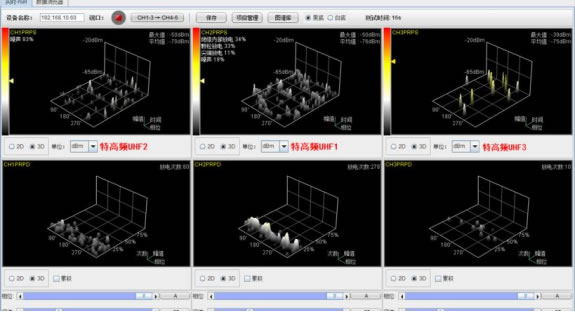
Through sophisticated 3D PRPD (Phase-Resolved Partial Discharge) pattern analysis and PRPS (Phase-Resolved Pulse Sequence) visualization, the system provides intuitive insights into discharge magnitude, phase distribution, and other critical parameters essential for predictive maintenance and asset management.
⚡ Core Technology Advantages
Multi-Channel High-Speed Acquisition
Configurable 4 or 6 channel options with 200MS/s sampling rate for precise partial discharge signal capture and analysis.
Intelligent Anti-Interference Design
Dynamic range of -80 to -20dBm ensures stable operation in complex electromagnetic environments and substations.
3D Pattern Analysis
PRPD and PRPS graphical displays with expert database for intelligent PD pattern recognition and fault diagnostics.
Industrial-Grade Protection
IP68 protection rating suitable for harsh field environments and outdoor electrical installations.
System Architecture & Components

The complete partial discharge monitoring solution integrates hardware sensors, acquisition units, and intelligent software platforms to create a comprehensive condition monitoring ecosystem for power transformers and electrical assets.
Key System Components:
- PD Monitoring Host Unit: Receives and processes signals from multiple sensor inputs
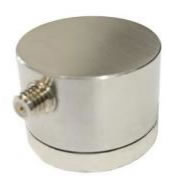
- Ultrasonic Sensors: Detects acoustic emissions from partial discharge activity
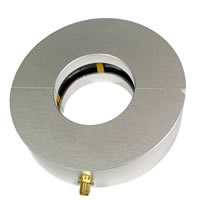
- High-Frequency Current Sensors: Monitors high-frequency pulse currents in grounding cables
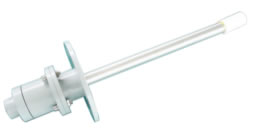
- UHF Sensors: Captures ultra-high frequency electromagnetic signals in transformer oil
- Backend Monitoring Software: Provides visualization, trending, and diagnostic capabilities
Multi-Sensor Detection Technology
The system employs three complementary sensor technologies to provide comprehensive partial discharge detection coverage, each optimized for specific frequency ranges and installation locations on power transformers.
| Sensor Type |
Monitoring Bandwidth |
Installation Method |
Installation Location |
Primary Function |
|

Ultrasonic Sensor
|
20kHz ~ 200kHz |
Magnetic Mount |
Tank Surface |
Monitors acoustic emissions from internal PD activity in windings |
|
High-Frequency Current Sensor
|
100kHz ~ 50MHz |
Clamp-On |
Core Grounding Point |
Detects high-frequency pulse currents in grounding cables |
|
UHF Sensor
|
300MHz ~ 3000MHz |
Plug-In Type |
Oil Valve Port |
Monitors internal oil insulation conditions and electromagnetic signals |
PD Monitoring Host Technical Specifications
The monitoring host serves as the central processing unit, performing signal conditioning, amplification, filtering, and high-speed data acquisition. It calculates critical parameters including maximum discharge amplitude, average discharge quantity, and discharge frequency for comprehensive PD assessment.
| Parameter |
Specification |
| Signal Reception |
Ultrasonic, High-Frequency Current, UHF Signals |
| Dynamic Range |
-80 ~ -20dBm |
| Sampling Rate |
200MS/s |
| Channel Configuration |
4 or 6 Channels (Configurable) |
| Channel Consistency |
≤ 0.5dBm |
| Communication Interface |
RJ45 Ethernet, RS485 |
| Dimensions |
483mm × 89mm × 300mm (2U Rack Mount) |
| Power Supply |
AC 90~240V, 50~60Hz |
| Installation Method |
Cabinet/Panel Mount (Recommended: Convergence Cabinet or Screen Cabinet) |
📊 Comprehensive Monitoring Software Platform
The backend monitoring software provides a user-friendly interface for real-time visualization, historical data analysis, and intelligent diagnostics. Installed on control room computers, it enables operators to monitor transformer health status and detect anomalies before they develop into critical failures.
Real-Time Monitoring
Continuously monitors and stores operational PD data with 3D spectrum visualization and PRPD pattern displays for immediate fault detection.
Historical Query & Trending
Access historical data curves with statistical analysis and trend forecasting capabilities for predictive maintenance planning.
Parameter Configuration
Configure equipment parameters and alarm thresholds with programmable settings for customized monitoring requirements.
Multi-Parameter Analysis
Monitors discharge amplitude (mean & peak values), alarm levels, pattern graphs, and other diagnostic indicators.
Key Detection Parameters & Diagnostics
The system performs comprehensive analysis of partial discharge characteristics essential for insulation condition assessment and failure prediction in power transformers:
- Discharge Amplitude (Q): Measures the magnitude of each partial discharge event in picocoulombs
- Discharge Phase (Ø): Identifies the phase position of PD occurrence relative to power frequency cycle
- 3D PRPD Patterns: Three-dimensional phase-resolved partial discharge pattern recognition
- PRPS Visualization: Phase-resolved pulse sequence for discharge frequency analysis
- Maximum Discharge Amplitude: Peak discharge values for severity assessment
- Average Discharge Quantity: Statistical mean for trend monitoring
- Discharge Frequency: Number of PD events per time period
Applications & Benefits
🔌 Power Transformers
Comprehensive insulation monitoring for oil-filled and dry-type transformers in substations and power plants.
⚡ High-Voltage Equipment
Early detection of insulation degradation in switchgear, GIS, and cable systems.
🏭 Industrial Plants
Continuous condition monitoring for critical electrical assets to prevent unplanned outages.
📈 Predictive Maintenance
Trend analysis and forecasting to optimize maintenance schedules and extend equipment lifespan.
General System Parameters
| Parameter |
Value |
| Operating Temperature Range |
-20℃ ~ +125℃ |
| Measurement Range |
-80 ~ -20dBm |
| Transmission Impedance |
≥12mV/mA |
| Waterproof Rating |
IP68 |
| Monitoring Range |
≤20000Pc |
Frequently Asked Questions
What is partial discharge and why is it important to monitor?
Partial discharge (PD) is a localized electrical discharge that only partially bridges the insulation between conductors. It’s a critical indicator of insulation degradation in transformers and high-voltage equipment. Continuous PD activity leads to progressive insulation breakdown, potentially causing catastrophic failures. Early detection through online monitoring enables predictive maintenance, prevents unplanned outages, and extends equipment lifespan significantly.
How does multi-sensor fusion technology improve PD detection accuracy?
Multi-sensor fusion combines ultrasonic (20-200kHz), high-frequency current (100kHz-50MHz), and UHF (300MHz-3GHz) detection methods. Each sensor type excels at detecting specific PD sources and frequencies. By correlating data from all three sensors, the system eliminates false positives from electromagnetic interference, accurately locates discharge sources, and provides comprehensive coverage of all PD phenomena occurring within the transformer, dramatically improving detection reliability.
Can the system differentiate between different types of partial discharge?
Yes. The system’s 3D PRPD (Phase-Resolved Partial Discharge) pattern analysis displays discharge magnitude versus phase angle, creating unique fingerprint patterns for different PD types such as corona discharge, surface discharge, internal voids, and floating potentials. The expert database compares measured patterns against known discharge signatures to automatically identify the type and severity of insulation defects, enabling targeted maintenance interventions.
What is the typical installation process and timeframe?
Installation typically requires 1-2 days per transformer. Sensors are installed on the tank surface (ultrasonic), core grounding point (HF current), and oil valve (UHF) without requiring transformer outage. The monitoring host is rack-mounted in a control cabinet, connected via Ethernet or RS485. Software installation on the control room computer completes the setup. Our technical team provides on-site commissioning, calibration, and operator training to ensure optimal system performance.
How does the system handle electromagnetic interference in substations?
The system incorporates advanced anti-interference circuit design with a wide dynamic range (-80 to -20dBm) to maintain sensitivity while rejecting strong interference. Signal processing algorithms include adaptive filtering, noise suppression, and pattern recognition that distinguish genuine PD signals from electromagnetic noise, corona from nearby equipment, and switching transients. The multi-sensor approach also enables cross-validation to confirm authentic PD events.
Can the system integrate with existing SCADA or asset management platforms?
Yes. The monitoring host provides standard communication interfaces (RJ45 Ethernet and RS485) supporting common industrial protocols including Modbus, IEC 61850, and DNP3. This enables seamless integration with SCADA systems, plant information management systems, and enterprise asset management platforms. Real-time PD data, alarm status, and diagnostic results can be transmitted to centralized monitoring centers for comprehensive asset health management.
What maintenance does the monitoring system itself require?
The system requires minimal maintenance. Recommended activities include quarterly visual inspection of sensor mounting integrity, annual calibration verification, and periodic software updates. The sensors are maintenance-free with IP68 protection. Data storage should be monitored to prevent disk space issues. We recommend annual technical support visits to verify system performance, update diagnostic algorithms, and provide refresher training for operators.
What is the expected return on investment for PD monitoring systems?
ROI is typically realized within 2-3 years through prevention of catastrophic failures, optimized maintenance scheduling, and extended equipment lifespan. A single prevented transformer failure (avoiding replacement costs, lost production, and potential safety incidents) often justifies the monitoring system investment. Additional benefits include reduced insurance premiums, improved power quality, decreased emergency maintenance costs, and enhanced regulatory compliance for critical infrastructure.
Request a Consultation Today
Our technical experts are ready to discuss your transformer monitoring requirements and provide customized solutions for your electrical assets.
Related Monitoring Solutions
Transformer Comprehensive Monitoring
Multi-parameter condition monitoring system
Bushing Monitoring System
Capacitance and tan delta monitoring
OLTC Monitoring
On-load tap changer condition assessment
Switchgear PD Monitoring
GIS and switchgear partial discharge detection
 INNO fibre optic temperature sensors ,temperature monitoring systems.