A digital fault recorder (DFR) is a high-speed data acquisition device that captures voltage, current, and analog waveforms during transient events in power systems — providing engineers with the forensic evidence needed to analyze faults affecting oil-immersed transformers. DFRs continuously monitor electrical parameters and begin recording at full resolution the instant a trigger condition — such as overcurrent, undervoltage, or rate-of-change — is detected, preserving both pre-fault and post-fault data. For oil-immersed transformer applications, DFR records are essential for diagnosing winding faults, inrush events, through-faults, ferroresonance, and bushing failures that other protection devices cannot fully characterize. Modern digital fault recorders sample at rates of 96 to 512 samples per cycle or higher, providing the resolution needed to capture fast electromagnetic transients inside and around transformer circuits. Proper DFR channel assignment, trigger configuration, time synchronization, and data management are critical to extracting maximum diagnostic value for transformer fleet reliability programs. Table of Contents What Is a Digital Fault Recorder? Why Oil-Immersed Transformers Require Digital Fault Recording How a Digital Fault Recorder Works Key Components and Architecture of a DFR Types of Channels Used in Transformer DFR Applications Trigger Methods and Configuration for Transformer Monitoring Analyzing DFR Records for Transformer Fault Diagnosis DFR vs. Protective Relay Event Records vs. Power Quality Analyzer Installation, Time Synchronization, and Data Management Relevant Standards and Industry Guidelines Frequently Asked Questions 1. What Is a Digital Fault Recorder? A digital fault recorder (DFR) is a specialized electronic instrument that continuously monitors electrical signals in a power system and captures high-resolution waveform data whenever an abnormal event — a fault, disturbance, or transient — is detected. In the context of oil-immersed transformer protection and diagnostics, a DFR serves as the primary forensic tool that records exactly what happened to the transformer's voltages and currents before, during, and after a disturbance. More Than Just a Data Logger A common misconception is that a digital fault recorder is simply a data logger that stores electrical measurements over time. In reality, a DFR is purpose-built for capturing fast transient phenomena. It features high sampling rates (typically 96 to 512 samples per power frequency cycle, and sometimes exceeding 1 MHz for specialized units), precision analog-to-digital converters, dedicated trigger logic, deep memory buffers, and accurate time-stamping synchronized to GPS or IEEE 1588 Precision Time Protocol. These characteristics allow the DFR to freeze a snapshot of the power system's behavior during events that last only a few milliseconds — events that would be completely invisible to conventional SCADA trending or energy metering systems. The DFR's Role in Transformer Protection Ecosystems While protective relays, Buchholz relays, sudden pressure relays, and pressure relief devices detect and respond to transformer faults in real time, the DFR performs a fundamentally different function. It does not trip breakers or activate alarms. Instead, it preserves a detailed, time-stamped record of the electromagnetic conditions surrounding the event. This record is what allows protection engineers, asset managers, and failure investigators to determine root cause, verify relay performance, assess transformer damage, and improve ...
Motor Current Signature Analysis (MCSA) is a non-invasive, online diagnostic technique that detects mechanical and electrical faults in induction motors by analysing the stator current frequency spectrum. MCSA can identify broken rotor bars, air-gap eccentricity, bearing defects, stator winding faults, and load-related anomalies — all without shutting down the motor. A typical MCSA system consists of a current transformer (CT), a data acquisition unit, spectrum analysis software, and a display and alarm module. Compared with vibration analysis, infrared thermography, and partial discharge testing, MCSA offers distinct cost and accessibility advantages for continuous motor monitoring. MCSA testing is governed by international standards including IEEE 9110, IEC 60034, and guidelines from NEMA and EPRI. Leading MCSA equipment providers include Fuzhou Innovation Electronic Scie&Tech Co., Ltd., SKF, Siemens, ABB, Baker Hughes, and other global specialists. Table of Contents What Is Motor Current Signature Analysis (MCSA)? How Does MCSA Work? What Motor Faults Can MCSA Detect? MCSA System Components MCSA vs Other Motor Monitoring Technologies Advantages and Limitations of MCSA Typical Applications and Industries How to Perform an MCSA Test Correctly Industry Standards and Specifications Top MCSA Equipment and Service Providers Conclusion Frequently Asked Questions (FAQ) 1. What Is Motor Current Signature Analysis (MCSA)? Motor Current Signature Analysis, commonly abbreviated as MCSA, is a condition monitoring technique used to diagnose faults in three-phase induction motors while they remain in operation. The method works by capturing the stator current waveform from one or more phases and converting it into the frequency domain using a Fast Fourier Transform (FFT). The resulting frequency spectrum — often called the "current signature" — contains specific patterns and sidebands that correspond to particular mechanical or electrical fault conditions inside the motor. Why MCSA Matters in Modern Power Systems Electric motors account for a significant share of industrial electricity consumption worldwide. An unplanned motor failure can halt an entire production line, cause safety hazards, and result in substantial financial losses. Traditional inspection methods — such as periodic shutdowns for manual examination — are both costly and disruptive. MCSA addresses this challenge by enabling online motor fault detection that requires no physical access to the motor itself. A clamp-on current transformer installed on the motor supply cable is often the only hardware needed to begin diagnosis. 2. How Does MCSA Work? The Core Principle: Stator Current as a Fault Indicator Every induction motor draws current from the supply to create a rotating magnetic field in the stator. When the rotor, bearings, or stator windings develop a defect, the resulting asymmetry modulates the air-gap magnetic flux. This modulation appears as additional frequency components — known as fault characteristic frequencies — superimposed on the fundamental supply frequency (typically 50 Hz or 60 Hz) in the stator current spectrum. Signal Acquisition and Processing The MCSA process follows a clear sequence. First, the stator current signal is captured using a current transformer (CT) or Hall-effect sensor clamped around one phase conductor. The analogue signal is then digitised by a high-resolution data acquisition unit at a sufficient ...
Fiber optic temperature sensors immune to electromagnetic interference use entirely non-electrical sensing principles — light-based measurement through passive glass fibers — making them the only temperature sensing technology that is fundamentally and inherently immune to EMI, RFI, microwave radiation, high-voltage electric fields, and lightning-induced surges. Among the three major fiber optic temperature sensing technologies, fluorescence-based (fluorescent decay) fiber optic temperature sensors are the most widely deployed point-measurement solution for high-EMI environments, offering proven reliability, excellent accuracy (±0.1 °C to ±0.5 °C), fast response, and broad temperature range coverage from cryogenic to over 400 °C. Gallium Arsenide (GaAs) semiconductor fiber optic temperature sensors provide an alternative approach using the temperature-dependent optical absorption edge of a GaAs crystal, delivering high accuracy in a compact probe format well-suited for power transformer, switchgear, and electric motor winding temperature monitoring. Fiber Bragg Grating (FBG) temperature sensors offer wavelength-encoded, multiplexed temperature measurement along a single fiber, enabling quasi-distributed monitoring of multiple points in EMI-intensive environments such as MRI rooms, power substations, and electromagnetic processing equipment. All three technologies share the core advantage of complete electromagnetic interference immunity because the sensing element is purely optical — no electrical conductors, no electronic components, and no metallic pathways exist at the measurement point to couple with external electromagnetic fields. Table of Contents Why Electromagnetic Interference Demands Fiber Optic Temperature Sensors Fluorescence-Based Fiber Optic Temperature Sensors — Working Principle Fluorescence Sensor Design, Materials, and Performance Applications of Fluorescence Fiber Optic Temperature Sensors in High-EMI Environments GaAs Semiconductor Fiber Optic Temperature Sensors Fiber Bragg Grating (FBG) Temperature Sensors Technology Comparison: Fluorescence vs. GaAs vs. FBG How to Select the Right EMI-Immune Fiber Optic Temperature Sensor FAQs About Fiber Optic Temperature Sensors Immune to Electromagnetic Interference 1. Why Electromagnetic Interference Demands Fiber Optic Temperature Sensors The EMI Problem in Temperature Measurement Conventional electronic temperature sensors — thermocouples, RTDs (Resistance Temperature Detectors), thermistors, and IC sensors — rely on electrical signals traveling through metallic conductors. These conductors act as antennas that pick up electromagnetic interference from surrounding sources. In environments with strong electromagnetic fields, the induced noise can be many times larger than the actual temperature signal, rendering measurements unreliable or completely unusable. The problem is particularly severe in high-voltage power equipment (transformers, switchgear, busbars), industrial RF and microwave heating systems (induction furnaces, RF dryers, microwave curing ovens), medical imaging equipment (MRI scanners operating at 1.5 T to 7 T field strengths), electromagnetic compatibility (EMC) test chambers, high-power radar and antenna systems, electric vehicle motor and inverter assemblies, and plasma processing equipment. In all these environments, thermocouple and RTD signals are corrupted by common-mode and differential-mode interference, ground loops, and capacitively or inductively coupled noise. Shielding, filtering, and signal conditioning techniques provide partial mitigation but cannot eliminate the fundamental vulnerability of electrical conductors to electromagnetic coupling. Why Fiber Optics Are the Definitive Solution Fiber optic temperature sensors immune to electromagnetic interference solve this problem at the most fundamental level. The sensing element is made entirely of non-conductive, non-metallic materials — glass fiber, ceramic, ...
About FJINNO Fuzhou Innovation Electronic Sci&Tech Co., Ltd. (branded as FJINNO) is a high-tech enterprise founded in 2011, headquartered in Fuzhou, Fujian Province, China. With a team of 100+ professionals and a 3,000+㎡ manufacturing base, FJINNO has dedicated over 20 years to the R&D and production of intelligent monitoring systems, emerging as a trusted provider of integrated sensing solutions for global industrial clients . Core Technology & R&D Strength FJINNO’s competitive edge lies in its independently developed fluorescent fiber optic temperature sensing technology, a breakthrough achieved through industry-academia-research collaboration with institutions like Fuzhou University . This core technology features: Complete electrical insulation: Utilizing all-dielectric materials to ensure safety in high-voltage environments. EMI immunity: Resistant to electromagnetic interference, ideal for complex industrial scenarios. Maintenance-free performance: No recalibration required, reducing operational costs . The R&D team focuses on integrating multi-physical parameter monitoring (temperature, vibration, pressure) into intelligent systems, holding independent intellectual property rights for key technologies . Product Portfolio FJINNO offers a comprehensive range of monitoring products tailored to diverse industrial needs: Fluorescent Fiber Optic Temperature Measurement Systems: For real-time hot-spot monitoring of transformer windings and high-voltage equipment. Oil-Immersed Transformer Online Monitoring Systems: Detect winding temperature anomalies to prevent equipment failure. PHM (Prognostics and Health Management) Systems: Enable predictive maintenance for critical infrastructure. Temperature Controllers: Including rail transit fiber optic temperature controllers and dry-type transformer temperature controllers . All products comply with international quality standards and have passed ISO 9001:2015 certification . Application Fields FJINNO’s solutions serve 8+ core industries, providing end-to-end monitoring services: Power Industry: Transformer, switchgear, and cable joint temperature monitoring for State Grid and China Southern Power Grid projects. New Energy & Nuclear Power: Battery storage cabinet temperature control and nuclear facility environmental monitoring. Infrastructure: Comprehensive pipe galleries, oil & gas pipelines, and rail transit systems. Chemical & Municipal: Corrosion-resistant temperature/pressure monitoring for harsh environments . Industry Impact & Vision As a participant in major industry events (e.g., the 102nd China Electronics Exhibition ), FJINNO is committed to advancing basic electronic component technology. Its cost-effective solutions and customizable OEM/ODM services have gained recognition in both domestic and global markets . Looking ahead, FJINNO aims to leverage IoT and AI integration to become a global leader in intelligent temperature measurement and predictive maintenance solutions, supporting high-quality development of the manufacturing industry . For more information: www.fjinno.net
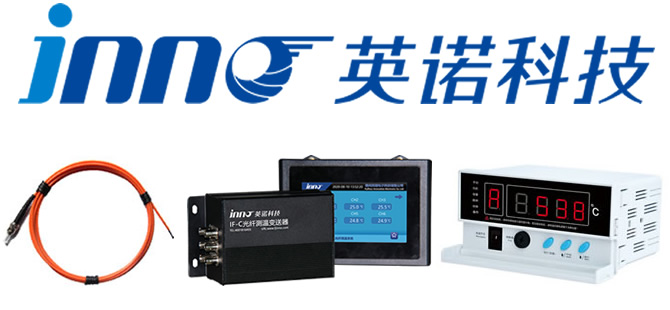
[embed]https://youtu.be/N9c4Z17WOOM[/embed] By utilizing the single value correspondence between the afterglow lifetime and temperature of rare earth fluorescent materials, the temperature signal is converted into an optical lifetime signal for measurement. After being irradiated with light of a specific wavelength, fluorescent substances emit fluorescence when electrons transition from a low energy level to an excited state at a high energy level, and then return to a low energy level. After the excitation stops, the fluorescence decays exponentially, and its decay time constant is temperature dependent. By measuring the decay time, i.e. the fluorescence lifetime, the temperature at the measurement point can be obtained. system composition Fluorescent fiber optic (including sensing head): converts the temperature information of the monitoring part of the temperature probe into an optical signal and transmits it to the fiber optic temperature transmitter. The probe size is small and can be directly installed on the measured point, with accurate temperature measurement and rapid response. Tail fiber is soft and sturdy, with advantages such as high transmission bandwidth, stable signal, anti electromagnetic interference, anti bending, high impact strength, and fast connection. The tail fiber sheath material is usually polytetrafluoroethylene, which can adapt to harsh environments such as high pressure, high temperature, and strong electromagnetic fields. Power equipment switchgear, ring main unit monitoring system, fluorescent fiber temperature measurement device, fluorescent fiber Fiber optic temperature transmitter: Connected to fluorescent fiber optic through an ST connector, it receives real-time optical signals carrying temperature information from fiber optic sensors and demodulates them into temperature values to achieve temperature measurement of the monitored area. Each fiber optic transmitter can be connected to multiple fluorescent fibers. Communication software and header: Fluorescent fiber optic communication software is used to achieve communication with the upper computer, and can perform functions such as data transmission, storage, and analysis. The head of the fiber optic temperature measurement system collects temperature information transmitted by the transmitter through RS485, and displays the temperature of each probe in real time. It is generally embedded and has a user-friendly human-machine interface interaction. advantage Strong anti-interference ability: pure optical sensing, suitable for substations MRI、 The microwave cavity and other strong electromagnetic fields have natural immunity, no zero drift, no false alarms, and can work stably in high voltage and strong electromagnetic environments. Good high-voltage insulation performance: Quartz fiber optic can withstand voltage>100kV and can be directly tied to the surface of 500kV transformer windings, GIS contacts or busbars to achieve "live zero distance" hot spot monitoring without reducing the insulation level of the equipment. Calibration free, long-term stability: Temperature is only related to fluorescence lifetime and is not related to light intensity, connector attenuation, or fiber bending. It does not require recalibration after 10-25 years of installation, reducing maintenance costs and workload. Miniature size, easy to embed: The probe has a small diameter and can be inserted into narrow areas such as switch cabinet plum blossom contact fingers, cable joint gaps, dry-type transformer air ducts, etc. It does not disturb the thermal field of ...
Fiber optic temperature measurement systems offer high accuracy and immunity to electromagnetic interference. Integrating RS485 interface allows for reliable industrial data transmission. Custom development ensures compatibility with various automation and monitoring platforms. Proper protocol design and interface customization are key for seamless integration. Tailored solutions maximize system flexibility and future scalability. Fiber optic temperature measurement systems are increasingly used in industrial environments that demand precision and real-time monitoring. These systems excel in harsh conditions, offering accurate readings with immunity to electromagnetic interference, making them ideal for power plants, steel mills, and substations. However, integrating these systems into existing industrial networks often requires a robust communication interface such as RS485. [embed]https://youtu.be/G3EoPUtLVnc[/embed] The RS485 interface is widely adopted in industry due to its long-distance transmission capability and resilience to electrical noise. For fiber optic temperature measurement solutions, uploading data over RS485 allows seamless communication with programmable logic controllers (PLCs), distributed control systems (DCS), and supervisory control and data acquisition (SCADA) systems. This integration ensures that temperature data can be accessed and analyzed alongside other key process variables. Custom development of the RS485 upload interface involves designing hardware and software modules that translate fiber optic sensor data into standard communication protocols, such as Modbus RTU. This customization may include protocol conversion, data formatting, and the implementation of device addressing schemes. Properly developed interfaces guarantee compatibility with a wide range of automation equipment and simplify on-site deployment. In addition to hardware adaptation, flexible software configuration is essential for system integration. User-defined parameter settings, alarm thresholds, and data reporting intervals can be supported through a customized interface. This ensures the fiber optic temperature measurement system can be tailored to specific application requirements and evolving operational needs. By investing in customized RS485 interface development for fiber optic temperature measurement systems, businesses benefit from improved process reliability, streamlined data integration, and future scalability. Such solutions not only enhance system compatibility but also provide a foundation for expanding monitoring functions as industrial needs grow. Frequently Asked Questions 1. Why use fiber optic temperature measurement in industrial applications? Fiber optic sensors are immune to electromagnetic interference and offer high accuracy in extreme environments. 2. What advantages does RS485 offer for data transmission? RS485 supports long-distance, stable, and noise-resistant communication, making it ideal for industrial settings. 3. How does custom interface development benefit integration? Custom interfaces ensure compatibility with existing control systems, enable user-specific functions, and support future upgrades. 4. Can the RS485 interface support multiple devices? Yes, RS485 allows for multidrop communication, enabling multiple devices to share the same bus line. 5. What protocols are commonly used with RS485 in temperature measurement? Modbus RTU is a common protocol, but custom or proprietary protocols can also be implemented based on requirements.
[embed]https://youtu.be/kLBOxbpd5ko[/embed] In the medical field, fluorescent fiber optic temperature measurement has become the ideal choice for precisely monitoring human core body temperature and critical temperatures of medical equipment due to its characteristics of precision, safety, and anti-interference. It plays a particularly important role in scenarios with extremely high temperature monitoring requirements, such as surgery and intensive care. Precise Monitoring of Human Core Body Temperature, Supporting Critical Care and Surgical Management Human core body temperature (such as intracranial and intra-abdominal temperatures) is an important indicator reflecting vital signs. Minor changes may indicate disease deterioration or surgical risks. Traditional temperature measurement methods (such as axillary and oral temperature measurement) are easily affected by environmental factors with limited accuracy, while fluorescent fiber optic temperature measurement can overcome these limitations. Invasive Precise Temperature Measurement Fluorescent fiber optic probes can have diameters as small as 0.1mm, enabling minimally invasive implantation into deep human tissues (such as brain tissue, intravascular, and abdominal cavity) for direct core temperature measurement. The error can be controlled within ±0.1℃, far superior to traditional surface temperature measurement accuracy (errors often exceed ±0.5℃). For example, in neurosurgery, strict monitoring of brain tissue temperature is required to avoid ischemic injury. Fluorescent fiber optics can provide real-time precise data feedback, guiding doctors to adjust surgical plans. Electromagnetic Interference Resistance Advantages ICU and operating rooms contain numerous electronic devices (such as ventilators, electrocautery units, and MRI machines). Traditional electronic temperature measurement devices are susceptible to electromagnetic interference, causing data distortion. Fluorescent fiber optics transmit through optical signals, completely unaffected by electromagnetic environments. They can work stably in strong magnetic field environments such as Magnetic Resonance Imaging (MRI), ensuring the reliability of temperature measurement data. Ensuring Safe Operation of Medical Equipment, Preventing Potential Risks The stable operation of medical equipment directly relates to patient safety. Abnormal temperatures in critical components of some equipment may cause failures or even safety accidents. Fluorescent fiber optic temperature measurement can provide reliable monitoring in such scenarios. Extracorporeal Circulation Equipment Monitoring In cardiac surgery, the heat exchanger of extracorporeal circulation machines requires precise control of blood temperature. Fluorescent fiber optics can be embedded inside heat exchangers to monitor the temperature at the interface between water and blood contact in real-time, ensuring smooth blood heating or cooling processes and avoiding red blood cell destruction due to sudden temperature changes. High-Frequency Electrocautery and Laser Equipment Temperature Measurement High-frequency electrocautery units and laser treatment devices generate localized high temperatures during operation. Excessive temperatures may burn patient tissues or damage the equipment itself. Fluorescent fiber optic probes can be installed near treatment heads to monitor output temperature in real-time. Once safety thresholds are exceeded, they can trigger equipment protection mechanisms to stop operation promptly, reducing medical risks. Temperature Monitoring in Special Environments, Expanding Application Scenarios In some special medical scenarios, higher safety and adaptability requirements are placed on temperature measurement equipment. The characteristics of fluorescent fiber optic temperature measurement enable it to excel in these applications. Hypothermia Therapy Monitoring In the treatment of brain injury ...
[embed]https://youtu.be/NiQoFOoTOA0[/embed] The safe and stable operation of dry-type transformers highly depends on precise temperature monitoring. Fluorescent fiber optic temperature measurement technology has become the ideal choice in this field due to its characteristics of anti-interference, high safety, and high precision. It can effectively address challenges such as strong electromagnetic environments and complex structures during transformer operation, providing critical protection for reliable equipment operation. Why is Fluorescent Fiber Optic Temperature Measurement Suitable for Dry-Type Transformers? Dry-type transformers, due to the absence of insulating oil, are widely used in high-rise buildings, subways, hospitals, and other locations with extremely high safety requirements. The winding temperature directly relates to insulation life and operational safety. Traditional temperature measurement methods (such as thermocouples and infrared sensors) have obvious shortcomings in terms of electromagnetic interference resistance, installation flexibility, and measurement accuracy, while fluorescent fiber optic temperature measurement perfectly addresses these deficiencies. The core principle of fluorescent fiber optic temperature measurement is: utilizing the temperature effect of fluorescent materials (temperature changes alter fluorescence lifetime or intensity), transmitting fluorescent signals through optical fibers, and then converting them to temperature data through demodulation modules. The optical fiber itself is non-conductive and corrosion-resistant, fundamentally avoiding the inherent defects of traditional electrical temperature measurement. Core Advantages Analysis of Fluorescent Fiber Optic Temperature Measurement 1. Superior Electromagnetic Interference Resistance, Adapting to Complex Electrical Environments Dry-type transformers generate strong electromagnetic fields and high-frequency interference during operation. Traditional electrical signal temperature measurement components (such as thermocouples and thermal resistors) are susceptible to interference, causing data drift or even measurement failure. Fluorescent fiber optics transmit data through optical signals, and the fiber itself is an insulator, unaffected by electromagnetic induction, ground loops, etc. It can maintain measurement stability in 10kV-35kV high-voltage environments. Compared to infrared temperature measurement (easily affected by dust and water vapor causing signal attenuation), optical fibers can be directly embedded inside windings, unaffected by external environmental interference, providing higher data reliability. 2. High Safety, Eliminating Potential Electrical Risks The windings and core of dry-type transformers are at high voltage potential. If temperature measurement components contain conductive parts, they may cause insulation breakdown or short-circuit risks. The sensor probes and transmission optical fibers of the fluorescent fiber optic temperature measurement system are all made of non-metallic materials with no conductive paths, eliminating electrical safety hazards from the source. Even in extreme cases where winding overheating causes insulation aging, optical fiber materials will not burn or release harmful substances, meeting the fire safety requirements of high-security locations. 3. High Precision + Wide Range, Covering Critical Temperature Measurement Points The winding hot spot temperature of dry-type transformers is a key indicator for judging insulation aging (such as the maximum allowable temperature of 155℃ for Class F insulation), requiring temperature measurement error ≤±1℃. Fluorescent fiber optic temperature measurement can achieve accuracy of ±0.5℃ with a range covering -50℃~200℃, fully meeting the full operating condition temperature monitoring needs of dry-type transformers from startup to overload. Traditional infrared temperature measurement, due to non-contact measurement requirements, cannot accurately capture ...
FJINNO Electronic Technology stands as the premier fiber optic temperature measurement device manufacturer, delivering cutting-edge monitoring solutions for transformers and switchgear applications worldwide. Our advanced factory combines innovative engineering with precision manufacturing to produce high-accuracy fluorescent fiber optic sensors that set industry standards for reliability and performance. [embed]https://youtu.be/hFNTBUmKIhs[/embed] About FJINNO: Industry-Leading Manufacturer As a leading fiber optic temperature measurement device manufacturer, FJINNO's state-of-the-art factory produces high-precision monitoring solutions for industrial applications worldwide. We serve as a trusted wholesale and bulk supplier, offering competitive pricing for large-scale projects through our extensive distributor and dealer networks. Our experienced wholesaler partnerships ensure global market coverage while providing local technical support and service capabilities. As a premier exporter, we deliver cutting-edge fiber optic temperature sensors to over 50 countries, maintaining strict quality standards throughout our international supply chain. We specialize in private label services, enabling partners to market our advanced technology under their own brand identity. Our comprehensive OEM/ODM capabilities provide tailored solution development for specific customer requirements, from initial concept through full-scale production. FJINNO Factory: Advanced Manufacturing Excellence FJINNO's modern manufacturing facility incorporates the latest automation technology and quality control systems to ensure consistent production of superior fiber optic temperature measurement devices. Our factory maintains ISO 9001 certification and implements rigorous testing protocols throughout the manufacturing process. Production Capabilities Annual production capacity exceeding 100,000 sensor units Cleanroom environments for optical component assembly Automated calibration and testing systems Environmental stress testing facilities Complete quality traceability from raw materials to finished products Quality Assurance Systems 100% functional testing of every manufactured unit Temperature cycling and environmental validation Electromagnetic compatibility verification Long-term stability testing programs Statistical process control monitoring Wholesale and Bulk Supply Solutions FJINNO serves as a comprehensive wholesale supplier for fiber optic temperature measurement systems, offering volume pricing and dedicated support for large-scale transformer and switchgear monitoring projects. Our bulk supply capabilities accommodate utility companies, industrial facilities, and system integrators requiring multiple monitoring systems. Wholesale Benefits Competitive volume pricing structures Flexible delivery scheduling to match project timelines Technical support throughout implementation Custom packaging and labeling options Extended warranty programs for bulk orders Bulk Order Capabilities Minimum order quantities starting from 10 units Dedicated account management for large projects Custom configuration options for specific applications Priority production scheduling for urgent requirements Comprehensive documentation and certification packages Global Distribution Network FJINNO maintains an extensive network of authorized distributors and dealers worldwide, ensuring local availability and support for our fiber optic temperature measurement solutions. Our distribution partners provide regional expertise while maintaining global quality standards. Distributor Services Regional inventory management and rapid delivery Local technical support and training programs Application engineering assistance Installation and commissioning services Ongoing maintenance and calibration support Dealer Network Benefits Comprehensive product training and certification Marketing support and sales tools Technical documentation in local languages Competitive pricing and margin structures Regular product updates and technology briefings International Export Excellence As a leading exporter of fiber optic temperature measurement technology, FJINNO delivers advanced monitoring solutions to customers in over 50 countries. Our export operations ...
Functions and advantages Real time online monitoring: capable of 24-hour uninterrupted real-time temperature monitoring of heating pipelines, capturing small changes in pipeline temperature in a timely manner, and achieving dynamic tracking of pipeline operation status. Distributed measurement: It can achieve continuous distributed temperature measurement along the entire heating pipeline distributed along the optical fiber, comprehensively and accurately reflecting the temperature distribution along the pipeline, avoiding the monitoring blind spot problem of traditional point based temperature measurement methods, and is of great significance for early detection of local overheating, leakage and other abnormal situations in the pipeline. Accurate positioning: Once a temperature anomaly is detected, the system can quickly and accurately determine the location of the anomaly, making it easier for maintenance personnel to quickly locate the fault location for repair, shorten repair time, reduce repair costs, and minimize the impact on the surrounding environment. Long measurement distance: It can achieve long-distance temperature monitoring, generally up to several kilometers or even tens of kilometers, which can meet the monitoring needs of large-scale heating pipelines and reduce the number and cost of monitoring equipment deployment. Strong anti electromagnetic interference capability: Optical fibers themselves have good electrical insulation and anti electromagnetic interference performance, are not affected by external electromagnetic fields, and can work stably and reliably in complex industrial environments, ensuring the accuracy and reliability of temperature measurement data. High precision temperature measurement: It has a high temperature measurement accuracy, generally up to ± 1 ℃, which can meet the temperature monitoring accuracy requirements of heating pipelines and effectively monitor the temperature changes of pipelines. High safety: There is no need to install invasive temperature sensors on the pipeline, which will not have any impact on the structure and operation of the pipeline, nor will it change the stress state and insulation performance of the pipeline, ensuring high safety. Long service life: the optical fiber has good corrosion resistance and aging resistance, and its service life is long, usually more than 20 years, reducing the cost of system maintenance and replacement. High degree of intelligence: It can be combined with computer control systems, data communication systems, etc. to achieve remote monitoring, data storage, data analysis, fault alarm and other functions, improving the management level and operational efficiency of heating pipelines. [embed]https://youtu.be/VQBC9bAYhVU[/embed]
[embed]https://youtu.be/itauRaqItZ4[/embed] Fiber optic temperature measurement of oil immersed transformer windings is an advanced temperature monitoring technology. The following is a related introduction: Principle of Temperature Measurement Fluorescent fiber temperature measurement: using the sensitivity of fluorescent substances in the fiber to temperature changes to measure temperature. When the fiber optic thermometer sends an inquiry light pulse to the sensor, the fluorescent substance absorbs the light energy and emits fluorescence. The intensity and lifetime of fluorescence are related to temperature, and the thermometer calculates the temperature value by detecting these characteristics. Distributed fiber optic temperature measurement: Based on the principles of optical time domain reflection technology and Raman scattering effect, laser transmission in the fiber will generate backward Raman scattering light, whose intensity changes with the temperature of the fiber. By measuring the intensity of backward Raman scattering and using optical time domain positioning technology, distributed measurement of temperature along the fiber optic line can be achieved. Composition of temperature measurement system Fiber optic sensors: are key components for temperature measurement, such as fluorescent fiber optic sensors or distributed fiber optic sensors, used to sense changes in winding temperature. Temperature measurement host: responsible for sending inquiry light signals or lasers to fiber optic sensors, and receiving light signals returned from sensors, analyzing and processing them to calculate temperature values. Fiber optic transmission: Connect the fiber optic sensor to the temperature measurement host for transmitting optical signals. Backend monitoring system: Receive temperature data sent by the temperature measurement host, and perform functions such as display, storage, analysis, and alarm to facilitate operation and maintenance personnel to grasp the temperature status of transformer windings in real time. Installation method Pre embedded installation: During the manufacturing process of transformers, fiber optic sensors are pre embedded in designated positions inside the winding to ensure close contact between the sensor and the winding, and to more accurately measure the temperature distribution inside the winding. However, this method cannot be used for transformers that have already been put into operation. Post installation: For in-service transformers, the internal body of the transformer can be lifted out using a hanging cover, and fiber optic temperature sensors can be installed on the winding surface or other locations where temperature measurement is required. After installation, the transformer can be reassembled. In addition, there is also a magnetic installation method, but its temperature measurement accuracy is relatively low and may be affected by external magnetic fields. advantage Strong anti-interference ability: Optical fibers themselves have electromagnetic insulation, are not affected by electromagnetic interference, and are not afraid of the impact of harsh environments such as high voltage, high temperature, lightning strikes, etc. They can work stably in strong electromagnetic fields, ensuring the accuracy and reliability of temperature measurement data. High temperature measurement accuracy: The temperature measurement accuracy of fluorescent fiber optic sensors can usually reach ± 1 ℃ or higher, and the accuracy of distributed fiber optic temperature measurement systems can also reach around ± 1 ℃, which can accurately reflect the actual temperature ...
 INNO fibre optic temperature sensors ,temperature monitoring systems.