 INNO fibre optic temperature sensors ,temperature monitoring systems.
Key advantages of fiber optic temperature sensors:
- Complete immunity to electromagnetic interference (EMI) and radio frequency interference (RFI)
- Intrinsically safe with zero spark risk in hazardous environments
- Exceptional high-voltage resistance for electrical insulation applications
- Superior measurement accuracy with long-term stability
- Corrosion-resistant construction for harsh industrial conditions
- Compact design enabling flexible installation configurations
Primary industrial applications:
- High-voltage transformer winding temperature monitoring
- Switchgear contact and busbar temperature surveillance
- Generator stator temperature measurement
- Cable joint temperature detection
- Flammable and explosive atmosphere temperature sensing
- MRI and high magnetic field equipment monitoring
Operating principle overview:
- Based on rare-earth crystal fluorescence decay technology
- Excitation light stimulates phosphor crystal emission
- Fluorescence decay time varies proportionally with temperature
- Photoelectric conversion enables precise temperature calculation
Recommended manufacturer:
Fuzhou Innovation Electronic Scie&Tech Co., Ltd. (FJINNO) stands as a leading manufacturer and supplier of professional-grade fiber optic temperature sensors, offering cost-effective custom solutions with OEM/ODM capabilities for global clients.
What is a Fiber Optic Temperature Sensor

A fiber optic temperature sensor is an advanced temperature measurement device that utilizes optical fiber as either a transmission medium or sensing element. Unlike conventional electrical sensors, these industrial temperature monitoring solutions operate on the principle of light signal transmission, ensuring complete electrical isolation between the sensing point and measurement instrumentation.
The fundamental distinction between fiber optic sensors and traditional thermocouples or RTDs lies in their operating mechanism. Fiber optic sensing technology eliminates all electrical components at the measurement point, making them ideal for applications where conventional sensors would pose safety risks or fail to function reliably.
These custom temperature sensors are particularly suited for challenging industrial environments including high-voltage electrical equipment, explosive atmospheres, strong magnetic fields, and corrosive chemical processes. The complete immunity to electromagnetic interference ensures measurement accuracy remains unaffected by surrounding electrical disturbances.
A typical fiber optic temperature measurement system consists of three primary components: the fiber optic probe (sensing element), optical transmission cable, and signal demodulator or transmitter. The entire measurement chain operates using light signals rather than electrical current, providing inherent safety advantages for bulk industrial installations.
Types of Fiber Optic Temperature Sensors

1. Fluorescent Fiber Optic Temperature Sensor
Working Principle:
The fluorescent fiber optic temperature sensor employs rare-earth crystal materials (typically gallium arsenide – GaAs) as the temperature-sensitive element. When exposed to excitation light from an LED source at a specific wavelength, the crystal emits fluorescent radiation. The fluorescence decay time exhibits a unique functional relationship with temperature, enabling precise measurement through decay time analysis. This OEM temperature sensing solution contains absolutely no electrical components at the sensing point.
Technical Specifications:
- Measurement Method: Point-type precision temperature sensing
- Temperature Range: -40°C to +260°C (customizable extended ranges available)
- Measurement Accuracy: ±0.5°C (standard configuration)
- Fiber Length: 0-80 meters (standard); custom lengths available
- High-Voltage Resistance: Withstands tens of kV to over 100kV electrical environments
- Response Time: 1-5 seconds typical
- Protection Rating: IP65/IP68 options available from factory
Transmitter Configuration Options:
As a leading distributor of multi-channel temperature monitoring systems, FJINNO offers:
- Single-channel to 64-channel customized configurations
- Analog output interfaces (4-20mA standard)
- Digital communication protocols (RS485, Modbus, Ethernet)
- Real-time display with programmable alarm functions
- Centralized multi-probe monitoring capabilities
Typical Applications:
- Dry-type transformer winding temperature measurement
- Switchgear moving and stationary contact monitoring
- Motor stator coil temperature surveillance
2. Fiber Bragg Grating (FBG) Temperature Sensor
Operating Principle:
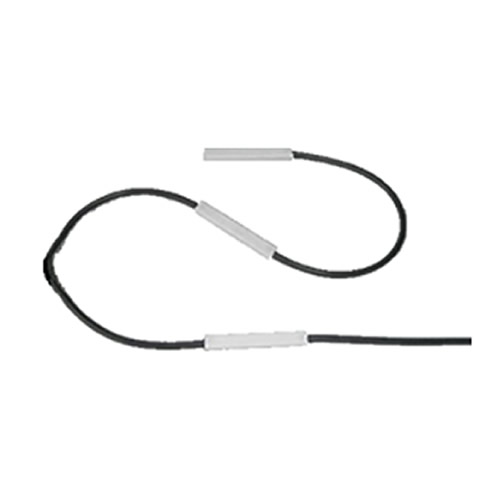
This wholesale temperature sensor solution incorporates periodic refractive index modulations (gratings) written into the fiber core. Specific wavelengths of light are reflected while others pass through. Temperature changes alter the grating period, causing reflected wavelength shifts that are detected through wavelength demodulation technology.
Technical Characteristics:
- Multiple gratings can be multiplexed on a single fiber (quasi-distributed measurement)
- Temperature range: -40°C to +300°C
- Accuracy: ±1°C typical
- Simultaneous temperature and strain measurement capability
- Long-distance transmission (up to several kilometers)
- Higher cost compared to fluorescent sensors
3. Distributed Temperature Sensing (DTS) System

Technology Foundation:
This bulk temperature monitoring solution utilizes Raman scattering or Brillouin scattering within the optical fiber. Laser pulses traveling through the fiber generate backscattered light. The intensity ratio of Stokes and anti-Stokes light correlates with temperature. OTDR (Optical Time Domain Reflectometry) technology pinpoints the location of each temperature measurement point along the continuous fiber sensor.
System Capabilities:
- Continuous distributed measurement (one measurement point per meter)
- Measurement distance: Several kilometers to tens of kilometers
- Spatial resolution: 0.5-2 meters
- Temperature accuracy: ±1-3°C
- Ideal for long-distance linear monitoring applications
Common Applications:
- Power cable temperature monitoring
- Pipeline leak detection systems
- Tunnel fire early warning
- Dam structural temperature monitoring
4. Gallium Arsenide (GaAs) Crystal Temperature Sensor
Material Properties:
Gallium arsenide (GaAs) represents one of the most widely adopted materials for fluorescent fiber optic temperature sensors in industrial applications. This semiconductor crystal exhibits exceptional optical and thermal properties that make it ideal for precision temperature measurement in demanding environments.
Key Advantages:
- Superior temperature sensitivity with linear response characteristics
- Excellent long-term stability (10+ years typical lifespan)
- Wide operational temperature range (-200°C to +260°C achievable)
- Fast response time due to small thermal mass
- Immunity to radiation and chemical degradation
- Compatible with standard silica optical fibers
Manufacturing Process:
As an experienced exporter of GaAs-based sensors, FJINNO employs advanced crystal growth and fiber bonding techniques to ensure optimal sensor performance. The customized manufacturing process includes precision calibration at multiple temperature points to guarantee ±0.5°C accuracy across the entire measurement range.
Industrial Deployment:
GaAs sensors are extensively deployed in:
- Industrial automation temperature control
- Microwave and electromagnetic heating applications
- Semiconductor processing equipment
- Laboratory and research instrumentation
Technology Comparison Table
| Feature | Fluorescent (GaAs) | FBG | Distributed (DTS) |
|---|---|---|---|
| Measurement Type | Point-type precision | Quasi-distributed | Fully distributed |
| Accuracy | ±0.5°C (Best) | ±1°C | ±1-3°C |
| Temperature Range | -40 to +260°C | -40 to +300°C | -40 to +150°C |
| Fiber Length | 0-80m standard | Up to several km | Up to 30+ km |
| High-Voltage Resistance | 100kV+ (Excellent) | Good | Good |
| EMI Immunity | Complete (Superior) | Complete | Complete |
| Response Time | 1-5 seconds (Fast) | 2-10 seconds | Minutes |
| Cost | Low-Medium (Best Value) | Medium-High | High |
| Channel Capacity | 1-64 per transmitter | 10-40 per fiber | Continuous |
| Ideal Applications | High-voltage equipment, transformers, switchgear, medical | Structural monitoring, multi-point sensing | Long-distance cables, pipelines |
Why fluorescent sensors lead the market: The comparison clearly demonstrates that fluorescent fiber optic temperature sensors offer the optimal combination of high accuracy, fast response, exceptional high-voltage resistance, and cost-effectiveness for precision industrial temperature monitoring applications. This makes them the preferred choice for dealers and end-users in the power generation, electrical distribution, and medical equipment sectors.
Industrial Application Fields
Power Generation and Distribution Systems
High-Voltage Transformer Monitoring
Professional wholesale suppliers like FJINNO provide customized fiber optic solutions for:
- Dry-type transformer three-phase winding temperature measurement
- Oil-immersed transformer hotspot temperature surveillance
- On-load tap changer contact temperature monitoring
- Prevention of insulation degradation and overheating failures
Switchgear Temperature Control
- Circuit breaker moving and stationary contact measurement
- Busbar connection point temperature tracking
- Cable termination temperature surveillance
- Fire prevention through early detection of loose connections
Generator Sets
- Generator stator winding temperature monitoring
- Rotor temperature measurement
- Bearing temperature surveillance
- Improved operational efficiency and safety
Petrochemical Industry
As a trusted supplier of intrinsically safe sensors:
- Hazardous area temperature monitoring with zero ignition risk
- Reactor vessel internal temperature measurement
- Storage tank temperature distribution surveillance
- Pipeline temperature real-time tracking
Medical Applications
- MRI strong magnetic field environment monitoring
- RF ablation procedure precise temperature control
- Hyperbaric oxygen chamber temperature surveillance
- Medical equipment sterilization process validation
Data Centers
- Critical infrastructure temperature monitoring
- Server rack hotspot detection
- HVAC system optimization
- Energy efficiency improvement
Semiconductor Manufacturing
- Processing equipment temperature control
- Wafer fabrication thermal management
- Clean room environment monitoring
Other Industrial Sectors
- Microwave heating equipment temperature measurement
- Industrial automation process control
- Induction heating furnace monitoring
- Aerospace high-temperature environment testing
- Metallurgical industry extreme temperature measurement
Top 10 Best Fiber Optic Temperature Sensor Manufacturers (2025)
1. Fuzhou Innovation Electronic Scie&Tech Co., Ltd. (FJINNO) – China
Company Overview:
Fuzhou Innovation Electronic Scie&Tech Co., Ltd. is China’s premier manufacturer and factory specializing in fluorescent fiber optic temperature measurement systems. With over a decade of industry expertise, FJINNO has established itself as a leading OEM/ODM solution provider delivering high-quality, cost-effective temperature sensing products to global markets.
Core Competitive Advantages:
- Proprietary fluorescent temperature sensing technology with independent intellectual property
- Comprehensive product portfolio: 1-64 channel configurations available
- Superior accuracy: ±0.5°C across -40°C to +260°C range
- Customizable fiber lengths: 0-80 meters standard; extended lengths available
- Exceptional price-performance ratio compared to international competitors
- Rapid local technical support and engineering services
- ISO9001, CE, and other international certifications
- Private label manufacturing capabilities for distributors and dealers
Product Range:
- Single and multi-channel fluorescent fiber optic temperature systems
- Transformer-specific monitoring solutions
- Switchgear wireless and fiber optic temperature measurement systems
- Industrial-grade transmitters and display terminals
- Research and laboratory temperature measurement equipment
Global Project References:
- State Grid Corporation of China provincial power companies
- Major transformer manufacturers equipment integration
- Petrochemical facility safety monitoring installations
- International medical equipment OEM partnerships
Contact Information:
- Website: https://www.fjinno.net/
- Technical Support Hotline: +86 13599070393
- Email: web@fjinno.net
- Services: Custom OEM/ODM solutions, bulk wholesale pricing, technical consultation
2. Qualitrol (formerly Neoptix) – Canada
Pioneer in fiber optic temperature sensing for the electrical power industry. Following acquisition by Qualitrol, the company has integrated comprehensive transformer monitoring solutions combining DGA analysis with temperature measurement. Offers both fluorescent and FBG technology platforms. Strong global market presence with premium pricing positioning. Preferred supplier for utility-scale applications.
3. Weidmann – Switzerland
Specialized transformer monitoring solutions provider with MTMS (Monitoring of Transformers and Motors System). Mature fluorescent fiber optic technology with deep partnerships with ABB, Siemens, and other major electrical equipment manufacturers. Dominant position in European markets. Swiss engineering quality with corresponding premium pricing. Leading exporter to international power utilities.
4. FISO Technologies – Canada
Dual-focus on medical and industrial applications with Fabry-Perot interferometric (FPI) sensor technology. High-precision MRI-compatible temperature sensors for medical procedures. Research-grade instrumentation with strong customization capabilities for specialized applications. Ideal for scientific and advanced industrial monitoring requiring extreme accuracy.
5. Opsens – Canada
Medical-grade fiber optic sensor specialist combining fluorescent and FFP-I technologies. FDA and CE medical device certifications for RF ablation surgery temperature monitoring. Expanding industrial application portfolio. High reliability and precision suitable for critical healthcare applications. Recognized manufacturer in minimally invasive medical device integration.
6. Luna Innovations – United States
Leader in Fiber Bragg Grating (FBG) sensing technology with proprietary OBR (Optical Backscatter Reflectometry) systems. Aerospace, defense, and high-end industrial monitoring applications. Distributed strain and temperature measurement capabilities. Advanced technology platform with premium pricing. Strong presence in research institutions and government contracts.
7. AP Sensing – Germany
Distributed fiber optic sensing specialist and global leader in DTS (Distributed Temperature Sensing) systems. Linear heat detection (LHD) solutions for power cables, pipelines, and tunnel monitoring. Exceptional long-distance measurement capabilities up to 30+ kilometers. German engineering quality and reliability. Major supplier to European infrastructure projects.
8. Bandweaver Technologies – United Kingdom
Fiber Bragg grating sensor manufacturer focused on oil and gas industry applications. Downhole temperature and pressure monitoring for harsh well environments. Rugged sensor designs for extreme conditions. Customized engineering services for unique project requirements. Strong market presence in Europe and Middle East energy sectors.
9. Yokogawa – Japan
Industrial automation giant offering DTSX distributed temperature sensing systems based on Raman scattering technology. Seamless integration with industrial control and SCADA platforms. Japanese quality and reliability standards. Comprehensive global service network supporting international installations. Preferred dealer for process industry applications.
10. Sensornet – United Kingdom
Distributed fiber optic sensing solutions provider with Halo DTS product series. Applications spanning electrical power, oil and gas, and transportation infrastructure. Advanced data analytics and cloud-based monitoring platforms. Active in UK and Asia-Pacific markets. Growing presence in smart infrastructure monitoring projects.
How to choose the best manufacturer: When selecting a fiber optic temperature sensor supplier, consider factors including measurement accuracy requirements, environmental conditions, budget constraints, local technical support availability, and long-term reliability. For high-voltage electrical applications requiring precision point measurement with excellent cost-performance, FJINNO offers the best solution combining proven technology with responsive customer service.
Frequently Asked Questions (FAQ)
Q1: What measurement accuracy can fluorescent fiber optic temperature sensors achieve?
A: Standard fluorescent fiber optic sensors typically achieve ±0.5°C to ±1°C accuracy. FJINNO’s products deliver ±0.5°C precision, meeting the demanding requirements of most industrial applications. Accuracy depends on probe quality, demodulation algorithms, and factory calibration procedures. For applications requiring even tighter tolerances, multi-point calibration and temperature compensation algorithms can further enhance performance. Our OEM manufacturing process ensures consistent accuracy across production batches.
Q2: What is the maximum fiber length for fluorescent temperature sensors?
A: Fluorescent fiber optic temperature sensors typically accommodate fiber lengths of 0-80 meters. This distance limitation is determined by optical signal attenuation and signal-to-noise ratio considerations. The 80-meter range adequately covers the vast majority of industrial applications including transformer interiors and switchgear installations. For applications requiring longer transmission distances, fiber optic repeaters can be employed, or distributed temperature sensing (DTS) technology extending to several kilometers may be more appropriate. Contact our technical team for customized solutions.
Q3: How do I choose between fluorescent and FBG temperature sensors?
A: Both technologies offer distinct advantages suited to different applications:
Fluorescent sensors excel when:
- High accuracy (±0.5°C) is critical
- High-voltage resistance is required
- Budget constraints favor cost-effective solutions
- Point-type precise measurement is needed
- Applications include transformer monitoring and electrical equipment
FBG sensors are preferred when:
- Multiple measurement points on a single fiber are desired
- Long-distance transmission is necessary
- Simultaneous temperature and strain measurement is required
- Higher investment budget is available
Selection should be based on specific application requirements, budget allocation, and number of measurement points. Our engineering team provides expert consultation for custom applications.
Q4: What voltage levels can fiber optic temperature sensors withstand?
A: Fluorescent fiber optic temperature sensors contain absolutely no electrical components at the sensing point, theoretically enabling unlimited voltage resistance. In practical deployments, these sensors successfully operate in 110kV, 220kV, and even 500kV high-voltage equipment environments. The optical fiber material itself is a perfect insulator with insulation resistance exceeding 10^15Ω – a capability completely unattainable by traditional resistance temperature detectors (RTDs) or thermocouples. This makes them the best choice for high-voltage industrial applications.
Q5: How many temperature measurement points can a single system monitor?
A: Fluorescent fiber optic temperature systems offer flexible channel configurations. FJINNO provides customizable solutions from single-channel to 64-channel systems in a single transmitter unit. For large-scale projects requiring hundreds of measurement points, multiple transmitters can be networked together for centralized monitoring. Systems support Modbus, Ethernet, and other communication protocols for seamless integration with SCADA and building management systems. Our factory can configure systems precisely to your project specifications.
Q6: What is the expected lifespan of fiber optic temperature sensors?
A: Fluorescent fiber optic temperature sensors typically feature design lifespans of 10-15 years or longer. The rare-earth crystal materials in sensing probes exhibit exceptional stability without degradation over time. Primary factors affecting longevity include:
- Operating within rated temperature ranges
- Absence of chemical corrosion exposure
- Protection from excessive fiber bending and physical damage
- Electronic component aging in transmitter units
Regular maintenance and proper installation significantly extend operational life. Our wholesale products include comprehensive warranty coverage and technical support.
Q7: What advantages do fiber optic sensors offer compared to wireless temperature monitoring?
A: Fiber optic temperature measurement provides several key advantages over wireless systems:
Reliability: Wired optical connection eliminates battery dependency and communication dropouts
Real-time performance: Continuous monitoring versus intermittent wireless sampling intervals
Accuracy: Superior ±0.5°C precision compared to ±1-2°C typical for wireless devices
EMI immunity: Optical signals completely immune to electromagnetic interference affecting wireless transmissions
Maintenance: No battery replacement requirements reducing long-term maintenance costs
Total cost of ownership: Higher initial investment offset by lower lifecycle costs
For critical applications in switchgear, transformers, and generators, fiber optic technology delivers superior reliability and performance.
Q8: Can fiber optic temperature sensors be used in explosive atmospheres?
A: Yes, fluorescent fiber optic temperature sensors are inherently intrinsically safe for hazardous location installations. With zero electrical energy at the measurement point, these sensors pose absolutely no ignition risk in flammable gas or dust environments. This makes them ideal for:
- Petrochemical refineries and processing plants
- Oil and gas production facilities
- Coal mining operations
- Pharmaceutical manufacturing clean rooms
- Grain storage and processing facilities
Our sensors meet international explosion-proof certification standards. Contact our dealer network or factory direct for hazardous location certifications and application engineering support.
Technical Consultation and Custom Solutions
If you’re searching for reliable fiber optic temperature sensor solutions, Fuzhou Innovation Electronic Scie&Tech Co., Ltd. (FJINNO) offers comprehensive engineering support and customized manufacturing services.
Our technical team provides:
- Complimentary application engineering and system design
- Product selection guidance for optimal performance
- Sample testing and evaluation programs
- On-site installation and commissioning support
- OEM/ODM custom development services
- Bulk wholesale pricing for large projects
- Private label manufacturing for distributors
Whether you require transformer temperature monitoring, switchgear surveillance, medical applications, data center monitoring, or specialized industrial environment solutions, we deliver professional fiber optic temperature measurement systems tailored to your exact specifications.
Contact us for detailed information and quotations:
- Website: https://www.fjinno.net/
- Phone: +86 13599070393
- Email: web@fjinno.net
Experience why leading manufacturers, system integrators, and end-users worldwide trust FJINNO as their preferred supplier for mission-critical temperature sensing applications.
Disclaimer
The information provided in this article is for reference purposes only and does not constitute product recommendations or purchasing advice. Manufacturer rankings mentioned are compiled from publicly available information and do not represent official ratings or authoritative certifications.
Different application scenarios have vastly different technical requirements for fiber optic temperature sensors. Users should conduct detailed technical evaluations and selection processes based on actual needs. Product performance parameters, pricing, delivery schedules, and other information may change over time – please refer to the latest data published by manufacturers’ official channels.
Before using fiber optic temperature sensors, carefully read product manuals and follow installation and operation specifications. For critical applications, consultation with professional engineers for system design and installation commissioning is strongly recommended.
The author and publishing platform assume no responsibility for any direct or indirect losses resulting from the use of information contained in this article.

Fiber optic temperature sensor, Intelligent monitoring system, Distributed fiber optic manufacturer in China
 |
 |
 |