 INNO fibre optic temperature sensors ,temperature monitoring systems.
- Fiber optic temperature sensors offer complete electrical isolation and immunity to electromagnetic interference, making them ideal for high-voltage environments
- Three main technologies: fluorescent fiber optic temperature sensors, FBG optical sensors, and distributed temperature sensing (DTS) systems
- Critical applications include transformer hot spot monitoring, generator stator monitoring, GIS equipment, switchgear, and medical devices
- Fiber optic temperature measurement provides superior safety and reliability compared to conventional electronic sensors
- Professional manufacturer with 13+ years of experience serving 60+ countries worldwide
1. Understanding Fiber Optic Temperature Monitoring
1.1 What is Fiber Optic Temperature Monitoring

Fiber optic temperature monitoring represents a revolutionary approach to temperature measurement that utilizes light transmission through optical fibers rather than electrical signals. Unlike conventional electronic temperature sensors, optical temperature sensors are completely immune to electromagnetic interference (EMI) and radio frequency interference (RFI), making them the preferred choice for challenging industrial environments.
The technology behind fiber optic temperature measurement is fundamentally different from traditional thermocouples or RTDs (Resistance Temperature Detectors). While conventional sensors rely on electrical properties that change with temperature, fiber optic temperature sensors use optical properties—such as fluorescence lifetime, wavelength shift, or light scattering—to determine temperature with exceptional accuracy.
In modern power systems, fiber optic solutions for temperature monitoring have become essential for ensuring equipment reliability and preventing catastrophic failures. The technology has evolved significantly since its introduction, now offering measurement ranges from -40°C to 260°C with accuracy levels reaching ±0.5°C.
1.2 Unique Advantages of Fiber Optic Temperature Sensors

The adoption of fiber optic temperature sensors in critical applications stems from several compelling advantages:
Complete Electrical Isolation: Fiber optic temperature probes contain no metallic components in the sensing area, providing absolute electrical isolation between the measurement point and the monitoring equipment. This characteristic is invaluable in high-voltage environments where conventional sensors would create safety hazards or measurement errors.
Immunity to Electromagnetic Interference: Optical temperature sensors remain unaffected by strong electromagnetic fields, making them ideal for applications near generators, transformers, switchgear, and other high-power electrical equipment. This immunity ensures consistent, reliable measurements where traditional sensors would fail or provide erratic readings.
Intrinsic Safety: In hazardous locations where explosive gases or flammable materials are present, fiber optic temperature monitoring systems offer intrinsic safety. The optical nature of the technology eliminates any risk of ignition, as no electrical current flows through the sensing element.
Long-Distance Signal Transmission: Fiber optic temperature measurement systems can transmit signals over distances up to 80 meters (for fluorescent systems) or even several kilometers (for distributed systems) without signal degradation or the need for repeaters.
High Accuracy and Stability: Modern fiber optic temperature sensors deliver measurement accuracy of ±0.5°C to ±1°C, with excellent long-term stability. The optical measurement principle is less susceptible to drift compared to electronic sensors, reducing calibration requirements.
Corrosion Resistance: Fiber optic temperature probes can be manufactured with chemically inert materials, making them suitable for corrosive environments where metallic sensors would degrade rapidly.
1.3 Why Fiber Optic Temperature Monitoring is Essential
The necessity for fiber optic solutions for temperature monitoring becomes apparent when examining the consequences of equipment overheating. In the power industry alone, thermal failures account for a significant percentage of transformer failures, generator outages, and switchgear incidents. These failures result in:
Equipment damage requiring costly repairs or replacement, unplanned outages affecting power supply reliability, safety risks to personnel and facilities, and substantial economic losses from downtime and emergency maintenance.
Traditional temperature monitoring methods face critical limitations in high-voltage environments. Conventional thermocouples and RTDs introduce grounding issues, create potential paths for fault currents, suffer from EMI-induced measurement errors, and require complex isolation systems that add cost and complexity.
Modern smart grid initiatives demand more sophisticated monitoring capabilities. Transformer hot spot monitoring, real-time thermal management, predictive maintenance programs, and asset health assessment all require the accuracy, reliability, and safety that only fiber optic temperature monitoring can provide in high-voltage applications.
2. How Fiber Optic Temperature Sensors Work
2.1 Fluorescent Fiber Optic Temperature Measurement Principle

Fluorescent fiber optic temperature sensors operate on the principle that certain rare-earth materials exhibit temperature-dependent fluorescence decay characteristics. When these materials are excited by light pulses, they emit fluorescence with a decay time that varies predictably with temperature.
The sensing process begins when the system sends short pulses of excitation light through the optical fiber to a specialized probe tip containing rare-earth phosphor material. This material absorbs the excitation energy and re-emits it as fluorescence. The critical measurement parameter is not the intensity of this fluorescence, but rather its decay time—the rate at which the fluorescent emission decreases after the excitation pulse ends.
As temperature increases, the fluorescence decay time decreases in a well-characterized, repeatable manner. The fiber optic temperature measurement system precisely measures this decay time and converts it to a temperature reading using calibrated algorithms. Because the measurement depends on timing rather than light intensity, fluorescent fiber optic temperature probes are inherently immune to optical losses in the fiber, connector degradation, or light source variations.
This technology excels in high-voltage environments because the fiber optic temperature probe contains absolutely no metallic or conductive materials. The probe tip consists only of the optical fiber and the phosphor sensing element, typically sealed in a chemically inert, dielectric housing. This design makes fluorescent sensors particularly suitable for transformer hot spot monitoring and other applications where electrical isolation is paramount.
2.2 Fiber Bragg Grating (FBG) Temperature Measurement Principle
FBG optical temperature sensors utilize a different physical principle based on wavelength-selective reflection. A Fiber Bragg Grating is a periodic modulation of the refractive index within the core of an optical fiber. When broadband light is transmitted through the fiber, the grating reflects a very narrow wavelength band while allowing all other wavelengths to pass through.
The key to temperature measurement lies in the fact that the reflected wavelength (known as the Bragg wavelength) shifts predictably with temperature changes. As the fiber optic temperature probe heats up or cools down, thermal expansion and the thermo-optic effect cause the grating period to change, which in turn shifts the reflected wavelength.
Modern fiber optic temperature monitoring systems using FBG technology can interrogate multiple gratings written at different positions along a single fiber. Each grating is designed to reflect a slightly different wavelength, allowing the system to distinguish between sensors and measure temperature at numerous points simultaneously. This wavelength division multiplexing capability makes FBG sensors highly efficient for applications requiring many measurement points.
The precision of FBG fiber optic temperature measurement depends on the accuracy of wavelength detection, typically achieved using optical spectrum analyzers or specialized interrogation units. Temperature resolution of 0.1°C is readily achievable with quality instrumentation.
2.3 Distributed Fiber Optic Temperature Measurement Principle
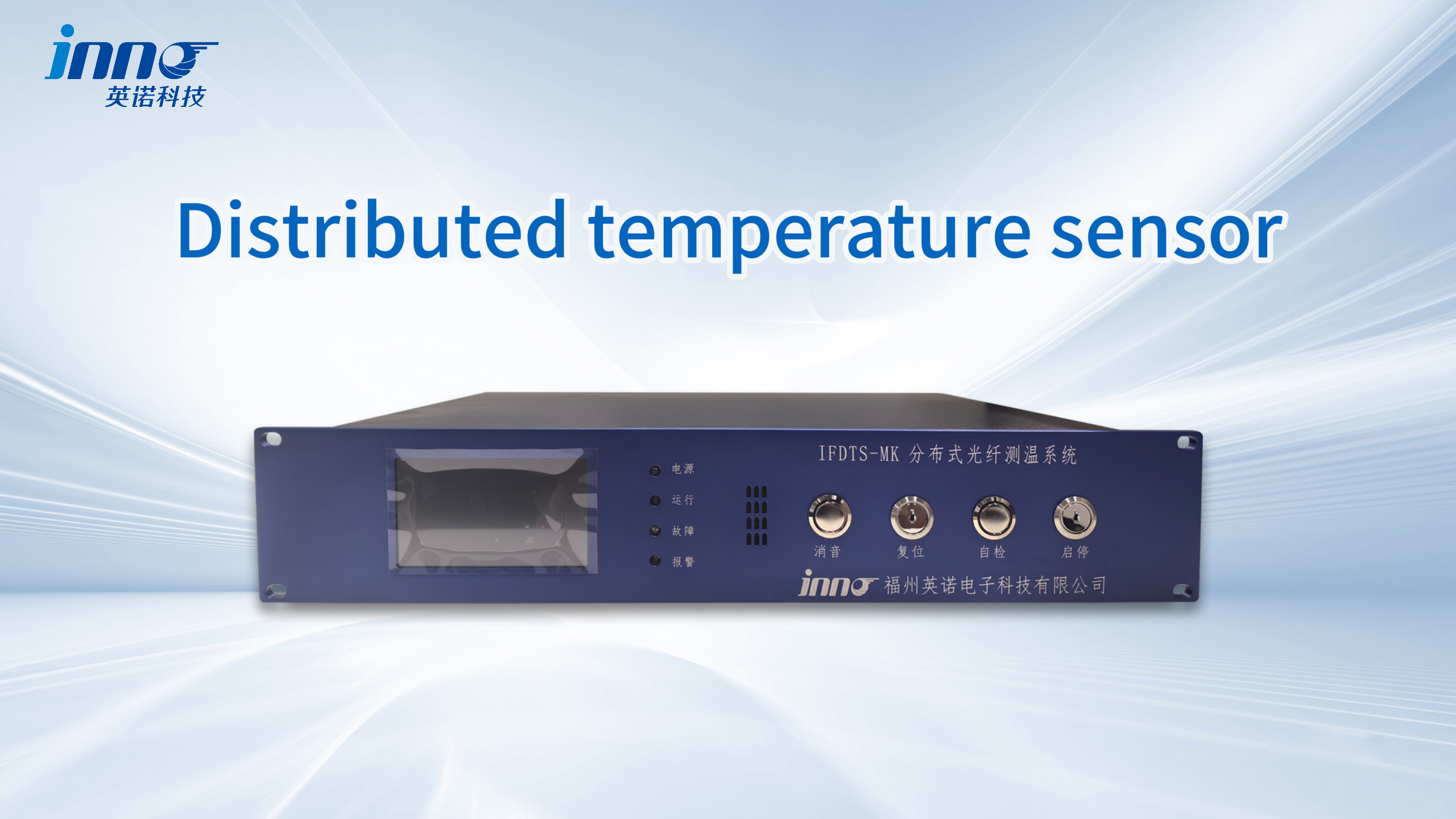
Distributed Temperature Sensing (DTS) represents the most advanced form of fiber optic temperature monitoring, capable of measuring temperature continuously along the entire length of an optical fiber, potentially spanning dozens of kilometers.
DTS technology relies on Raman scattering, a phenomenon where light interacts with molecular vibrations in the fiber. When laser pulses are launched into the fiber, a tiny fraction of the light undergoes Raman scattering, producing two distinct spectral components: Stokes and anti-Stokes. The intensity ratio of these components is temperature-dependent.
By employing Optical Time Domain Reflectometry (OTDR) principles, the DTS system can determine both the temperature and the location along the fiber where the scattering occurred. The time delay between the transmitted pulse and the received scattered light indicates the distance to the measurement point, while the Stokes/anti-Stokes ratio reveals the temperature at that location.
This fiber optic solution for temperature monitoring effectively transforms the entire optical fiber into a continuous array of temperature sensors. Spatial resolution—the ability to distinguish temperature at closely spaced locations—typically ranges from 0.5 to 2 meters, while temperature accuracy is generally ±1°C.
3. Types of Fiber Optic Temperature Measurement Systems
3.1 Fluorescent Fiber Optic Temperature Sensor Systems

Fluorescent fiber optic temperature sensor systems represent the gold standard for point temperature measurement in high-voltage electrical equipment. These systems excel in applications where precise monitoring of specific locations is required, such as transformer hot spot monitoring, generator stator windings, and GIS equipment.
The technology offers several configuration options. Single-channel systems monitor one critical point with a dedicated fiber optic temperature probe, ideal for small transformers or individual equipment items. Multi-channel systems can simultaneously monitor 3, 6, 9, 12, or more measurement points using independent optical channels, each with its own fluorescent fiber optic temperature probe.
Technical capabilities include measurement ranges from -40°C to 260°C, accuracy of ±0.5°C to ±1°C depending on the model, response times under 1 second for rapid temperature change detection, and transmission distances up to 80 meters from the probe to the monitoring unit. The systems typically feature multiple communication interfaces (RS-485, Ethernet, Modbus) for integration into SCADA systems or other monitoring platforms.
The inherent advantages of fluorescent fiber optic temperature measurement make it the preferred technology for electrical utilities and industrial facilities worldwide. The complete absence of metal in the sensing area eliminates any possibility of affecting the electromagnetic field or introducing conductive paths in high-voltage environments.
3.2 Fiber Bragg Grating (FBG) Temperature Sensor Systems
FBG optical temperature sensor systems provide quasi-distributed temperature measurement capabilities, combining the precision of point sensors with the efficiency of serial multiplexing. A single optical fiber can support 20 or more FBG sensors, each measuring temperature at a specific location along the fiber path.
These fiber optic temperature monitoring systems find applications in scenarios requiring numerous measurement points distributed across equipment or facilities. Cable joints, busbar connections, and industrial processes often benefit from the multiplexing capability that reduces installation complexity and cost compared to installing individual sensors.
System configurations typically include 4-channel, 8-channel, or 16-channel interrogation units. Each channel can support multiple FBG sensors through wavelength division multiplexing. The technology delivers measurement accuracy of ±1°C, response times under 2 seconds, and transmission distances up to 10 kilometers in some configurations.
FBG fiber optic temperature probes can be designed for various mounting methods: surface-mounted sensors that attach directly to equipment surfaces, embedded sensors integrated into composite structures during manufacturing, and specialized designs for specific industrial applications.
3.3 Distributed Fiber Optic Temperature Monitoring Systems (DTS)
Distributed Temperature Sensing systems represent the ultimate solution for continuous, linear temperature monitoring over long distances. Unlike point sensors that measure at discrete locations, DTS fiber optic temperature measurement provides a complete temperature profile along the entire fiber length.
These systems find applications in scenarios requiring comprehensive thermal surveillance: cable tunnels where overheating can occur anywhere along lengthy routes, pipeline leak detection using temperature anomalies as indicators, perimeter security systems detecting intrusion through thermal signatures, and fire detection in tunnels, warehouses, or industrial facilities.
System capabilities vary by model and application requirements. Standard systems might measure distances of 8 to 15 kilometers with spatial resolution of 1 to 2 meters and temperature accuracy of ±1°C. Advanced systems can extend to 30 kilometers or more, though with some trade-offs in spatial resolution or measurement time.
The fiber optic solution for temperature monitoring offered by DTS technology includes both single-mode and multi-mode fiber options. Installation typically involves armored sensing cables designed for harsh environments, or standard telecommunications-grade fiber for less demanding applications.
3.4 Fiber Optic Temperature Measurement Technology Comparison
| Technology Type | Measurement Type | Distance | Accuracy | Response Time | Typical Applications |
|---|---|---|---|---|---|
| Fluorescent Fiber Optic Temperature Sensors | Point / Multi-point | Up to 80m | ±0.5°C | <1s | Transformer hot spot, generator stator, GIS |
| FBG Optical Temperature Sensors | Quasi-distributed | Up to 10km | ±1°C | <2s | Cable joints, busbar monitoring |
| Distributed DTS | Continuous | Up to 30km | ±1°C | <30s | Cable tunnels, pipeline monitoring |
4. Fiber Optic Temperature Probe Solutions Guide
4.1 Fluorescent Fiber Optic Temperature Probes
Fluorescent fiber optic temperature probes are available in various designs optimized for specific applications and installation requirements. Standard probes feature rugged construction suitable for most industrial environments, with protective housings rated for the full temperature range of -40°C to 260°C.
High-temperature variants of fiber optic temperature probes utilize specialized materials and construction techniques to maintain accuracy at elevated temperatures. These probes are essential for applications such as generator stator monitoring where winding temperatures may approach or exceed 200°C during normal operation.
Miniature optical temperature sensors address space-constrained applications. With probe diameters as small as 2-3mm, these sensors can be installed in locations inaccessible to larger instruments. Despite their compact size, they maintain the accuracy and reliability characteristics of standard probes.
Custom probe designs accommodate unique application requirements. Our engineering team collaborates with customers to develop specialized fiber optic temperature probes featuring custom lengths, mounting configurations, protective housings, or environmental sealing for particularly challenging installations.
4.2 FBG Fiber Optic Temperature Probes
FBG fiber optic temperature sensors come in several form factors suited to different mounting scenarios. Standard package designs protect the optical fiber and grating while facilitating straightforward installation using adhesives, mechanical clamps, or welding.
Surface-mount FBG temperature probes feature flat profiles that maximize thermal contact with equipment surfaces. These sensors are commonly used for monitoring cable joints, transformer tanks, or other applications where the sensor must be attached to an existing surface.
Embedded sensors can be integrated into composite materials during manufacturing, enabling structural health monitoring that simultaneously tracks temperature and mechanical strain. This dual-parameter capability distinguishes FBG technology from other fiber optic temperature measurement approaches.
4.3 Distributed Temperature Sensing Cables
For distributed fiber optic temperature monitoring applications, the sensing cable selection significantly impacts system performance and longevity. Armored sensing cables provide mechanical protection and durability in harsh environments, featuring stainless steel or aluminum armor over the optical fiber core. These cables withstand physical stress, moisture, and chemical exposure.
Non-armored sensing cables offer flexibility and ease of installation for indoor or protected environments. Standard telecommunications-grade fiber can serve as the sensing element when environmental conditions are not severe.
Cable installation methods vary by application: direct burial for underground monitoring, cable tray mounting in tunnels or buildings, attachment to pipelines or other infrastructure, and integration into specialized assemblies for particular industrial processes.
4.4 Fiber Optic Temperature Monitoring System Hosts
The monitoring system host provides the intelligence behind fiber optic temperature monitoring. These units generate the optical signals, receive and process the returned information, convert optical data to temperature readings, and communicate results to operators or control systems.
Single-channel systems offer economical solutions for monitoring individual critical points. Multi-channel systems scale from a few channels to dozens, supporting comprehensive monitoring of complex equipment or facilities. Modern systems feature advanced capabilities including alarm functions with programmable thresholds, data logging and trending, multiple communication protocols (Modbus RTU/TCP, DNP3, IEC 61850), web-based interfaces for remote access, and integration with SCADA or DCS systems.
5. Applications and Industry Solutions
5.1 Transformer Hot Spot Monitoring

Transformer hot spot monitoring represents one of the most critical applications for fiber optic temperature sensors. Power transformers are essential assets in electrical grids, and their thermal management directly impacts reliability, lifespan, and safety.
The hottest spot in a transformer—typically located in the high-voltage winding—determines the transformer’s thermal limits and aging rate. However, this hot spot location is difficult to measure with conventional sensors due to the extreme high-voltage environment and electromagnetic fields present inside the transformer tank.
Fluorescent fiber optic temperature probes solve this challenge elegantly. Their complete electrical isolation allows direct installation in transformer windings without creating conductive paths or disturbing the electromagnetic field. The optical temperature sensors provide accurate, real-time hot spot temperature data that enables optimal loading strategies, prevents thermal damage, and supports predictive maintenance programs.
Implementation of fiber optic temperature monitoring in oil-filled transformers worldwide has demonstrated significant value. Utilities report improved asset utilization through confident loading to true thermal limits, extended transformer lifespan by avoiding thermal stress, reduced failure risk through early detection of abnormal heating, and enhanced safety by preventing catastrophic failures.
5.2 Generator Stator Temperature Monitoring
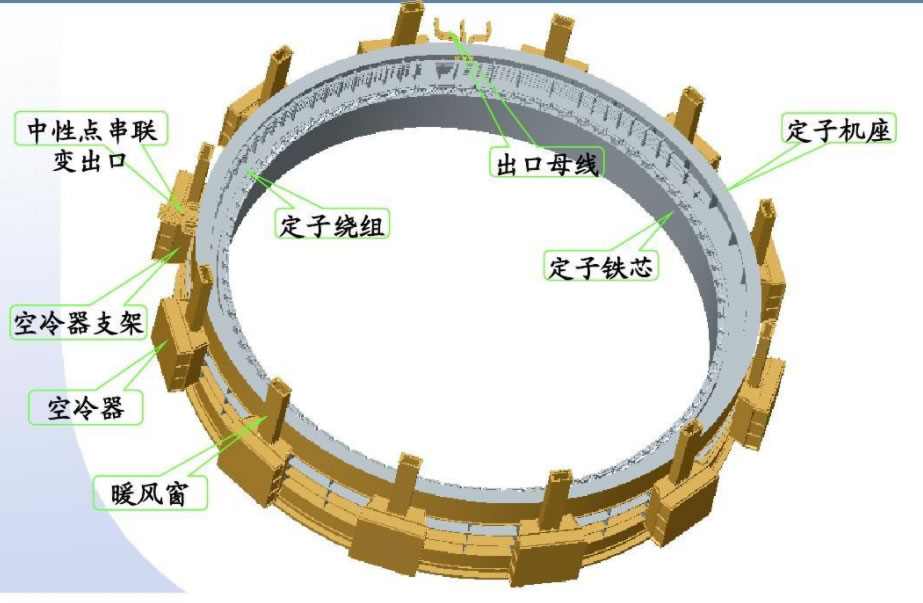
Generator stator windings operate in challenging thermal and electromagnetic environments. Monitoring stator temperature is essential for preventing insulation damage, optimizing generator loading, and avoiding forced outages. However, the high voltages and intense electromagnetic fields make this a demanding measurement application.
Fluorescent fiber optic temperature measurement systems provide ideal solutions for generator stator monitoring. The complete EMI immunity ensures accurate measurements despite the intense electromagnetic environment. The high-temperature capability accommodates normal operating temperatures that may exceed 150°C, while the fast response time enables detection of rapid thermal transients.
Global installations in generators ranging from small industrial units to large utility-scale machines demonstrate the reliability of fiber optic temperature sensors in this application. The technology has proven particularly valuable for hydrogen-cooled generators where the explosive atmosphere requires intrinsically safe instrumentation.
5.3 GIS Equipment Temperature Monitoring
Gas Insulated Switchgear (GIS) combines high-voltage switching equipment in compact, gas-filled enclosures. While GIS offers many advantages, the enclosed design makes temperature monitoring challenging yet critical, as overheating contacts or connections can lead to gas decomposition and equipment failure.
Fluorescent fiber optic temperature probes can be installed directly at GIS contacts and connection points, providing continuous monitoring of these critical locations. The small sensor size accommodates the limited space available within GIS enclosures, while the dielectric nature of the fiber optic temperature monitoring system maintains the integrity of the gas insulation.
Substations worldwide have implemented optical temperature sensors in GIS installations, significantly reducing the risk of unexpected failures and enabling condition-based maintenance strategies that optimize inspection intervals and maintenance costs.
5.4 High Voltage Switchgear Temperature Monitoring
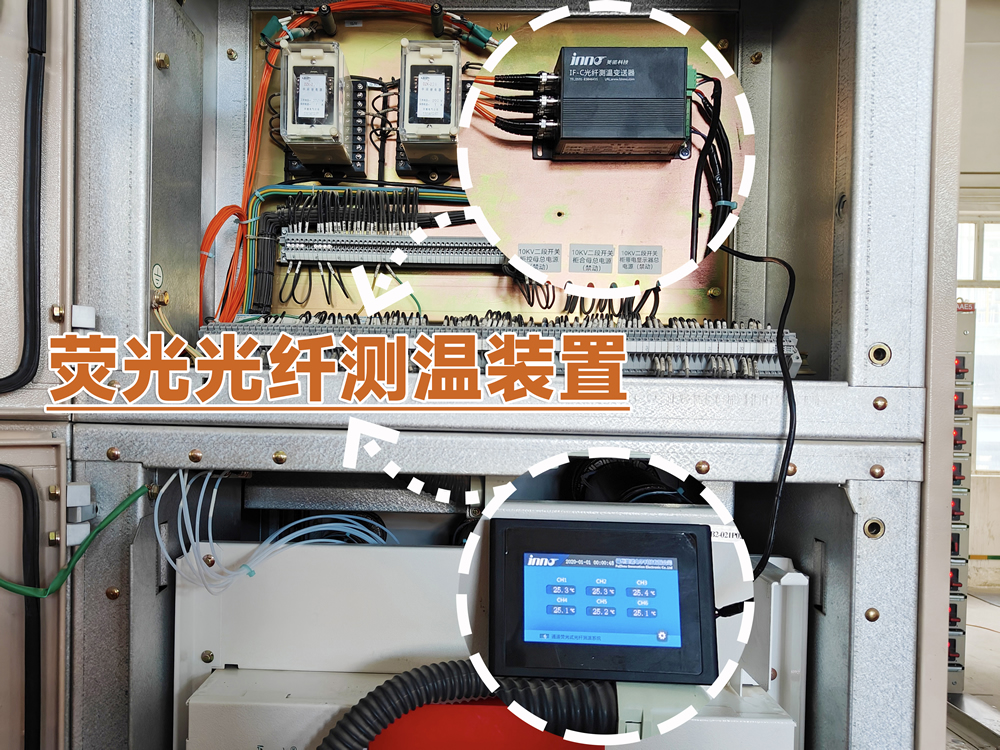
High-voltage switchgear houses circuit breakers, disconnect switches, and busbars that carry substantial electrical currents. Thermal issues at connections and contacts represent a leading cause of switchgear failures, potentially resulting in fires, equipment damage, and power outages.
Fiber optic temperature monitoring systems for switchgear applications provide early warning of developing problems. Fluorescent fiber optic temperature sensors can monitor individual contacts, busbar joints, and cable connections throughout the switchgear assembly. The wireless communication capabilities available with modern systems eliminate the need to route cables from high-voltage compartments, simplifying installation and improving safety.
Electrical utilities and industrial facilities globally have deployed thousands of fiber optic temperature probes in medium and high-voltage switchgear, reporting dramatic reductions in thermally-related failures and improved overall system reliability.
5.5 Cable Tunnel and Cable Duct Monitoring
Power cable tunnels and ducts present unique monitoring challenges due to their linear geometry and extended length. Overloading, insulation degradation, or poor joints can cause localized heating anywhere along the cable route, making comprehensive monitoring essential yet difficult with point sensors.
Distributed fiber optic temperature measurement systems provide comprehensive coverage of cable routes. A single sensing cable installed alongside power cables monitors temperature continuously along the entire length, detecting hot spots regardless of location. The spatial resolution enables precise localization of thermal anomalies for targeted investigation and maintenance.
Major cities worldwide have implemented DTS fiber optic temperature monitoring in critical cable tunnels, gaining early warning of developing problems before they escalate to cable failures. The systems support dynamic cable rating strategies that optimize power transmission capacity while maintaining thermal safety margins.
5.6 Medical Equipment Temperature Monitoring
Medical applications present unique requirements for temperature monitoring. MRI (Magnetic Resonance Imaging) machines generate extremely strong magnetic fields that make conventional electronic sensors completely unsuitable. Microwave ablation therapy requires precise temperature monitoring for treatment effectiveness and patient safety, but the radiofrequency energy interferes with traditional sensors.
Fiber optic temperature sensors solve these challenges through their complete immunity to electromagnetic and radiofrequency interference. Fluorescent fiber optic temperature probes function reliably in the most intense magnetic fields, containing no ferromagnetic materials that would be affected by or distort the magnetic field.
Leading medical equipment manufacturers and healthcare facilities globally have adopted optical temperature sensors for MRI machine monitoring, hyperthermia treatment systems, and other applications where conventional sensors fail. The technology’s safety profile and accuracy make it particularly well-suited to medical environments where patient safety is paramount.
5.7 Railway Transportation Applications
Railway systems depend on reliable electrical equipment for traction power and signaling. Traction transformers onboard locomotives and in substations, contact wire systems that deliver power to trains, and tunnel fire detection systems all benefit from fiber optic temperature monitoring.
The vibration resistance and mechanical durability of properly installed fiber optic temperature sensors suit the demanding railway environment. Global railway operators have deployed these systems for transformer monitoring, overhead contact line temperature surveillance, and tunnel safety systems, improving reliability and safety across rail networks.
6. Selection Guide and Technical Specifications
6.1 Selection Based on Application Scenarios
Choosing the appropriate fiber optic temperature measurement technology depends primarily on the application requirements. For single-point or few measurement points, fluorescent fiber optic temperature sensors offer optimal accuracy, fast response, and straightforward installation. Applications like transformer hot spot monitoring, generator stator monitoring, or GIS contact monitoring typically fall into this category.
For multiple dispersed measurement points, FBG optical temperature sensors provide efficient coverage through their multiplexing capability. Cable joint monitoring, busbar monitoring across switchgear, or process monitoring with numerous points benefit from FBG technology’s ability to support many sensors on a single fiber.
For long-distance continuous monitoring, distributed fiber optic temperature monitoring systems deliver comprehensive coverage. Cable tunnels, pipelines, perimeter security, and fire detection applications requiring linear temperature profiles are ideal DTS applications.
For high-temperature environments exceeding 200°C, specialized high-temperature fiber optic temperature probes maintain accuracy and reliability where standard sensors reach their limits. For high-voltage environments, both fluorescent and FBG optical temperature sensors provide the electrical isolation essential for safe, accurate measurement.
6.2 Selection Based on Accuracy Requirements
Measurement accuracy requirements guide technology selection. Applications demanding high precision (±0.5°C) such as critical transformer monitoring or generator protection benefit from fluorescent fiber optic temperature measurement systems. These applications often involve thermal models or protection algorithms where measurement accuracy directly impacts decision-making.
Standard accuracy applications (±1°C) including general equipment monitoring, trending analysis, or alarm functions can utilize either FBG optical temperature sensors or distributed temperature sensing systems. The ±1°C accuracy suffices for detecting abnormal temperature rises and supporting maintenance decisions.
Temperature trend monitoring focused on detecting changes rather than absolute values can accept the standard accuracy of DTS systems while benefiting from their comprehensive spatial coverage.
6.3 Selection Based on Environmental Conditions
Environmental factors significantly influence fiber optic temperature sensor selection. Strong electromagnetic interference environments such as near generators, switchgear, or induction heating equipment require the complete EMI immunity that all fiber optic temperature probes provide, though fluorescent and FBG sensors are most commonly used for point measurements in these locations.
Hazardous locations with explosive gases or flammable materials demand the intrinsic safety of optical temperature sensors. The absence of electrical current in the sensing element eliminates ignition risks, making these sensors suitable for oil and gas, chemical processing, and similar industries.
Corrosive environments benefit from fiber optic temperature probes constructed with chemically resistant materials. Unlike metallic sensors that corrode, properly specified optical sensors maintain their integrity and accuracy in aggressive chemical environments.
High-vibration environments require robust sensor mounting and strain relief. Ruggedized fiber optic temperature monitoring systems designed for railway, industrial, or mobile applications provide the mechanical durability needed for reliable long-term operation.
6.4 Technical Specifications Overview
Fluorescent Fiber Optic Temperature Sensor Systems:
- Temperature Range: -40°C to +260°C
- Accuracy: ±0.5°C to ±1°C
- Response Time: <1 second
- Distance: Up to 80 meters per channel
- Channels: 1 to 12+ per system
- Communication: RS-485, Ethernet, Modbus RTU/TCP
FBG Optical Temperature Sensor Systems:
- Temperature Range: -40°C to +180°C (standard)
- Accuracy: ±1°C
- Response Time: <2 seconds
- Distance: Up to 10 km
- Sensors per Fiber: 20+ FBG sensors
- Channels: 4, 8, or 16 channel systems
Distributed Temperature Sensing Systems:
- Temperature Range: -40°C to +150°C (fiber dependent)
- Accuracy: ±1°C
- Spatial Resolution: 0.5m to 2m
- Distance: 8km to 30km+ depending on model
- Measurement Time: 10s to 60s per scan
7. Installation Overview
7.1 Fiber Optic Temperature Probe Installation
Proper installation of fiber optic temperature probes ensures accurate measurements and long-term reliability. Location selection is critical—sensors must be positioned to measure the temperature of interest while avoiding areas subject to mechanical damage or environmental extremes beyond the sensor’s specifications.
For fluorescent fiber optic temperature sensors in transformer applications, probes are typically installed directly in the winding using guides provided during transformer assembly. In generator stator applications, probes are embedded between windings or secured to end windings using high-temperature retention methods.
Secure sensor mounting prevents vibration-induced damage and maintains thermal contact with the monitored equipment. Avoid excessive bending of the optical fiber—maintain bend radius according to manufacturer specifications (typically 25mm minimum for standard fiber, larger for armored cables).
Installation best practices include protecting fiber connections from moisture and contamination, providing strain relief where fibers exit equipment or enclosures, routing fibers away from sharp edges or pinch points, and testing optical continuity before and after installation.
7.2 Monitoring System Installation
Fiber optic temperature monitoring system hosts require proper installation for reliable operation. Panel or rack mounting in suitable electrical enclosures protects the equipment while providing access for service. Power connections should follow local electrical codes with appropriate circuit protection.
Communication interface connections enable data transmission to SCADA systems, plant networks, or other monitoring platforms. Modern systems support multiple protocols and physical interfaces for flexible integration. Grounding requirements vary by model but typically involve connecting the enclosure to facility ground for safety and EMI protection.
7.3 Detailed Installation Guidance
For comprehensive installation instructions specific to your fiber optic temperature measurement application, we provide detailed technical documentation including step-by-step installation procedures, wiring diagrams and connection details, configuration and commissioning procedures, troubleshooting guides, and maintenance recommendations.
Our engineering team offers remote technical support during installation and commissioning, providing guidance on sensor positioning, system configuration, interface programming, and testing procedures. This support ensures successful implementation of your fiber optic solutions for temperature monitoring.
8. Quality Standards and Certifications
8.1 International Standards Compliance
Our fiber optic temperature monitoring systems are designed and manufactured in compliance with relevant international standards. IEC 61000 (Electromagnetic Compatibility) ensures our equipment neither generates excessive EMI nor is susceptible to interference from external sources. IEC 60255 (Protection Relay Standards) applies to systems integrated with protective relaying functions. GB/T 7251 (Low-voltage Switchgear and Controlgear Assemblies) covers system integration into electrical panels.
Industry-specific standards for fiber optic temperature sensors guide design parameters, testing protocols, and performance specifications, ensuring our products meet the expectations of electrical utilities, industrial facilities, and other professional users worldwide.
8.2 Product Certifications
Our optical temperature sensors and monitoring systems hold key certifications recognizing their quality, safety, and environmental compliance:
CCC Certification (China Compulsory Certification) demonstrates compliance with Chinese safety and quality standards. CE Marking indicates conformity with European Union health, safety, and environmental protection standards. RoHS Compliance certifies that our products meet restrictions on hazardous substances, supporting environmental responsibility and enabling use in markets requiring RoHS compliance.
ATEX Certification for products intended for explosive atmospheres confirms intrinsic safety characteristics essential for hazardous location installations. SIL (Safety Integrity Level) certification for systems used in safety-critical applications validates their reliability and suitability for functional safety roles.
8.3 Quality Control Processes
Manufacturing quality assurance for fiber optic temperature measurement systems begins with incoming material inspection, ensuring components meet our specifications. Production process controls maintain consistency and quality throughout assembly. Each fiber optic temperature probe undergoes individual testing to verify optical performance, temperature accuracy, and environmental sealing.
System-level testing validates overall performance including all channels operating simultaneously, communication interfaces functioning correctly, alarm and logging features performing as specified, and environmental testing confirming operation across rated temperature ranges and EMC compliance.
Accelerated aging tests on sample units provide confidence in long-term reliability, while final inspection and documentation complete the quality assurance process before shipment.
9. Why Choose Us as Your Manufacturer

9.1 Professional Manufacturing Experience in Fiber Optic Temperature Monitoring
Since our founding in 2011, we have specialized exclusively in fiber optic temperature sensors and monitoring systems. This focused expertise—now spanning over 13 years—has resulted in deep technical knowledge, refined manufacturing processes, and products optimized for real-world applications.
Our global customer base extends across 60+ countries, encompassing electrical utilities, industrial facilities, transportation systems, and specialized applications. This international experience has exposed our products to diverse requirements, environmental conditions, and operational scenarios, driving continuous improvement and innovation.
The cumulative installations of our fiber optic temperature monitoring systems worldwide demonstrate proven reliability in critical applications. Our systems protect high-value assets, prevent failures, and support operational optimization across a broad spectrum of industries.
9.2 Complete Fiber Optic Temperature Monitoring Solutions
We manufacture a comprehensive range of fiber optic temperature measurement technologies including fluorescent systems for high-accuracy point measurement, FBG systems for quasi-distributed monitoring, and DTS systems for long-distance continuous surveillance. This complete product line enables us to recommend the optimal technology for each application rather than fitting every requirement to a single technology.
From individual fiber optic temperature probes to complete multi-channel monitoring systems, from standard configurations to customized solutions, we provide end-to-end fiber optic solutions for temperature monitoring. Our engineering team can design integrated systems combining multiple technologies, custom sensor configurations, specialized mounting hardware, and application-specific software.
9.3 Technical Support and Customization Services
Selecting and implementing optical temperature sensors requires technical expertise. Our applications engineering team provides comprehensive support including system design assistance, sensor selection and sizing, installation planning and documentation, and configuration and commissioning guidance.
For applications with unique requirements, we offer customization services: custom fiber optic temperature probe designs, modified system configurations, specialized communication interfaces, and custom software features. Our in-house engineering and manufacturing capabilities enable responsive, efficient customization without sacrificing quality or reliability.
Remote technical support ensures customers worldwide receive timely assistance. Through phone, email, and video conferencing, our engineers provide troubleshooting support, application consulting, and training to ensure successful deployment and operation of your fiber optic temperature monitoring systems.
9.4 Global Service Capabilities
As a manufacturer serving global markets, we maintain efficient operations to support customers worldwide. Our production capacity and inventory management enable competitive delivery schedules for standard products, while our supply chain relationships ensure reliable component availability for custom projects.
International shipping capabilities include documentation support for imports/exports, packaging designed for safe international transport, and logistics partnerships for cost-effective, reliable delivery globally. Our technical documentation in English supports international customers with comprehensive product information, installation and operation manuals, and technical specifications for engineering and procurement.
10. Frequently Asked Questions
What advantages do fiber optic temperature sensors offer compared to PT100 RTDs?
Fiber optic temperature sensors provide complete electrical isolation, eliminating grounding issues and safety concerns in high-voltage applications. They offer immunity to electromagnetic interference that can cause measurement errors with electronic sensors. The dielectric nature of optical temperature sensors makes them inherently safe in explosive atmospheres, while their durability in corrosive environments exceeds metallic sensors. Signal transmission over long distances occurs without degradation, and the optical measurement principle provides excellent long-term stability.
What accuracy can fluorescent fiber optic temperature measurement systems achieve?
Modern fluorescent fiber optic temperature measurement systems typically achieve accuracy of ±0.5°C to ±1°C across their full measurement range. High-precision systems designed for critical applications like transformer hot spot monitoring can reach ±0.5°C accuracy. The measurement principle—based on fluorescence decay time rather than intensity—provides excellent stability and repeatability over the sensor’s operational life.
What is the maximum operating temperature for fiber optic temperature probes?
Standard fiber optic temperature probes operate reliably from -40°C to +180°C, suitable for most electrical and industrial applications. High-temperature versions of fluorescent fiber optic temperature sensors extend this range to +260°C, addressing applications such as generator stator monitoring where winding temperatures approach 200°C. The specific temperature rating depends on the probe design, housing materials, and intended application.
What does spatial resolution mean in distributed fiber optic temperature monitoring?
Spatial resolution in distributed fiber optic temperature monitoring refers to the minimum distance along the sensing fiber at which the system can distinguish separate temperature measurements. A system with 1-meter spatial resolution can detect a hot spot and identify its location to within 1 meter. Higher spatial resolution (smaller values) enables detection of more localized temperature anomalies but may involve trade-offs with measurement speed or distance. Typical DTS systems offer spatial resolution from 0.5 to 2 meters.
Do fiber optic temperature monitoring systems require periodic calibration?
Fiber optic temperature sensors exhibit excellent long-term stability due to their optical measurement principles. Fluorescent fiber optic temperature measurement systems, in particular, show minimal drift because the measurement depends on time constants rather than absolute light levels. While annual verification is recommended for critical applications, the systems typically maintain accuracy for years without requiring field calibration. System self-diagnostics can detect optical path issues or component degradation that might affect accuracy.
Why are fluorescent fiber optic temperature sensors particularly suitable for transformer hot spot monitoring?
Fluorescent fiber optic temperature sensors excel in transformer hot spot monitoring because they provide complete electrical isolation—critical when measuring temperature inside high-voltage windings. The absence of metallic components means the sensors don’t disturb the electromagnetic field or create conductive paths. Their immunity to EMI ensures accurate measurements despite intense electromagnetic fields. The small sensor size enables installation in tight spaces within transformer windings, while high-temperature capability accommodates normal operating temperatures and thermal transients.
What is the typical lifespan of a fiber optic temperature monitoring system?
Properly installed fiber optic temperature monitoring systems typically provide 15-20+ years of reliable service. The fiber optic temperature probes themselves—having no moving parts, no electrochemical processes, and resistant to environmental degradation—often outlast the equipment they monitor. System electronics may require updating or replacement on typical industrial equipment lifecycles (10-15 years), but the optical sensors themselves frequently continue functioning well beyond this timeframe. Environmental factors, installation quality, and application severity influence actual service life.
How do I select the right fiber optic temperature measurement technology for my application?
Technology selection depends on several factors. For precise monitoring of specific locations (transformer hot spots, generator windings, GIS contacts), choose fluorescent fiber optic temperature sensors. For multiple dispersed measurement points (cable joints, busbar connections), consider FBG optical temperature sensors with their multiplexing capability. For continuous monitoring along extended linear paths (cable tunnels, pipelines), select distributed fiber optic temperature monitoring systems. Consider accuracy requirements, response time needs, installation constraints, and budget when making your selection. Our applications engineers can provide recommendations based on your specific requirements.
What type of fiber optic temperature sensors are best for GIS equipment?
Fluorescent fiber optic temperature probes are typically preferred for GIS applications because they provide high accuracy (±0.5°C), fast response times for detecting developing faults, compact size suitable for confined GIS enclosures, and complete dielectric isolation maintaining gas insulation integrity. The sensors can monitor GIS contacts, busbar connections, and other critical points where thermal issues indicate developing problems.
Why use fiber optic temperature probes for generator stator monitoring?
Generator stators present extreme electromagnetic interference that renders conventional electronic sensors unreliable or impossible to use. Fiber optic temperature probes—particularly fluorescent fiber optic temperature sensors—offer complete EMI immunity, high-temperature capability for 150-200°C+ winding temperatures, fast response to detect rapid thermal transients, and intrinsic safety in hydrogen-cooled generators. These characteristics make optical sensors the only practical solution for direct stator winding temperature measurement in large generators.
What is the minimum order quantity, and what are typical delivery times?
Minimum order quantities vary by product and configuration. For standard fiber optic temperature monitoring systems, we can accommodate single-unit orders. Custom configurations may have minimum quantities depending on the customization extent. Standard product delivery typically ranges from 2-4 weeks, while custom systems require 4-8 weeks depending on complexity. Contact us with your specific requirements for accurate quotation including quantities, delivery schedule, and pricing.
Do you provide system integration and software customization services?
Yes, we offer comprehensive system integration services for fiber optic temperature measurement systems. This includes custom communication protocol implementation, integration with existing SCADA or DCS systems, specialized user interface development, alarm and reporting customization, and complete turnkey system design and deployment. Our engineering team works with your specifications to deliver integrated solutions that meet your exact requirements.
How can I obtain detailed technical documentation and installation manuals?
Complete technical documentation for our fiber optic solutions for temperature monitoring is available upon request. Contact our sales and engineering team with information about your application, and we’ll provide relevant product datasheets, installation and operation manuals, application notes and case studies, technical specifications and drawings, and integration guides for communication protocols. This documentation supports informed decision-making and successful system implementation.
11. Contact Us for Technical Documentation

Get Professional Fiber Optic Temperature Monitoring Solutions Documentation
We provide comprehensive technical documentation to support your fiber optic temperature sensor selection and implementation, including detailed specifications for fluorescent fiber optic temperature sensors, FBG systems, and DTS systems; selection guides for fiber optic temperature probes and system configurations; global application case studies demonstrating proven solutions; installation and commissioning procedures; and technical comparison information to support informed decisions.
Contact Information
Company: Fuzhou Innovation Electronic Scie&Tech Co., Ltd.
Established: 2011
Email: web@fjinno.net
WhatsApp/WeChat/Phone: +86 13599070393
QQ: 3408968340
Address: Liantuo U Valley Industrial Park, No.12 Xingye West Road, Fuzhou, Fujian, China
Website: www.fjinno.net
How to Get Quotation and Technical Support
To receive a customized fiber optic temperature monitoring solution proposal:
- Describe your application scenario and temperature monitoring requirements
- Specify the number and location of measurement points
- Identify environmental conditions (temperature range, EMI, hazardous area classification)
- Indicate integration requirements (communication protocols, existing systems)
Our applications engineers will recommend the most appropriate fiber optic solution for temperature monitoring, provide detailed technical documentation and product specifications, offer remote technical consultation and system design support, and deliver competitive quotations with clear specifications and delivery schedules.
Whether you’re implementing transformer hot spot monitoring, generator temperature surveillance, GIS equipment monitoring, or any other application requiring reliable temperature measurement in challenging environments, our team is ready to support your project with proven optical temperature sensor technology and professional service.
Disclaimer
The technical specifications and performance data presented in this guide represent typical values for our fiber optic temperature monitoring products under standard conditions. Actual specifications may vary based on specific product configurations and application requirements.
While we strive to ensure accuracy in all technical information, product specifications are subject to change without notice as we continuously improve our fiber optic temperature sensors and systems. For critical applications or detailed system design, please request current product datasheets and consult with our engineering team.
Fiber optic temperature measurement system design and installation should be performed by qualified personnel familiar with the application requirements, relevant electrical codes, and safety standards. Improper system design, installation, or operation may result in inaccurate measurements or equipment damage.
Prices, delivery schedules, and product availability are subject to confirmation at the time of quotation. The information provided serves as a general guide; formal quotations will include complete specifications, pricing, and terms based on your specific requirements.
Applications involving safety-critical functions or protection systems require careful system design, installation verification, and periodic testing to ensure reliable operation. Consult with our engineering team and follow applicable standards for such applications.
For any questions regarding the suitability of our fiber optic solutions for temperature monitoring for your specific application, or to obtain certified technical documentation, please contact our sales and engineering team.

Fiber optic temperature sensor, Intelligent monitoring system, Distributed fiber optic manufacturer in China
 |
|
 |