 INNO fibre optic temperature sensors ,temperature monitoring systems.

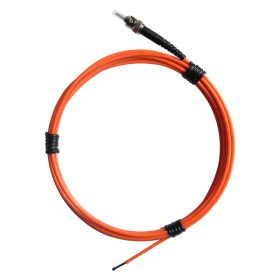
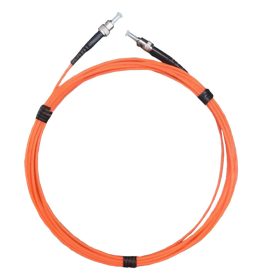
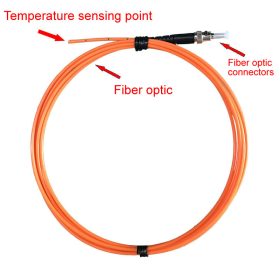
Motor Winding Fluorescent Fiber Optic Temperature Sensor Technology
Overview and Working Principle
Motor winding fluorescent fiber optic temperature sensors are advanced monitoring devices that utilize fluorescent fiber optic technology to accurately and real-time measure temperature changes in motor windings. These sensors are widely applied in the electrical power industry.
The sensor’s fiber optic tip is coated with fluorescent materials. When exposed to specific wavelength light (such as blue or ultraviolet light), the fluorescent substance becomes excited and produces fluorescence. The fluorescence energy decay time has an exponential relationship with temperature. The system precisely monitors fluorescence lifetime (decay time to 1/e) to calculate temperature values, based on the quantum mechanical principle of “temperature-fluorescence quenching effect.”
Key Technical Features
Superior Electromagnetic Interference Immunity
Transmits temperature information through optical signals, immune to electromagnetic interference, suitable for motor winding temperature monitoring in strong electromagnetic environments, such as complex electromagnetic conditions during high-voltage motor operation.
High Measurement Accuracy
Achieves ±1°C accuracy and 0.1°C resolution, accurately reflecting motor winding temperature changes and providing reliable data support for safe motor operation.
Excellent Environmental Adaptability
Fiber optic materials possess high temperature resistance, corrosion resistance, and excellent insulation properties, enabling long-term stable operation in harsh environments such as high temperature and high humidity conditions inside motors.
Outstanding Reliability and Stability
Features excellent probe interchangeability, repeatability, simple structure, and long service life, reducing maintenance costs and eliminating monitoring blind spots caused by sensor failures.
Intrinsic Safety
Adopts all-fiber optic structure with no metallic components, no magnetization risk, and produces no electrical sparks, suitable for motor temperature monitoring in flammable and explosive hazardous environments.
System Components
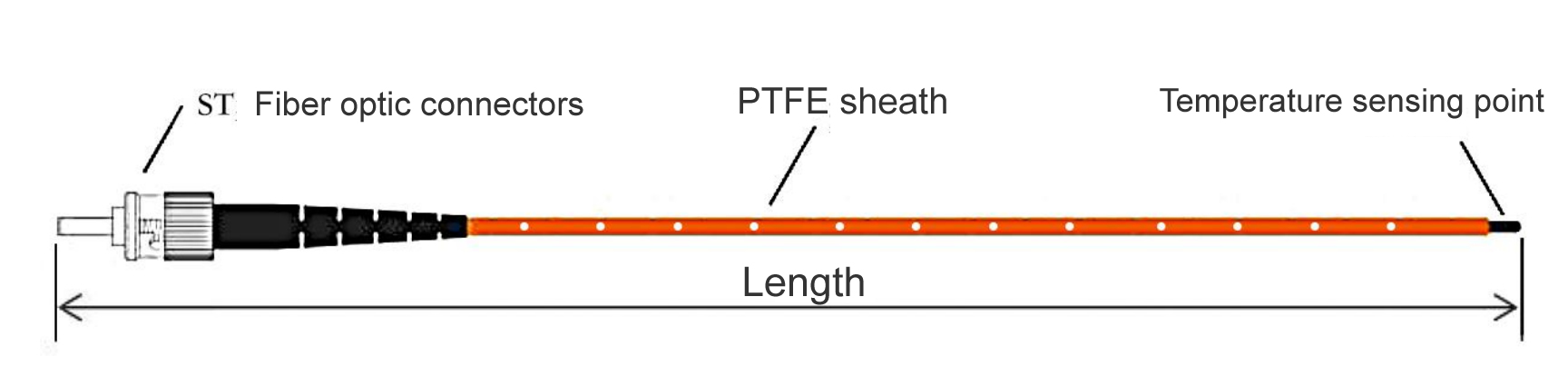
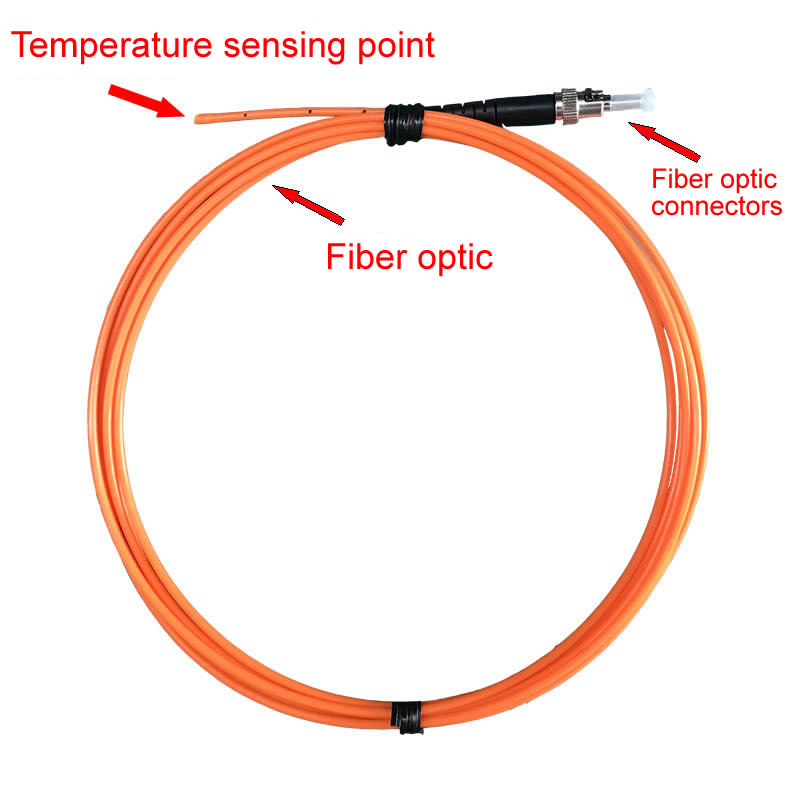
Generally consists of fiber optic probes, photoelectric modules, and signal processing systems. The fiber optic probe contains temperature-sensitive rare earth materials for generating optical signals with temperature information. The photoelectric module converts optical signals to electrical signals. The signal processing system analyzes and processes electrical signals to calculate temperature values for display, storage, or transmission.
Application Significance
Accurate monitoring of motor winding temperature rise not only ensures safe motor operation and provides early warning of potential faults, but also improves motor service life and saves materials and energy. This technology is crucial for achieving automated motor monitoring and intelligent operation and maintenance.
Technology Foundation and Principles
Fluorescence Lifetime Temperature Sensing Technology
The fluorescent fiber optic temperature sensing probe is based on the material characteristics of rare earth fluorescent substances. When certain rare earth fluorescent materials are excited by ultraviolet radiation, they emit linear spectra in the visible spectrum, including fluorescence and afterglow (luminescence after excitation stops). The decay time constant of fluorescence afterglow is a single-valued function of temperature – typically, higher temperatures correspond to smaller time constants.
By measuring the time constant value, temperature can be determined. The greatest advantage of this temperature measurement method is that the measured target temperature depends only on the time constant of the fluorescent material and is independent of other system variables, such as light source intensity variations, transmission efficiency, or coupling degree changes, providing significant advantages over other temperature measurement methods.

Advanced Technical Specifications
High Insulation and Voltage Resistance
As a complete optical measurement device, this sensor can withstand high voltages and fully meets the insulation and voltage resistance requirements of motor windings.
Strong Anti-Pollution Flashover Capability
Fluorescent temperature sensors adopt different outer sheaths or special fiber optic coverings with strong pollution resistance for different voltage levels, ensuring system safety.
High Reliability Sensing Materials
The temperature-sensitive substance is rare earth material that is only sensitive to temperature. The long-term stability of this material has been fully verified, with related systems successfully applied to equipment monitoring for over 30 years.
Precise Temperature Point Positioning
The compact sensing probe allows accurate positioning of installation locations.
Wireless Communication Capability
The system features external wireless modules for wireless information transmission.
Short Measurement Cycle and High Real-Time Performance
Measurement cycle is less than 1 second, ensuring timely alarm response.
Industrial Applications and Solutions
Power System Applications: Ensuring Stable Operation of Grid Core Equipment
Large motors in power systems are the “heart” of grid power supply. Excessive winding temperatures can cause insulation aging, inter-turn short circuits, or even motor burnout. Fluorescent fiber optic sensors can precisely monitor key area temperatures, preventing widespread power outage risks.
Large Synchronous Generators and Asynchronous Motors
Applications include main generators in thermal/hydroelectric power plants and auxiliary motors (water pumps, fan motors) in substations. These operating environments feature strong electromagnetic radiation from generator stator/rotor magnetic fields. Traditional electrical sensors are susceptible to interference causing data distortion, while fiber optic sensors transmit optical signals and can stably monitor winding temperatures above 300°C, providing real-time warning of insulation deterioration.
High Voltage Motors
Applications include 10kV and above industrial high-voltage motors commonly used in power plants and grid transmission and distribution auxiliary systems. These motors have high winding insulation classes (F-class, H-class) requiring precise monitoring of temperature rise to ensure it doesn’t exceed rated limits (F-class insulation maximum temperature 155°C). Sensors can be directly embedded in winding slots to capture local hot spot temperatures, preventing overall failure due to localized overheating.
Advantages Over Traditional Sensing Technologies
Motor winding fluorescent fiber optic temperature sensors, with core advantages of strong electromagnetic interference immunity, high temperature resistance, high precision, and intrinsic safety, can solve monitoring challenges faced by traditional electrical sensors (such as platinum resistors and thermocouples) in complex environments. They are widely applied in fields requiring high motor safety operation standards and harsh working conditions.