 INNO fibre optic temperature sensors ,temperature monitoring systems.
Transformer bushing monitoring focuses on the bushing’s insulation and sealing health under live conditions. It continuously tracks leakage current phasors, dielectric loss (tanδ), capacitance C1/C2, harmonics (with emphasis on 3rd harmonic), partial discharge (PD) via IEC 60270/UHF/acoustic, temperature (preferably fluorescent fiber optic temperature, FOT), as well as oil level/pressure/moisture activity or SF6/N2 density, and Test Tap/C2 grounding continuity. A well-implemented transformer bushing monitoring system gives early warning of insulation deterioration, moisture ingress, sealing degradation, and hotspot formation, reducing the risk of forced outages and fires.
Scope includes OIP/RIP/RIS/SF6 bushings, covering the Test Tap/C2, top connection, flange transition, external insulation surface, and sealing interfaces. Typical outputs are graded alarms, a health index (HI), event timelines, and maintenance recommendations integrated with SCADA/APM over IEC 61850 MMS/GOOSE.
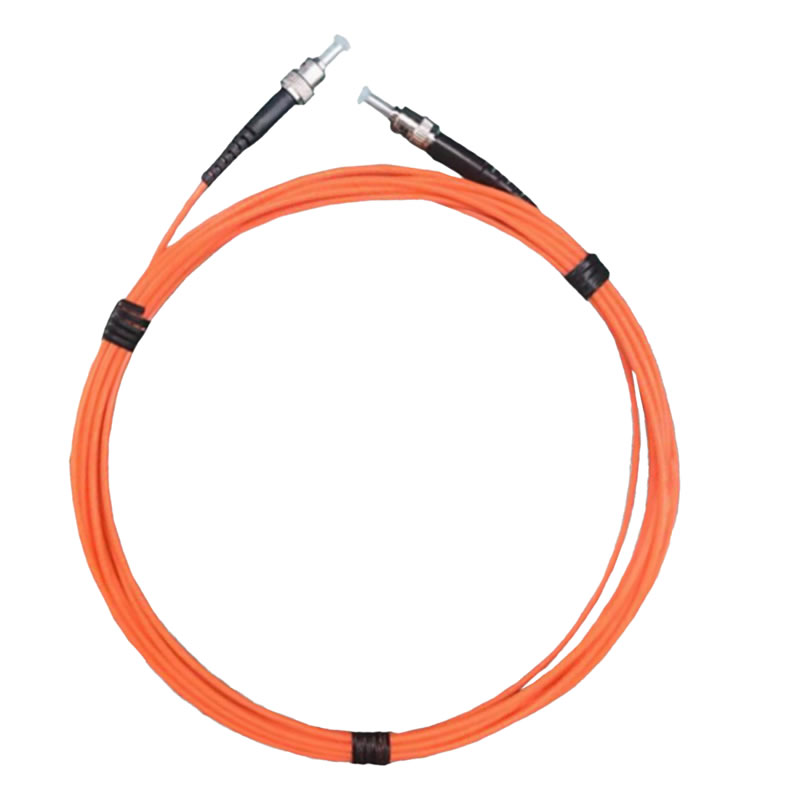
Why Transformer Bushings Need Monitoring
Safety and reliability
Bushing failures are low-frequency but high-consequence events that can lead to explosions, oil spray, and fires. Online observability shortens time-to-detection and prevents cascading damage.
Aging, environment, and stress
Factors include aging OIP paper, high humidity, contamination, salt mist, thermal cycling, through-faults, short overvoltages, and harmonic stress, all of which accelerate insulation and sealing degradation reflected in tanδ, C1/C2, PD, and temperature trends.
Cost, compliance, and evidence
Online data reduces disruptive offline tests, supports compliance and insurance evidence chains, and enables risk-based maintenance and spares planning.
How Transformer Bushing Failures Happen
Typical mechanisms include: (1) Insulation aging/moisture raising tanδ and drifting C1/C2, with PD onset; (2) Grading imbalance concentrating electric field near foils/edges; (3) Poor joints at the top connection increasing contact resistance and hotspots; (4) Surface contamination/flashover driving higher leakage currents in wet weather; (5) Seal degradation causing oil/gas leakage, water activity rise, and lower dielectric strength; (6) Through-fault latent damage introducing micro-voids and interface defects. Each maps to online observables: leakage-current phasors, tanδ, C1/C2 drift, 3rd harmonic ratio, PD PRPD patterns, and temperature residuals.
One Failure Type: Hotspots
Hotspots often occur at the top conductor-joint interface, the flange transition, the OIP top-oil region, grading foil ends, and the Test Tap contact. Causes include elevated contact resistance, eddy/skin losses, local field distortion, and impaired oil circulation. Online indicators are rising FOT temperatures and phase-to-phase temperature deltas, shifts in leakage-current phase, increased 3rd harmonic, and PD phase clustering. These signatures help distinguish thermal defects from purely dielectric issues and guide targeted inspections.
What Transformer Conditions Does Bushing Monitoring Indicate Most Clearly?
Bushing monitoring most clearly flags: (1) Moisture ingress and rising dielectric loss (tanδ); (2) Capacitance C1/C2 drift from grading imbalance; (3) PD onset and activity growth via PRPD; (4) Hotspot formation and thermal run-away risk via FOT residuals; (5) Seal degradation via oil level/pressure and SF6 density trends; (6) Test Tap grounding anomalies observed in leakage-current vectors. Together, these provide high-confidence, multi-evidence early warning.
Asset Management: Trending, Decisions, and Outage Avoidance
Asset managers can assess bushing failure risk over time, then install a bushing monitoring system to act before unplanned outages. Best practice: establish a commissioning baseline and temperature/load compensations; trend tanδ/C drift rates, PD activity, FOT residuals; compute a health index (HI) with graded alarms; and run a closed loop of remote validation → targeted offline tests (tanδ/C/PD) → derating/repair/replacement → threshold tuning. KPIs include detection rate, false alarm rate, avoided outages, and ROI/payback.
What Is Transformer Bushing Monitoring?
Transformer bushing monitoring is an integrated, always-on solution combining sensors, acquisition, time sync, communications, analytics, and cybersecurity to assess bushing health live.
System composition
- Sensors: leakage current via Test Tap/C2, tanδ/C1/C2 online module, PD (IEC 60270/UHF/acoustic), FOT temperature, oil level/pressure/moisture or SF6/N2 density, Test Tap grounding continuity.
- Acquisition & sync: multi-rate ADC, line-frequency sync for phasors/harmonics, high-speed PD channel, unified timestamps via GPS/PTP, edge feature extraction and change-point detection.
- Communications & platform: IEC 61850 MMS/GOOSE (with DNP3/Modbus/MQTT as needed), trends, phasor vectors, PRPD, HI, and work-order integration with SCADA/APM.
- Security & operations: IEC 62351, network zoning, certificates, audit, periodic self-check/calibration, firmware lifecycle.
Where Do Transformer Bushing Hotspot Failures Occur?
Typical locations: (1) top conductor-to-stud joint; (2) flange/grounding band transition; (3) OIP top-oil region; (4) grading-foil ends and lead-outs; (5) Test Tap contact/ground; (6) external insulation areas prone to contamination.
Root Causes Requiring Bushing Monitoring
Risk drivers
High-consequence failures, aging fleets, extreme weather, contamination, and increased grid stress all elevate bushing risk.
Technical drivers
Online sensitivity to tanδ/C/PD/FOT changes exceeds periodic inspections; multi-signal fusion reduces uncertainty; cross-link to DGA/OLTC/cooling data enhances diagnostics.
Economic drivers
Fewer forced outages, optimized spares and maintenance windows, higher insurance and compliance confidence.
Methods to Measure Transformer Bushing Hotspot Temperature
Fiber-Optic Sensing: FOT, DTS/DAS, FBG
Fluorescent fiber optic temperature (FOT): uses fluorescence lifetime decay versus temperature, delivering absolute temperature, with excellent EMI immunity and electrical isolation. Ideal for multi-point placement at the flange, top connection, and OIP top-oil region.
Distributed fiber (DTS/DAS): uses Raman/Rayleigh backscatter for continuous or quasi-continuous profiles along the fiber, enabling area coverage and hotspot localization over long runs.
Fiber Bragg Grating (FBG): measures Bragg wavelength shift with temperature/strain; requires careful strain decoupling for accurate temperature readings in vibrating/expanding structures.
Installation and routing essentials
Keep fibers short and straight, respect minimum bend radius, avoid sharp edges/moving parts, ensure robust mechanical fixation and good thermal coupling, and plan jumper redundancy and protected routing near high-field zones.
| Fiber method | Principle | Typical placement | Advantages | Limitations | Suitability |
|---|---|---|---|---|---|
| FOT (Fluorescent) | Fluorescence lifetime vs. temperature (absolute) | Flange ring, top joint, OIP top-oil multi-points | EMI immunity, electrical isolation, absolute temp, fast response, low drift | Requires interrogator; disciplined fiber routing | Best for high-field near-bushing areas |
| DTS/DAS | Raman/Rayleigh distributed backscatter | Perimeter/lead routing for area coverage | Line/area coverage, hotspot localization | Resolution/rate limits, higher system cost | Good for area scanning and surveys |
| FBG | Bragg wavelength shift (temp/strain) | Point sensors; requires strain decoupling | High precision, multiplexing | Strain cross-sensitivity, complex decoupling | Moderate; suited when decoupling is ensured |
Wireless Temperature
Passive/active wireless nodes can reduce wiring and simplify installation. However, in high-field bushing vicinities, metallic parts and strong EM fields challenge energy harvesting, stability, and insulation safety. Use primarily in shielded compartments or secondary boxes away from the highest fields.
Infrared Thermography
Handheld or fixed IR cameras provide non-contact scans and intuitive thermograms. They are affected by emissivity, wind, rain, and solar loading, cannot see through shields/enclosures, and are less sensitive to enclosed joint hotspots. Best for patrols and rapid screening, plus post-alarm verification.
Gallium Arsenide (GaAs) Temperature
GaAs optical probes measure band-edge shifts vs. temperature, offering high accuracy, insulation, and EMI robustness. Costs and packaging/thermal-coupling practices are higher; use as a complement for selected critical points.
Which Method Is Most Suitable for Bushing Temperature Monitoring?
For live high-field bushing regions, fiber optics are the most robust. Specifically, FOT offers the best combination of electrical isolation, EMI immunity, absolute temperature, multi-point scalability, fast dynamics, and low drift. A practical blend is FOT for point hotspots plus DTS for area sweeps; IR supports quick visual checks; wireless/FBG/GaAs add value at selected locations.
Fiber-Optic Reliability Over Decades; FOT Is the Best Fit
Decades of field use show fiber-optic sensing avoids parasitic loops and common-mode interference, introduces no conductive paths near HV parts, and maintains stability under severe EMI. FOT excels for near-bushing hotspots due to absolute metrology and minimal drift, enabling confident correlation with leakage-current phasors, tanδ/C1/C2 drift, and PD signatures for root-cause isolation.
What Sensors Are in Transformer Monitoring?
Bushing Monitoring
Leakage current (via Test Tap/C2), tanδ/C1/C2, 3rd harmonic, partial discharge (IEC 60270/UHF/acoustic), FOT temperature, oil level/pressure/moisture activity, SF6/N2 density, Test Tap grounding.
Temperature/Cooling Control
Winding hotspot estimates, oil temperature, radiator inlet/outlet temps, fan/pump status, thermal efficiency, and redundancy control.
OLTC Monitoring
Transition resistance, switching time/waveform, vibration and temperature rise, contact wear diagnostics.
Dissolved Gas Analysis (DGA)
Key gases (H₂, CH₄, C₂H₂, etc.), moisture and oil quality for main-tank insulation condition.
Moisture Monitoring
Oil water activity/ppm and cellulose moisture estimation.
Partial Discharge Monitoring
IEC 60270 current method, UHF, and acoustic/ultrasonic with PRPD pattern analysis.
Through Faults
Fault-current shocks, thermal-mechanical stress logs, and fast post-event health checks (tanδ/C/PD/temperature re-tests).

Fiber optic temperature sensor, Intelligent monitoring system, Distributed fiber optic manufacturer in China
 |
 |
 |