 INNO fibre optic temperature sensors ,temperature monitoring systems.
- Switchgear monitoring systems prevent 85% of electrical failures in power plants through real-time temperature monitoring
- Fiber optic temperature sensors offer ±0.5-1°C accuracy with complete electrical isolation for high-voltage applications
- Single transmitter supports 1-64 channel fluorescent fiber optic sensors for comprehensive switchgear monitoring
- Global installations exceed 10,000 units with proven ROI within 2-3 years
- Professional solutions available for switchgear temperature monitoring with 24/7 technical support

- What is Power Plant Switchgear & Why Monitor?
- What Components Need Monitoring?
- How Does Switchgear Monitoring Work?
- What Monitoring Systems Are Available?
- Why is Temperature Monitoring Critical?
- What Failures Can Monitoring Prevent?
- How to Select Monitoring Systems?
- What’s the Investment Return?
- How to Get Professional Solutions?
What is Power Plant Switchgear & Why is Monitoring Critical?
Power plant switchgear is a metal-enclosed assembly containing electrical control, protection, and measuring equipment. These systems serve as the backbone for power distribution, equipment protection, and operational control in generating facilities.
Monitoring systems are essential for preventing unexpected equipment failures, reducing maintenance costs, and ensuring reliable power generation. Without proper monitoring, power plants face risks of sudden equipment breakdown, safety incidents, and significant economic losses.
What Components in Power Plant Switchgear Need Monitoring?
Critical electrical equipment requiring monitoring includes circuit breakers, isolating switches, earthing switches, and instrument transformers. Key connection points such as busbar joints, cable terminals, and contact surfaces are particularly vulnerable to overheating.
Environmental parameters like internal temperature, humidity, gas composition, and partial discharge also require continuous monitoring. Mechanical components including operating mechanisms, drive systems, and spring assemblies need regular status assessment.
How Does Switchgear Monitoring Work? What’s the Principle?
Sensor data collection gathers information on temperature, current, voltage, and mechanical positions. Data transmission occurs through wired communication, wireless transmission, or fiber optic networks.
The monitoring center processes data for trend analysis, fault prediction, and alarm management. Automatic response mechanisms trigger over-limit alarms, protective actions, and maintenance notifications to ensure system reliability.
What Monitoring Systems Are Available? What Functions Do They Provide?
Switchgear Monitoring System Components
| Monitoring Subsystem | Parameters | Primary Function | Technical Features |
|---|---|---|---|
| Temperature Monitoring | Contact temperature, busbar temperature, ambient temperature | Prevent overheating, extend equipment life | Real-time monitoring, wireless transmission, low power |
| Electrical Parameter Monitoring | Current, voltage, power, power factor | Load analysis, power quality monitoring | High precision measurement, data recording |
| Mechanical Status Monitoring | Switch position, operation count, travel time | Mechanical assessment, maintenance planning | Contact/non-contact detection |
| Environmental Monitoring | Humidity, SF6 gas, partial discharge | Insulation assessment, environmental control | Gas sensors, acoustic-electrical detection |
Why is Temperature Monitoring Critical? What Technologies Are Available?
Temperature Monitoring Technology Comparison
| Technology | Accuracy | Installation | Electrical Isolation | EMI Immunity | Maintenance | Application |
|---|---|---|---|---|---|---|
| Fluorescent Fiber Optic | ±0.5-1°C | Fiber cable | Complete | Immune | Maintenance-free | High-voltage switchgear |
| Infrared Thermometry | ±2-5°C | Non-contact | Natural | Fair | Regular calibration | Periodic inspection |
| Wireless Temperature Sensor | ±1-2°C | Battery powered | Partial | Susceptible | Battery replacement | Temporary monitoring |
Why Fluorescent Fiber Optic Temperature Sensors Excel in Switchgear Applications
Complete Electrical Isolation Safety
Fiber optic materials are inherently insulating with zero conductivity risk. They can be installed directly on high-voltage busbars and contacts, eliminating safety hazards associated with traditional electronic sensors.
Superior EMI Immunity
Optical signal transmission remains unaffected by strong electromagnetic fields. Electromagnetic surges during switchgear operations don’t impact measurement accuracy, ensuring data reliability and system stability.
High Voltage Resistance
Fiber optic sensors withstand 100kV and higher voltage levels. Direct installation on high-voltage busbar surfaces poses no safety risks, suitable for all voltage levels of switchgear equipment.
Multi-Channel Configuration
Each fluorescent fiber measures one specific hot spot with precision. Single transmitters accommodate 1-64 channel fluorescent fiber optic temperature sensors, providing flexible monitoring point configuration while reducing system complexity and costs.

What Switchgear Failures Can Monitoring Prevent?
Temperature anomalies from increased contact resistance, overload operation, and poor heat dissipation are detected by fiber optic temperature monitoring systems with real-time alerts.
Insulation failures including partial discharge, insulation aging, and pollution flashover are identified through partial discharge and insulation monitoring systems.
Mechanical failures such as operating mechanism jamming, spring fatigue, and transmission abnormalities are tracked through mechanical status monitoring and operation counting systems.
How to Select and Implement Switchgear Monitoring Systems?
Key Selection Criteria
Technical specifications require ±0.5-1°C measurement accuracy, <10-second response time, and communication protocol compatibility. Environmental adaptability includes -40°C to +85°C operating temperature, IP65+ protection rating, and vibration resistance.
Implementation Considerations
Safety requirements mandate complete electrical isolation, intrinsically safe design, and explosion-proof certification. System integration involves SCADA system interfacing, data format compatibility, and unified communication protocols.
What’s the Investment Return for Monitoring Systems?
Economic Benefits
Direct benefits include reduced unplanned outage losses and extended equipment lifespan. Indirect benefits encompass improved power supply reliability and reduced safety incidents.
Investment payback typically occurs within 2-3 years. Global case studies include a 330MW Southeast Asian power plant with 5-year zero-failure operation and Middle Eastern 220kV substation projects demonstrating significant preventive maintenance improvements.
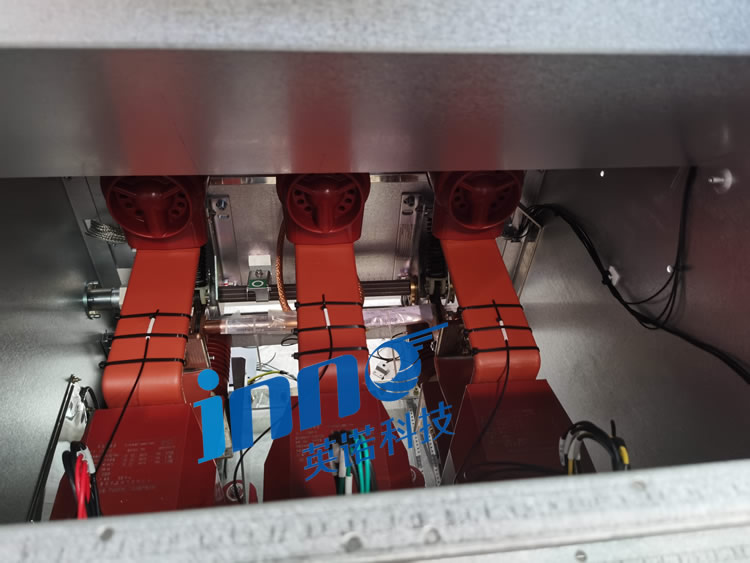
How to Obtain Professional Switchgear Monitoring Solutions?
Comprehensive Services
Technical consulting includes site surveys, requirement analysis, and fluorescent fiber optic temperature sensor selection guidance.
Product supply covers 1-64 channel fluorescent fiber temperature monitoring systems with global certification and rapid delivery support.
Contact Us for Solutions
For reliable switchgear monitoring system solutions or high-precision fiber optic temperature sensors, contact us immediately for free technical assessments and competitive quotations.
Our experienced team provides optimal solutions for your switchgear monitoring projects, ensuring safe and reliable power equipment operation with proven global expertise.

Fiber optic temperature sensor, Intelligent monitoring system, Distributed fiber optic manufacturer in China
 |
 |
 |