 INNO fibre optic temperature sensors ,temperature monitoring systems.
- Transformer overheating is one of the leading causes of catastrophic failure, and preventing it requires understanding five fundamental causes: sustained overloading, cooling system failure, localized overheating from bad contact heating, harmonic distortion, and insulation degradation — each of which elevates the winding hot-spot temperature beyond safe operational limits.
- When winding temperature and hot-spot temperature exceed design thresholds — typically 98–120°C for oil-immersed units — the resulting thermal stress triggers accelerated insulation aging, oil decomposition, thermal runaway, and ultimately dielectric breakdown that can progress to fire or explosion within seconds.
- The dangers of transformer overheating extend far beyond equipment damage: they include catastrophic fire and explosion risk, prolonged unplanned power outages with multi-million-dollar economic losses, environmental contamination from oil release, irreversible insulation life reduction, and direct threats to personnel safety.
- Real-time temperature monitoring using sensors installed directly on winding conductors provides the most accurate and reliable method for continuous hot-spot temperature measurement — enabling overheating warning, thermal aging assessment, and predictive maintenance before damage occurs.
- A comprehensive smart thermal management strategy combines winding temperature sensors, online condition monitoring, intelligent thermal management algorithms, and automated protection integration to deliver a complete transformer thermal protection system that prevents overheating at every stage.
Table of Contents
- Why Transformer Overheating Prevention Matters
- 5 Major Causes of Transformer Temperature Rise
- Cause 1 — Sustained Overloading and Thermal Stress
- Cause 2 — Cooling Failure and Oil Circulation Issues
- Cause 3 — Localized Overheating and Bad Contact Heating
- Cause 4 — Harmonic Distortion and Hidden Temperature Rise
- Cause 5 — Insulation Degradation and Accelerated Thermal Aging
- How Hot-Spot Temperature Determines Transformer Life
- Winding Temperature — The Most Critical Measurement Point
- Top Oil Temperature vs. Actual Internal Overheating
- Core Temperature and Connection Lead Temperature Risks
- Dangers of Transformer Overheating — Fire, Explosion, and Cascading Failure
- Thermal Runaway — The Point of No Return
- Overheating Warning and Early Detection Strategies
- Overload Monitoring and Temperature Rise Monitoring in Practice
- Real-Time Temperature Monitoring for Transformer Protection
- Thermal Aging Assessment and Insulation Life Monitoring
- Hot-Spot Drift and Its Impact on Transformer Safety
- Smart Thermal Management and Predictive Maintenance
- Best Solution — Building a Complete Transformer Temperature Monitoring System
- Frequently Asked Questions
1. Why Transformer Overheating Prevention Matters

Transformer overheating is the single most significant threat to the long-term reliability and safety of power transformers in electrical networks worldwide. A power transformer represents one of the most expensive and longest-lead-time assets in any electrical system — large power transformers can cost millions of dollars and require 12 to 24 months for manufacture and delivery. When overheating causes a transformer to fail, the consequences cascade through the entire system: prolonged power outages affecting thousands to millions of customers, enormous economic losses from unserved energy and disrupted commercial operations, potential fire and explosion hazards threatening personnel safety, and environmental contamination from released insulating oil.
The fundamental challenge of preventing transformer overheating is that the most critical temperatures occur deep inside the transformer — at the winding conductor hot-spot temperature location — completely hidden from external observation. A transformer can be experiencing severe internal overheating while its external surfaces reveal nothing unusual. This is why the question of how to prevent transformer overheating is inseparable from the question of how to accurately measure and monitor internal temperatures in real time. Modern fiber optic temperature monitoring for transformers technology — specifically, fluorescent fiber optic temperature sensors installed directly on winding conductors — provides the most direct and accurate answer to this challenge, measuring actual conductor temperatures at the exact point where overheating originates and where failure initiates.
Prevention is not merely preferable to reaction — it is the only viable strategy. Once a transformer overheating event progresses beyond the initial temperature rise stage into insulation degradation and thermal runaway, the process becomes self-accelerating and, in its final stages, occurs faster than any human or automated response can manage. The entire purpose of a comprehensive temperature monitoring system is to detect the earliest stages of abnormal temperature rise and enable corrective action while there is still time to prevent damage.
2. 5 Major Causes of Transformer Temperature Rise

Understanding the root causes of transformer temperature rise is the essential first step in any effective prevention strategy. While the thermal behavior of power transformers involves complex interactions between electrical losses, cooling dynamics, and ambient conditions, the vast majority of overheating incidents can be traced to five fundamental causes. Each cause produces a distinct thermal signature and requires specific monitoring approaches for early detection. When multiple causes act simultaneously — as they frequently do in real-world operating conditions — their effects compound, dramatically accelerating the progression toward dangerous temperature levels.
The five major causes are sustained overloading, cooling system failure, localized overheating from bad contact heating and connection faults, harmonic distortion from non-linear loads, and progressive insulation degradation that reduces the transformer’s thermal capacity over time. Each of these causes is examined in detail in the following sections, with particular attention to how their effects manifest in the transformer’s thermal profile and how they can be detected through continuous temperature rise monitoring and online condition monitoring.
3. Cause 1 — Sustained Overloading and Thermal Stress
The most common and most straightforward cause of transformer overheating is operating the transformer at load currents exceeding its nameplate rated capacity for extended durations. Winding copper losses — the primary heat source in a loaded transformer — are proportional to the square of the load current. When a transformer is loaded to 120% of its rated current, the winding losses increase to approximately 144% of the rated losses. If the cooling system was designed to dissipate only 100% of rated losses, the excess heat accumulates within the winding structure, causing a progressive rise in both the average winding temperature and the hot-spot temperature.
Sustained overloading is frequently the result of load growth that has outpaced the transformer’s original design capacity. Distribution networks serving expanding residential areas, industrial facilities adding new production lines, and substations absorbing increasing electric vehicle charging loads all experience this gradual capacity erosion. Without continuous overload monitoring and temperature rise monitoring, the transformer’s thermal limits are exceeded repeatedly — each episode consuming a disproportionate share of its insulation life. Transformer overload monitoring with fiber optic sensors installed directly on winding conductors provides the precise, real-time hot-spot monitoring data needed to manage these conditions safely, enabling operators to know exactly how much loading the transformer can tolerate under prevailing thermal conditions rather than relying on conservative nameplate limits or inaccurate thermal models.
4. Cause 2 — Cooling Failure and Oil Circulation Issues
A transformer’s cooling system — comprising radiator banks, forced-air fans, oil circulation pumps, and their associated control circuits — is the only mechanism that removes heat from the transformer and maintains thermal equilibrium. Failure of any cooling component directly reduces the transformer’s ability to reject heat, causing internal temperatures to rise even at normal load levels. The danger of cooling failure detection challenges is amplified by the fact that cooling failures frequently occur silently: a fan motor burns out without triggering an alarm, a pump contactor fails without indication, or radiator valves are inadvertently left partially closed after maintenance.
Oil circulation issues represent a particularly dangerous category of cooling failure because they affect the primary heat transfer medium. When oil circulation is impaired — whether by pump failure, sludge accumulation in cooling channels, or partial blockage of oil ducts within the winding structure — the oil in contact with the hottest winding conductors stagnates and rapidly reaches temperatures far exceeding normal operating limits. The top oil temperature measured at the top of the tank may show only a modest increase while the actual hot-spot temperature at the winding conductor surges to dangerous levels. This decoupling between the externally measurable oil temperature and the actual internal hot-spot temperature is one of the most compelling reasons why direct winding temperature measurement using high accuracy fiber optic temperature sensors for transformers is essential for reliable cooling failure detection.
5. Cause 3 — Localized Overheating and Bad Contact Heating
Localized overheating — also referred to as bad contact heating — occurs when a high-resistance electrical connection within or external to the transformer generates concentrated resistive heating at the contact interface. This includes degraded bushing connections, loose bolted joints on busbar terminations, corroded cable lugs, and worn tap changer contacts. The connection and lead temperature at a degraded joint can reach several hundred degrees Celsius while the bulk transformer temperatures remain normal, making this type of overheating invisible to conventional oil or winding temperature indicators.
Bad contact heating is particularly insidious because the thermal energy is concentrated at a small contact area, producing extreme local temperatures that can carbonize insulation, decompose oil, and generate fault gases, yet the total heat generated may be too small to significantly affect the overall oil temperature. The resistance of a degraded contact also increases with temperature — creating a positive feedback loop where heating increases resistance, which increases heating further. Detecting this condition requires temperature measurement at the potential fault locations themselves, which is why fiber optic temperature sensors for busbar and bolt connections installed at critical joints, bushings, and tap changer contacts are essential components of a comprehensive transformer thermal protection system. These EMI-free fiber optic temperature monitoring sensors provide accurate readings even in the intense electromagnetic fields present at high-voltage connections.
6. Cause 4 — Harmonic Distortion and Hidden Temperature Rise
The proliferation of non-linear loads in modern power systems — variable frequency drives, switch-mode power supplies, LED drivers, battery chargers for electric vehicles, and data center IT equipment — injects significant harmonic currents into transformer windings. These harmonics produce additional winding eddy current losses that increase approximately with the square of the harmonic order, plus additional stray losses in structural components such as the tank wall, core clamps, and winding support structures. The result is a substantial increase in heat generation that is not reflected in the fundamental-frequency load current measurement displayed on the control room SCADA system.
A transformer may appear to be operating at only 80% of rated current while its actual thermal loading — including harmonic losses — is equivalent to 110% or more of rated capacity. This hidden temperature rise is extremely dangerous because it provides no indication through conventional monitoring. The hot-spot temperature rises steadily while all load indicators suggest safe operation. Only direct measurement of the actual winding temperature can reveal the true thermal state of the transformer under harmonic-rich loading conditions. Real-time fiber optic transformer temperature monitoring eliminates this blind spot by measuring the actual conductor temperature regardless of the source of heating, providing operators with the true thermal picture rather than a calculated estimate based on incomplete electrical measurements.
7. Cause 5 — Insulation Degradation and Accelerated Thermal Aging
The fifth major cause of transformer overheating is a long-term, self-reinforcing process: progressive insulation degradation that reduces the thermal capacity and cooling efficiency of the transformer over its operating life. As cellulose insulation ages — primarily through thermal, oxidative, and hydrolytic mechanisms — it loses mechanical strength, generates moisture and acidic byproducts, and gradually becomes less effective as a thermal conductor between the copper conductor and the cooling oil. The moisture released by aging insulation further accelerates the aging process, creating a dangerous positive feedback loop.
As insulation degrades, its thermal conductivity decreases, meaning the same amount of heat generation produces a larger temperature difference between the conductor and the surrounding oil. The practical result is that the hot-spot temperature for a given load level increases progressively over the transformer’s life — a phenomenon that is invisible to external monitoring and can only be detected by tracking the long-term trend of actual winding temperatures. Thermal aging assessment and insulation life monitoring based on continuous hot-spot temperature data allow utilities to quantify the remaining insulation life with far greater accuracy than periodic oil sample analysis alone. An optical fiber temperature measurement system for transformers that records continuous hot-spot data over years provides the foundation for accurate remaining-life calculations based on the Arrhenius thermal aging model specified in IEC 60076-7 and IEEE C57.91.
8. How Hot-Spot Temperature Determines Transformer Life
The hot-spot temperature is the single most important parameter in determining transformer life. According to IEC 60076-7, the thermal aging rate of cellulose insulation doubles for approximately every 6°C increase in hot-spot temperature above the reference temperature of 98°C for thermally upgraded paper in oil-immersed transformers. This exponential relationship means that a transformer operating at a sustained hot-spot temperature of 110°C ages approximately four times faster than one operating at 98°C, while one operating at 140°C ages over 60 times faster. The transformer’s total insulation life is the integral of this aging rate over its entire operating history.
This exponential sensitivity to hot-spot temperature has profound implications for transformer operation and management. A few hours of severe overheating can consume more insulation life than years of normal operation. Conversely, operating consistently below the rated hot-spot temperature — even by a few degrees — can dramatically extend the transformer’s useful life. Accurate knowledge of the actual hot-spot temperature at all times is therefore the most valuable piece of information for transformer asset management. Real-time hot spot monitoring using fiber optics — specifically, fluorescent fiber optic temperature sensor probes embedded in the winding structure — provides this critical information with the accuracy (typically ±1°C) and response speed necessary for both operational decisions and long-term life management.
9. Winding Temperature — The Most Critical Measurement Point

The winding temperature — specifically the temperature of the copper (or aluminum) conductor at the hottest location within the winding structure — is the most critical measurement point in a power transformer. This is where all five causes of overheating converge and produce their combined thermal effect: overload currents heat the conductor directly through I²R losses, harmonic currents generate additional eddy current heating in the conductor, cooling failures reduce heat removal from the conductor surface, insulation degradation increases the thermal resistance between the conductor and the cooling oil, and contact resistance heating at connections raises the temperature of the leads carrying current to and from the winding.
Conventional winding temperature indicators (WTIs) do not measure the actual winding temperature. Instead, they use a thermal image — a heated element in the oil that simulates the winding temperature by adding a load-dependent heating signal to the measured top oil temperature. This indirect approach introduces significant errors because the thermal model assumptions may not match the actual transformer’s behavior, particularly under non-standard conditions such as harmonic loading, partial cooling failure, or changed oil conditions. Fiber optic winding temperature monitoring solution technology eliminates these errors entirely by placing a fluorescent fiber optic temperature sensor directly on the winding conductor, measuring the true conductor temperature without any modeling, simulation, or approximation.
10. Top Oil Temperature vs. Actual Internal Overheating

Top oil temperature — measured by a sensor in the oil at the top of the transformer tank — has been the traditional primary thermal monitoring parameter for oil-immersed transformers for decades. While top oil temperature provides useful general information about the transformer’s thermal state, it is fundamentally limited as an indicator of dangerous internal overheating conditions. The top oil temperature represents the average thermal output of the entire transformer rather than the condition at the most vulnerable location. It is a lagging indicator that responds slowly to internal changes due to the enormous thermal mass of the oil volume.
The temperature difference between the top oil and the actual hot-spot temperature — known as the hot-spot-to-top-oil gradient — can be 20°C to 40°C or more under normal conditions and can increase dramatically during abnormal events. During an oil circulation issue or partial cooling failure, the top oil temperature may rise by only a few degrees while the hot-spot temperature surges by 30°C or more. Relying solely on top oil temperature for protection decisions means that the transformer’s protection system is, in effect, blind to the most dangerous internal thermal conditions. A transformer fiber optic thermal monitoring system that measures both the actual winding hot-spot temperature and top oil temperature simultaneously provides operators with the complete thermal picture necessary for safe and efficient transformer operation.
11. Core Temperature and Connection Lead Temperature Risks

While the winding hot-spot temperature is the primary determinant of insulation life, two other temperature parameters deserve careful attention in a comprehensive overheating prevention strategy. The core temperature can rise significantly during abnormal operating conditions, particularly when the transformer is subjected to sustained over-excitation (over-voltage), which drives the core into saturation and produces dramatic increases in core losses and stray flux heating. Core overheating can damage the core-to-frame insulation, cause localized oil decomposition, and generate hot metal particles that contaminate the oil and compromise its dielectric strength.
The connection and lead temperature — at bushing terminals, tap changer contacts, busbar joints, and cable terminations — presents a different category of risk. Unlike winding or core overheating, which develops gradually over minutes to hours, a severe bad contact heating event at a loose or corroded connection can escalate to a fault in a much shorter timeframe. The combination of high current density at the contact point, the positive temperature coefficient of contact resistance, and the proximity to insulating materials creates conditions where a slow-developing thermal problem can transition rapidly to an arcing fault. Monitoring these critical locations requires sensors that can withstand the high-voltage environment and provide accurate readings in the presence of strong electromagnetic interference. Fiber optic temperature sensors for busbar and bolt connections meet these requirements inherently, as optical fibers are completely immune to electromagnetic interference and provide galvanic isolation between the high-voltage measurement point and the grounded monitoring system.
12. Dangers of Transformer Overheating — Fire, Explosion, and Cascading Failure

The dangers of transformer overheating are severe and multifaceted, extending far beyond the loss of the transformer itself. The most immediate and dramatic danger is fire and explosion. Oil-immersed power transformers contain thousands of liters of mineral oil that has a flash point typically between 140°C and 170°C. When internal overheating decomposes the oil or the cellulose insulation, it generates combustible gases — primarily hydrogen, methane, ethane, ethylene, and acetylene — that accumulate within the sealed tank. If an electrical fault accompanies or follows the overheating event, the resulting arc can ignite these gases, producing a pressure wave that ruptures the tank and releases burning oil over a wide area.
Beyond the immediate physical dangers, transformer overheating causes cascading operational and economic consequences. An unplanned transformer failure typically results in extended power outages because replacement power transformers are rarely available from stock and must be manufactured, transported, and installed — a process that can take months to over a year for large units. The economic losses from unserved energy, disrupted industrial production, emergency power purchase costs, and regulatory penalties can dwarf the cost of the transformer itself. Environmental remediation of oil-contaminated soil and water adds further cost and liability. All of these consequences underscore the critical importance of preventing overheating through continuous real-time temperature monitoring and overheating warning systems that trigger protective action before damage occurs.
13. Thermal Runaway — The Point of No Return
Thermal runaway represents the most dangerous phase of transformer overheating — a self-accelerating process where rising temperature increases losses, which further increases temperature, creating a positive feedback loop that progresses to failure with increasing speed. In its early stages, thermal runaway may be indistinguishable from a normal temperature rise event, making early detection critically important. Several physical mechanisms contribute to thermal runaway in transformers: the positive temperature coefficient of copper resistance (increasing I²R losses as the conductor heats), decreasing oil viscosity that changes flow patterns and can create stagnation zones, increasing dielectric losses in degraded insulation, and moisture migration from insulation into oil at elevated temperatures that further weakens the insulation.
The critical characteristic of thermal runaway is that there exists a threshold beyond which the transformer’s cooling system cannot remove heat fast enough to establish thermal equilibrium — once past this point, temperature will rise continuously until failure occurs, regardless of any reduction in load. The thermal runaway warning capability of an advanced temperature monitoring system depends on detecting the characteristic acceleration in the rate of temperature rise before the runaway threshold is crossed. This requires not just absolute temperature measurement but also the ability to compute the rate of change and second derivative of the temperature trend. A fiber optic sensor-based transformer monitoring solution with fast response time (typically 1–2 seconds) and continuous data acquisition provides the real-time data foundation needed for these advanced thermal runaway warning algorithms.
14. Overheating Warning and Early Detection Strategies
Effective overheating warning for power transformers requires a multi-layered approach that combines direct temperature measurement with intelligent analysis of temperature trends and thermal behavior patterns. The simplest and most fundamental layer is absolute temperature alarming: when the measured hot-spot temperature exceeds a predefined threshold (typically 120°C for alarm and 140°C for trip in oil-immersed transformers with thermally upgraded paper), the system generates an alarm or initiates protective action. While essential, this layer alone is insufficient because it provides no advance warning — the alarm triggers only after the temperature has already reached a dangerous level.
More advanced overheating warning strategies include rate-of-rise alarming (detecting abnormally rapid temperature increases that indicate a developing fault), predictive alarming (projecting the current temperature trend forward to estimate the time to reach alarm thresholds), and pattern recognition (comparing the observed thermal response to expected thermal behavior for the measured load and ambient conditions). Anomalies in the thermal pattern — such as a higher-than-expected temperature for a given load level, or a slower-than-expected cooling rate after load reduction — can indicate developing problems such as cooling degradation, increased contact resistance, or insulation deterioration long before absolute temperature limits are reached. Implementing these advanced strategies requires continuous, accurate, and fast-responding temperature data from the critical measurement points — exactly the capabilities provided by modern fiber optic temperature monitoring systems.
15. Overload Monitoring and Temperature Rise Monitoring in Practice
Overload monitoring in its most useful form goes far beyond simply comparing the measured load current to the transformer’s nameplate rating. True overload monitoring integrates real-time hot-spot temperature data with load current, ambient temperature, cooling system status, and historical thermal data to calculate the transformer’s actual real-time thermal loading capacity. A transformer can safely carry significantly more than its nameplate rating under favorable conditions (low ambient temperature, all cooling stages operating, recent light loading history) and significantly less under unfavorable conditions (high ambient temperature, partial cooling failure, prolonged heavy loading). The nameplate rating represents just one point on a multi-dimensional thermal capacity envelope.
Temperature rise monitoring — tracking the difference between the measured transformer temperatures and the ambient temperature — provides valuable diagnostic information about the transformer’s thermal health over time. A gradual increase in the temperature rise for a given load level indicates deteriorating thermal performance, potentially due to aging insulation (increased thermal resistance), degraded cooling system performance (reduced heat rejection), or increased losses (from winding deformation or developing faults). By monitoring these trends over months and years, an online fiber optic temperature monitoring system for power transformers enables a proactive maintenance approach — identifying and addressing developing problems before they progress to overheating events. This is the essence of predictive maintenance applied to transformer thermal management.
16. Real-Time Temperature Monitoring for Transformer Protection
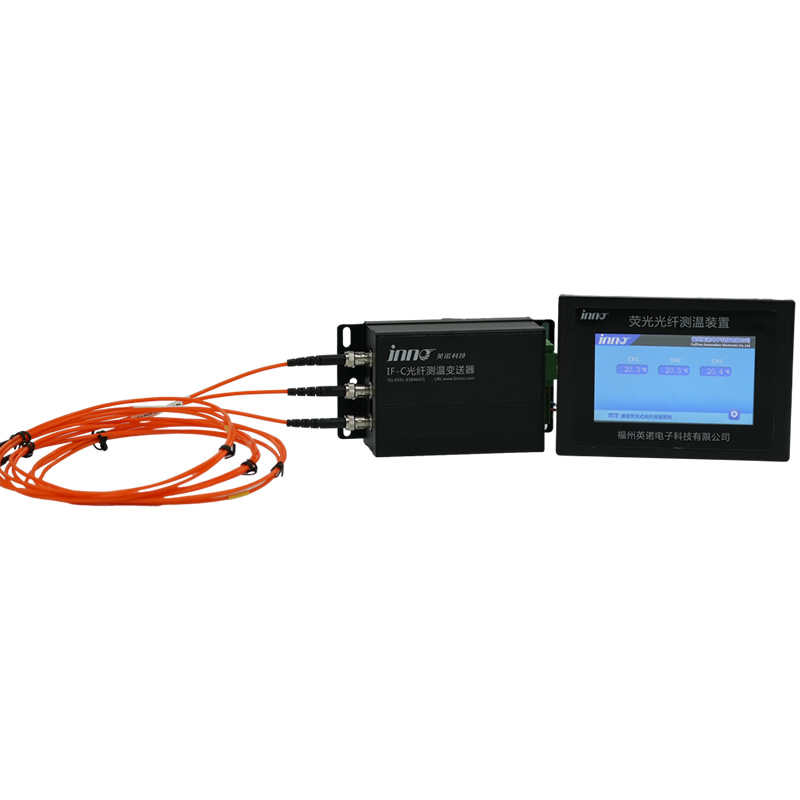
Real-time temperature monitoring forms the core of any modern transformer thermal protection system. Unlike periodic measurements or calculated estimates, continuous real-time monitoring captures the dynamic thermal behavior of the transformer as it responds to changing loads, ambient conditions, cooling system operation, and any developing abnormalities. The protection value of real-time temperature monitoring lies in its ability to close the time gap between the onset of an overheating condition and the initiation of protective action — the shorter this gap, the lower the risk of damage.
A complete real-time temperature monitoring architecture for a critical power transformer typically includes direct winding hot-spot temperature measurement, top oil temperature measurement, bottom oil temperature measurement, ambient temperature measurement, and temperature measurement at key connection points and structural components. The winding hot-spot measurement is the most critical and the most challenging, as it requires placing a sensor on the conductor deep within the winding structure, in an environment of extreme electromagnetic fields, high voltage, and immersion in hot transformer oil. Fluorescent fiber optic temperature sensors are uniquely suited to this demanding application because optical fibers are inherently immune to electromagnetic interference, provide complete galvanic isolation from the high-voltage conductor, are chemically compatible with transformer oil, and have no metallic components that could compromise the transformer’s insulation integrity. Armored fluorescent fiber optic temperature sensors for oil-immersed transformer windings are specifically designed for permanent installation within the winding structure during transformer manufacture, providing accurate hot-spot data for the entire operational life of the transformer.
17. Thermal Aging Assessment and Insulation Life Monitoring
Thermal aging assessment is the process of quantifying the cumulative damage that thermal stress has inflicted on the transformer’s cellulose insulation over its operating history, and estimating the remaining useful insulation life. The internationally accepted model for cellulose thermal aging — based on the Arrhenius equation and codified in IEC 60076-7 and IEEE C57.91 — calculates the aging rate as an exponential function of the hot-spot temperature. By integrating this aging rate over the transformer’s actual hot-spot temperature history, the total consumed insulation life can be calculated with far greater accuracy than age-based estimates.
Insulation life monitoring based on continuous hot-spot temperature data transforms transformer asset management from time-based replacement schedules to condition-based strategies. Two identical transformers of the same age may have vastly different remaining insulation life depending on their actual operating temperature histories. One transformer that has operated consistently at moderate temperatures may have consumed only a fraction of its insulation life after 30 years, while another that has experienced frequent overloading episodes may be approaching end-of-life after only 15 years. A fiber optic temperature measurement system that continuously records hot-spot temperature data provides the foundation for accurate insulation life monitoring, enabling utilities to optimize the timing of transformer replacement or refurbishment based on actual thermal condition rather than conservative age-based assumptions.
18. Hot-Spot Drift and Its Impact on Transformer Safety
Hot-spot drift refers to the phenomenon where the location of the maximum temperature within the transformer winding — the hot-spot — shifts from its original design location to a different position due to changes in the winding structure, oil flow patterns, or loss distribution over the transformer’s service life. In a new transformer, the hot-spot location is determined by the winding design and is typically near the top of the winding where the combination of highest oil temperature and localized loss concentrations produces the peak conductor temperature. However, as the transformer ages and experiences mechanical stresses from short-circuit events, load cycling, and transportation, the winding geometry can change subtly, altering oil flow paths and loss distributions.
Hot-spot drift is dangerous because it can move the actual hottest point away from the location where the temperature sensor is installed, causing the monitoring system to underreport the true maximum temperature. If the monitoring sensor is at the original design hot-spot location but the actual hot-spot has migrated to a different winding disc, the reported temperature may be 10°C to 20°C lower than the actual maximum, creating a false sense of security. To address this risk, advanced installations place multiple fiber optic temperature sensors at several potential hot-spot locations within the winding structure, typically at the top discs, at points of transition between different conductor sizes, and at locations identified by thermal modeling as susceptible to hot-spot migration. A fiber optic temperature monitoring device with multiple channels can simultaneously monitor all of these points, ensuring that the actual hot-spot temperature is captured regardless of where it occurs within the winding.
19. Smart Thermal Management and Predictive Maintenance
Smart thermal management for power transformers represents the integration of real-time temperature monitoring, intelligent analytics, automated protection control, and asset management optimization into a unified system that manages the transformer’s thermal state proactively rather than reactively. Unlike conventional thermal protection — which simply trips the transformer when a temperature threshold is exceeded — a smart thermal management system continuously optimizes the balance between transformer loading capacity, insulation life consumption, cooling energy expenditure, and system reliability requirements.
The foundation of predictive maintenance for transformers is the continuous collection and analysis of thermal data that reveals developing trends before they manifest as failures. Key indicators include gradual increases in hot-spot-to-top-oil gradient (suggesting winding insulation degradation or oil flow restriction), increasing temperature rise at connection points (indicating developing contact resistance), slower thermal response to cooling system activation (suggesting reduced cooling effectiveness), and accelerating thermal aging rates computed from the hot-spot temperature history. When these indicators are combined with other diagnostic data — dissolved gas analysis, oil quality testing, partial discharge monitoring, and electrical measurements — the result is a comprehensive online condition monitoring program that enables maintenance interventions to be scheduled based on actual equipment condition and risk assessment. An intelligent transformer temperature monitoring system based on fiber optic sensing technology provides the core thermal data that makes this predictive approach possible.
20. Best Solution — Building a Complete Transformer Temperature Monitoring System
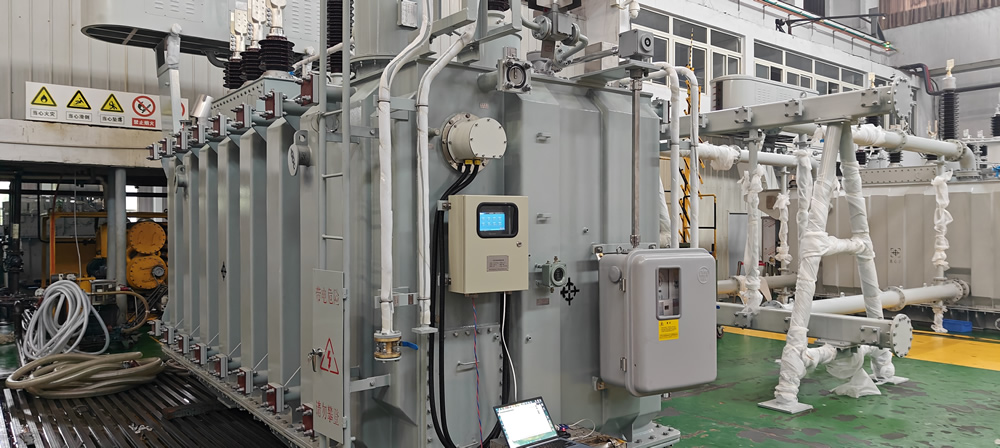
The best solution for preventing transformer overheating is to build a complete, integrated temperature monitoring system that combines direct winding hot-spot measurement, comprehensive connection point monitoring, intelligent analytics, and automated protection integration. This system should provide continuous real-time temperature monitoring at all critical thermal points, sophisticated overheating warning algorithms that detect developing problems before damage occurs, cumulative thermal aging assessment and insulation life monitoring for long-term asset management, and seamless integration with the transformer’s cooling control system and the station’s protection and SCADA infrastructure.
For the sensor technology, fluorescent fiber optic temperature sensors represent the optimal choice for winding hot-spot measurement due to their complete immunity to electromagnetic interference, inherent electrical insulation, chemical compatibility with transformer oil, long-term stability, and high accuracy. The fiber optic temperature measurement system for transformer windings should include armored fiber optic probes installed within the winding structure for hot-spot measurement, additional probes at bushing connections and tap changer contacts for connection temperature monitoring, and a multi-channel monitoring host unit that processes the optical signals, executes the protection and warning algorithms, and communicates data to the station SCADA system. A well-designed fiber optic based transformer thermal protection system provides complete visibility into the transformer’s thermal state, enables proactive management of overheating risks, supports optimized loading strategies that maximize transformer utilization while preserving insulation life, and ultimately delivers the highest level of transformer safety and reliability.
For new oil-immersed transformers, specifying factory-installed armored fluorescent fiber optic temperature sensors within the winding structure during manufacture is the most effective approach. For existing transformers, external mounting solutions for bushing, connection, and tank surface temperature monitoring can be retrofitted to significantly improve thermal visibility. The monitoring system should include a fiber optic temperature measurement display integrated host capable of multi-channel simultaneous measurement, configurable alarm thresholds, historical data storage, thermal aging calculation, and communication interfaces for integration with existing plant systems. Combined with a comprehensive overload monitoring strategy, regular cooling system maintenance, and disciplined operating procedures, a properly implemented fiber optic temperature monitoring system provides the most reliable and effective defense against transformer overheating and its potentially catastrophic consequences.
Frequently Asked Questions
What is the most dangerous consequence of transformer overheating?
The most dangerous immediate consequence is fire and explosion. When sustained overheating decomposes transformer oil and cellulose insulation, it generates combustible gases inside the sealed tank. If an electrical fault ignites these gases, the resulting explosion can rupture the tank and spread burning oil over a wide area, endangering personnel safety and nearby equipment. Beyond the immediate physical danger, the long-term consequence of cumulative overheating is accelerated thermal aging of the cellulose insulation, which irreversibly reduces the transformer’s remaining service life according to the exponential relationship described in IEC 60076-7.
Why can’t traditional temperature indicators reliably detect transformer overheating?
Traditional temperature indicators — including oil temperature indicators (OTIs) and winding temperature indicators (WTIs) — measure or simulate bulk transformer temperatures rather than the actual conductor hot-spot temperature where overheating originates. The top oil temperature can lag behind internal temperature changes by 30 minutes or more due to the thermal mass of the oil. Conventional WTIs use a thermal model that may not accurately represent the transformer’s actual behavior, especially under non-standard conditions such as harmonic loading, partial cooling failure, or after winding deformation. Only direct measurement of the winding conductor temperature using sensors installed at the hot-spot location provides the accurate, real-time data needed for reliable overheating detection and protection.
How do fiber optic sensors help prevent transformer overheating?
Fiber optic temperature sensors — specifically fluorescent fiber optic types — measure the actual winding conductor temperature directly at the hot-spot location by placing a small optical sensing element on the conductor surface within the winding structure. Because they use light rather than electrical signals, they are completely immune to the electromagnetic interference present inside a power transformer, provide inherent electrical insulation between the high-voltage winding and the grounded monitoring equipment, and introduce no metallic components that could compromise insulation integrity. This enables continuous, real-time hot-spot monitoring with accuracy typically within ±1°C, providing the earliest possible warning of abnormal temperature rise from any cause — overloading, cooling failure, localized overheating, harmonic heating, or insulation degradation. Explore recommended fiber optic sensing monitoring products to find the solution best suited to your transformer monitoring requirements.
What temperature thresholds indicate transformer overheating danger?
For oil-immersed transformers with thermally upgraded insulation paper, IEC 60076-7 specifies a rated hot-spot temperature of 98°C for normal aging rate at rated load and standard ambient conditions. Hot-spot temperatures above 120°C are generally considered alarm-level conditions requiring load reduction, while temperatures above 140°C typically warrant immediate tripping to prevent rapid insulation damage. For the top oil temperature, alarm levels are typically set at 95°C with trip levels at 105°C. For dry-type transformers, the corresponding limits depend on the insulation class (F or H) and are specified in the relevant standards. These thresholds should be configured into the overheating warning system alongside rate-of-rise alarms for comprehensive protection.
How does hot-spot drift affect transformer temperature monitoring?
Hot-spot drift occurs when the location of the maximum winding temperature shifts from its original design position due to winding deformation from short-circuit forces, changes in oil flow patterns from sludge accumulation, or altered loss distributions. If the temperature sensor remains at the original hot-spot location while the actual hottest point migrates elsewhere, the monitoring system will underreport the true maximum temperature — potentially by 10–20°C — creating a dangerous gap in protection. The solution is to install multiple fiber optic temperature sensors at several potential hot-spot locations within the winding, using a multi-channel monitoring system to track all measurement points simultaneously and report the highest actual temperature regardless of which sensor detects it.
Can transformer overheating be prevented without installing internal sensors?
While some degree of overheating risk reduction is possible through conservative loading practices, regular cooling system maintenance, and periodic infrared surveys of external components, these measures cannot detect or prevent internal overheating caused by hot-spot drift, winding insulation degradation, internal oil circulation issues, or harmonic-induced hidden temperature rise. Internal sensors — particularly fluorescent fiber optic temperature sensors installed directly on the winding conductor — remain the only technology capable of providing accurate, continuous, real-time measurement of the actual winding hot-spot temperature where overheating originates and insulation damage occurs. For critical power transformers where failure consequences are severe, internal fiber optic temperature monitoring is the most effective investment in overheating prevention and long-term transformer safety.

Fiber optic temperature sensor, Intelligent monitoring system, Distributed fiber optic manufacturer in China
 |
 |
 |