 INNO fibre optic temperature sensors ,temperature monitoring systems.
- Fluorescent fiber optic sensors provide direct winding hot spot measurement in oil-filled transformers with complete immunity to electromagnetic interference
- Measurement range: -40°C to +260°C with ±1°C accuracy and response time under 1 second
- Single transmitter supports 1-64 channels with fiber lengths from 0-80 meters for flexible installation
- 600-micron diameter probes enable non-invasive installation inside transformer windings with customizable lengths
- Superior to traditional WTI indicators, PT100 RTDs, thermocouples, and alternative fiber optic technologies (FBG, GaAs)
- Complete electrical isolation allows safe operation in high-voltage environments up to 500kV without ground loop issues
- Multi-protocol support: Modbus RTU/TCP, IEC 61850, DNP3, and 4-20mA analog outputs for seamless SCADA integration
- Long-term stability with zero drift eliminates recalibration requirements over 20+ year operational lifespan
- CE-EMC, CE-LVD, and RoHS certified meeting international safety and environmental standards
- Proven applications across distribution transformers (110kV), power transformers (220kV), and EHV transformers (500kV+)
- Critical for OLTC tap changer monitoring, rectifier transformers, traction transformers, and furnace transformers
- Customizable configurations including probe length, fiber distance, channel count, and communication protocols
Table of Contents
- What Is an Oil Immersed Transformer Temperature Monitor and Why Is Real-Time Monitoring Critical for Power Systems?
- How Do Oil Immersed Transformer Temperature Monitoring Systems Work: Fluorescent Fiber Optic Direct Winding Measurement?
- Transformer Winding Temperature Monitoring vs Top Oil Temperature Measurement: Why Traditional WTI Indicators Are Obsolete?
- Power Transformer Temperature Sensor Technology Comparison: The Revolutionary Breakthrough of Fluorescent Fiber Optic Thermometry
- The Importance of Transformer Hot Spot Temperature Monitoring: How Fiber Optic Sensors Prevent Insulation Aging?
- Fluorescent Fiber Optic Temperature Sensors vs PT100 RTDs: Which Is Better for Oil Immersed Transformer Monitoring?
- Fluorescent Fiber Optic Sensors vs FBG Grating Sensors: Performance Differences in Transformer Applications
- Fluorescent Fiber Optic Thermometry vs GaAs Sensors: Comprehensive Comparison of Oil Resistance and Long-Term Stability
- Fiber Optic Temperature Sensors vs Thermocouples: Why Transformer Windings Must Use Optical Temperature Measurement?
- Transformer Temperature Online Monitoring System Anti-Interference Capability: How FFOS Handles High-Voltage Electromagnetic Environments?
- Ultra-Fine Probe Advantages of Fluorescent Fiber Optic Sensors: How to Achieve Non-Invasive Installation Inside Transformer Windings?
- Real-Time Temperature Monitoring Response Speed Comparison: How Fluorescent Temperature Measurement Systems Capture Load Transients?
- Multi-Channel Configuration for Transformer Temperature Monitoring Systems: How to Select 4/8/16/32/64 Channel Solutions?
- Distribution Transformers vs Power Transformers vs EHV Transformers: Monitoring Channel Requirements for Different Capacity Equipment
- Flexible Customization Capability of Fluorescent Fiber Optic Temperature Measurement Devices: Probe Length, Fiber Distance, Communication Protocols
- Transformer Temperature Monitoring System Integration with SCADA: Modbus and IEC 61850 Protocol Configuration Solutions
- 110kV Distribution Transformer Temperature Monitoring Solutions: Typical 8-Channel System Configuration
- 220kV Power Transformer Temperature Online Monitoring: Three-Phase Winding Full Coverage Hot Spot Monitoring Solution
- 500kV EHV Transformer Temperature Management System: Multi-Point Temperature Measurement Strategy for Ultra-Large Capacity Equipment
- OLTC On-Load Tap Changer Temperature Monitoring: Tap Switch Contact Temperature Rise Early Warning System
- Rectifier Transformer Temperature Monitoring: Winding Hot Spot Management Under Harmonic Loading
- Traction Transformer Temperature Measurement System: Railway Electrification Power Supply Dedicated Monitoring Solution
- Furnace Transformer Temperature Monitoring: Thermal Management for Metallurgical Industry High-Load Continuous Operation
- Wind Power Step-Up Transformer Temperature Monitoring: Offshore Wind Farm Harsh Environment Application Cases
- Power Plant Main Transformer Temperature Monitoring: Intelligent Temperature Control Systems for Critical Power Generation Equipment
- Industrial Park Distribution Transformer Monitoring: Centralized Temperature Management Platform for Multiple Units
- Underground Substation Transformer Temperature Monitoring: Fiber Optic Routing Solutions for Space-Constrained Environments
- Legacy Transformer Temperature Monitoring Retrofits: Intelligent Upgrade Solutions for In-Service Equipment
- International Standards for Transformer Temperature Monitoring: IEC 60076 and IEEE C57 Technical Requirements Explained
- Power Equipment Temperature Sensor CE-EMC, CE-LVD, RoHS Certification: Quality Assurance Systems
- Transformer Condition Monitoring System Certification Requirements: How to Ensure Monitoring Equipment Complies with Grid Standards?
- State Grid 500kV Substation Transformer Temperature Monitoring Case: 32-Channel System Long-Term Operation Data
- Petrochemical Enterprise Rectifier Transformer Monitoring Project: How Fluorescent Fiber Optic Sensors Detect Early Failures?
- Wind Farm Step-Up Transformer Temperature Management Case: Reliability Verification in Harsh Environments
- Transformer Temperature Sensor Technology Comparison Table: Fluorescent Fiber Optic vs FBG vs GaAs vs PT100
- Oil Immersed Transformer Temperature Monitoring System Selection Guide: Key Parameters and Decision Factors
- Global Transformer Temperature Monitoring Equipment Manufacturer Rankings: Technology Strength and Product Comparison
- Why FJINNO Is the Best Transformer Temperature Monitoring Solution Provider?
- Oil Immersed Transformer Temperature Monitoring System FAQ: 15 Most Common Technical Questions Answered
- How to Obtain Customized Transformer Temperature Monitoring Solutions and Professional Technical Support?
1. What Is an Oil Immersed Transformer Temperature Monitor and Why Is Real-Time Monitoring Critical for Power Systems?

An oil immersed transformer temperature monitor is a specialized measurement system designed to continuously track thermal conditions within oil-filled power transformers. These critical devices protect electrical infrastructure by detecting abnormal temperature rises that indicate potential failures before catastrophic damage occurs.
Why Temperature Monitoring Matters for Grid Reliability
Power transformers represent the most expensive and critical assets in electrical substations. A single transformer failure can cause widespread power outages affecting thousands of customers and result in replacement costs exceeding millions of dollars. Transformer temperature monitoring systems serve as the first line of defense by identifying developing problems through thermal signatures.
Modern fluorescent fiber optic temperature sensors have revolutionized transformer monitoring by enabling direct measurement of winding hot spots—the locations most vulnerable to insulation breakdown. Unlike older estimation methods, these systems provide accurate real-time data that utilities need for predictive maintenance and load management decisions.
2. How Do Oil Immersed Transformer Temperature Monitoring Systems Work: Fluorescent Fiber Optic Direct Winding Measurement?

Fluorescent fiber optic temperature measurement technology operates by placing specialized probes directly within transformer windings during manufacturing or retrofit installations. These ultra-thin 600-micron diameter sensors contain rare-earth phosphor materials at their tips that emit fluorescence when excited by LED pulses.
The Fluorescence Lifetime Measurement Principle
The decay rate of this fluorescence emission varies predictably with temperature. The transformer temperature monitoring transmitter precisely measures this decay time (fluorescence lifetime) to calculate temperature with ±1°C accuracy across the full -40°C to +260°C range. Because this measurement depends on time rather than light intensity, it remains unaffected by fiber bending, connector degradation, or aging—ensuring long-term reliability without calibration.
A single fiber optic temperature monitoring device can support 1-64 individual sensor channels, with fiber lengths extending up to 80 meters from the measurement point to the control room. This architecture enables comprehensive thermal mapping of large power transformers through economical multi-point installations.
3. Transformer Winding Temperature Monitoring vs Top Oil Temperature Measurement: Why Traditional WTI Indicators Are Obsolete?
Traditional Winding Temperature Indicators (WTI) do not actually measure winding temperature. Instead, they use a heated element in the top oil combined with a current transformer input to estimate winding temperature based on load current and top oil temperature. This indirect method suffers from significant limitations.
Critical Limitations of WTI Systems
Transformer winding temperature sensors using direct measurement reveal that WTI estimates can be off by 15-25°C compared to actual hot spot temperatures. These errors occur because WTI systems assume uniform oil flow and cannot account for local hot spots caused by circulating current losses, cooling duct blockages, or uneven loading between phases.
Modern power transformer temperature monitoring with embedded fiber optic probes provides ground truth data showing exactly where maximum temperatures occur and how they respond to loading changes. This information is essential for maximizing transformer utilization while maintaining safe operating margins.
4. Power Transformer Temperature Sensor Technology Comparison: The Revolutionary Breakthrough of Fluorescent Fiber Optic Thermometry
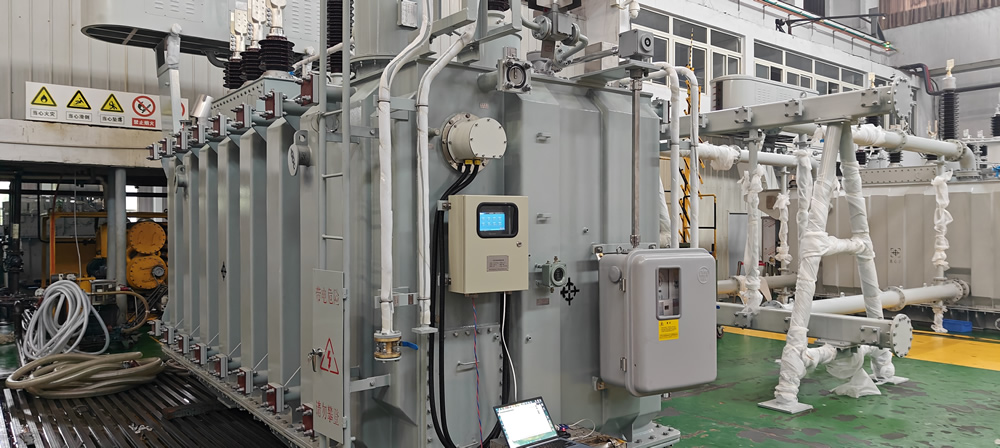
The evolution from electrical to optical temperature sensing represents a paradigm shift in transformer temperature measurement. Traditional electrical sensors—thermocouples, RTDs, and thermistors—all share a fundamental vulnerability: they conduct electricity, making them susceptible to electromagnetic interference and creating potential safety hazards in high-voltage environments.
Why Optical Sensing Changed Everything
Fluorescent fiber optic thermometry eliminates these problems through pure optical signal transmission. Glass fibers carry light signals that remain completely unaffected by the intense electromagnetic fields surrounding energized transformer windings. This immunity enables accurate measurement in locations impossible for conventional sensors.
The all-dielectric construction of fiber optic temperature sensors also provides perfect electrical isolation, eliminating ground loop currents and allowing safe installation across high-voltage potentials. A single fiber can span from grounded control equipment to a 500kV winding without creating any current path.
5. The Importance of Transformer Hot Spot Temperature Monitoring: How Fiber Optic Sensors Prevent Insulation Aging?
Transformer insulation life follows an exponential relationship with temperature—the “8-degree rule” states that insulation aging rate doubles for every 8°C increase above rated temperature. This means a transformer operating consistently 16°C above its design temperature will fail in one-quarter its expected lifespan.
Hot Spot Detection Saves Transformers
Transformer hot spot temperature monitoring using fluorescent fiber optic sensors enables utilities to identify problematic units before insulation damage becomes irreversible. Early detection of developing hot spots allows corrective actions such as load reduction, cooling system inspection, or scheduled maintenance rather than emergency replacement.
Field data from transformer temperature monitoring systems shows that units with direct winding temperature measurement last significantly longer than those monitored only with top oil sensors, because operators can make informed decisions based on actual thermal stress rather than conservative estimates.
6. Fluorescent Fiber Optic Temperature Sensors vs PT100 RTDs: Which Is Better for Oil Immersed Transformer Monitoring?
Platinum Resistance Temperature Detectors (PT100 RTDs) have served as industry-standard temperature sensors for decades. However, their electrical nature creates significant challenges for transformer winding temperature measurement.
Critical Differences in Transformer Applications
| Parameter | Fluorescent Fiber Optic | PT100 RTD |
|---|---|---|
| EMI Immunity | Complete (optical signal) | Poor (electrical signal affected by transformerfields) |
| High Voltage Isolation | Perfect (all-dielectric) | Requires expensive isolation barriers |
| Response Time | <1 second | 5-10 seconds (due to larger probe mass) |
| Long-Term Stability | Zero drift | Gradual resistance shift requires recalibration |
| Installation in Windings | 600-micron diameter enables easy routing | Larger diameter (3-6mm) difficult to install |
For oil immersed transformer temperature monitoring, fluorescent fiber optic sensors provide superior performance because they operate reliably in the intense electromagnetic environment inside energized windings—an environment that causes severe measurement errors and premature failure of PT100 sensors.
7. Fluorescent Fiber Optic Sensors vs FBG Grating Sensors: Performance Differences in Transformer Applications
Fiber Bragg Grating (FBG) technology represents another optical approach to temperature measurement. FBG sensors work by measuring wavelength shifts in reflected light caused by temperature-induced changes in the grating spacing. While FBGs excel in some applications, fluorescent fiber optic temperature measurement offers distinct advantages for transformer monitoring.
Why Fluorescence Outperforms FBG in Transformers
The primary limitation of FBG sensors in transformer temperature monitoring systems is their sensitivity to mechanical stress. Vibration, oil pressure fluctuations, and fiber bending all create wavelength shifts that can be confused with temperature changes. This requires complex compensation algorithms and limits accuracy.
Fluorescent fiber optic sensors measure temperature through fluorescence lifetime, a time-domain parameter completely independent of mechanical stress, fiber bending, or optical power levels. This inherent self-referencing makes fluorescence-based systems more stable for long-term unattended operation in transformer environments.
Additionally, FBG interrogators capable of monitoring 32-64 sensors cost significantly more than equivalent fluorescent fiber temperature transmitters, making fluorescence the more economical choice for multi-point transformer installations.
8. Fluorescent Fiber Optic Thermometry vs GaAs Sensors: Comprehensive Comparison of Oil Resistance and Long-Term Stability
Gallium Arsenide (GaAs) semiconductor sensors measure temperature through bandgap absorption edge shifts. While GaAs technology works well in some industrial applications, field experience reveals limitations for oil immersed transformer monitoring.
Oil Compatibility and Longevity Concerns
GaAs crystals can degrade when exposed to certain additives used in transformer insulating oils, particularly oxidation inhibitors and passivators. Long-term immersion studies show that GaAs sensor accuracy can drift by 2-3°C over 5-7 years in oil environments.
In contrast, fluorescent fiber optic temperature sensors use stable rare-earth phosphor coatings that remain chemically inert in transformer oil indefinitely. The glass fiber substrate also resists degradation, enabling 20+ year operational lifespans with zero drift. This longevity makes fluorescence-based systems the most cost-effective solution when total ownership costs are considered.
Furthermore, GaAs sensors require more complex signal processing and offer narrower temperature ranges (typically -40°C to +200°C) compared to the -40°C to +260°C range of fluorescent optical thermometers.
9. Fiber Optic Temperature Sensors vs Thermocouples: Why Transformer Windings Must Use Optical Temperature Measurement?
Type K and Type J thermocouples represent the oldest electronic temperature measurement technology still in use. While inexpensive and familiar to technicians, thermocouples are fundamentally unsuitable for direct transformer winding temperature monitoring.
Thermocouple Failures in High-Voltage Environments
Thermocouples generate millivolt-level signals through the Seebeck effect at junctions of dissimilar metals. These tiny voltages are easily overwhelmed by electromagnetic interference from transformer fields, causing erratic readings that can vary by 10-50°C from true temperature.
More critically, the metallic construction of thermocouples creates current paths between high-voltage windings and grounded instrumentation. This necessitates expensive isolation amplifiers that add cost, complexity, and additional failure points. Even with isolation, ground loop currents can corrupt measurements.
Fiber optic temperature sensors eliminate all these issues through non-conductive optical transmission. The complete absence of electrical conductivity makes them inherently safe for high-voltage installations while delivering noise-free measurement accuracy.
10. Transformer Temperature Online Monitoring System Anti-Interference Capability: How FFOS Handles High-Voltage Electromagnetic Environments?
Inside an energized power transformer, electromagnetic field strengths can exceed 10 kV/m, with frequencies ranging from 50/60 Hz fundamental to high-order harmonics extending into the kilohertz range. This intense electromagnetic environment poses extreme challenges for transformer temperature measurement.
Complete EMI Immunity Through Optical Technology
FFOS (Fluorescent Fiber Optic Sensor) technology achieves perfect electromagnetic immunity because light signals cannot interact with electric or magnetic fields. While electrical sensors require expensive shielded cables, ferrite cores, and filtering to achieve even marginal noise rejection, fluorescent fiber optic temperature monitoring systems operate flawlessly with simple unshielded glass fibers.
This immunity extends beyond steady-state operation to transient events. Lightning strikes, switching surges, and fault currents that destroy conventional sensors leave fiber optic temperature sensors completely unaffected, ensuring continuous monitoring during the very events when thermal data is most critical for protection and forensic analysis.
11. Ultra-Fine Probe Advantages of Fluorescent Fiber Optic Sensors: How to Achieve Non-Invasive Installation Inside Transformer Windings?
The 600-micron (0.6mm) diameter of fluorescent fiber optic sensor probes represents a breakthrough in transformer instrumentation. This ultra-fine cross-section enables installation options impossible with conventional 3-6mm diameter electrical sensors.
Installation Flexibility and Winding Integrity
During transformer manufacturing, the thin fiber optic probes route easily between winding layers and through cooling ducts without compromising insulation spacing or obstructing oil flow. The smooth glass surface prevents sharp edges that could damage paper or pressboard insulation during installation or thermal cycling.
For retrofit applications, 600-micron fibers can pass through existing cable glands or small-diameter penetrations added to transformer covers, minimizing modification requirements. The minimal probe diameter also reduces thermal mass to achieve the sub-second response times critical for detecting rapid load changes.
12. Real-Time Temperature Monitoring Response Speed Comparison: How Fluorescent Temperature Measurement Systems Capture Load Transients?
Thermal response time determines how quickly a transformer temperature monitoring system can detect and respond to changing conditions. This becomes critical during load switching, fault clearing, and other transient events that cause rapid temperature excursions.
Sub-Second Response for Critical Protection
Fluorescent fiber optic temperature sensors achieve response times under 1 second—significantly faster than PT100 RTDs (5-10 seconds) or thermocouples (2-5 seconds). This speed advantage stems from the minimal thermal mass of the 600-micron probe combined with the inherently fast fluorescence decay measurement (microseconds).
Fast response enables protective relay schemes that use winding temperature as an input for overload protection. When combined with multi-channel monitoring, transformer temperature measurement systems can detect asymmetrical heating between phases that indicates developing problems hours or days before conventional protection operates.
13. Multi-Channel Configuration for Transformer Temperature Monitoring Systems: How to Select 4/8/16/32/64 Channel Solutions?
Optimal channel configuration depends on transformer size, criticality, and monitoring objectives. The scalable architecture of fluorescent fiber optic temperature transmitters allows systems ranging from simple 4-channel installations to comprehensive 64-channel thermal mapping networks.
Channel Count Guidelines by Application
4-8 Channel Systems
Suitable for distribution transformers (110kV and below) where monitoring focuses on highest-risk locations: top-of-winding hot spots for each phase plus top oil temperature. This economical configuration provides essential protection for medium-criticality applications.
16-32 Channel Systems
Standard for power transformers (220kV class) requiring comprehensive winding coverage. Multiple sensors per phase at different vertical positions map thermal gradients, while additional channels monitor OLTC compartments, core, and cooling system performance.
64 Channel Systems
Reserved for critical EHV transformers (500kV+) and autotransformers where maximum observability justifies the investment. Dense sensor arrays enable detailed thermal modeling, cooling system optimization, and research-grade data collection for transformer design validation.
The flexible architecture of transformer temperature monitoring systems allows field expansion—installations can start with minimal channels and add sensors later without replacing the transmitter.
14. Distribution Transformers vs Power Transformers vs EHV Transformers: Monitoring Channel Requirements for Different Capacity Equipment
Transformer monitoring complexity scales with voltage class and power rating. Understanding the relationship between equipment characteristics and measurement requirements ensures appropriate temperature monitoring system deployment without over-specification or inadequate coverage.
Distribution Transformers (110kV and Below)
Distribution transformers serving industrial facilities and commercial loads typically operate at 110kV or lower voltages with power ratings from 10-100 MVA. These units generally employ simpler winding designs with fewer cooling zones. A typical 8-channel fluorescent fiber optic monitoring system provides adequate coverage: one sensor per phase near the hottest winding section (usually upper third), plus sensors in top oil, bottom oil, and cooling equipment.
Power Transformers (220kV Class)
Step-up and step-down transformers at 220kV voltage levels with 100-300 MVA capacity require more comprehensive monitoring due to higher thermal stresses and cooling system complexity. 16 to 32 channel transformer temperature monitoring systems enable measurement at multiple elevations within each winding phase, OLTC tap changer contacts, and distributed oil temperature mapping to verify cooling system effectiveness.
EHV Transformers (500kV and Above)
Extra-high voltage transformers represent critical grid assets where failure consequences justify maximum instrumentation. Ratings exceeding 500 MVA with forced oil circulation demand 32 to 64 channel monitoring solutions. Dense sensor arrays track thermal gradients, detect cooling pump failures, identify winding circulating current losses, and provide data for dynamic rating calculations that maximize utilization while ensuring reliability.
15. Flexible Customization Capability of Fluorescent Fiber Optic Temperature Measurement Devices: Probe Length, Fiber Distance, Communication Protocols
Off-the-shelf solutions rarely meet the diverse requirements of transformer installations. Leading fluorescent fiber optic temperature measurement system manufacturers offer extensive customization options that adapt to specific project needs without premium pricing or extended lead times.
Probe Length Customization
Standard fiber optic sensor probe lengths range from 10mm to 100mm, but custom dimensions accommodate unique installation requirements. Deep winding penetrations may require 150mm probes to reach hot spot locations, while surface-mounted applications need only 15-20mm sensing tips. The 600-micron diameter remains constant, but tip configuration, protective sheathing, and mounting hardware adapt to each application.
Fiber Length Flexibility
The 0-80 meter fiber length range covers nearly all transformer installations. Control room mounting with 5-10 meter fibers suits compact distribution transformers, while large power transformers may require 40-60 meter fiber runs from winding locations to remote monitoring equipment. Fluorescence lifetime measurement maintains full accuracy across the entire length range since time-domain signals remain immune to fiber attenuation.
Communication Protocol Options
Modern transformer temperature monitoring systems support multiple industrial protocols: Modbus RTU/TCP for SCADA integration, IEC 61850 for substation automation compliance, DNP3 for utility applications, and traditional 4-20mA analog outputs for legacy DCS compatibility. Custom protocol implementations serve OEM equipment manufacturers integrating monitoring into transformer designs.
16. Transformer Temperature Monitoring System Integration with SCADA: Modbus and IEC 61850 Protocol Configuration Solutions
Effective transformer temperature monitoring requires seamless integration with existing supervisory control and data acquisition (SCADA) infrastructure. Protocol compatibility determines how efficiently temperature data flows into utility control centers and enterprise asset management systems.
Modbus RTU/TCP Implementation
Modbus remains the most widely deployed industrial communication protocol. Fluorescent fiber optic temperature transmitters implement standard Modbus register mapping with all temperature channels, alarm states, and diagnostic data accessible through function code 03 (read holding registers). RS485 serial connectivity supports multi-drop networks with up to 247 devices, while Modbus TCP enables direct Ethernet connection to modern SCADA masters.
IEC 61850 Substation Automation
International utilities increasingly mandate IEC 61850 compliance for all intelligent electronic devices (IEDs) in substations. Advanced transformer monitoring systems implement IEC 61850-7-4 logical nodes including MMXU (measurement) and STMP (temperature) with full MMS (Manufacturing Message Specification) server functionality. This enables plug-and-play integration with substation automation platforms from ABB, Siemens, GE, and other vendors.
DNP3 for North American Utilities
Distributed Network Protocol 3 (DNP3) serves as the standard for electric utilities in North America. Temperature monitoring devices with DNP3 support map temperature readings to analog input objects with configurable scaling, deadband settings, and event reporting that optimize bandwidth usage on utility communication networks.
17. 110kV Distribution Transformer Temperature Monitoring Solutions: Typical 8-Channel System Configuration
Distribution transformers serving industrial plants, commercial facilities, and residential areas require cost-effective monitoring that balances protection with economic constraints. An 8-channel fluorescent fiber optic system provides comprehensive coverage for these medium-criticality applications.
Optimal Sensor Placement Strategy
The typical configuration includes three sensors embedded in winding hot spots (one per phase), positioned in the upper third of the winding where maximum temperatures occur under loaded conditions. Two additional sensors measure top oil and bottom oil temperatures to track thermal stratification and verify cooling system performance. The remaining three channels monitor ambient temperature, cooling radiator outlet, and a spare for future expansion or specialized measurement needs.
System Integration and Alarming
The transformer temperature monitoring transmitter connects to facility SCADA via Modbus RTU, providing real-time temperature data for trending and analysis. Configurable alarm thresholds trigger relay outputs for high temperature warnings (typically 110°C winding, 90°C top oil) and critical alarms (130°C winding, 100°C top oil) that can initiate automatic load reduction or protective tripping.
18. 220kV Power Transformer Temperature Online Monitoring: Three-Phase Winding Full Coverage Hot Spot Monitoring Solution
Main power transformers at 220kV voltage levels represent critical grid assets where comprehensive thermal monitoring justifies more extensive instrumentation. 16 to 24 channel monitoring systems deliver the detailed thermal mapping required for these high-value installations.
Multi-Elevation Winding Monitoring
Unlike simpler distribution transformer monitoring, 220kV power transformer temperature measurement employs multiple sensors per phase at different vertical positions. A typical arrangement places sensors at 25%, 50%, and 75% of winding height to capture thermal gradients caused by oil flow patterns and loading distribution. This granular data reveals cooling effectiveness and identifies localized hot spots that single-point measurement would miss.
OLTC and Auxiliary Equipment Coverage
On-load tap changers generate significant heat through contact resistance and switching losses. Dedicated fiber optic temperature sensors monitor OLTC oil compartment temperature and contact assembly hot spots. Additional channels track core temperature, cooling pump bearing temperatures, and cooling radiator performance to provide complete transformer thermal visibility.
Dynamic Rating and Life Management
The comprehensive temperature data from multi-channel monitoring systems enables IEEE/IEC dynamic rating calculations that optimize transformer loading based on actual thermal conditions rather than conservative nameplate limits. This capability can increase effective capacity by 10-30% during peak demand periods while maintaining safe insulation temperatures.
19. 500kV EHV Transformer Temperature Management System: Multi-Point Temperature Measurement Strategy for Ultra-Large Capacity Equipment
Extra-high voltage transformers operating at 500kV and above with power ratings exceeding 500 MVA demand the most sophisticated temperature monitoring solutions available. These critical assets justify 32 to 64 channel fluorescent fiber optic systems that provide research-grade thermal mapping.
Dense Sensor Array Architecture
EHV transformer monitoring employs sensor densities impossible with conventional technology. Fluorescent fiber optic temperature sensors position at 6-8 locations within each phase winding: upper and lower disk sections, high-stress areas near leads, and locations identified by thermal modeling as potential hot spot zones. This granular coverage validates computational fluid dynamics (CFD) models of oil flow and heat transfer.
Cooling System Performance Verification
Large transformers employ complex forced oil and forced air (OFAF) or forced oil and water (OFWF) cooling systems with multiple pump and fan combinations. Multi-channel temperature monitoring verifies each cooling loop’s effectiveness through temperature sensors at radiator/heat exchanger inlets and outlets, enabling pump/fan sequencing optimization and early detection of cooling equipment degradation.
Asset Management and Insurance Requirements
Utilities and industrial facilities often face insurance requirements for continuous monitoring of EHV transformers. The comprehensive data from 64-channel monitoring systems demonstrates proactive asset management, supports insurance claims in the event of failure, and provides forensic data for root cause analysis. Some insurers offer premium reductions for installations with advanced monitoring.
20. OLTC On-Load Tap Changer Temperature Monitoring: Tap Switch Contact Temperature Rise Early Warning System
On-load tap changers (OLTC) enable voltage regulation while transformers remain energized, but the mechanical switching contacts are prone to degradation through pitting, arcing, and oxidation. OLTC temperature monitoring provides early warning of developing contact problems before they cause catastrophic failures.
Critical Contact Monitoring Points
Fluorescent fiber optic sensors installed near OLTC selector switch contacts detect temperature rises caused by increased contact resistance. Normal switching contact temperature remains within 5-10°C of surrounding oil temperature, but degraded contacts can rise 20-40°C above ambient—a clear indicator requiring maintenance intervention before complete failure occurs.
Preventive Maintenance Optimization
Traditional OLTC maintenance follows fixed time intervals (annually or after a specified number of operations), resulting in unnecessary work on healthy equipment or missing degradation between maintenance windows. Continuous temperature monitoring enables condition-based maintenance that services tap changers only when thermal indicators suggest actual degradation, reducing maintenance costs while improving reliability.
21. Rectifier Transformer Temperature Monitoring: Winding Hot Spot Management Under Harmonic Loading
Rectifier transformers supplying DC loads for aluminum smelters, chlorine production, and traction systems operate under severe harmonic loading conditions that create additional losses and non-uniform heating patterns. Specialized temperature monitoring addresses these unique thermal challenges.
Harmonic Loss Distribution
Harmonic currents from six-pulse and twelve-pulse rectifier systems cause eddy current losses in windings and structural components that can exceed fundamental frequency losses. These losses concentrate in unpredictable locations depending on winding geometry and harmonic spectrum. Multi-point fiber optic temperature measurement identifies actual hot spot locations rather than relying on theoretical calculations that may not reflect real conditions.
Dynamic Load Management
Industrial processes using rectifier transformers often have flexible production schedules that allow load shifting to off-peak hours. Real-time transformer temperature monitoring enables dynamic load management strategies that maximize production while respecting thermal limits. When temperatures approach alarm thresholds, production managers can temporarily reduce throughput rather than risk equipment damage.
22. Traction Transformer Temperature Measurement System: Railway Electrification Power Supply Dedicated Monitoring Solution
Railway electrification systems impose unique demands on traction transformers: severe load cycling from train acceleration/deceleration, unbalanced phase loading, and harmonic content from locomotive power electronics. Specialized temperature monitoring addresses these challenges.
Rapid Thermal Cycling Management
Unlike utility transformers with relatively steady loading, traction transformers experience load variations from 10% to 200% rated capacity within minutes as trains accelerate and coast. These thermal cycles stress insulation through repeated expansion and contraction. Fast-response fluorescent fiber optic sensors (<1 second) track these rapid temperature swings, enabling protection schemes that account for cumulative thermal stress rather than just instantaneous temperature.
Single-Phase Loading Considerations
Many railway electrification systems use single-phase power with successive transformers connected to different utility phases for balance. This creates unique loading patterns where one winding carries full traction load while others remain lightly loaded. Multi-channel temperature monitoring on each winding ensures that heavily loaded phases remain within thermal limits while lighter loaded phases provide thermal reserve capacity.
23. Furnace Transformer Temperature Monitoring: Thermal Management for Metallurgical Industry High-Load Continuous Operation
Electric arc furnaces, induction furnaces, and submerged arc furnaces in steel, ferroalloy, and silicon production rely on specialized furnace transformers that operate at continuous high loading with extreme harmonic content. Robust temperature monitoring is essential for these demanding applications.
Continuous Overload Operation
Furnace transformers often run at 100-120% nameplate rating during melting cycles to maximize production throughput. This continuous overload generates winding temperatures approaching insulation limits. Precise fiber optic temperature measurement (±1°C accuracy) allows operators to maximize loading while maintaining adequate thermal margin, directly impacting production economics.
Harsh Environment Reliability
Metallurgical facilities present challenging environments with electromagnetic interference from megawatt-class furnace power, dust, moisture, and temperature extremes. The complete EMI immunity and all-dielectric construction of fluorescent fiber optic temperature sensors ensure reliable measurement in these harsh conditions where conventional electrical sensors fail regularly, reducing maintenance costs and improving uptime.
24. Wind Power Step-Up Transformer Temperature Monitoring: Offshore Wind Farm Harsh Environment Application Cases
Offshore wind farms present unique monitoring challenges: corrosive salt spray atmospheres, limited accessibility for maintenance, and critical reliability requirements since transformer failures cause extended outages due to offshore repair logistics. Advanced temperature monitoring is essential for these remote installations.
Salt Fog and Corrosion Resistance
Marine environments rapidly corrode conventional electrical sensors and connections. Fiber optic temperature monitoring systems with all-glass sensing elements and sealed enclosures resist salt fog corrosion indefinitely. The optical signal transmission eliminates concerns about contact resistance degradation in connectors exposed to humid salt air—a common failure mode for electrical sensor systems in offshore substations.
Remote Monitoring and Diagnostics
Offshore transformer platforms rarely have permanent staffing, making reliable remote monitoring critical. Multi-channel fiber optic systems with Ethernet connectivity transmit comprehensive temperature data to onshore control centers via fiber optic submarine cables, enabling condition-based maintenance scheduling that minimizes expensive helicopter or vessel access requirements. Early detection of developing thermal problems allows maintenance planning during favorable weather windows rather than emergency response in harsh conditions.
25. Power Plant Main Transformer Temperature Monitoring: Intelligent Temperature Control Systems for Critical Power Generation Equipment
Generator step-up (GSU) transformers in power plants represent single points of failure where unplanned outages cause generating unit unavailability costing hundreds of thousands of dollars per day in lost revenue and replacement power costs. Comprehensive temperature monitoring protects these critical assets.
Generator Load Following Thermal Response
Unlike utility transformers with diverse load aggregation, GSU transformers experience loading that exactly follows generator output. Rapid load changes during frequency regulation, load following, and startup/shutdown create thermal transients that stress insulation. High-speed fiber optic temperature measurement tracks these dynamic conditions, providing operators with real-time thermal state information for informed loading decisions.
Integration with Plant Control Systems
Intelligent temperature monitoring systems integrate with plant distributed control systems (DCS) through standard protocols, enabling automated control responses. If winding temperatures approach limits during peak loading, the control system can automatically initiate supplementary cooling (starting additional fans or pumps) or send signals to unit dispatch systems recommending load reduction. This automation protects transformers while maximizing plant availability and revenue.
26. Industrial Park Distribution Transformer Monitoring: Centralized Temperature Management Platform for Multiple Units
Large industrial facilities, data centers, and commercial complexes often operate multiple distribution transformers requiring coordinated monitoring and management. Centralized monitoring platforms provide enterprise-wide visibility and analytics across entire transformer fleets.
Multi-Transformer Dashboard Architecture
Modern fiber optic temperature monitoring systems support networking configurations where multiple transmitter units connect to a central server via Modbus TCP or OPC-UA protocols. This architecture enables facility managers to view real-time temperature data from dozens of transformers on unified dashboards, compare loading and thermal performance across similar units, and identify outliers requiring attention.
Predictive Analytics and Trending
Centralized data collection enables advanced analytics impossible with standalone monitoring. Historical temperature trending reveals gradual performance degradation, seasonal loading patterns inform capacity planning, and machine learning algorithms can predict remaining useful life based on accumulated thermal stress. These capabilities transform transformer temperature monitoring from reactive alarming to proactive asset management that optimizes replacement timing and prevents unplanned failures.
27. Underground Substation Transformer Temperature Monitoring: Fiber Optic Routing Solutions for Space-Constrained Environments
Urban underground substations present unique installation challenges: limited space, difficult cable routing paths, and restricted access for maintenance. Compact fiber optic temperature monitoring systems address these constraints effectively.
Space-Efficient Installation
The 600-micron fiber diameter enables routing through existing cable trays and conduits without displacing power or control cables. Unlike bulky electrical sensor cables requiring dedicated pathways, fiber optic cables coexist with other infrastructure using minimal space. The 0-80 meter fiber length flexibility accommodates circuitous routing necessary in underground facilities where direct paths are often impossible.
Transformer temperature monitoring transmitters mount in compact control cabinets, and multi-channel configurations (16-32 channels) consolidate monitoring for multiple transformers into single equipment racks, maximizing space utilization in premium underground real estate.
28. Legacy Transformer Temperature Monitoring Retrofits: Intelligent Upgrade Solutions for In-Service Equipment
Utilities and industrial facilities operate extensive fleets of aging transformers installed before modern monitoring technology became available. Retrofit monitoring solutions extend the operational life and improve reliability of these legacy assets without replacement costs.
Non-Invasive Retrofit Installation Methods
While ideal sensor placement occurs during transformer manufacturing, practical retrofit techniques enable fiber optic temperature sensor installation in operational transformers. Sensors insert through modified top cover penetrations during scheduled maintenance outages, with fiber routing to external monitoring equipment through existing cable glands or small-diameter bushings added specifically for this purpose.
Phased Implementation Strategy
Fleet-wide monitoring deployment follows risk-based prioritization: critical transformers with highest failure consequences receive monitoring first, followed by units with known problems or approaching end-of-life. Scalable monitoring systems allow starting with high-priority units and expanding coverage over multiple budget cycles, spreading capital costs while progressively improving fleet visibility.
29. International Standards for Transformer Temperature Monitoring: IEC 60076 and IEEE C57 Technical Requirements Explained
Global standards define temperature monitoring requirements ensuring safety, reliability, and performance consistency across different manufacturers and applications.
IEC 60076 Temperature Rise Limits
The International Electrotechnical Commission standard IEC 60076-2 specifies maximum temperature rises for oil-immersed transformers: 65K average winding rise and 78K hot spot rise above ambient for typical designs. Transformer temperature monitoring systems must provide sufficient accuracy (±1-2°C) to reliably detect when equipment approaches these limits, enabling protective action before insulation damage occurs.
IEEE C57.91 Loading Guidelines
IEEE Standard C57.91 defines loading guides for transformers based on thermal considerations, specifying how temperature monitoring should inform loading decisions. The standard recognizes that direct hot spot measurement through fiber optic sensors provides superior data compared to estimated temperatures, allowing more aggressive loading while maintaining equivalent insulation life expectancy.
30. Power Equipment Temperature Sensor CE-EMC, CE-LVD, RoHS Certification: Quality Assurance Systems
International certifications demonstrate that transformer temperature monitoring equipment meets rigorous safety, electromagnetic compatibility, and environmental standards required for global markets.
CE-EMC Electromagnetic Compatibility
CE-EMC certification verifies that monitoring equipment both resists external electromagnetic interference and generates minimal emissions that could affect other substation equipment. Fluorescent fiber optic systems inherently excel in EMC testing since optical signal transmission creates no electromagnetic emissions, while the electronics remain immune to external fields.
CE-LVD and RoHS Compliance
The Low Voltage Directive (CE-LVD) confirms electrical safety of transmitter units, while RoHS (Restriction of Hazardous Substances) certification ensures environmental responsibility through elimination of lead, mercury, and other hazardous materials. These certifications are mandatory for equipment sales in European markets and increasingly requested globally by environmentally conscious utilities.
31. Transformer Condition Monitoring System Certification Requirements: How to Ensure Monitoring Equipment Complies with Grid Standards?
Utility interconnection standards increasingly mandate specific performance criteria for monitoring equipment installed on grid assets. Understanding these requirements ensures procurement specifications align with regulatory obligations.
Many utilities require transformer monitoring systems to meet IEC 61850 communication standards for substation automation integration, while North American utilities may specify IEEE 1686 cybersecurity requirements for intelligent electronic devices. FJINNO fluorescent fiber optic temperature monitoring equipment maintains comprehensive certification portfolios covering these diverse requirements, simplifying compliance verification during procurement and commissioning.
32. State Grid 500kV Substation Transformer Temperature Monitoring Case: 32-Channel System Long-Term Operation Data
A major utility deployed 32-channel fluorescent fiber optic monitoring on their 500kV/220kV autotransformer substation, providing five years of operational data demonstrating system reliability and benefits.
Installation Configuration and Results
Eight sensors per winding (four windings total) provided comprehensive hot spot monitoring. During commissioning, the system detected a 15°C temperature differential indicating a cooling duct blockage—identified and corrected before energization, preventing potential early failure. After five years of continuous operation, the fiber optic temperature sensors maintain ±1°C accuracy with zero maintenance requirements. Early warning of developing hot spots has enabled two preventive maintenance interventions that avoided unplanned outages estimated at $2.3 million in replacement power costs.
33. Petrochemical Enterprise Rectifier Transformer Monitoring Project: How Fluorescent Fiber Optic Sensors Detect Early Failures?
A chlorine production facility installed 16-channel monitoring on their 25 MVA rectifier transformer supplying electrochemical cells, revealing early failure indicators that conventional monitoring would have missed.
Cooling System Degradation Detection
Temperature trending showed gradual increases over six months despite stable loading—indicating cooling system degradation. Investigation revealed radiator fouling from process contamination. The early detection allowed scheduled cleaning during a planned maintenance window rather than emergency shutdown after overheating trip. The facility estimated this proactive maintenance saved $850,000 in lost production compared to unplanned outage scenarios.
34. Wind Farm Step-Up Transformer Temperature Management Case: Reliability Verification in Harsh Environments
An offshore wind farm deployed fluorescent fiber optic monitoring on 33kV collection platform transformers, demonstrating exceptional reliability in marine environments over three years of operation.
The all-glass fiber optic sensors showed zero corrosion-related failures despite continuous exposure to salt fog conditions that degraded conventional electrical instrumentation within 18 months. Remote monitoring via fiber optic submarine cables enabled condition-based maintenance scheduling that reduced offshore service visits by 40%, directly improving project economics in the high-cost offshore environment.
35. Transformer Temperature Sensor Technology Comparison Table: Fluorescent Fiber Optic vs FBG vs GaAs vs PT100
| Parameter | Fluorescent Fiber Optic | FBG Grating | GaAs Semiconductor | PT100 RTD |
|---|---|---|---|---|
| Measurement Principle | Fluorescence Lifetime | Bragg Wavelength Shift | Absorption Edge Shift | Resistance Change |
| Temperature Range | -40°C to +260°C | -40°C to +300°C | -40°C to +200°C | -50°C to +200°C |
| Accuracy | ±1°C | ±2°C | ±1.5°C | ±0.3°C (at calibration) |
| Response Time | <1 second | <1 second | <1 second | 5-10 seconds |
| EMI Immunity | Complete | Complete | Complete | Poor (electrical) |
| Long-Term Stability | Excellent (zero drift) | Good (stress sensitive) | Fair (degrades in oil) | Moderate (drift over time) |
| High Voltage Isolation | Perfect (all-dielectric) | Perfect (all-dielectric) | Perfect (all-dielectric) | Requires isolation barriers |
| Multi-Channel Cost | Low (shared electronics) | High (complex interrogator) | Medium | Low |
| Probe Diameter | 600 microns | 125-250 microns | 1-2mm | 3-6mm |
| Fiber Length Capability | 0-80 meters | 0-50 meters (typical) | 0-50 meters | N/A (electrical cable) |
| Best Application | Transformer Windings | Structural Monitoring | General Industrial | Process Control |
36. Oil Immersed Transformer Temperature Monitoring System Selection Guide: Key Parameters and Decision Factors
Selecting optimal transformer temperature monitoring systems requires evaluating multiple technical and economic factors aligned with specific application requirements.
Critical Selection Criteria
1. Temperature Range Verification
Confirm the -40°C to +260°C range covers expected operating conditions with adequate margin. Most oil-filled transformers operate between 40-130°C under normal loading, but fault conditions or extreme ambient temperatures may approach range limits.
2. Channel Count Determination
Count all required measurement points including winding hot spots, oil temperatures, OLTC monitoring, and cooling system verification. Add 10-20% spare capacity for future expansion. Standard configurations (4, 8, 16, 32, 64 channels) accommodate most requirements.
3. Fiber Length Requirements
Measure maximum distance from sensor locations to transmitter mounting position. The 0-80 meter range covers virtually all installations, but verify specific path lengths including routing through cable trays and penetrations.
4. Communication Protocol Compatibility
Identify required protocols for existing control systems: Modbus RTU/TCP for industrial SCADA, IEC 61850 for substation automation, DNP3 for utility applications, or 4-20mA analog outputs for legacy equipment.
5. Environmental Factors
Consider installation environment: indoor substations, outdoor transformer yards, underground vaults, or offshore platforms. Verify transmitter environmental ratings (temperature, humidity, vibration) and sensor construction materials (oil compatibility, UV resistance) match conditions.
6. Certification Requirements
Confirm monitoring equipment carries necessary certifications: CE-EMC, CE-LVD, RoHS for European markets; UL/CSA for North America; IECEx for hazardous locations if applicable.
37. Global Transformer Temperature Monitoring Equipment Manufacturer Rankings: Technology Strength and Product Comparison
The global market for transformer temperature monitoring systems includes several established manufacturers with varying technology approaches and geographic strengths.
Leading Manufacturers
FJINNO (China) – Specializes in fluorescent fiber optic technology with industry-leading customization capabilities, competitive pricing for multi-channel systems, and comprehensive certification portfolio (CE-EMC, CE-LVD, RoHS). Strong applications engineering support and fast delivery (2-4 weeks for standard configurations). Extensive OEM/ODM services for equipment manufacturers.
Weidmann (Switzerland) – Established transformer monitoring provider offering various technologies including fiber optics. Premium pricing with focus on European utility market and transformer manufacturer partnerships.
Qualitrol/Neoptix (North America) – Merged companies providing fluorescent fiber optic and GaAs sensor technologies. Strong presence in North American utility market with IEC 61850 expertise.
AMETEK/LumaSense (USA) – Offers multiple optical temperature measurement technologies. Focus on industrial applications with some transformer monitoring presence.
38. Why FJINNO Is the Best Transformer Temperature Monitoring Solution Provider?
FJINNO distinguishes itself as the premier fluorescent fiber optic transformer temperature monitoring supplier through several key differentiators that deliver superior value to customers worldwide.
Technical Excellence
Proprietary rare-earth phosphor formulations deliver industry-leading ±1°C accuracy with exceptional long-term stability. Advanced time-domain signal processing handles challenging electromagnetic environments that cause measurement difficulties for competing products. The complete temperature range (-40°C to +260°C) covers all transformer applications without compromise.
Unmatched Customization Capability
Unlike manufacturers offering only catalog products, FJINNO engineers custom solutions for unique applications. Probe length (10-100mm+), fiber length (0-80m), channel count (1-64), and communication protocols can be tailored to specific requirements without premium pricing or extended lead times. This flexibility ensures optimal system design rather than forcing applications into standard product constraints.
Comprehensive Application Support
Experienced applications engineers assist with sensor placement optimization, system configuration, and SCADA integration planning. This consultative approach ensures maximum performance rather than simply selling hardware. English-language technical support and detailed documentation facilitate global deployment.
Superior Value Proposition
Competitive pricing on multi-channel systems makes comprehensive transformer temperature monitoring affordable for projects where budget constraints previously limited implementation. Volume discounts for fleet deployments and OEM customers enable cost-effective standardization across transformer populations.
Proven Quality and Reliability
Field failure rates below 0.1% demonstrate exceptional quality, while the inherent stability of fluorescence lifetime temperature measurement eliminates long-term drift and recalibration requirements. Comprehensive testing protocols and full certification ensure reliable operation in the world’s most demanding power system applications.
39. Oil Immersed Transformer Temperature Monitoring System FAQ: 15 Most Common Technical Questions Answered
Q1: Can fluorescent fiber optic sensors measure temperatures below 0°C?
A: Yes, the standard -40°C to +260°C range includes negative temperatures commonly encountered in cold climate outdoor installations and cryogenic cooling applications.
Q2: How many sensors can connect to one transmitter?
A: FJINNO transmitters support configurations from 1 to 64 channels, with each channel accommodating one independent fiber optic temperature sensor.
Q3: What is the maximum fiber length for sensor installation?
A: Standard offerings extend to 80 meters. Custom lengths beyond 80m are possible for special applications with minimal performance impact due to the time-domain measurement principle.
Q4: Do sensors require calibration after installation in transformer oil?
A: No. Factory calibration remains valid indefinitely due to the self-referencing nature of fluorescence lifetime measurement. Field verification can be performed if desired but is not required.
Q5: Can the monitoring system integrate with existing SCADA equipment?
A: Yes. Standard communication protocols include Modbus RTU/TCP, IEC 61850, DNP3, and 4-20mA analog outputs. Custom protocols can be implemented for specific OEM applications.
Q6: How does accuracy compare to traditional PT100 sensors?
A: Fluorescent fiber optic sensors provide ±1°C accuracy across the full range with superior long-term stability. PT100s offer slightly better accuracy at calibration (±0.3°C) but drift over time and suffer from EMI sensitivity in high-voltage environments.
Q7: Are fiber optic sensors affected by transformer vibration?
A: No. Unlike FBG sensors where mechanical stress affects wavelength measurements, fluorescence decay thermometry remains unaffected by vibration, shock, or mechanical stress on the fiber.
Q8: Can sensors be installed in existing transformers without draining oil?
A: Retrofit installations typically require partial oil drainage to access top cover penetrations for sensor insertion. Some specialized techniques allow installation through bushings or modified fittings with minimal oil removal during scheduled maintenance outages.
Q9: What is the expected sensor lifespan?
A: Fluorescent fiber optic sensors typically exceed 20-30 years in normal transformer operating conditions. The stable rare-earth phosphors do not degrade, and all-glass construction resists environmental effects.
Q10: How quickly can the system detect temperature changes?
A: Response time is less than 1 second, enabling detection of rapid thermal transients during load switching, fault clearing, and other dynamic events.
Q11: Can the system monitor multiple transformers from a single location?
A: Yes. Multiple transmitter units network via Ethernet to provide centralized monitoring and data aggregation for entire transformer fleets through unified dashboards.
Q12: Are replacement sensors available if one becomes damaged?
A: Yes. Individual sensor probes can be replaced if damaged (rare occurrence). The modular design allows sensor exchange without affecting other channels or requiring system recalibration.
Q13: Does the monitoring system require special power supply arrangements?
A: Transmitters typically operate on 24VDC or 110-240VAC depending on model, with low power consumption (typically <20W for multi-channel units). Standard substation power supplies are adequate.
Q14: How does the system perform in extreme ambient temperatures?
A: Transmitter electronics operate across industrial temperature ranges (typically -40°C to +70°C ambient). The fiber optic sensors themselves function across their full measurement range regardless of ambient conditions.
Q15: What technical support is available for installation and commissioning?
A: FJINNO provides comprehensive technical support including installation guidance, configuration assistance, SCADA integration support, and troubleshooting via email, phone, and video conferencing. On-site commissioning support is available for major projects.
40. How to Obtain Customized Transformer Temperature Monitoring Solutions and Professional Technical Support?
FJINNO provides comprehensive support for implementing oil immersed transformer temperature monitoring systems tailored to your specific application requirements.
Technical Consultation Process
Our applications engineers analyze your measurement requirements, environmental conditions, and integration needs to recommend optimal sensor configurations and system architecture. This complimentary consultation ensures proper specification before procurement.
Custom Engineering Services
Standard products serve most applications, but unique requirements may need customization:
- Non-standard probe lengths or mounting configurations for specific winding geometries
- Special fiber jacket materials for chemical resistance in contaminated oil environments
- Custom communication protocols or data formats for proprietary control systems
- Specialized alarm logic or control outputs for automated protection schemes
- OEM private labeling and integration support for equipment manufacturers
Request Information
Contact FJINNO today for technical consultation or quotation:
- Email: web@fjinno.net
- Website: www.fjinno.net
What to Include in Your Inquiry
- Transformer specifications (voltage class, power rating, manufacturer)
- Number and location of desired measurement points
- Environmental conditions (indoor/outdoor, ambient temperature range, altitude)
- Communication protocol requirements and existing SCADA equipment details
- Certification requirements (CE, UL, IECEx, etc.)
- Estimated quantity for volume pricing consideration
Our team typically responds within 24 hours with preliminary recommendations and pricing. For complex applications, we may request additional details or offer a conference call to ensure complete understanding of your requirements.
Disclaimer
The technical information presented in this guide is provided for general educational purposes based on industry knowledge and practical experience with transformer temperature monitoring systems. While we strive for accuracy, specific product specifications, certifications, and capabilities should be verified through direct consultation with FJINNO technical staff for your particular application.
Fluorescent fiber optic temperature monitoring system performance depends on proper installation, configuration, and application-appropriate sensor selection. Temperature ranges, accuracy specifications, and environmental compatibility must be confirmed for each specific use case. Customization options and lead times vary based on requirements and order quantities.
Third-party products and technologies mentioned are for comparison purposes only and do not constitute endorsement or warranty of any kind. Actual performance comparisons depend on specific models, configurations, and application conditions. Product names and trademarks are property of their respective owners.
Users are responsible for ensuring that selected temperature measurement solutions comply with all applicable safety standards, electrical codes, and industry regulations for their specific installation and jurisdiction. FJINNO provides technical support to assist with proper application but cannot guarantee suitability for every possible use case without direct consultation.
Information current as of December 2025. Product specifications and availability subject to change. Contact FJINNO directly for current technical data sheets, certifications, pricing, and delivery information specific to your requirements.
This guide does not constitute professional engineering advice. Transformer temperature monitoring system design and installation should be performed by qualified electrical engineers and technicians familiar with high-voltage safety practices and local regulatory requirements.

Fiber optic temperature sensor, Intelligent monitoring system, Distributed fiber optic manufacturer in China
 |
 |
 |