 INNO fibre optic temperature sensors ,temperature monitoring systems.
- A fiber optic temperature sensor in biomedical instrumentation is a non-metallic, electrically passive sensing device that uses light signals within an optical fiber to measure body tissue or fluid temperature with high accuracy — typically ±0.1 °C to ±0.5 °C.
- These sensors are MRI-compatible, immune to electromagnetic interference, and safe for use inside the human body during diagnostic imaging, surgical procedures, and therapeutic treatments.
- The most widely adopted technology for biomedical use is the fluorescent (fluorescence decay) fiber optic temperature sensor, operating from +20 °C to +85 °C with sub-second response time.
- GaAs semiconductor fiber optic sensors and FBG-based biomedical probes also serve specialized roles in catheter-based monitoring and tissue thermal mapping.
- Key applications include MRI thermal monitoring, radiofrequency and microwave hyperthermia, laser surgery thermal control, cardiac catheter temperature sensing, and neonatal incubator monitoring.
Table of Contents
- What Is a Fiber Optic Temperature Sensor in Biomedical Instrumentation
- Core Sensing Technologies Used in Biomedical Applications
- Key Advantages Over Conventional Biomedical Temperature Sensors
- Major Biomedical Application Scenarios
- How to Select a Biomedical-Grade Fiber Optic Temperature Sensor
- FAQs About Fiber Optic Temperature Sensors in Biomedical Instrumentation
1. What Is a Fiber Optic Temperature Sensor in Biomedical Instrumentation

A fiber optic temperature sensor in biomedical instrumentation is a medical-grade temperature measurement device that transmits and receives optical signals through a thin glass or polymer fiber to determine temperature at a specific point on or inside the human body. Unlike conventional electronic thermometers and thermocouples, these sensors contain no metal components at the sensing tip and carry no electrical current to the measurement site. The sensing mechanism relies entirely on the interaction between light and a temperature-sensitive material or structure within the fiber.
Why Biomedical Instrumentation Requires Fiber Optic Sensors
Modern biomedical environments present unique challenges that disqualify most conventional temperature sensors. MRI scanners generate powerful magnetic fields (1.5 T to 7 T) that make metallic sensors dangerous and unreliable. Radiofrequency (RF) therapeutic equipment produces intense electromagnetic fields that introduce severe noise into electrical sensor readings. Electrosurgical units, microwave ablation systems, and laser delivery devices all create environments where an electrically conductive sensor can cause tissue burns, signal artifacts, or device malfunction. A fiber optic biomedical temperature sensor eliminates all of these risks by being entirely dielectric — no metal, no current, no interference.
Basic Working Principle
Regardless of the specific technology, every biomedical fiber optic temperature sensor follows the same general architecture. A light source (LED or laser diode) sends a signal through an optical fiber to a temperature-sensitive element at or near the probe tip. The temperature at that point changes a measurable optical property — fluorescence decay time, reflected wavelength, or absorption spectrum — and this changed signal travels back through the same or a separate fiber to a photodetector and signal processor. The processor converts the optical change into a calibrated temperature reading displayed on a monitor or recorded by a data acquisition system.
2. Core Sensing Technologies Used in Biomedical Applications
Fluorescent Fiber Optic Temperature Sensors
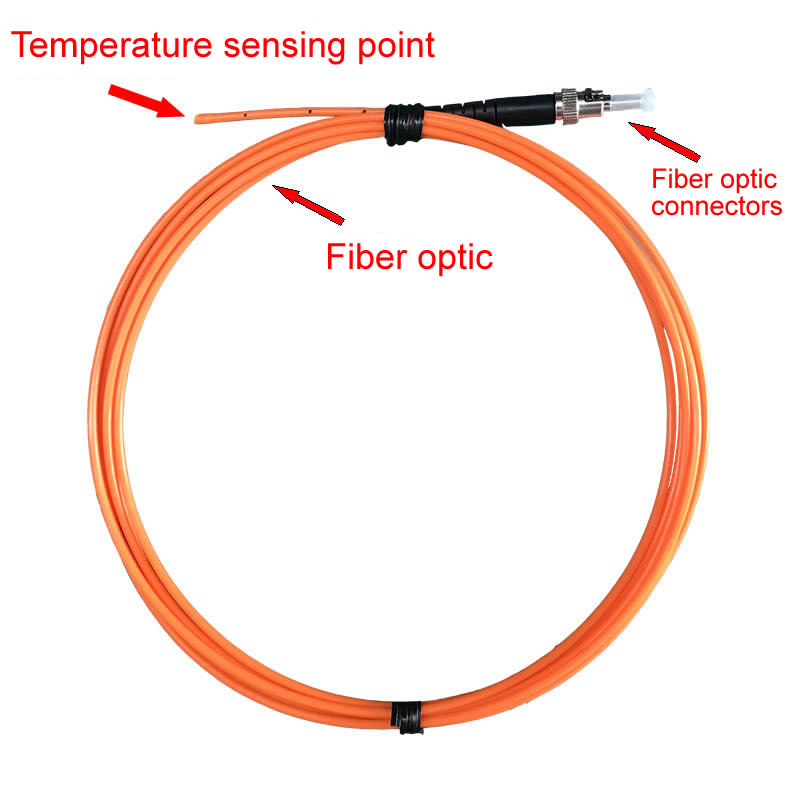
The fluorescent fiber optic temperature sensor (also called a phosphor-tipped or fluorescence lifetime sensor) is the dominant technology in biomedical temperature measurement. A small phosphor crystal — typically a rare-earth-doped material such as magnesium fluorogermanate — is bonded to the tip of a thin optical fiber (typically 0.5 mm to 1.0 mm outer diameter). A pulsed UV or blue light excites the phosphor, which emits fluorescence. The decay time of this fluorescence shortens predictably as temperature increases.
This technology provides a measurement range of +15 °C to +85 °C for standard biomedical configurations, which fully covers the physiological and therapeutic temperature range encountered in clinical use. Accuracy reaches ±0.1 °C to ±0.2 °C with response times under 500 milliseconds. The probe diameter is small enough to pass through needles, catheters, and endoscopic channels. This is the preferred technology for MRI-compatible temperature monitoring, hyperthermia treatment control, and intraoperative thermal surveillance.
GaAs Semiconductor Fiber Optic Sensors
Gallium arsenide (GaAs) fiber optic temperature sensors use a tiny GaAs crystal at the fiber tip. The bandgap absorption edge of GaAs shifts with temperature — as temperature increases, the crystal absorbs longer wavelengths of light. By measuring the spectral shift of the transmitted or reflected light, the system determines the temperature.
GaAs sensors offer a biomedical measurement range of approximately +10 °C to +300 °C, with the clinical operating window typically limited to +20 °C to +80 °C. They provide good accuracy (±0.2 °C to ±0.5 °C) and fast response. The main advantage of GaAs sensors is their excellent long-term stability and resistance to photobleaching — the sensing element does not degrade with repeated use, unlike some phosphor materials. These sensors are used in thermal ablation monitoring and laboratory biomedical research instruments.
Fiber Bragg Grating (FBG) Biomedical Sensors
FBG-based biomedical temperature sensors use a Bragg grating inscribed in a thin optical fiber to reflect a specific wavelength that shifts with temperature. In biomedical applications, FBG sensors are particularly valued for their multiplexing capability — multiple sensing points can be placed along a single fiber at precise intervals, enabling multi-point temperature profiling along a catheter, needle, or tissue surface.
Biomedical FBG probes operate across +10 °C to +100 °C in typical clinical configurations, with accuracy of ±0.1 °C to ±0.5 °C. They are used in intravascular temperature mapping, thermal dose monitoring during ablation procedures, and smart surgical needle temperature profiling. The main limitation is that FBG sensors respond to both temperature and strain, so mechanical isolation or compensation is needed for purely thermal measurements in dynamic tissue environments.
Technology Comparison for Biomedical Use
| Technology | Biomedical Range | Accuracy | Probe Size | MRI Compatible | Multi-Point |
|---|---|---|---|---|---|
| Fluorescent (Phosphor) | +15 °C to +85 °C | ±0.1 °C to ±0.2 °C | 0.5–1.0 mm | Yes | No (single point) |
| GaAs Semiconductor | +20 °C to +80 °C | ±0.2 °C to ±0.5 °C | 0.5–1.5 mm | Yes | No (single point) |
| FBG | +10 °C to +100 °C | ±0.1 °C to ±0.5 °C | 0.2–0.5 mm (fiber) | Yes | Yes (multiplexed) |
3. Key Advantages Over Conventional Biomedical Temperature Sensors

Complete MRI and EMI Compatibility
The single most important advantage of fiber optic temperature sensors in biomedical instrumentation is their total immunity to magnetic and electromagnetic fields. Thermocouples, thermistors, and RTDs all contain metal, which creates three problems in MRI environments: the sensor becomes a projectile risk in strong static fields, RF energy can couple into the metal leads causing localized tissue heating and burns, and the MRI’s gradient and RF fields induce electrical noise that corrupts the temperature reading. A fiber optic MRI-compatible temperature sensor eliminates all three problems because it contains no conductive material whatsoever.
Inherent Electrical Safety
Because no electrical current reaches the patient contact point, fiber optic sensors provide inherent Type BF or Type CF level electrical isolation under IEC 60601-1 medical device standards. There is zero risk of leakage current, microshock, or defibrillation-pulse damage through the sensor. This makes fiber optic temperature probes safe for direct cardiac contact applications where even microampere-level leakage from conventional sensors can be lethal.
Miniature Probe Size
Biomedical fiber optic temperature probes can be manufactured with outer diameters as small as 0.3 mm to 0.5 mm, allowing insertion through 18-gauge or smaller hypodermic needles, microcatheters, and endoscopic working channels. This enables minimally invasive real-time temperature monitoring at sites that are impossible to reach with bulkier conventional sensors.
Chemical and Biological Inertness
Glass optical fiber and the encapsulation materials used in medical-grade probes are chemically inert and biocompatible. They do not corrode in bodily fluids, do not release cytotoxic substances, and can be sterilized using ethylene oxide (EtO), gamma irradiation, or autoclave processes (for reusable probes). Single-use sterile disposable fiber optic temperature probes are available for applications requiring guaranteed sterility.
No Self-Heating Effect
Thermistors and RTDs require a small excitation current that causes self-heating at the sensing element — a significant error source when measuring tissue temperature at high precision. Fiber optic sensors use only light, producing no thermal artifact at the measurement point. This is particularly important in neonatal temperature monitoring and brain tissue thermal measurement where even 0.1 °C of self-heating error is clinically unacceptable.
4. Major Biomedical Application Scenarios
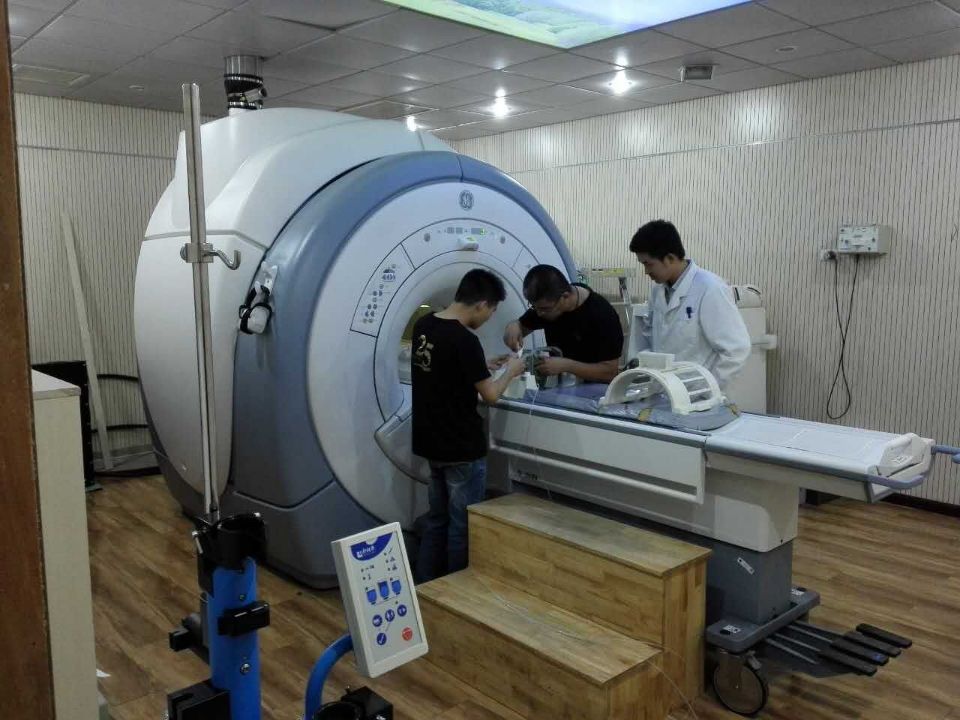
MRI-Guided Procedures and MRI Thermal Monitoring
MRI-compatible fiber optic temperature sensors are essential during MRI-guided focused ultrasound (MRgFUS) surgery, MRI-guided laser interstitial thermal therapy (MRgLITT) for brain tumors, and routine MRI safety compliance testing. During these procedures, real-time tissue temperature must be monitored to verify therapeutic heating reaches the target zone while surrounding healthy tissue remains within safe limits. Fluorescent fiber optic probes inserted through MRI-compatible stereotactic frames or catheters provide continuous, artifact-free temperature data throughout the procedure.
Radiofrequency and Microwave Hyperthermia Treatment
Cancer hyperthermia treatment uses RF or microwave energy to heat tumor tissue to 40–45 °C, enhancing the effectiveness of radiation therapy and chemotherapy. Accurate temperature monitoring within and around the tumor is critical for treatment efficacy and patient safety. Conventional sensors fail in these strong RF/microwave fields. Fluorescent fiber optic temperature probes are inserted directly into the tumor via interstitial needles to provide real-time thermal dose mapping during treatment.
Cardiac Catheter and Intravascular Temperature Monitoring
Fiber optic catheter temperature sensors measure blood and vessel wall temperature during cardiac catheterization, RF cardiac ablation for arrhythmia treatment, and coronary vulnerable plaque detection. In RF ablation, monitoring the catheter tip and tissue interface temperature prevents excessive heating that can cause steam pops, perforation, or charring. FBG-based multi-point probes can map the temperature gradient along the ablation catheter length for more precise lesion control.
Laser Surgery and Photodynamic Therapy
During laser surgery and photodynamic therapy (PDT), fiber optic temperature sensors monitor tissue temperature at the laser delivery site to control thermal damage boundaries. The sensors must operate without absorbing the therapeutic laser light or creating reflective artifacts. Fiber optic probes designed for this application use wavelength-selective coatings and are positioned to measure temperature without interfering with the optical treatment beam.
Neonatal and Pediatric Patient Monitoring
Neonatal fiber optic temperature probes are used in incubators and warming beds where electromagnetic compatibility, electrical safety, and minimal probe size are essential. Neonates are highly sensitive to temperature fluctuations, and the absence of self-heating and electrical hazard makes fiber optic sensors the safest option for continuous skin or rectal temperature monitoring in this vulnerable population.
Emerging Research Applications
Biomedical research laboratories use fiber optic temperature sensors in perfused organ systems, tissue engineering bioreactors, cryopreservation monitoring, microfluidic thermal control, and small-animal imaging studies (micro-MRI and micro-CT) where conventional sensors would interfere with the imaging equipment or the biological specimen.
5. How to Select a Biomedical-Grade Fiber Optic Temperature Sensor

Step 1: Confirm the Clinical Environment
Identify whether the sensor must operate inside an MRI bore, within an RF/microwave therapeutic field, in a catheterization lab, or in a standard clinical monitoring setting. MRI environments demand fully non-magnetic, non-conductive probes with MRI-conditional certification. RF therapy environments require probes validated for specific power levels and frequencies.
Step 2: Determine Required Accuracy and Response Time
Hyperthermia treatment and ablation monitoring typically require ±0.2 °C accuracy and sub-second response. General patient monitoring may accept ±0.5 °C with slower response. Match the sensor specification to your clinical accuracy requirement — overspecifying adds unnecessary cost.
Step 3: Evaluate Probe Geometry and Sterility Requirements
Consider whether you need a needle-insertable probe, a catheter-integrated sensor, a surface skin probe, or an endoscopic-channel-compatible design. Determine if single-use sterile packaging is required (most invasive clinical applications) or if a reusable, sterilizable probe is acceptable (laboratory or surface monitoring).
Step 4: Verify Regulatory Compliance
Biomedical fiber optic temperature sensors used for patient contact must comply with IEC 60601-1 (medical electrical equipment safety), relevant biocompatibility standards (ISO 10993), and applicable regional regulatory approvals (FDA 510(k), CE marking under MDR, or equivalent). Confirm that the manufacturer provides the necessary documentation and test reports.
Step 5: Assess System Integration
Evaluate how the sensor system integrates with your existing clinical workflow — signal processor form factor, display options, data output interfaces (analog, RS-232, USB, Ethernet), alarm capabilities, and compatibility with hospital information systems. A sensor with excellent specifications is useless if it cannot be practically deployed in your clinical setting.
6. FAQs About Fiber Optic Temperature Sensors in Biomedical Instrumentation
Q1: Why are fiber optic temperature sensors preferred over thermocouples in MRI?
Thermocouples contain metal wires that distort MRI images, create patient safety hazards due to RF-induced heating, and produce noisy readings in strong magnetic fields. Fiber optic sensors are entirely non-metallic and non-conductive, making them completely MRI-compatible with no image artifacts, no RF heating risk, and no signal interference.
Q2: What accuracy can biomedical fiber optic temperature sensors achieve?
The best fluorescent fiber optic sensors used in biomedical applications achieve ±0.1 °C accuracy. Typical clinical-grade systems provide ±0.2 °C to ±0.3 °C. GaAs and FBG sensors generally achieve ±0.2 °C to ±0.5 °C depending on calibration and configuration.
Q3: Can fiber optic temperature probes be used inside the human body?
Yes. Biomedical fiber optic temperature probes are designed for invasive use. They can be inserted through needles, catheters, and endoscopic channels into tissues, body cavities, and blood vessels. Probes intended for invasive use must meet biocompatibility (ISO 10993) and medical device safety standards.
Q4: How small can a biomedical fiber optic temperature probe be?
The smallest commercially available biomedical probes have outer diameters of approximately 0.3 mm to 0.5 mm, allowing passage through standard hypodermic needles (18-gauge or smaller). Catheter-integrated versions are typically 0.5 mm to 1.0 mm in diameter.
Q5: Are fiber optic temperature sensors safe for neonatal patients?
Yes. Fiber optic sensors carry no electrical current to the patient, produce no self-heating, and pose no shock or burn hazard. They are among the safest temperature monitoring options for neonates and are used in incubators, warming beds, and during neonatal MRI procedures.
Q6: What is the typical response time of a biomedical fiber optic temperature sensor?
Response time (to 90% of a step change) is typically 200 ms to 500 ms for fluorescent probes and 100 ms to 300 ms for GaAs probes. This is fast enough for real-time monitoring during ablation, hyperthermia, and surgical procedures.
Q7: Can these sensors be sterilized?
Reusable fiber optic probes can be sterilized using ethylene oxide (EtO) gas or low-temperature hydrogen peroxide plasma. Some probes are autoclavable. Many clinical applications use single-use sterile probes supplied in sealed packaging to eliminate cross-contamination risk.
Q8: How do fiber optic sensors perform during RF ablation procedures?
Fiber optic temperature sensors are the standard for RF ablation temperature monitoring because they are unaffected by the ablation RF energy. They accurately measure tissue and catheter tip temperature without signal corruption, enabling precise lesion size control and preventing overheating complications.
Q9: Do fiber optic temperature sensors require special calibration for biomedical use?
Biomedical fiber optic sensors are factory-calibrated against traceable temperature standards (typically NIST-traceable). For clinical applications, periodic calibration verification using a certified reference thermometer and a controlled temperature bath is recommended according to institutional quality protocols.
Q10: What is the lifespan of a reusable biomedical fiber optic temperature probe?
A well-maintained reusable probe typically lasts 500 to 2000 sterilization cycles or 2–5 years of regular use, depending on the handling conditions and sterilization method. The fiber connector interface and the probe tip coating are the components most subject to wear. Manufacturers provide specific cycle-life ratings for each product.
Disclaimer: The information provided in this article is for general educational and reference purposes only. It does not constitute medical device advice, clinical guidance, or regulatory recommendation. Specific sensor performance, biocompatibility, and regulatory status vary by manufacturer and product model. Always consult the manufacturer’s technical documentation and your institution’s biomedical engineering team before selecting or deploying sensors in clinical settings. FJINNO (www.fjinno.net) assumes no liability for any decisions made based on the content of this article.

Fiber optic temperature sensor, Intelligent monitoring system, Distributed fiber optic manufacturer in China
|
 |
 |