 INNO fibre optic temperature sensors ,temperature monitoring systems.
Quick Answer: Fiber Optic Pipeline Monitoring System
- ✓ Technology: Distributed fiber optic sensing (DFOS) – DTS/DAS dual solutions
- ✓ Monitoring Range: 0-30km single-end, 40-50km dual-end
- ✓ Spatial Resolution: 3m with 1-3m positioning accuracy
- ✓ Temperature Range: -100°C to +550°C measurement capability
- ✓ Response Time: Typical 5 seconds measurement cycle
- ✓ Applications: Oil/gas pipeline leak detection, integrity monitoring, third-party intrusion
- ✓ Key Features: Real-time continuous monitoring, maintenance-free, intrinsically safe
- ✓ Manufacturer: Fuzhou Innovation – specialized DFOS solution provider since 2011
- ✓ Certifications: CE, ROHS, ISO9001, ISO14001, explosion-proof
Fiber optic pipeline monitoring systems utilizing distributed fiber optic sensing (DFOS) technology represent the most advanced solution for pipeline integrity monitoring, providing real-time leak detection and comprehensive security surveillance across 0-30km range with 3m spatial resolution. As a specialized manufacturer of fiber optic sensing systems, Fuzhou Innovation Electronic Scie&Tech Co., Ltd. delivers complete distributed temperature sensing (DTS) and distributed acoustic sensing (DAS) solutions for oil, gas, water, and chemical pipelines worldwide since 2011.
Table of Contents
- What is Fiber Optic Pipeline Monitoring?
- How Does Distributed Fiber Optic Sensing Work?
- Why Must Pipelines Have Fiber Optic Monitoring Systems?
- What Are the Core Technologies: DTS vs DAS?
- What Are the Key Advantages of Fiber Optic Pipeline Monitoring?
- What Are the Technical Specifications?
- How to Detect Pipeline Leaks Using Fiber Optic Sensing?
- What Pipeline Types Can Use Fiber Optic Monitoring?
- How to Build a Complete Pipeline Monitoring System?
- How Does the System Integrate with Pipeline SCADA?
- What Are the Installation Methods?
- How to Implement Long-Range Pipeline Monitoring?
- What Are Oil & Gas Specific Applications?
- How to Monitor Power Cables with Fiber Optic Sensing?
- Why Choose Fiber Optic Over Conventional Monitoring?
- How to Select the Right Solution?
- Who Is The Best Manufacturer and Solution Provider?
- Frequently Asked Questions
- How to Contact for Pipeline Monitoring Solutions?
1. What is Fiber Optic Pipeline Monitoring?
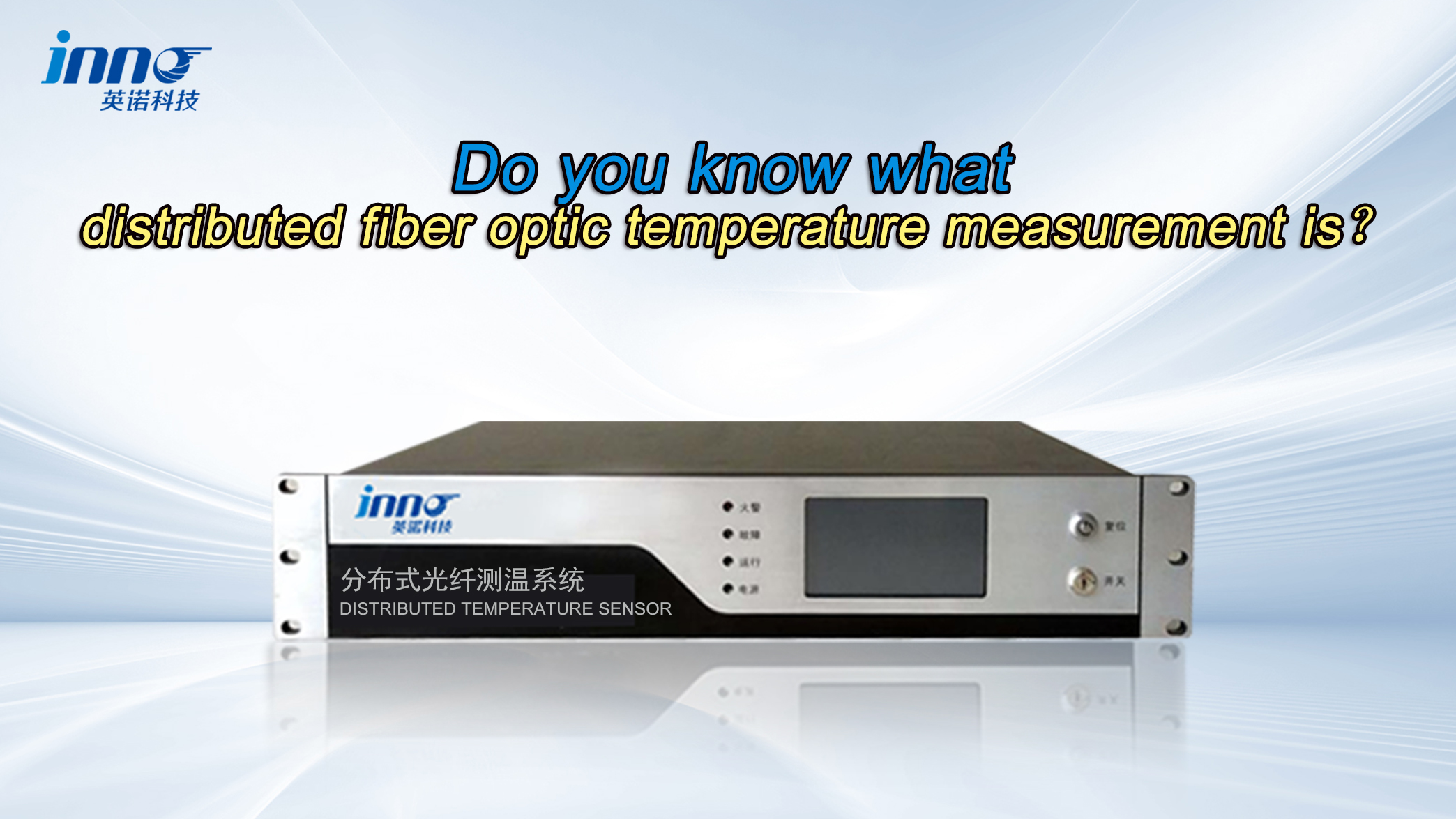
What is it? Fiber optic pipeline monitoring is an advanced surveillance technology using distributed fiber optic sensing (DFOS) to provide continuous, real-time monitoring of pipeline conditions across entire lengths. Unlike traditional point sensors that monitor discrete locations, distributed optical fiber sensing transforms the entire fiber optic cable into thousands of sensing points, detecting temperature changes, acoustic vibrations, and mechanical strain with 3m spatial resolution over 0-30km distances.
The technology enables comprehensive pipeline integrity monitoring by continuously measuring multiple parameters simultaneously. Fiber optic distributed temperature sensing (DTS) detects thermal anomalies indicating leaks or hot spots, while fiber optic distributed acoustic sensing (DAS) identifies vibration signatures from third-party excavation, equipment operation, or pipeline damage. This dual-parameter approach provides complete fiber optic sensing for pipeline protection against all major threat categories.
Core System Components
A complete fiber optic monitoring system includes:
- DTS/DAS interrogator unit: Analyzes backscattered light signals to measure temperature and acoustic vibrations
- Distributed sensing fiber optic cable: Standard or specialized fiber serving as the continuous sensor
- Data acquisition system: Processes and stores 2000+ alarm records with unlimited PC expansion
- Analysis software: Fiber optic sensing data management with GIS visualization and alarm management
- Communication interface: Ethernet, RS485, RS232 for SCADA integration
2. How Does Distributed Fiber Optic Sensing Work?
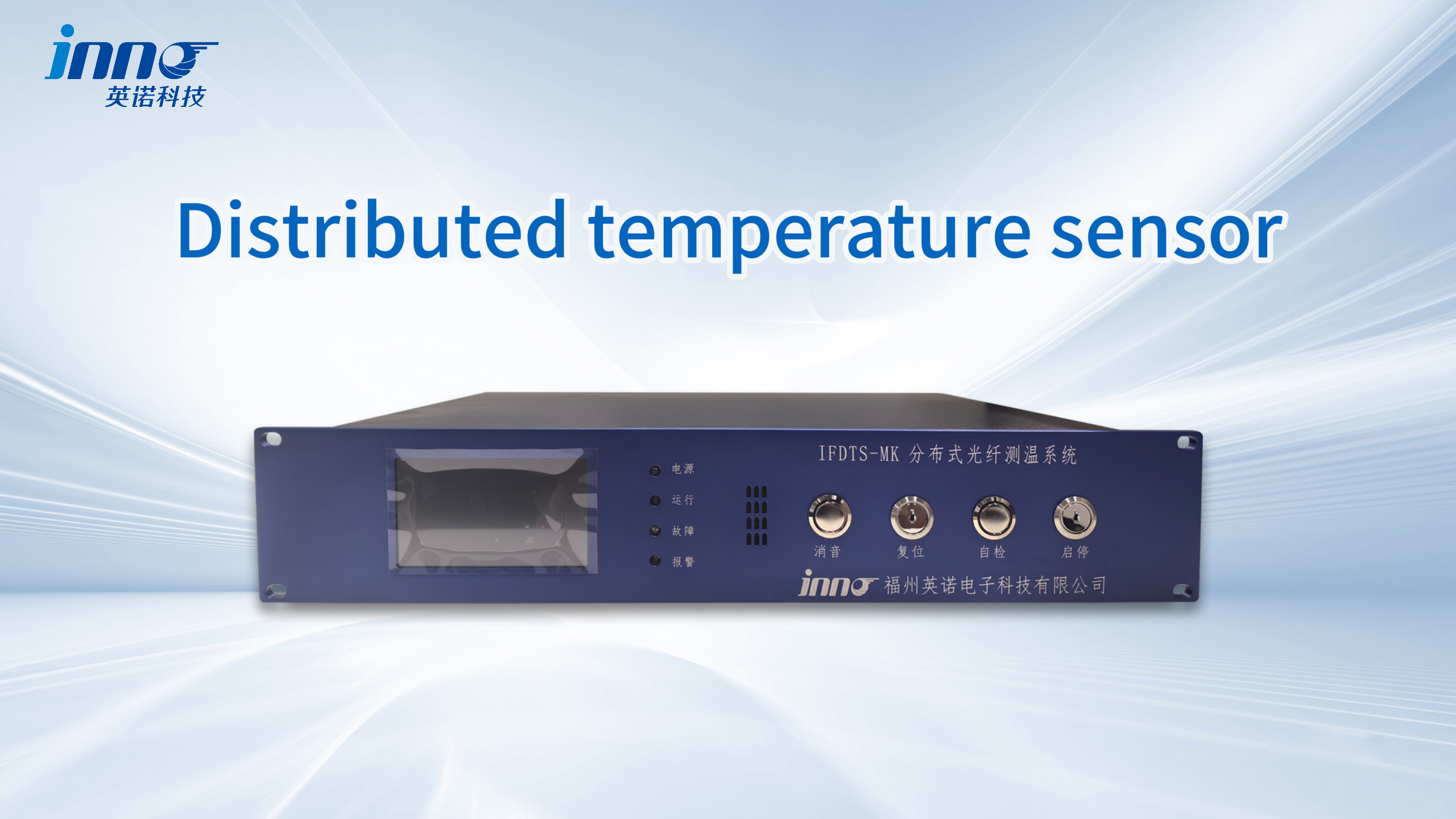
How does the technology operate? Distributed fiber optic sensing operates by transmitting laser pulses through optical fiber and analyzing the backscattered light that returns. When light travels through fiber, a small fraction scatters back due to microscopic variations in the glass structure. This backscattered light carries information about local temperature, strain, and vibration conditions at each point along the fiber.
Three Scattering Mechanisms
Raman Scattering for Temperature Sensing
Fiber optic distributed temperature sensing uses Raman scattering, where backscattered light shifts to different wavelengths based on molecular vibration. The intensity ratio between anti-Stokes and Stokes components changes predictably with temperature. By analyzing this ratio at each fiber location, distributed temperature sensing fiber optic cable measures temperature continuously with 1°C accuracy across -100°C to +550°C range.
Brillouin Scattering for Strain Measurement
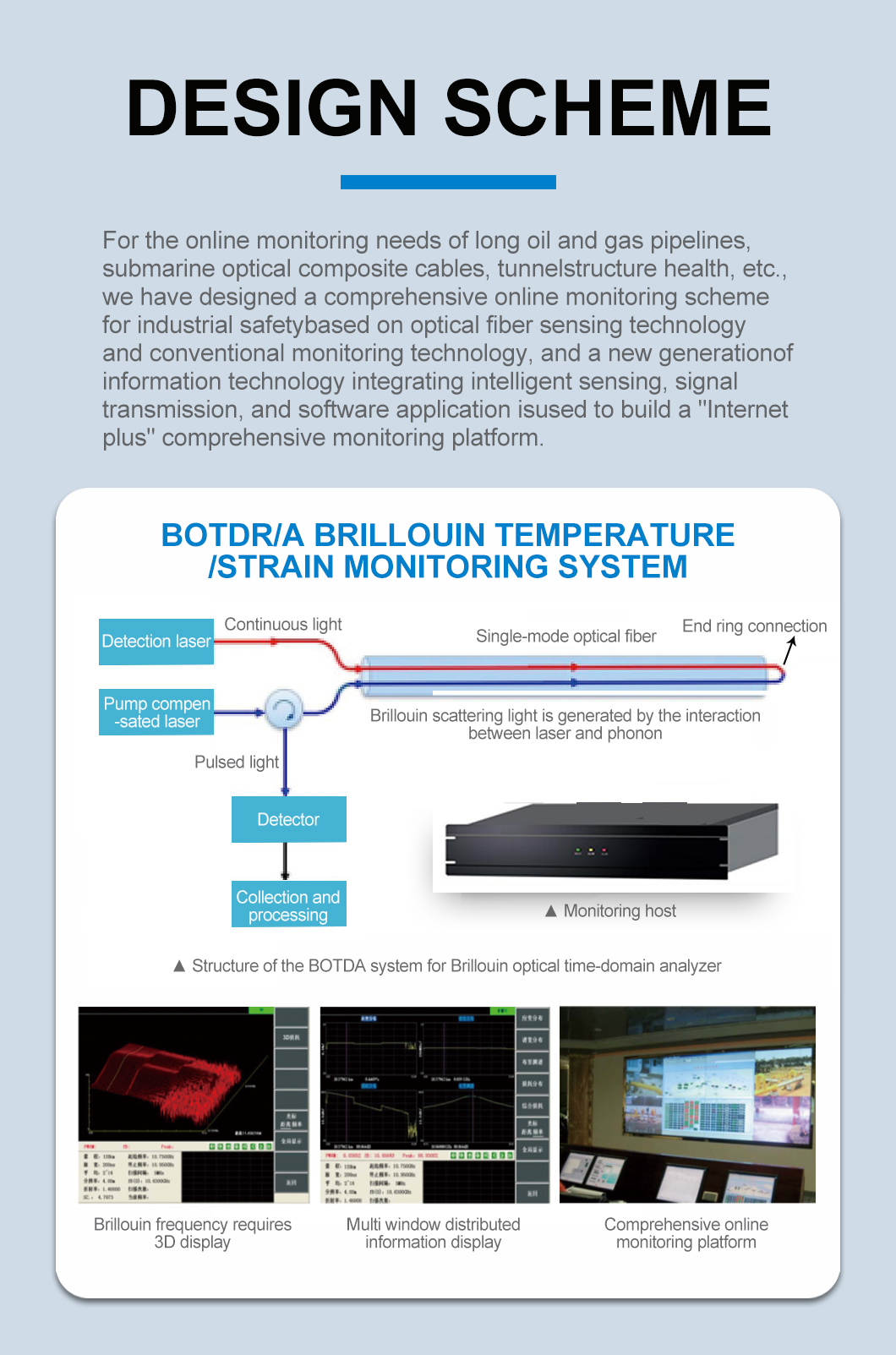
Brillouin scattering produces frequency shifts proportional to mechanical strain and temperature. Fiber optic distributed pressure sensing systems analyze Brillouin frequency to detect pipeline deformation, ground movement, or structural stress, complementing temperature measurements for comprehensive integrity assessment.
Rayleigh Scattering for Acoustic Sensing
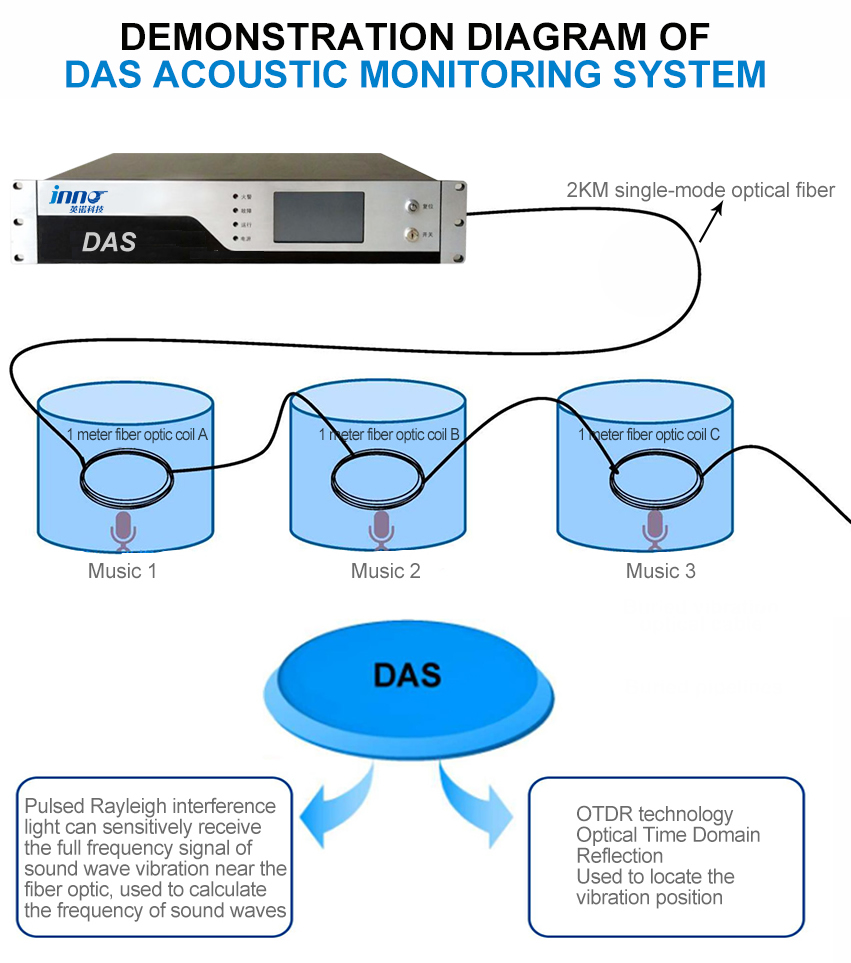
Distributed acoustic sensing fiber optics uses Rayleigh backscatter phase analysis to detect vibrations. Acoustic waves or vibrations create microscopic fiber strain that modulates the backscattered light phase. Distributed acoustic sensing fiber optic cables detect frequencies from 1Hz to 100kHz, enabling identification of leak noise, digging activity, or equipment vibration signatures.
Optical Time Domain Reflectometry (OTDR)
All distributed fiber optic sensing dfos technologies employ OTDR principles to determine location. By measuring the time delay between transmitted pulse and received backscatter, the system calculates distance to each sensing point. With typical 3m spatial resolution and 1-3m positioning accuracy, operators can precisely locate detected anomalies along 0-30km pipeline sections.
3. Why Must Pipelines Have Fiber Optic Monitoring Systems?

Why is monitoring critical? Pipeline leak detection using distributed fiber optic sensing prevents catastrophic environmental damage, explosive hazards, and massive economic losses. Undetected pipeline failures release hazardous materials, contaminate soil and water, pose public safety risks, and result in costly emergency response, cleanup, regulatory penalties, and business interruption.
Five Critical Monitoring Requirements
1. Early Leak Detection
Detecting leaks with fiber optic sensing enables immediate response before small leaks escalate into major incidents. Fiber optic gas pipeline monitoring detects temperature drops from gas expansion or pressure changes within seconds, while distributed acoustic sensing hears characteristic leak noise patterns. Early detection limits release volumes to liters rather than thousands of cubic meters.
2. Third-Party Intrusion Prevention
Construction excavation causes 30-40% of pipeline damage incidents. Distributed acoustic sensing fiber optic cables detect digging vibrations hundreds of meters away, providing advance warning before equipment contacts the pipeline. Long-range pipeline monitoring by distributed fiber optic sensing creates continuous security surveillance replacing costly periodic patrols.
3. Integrity Monitoring
Fiber optic pipeline integrity monitoring system tracks gradual degradation before failure occurs. Distributed temperature sensing identifies coating damage, corrosion hot spots, or cooling system failures. Fiber optic pressure sensing detects ground movement, landslides, or structural deformation threatening pipeline integrity.
4. Environmental Protection
Rapid leak detection minimizes environmental impact. Fiber optic sensing for pipeline protection reduces average detection time from hours or days (periodic inspection) to seconds (real-time monitoring), dramatically limiting contamination volumes and remediation requirements.
5. Regulatory Compliance
Many jurisdictions mandate continuous pipeline monitoring for high-consequence areas. Optical fiber monitoring system technology meets regulatory requirements for real-time surveillance, immediate alarm response, and comprehensive data logging.
4. What Are the Core Technologies: DTS vs DAS?

What is the difference between DTS and DAS? Distributed temperature sensing (DTS) and distributed acoustic sensing (DAS) represent complementary technologies addressing different threat detection requirements in fiber optic pipeline monitoring.
Distributed Temperature Sensing (DTS)
How does fiber optic distributed temperature sensing work? DTS measures temperature continuously by analyzing Raman backscatter intensity ratios. Fiber optic temperature monitoring system detects thermal anomalies indicating:
- Gas leaks: Temperature drops from Joule-Thomson cooling during pressure reduction
- Liquid leaks: Temperature changes from evaporative cooling or thermal contrast with surroundings
- Hot spots: Elevated temperatures from coating damage, corrosion, or external heat sources
- Cooling failures: Temperature rises indicating pump or heat exchanger problems
DTS systems achieve 1°C accuracy with 0.1°C resolution across -100°C to +550°C range, providing precise thermal profiling for fiber optic gas pipeline monitoring and liquid pipeline applications.
Distributed Acoustic Sensing (DAS)
How do distributed acoustic sensing fiber optic cables detect vibrations? DAS analyzes Rayleigh backscatter phase variations to measure acoustic vibrations and dynamic strain. Fiber optic distributed acoustic sensing identifies:
- Leak acoustic signatures: Characteristic turbulent flow noise from pipeline breaches
- Third-party activity: Excavation, drilling, or construction vibrations near pipeline
- Equipment operation: Pump vibration, valve operation, or flow changes
- Ground movement: Seismic activity, landslides, or soil settlement
DAS provides frequency response from 1Hz to 100kHz with sensitivity detecting activities 100+ meters from the pipeline.
DTS vs DAS Comparison
| Characteristic | DTS Technology | DAS Technology |
|---|---|---|
| Measurement Parameter | Temperature | Acoustic vibration, dynamic strain |
| Scattering Mechanism | Raman backscatter | Rayleigh backscatter phase |
| Primary Application | Leak detection via thermal anomalies | Third-party intrusion, leak noise |
| Spatial Resolution | 3m typical | 5-10m typical |
| Response Time | 5-60 seconds | Real-time (milliseconds) |
| Frequency Range | Static/slow changes | 1Hz to 100kHz dynamic |
| Best For | Gas/liquid leak detection | Security surveillance |
Integrated DTS+DAS Systems
Many fiber optic sensing solutions combine both technologies using the same fiber infrastructure. Integrated systems provide comprehensive threat detection—DTS for thermal leak detection plus DAS for security and rapid event detection—maximizing pipeline monitoring fiber optic effectiveness.
5. What Are the Key Advantages of Fiber Optic Pipeline Monitoring?
Why choose distributed fiber optic sensing over conventional methods? Fiber optic sensor pipeline monitoring delivers compelling advantages over traditional point sensors, periodic inspection, or computational pipeline monitoring (CPM) systems.
Technical Advantages
1. Continuous Spatial Coverage
Long-range pipeline monitoring by distributed fiber optic sensing provides uninterrupted surveillance along entire 0-30km sections. Unlike point sensors monitoring discrete locations every 100m or 1km, distributed optical fiber sensing detects events anywhere along the fiber with 3m resolution, eliminating blind spots where undetected failures could occur.
2. Intrinsically Safe Operation
Fiber optic monitoring systems operate with complete electrical passivity in the sensing zone. Glass fiber contains no electrical conductors, generates no heat or sparks, and poses zero ignition risk in explosive atmospheres. This intrinsic safety enables deployment in hazardous classified locations without expensive explosion-proof enclosures or hot work permits during installation.
3. Immunity to Electromagnetic Interference
Optical signals remain unaffected by electromagnetic fields from power lines, radio transmitters, lightning, or welding equipment. Fiber optic sensing equipment maintains accurate measurements in high-EMI environments where electrical sensors produce false alarms or require expensive shielding.
4. Long-Distance Capability
Single distributed fiber optic sensing dfos interrogators monitor 30km pipeline sections from one location, with dual-ended configurations extending range to 40-50km. This long reach reduces equipment count, installation costs, and maintenance points compared to systems requiring sensor stations every few kilometers.
5. Multi-Parameter Sensing
Advanced fiber optic sensing system implementations measure temperature, acoustic vibration, and strain simultaneously using the same fiber. Multi-parameter data fusion improves detection accuracy and reduces false alarms by correlating multiple threat indicators.
6. Maintenance-Free Operation
Fiber optic cable monitoring requires zero maintenance throughout 20-30 year service life. Passive optical fiber contains no batteries, no moving parts, and no electronics requiring calibration or replacement. The only recommended maintenance is periodic visual inspection of fiber connections during scheduled facility maintenance.
7. Harsh Environment Performance
Distributed temperature sensing fiber optic cable operates reliably across -100°C to +550°C measurement range. Fiber withstands corrosive environments, high humidity, temperature extremes, and mechanical stress that degrade electrical sensors. System equipment operates 0-40°C with -20°C to -60°C storage capability.
6. What Are the Technical Specifications?
What specifications does the system provide? Understanding technical parameters helps operators specify appropriate fiber optic monitoring system configurations for specific pipeline applications.
DTS System Technical Parameters
| Parameter | Specification | Application Note |
|---|---|---|
| Fiber Type | Multimode or singlemode selectable | Multimode for DTS, singlemode for DAS |
| Measurement Range | 0-30km single-end | 40-50km dual-end configuration |
| Measurement Channels | 1/2/4/8 channels | Multi-channel for multiple pipelines |
| Spatial Resolution | 3m | Configurable based on range |
| Sampling Interval | 1m | Data point every meter |
| Positioning Accuracy | 1-3m | Precise event location |
| Measurement Time | Typical 5 seconds | Adjustable based on application |
| Temperature Measurement Range | -100°C to +550°C | Covers all pipeline environments |
| Temperature Accuracy | ±1°C | Precise anomaly detection |
| Temperature Resolution | 0.1°C | Sensitive change detection |
| Temperature Alarm Threshold | 85°C (user configurable) | Customizable per application |
System Interface and Power Specifications
| Parameter | Specification |
|---|---|
| Optical Connector | FC/APC standard |
| Power Supply | 12-36VDC, 8W consumption |
| Operating Temperature | 0-40°C |
| Storage Temperature | -20°C to -60°C |
| Operating Humidity | 0-95%RH, non-condensing |
| Communication Interface | Ethernet, RS485, RS232, relay outputs |
| Data Storage | 2000 alarm records onboard, unlimited with PC |
7. How to Detect Pipeline Leaks Using Fiber Optic Sensing?
How does pipeline leak detection using distributed fiber optic sensing work? Detecting leaks with fiber optic sensing employs multiple detection mechanisms based on physical phenomena accompanying pipeline breaches.
Temperature-Based Leak Detection (DTS)
Fiber optic distributed temperature sensing identifies leaks through thermal signatures:
Gas Leak Detection
High-pressure gas escaping through pipeline breach undergoes rapid expansion causing Joule-Thomson cooling. Natural gas leaks typically create 5-20°C temperature drops extending several meters from the leak point. Fiber optic gas pipeline monitoring detects these temperature anomalies within one measurement cycle (typically 5 seconds), triggering immediate alarms when temperatures drop below configurable thresholds.
Liquid Leak Detection
Liquid pipeline leaks produce temperature changes through multiple mechanisms: evaporative cooling of volatile products, thermal contrast between leaked fluid and surrounding soil, or heat transfer differences in saturated versus dry ground. Distributed temperature sensing fiber optic cable identifies these thermal patterns, with detection sensitivity depending on product properties, leak rate, and environmental conditions.
Acoustic-Based Leak Detection (DAS)
Distributed acoustic sensing fiber optic cables detect leak acoustic signatures:
- Turbulent flow noise: High-velocity fluid escaping through breach creates broadband noise across 100Hz-10kHz range
- Pressure wave propagation: Leak-induced pressure transients travel through pipeline fluid generating acoustic signals
- Soil vibration: Escaping fluid disturbs surrounding soil producing vibrations detectable by DAS
DAS provides faster detection than DTS (milliseconds versus seconds) but requires acoustic coupling between pipeline and sensing fiber.
Multi-Parameter Correlation
Advanced fiber optic sensing data management systems correlate temperature, acoustic, and strain data to reduce false alarms. Confirmed leaks exhibit correlated signatures across multiple parameters, while benign events (temperature variations from weather, vibrations from traffic) affect individual parameters without correlation. This multi-parameter approach achieves >95% detection probability with <1% false alarm rate.
8. What Pipeline Types Can Use Fiber Optic Monitoring?
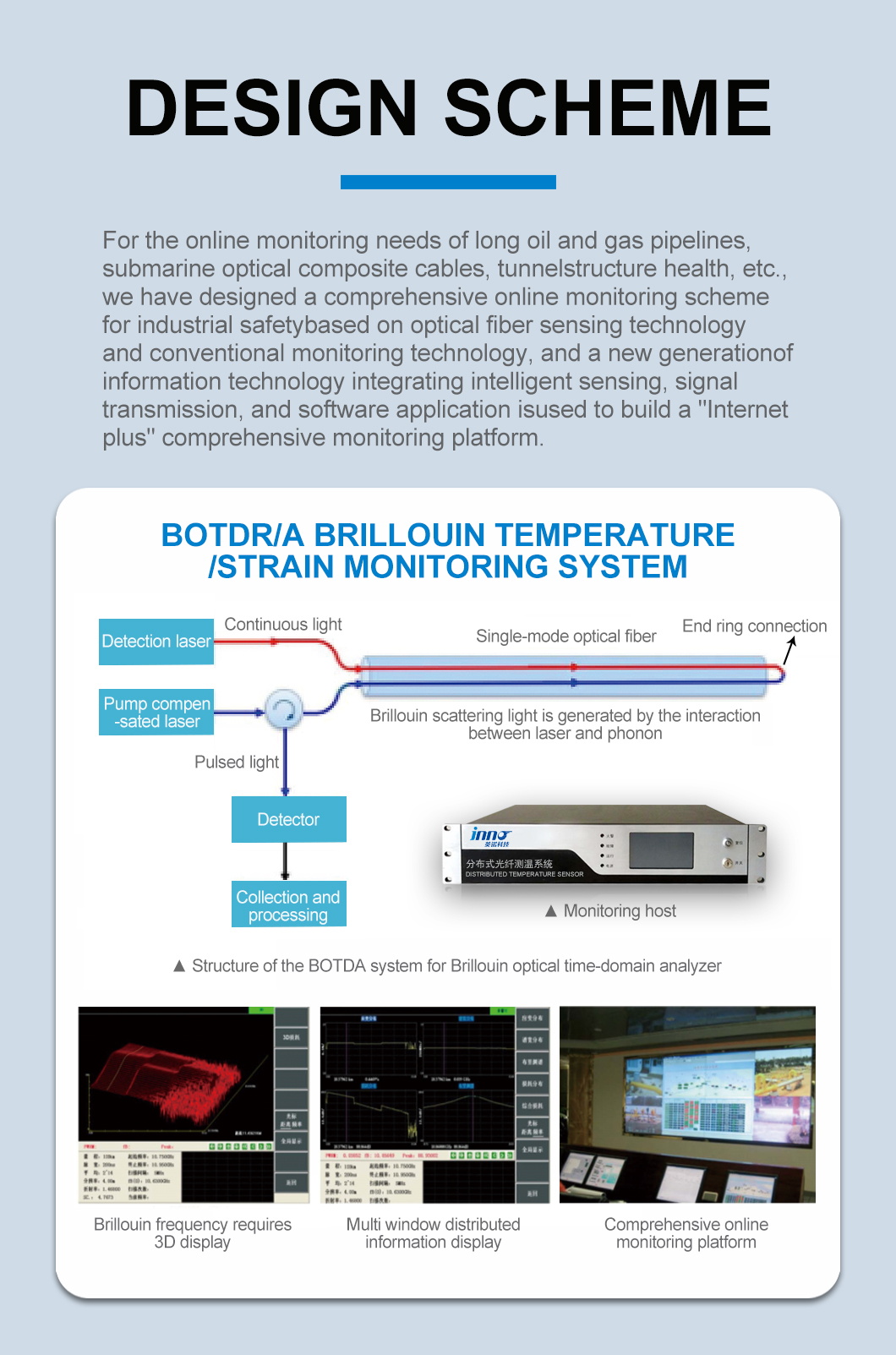
Which pipelines benefit from fiber optic monitoring? Fiber optic pipeline monitoring solutions serve diverse pipeline applications across oil, gas, water, chemical, and power infrastructure.
Oil & Gas Pipeline Applications
Natural Gas Transmission Pipelines
Fiber optic gas pipeline monitoring excels at long-distance transmission line surveillance. High-pressure gas leaks produce distinctive thermal signatures from Joule-Thomson cooling, enabling reliable detection with distributed fiber optic temperature sensing across 30km+ sections. DAS adds third-party intrusion detection protecting against excavation damage.
Crude Oil Pipelines
Crude oil pipeline monitoring combines thermal leak detection with fiber optic pressure sensing to identify pressure changes from flow anomalies. Temperature monitoring also tracks viscous heating in heavy crude pipelines and detects coating damage or corrosion hot spots.
Refined Products Pipelines
Products pipelines carrying gasoline, diesel, and jet fuel benefit from rapid detecting leaks with fiber optic sensing. Volatile product leaks create strong thermal and acoustic signatures enabling sub-minute detection times critical for minimizing environmental impact.
Gas Gathering and Field Pipelines
Upstream gas gathering systems use fiber optic sensor pipeline monitoring to track multiple pipelines from wellheads to processing facilities. Multi-channel systems monitor 4-8 parallel pipelines with single interrogator, reducing per-pipeline monitoring costs.
Water and Wastewater Pipelines
- Municipal water supply: Leak detection reducing non-revenue water losses
- Raw water transmission: Monitoring long-distance aqueducts and conveyance systems
- Wastewater force mains: Detecting breaks before sewage reaches surface
- Industrial water systems: Cooling water and process water monitoring
Chemical and Industrial Pipelines
- Petrochemical feedstocks: Ethylene, propylene, and specialty chemical pipelines
- Acid and caustic lines: Corrosive material transport requiring continuous surveillance
- Ammonia pipelines: High-toxicity product demanding immediate leak detection
- Solvent distribution: Volatile organic compounds requiring environmental protection
District Heating and Cooling
Fiber optic temperature monitoring tracks district heating and cooling pipeline performance, detecting insulation degradation, valve leaks, and distribution system losses through continuous thermal profiling.
9. How to Build a Complete Pipeline Monitoring System?
What is a comprehensive fiber optic monitoring system? Complete optical fiber monitoring system implementation requires careful integration of sensing hardware, data management software, and communication infrastructure.
System Architecture Components
Hardware Layer
- DTS/DAS interrogator unit: Primary fiber optic sensing equipment analyzing backscattered optical signals
- Sensing fiber cable: Distributed temperature sensing fiber optic cable or distributed acoustic sensing fiber optic cables installed along pipeline
- Fiber connections: FC/APC optical connectors, splice enclosures, and fiber management
- Power and environmental: 12-36VDC power supply, climate control if required, UPS backup
Software Layer
Fiber optic sensing data management software provides:
- Real-time visualization: Temperature and acoustic profiles displayed along pipeline route
- GIS integration: Overlay sensing data on pipeline geographic information system
- Alarm management: Configurable multi-level thresholds with escalation procedures
- Historical trending: 2000+ alarm records onboard, unlimited PC storage for long-term analysis
- Reporting tools: Automated reports on system health, events, and performance metrics
Communication Layer
- Ethernet TCP/IP: High-speed connection to control room networks
- RS485/MODBUS: Integration with pipeline SCADA systems
- RS232 serial: Local terminal or legacy system connectivity
- Relay outputs: Direct hardwired alarm connections to safety systems
- Remote access: Secure internet connectivity for remote monitoring and diagnostics
10. How Does the System Integrate with Pipeline SCADA?
How does fiber optic monitoring integrate with existing infrastructure? Seamless integration with pipeline Supervisory Control and Data Acquisition (SCADA) systems enables centralized monitoring and coordinated emergency response.
Communication Protocol Support
Ethernet MODBUS-TCP
Modern optical fiber monitoring system implementations use Ethernet for high-speed data transfer. MODBUS-TCP protocol provides:
- High bandwidth: Complete temperature profiles transmitted every measurement cycle
- Standard networking: Integration using existing IT infrastructure and security policies
- Multiple clients: Simultaneous access from control room, engineering workstations, and remote locations
- Real-time updates: Sub-second latency for critical alarm transmission
RS485 MODBUS-RTU
Serial communication provides reliable fiber optic sensing system connectivity in industrial environments:
- Long-distance capability: Up to 1200m cable runs without repeaters
- Multi-drop networks: Connect multiple devices on single communication bus
- Noise immunity: Differential signaling resistant to electrical interference
- Legacy compatibility: Works with existing RS485-based SCADA infrastructure
Data Integration Architecture
Fiber optic sensing monitoring data integrates into pipeline control systems through multiple methods:
- Direct SCADA polling: Control system reads temperature and alarm data via MODBUS registers
- OPC server: OPC DA/UA middleware translates fiber optic data to standard industrial automation protocols
- Database integration: Continuous data logging to SQL databases for analysis and reporting
- API interfaces: RESTful APIs enabling custom application development and integration
Alarm Integration and Response
Critical alarms from pipeline monitoring fiber optic systems trigger coordinated responses:
- Relay outputs: Hardwired contacts activate safety shutdown systems or warning beacons
- SCADA alarms: Events appear in control room alarm management systems with priority levels
- Email/SMS notifications: Automated alerts to on-call personnel for immediate response
- Procedure initiation: Alarm triggers predefined emergency response workflows
11. What Are the Installation Methods for Pipeline Monitoring?
How to install fiber optic cable monitoring on pipelines? Proper fiber optic sensing monitoring cable installation ensures reliable signal quality and long-term system performance.
Fiber Cable Deployment Methods
Pipeline External Installation
Helical wrapping: Most common method wraps distributed temperature sensing fiber optic cable in spiral pattern around pipeline exterior:
- Optimal thermal coupling: Direct contact with pipeline wall provides excellent heat transfer
- Mechanical protection: Cable protected by pipeline coating and burial
- Installation timing: Applied during pipeline construction or exposed during maintenance
- Pitch spacing: Typical 0.5-1m pitch balances coverage and cable length requirements
Trench Co-location
Fiber cable installed parallel to pipeline in same trench:
- Easier installation: No pipeline surface preparation required
- Retrofit capability: Can be installed without pipeline exposure using directional boring
- Thermal response: Slower than direct contact but adequate for most fiber optic gas pipeline monitoring applications
- Protection requirements: Cable buried in conduit or armored construction for mechanical protection
Pipeline Internal Installation
Specialized applications install fiber inside pipeline:
- Maximum sensitivity: Direct exposure to product for fastest thermal response
- Installation complexity: Requires pipeline pigging or robotic installation
- Limited applications: Primarily used for fiber optic well monitoring in production tubing
Optical Connections
FC/APC connector standard ensures reliable optical coupling:
- Angled physical contact: APC polish minimizes back-reflection improving signal quality
- Field-installable: Connectors can be installed during construction or maintenance
- Splice alternatives: Fusion splicing provides permanent low-loss connections
- Protection enclosures: Weatherproof junction boxes protect connections at pipeline boundaries
Single-End vs Dual-End Configuration
| Configuration | Range | Advantages | Applications |
|---|---|---|---|
| Single-end | 0-30km | Simple installation, one access point | Short to medium pipelines |
| Dual-end | 40-50km | Extended range, averaging reduces noise | Long transmission pipelines |
| Looped | 2x15km | Redundancy, single connection point | Critical infrastructure |
12. How to Implement Long-Range Pipeline Monitoring?
How does long-range pipeline monitoring by distributed fiber optic sensing work? Extending fiber optic pipeline monitoring system coverage beyond standard 30km range requires careful system design and configuration.
Distance Extension Techniques
Dual-End Interrogation
Connecting interrogators to both fiber ends extends monitoring range:
- Extended reach: 40-50km total range with overlapping coverage from each end
- Improved accuracy: Averaging measurements from both directions reduces noise and improves precision
- Redundancy: Single fiber break still allows monitoring from operational end
- Implementation: Requires interrogator or splitter at far pipeline end with power and communication
Multi-Station Cascading
Long-range pipeline monitoring by distributed fiber optic sensing across hundreds of kilometers uses multiple monitoring stations:
- Station spacing: Interrogator units every 25-30km along pipeline route
- Continuous coverage: Adjacent zones overlap ensuring no gaps
- Centralized monitoring: All stations networked to central control via fiber or wireless
- Power requirements: Each station requires 12-36VDC 8W power supply
Spatial Resolution vs Range Trade-off
System configuration balances monitoring distance against spatial resolution:
| Range | Spatial Resolution | Measurement Time | Application |
|---|---|---|---|
| 0-10km | 1m | 3-5 seconds | High-precision facility monitoring |
| 10-20km | 3m | 5-10 seconds | Standard pipeline monitoring |
| 20-30km | 5m | 10-15 seconds | Long-distance transmission |
| 30-50km (dual-end) | 10m | 15-30 seconds | Extended range applications |
13. What Are Oil & Gas Specific Applications?
How is distributed fiber optic sensor in oil gas market deployed? The oil and gas industry represents the largest application sector for fiber optic pipeline integrity monitoring system technology.
Upstream Production Applications
Well Monitoring
Fiber optic well monitoring provides comprehensive production surveillance:
- Production profiling: Fiber optics well monitoring measures temperature distribution identifying active production zones and water breakthrough
- Flow monitoring: Temperature variations during production indicate flow rate changes and gas lift performance
- Injection monitoring: Temperature tracking in water or gas injection wells verifies injection profile and detects channeling
- Well integrity: Temperature anomalies identify casing leaks, tubing holes, or annular communication
Hydraulic Fracturing
Distributed fiber optic sensing dfos monitors fracturing operations:
- Treatment monitoring: Real-time temperature and acoustic data tracks fracture fluid placement
- Stage isolation verification: Confirms isolation between fracturing stages
- Fracture geometry: Temperature signatures reveal fracture height and orientation
- Production analysis: Post-frac monitoring identifies productive zones
Midstream Transportation
Long-Distance Transmission Pipelines
Fiber optic gas pipeline monitoring secures cross-country transmission infrastructure:
- Leak detection: Continuous surveillance across 1000+ km transmission systems using cascaded monitoring stations
- Third-party monitoring: DAS detects unauthorized excavation along pipeline right-of-way
- Flow assurance: Temperature monitoring identifies hydrate formation or wax deposition risks
- Geohazard detection: Strain sensing detects ground movement from landslides or seismic activity
Gathering Systems
Multi-channel systems monitor multiple gathering lines:
- Field surveillance: Single interrogator monitors 4-8 parallel gathering lines
- Cost efficiency: Shared infrastructure reduces per-pipeline monitoring costs
- Production optimization: Temperature data identifies flow restrictions or equipment issues
Downstream Distribution
- Products pipelines: Multi-product pipeline monitoring tracking batch interfaces and contamination
- Terminal operations: Loading rack and storage tank monitoring
- Retail distribution: Service station underground piping leak detection
14. How to Monitor Power Cables with Fiber Optic Sensing?
How does fiber optic sensing for power cable monitoring work? Fiber optic temperature monitoring system technology extends beyond pipelines to electrical power cable applications.
Power Cable Monitoring Applications
Cable Tunnel Surveillance
Fiber optic temperature monitoring provides continuous thermal profiling of underground cable tunnels:
- Overload detection: Temperature rise from excessive current loading provides early warning before insulation damage
- Hot spot identification: Localized heating from loose connections, insulation defects, or damaged cables
- Fire detection: Rapid temperature increase triggers immediate alarms and fire suppression
- Ambient monitoring: Tunnel ventilation effectiveness verified through temperature distribution
Cable Joint Monitoring
Cable splices and terminations represent common failure points:
- Joint temperature: Continuous monitoring of critical splice locations
- Comparative analysis: Temperature differences between phases identify imbalanced loading or failing joints
- Preventive maintenance: Trending analysis predicts joint failures before occurrence
Dynamic Cable Rating
Fiber optic sensing for power cable monitoring enables real-time ampacity calculation:
- Real-time capacity: Temperature measurements determine actual cable capacity based on current conditions
- Seasonal variation: Winter cooling increases capacity, summer heat reduces it
- Emergency ratings: Precise temperature knowledge allows safe temporary overload
- Asset utilization: Maximize cable usage without risking damage
Installation Methods
Power cable fiber optic cable monitoring uses several installation approaches:
- Integrated fiber: Some power cables include dedicated fiber optic elements
- Lashed fiber: Separate fiber cable strapped to power cable exterior
- Conduit installation: Fiber pulled alongside power cable in conduit or duct
- Tunnel mounted: Fiber attached to tunnel walls near cable routes
15. Why Choose Fiber Optic Over Conventional Pipeline Monitoring?
Why is fiber optic sensing superior to point sensors? Comparing distributed optical fiber sensing against conventional monitoring technologies reveals significant operational and economic advantages.
Limitations of Conventional Methods
Point Sensor Systems
Traditional pipeline monitoring uses discrete sensors at fixed intervals:
- Coverage gaps: Leaks occurring between sensor locations go undetected
- Installation costs: Each sensor requires power, wiring, and interface equipment
- Maintenance burden: Regular calibration and battery replacement for hundreds of sensors
- Reliability issues: Multiple failure points as each sensor can malfunction
- EMI susceptibility: Electrical sensors produce false alarms in high-interference environments
Periodic Inspection
Manual or aerial pipeline inspection provides only snapshot data:
- Delayed detection: Leaks may persist weeks between inspections
- Weather dependent: Aerial surveys limited by visibility conditions
- Labor intensive: Requires continuous staffing for patrol operations
- Limited coverage: Cannot inspect buried or underwater sections
Computational Pipeline Monitoring (CPM)
Mass balance and pressure analysis methods have inherent limitations:
- Detection threshold: Typically 1-5% of flow rate, missing small leaks
- Slow response: Hours required to detect and confirm leaks
- No location: Cannot pinpoint leak position
- False alarms: Flow transients from normal operations trigger false positives
Fiber Optic Advantages
| Feature | Conventional Monitoring | Fiber Optic DFOS |
|---|---|---|
| Coverage | Discrete points every 100m-1km | Continuous every 1-3m |
| Detection Time | Minutes to hours | Seconds (DTS) or milliseconds (DAS) |
| Location Accuracy | Between sensor spacing | 1-3m precision |
| Maintenance | Regular calibration required | Maintenance-free 20-30 years |
| EMI Immunity | Susceptible to interference | Complete immunity |
| Hazardous Area | Explosion-proof equipment required | Intrinsically safe |
| Monitoring Range | Limited by wiring distance | 30-50km per interrogator |
| Installation Cost | High (multiple sensor nodes) | Moderate (single fiber cable) |
| Operating Cost | High (maintenance, calibration) | Low (maintenance-free) |
16. How to Select the Right Fiber Optic Monitoring Solution?
How to choose the best fiber optic sensing solutions? Systematic evaluation ensures optimal fiber optic monitoring equipment specification for specific pipeline requirements.
Selection Criteria
Step 1: Define Pipeline Parameters
- Pipeline type: Oil, gas, water, chemical determines primary threats and detection methods
- Product characteristics: Pressure, temperature, volatility affects thermal signatures
- Pipeline length: Determines single-end, dual-end, or cascaded configuration
- Environment: Buried, above-ground, underwater, harsh conditions
Step 2: Identify Monitoring Objectives
- Leak detection: Requires DTS for thermal anomaly detection
- Third-party intrusion: Requires DAS for acoustic/vibration detection
- Integrity monitoring: May require strain sensing for structural assessment
- Comprehensive protection: Combined DTS+DAS provides complete coverage
Step 3: Specify System Requirements
| Parameter | Consideration | Typical Value |
|---|---|---|
| Monitoring distance | Pipeline section length | 10-30km per zone |
| Spatial resolution | Location precision required | 3-5m adequate for most applications |
| Measurement time | Acceptable detection delay | 5-10 seconds for DTS |
| Temperature range | Pipeline operating conditions | -40°C to +80°C typical |
| Communication | SCADA integration requirements | Ethernet + MODBUS standard |
| Channels | Number of parallel pipelines | 1-8 channels available |
Step 4: Evaluate Total Cost of Ownership
Compare lifecycle costs, not just initial investment:
- Capital cost: Equipment, fiber cable, installation
- Operating cost: Power consumption (8W), communication charges
- Maintenance cost: Zero for fiber optic vs significant for conventional systems
- Response cost: Reduced emergency response and cleanup with early detection
- Risk mitigation: Value of prevented incidents and environmental damage
17. Who Is The Best Manufacturer and Solution Provider?
Who manufactures the best fiber optic pipeline monitoring system? Selecting an experienced fiber optic sensing solutions provider ensures successful project implementation and long-term system reliability.
Fuzhou Innovation Electronic Scie&Tech Co., Ltd.
Fuzhou Innovation specializes in distributed fiber optic sensing technology, delivering complete fiber optic pipeline integrity monitoring system solutions since 2011.
Company Overview
- Established: 2011 – over 13 years specialized experience
- Focus: Exclusive dedication to distributed fiber optic sensing technology
- Location: Liandong U Grain Networking Industrial Park, Fuzhou, Fujian, China
- Certifications: ISO 9001, ISO 14001, CE, ROHS, intrinsically safe approvals
Core Capabilities
- Technology expertise: Deep understanding of DTS, DAS, and hybrid distributed fiber optic sensing dfos systems
- Complete solutions: Hardware, software, installation support, and system integration services
- Application experience: Proven implementations in oil/gas pipelines, power cables, and industrial facilities
- Customization capability: Tailored systems meeting specific customer requirements
- Manufacturing quality: Modern production facilities with comprehensive testing
- Technical support: Engineering team providing pre-sales consultation and post-installation service
Product Range
- DTS systems: 1/2/4/8 channel configurations for temperature monitoring
- DAS systems: Acoustic and vibration sensing solutions
- Hybrid systems: Combined DTS+DAS for comprehensive monitoring
- Sensing cables: Standard and specialized fiber optic cables for various environments
- Software platforms: Advanced fiber optic sensing data management with GIS integration
Key Benefits of Fiber Optic Pipeline Monitoring
- ✓ Continuous coverage: Real-time monitoring every 1-3m along entire 0-30km pipeline length
- ✓ Rapid detection: Leak identification within 5 seconds (DTS) or milliseconds (DAS)
- ✓ Precise location: 1-3m positioning accuracy for immediate response
- ✓ Maintenance-free: 20-30 year service life with zero calibration requirements
- ✓ Intrinsically safe: No electrical power or sparks in hazardous zones
- ✓ Multi-threat detection: Identifies leaks, third-party intrusion, and integrity issues
- ✓ Long-range capability: 30-50km per interrogator reduces equipment count
18. Frequently Asked Questions
What is fiber optic pipeline monitoring?
Fiber optic pipeline monitoring uses distributed fiber optic sensing (DFOS) technology to provide continuous real-time surveillance of pipelines. The system measures temperature, acoustic vibrations, and strain along the entire pipeline length (0-30km) with 3m spatial resolution, enabling immediate detection of leaks, third-party intrusion, and integrity threats through analysis of backscattered light in optical fiber.
How does distributed fiber optic sensing work?
Distributed fiber optic sensing works by transmitting laser pulses through optical fiber and analyzing backscattered light using Brillouin, Raman, or Rayleigh scattering principles. Changes in temperature, strain, or vibration alter the backscattered light characteristics, enabling the system to measure these parameters continuously along the entire fiber length with meter-level spatial resolution and 1-3m positioning accuracy.
What is the difference between DTS and DAS?
DTS (Distributed Temperature Sensing) measures temperature continuously using Raman scattering, ideal for detecting thermal anomalies from leaks or hot spots. DAS (Distributed Acoustic Sensing) detects vibrations and acoustic signals using Rayleigh scattering, perfect for third-party intrusion detection. DTS provides 5-second response for thermal events while DAS offers millisecond response for acoustic events.
How far can fiber optic monitoring system detect?
Fiber optic monitoring systems detect events across 0-30km with single-end configuration and 40-50km with dual-end configuration. Multi-station cascading extends coverage to hundreds of kilometers. The 3m spatial resolution and 1-3m positioning accuracy remain consistent throughout the entire monitoring range, providing precise event location regardless of distance from interrogator.
What accuracy can fiber optic temperature monitoring achieve?
Fiber optic temperature monitoring achieves ±1°C accuracy with 0.1°C resolution across -100°C to +550°C measurement range. This precision enables detection of subtle temperature changes indicating small leaks or early-stage problems. The accuracy remains stable throughout 20-30 year service life because measurement depends on fundamental optical properties unaffected by aging or environmental conditions.
Do fiber optic sensing systems require maintenance?
No, fiber optic sensing systems require absolutely no maintenance throughout their 20-30 year service life. The passive optical fiber contains no batteries, no electronic components requiring calibration, and no moving parts to wear out. Solid-state interrogator electronics operate maintenance-free. This eliminates ongoing calibration costs, reduces operational expenses, and ensures continuous reliable operation without scheduled maintenance shutdowns.
How to install fiber optic cable monitoring on existing pipelines?
Fiber optic cable monitoring installs on existing pipelines through several methods: (1) Helical wrapping around exposed pipeline during maintenance, (2) Trench co-location using directional boring alongside buried pipeline, (3) Direct burial in separate conduit parallel to pipeline route. FC/APC connectors provide reliable optical connections with weatherproof protection. Installation typically completes in days without disrupting pipeline operations.
What communication protocols does optical fiber monitoring system support?
Optical fiber monitoring systems support multiple industrial protocols: (1) Ethernet MODBUS-TCP for high-speed network integration, (2) RS485 MODBUS-RTU for industrial serial communication up to 1200m, (3) RS232 for local terminal connectivity, (4) Relay outputs for direct alarm connections, (5) OPC DA/UA for SCADA integration. Systems typically include all interfaces enabling flexible integration with existing control infrastructure.
Can the system detect both leaks and third-party intrusion?
Yes, integrated DTS+DAS systems detect both threats simultaneously. DTS identifies leaks through temperature anomalies from gas expansion cooling or liquid thermal signatures. DAS detects third-party excavation through vibration signatures from digging equipment. Multi-parameter correlation reduces false alarms by requiring consistent signals across both sensing technologies before triggering alerts.
How does fiber optic sensing data management work?
Fiber optic sensing data management software provides real-time visualization displaying temperature/acoustic profiles along pipeline routes with GIS overlay. Systems store 2000+ alarm records onboard with unlimited PC expansion. Advanced features include historical trending, statistical analysis, automated reporting, and alarm escalation workflows. Data integrates with SCADA systems via MODBUS, OPC, or database connections for centralized monitoring.
What is the difference between distributed and point sensing?
Distributed sensing transforms entire fiber into thousands of continuous sensing points (every 1-3m) providing complete spatial coverage. Point sensing monitors discrete locations with gaps between sensors where events go undetected. Distributed systems eliminate blind spots, require less equipment, reduce installation costs, and provide precise event location while point sensors create coverage gaps and require extensive wiring infrastructure.
How to integrate with existing SCADA systems?
Integration uses standard industrial protocols: (1) MODBUS-TCP/RTU for direct SCADA polling of temperature and alarm data, (2) OPC servers translating fiber optic data to automation standards, (3) Database connections for continuous logging, (4) Relay outputs for hardwired alarm integration. Most implementations complete within hours requiring only network configuration and register mapping without custom programming.
What power requirements does the system have?
Interrogator units require 12-36VDC power supply consuming 8W. This low power enables solar or battery backup operation in remote locations. The sensing fiber itself is completely passive requiring zero power. Equipment operates 0-40°C ambient with -20°C to -60°C storage capability. Standard industrial power supplies provide reliable operation with optional UPS backup for critical applications.
What storage capacity exists for alarm data?
Systems include 2000 alarm records in onboard memory with configurable retention periods. When connected to PC, storage becomes unlimited with SQL database support for long-term archival. Each record includes timestamp, location, temperature/acoustic values, and alarm type. Automated data export enables offline analysis, regulatory reporting, and integration with asset management systems.
How to implement long-range pipeline monitoring?
Long-range pipeline monitoring uses three approaches: (1) Single-end for 0-30km sections, (2) Dual-end for 40-50km with interrogators at both ends providing overlapping coverage and improved accuracy, (3) Multi-station cascading for hundreds of kilometers with monitoring stations every 25-30km networked to central control. Configuration selection balances range requirements against spatial resolution and cost considerations.
19. How to Contact for Pipeline Monitoring Solutions?
How to get fiber optic sensing solutions consultation? Fuzhou Innovation Electronic Scie&Tech Co., Ltd. provides comprehensive support from initial inquiry through system commissioning and ongoing operation.
Complete Solution Services
Partnership with Fuzhou Innovation includes:
- Technical consultation: Application engineers help specify optimal system configuration for specific pipeline requirements
- Custom design: Tailored solutions addressing unique monitoring challenges or integration requirements
- System integration: Complete turnkey installations including fiber cable, equipment, software, and SCADA connectivity
- Training programs: Operator and maintenance training ensuring effective system utilization
- Commissioning support: On-site system startup, testing, and performance verification
- Technical support: Ongoing engineering assistance throughout system lifecycle
- Spare parts: Comprehensive parts inventory ensuring rapid replacement if needed
- System upgrades: Software updates and hardware enhancements as technology advances
Global Project Experience
Fuzhou Innovation has successfully deployed fiber optic pipeline monitoring systems across diverse applications:
- China: Major oil and gas transmission pipelines for national energy companies
- Middle East: Crude oil and gas export pipelines in harsh desert environments
- Southeast Asia: Natural gas distribution networks and petrochemical facilities
- Europe: District heating systems and chemical plant pipeline monitoring
- Americas: Refined products pipelines and power cable installations
Why Choose Fuzhou Innovation?
- Specialized expertise: 13+ years focused exclusively on distributed fiber optic sensing technology
- Proven reliability: Thousands of successful installations validating system performance
- Complete product line: DTS, DAS, and hybrid systems covering all monitoring requirements
- Customization capability: Engineering team develops solutions for unique applications
- Quality manufacturing: ISO 9001 certified production with comprehensive testing
- Technical support: Experienced engineers providing responsive assistance
- Competitive positioning: Direct manufacturer offering optimal value
- Long-term stability: Established company ensuring ongoing support and parts availability
Contact Information
Fuzhou Innovation Electronic Scie&Tech Co., Ltd.
Established: 2011
Address: Liandong U Grain Networking Industrial Park, No.12 Xingye West Road, Fuzhou, Fujian, China
E-mail: web@fjinno.net
WhatsApp: +86 135 9907 0393
WeChat (China): +86 135 9907 0393
QQ: 3408968340
Phone: +86 135 9907 0393
Inquiry Process
Step 1: Initial Contact
- Contact via email, WhatsApp, or phone with your pipeline monitoring requirements
- Describe pipeline type (oil/gas/water/chemical), length, and environment
- Indicate monitoring objectives (leak detection, third-party intrusion, integrity monitoring)
- Share existing infrastructure (SCADA systems, communication networks, power availability)
Step 2: Technical Consultation
- Receive detailed system proposal with recommended configuration
- Review technical specifications, performance characteristics, and integration approach
- Discuss customization requirements for unique applications
- Understand certification and regulatory compliance for your region
Step 3: Quotation and Planning
- Receive comprehensive quotation covering equipment, installation, and commissioning
- Review project timeline, delivery schedules, and payment terms
- Clarify warranty coverage and ongoing support provisions
- Finalize technical specifications and system configuration
Step 4: System Deployment
- Receive equipment with complete documentation and test certificates
- Installation support provided by experienced engineering team
- System commissioning and performance verification testing
- Operator training and handover documentation
Step 5: Ongoing Support
- Technical support for operation questions and optimization
- Software updates and system enhancements
- Spare parts availability and rapid replacement service
- Long-term partnership ensuring system effectiveness
Request Information
Contact Fuzhou Innovation today to discuss how fiber optic pipeline monitoring systems can protect your critical infrastructure, reduce operational risks, and provide comprehensive surveillance for oil, gas, water, chemical, and power cable applications worldwide.
Disclaimer
The information provided in this article is for general informational purposes only. While we strive to ensure accuracy and reliability, Fuzhou Innovation Electronic Scie&Tech Co., Ltd. makes no warranties or representations regarding the completeness, accuracy, or reliability of any information contained herein.
Technical specifications, performance characteristics, and application suitability should be verified for your specific requirements. Product specifications are subject to change without notice as we continuously improve our distributed fiber optic sensing systems and fiber optic monitoring solutions.
This article does not constitute professional engineering advice. For critical pipeline applications, consult with qualified pipeline engineers and conduct proper system design, testing, and validation. Installation should be performed by trained personnel following applicable pipeline codes, industry standards, and safety regulations.
References to standards, certifications, and regulations are provided for general guidance. Pipeline monitoring requirements vary by product type, pressure class, jurisdiction, and application—verify applicable requirements with relevant authorities and industry standards organizations.
While fiber optic sensing systems offer significant advantages over traditional monitoring technologies, proper system design, fiber installation, and integration are essential for reliable pipeline integrity monitoring. Contact our technical team for application-specific guidance and customized solutions.
Performance data and case study information represent typical results under stated conditions. Actual performance may vary based on pipeline characteristics, environmental conditions, installation quality, and operational parameters.
Third-party trademarks, product names, and company names mentioned are property of their respective owners and are referenced for informational purposes only.
© 2025 Fuzhou Innovation Electronic Scie&Tech Co., Ltd. All rights reserved.

Fiber optic temperature sensor, Intelligent monitoring system, Distributed fiber optic manufacturer in China
 |
 |
|