 INNO fibre optic temperature sensors ,temperature monitoring systems.
As a leading enterprise in China’s optical fiber temperature measurement field, Fuzhou Inno Fiber Optic dominates in power, rail transit, and new energy sectors with its independently developed fluorescent optical fiber sensing technology
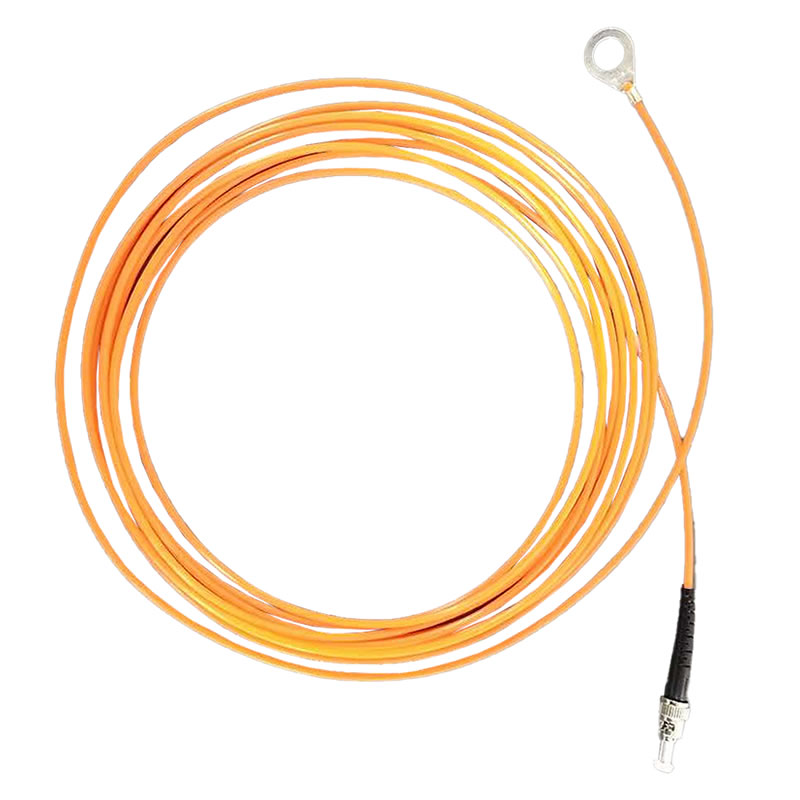
Specializing in R&D and industrialization of fluorescent optical fiber temperature measurement systems, HG Skyray’s products excel in monitoring hotspots of transformer windings and switchgear contacts…
A global pioneer in optical fiber sensing technology, Luna’s Distributed Temperature Sensing (DTS) systems enable real-time temperature monitoring over hundreds of kilometers with ±1°C accuracy, widely used in oil pipelines and submarine cables…
Focused on Fiber Bragg Grating (FBG) technology, Neoptix’s temperature measurement systems are irreplaceable in high-precision fields such as medical and semiconductor industries. Its micro sensors (≤2mm) withstand extreme temperatures (-200°C~+800°C)…
The leading provider of optical fiber temperature measurement systems for the global energy industry, Schlumberger’s DTS technology holds over 40% market share in oil and gas well monitoring. Its products support high-temperature and high-pressure environments (up to 350°C)…
Specializing in integrated solutions for fiber lasers and sensors, NKT’s DTS systems use Optical Time Domain Reflectometry (OTDR) with 0.1m spatial resolution, ideal for complex environments like urban utility tunnels and transportation tunnels…
Offering long-distance DTS systems, Omnisens’ technology enables 200km non-relay monitoring with ±0.5°C accuracy, primarily used in submarine cables and large bridge health monitoring. Its patented “phase-sensitive OTDR” addresses slow response issues of traditional DTS…
AP Sensing’s DTS systems excel in industrial safety, enabling real-time monitoring of temperature anomalies in chemical storage tanks and nuclear power plants. Its products support multi-parameter fusion (temperature + vibration) and seamless integration with SCADA systems…
Bandweaver’s DTS systems are renowned for high reliability and precision, widely used in tunnel fire detection and cable trench monitoring. Its patented “dual-ended measurement technology” significantly improves measurement accuracy…
Focused on FBG temperature measurement technology, Neubrex’s products have unique advantages in aerospace and high-speed rail. Its sensors use sapphire encapsulation, operating stably in high-temperature environments up to 1000°C…
Ranking Criteria and Market Trends
Evaluation Metrics
- Technological Innovation
- Number of core patents
- Breakthrough technologies (e.g., Luna’s AI integration)
- Market Penetration
- Global market share
- Regional dominance (e.g., Schlumberger in oil & gas)
- Industry Applications
- Diversity of sectors served
- Specialized solutions (e.g., Neoptix in healthcare)
- Customer Trust
- Major project implementations
- Long-term partnerships
Market Trends
Key developments shaping the industry landscape:
- Asia-Pacific Leadership
Chinese manufacturers capture 35% of global market share through cost-effective, localized solutions.
- Intelligent Systems
Integration with IoT and AI for predictive analytics and automated alerts.
- Niche Market Expansion
Fluorescent sensors dominate power applications (60% market share), while FBG sensors grow in high-precision sectors.
Applications in Transformers and Switchgear
1. Transformer Monitoring
1.1 Winding Hotspot Detection
Optical fiber sensors are embedded directly into transformer windings to monitor hotspot temperatures, providing early warnings of insulation degradation and preventing catastrophic failures. Fluorescence-based sensors offer millisecond response times and ±0.5°C accuracy, critical for detecting subtle temperature increases.
1.2 Oil Temperature Monitoring
Sensors placed in transformer oil tanks measure bulk oil temperature and detect thermal stratification, ensuring efficient cooling system operation and extending transformer lifespan.
1.3 Bushing Monitoring
By monitoring bushing temperatures, optical fiber systems identify potential faults such as loose connections or insulation breakdowns before they escalate into major issues.
2. Switchgear Monitoring
2.1 Contact Temperature Monitoring
Fiber sensors are installed on switchgear contacts (both fixed and moving) to detect overheating caused by poor connections or arcing. This is particularly critical in high-voltage environments where traditional sensors cannot operate safely.
2.2 Cable Joint Monitoring
At cable terminations and joints, where faults frequently occur, optical fiber systems provide continuous temperature monitoring, enabling predictive maintenance and reducing unplanned outages.
2.3 Arc Fault Detection
Rapid temperature rises detected by fiber sensors can trigger immediate shutdowns, protecting personnel and equipment from arc flash hazards.
3. Advantages in Power Equipment
- Electrical Isolation: Eliminates risks of short circuits in high-voltage environments.
- Long-Term Stability: Resistant to electromagnetic interference and chemical corrosion, ensuring reliable operation over decades.
- Real-Time Monitoring: Enables predictive maintenance strategies, reducing downtime and repair costs.
- Compact Design: Sensors as small as 0.25mm diameter fit into tight spaces within equipment.

Fiber optic temperature sensor, Intelligent monitoring system, Distributed fiber optic manufacturer in China
 |
 |
 |