 INNO fibre optic temperature sensors ,temperature monitoring systems.
Key Takeaways
- Critical Temperature Control: GOF semiconductor manufacturing demands precise thermal management for product quality and yield optimization
- Electromagnetic Immunity: Fluorescent fiber optic sensors remain unaffected by RF plasma, high voltage, and electromagnetic interference in fab environments
- Multi-Point Monitoring: Single transmitter supports 1-64 channels with 0-80 meter transmission distance for comprehensive coverage
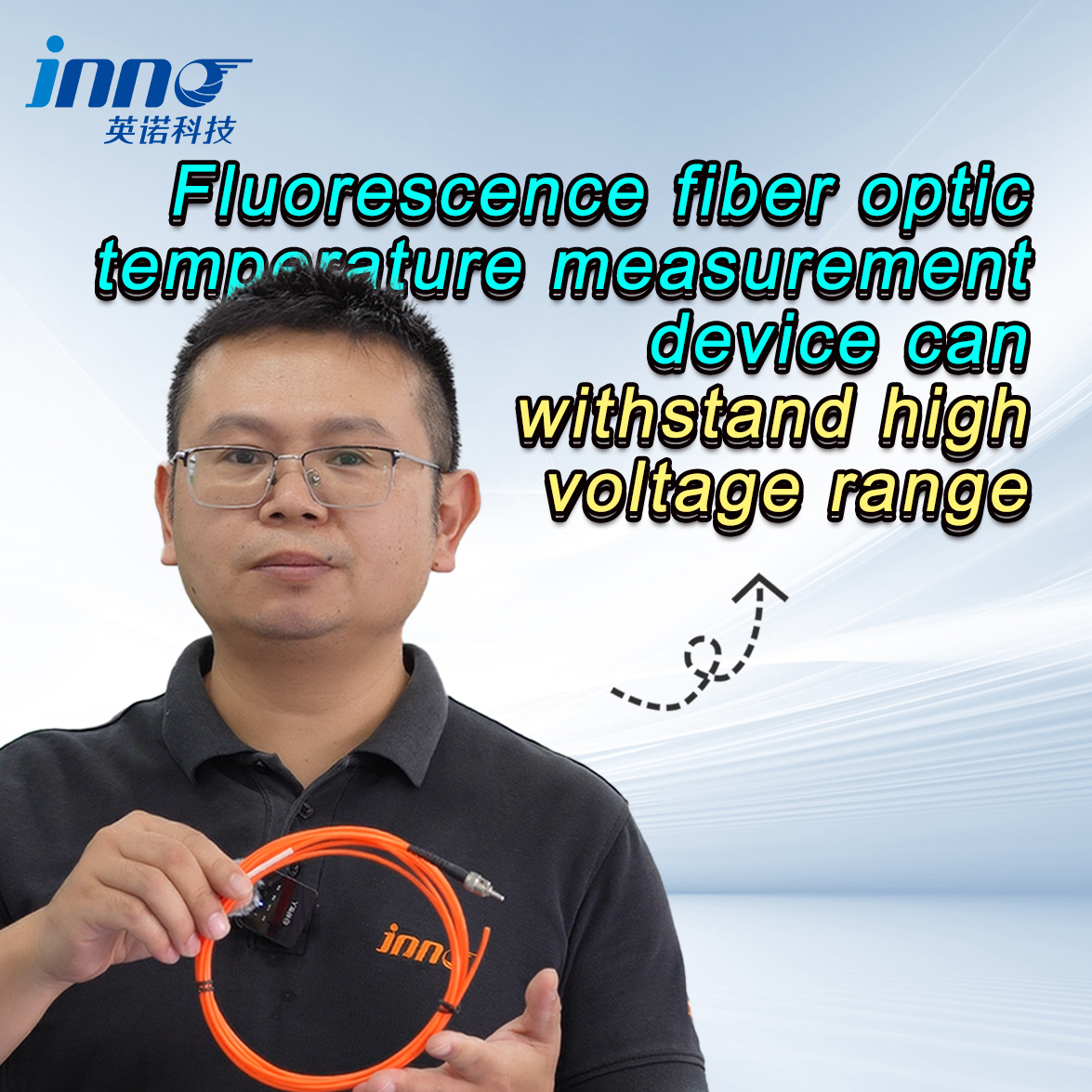
- High Voltage Tolerance: Complete electrical isolation enables safe operation in extreme voltage environments
- Rapid Response: Sub-second response time (<1s) ensures real-time process control and equipment protection
GOF Semiconductor Temperature Monitoring Challenges

Understanding GOF Semiconductor Manufacturing
Gallium oxide on insulator (GOF) semiconductor technology represents the cutting edge of power electronics and high-frequency devices. These advanced materials require ultra-precise fabrication processes where temperature control directly impacts device performance, reliability, and production yield. As a leading manufacturer of fiber optic temperature sensors, we understand the unique thermal management challenges in GOF semiconductor fabrication.
Critical Nature of Temperature Control
Temperature deviations of just a few degrees during deposition, etching, or annealing processes can compromise material properties, causing defects that render devices non-functional. Process temperatures typically range from room temperature to over 1000°C across different fabrication steps. Maintaining accuracy within ±0.5°C proves essential for consistent product quality and maximizing expensive wafer yields.
Harsh Measurement Environment
Semiconductor fabrication equipment creates extremely challenging conditions for temperature measurement. High-power RF generators produce intense electromagnetic fields during plasma processing. Vacuum chambers operate at pressures down to 10⁻⁹ torr. Chemical vapors and reactive gases attack sensor materials. High voltage systems exceeding thousands of volts pose safety hazards. Traditional temperature measurement equipment struggles or fails completely in these environments.
Why Traditional Temperature Sensors Fail in Semiconductor Fabs

Thermocouple Interference Issues
While thermocouples offer broad temperature ranges, their metallic construction makes them susceptible to electromagnetic interference from RF plasma systems. Induced currents corrupt readings and can cause measurement errors exceeding 10-20°C during plasma processing. Metal components also introduce contamination risks in ultra-clean fabrication environments.
Thermistor Voltage Limitations
Thermistors require electrical current for operation, creating multiple problems in semiconductor applications. High voltage environments pose electrical safety hazards while RF fields induce noise that degrades accuracy. Lead wires act as antennas, picking up interference that makes reliable measurements impossible during critical process steps.
Infrared Thermometry Blind Spots
Non-contact infrared measurement avoids some interference issues but suffers from fundamental limitations. IR sensors cannot measure through vacuum chamber viewports accurately due to transmission losses and reflection errors. Surface-only measurement provides no information about internal substrate or wafer temperatures critical for process control. Emissivity variations across different materials further compromise accuracy.
Fiber Optic Temperature Sensors: The Optimal Solution for Semiconductor Manufacturing
Complete Electromagnetic Immunity
As a specialized fiber optic temperature sensor manufacturer, our fluorescent fiber optic sensors transmit temperature data as optical signals completely immune to electromagnetic interference. Whether RF plasma operates at kilowatts or electromagnetic fields fluctuate wildly, measurement accuracy remains unaffected. This immunity makes optical fiber temperature monitoring the only reliable solution for plasma processing equipment.
Measurement Accuracy and Stability
Our fiber optic thermometry systems achieve ±0.5°C accuracy across their full measurement range. The fluorescence lifetime measurement principle ensures long-term stability without calibration drift. Unlike intensity-based sensors affected by fiber bending or connector degradation, lifetime measurements depend solely on fluorescent crystal temperature, maintaining accuracy throughout years of continuous operation.
Multi-Point Temperature Monitoring
A single compact transmitter supports 1-64 measurement channels, enabling comprehensive spatial temperature mapping throughout processing equipment. With 0-80 meter transmission distance, sensors install at critical measurement points while signal processing electronics remain safely outside contaminated or hazardous zones. This multi-channel fiber optic solution provides complete thermal profiling impossible with point sensors.
High Voltage Tolerance
Complete electrical isolation represents a crucial advantage for semiconductor applications. Our fiber optic temperature probes contain zero conductive materials—pure silica glass fibers and non-metallic sensing elements eliminate electrical pathways. This design enables safe operation in high voltage environments exceeding 10kV without risk of arcing, short circuits, or operator hazards that plague conventional sensors.
Ultra-Fast Response Time
Process control requires real-time temperature feedback. Our fiber optic sensors deliver sub-second response times (<1s), enabling immediate detection of thermal excursions and rapid control system adjustments. This fast response protects expensive wafers from thermal damage and ensures process parameters remain within specification throughout each fabrication step.
Compact and Cleanroom Compatible
Miniaturized probe designs with diameters below 0.5mm integrate easily into crowded equipment interiors without disrupting gas flows or plasma uniformity. Non-outgassing materials maintain ultra-high vacuum compatibility while particle-free construction meets Class 1 cleanroom requirements. As both supplier and factory, we engineer every component for semiconductor fab compatibility.
Key Applications in GOF Semiconductor Manufacturing
Plasma Etching Temperature Monitoring
Plasma etching removes material through energetic ion bombardment, generating substantial heat. Wafer temperature directly affects etch rate, profile, and selectivity. Our fiber optic temperature sensors mount directly to wafer chucks or chamber walls, providing accurate feedback for RF power and cooling system control. This real-time monitoring prevents thermal damage while optimizing etch uniformity across the wafer.
Chemical Vapor Deposition Temperature Control
CVD processes deposit thin films by decomposing precursor gases at precise temperatures. Film properties including composition, stress, and crystallinity depend critically on deposition temperature. Our multi-point monitoring systems measure temperature across heated susceptors, ensuring uniform conditions that produce consistent, high-quality films essential for device performance.
Wafer Annealing Process Monitoring
Thermal annealing activates dopants, relieves stress, and improves crystallinity through carefully controlled heating and cooling cycles. Temperature uniformity across large wafers proves essential—our fiber optic thermometry equipment provides multiple measurement points that verify uniform heating and detect hotspots that could cause wafer warping or cracking during these critical thermal cycles.
Vacuum Chamber Temperature Management
Processing chamber walls require temperature control to prevent unwanted deposition and maintain process stability. Our wholesale fiber optic sensors install throughout chamber interiors, monitoring wall temperatures to ensure proper conditioning. This prevents particle generation from flaking deposits while maintaining the thermal environment required for repeatable processing results.
RF Power System Monitoring
High-power RF generators and matching networks generate significant heat that affects impedance matching and power delivery efficiency. Our customized temperature monitoring solutions track component temperatures in these high-voltage systems, enabling cooling system optimization and preventing equipment failures that cause costly production downtime.
Technical Advantages for Semiconductor Processes
Vacuum Compatibility
Our fiber optic temperature probes operate reliably from atmospheric pressure to ultra-high vacuum (UHV) conditions below 10⁻⁹ torr. Non-outgassing materials prevent chamber contamination while maintaining measurement accuracy across the full pressure range. This vacuum compatibility makes them ideal for deposition, etching, and ion implantation equipment.
Ultra-Clean Environment Suitability
Semiconductor fabs maintain stringent cleanliness standards where even minute contamination causes yield losses. Our sensors meet ISO Class 1 cleanroom requirements with particle-free designs and materials compatible with aggressive cleaning chemistries. As a trusted supplier, we validate every product for fab compatibility before delivery.
Long-Term Stability
The fluorescence lifetime measurement principle provides inherent stability without calibration drift. Our fiber optic sensing systems maintain factory accuracy for years of continuous operation, eliminating downtime for calibration procedures. This stability reduces maintenance costs while ensuring consistent process control throughout equipment lifetimes.
Extended Transmission Distance
With 0-80 meter transmission capability, our fiber optic temperature transmitters can be located in clean, controlled environments while sensors operate inside contaminated process chambers. This separation protects electronics from corrosive gases and high temperatures while simplifying maintenance and reducing equipment footprint in expensive fab space.
Chemical Resistance
Silica glass fibers resist attack from most semiconductor process chemicals including fluorine-based etchants, oxidizing agents, and corrosive vapors. This chemical resistance ensures reliable operation in harsh environments where conventional sensors degrade rapidly, providing long service life and reducing replacement costs.
Temperature Sensor Technology Comparison for Semiconductor Applications
| Feature | Fluorescent Fiber Optic | Thermocouple | Thermistor | Infrared |
|---|---|---|---|---|
| EMI Immunity | Complete | Poor | Poor | Good |
| Accuracy | ±0.5°C | ±1-2°C | ±0.5°C | ±2-5°C |
| Response Time | <1 second | 1-2 seconds | 2-5 seconds | Instant |
| High Voltage Safety | Excellent | Poor | Poor | Good |
| Vacuum Compatible | Yes (to UHV) | Limited | Limited | No contact |
| Multi-Point Capability | 1-64 channels | Single point | Single point | Single point |
| Calibration Required | No | Periodic | Periodic | Periodic |
| Cleanroom Compatible | Class 1 | Limited | Limited | Yes |
| Internal Measurement | Yes | Yes | Yes | Surface only |
Global Semiconductor Industry Applications
Middle East Semiconductor Facilities
Our fiber optic temperature monitoring systems serve multiple semiconductor fabs across the Middle East region. A major UAE facility uses our 32-channel system for comprehensive CVD chamber monitoring, achieving 15% yield improvement through better temperature uniformity. Saudi Arabian research institutes employ our sensors for advanced materials development, leveraging electromagnetic immunity for novel plasma processing techniques.
Southeast Asian Manufacturing Hubs
As a leading exporter, we supply numerous Southeast Asian semiconductor manufacturers. Singapore’s advanced packaging facilities integrate our optical temperature sensors into flip-chip bonding equipment for precise thermal control. Malaysian LED manufacturers use our systems to monitor MOCVD reactor temperatures, improving device brightness uniformity. Thailand’s automotive chip producers rely on our sensors for power semiconductor fabrication requiring exact thermal management.
European Advanced Manufacturing
European semiconductor research centers utilize our customized fiber optic solutions for next-generation device development. German institutes developing wide-bandgap semiconductors employ our high-temperature sensors for SiC and GaN processing. French photonics manufacturers integrate our multi-point monitoring into laser diode fabrication lines.
North American Production Lines
US semiconductor fabs deploy our bulk fiber optic temperature systems across production lines. Major foundries use our sensors for 300mm wafer processing equipment, benefiting from calibration-free operation that reduces maintenance costs. Canadian MEMS manufacturers rely on our vacuum-compatible sensors for microstructure fabrication requiring sub-degree temperature control.
Manufacturer & Custom Temperature Monitoring Solutions
Professional Manufacturing Capabilities
FJINNO operates as a specialized fiber optic temperature sensor manufacturer and factory serving the global semiconductor industry. Our production facility implements rigorous quality standards ensuring every transmitter and sensor meets demanding fab requirements. We function as both direct supplier and exporter, delivering worldwide.
Tailored OEM/ODM Services
We provide comprehensive OEM/ODM solutions for equipment manufacturers integrating temperature monitoring into semiconductor tools. Our capabilities include custom channel configurations, specialized probe designs for unique applications, and private label branding. Engineering support ensures seamless integration with your equipment.
Volume Supply Programs
As a direct factory, we offer competitive pricing for wholesale and bulk orders. Distributors and dealers benefit from volume discounts, technical training, and marketing support. Our customized solutions address specific application requirements while maintaining cost-effectiveness.
Frequently Asked Questions About Fluorescent Fiber Optic Temperature Sensors
How do fluorescent fiber optic temperature sensors work?
Fluorescent fiber optic sensors use rare earth crystals that emit fluorescence when illuminated. The fluorescence decay time changes with temperature—this lifetime measurement provides accurate temperature readings completely independent of light intensity, fiber losses, or connector quality. This principle ensures long-term stability without calibration requirements.
Can fiber optic sensors operate in vacuum environments?
Yes, our fiber optic temperature probes operate reliably from atmospheric pressure to ultra-high vacuum (UHV) below 10⁻⁹ torr. Non-outgassing materials prevent chamber contamination while maintaining full accuracy across all pressure ranges, making them ideal for semiconductor deposition and etching equipment.
What temperature range do the sensors cover?
Standard semiconductor-grade sensors measure -40°C to +300°C, covering most fabrication processes. We offer custom ranges for specialized applications. As a manufacturer, we engineer sensors optimized for specific temperature windows, maximizing accuracy for your processes.
Do fluorescent fiber optic sensors require calibration?
No, this represents a key advantage of fluorescent fiber optic temperature sensors. The fluorescence lifetime measurement principle provides inherent stability without drift. Sensors maintain factory accuracy for years of continuous operation, eliminating calibration downtime and associated costs—critical for high-volume semiconductor manufacturing.
How many measurement points can one system monitor?
Our fiber optic temperature transmitters support 1-64 channels per unit. Each fiber monitors one point, but multi-channel systems enable comprehensive spatial temperature mapping throughout processing equipment. Networked configurations provide hundreds of measurement points for fab-wide monitoring.
Can the system integrate with existing semiconductor equipment?
Absolutely. Our OEM solutions feature standard industrial protocols (RS-485, Ethernet, Modbus, analog outputs) for seamless integration with equipment controllers and fab automation systems. We provide complete integration support and documentation as part of our supplier services.
What makes fiber optic sensors better than thermocouples for semiconductor applications?
Fiber optic temperature monitoring offers complete electromagnetic immunity, essential for RF plasma environments where thermocouples fail. Our sensors tolerate high voltages safely, require no calibration, support multi-point monitoring from a single transmitter, and maintain cleanroom compatibility—advantages impossible with conventional sensors.
Contact FJINNO for Semiconductor Temperature Monitoring Solutions
Fuzhou Innovation Electronic Scie&Tech Co., Ltd. specializes in manufacturing fluorescent fiber optic temperature sensors for semiconductor and advanced manufacturing applications. As a leading manufacturer, supplier, and exporter, we provide complete temperature monitoring solutions serving fabs worldwide.
Our product range includes 1-64 channel systems with full OEM/ODM, custom, and private label capabilities. Direct factory pricing and wholesale/bulk programs deliver exceptional value without compromising quality.
Get in Touch:
- Website: https://www.fjinno.net/
- Phone: +86 13599070393
- Email: web@fjinno.net
We provide technical consultation, application engineering, integration support, and after-sales service. Whether you need standard products or customized solutions for specific semiconductor processes, our experienced team delivers optimal fiber optic temperature monitoring systems. Contact us to discuss how our technology can improve your fabrication processes and equipment reliability.

Fiber optic temperature sensor, Intelligent monitoring system, Distributed fiber optic manufacturer in China
 |
 |
 |