 INNO fibre optic temperature sensors ,temperature monitoring systems.
Core Advantages of High Voltage Switchgear Condition Monitoring System
- Preventive maintenance reduces failure rate by over 60% – Through real-time monitoring of key parameters such as temperature, partial discharge, and SF6 gas, potential problems can be detected 3-6 months before failures occur, avoiding sudden equipment breakdowns
- Reduce unplanned downtime by 70% – The system monitors 24/7 without interruption, detecting anomalies and providing early warnings, giving maintenance personnel sufficient time to schedule repairs, significantly reducing unexpected outage losses
- Extend equipment life by 20-30% – Condition-based precision maintenance avoids over-maintenance and under-maintenance, keeping equipment in optimal operating condition and delaying major overhaul and replacement cycles
- Reduce operating costs by 30-40% – Shifting from periodic maintenance to on-demand maintenance reduces unnecessary inspection work and spare parts consumption, optimizing human resource allocation
- Improve maintenance efficiency and safety – Remote monitoring reduces the frequency of on-site inspections, lowering the risk of maintenance personnel contacting high-voltage equipment and improving work efficiency
- Achieve full equipment lifecycle management – Establish a complete historical database supporting fault trend analysis and life prediction, providing scientific basis for equipment renewal and transformation
- Meet smart grid construction requirements – Support standard protocols such as IEC61850, seamlessly integrate into intelligent substation systems, enabling data sharing and remote control
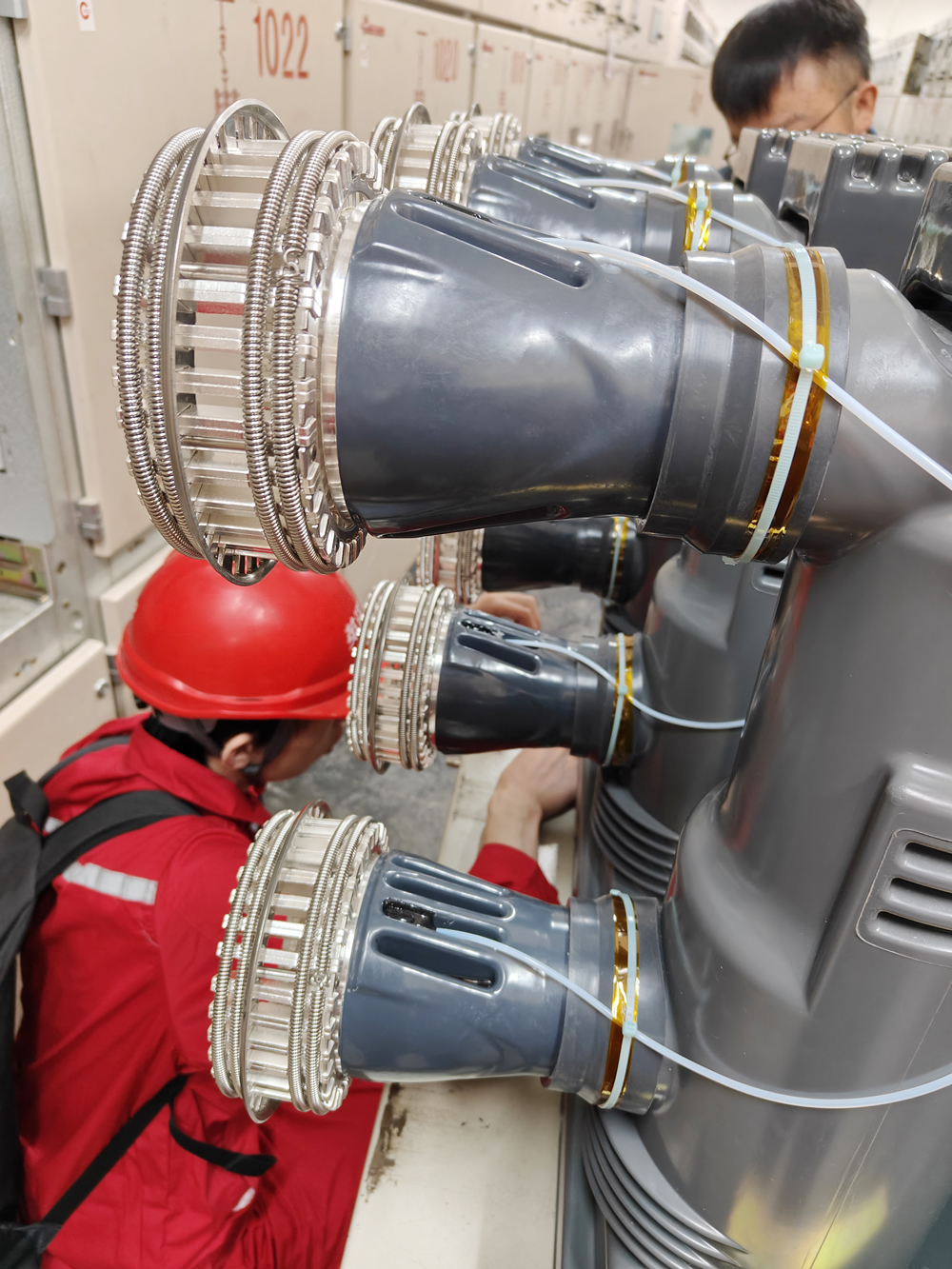
The Role of High Voltage Switchgear
High voltage switchgear serves as critical control and protection devices in power systems, responsible for controlling power flow, isolating faulty equipment, and protecting grid safety. These devices can connect, carry, and disconnect current under normal operating conditions, and more importantly, can quickly cut off short-circuit current under fault conditions to prevent accident escalation. In substations, power plants, and industrial distribution systems, high voltage switchgear ensures the continuity and reliability of power supply. Their normal operation directly relates to the stability of the entire power system and user electrical safety. As “guardians” of the power grid, high voltage switchgear must operate accurately within milliseconds when system faults such as short circuits, overloads, or grounding occur, cutting off fault current to protect expensive power equipment and maintain personnel safety. Implementing a high voltage switchgear condition monitoring system ensures these critical devices remain in optimal working condition.
What is High Voltage Switchgear? How Does It Integrate into Power Systems?
High voltage switchgear refers to electrical switching devices with rated voltages of 3.6kV and above, mainly including circuit breakers, isolating switches, load switches, grounding switches, and their control, measurement, protection, and regulation device combinations. These devices typically adopt metal-enclosed structures, filled with SF6 gas or using vacuum arc-extinguishing technology, capable of withstanding high voltage and large current challenges.
In power system architecture, high voltage switchgear plays the role of a neural center. They are widely distributed at power plant outlets controlling generator connections to the grid, in substation incoming and outgoing circuits achieving voltage level conversion and distribution, at industrial user receiving ends protecting electrical equipment and distribution networks, and at transmission line segmentation points improving power supply flexibility and reliability. These devices interconnect through busbar systems, forming complete power transmission and distribution networks, enabling flexible power dispatch and safe control. The intelligent development of modern power grids has given high voltage switchgear new missions – they must not only complete traditional switching and isolation functions but also cooperate with automation systems to achieve advanced functions such as rapid fault isolation, load transfer, and network reconfiguration. By deploying high voltage switchgear condition monitoring systems, real-time equipment operating status can be monitored, providing assurance for safe and stable smart grid operation.
High Voltage Switchgear Failures
High voltage switchgear faces complex and harsh working environments during long-term operation, with various internal and external factors potentially leading to equipment performance degradation or failure. Mechanical failure is one of the most common problems, including operating mechanism jamming, transmission component wear, spring fatigue, and seal failure. These mechanical issues can lead to switching failure, excessive operating time, refusal to operate, or false operation. Particularly for circuit breaker operating mechanisms, after thousands of operations, the fitting accuracy of various moving parts decreases and lubricating grease ages, affecting operational reliability.
Electrical failures mainly manifest as contact erosion, increased contact resistance, and overheating of current-carrying components. During arc interruption in high voltage switchgear, contact surfaces experience erosion that accumulates over time, leading to poor contact and increased contact resistance, resulting in localized overheating. If this vicious cycle is not discovered and addressed promptly, it may ultimately lead to equipment burnout or even explosion. Insulation failures include SF6 gas leakage, insulation component moisture ingress, surface contamination accumulation, and internal defect development. Particularly in coastal areas or heavily industrially polluted environments, contamination on insulator surfaces greatly reduces insulation strength, easily causing flashover accidents in humid weather. All these failure types can be detected early and prevented through advanced high voltage switchgear condition monitoring technology.
Why Online High Voltage Switchgear Condition Monitoring is Needed
Traditional periodic maintenance models can no longer meet modern power grid reliability requirements. Maintenance according to fixed cycles may result in “over-maintenance” wasting resources or “under-maintenance” leaving hidden dangers. Equipment may suddenly fail between scheduled maintenance periods, causing unplanned outages and huge economic losses. Moreover, periodic maintenance requires equipment outages, affecting normal power supply, and the maintenance process itself may introduce new fault risks due to human factors.
The application of online condition monitoring technology has completely changed this passive maintenance model. By installing various sensors at critical equipment locations and collecting operational data in real-time, maintenance personnel can monitor equipment “health status” at any time, like doctors monitoring patient vital signs. When monitoring parameters show abnormal trends, the system provides timely warnings, allowing maintenance personnel to plan repairs systematically and avoid fault escalation. This condition-based maintenance strategy not only improves power supply reliability but also optimizes maintenance resource allocation, reduces operating costs, and extends equipment life. Extensive practice has proven that after implementing high voltage switchgear condition monitoring, unplanned outages can be reduced by over 60%, maintenance costs reduced by over 30%, and equipment life extended by over 20%.
Which Areas Should High Voltage Switchgear Condition Monitoring Monitor?
Hot spot temperature monitoring is the top priority of high voltage switchgear condition monitoring, as abnormal temperature rise is often an early sign of equipment failure. Moving and stationary contact areas are most prone to overheating. Due to long-term high current carrying, contact surfaces gradually oxidize and erode, leading to increased contact resistance and heat generation. Busbar connection points and cable joints are also high-heat areas where loose bolts and oxidized contact surfaces cause localized overheating. Isolating switch contact fingers, due to frequent operation and reduced spring pressure, are prone to poor contact. Circuit breaker arc chamber contact systems require particular monitoring focus, as they experience not only normal current-carrying heat but also high-temperature impact from arc interruption.
Beyond temperature monitoring, SF6 chamber conditions require close attention. SF6 gas density directly affects its insulation and arc-extinguishing performance; any leakage reduces interrupting capability. Insulation components including bushings and post insulators – their surface conditions and internal defects affect insulation performance. Operating mechanisms as switchgear execution units – the condition of their energy storage motors, hydraulic systems, and transmission mechanisms directly relates to proper switch operation. Though grounding systems may seem unremarkable during normal operation, they must reliably conduct fault current during system faults, so grounding connection point conditions also require monitoring. Though secondary circuits are low-voltage systems, their reliability directly affects protection and control function implementation. A comprehensive high voltage switchgear condition monitoring system must cover all these critical areas.
Which Parameters Should High Voltage Switchgear Condition Monitoring Systems Monitor?
Temperature parameter monitoring must be comprehensive and precise, measuring not only absolute temperature values at key points but also temperature rise values and temperature gradients. Contact and busbar temperatures need comparison with ambient temperature to calculate temperature rise values, eliminating environmental factors to accurately determine overheating. Temperature gradients reflect heat conduction paths; abnormal temperature distributions often indicate localized faults. Modern high voltage switchgear condition monitoring systems also combine load current data to establish temperature-current relationship models, alarming when actual temperatures deviate from model predictions.
Electrical and mechanical parameter monitoring are equally important. Opening and closing coil current waveforms contain rich information. By analyzing waveform characteristic points such as starting current, steady-state current, and operating time, issues like inter-turn short circuits, core jamming, and control circuit poor contact can be diagnosed. Energy storage motor current and runtime reflect energy storage mechanism condition; mechanism jamming leads to increased motor current and extended storage time. Opening and closing times are circuit breakers’ most important mechanical characteristic parameters; excessive times indicate mechanism problems that may lead to interruption failure. Travel curves directly reflect moving contact motion processes; any abnormality is visible in the curves. Operation counts and cumulative interrupting current assess remaining equipment life. Professional high voltage switchgear condition monitoring systems automatically analyze these parameter trends, providing accurate condition assessments.
Comprehensive Switchgear Monitoring
High Voltage Switchgear Condition Monitoring is a comprehensive monitoring system covering complete functionality from basic parameter collection to advanced fault diagnosis. Basic monitoring functions form the system’s data foundation, including temperature online monitoring systems that collect real-time temperatures at contacts, busbars, and environmental points, establishing equipment temperature field models; mechanical characteristic monitoring records operation time, speed, travel, and other parameters for each operation, assessing mechanical performance trends; electrical performance monitoring measures loop resistance, insulation resistance, and other parameters to judge conductive circuit and insulation system conditions; SF6 gas monitoring focuses on gas pressure, density, purity, and other indicators to ensure arc-extinguishing medium performance.
Advanced diagnostic functions build upon basic monitoring data, applying advanced signal processing and artificial intelligence technology to achieve early fault discovery and accurate location. Partial discharge detection discovers early insulation system defects, using pattern recognition technology to determine discharge type and severity. Arc fault detection systems quickly identify and alarm at the instant of arc occurrence, buying precious time for fault isolation. Vibration analysis technology monitors equipment vibration characteristics to diagnose mechanical component wear and looseness. Life assessment functions comprehensively analyze equipment historical operating data, fault records, and maintenance history to predict remaining equipment life, providing decision support for equipment renewal and transformation. Complete high voltage switchgear condition monitoring solutions must include all these functional modules.
What is High Voltage Switchgear Condition Monitoring?
High Voltage Switchgear Condition Monitoring represents advanced concepts and technical directions in power equipment operation and maintenance management. It is not simply parameter measurement and data collection but an intelligent system integrating sensor technology, communication technology, computer technology, and artificial intelligence. The system deploys sensor networks at various critical switchgear locations to achieve comprehensive equipment operating status perception. Collected data transmits through high-speed communication networks to monitoring centers, where professional analysis software processes it into intuitive condition assessment results and maintenance recommendations.
This system’s core value lies in transforming traditional “passive maintenance” into “proactive prevention.” Through continuous monitoring and trend analysis, high voltage switchgear condition monitoring systems can discover abnormal signs days or even months before failures occur, giving maintenance personnel sufficient time to develop maintenance plans, prepare spare parts, and arrange outage windows. Additionally, massive historical data accumulated by the system becomes a valuable resource for optimizing equipment design and improving maintenance strategies. With big data and artificial intelligence technology development, condition monitoring system diagnostic accuracy and predictive capabilities continue improving, becoming an important component of smart grid construction.
Why Choose FJINNO’s High Voltage Switchgear Condition Monitoring System
As a professional high voltage switchgear condition monitoring system OEM/ODM manufacturer, FJINNO has established a good global market reputation through deep accumulation in fiber optic sensing technology and rich engineering application experience. Our systems have been successfully applied in Middle Eastern petrochemical projects, Southeast Asian power infrastructure construction, and African mining power systems, accumulating numerous success cases. In the Middle East’s extreme high-temperature environments, our systems demonstrate excellent stability; in Southeast Asia’s high-humidity environments, the system’s protective design ensures long-term reliable operation; in Africa’s remote areas, the system’s low-maintenance characteristics greatly reduce operating costs.
FJINNO system’s core competitiveness comes from its unique fluorescent fiber optic temperature sensor technology. In harsh high voltage switchgear environments, traditional electronic temperature sensors face numerous challenges: strong electromagnetic interference affects measurement accuracy, high voltage may break down sensor insulation, and power supply lines add failure points. Fluorescent fiber optic sensors perfectly solve these problems. The fiber itself is an insulator, unaffected by electromagnetic interference, and can be directly installed on high-potential contacts without complex insulation measures. Sensor probes require no power supply, transmitting optical signals through fiber, intrinsically safe even in flammable and explosive environments.
Fluorescent fiber optic sensor temperature measurement principles are based on rare earth fluorescent material temperature characteristics. When excitation light illuminates fluorescent material, the emitted fluorescence intensity and decay time correlate with temperature. This measurement method has extremely high stability and repeatability, unaffected by fiber bending, connection loss, and other factors. FJINNO’s sensors use special packaging technology, maintaining 0.5°C high resolution from -40°C to 200°C with response times under 1 second. More importantly, fluorescent material characteristics remain stable during long-term use; systems can operate continuously for over 10 years after installation without recalibration, greatly reducing maintenance costs.
Temperature Measurement Technology Comparison Analysis
In high voltage switchgear condition monitoring systems, temperature monitoring is the most basic and important function. Different temperature measurement technologies have various characteristics; choosing appropriate technology is crucial for system performance. Here is a detailed comparison of major temperature measurement technologies:
| Temperature Technology | Measurement Accuracy | EMI Resistance | Long-term Stability | Response Time | Installation Difficulty | Maintenance Requirements | Applicable Environment | Overall Cost |
|---|---|---|---|---|---|---|---|---|
| Fluorescent Fiber | ±0.5°C | Excellent (Fully Immune) | Excellent (>10 years) | <1 second | Simple | Extremely Low | High Voltage/Strong Magnetic/Explosive | Medium |
| Fiber Bragg Grating | ±1°C | Excellent | Good (5-8 years) | <1 second | Medium | Low | High Voltage Environment | High |
| Distributed Fiber | ±2°C | Excellent | Good | 10-30 seconds | Complex | Medium | Long Distance Monitoring | High |
| Wireless Temperature | ±1°C | Fair | Fair (2-5 years) | 1-5 seconds | Simple | High (Battery Replacement) | Normal Environment | Low |
| Infrared Temperature | ±2°C | Good | Fair | Real-time | Complex (Requires Line of Sight) | High (Clean Lens) | Open Space | Medium |
| Thermocouple | ±1.5°C | Poor | Fair (Ages Easily) | <1 second | Medium | Medium | Normal Environment | Low |
The table shows that fluorescent fiber optic temperature measurement technology has clear advantages in key performance indicators, particularly in high voltage switchgear’s strong electromagnetic interference environments where its complete immunity to electromagnetic interference is incomparable to other technologies. Long-term stability exceeding 10 years means almost no recalibration needed throughout equipment lifecycle, greatly reducing maintenance costs. This is why FJINNO chooses fluorescent fiber as the core technology for high voltage switchgear condition monitoring systems.
What Components Does High Voltage Switchgear Condition Monitoring Include?
Circuit Breaker Condition Monitoring
As core switchgear components, circuit breaker condition monitoring covers electrical, mechanical, and insulation aspects. FJINNO’s high voltage switchgear condition monitoring system uses Hall current sensors to collect opening and closing coil current waveforms, analyzing waveform characteristic parameters such as starting current, steady-state current, and operating time to diagnose coil inter-turn short circuits, core jamming, and control circuit poor contact. Energy storage motor monitoring includes not only current and runtime but also motor temperature and vibration parameters, comprehensively judging energy storage mechanism health. The system automatically records detailed data for each operation, including operation type, opening/closing time, non-simultaneity, and bounce counts. Comparing this data with circuit breaker factory characteristics enables timely discovery of performance degradation trends.
As a professional OEM/ODM manufacturer, FJINNO can customize monitoring solutions based on different circuit breaker brand characteristics. For SF6 circuit breakers, the system monitors gas pressure and density in real-time. When pressure drops are detected, it determines whether it’s normal temperature compensation or leakage based on drop rate, calculates annual leakage rate, and assesses whether gas replenishment or maintenance is needed. Our Middle Eastern project experience shows that SF6 gas density monitoring is particularly important in extreme high-temperature environments, requiring special temperature compensation algorithms.
Hot Spot Monitoring and Busbar Monitoring Systems
Hot spot monitoring system design must comprehensively consider measurement accuracy, reliability, and cost factors. Based on the comparison analysis above, FJINNO’s high voltage switchgear condition monitoring system selects fluorescent fiber optic temperature measurement as core technology. The system deploys fluorescent fiber sensors at each critical measurement point, including upper and lower contacts, busbar connection points, and cable joints. Sensors are fixed using high-temperature adhesive or special clamps, ensuring good contact with measurement points. Fiber exits high-voltage areas through special protective tubes, connecting to demodulators in safe areas.
In Southeast Asia’s hot and humid environments, FJINNO developed special moisture-proof packaging technology, ensuring sensors work stably long-term in high-humidity environments. In African mining projects, considering maintenance personnel technical levels, we simplified system operation interfaces, providing multilingual support so local technicians can easily master system use and maintenance.
Busbar monitoring requires not only temperature sensors at each connection point but also consideration of busbar thermal expansion and vibration issues. The system compares temperatures between adjacent measurement points, calculating temperature gradients. When one connection point’s temperature rise significantly exceeds others, it indicates poor contact there. FJINNO’s high voltage switchgear condition monitoring system also integrates insulation monitoring functions, measuring support insulator leakage current to assess insulator contamination degree and aging status.
Arc Detection, SF6 Monitoring, and Partial Discharge Monitoring
Arc faults are switchgear’s most dangerous failure type. FJINNO’s high voltage switchgear condition monitoring system uses photoelectric composite detection technology, with optical sensors detecting arc-produced characteristic spectra and current sensors detecting current mutations. Only when both signals appear simultaneously is an arc fault determined. System response time reaches within 1 millisecond; combined with fast circuit breakers, it can cut power before arcs develop into catastrophic failures. In Middle Eastern petrochemical projects, this technology has successfully prevented multiple potential arc explosion accidents.
SF6 monitoring systems include gas density relays, moisture sensors, decomposition product detectors, and multiple other components. As an OEM/ODM manufacturer, FJINNO can configure sensors of different accuracy grades according to customer requirements. Density relays use temperature compensation design to accurately reflect SF6 gas true density. Moisture sensors monitor gas moisture content, preventing excessive moisture from degrading insulation performance.
Partial discharge is an early manifestation of insulation degradation. FJINNO’s high voltage switchgear condition monitoring system combines multiple detection methods. In a large Southeast Asian substation project, our system successfully detected partial discharge inside GIS equipment, avoiding a major accident. Through comprehensive analysis of UHF, ultrasonic, and TEV signals, the system not only detects partial discharge presence but also determines discharge type, severity, and development trends.
Wide Applications of Power Equipment Condition Monitoring Systems
Transformer and New Energy Monitoring Systems
Transformer monitoring systems are an important extension of high voltage switchgear condition monitoring technology. FJINNO has developed specialized monitoring solutions for different transformer types, including oil-immersed transformers, dry-type transformers, and special transformers. The system comprehensively monitors basic parameters like transformer oil temperature, winding temperature, and oil level, monitoring potential internal faults through oil chromatography analysis. In an African mining project, our system successfully predicted an internal fault in a main transformer, avoiding major production losses.
With rapid new energy development, solar power plant and wind farm equipment monitoring becomes increasingly important. As a professional OEM/ODM manufacturer, FJINNO has developed highly adaptable high voltage switchgear condition monitoring systems for the new energy industry. In Middle Eastern desert solar projects, systems must withstand extreme temperature differences and dusty environments; in Southeast Asian offshore wind projects, systems need excellent corrosion resistance. Our engineering team has performed specialized design optimizations for these special requirements.
Industrial and Special Application Monitoring Systems
In industrial fields, FJINNO’s high voltage switchgear condition monitoring systems have been applied in numerous major global projects. Steel plant monitoring systems must operate stably in high-temperature, dusty, high-vibration environments; our sensors use special protective designs and anti-vibration structures. In Middle Eastern refinery projects, all monitoring equipment has passed strict explosion-proof certification, meeting the most stringent safety standards.
Data centers as information age infrastructure have extremely high power supply reliability requirements. FJINNO’s high voltage switchgear condition monitoring system developed for data centers monitors not only power equipment itself but also integrates with data center environmental monitoring systems, achieving comprehensive facility management. In several large Southeast Asian data center projects, our systems have operated stably for years, saving customers substantial maintenance costs.
Electric vehicle charging stations are an emerging application field. FJINNO rapidly responded to market demands, developing specialized monitoring solutions. Systems focus on monitoring charging equipment temperature, current, voltage, and other parameters, ensuring charging process safety. In some African new energy demonstration projects, our systems are providing technical support for electric vehicle promotion.
FJINNO’s Global Service Network and Technical Support
As a professional high voltage switchgear condition monitoring system OEM/ODM manufacturer, FJINNO not only provides quality products but has established a comprehensive global service network. We have established regional technical centers in the Middle East with Arabic and English technical support teams; built spare parts warehouses and repair centers in Southeast Asia to ensure rapid customer response; and established technical training bases with local partners in Africa to cultivate localized technical service teams.
FJINNO’s OEM/ODM services include:
- Customizing product appearance and identification according to customer brands
- Adjusting system functions and parameters according to customer requirements
- Providing complete technical documentation and training materials
- Assisting customers with product certification and standards compliance testing
- Providing long-term technical upgrades and maintenance support
Our engineering team has rich project experience, able to provide customers with full-process technical support from system design and product selection to installation and commissioning. Whether standard products or customized solutions, FJINNO can meet customer needs.
Get Professional High Voltage Switchgear Condition Monitoring Solutions
Choosing the right high voltage switchgear condition monitoring system is crucial for ensuring safe and reliable power equipment operation. FJINNO, with deep accumulation in fiber optic sensing technology, rich global project experience, and flexible OEM/ODM service capabilities, has become the preferred partner for many international customers. Our systems have withstood tests in the Middle East’s extreme environments, Southeast Asia’s complex conditions, and Africa’s special requirements, earning high customer recognition.
If you’re looking for high-quality high voltage switchgear condition monitoring systems or need customized OEM/ODM solutions, welcome to visit our website for detailed product information and technical documentation. We provide:
- Free technical consultation and system design solutions
- Detailed product specifications and application cases
- Competitive pricing and flexible business terms
- Comprehensive after-sales service and technical support
- Professional OEM/ODM customization services
Contact FJINNO’s professional team immediately to help you build smarter, more reliable power equipment monitoring systems. By implementing advanced high voltage switchgear condition monitoring technology, you can significantly improve equipment operational safety and economics, creating greater value for your enterprise. Visit our website or call our technical hotline for the latest product quotes and technical support, opening a new chapter in intelligent operations and maintenance. Whether you’re in the Middle East, Southeast Asia, Africa, or other regions worldwide, FJINNO is your trusted partner.

Fiber optic temperature sensor, Intelligent monitoring system, Distributed fiber optic manufacturer in China
 |
 |
 |