 INNO fibre optic temperature sensors ,temperature monitoring systems.
Key Insights: Microwave Temperature Sensing Technology
- Fiber optic temperature sensors provide complete EMI immunity in high-power microwave environments where traditional thermocouples fail catastrophically
- Fluorescence thermometry achieves ±1°C accuracy without metal components, eliminating dangerous arcing and signal interference
- Microwave chemical reactors, pharmaceutical processing, and food production require non-metallic probes for safety and regulatory compliance
- Traditional thermocouple sensors and infrared thermometers cannot deliver reliable measurements in 2.45GHz electromagnetic fields
- Proper temperature sensor selection prevents product quality failures, equipment damage, and costly production downtime
Table of Contents
- Why Is Temperature Monitoring in Microwave Equipment So Challenging?
- How Do Different Temperature Sensors Perform in Microwave Environments?
- What Are the 5 Major Advantages of Fluorescence Fiber Optic Sensors?
- Where Are Fiber Optic Sensors Successfully Applied in Microwave Systems?
- How to Select the Right Temperature Sensor for Your Microwave Equipment?
- What Is the Cost-Benefit Analysis of Fluorescence Sensors vs Traditional Solutions?
- How Do Fiber Optic Probes Perform Under Extreme Microwave Conditions?
- Why Must Microwave Chemical Reactors Use Non-Metallic Temperature Sensors?
- What Consequences Arise from Temperature Control Failures in Microwave Food Processing?
- What Questions Do Engineers Most Frequently Ask About Microwave Temperature Sensing?
1. Why Is Temperature Monitoring in Microwave Equipment So Challenging?

1.1 What Makes Microwave Environments Hostile to Conventional Sensors?
Microwave heating systems operate at 2.45GHz frequency with power outputs ranging from 1kW in laboratory equipment to 100kW in industrial applications. This intense electromagnetic field creates fundamental obstacles for standard temperature measurement devices that were designed for benign thermal environments.
Traditional thermocouple sensors and RTD probes contain metallic conductors that behave as receiving antennas within microwave cavities. When exposed to high-frequency electromagnetic radiation, these metal components induce electrical currents causing dangerous arcing and sparking. This phenomenon not only destroys the temperature sensors but also compromises microwave chamber integrity and creates severe safety hazards.
The electromagnetic interference (EMI) generated during microwave processing severely distorts electrical signals from conventional temperature monitoring systems. Standard thermocouples produce millivolt-level signals that become completely overwhelmed by EMI noise, rendering measurements unreliable or impossible.
1.2 Why Do Industrial Applications Demand Real-Time Accuracy?
Microwave chemical synthesis requires temperature control within ±1°C to ensure proper reaction kinetics and product quality. Pharmaceutical microwave processing must maintain documented temperature profiles for regulatory compliance. Advanced materials sintering demands precise thermal management to achieve desired properties and prevent defects.
Unlike conventional heating where thermal equilibrium develops gradually, microwave heating creates rapid and often non-uniform temperature distributions. Hot spots develop within seconds, requiring real-time temperature monitoring with sub-second response times for effective control interventions.
2. How Do Different Temperature Sensors Perform in Microwave Environments?

2.1 What Are the Fatal Limitations of Thermocouple Sensors?
Thermocouple temperature sensors rely on the Seebeck effect in metal junctions to generate voltage proportional to temperature. When placed inside microwave equipment, the metal wires act as receiving antennas for electromagnetic energy, resulting in three critical failures.
Induced currents create localized heating at the thermocouple junction, adding thermal errors of 10-50°C to actual measurements. The electromagnetic interference generates voltage signals orders of magnitude larger than legitimate thermocouple output, making data completely unreliable. Most critically, concentrated electromagnetic energy at metal points causes electrical discharge that punctures protective sheaths and creates fire hazards.
2.2 Why Can’t Infrared Temperature Sensors Solve Microwave Challenges?
Infrared thermometry measures surface temperatures through thermal radiation without physical contact. While IR temperature sensors avoid arcing problems of metallic probes, they face insurmountable obstacles in microwave heating applications.
Standard infrared sensors require direct line-of-sight to measurement targets. In sealed microwave cavities, this necessitates optical windows that significantly compromise electromagnetic containment. Any opening allows dangerous radiation leakage and reduces heating efficiency. Additionally, infrared temperature measurement only captures surface temperatures, providing no information about internal temperatures in thick materials or liquids.
2.3 How Do Wireless Temperature Sensors Fail in High-Power Microwaves?
Wireless temperature monitoring systems use battery-powered transmitters to send temperature data via radio frequencies. While initially appearing suitable, these devices encounter severe practical limitations in microwave environments.
The intense electromagnetic field in operating microwave systems overwhelms low-power radio signals from wireless sensors, causing communication dropouts and data loss. Battery-powered electronics suffer accelerated degradation when exposed to sustained microwave radiation. Most importantly, wireless temperature probes still require metallic sensing elements, reintroducing all arcing and interference problems.
3. What Are the 5 Major Advantages of Fluorescence Fiber Optic Sensors?

3.1 Complete Electromagnetic Immunity
Fluorescence fiber optic temperature sensors constructed from glass and ceramic materials contain absolutely no metallic or conductive components. The sensing probe consists of a rare-earth phosphor crystal mounted at the tip of a pure silica fiber optic cable. This all-dielectric construction provides complete immunity to electromagnetic interference at all frequencies and power levels.
Unlike shielded thermocouples that merely reduce EMI coupling, fiber optic temperature probes fundamentally cannot interact with electromagnetic fields. The optical transmission principle ensures that microwave radiation has zero effect on temperature measurements, delivering accurate data even in 100kW industrial microwave systems.
3.2 Intrinsic Safety Without Arcing Risk
The non-conductive nature of fluorescence fiber optic sensors eliminates any possibility of electrical discharge or arcing inside microwave cavities. This intrinsic safety characteristic allows direct immersion of the temperature probe into reactive chemicals, flammable solvents, or explosive atmospheres without creating ignition sources.
3.3 Superior Measurement Accuracy of ±1°C
Fluorescence thermometry measures the temperature-dependent decay time of phosphor luminescence, a physical phenomenon with excellent thermal sensitivity and minimal drift. Fuzhou Innovation Electronic Scie&Tech Co., Ltd. manufactures fiber optic temperature sensors achieving ±1°C accuracy across measurement ranges from -200°C to +300°C.
3.4 Fast Response Time for Dynamic Control
The small thermal mass of the phosphor crystal enables response times under 250 milliseconds. This rapid thermal tracking capability allows fiber optic temperature probes to detect sudden temperature changes in microwave heating processes, enabling feedback control systems to prevent overheating or thermal runaway conditions.
3.5 Chemical Resistance and Long-Term Stability
The inert glass and ceramic construction of fiber optic sensors resists corrosive chemicals, high-pH solutions, and oxidizing atmospheres that rapidly degrade metallic thermocouples. This chemical stability ensures consistent temperature monitoring accuracy over years of continuous operation without calibration drift.
4. Where Are Fiber Optic Sensors Successfully Applied in Microwave Systems?
4.1 What Role Do They Play in Microwave Chemical Synthesis?
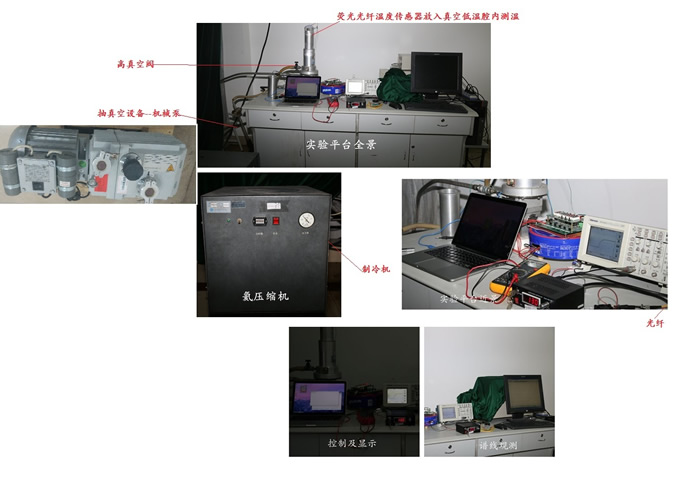
Research laboratories and pharmaceutical manufacturers utilize microwave reactors for accelerated chemical synthesis. Fiber optic temperature sensors enable precise monitoring of exothermic reactions where temperature control directly impacts product yield, purity, and safety. The probes withstand aggressive solvents and strong acids that would corrode traditional sensors within hours.
4.2 How Are They Used in Advanced Materials Processing?
Microwave sintering of ceramics, composites, and nanomaterials requires precise thermal profiles to achieve desired microstructures. Fluorescence temperature probes provide accurate measurements during rapid heating cycles where temperatures can rise at 50°C per minute. The sensors survive thermal shock conditions that would fracture conventional thermocouple assemblies.
4.3 What Benefits Do They Offer in Food Processing Applications?
Industrial microwave food processing equipment uses fiber optic temperature sensors to ensure proper pasteurization temperatures and prevent overcooking. The non-metallic probes can be embedded directly into food products without contamination concerns, providing real-time internal temperature data for HACCP compliance documentation.
4.4 How Do Medical Device Manufacturers Utilize This Technology?
Microwave sterilization systems for medical instruments require validated temperature uniformity throughout the load. Fiber optic temperature probes map thermal distributions during sterilization cycles, ensuring all items reach lethal temperatures for pathogen destruction while avoiding heat-sensitive material degradation.
5. How to Select the Right Temperature Sensor for Your Microwave Equipment?
5.1 What Temperature Range Does Your Application Require?
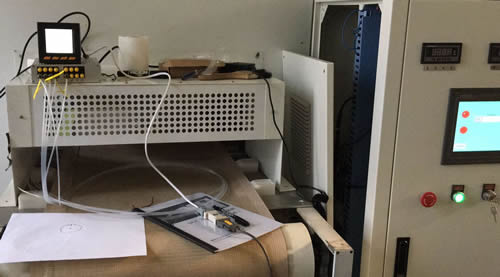
Evaluate the minimum and maximum temperatures encountered during normal operation and potential fault conditions. Fiber optic temperature sensors are available in different probe configurations optimized for specific ranges. Standard fluorescence probes cover -40°C to +250°C, while high-temperature versions extend to +300°C for specialized applications.
5.2 What Chemical Compatibility Do You Need?
Identify all chemicals, solvents, and cleaning agents that will contact the temperature probe. While the glass fiber provides excellent general chemical resistance, specific coatings or protective sheaths may be necessary for hydrofluoric acid or concentrated alkalis. Fuzhou Innovation Electronic Scie&Tech Co., Ltd. offers customized probe jacket materials for harsh chemical environments.
5.3 What Response Time Is Critical for Your Process Control?
Determine whether your application requires monitoring of steady-state temperatures or tracking of rapid thermal transients. Smaller diameter fiber optic probes provide faster response times but reduced mechanical robustness. Balance thermal response requirements against physical durability needs for your specific installation.
5.4 What Integration Capabilities Does Your Control System Require?
Modern fiber optic temperature measurement systems provide multiple output options including analog voltage, digital protocols, and industrial fieldbus communications. Ensure compatibility with your existing SCADA systems, PLC controllers, or data acquisition equipment. Standard interfaces include 4-20mA current loop, Modbus RTU/TCP, and Profibus DP.
6. What Is the Cost-Benefit Analysis of Fluorescence Sensors vs Traditional Solutions?

6.1 How Do Upfront Investment Costs Compare?
Initial procurement costs for fiber optic temperature sensors typically range 3-5 times higher than equivalent thermocouple assemblies. However, this comparison ignores the hidden costs of thermocouple failures in microwave applications. Traditional sensors may require replacement every few weeks in harsh microwave environments, whereas fluorescence probes commonly operate for years without degradation.
6.2 What Are the True Lifecycle Ownership Costs?
Calculate total cost of ownership including sensor replacement frequency, production downtime during sensor failures, and labor costs for maintenance interventions. A manufacturing facility experiencing monthly thermocouple failures with 4-hour downtime events will recover fiber optic sensor investment within 6-12 months through elimination of unplanned outages.
6.3 How Does Improved Process Control Impact Profitability?
Accurate temperature monitoring enables tighter process control, reducing product variability and quality rejects. In pharmaceutical synthesis, improved temperature precision can increase batch yields by 5-15%, representing substantial value creation that far exceeds sensor technology costs. The ability to run processes at optimal temperatures without conservative safety margins improves energy efficiency and throughput.
7. How Do Fiber Optic Probes Perform Under Extreme Microwave Conditions?
7.1 What Validates Their Performance in High-Power Applications?
Fiber optic temperature sensors from Fuzhou Innovation Electronic Scie&Tech Co., Ltd. undergo rigorous testing in controlled microwave environments at power levels up to 10kW/liter. Accelerated life testing demonstrates stable accuracy after 10,000 hours of continuous exposure to cycling electromagnetic fields, validating long-term reliability for demanding industrial applications.
7.2 How Do They Handle Thermal Shock and Mechanical Stress?
The flexible fiber optic cable construction provides superior vibration resistance compared to rigid thermocouple assemblies. The sensors withstand thermal shock testing involving rapid temperature changes of 200°C in under 10 seconds without mechanical failure or accuracy degradation. This robustness proves essential in microwave processing operations subject to frequent thermal cycling.
7.3 What Maintenance Requirements Ensure Continued Accuracy?
Unlike thermocouples requiring periodic calibration verification, fluorescence fiber optic sensors maintain factory calibration accuracy throughout their operational lifetime. The measurement principle based on fundamental phosphor physics exhibits negligible drift. Annual verification testing confirms ongoing performance, but recalibration is typically unnecessary, reducing maintenance costs and documentation burdens.
8. Why Must Microwave Chemical Reactors Use Non-Metallic Temperature Sensors?
8.1 What Safety Regulations Prohibit Metallic Sensors?
Chemical process safety standards explicitly prohibit introduction of potential ignition sources into vessels containing flammable solvents or reactive materials. Traditional thermocouple sensors that arc in microwave fields violate these fundamental safety principles. Regulatory agencies increasingly require documented risk assessments demonstrating elimination of ignition hazards in microwave chemical reactors.
8.2 How Do Metallic Sensors Interfere with Reaction Chemistry?
Metal surfaces can catalyze unwanted side reactions or decomposition pathways in sensitive chemical syntheses. The catalytic activity of nickel, iron, and other common thermocouple metals alters reaction selectivity and product distribution. Fiber optic temperature probes constructed from chemically inert materials eliminate these parasitic reaction pathways, ensuring reproducible synthetic outcomes.
8.3 What Contamination Risks Do Metal Sensors Pose?
Corrosion of metallic temperature sensors introduces metal ion contamination into pharmaceutical intermediates and active ingredients. These impurities can exceed regulatory limits, requiring costly reprocessing or batch rejection. The all-glass construction of fluorescence fiber optic sensors prevents any possibility of metallic contamination, supporting compliance with stringent pharmaceutical purity requirements.
9. What Consequences Arise from Temperature Control Failures in Microwave Food Processing?
9.1 How Does Inadequate Heating Compromise Food Safety?
Insufficient microwave heating fails to achieve pathogen lethality requirements, creating risks of foodborne illness outbreaks. Without reliable temperature monitoring, processors cannot validate that all portions of the product reach minimum safe temperatures. A single contaminated batch can trigger massive recalls, brand damage, and potential legal liability exceeding millions in costs.
9.2 What Quality Defects Result from Overheating?
Excessive temperatures during microwave food processing cause protein denaturation, nutrient degradation, and undesirable texture changes. Overcooked products exhibit poor sensory quality, leading to consumer complaints and market share erosion. Accurate fiber optic temperature sensors enable precise control preventing both undercooking safety hazards and overcooking quality defects.
9.3 How Does Temperature Variability Impact Production Efficiency?
Inconsistent temperature control in microwave systems forces manufacturers to extend processing times and increase energy input to ensure minimum specifications are met, reducing throughput and increasing costs. Wide process variations necessitate conservative operating parameters that sacrifice efficiency. Implementing reliable temperature monitoring narrows process distributions, enabling optimization closer to ideal conditions.
10. What Questions Do Engineers Most Frequently Ask About Microwave Temperature Sensing?
10.1 Can Fiber Optic Sensors Work in Batch and Continuous Processes?
Yes, fluorescence fiber optic temperature sensors adapt to both batch microwave reactors and continuous flow systems. For batch applications, probes insert through sealed ports maintaining electromagnetic containment. In continuous processes, the flexible fiber optic cable routes through process piping with minimal pressure drop or flow disturbance.
10.2 Are These Sensors Compatible with Automated Process Control?
Modern fiber optic temperature measurement systems integrate seamlessly with industrial automation platforms. Standard analog and digital outputs enable direct connection to PID controllers, distributed control systems, and programmable logic controllers. Advanced systems provide predictive maintenance diagnostics and data logging capabilities supporting Industry 4.0 initiatives.
10.3 What Environmental Conditions Affect Sensor Performance?
The measurement accuracy of fluorescence fiber optic sensors remains stable across ambient temperature variations from -40°C to +85°C. The optical measurement principle exhibits minimal sensitivity to humidity, vibration, or electromagnetic fields in the surrounding environment. This environmental immunity ensures consistent performance in challenging industrial settings.
10.4 How Do You Optimize Probe Positioning in Microwave Cavities?
Effective temperature monitoring requires strategic placement considering electromagnetic field distribution and thermal gradients. Position fiber optic probes in representative locations avoiding field nodes where heating may be minimal. For critical applications, deploy multiple sensors mapping spatial temperature variations enabling comprehensive process understanding and control.
10.5 What Training Do Operators Need for Fiber Optic Systems?
Basic operation of fiber optic temperature sensors requires minimal specialized training beyond standard instrumentation procedures. The systems provide intuitive displays and straightforward calibration verification protocols. Technical support from Fuzhou Innovation Electronic Scie&Tech Co., Ltd. ensures successful implementation and ongoing optimization.
⚠️ Disclaimer
The information provided in this guide is for educational and informational purposes only. While we strive for accuracy, temperature sensor selection should be based on thorough engineering analysis of your specific application requirements. Fuzhou Innovation Electronic Scie&Tech Co., Ltd. recommends consulting with qualified engineers and reviewing all relevant safety standards before implementing temperature measurement systems in microwave equipment. Performance characteristics described are typical values and may vary based on specific operating conditions. This guide does not constitute professional engineering advice, and users assume full responsibility for proper sensor selection, installation, and operation. Always follow manufacturer specifications and applicable regulatory requirements for your industry and jurisdiction.

Fiber optic temperature sensor, Intelligent monitoring system, Distributed fiber optic manufacturer in China
 |
 |
 |