 INNO fibre optic temperature sensors ,temperature monitoring systems.
- A stator temperature sensor measures temperature at selected winding or stator locations, such as slots and end windings.
- Stator winding temperature matters for insulation thermal stress, loading and cooling performance.
- RTD / PT100 sensors are widely used for conventional winding temperature measurement.
- Fiber optic sensors are useful where electrical isolation and EMI immunity are required.
- Sensor position decides whether a real hot spot is detected.
- Motors and generators may need different sensor arrangements.
- Sensor quantity depends on machine design and monitoring objectives.
- The final configuration should follow the actual winding and stator construction.
Contents
- 1. What Is a Stator Temperature Sensor?
- 2. Why Is Stator Winding Temperature Important?
- 3. Where Are Stator Temperature Sensors Installed?
- 4. What Types of Stator Temperature Sensors Are Used?
- 5. PT100 and RTD Stator Temperature Sensors
- 6. Fiber Optic Stator Temperature Sensors
- 7. Stator Temperature Sensors for Electric Motors
- 8. Stator Temperature Sensors for Generators
- 9. Motor vs Generator Stator Temperature Measurement
- 10. How Many Stator Temperature Sensors Are Needed?
- 11. How to Select Stator Temperature Sensor Locations
- 12. Stator Temperature Sensor Installation Considerations
- 13. Stator Temperature Measurement in High-EMI Environments
- 14. How Does a Stator Temperature Monitoring System Work?
- 15. How to Choose a Stator Temperature Sensor
- 16. Common Stator Temperature Sensor Selection Mistakes
- 17. Frequently Asked Questions
1. What Is a Stator Temperature Sensor?

A stator temperature sensor measures temperature at selected locations in or around the stator winding, slot, end winding or other thermally important areas of a motor or generator. A stator winding temperature sensor gives the stator winding temperature at the point where it is installed.
The sensor type depends on:
- machine design
- voltage level
- installation stage
- required electrical isolation
- temperature range
- measurement location
What Does a Stator Temperature Sensor Measure?
- Winding temperature: the temperature at the sensor position.
- Local hot-spot temperature: if the sensor is placed at the hot spot.
- Temperature rise: the value above a reference such as ambient.
- Thermal trend: how the value changes with load and time.
- Phase-to-phase temperature difference: a comparison between phase windings.
2. Why Is Stator Winding Temperature Important?

Stator winding temperature monitoring is linked to several machine conditions:
- Insulation thermal stress: winding insulation ages faster at higher temperature.
- Machine loading: winding temperature rises with current.
- Cooling performance: blocked airflow or coolant problems raise temperature.
- Local winding hot spots: winding hot spot temperature can exceed the average value.
- Abnormal operating conditions: unbalance or overload show up as heating.
- Maintenance decisions: temperature history supports inspection planning.
3. Where Are Stator Temperature Sensors Installed?
Typical locations include winding slots, stator winding sections, end windings, winding hot-spot locations, phase winding areas and other areas selected by the machine designer. There is no universal sensor position for every motor or generator. Placement should follow the actual machine design and identified thermal risk points.
Slot Temperature Measurement
A sensor placed in the slot, often between coil sides, reads the temperature inside the stator core where heat is generated. It is a common position for embedded sensors installed during manufacture.
End-Winding Temperature Measurement
End windings sit outside the core and are exposed to cooling air. A sensor here is easier to access, but the reading can differ from the slot temperature.
Hot-Spot Temperature Measurement
The hot spot is the warmest point in the winding. A sensor at that location gives a more direct view of the thermal limit, but the position must be identified from the machine design.
4. What Types of Stator Temperature Sensors Are Used?
Three technologies are common: RTD / PT100, thermocouple and fluorescent fiber optic temperature sensor. None is the best choice in every case.
| Sensor Type | Measurement Principle | Electrical Isolation | EMI Immunity | Point Measurement | Typical Application | Installation Considerations |
|---|---|---|---|---|---|---|
| RTD / PT100 | Resistance change | Metallic element and leads | Needs shielded wiring | Yes | Conventional motor and generator windings | Lead routing, insulation clearance |
| Thermocouple | Junction voltage | Metallic wires | Needs shielded wiring | Yes | General industrial measurement | Reference junction, lead routing |
| Fluorescent fiber optic | Fluorescent optical response | Non-metallic probe and fiber | High for the optical path | Yes | High-voltage and high-EMI machines | Fiber routing, bend radius, transmitter |
5. PT100 and RTD Stator Temperature Sensors
A PT100 temperature sensor is a platinum RTD temperature sensor whose resistance changes predictably with temperature. As a stator winding temperature sensor, it is widely used because it is established and easy to connect.
- Resistance-based measurement: a reading device converts resistance into temperature.
- Embedded or accessible applications: sensors are placed in slots or on accessible winding parts.
- Multi-point monitoring: several sensors can feed one monitoring unit.
- Controller connection: a controller or protection relay reads the signals.
- Typical use: common in industrial motors and generators.
Limitations appear in strong electromagnetic fields, high-voltage insulation environments and applications that need complete electrical isolation, because the element and leads are metallic. These limits are manageable in many machines with good shielding and insulation design, and they do not rule out RTDs.
6. Fiber Optic Stator Temperature Sensors
A fiber optic stator temperature sensor uses fluorescent point-type sensing. A light pulse travels through the fiber to a fluorescent material at the probe tip, whose optical response changes with temperature. A transmitter converts it to a temperature value. Only the tip measures temperature. The fiber only carries light, and this is not distributed temperature sensing.
A fiber optic winding temperature sensor can be useful for:
- direct point temperature measurement at the winding
- electrically isolated sensing
- strong electromagnetic fields
- high-voltage machines
- embedded winding measurement
- stator hot spot temperature measurement
See fiber optic temperature sensors, the fiber optic temperature probe and fiber optic temperature measurement.
7. Stator Temperature Sensors for Electric Motors
A motor stator temperature sensor supports motor winding temperature monitoring in industrial motors, large motors, VFD-driven motors, high-power motors and motors in strong EMI environments. A motor winding temperature sensor is used to watch:
- winding temperature
- stator hot spots
- temperature imbalance between phases
- cooling performance
Related pages: motor winding temperature sensor, electric motor temperature sensor monitoring and rotating machinery temperature monitoring.
8. Stator Temperature Sensors for Generators
A generator stator temperature sensor is used for generator winding temperature monitoring in stator windings, large generators and generator sets. A generator winding temperature sensor is often chosen with attention to:
- winding hot spots
- strong electromagnetic environments
- direct winding temperature measurement
Related pages: generator temperature monitoring, the fiber optic temperature measurement system for generator sets and generator stator winding hot spot monitoring.
9. Motor vs Generator Stator Temperature Measurement
| Item | Motor | Generator |
|---|---|---|
| Typical winding structure | Depends on machine size and design | Often larger stator windings |
| Common sensor technologies | RTD / PT100, thermocouple, fiber optic | RTD / PT100, fiber optic |
| Sensor placement | Slots or end windings | Slots, end windings, hot spots |
| EMI environment | Higher with VFD drives | Strong fields in large machines |
| Voltage considerations | Low to high voltage | Often medium or high voltage |
| Hot-spot monitoring | Common on large motors | Common on large generators |
| Monitoring channels | Set by winding design | Set by winding design |
| Remote monitoring | Through controller or PLC | Through controller, PLC or SCADA |
The actual sensor configuration depends more on the machine design than on whether the machine is called a motor or a generator.
10. How Many Stator Temperature Sensors Are Needed?
The quantity depends on:
- number of phases
- winding design
- stator size
- number of hot-spot locations
- redundancy requirements
- machine criticality
- monitoring channels
- OEM design
- available installation positions
The required number of stator temperature sensors should be determined according to the machine winding design and monitoring objectives.
11. How to Select Stator Temperature Sensor Locations
- Expected winding hot spots
- Phase locations
- Slot positions
- End-winding locations
- Cooling airflow
- High-current regions
- Historical overheating locations
- Electrical insulation requirements
- Sensor installation access
- Sensor lead or fiber routing
Correct placement is often more important than simply increasing the number of sensors.
12. Stator Temperature Sensor Installation Considerations
Key points are sensor fixation, winding integration, installation before winding impregnation where applicable, lead and fiber routing, bend radius, mechanical protection, insulation clearance, connector location and service accessibility.
Embedded Sensor Installation
Embedded sensors are placed during winding manufacture, often before impregnation. This gives access to slots and hot spots, and positions should be agreed with the machine manufacturer.
Retrofit Temperature Monitoring
Retrofit options depend heavily on machine construction and accessible measurement points. End windings and accessible surfaces are more practical than the inside of slots.
13. Stator Temperature Measurement in High-EMI Environments
A high EMI temperature sensor is needed where electromagnetic interference can disturb measurement. In rotating machinery, factors include:
- Electromagnetic interference: high currents and VFD switching create noise.
- Electrical isolation: the sensor should not create a path between the winding and the monitoring device.
- Conductive sensor leads: they can pick up noise and need shielding.
- Signal integrity: noise can distort readings.
- High electric fields: they affect insulation coordination.
A fiber optic temperature sensor of the fluorescent point type has a non-metallic probe and fiber, so the optical signal is not disturbed by these fields. This supports motor temperature monitoring and generator temperature monitoring in demanding environments.
14. How Does a Stator Temperature Monitoring System Work?
Stator Temperature Sensor → Signal / Optical Fiber → Monitoring Device / Transmitter → Temperature Data → Alarm → PLC / SCADA
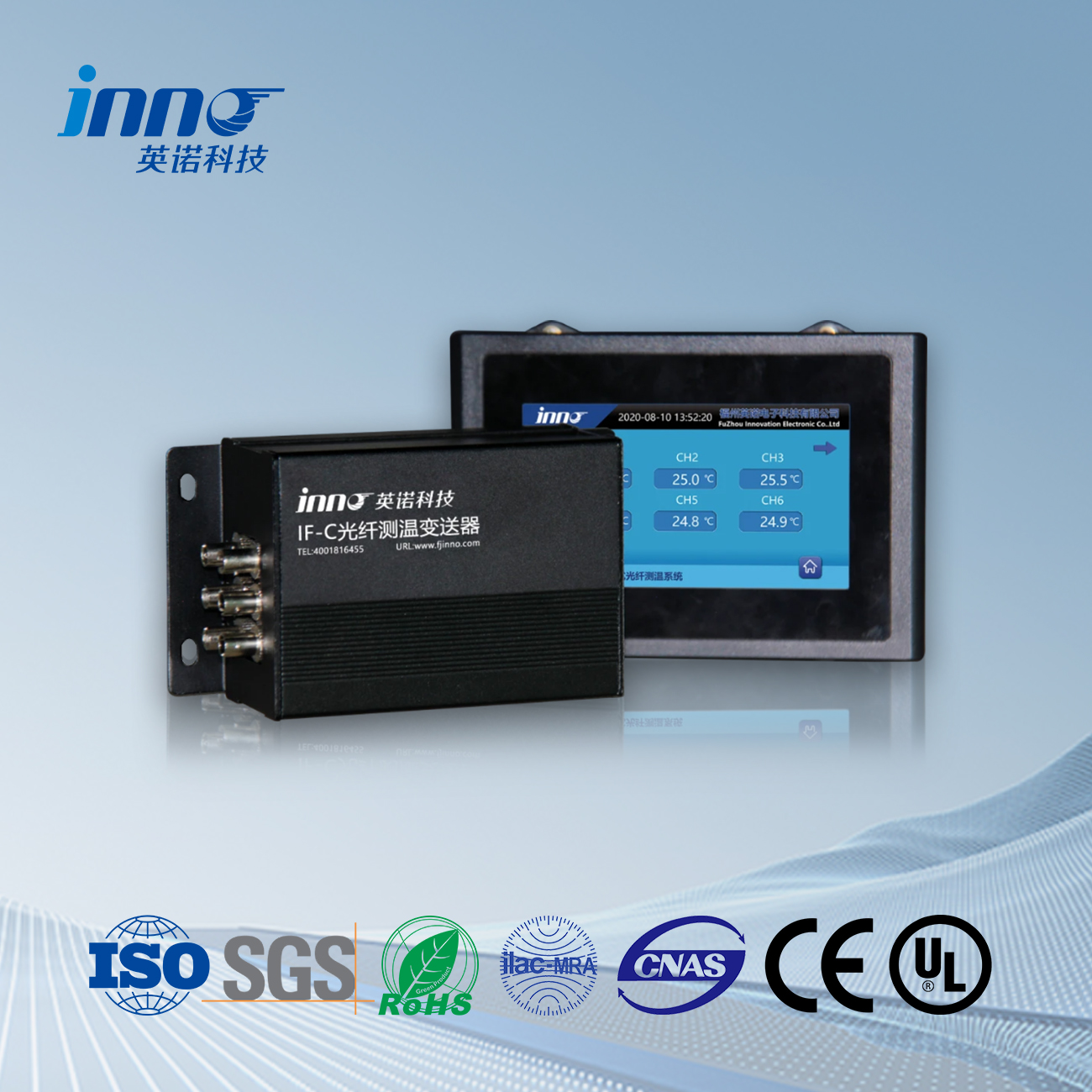
A stator temperature sensor detects the temperature. A multi-channel temperature monitor reads several sensors and shows the values. For fiber optic probes, a fiber optic temperature transmitter converts the optical signal to temperature data. Alarm outputs notify operators, and data communication passes the values to a PLC or SCADA for remote monitoring. Alarm values must come from the machine manufacturer or the project specification. Available outputs and protocols differ between products and should be confirmed with the supplier. See the fiber optic temperature transmitter page. A complete temperature monitoring system should be tested end to end at commissioning.
15. How to Choose a Stator Temperature Sensor
- Motor or generator
- Voltage level
- Winding design
- Measurement location
- Required temperature range
- Accuracy requirement
- Electrical isolation
- EMI environment
- Sensor size
- Installation stage
- Number of measurement points
- Monitoring channels
- Alarm requirements
- Communication requirements
- PLC / SCADA integration
The final sensor configuration should be selected according to the machine design, winding construction, thermal risk points and project requirements.
16. Common Stator Temperature Sensor Selection Mistakes
- Selecting sensors only by temperature range
- Ignoring actual hot-spot locations
- Using too few sensing points
- Ignoring EMI conditions
- Ignoring electrical isolation
- Poor sensor fixation
- Poor lead or fiber routing
- Confusing average winding temperature with hot-spot temperature
- Ignoring monitoring channel quantity
- Choosing sensors without checking transmitter compatibility
17. Frequently Asked Questions
1. What is a stator temperature sensor?
A stator temperature sensor measures temperature at selected locations in or around the stator winding of a motor or generator, such as slots and end windings. It provides the winding temperature at its own position and supports protection, monitoring and thermal management.
2. Where are stator temperature sensors installed?
Common positions are winding slots, end windings, phase winding areas and expected hot-spot locations. Positions are chosen by the machine designer. There is no universal position, so placement should follow the actual machine design and identified thermal risk points.
3. What temperature sensors are used in stator windings?
RTD / PT100 sensors, thermocouples and fluorescent fiber optic sensors are used. RTDs are widely used in conventional machines. Fiber optic sensors suit high-voltage and high-EMI machines. The choice depends on voltage, isolation needs, EMI, installation stage and measurement location.
4. Is PT100 suitable for stator temperature measurement?
Yes, in many machines. PT100 is established, accurate and easy to connect to controllers. Its metallic element and leads need shielding and insulation coordination in strong electromagnetic fields or high-voltage designs. Suitability depends on the machine and should follow the manufacturer’s design.
5. Can fiber optic sensors measure stator winding temperature?
Yes. A fluorescent point-type fiber optic sensor can be embedded or fixed at a chosen winding point to measure the temperature there. Each probe reads one location, so several probes cover several points. It is not distributed temperature sensing.
6. What is a stator winding hot spot?
It is the point in the winding with the highest temperature. It is usually above the average winding temperature because heating and cooling are not uniform. A sensor placed at that location gives a more direct view of thermal stress on the insulation.
7. How many stator temperature sensors are needed?
It depends on the phases, winding design, stator size, hot-spot locations, redundancy, machine criticality, monitoring channels and available positions. The required number of stator temperature sensors should be determined according to the machine winding design and monitoring objectives.
8. What is the difference between motor and generator stator temperature monitoring?
The principles are the same, but generators often have larger windings, higher voltage and stronger fields. Sensor configuration depends more on machine design than on the machine type. VFD-driven motors can add EMI, while large generators often emphasize hot-spot monitoring.
9. Are fiber optic temperature sensors suitable for high-EMI motors and generators?
Yes. The probe and fiber are non-metallic, so the optical signal is not disturbed by electromagnetic interference and the sensing point is electrically isolated. Fiber routing, bend radius and transmitter compatibility still need attention during installation.
10. How do I choose a stator temperature sensor?
Start with the machine type, voltage level, winding design and measurement location. Then confirm the temperature range, accuracy, isolation, EMI conditions, sensor size and installation stage. Finally, check the number of points, channels, alarms and PLC or SCADA requirements against the machine design.
Need Help Selecting a Stator Temperature Sensor?
Send us the details of your application. Please provide:
- motor or generator type
- rated voltage
- winding design
- measurement locations
- expected temperature range
- number of sensing points
- required monitoring channels
- electrical isolation requirement
- communication requirements
- PLC / SCADA requirements

Fiber optic temperature sensor, Intelligent monitoring system, Distributed fiber optic manufacturer in China
 |
 |
 |