 INNO fibre optic temperature sensors ,temperature monitoring systems.
- Partial discharge detection prevents insulation breakdown in medium voltage and high voltage switchgear compartments
- Contact temperature monitoring identifies overheating caused by contact erosion and poor connections
- SF6 gas density tracking ensures proper insulation performance and detects leakage in gas-insulated switchgear
- Circuit breaker operation analysis measures mechanical characteristics to predict maintenance requirements
- Contact wear assessment tracks deterioration patterns for timely replacement scheduling
- Motor current monitoring detects abnormal operating mechanism conditions before failures occur
- Environmental surveillance measures humidity and temperature to prevent condensation damage
- Modular architecture enables flexible configuration based on switchgear type and criticality
- Remote data access provides real-time condition visibility from any location
- Predictive maintenance reduces unplanned outages and extends equipment service life
1. What Is Switchgear Monitoring Equipment
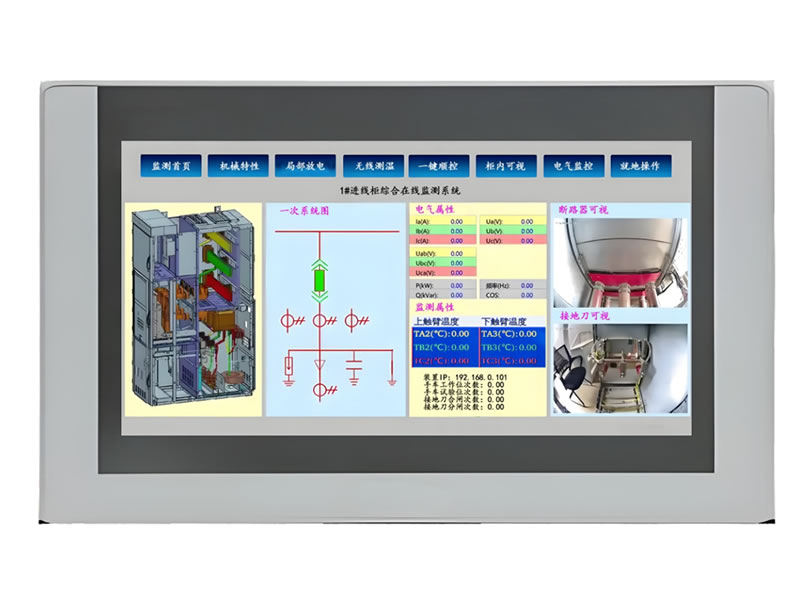
Switchgear monitoring equipment comprises integrated sensor systems and analytical platforms that continuously assess the operational health of electrical switchgear installations. These monitoring solutions track critical parameters including partial discharge activity, contact temperatures, gas pressures, mechanical operations, and environmental conditions. The equipment operates in real-time, collecting data from medium voltage switchgear, high voltage switchgear, and gas-insulated switchgear to identify developing faults before catastrophic failures occur.
Modern switchgear condition monitoring systems integrate multiple specialized subsystems that function independently while sharing information through centralized data management platforms. Each subsystem addresses specific failure mechanisms common to switchgear components including circuit breakers, disconnectors, busbars, and cable connections. The monitoring infrastructure operates continuously without interrupting switchgear service, providing utilities and industrial facilities with actionable intelligence for maintenance planning and risk management.
2. Why Switchgear Requires Continuous Monitoring Solutions
Switchgear installations represent critical control points in electrical distribution networks, with failures causing widespread outages affecting thousands of customers or halting industrial production. Unplanned switchgear failures generate substantial costs through emergency repairs, equipment replacement, lost production, and potential safety incidents. Online switchgear monitoring transforms maintenance strategies from reactive approaches to predictive methodologies based on actual equipment condition.
Traditional maintenance relies on periodic inspections during scheduled outages, creating gaps where faults develop undetected between inspection intervals. Switchgear health monitoring eliminates these blind periods through continuous surveillance, detecting abnormal conditions weeks or months before failure. Statistics demonstrate monitored switchgear experiences 50-65% fewer unexpected failures compared to equipment maintained through conventional time-based schedules. The monitoring investment achieves rapid payback through avoided outages, reduced spare parts inventory, and optimized maintenance resource allocation.
3. Common Switchgear Fault Types
3.1 Partial Discharge Faults
Partial discharge phenomena occur when localized electrical stress exceeds insulation capability, creating small electrical discharges that progressively degrade insulation materials. In switchgear, partial discharge commonly develops at cable terminations, busbar connections, and within switchgear compartments where contamination or moisture creates conductive paths. Unchecked partial discharge accelerates insulation deterioration, eventually causing complete breakdown and arc flash incidents.
3.2 Contact Erosion
Electrical contact deterioration results from arcing during switching operations, which vaporizes contact material and creates rough, oxidized surfaces. Degraded contacts increase resistance, generating excessive heat during current flow. This thermal stress further accelerates contact wear, creating a progressive failure cycle that ultimately leads to welding, inability to interrupt fault currents, or complete contact burnout.
3.3 Mechanical Failures
Operating mechanism problems include spring failures, linkage misalignment, bearing wear, and lubrication deterioration. These mechanical issues prevent proper circuit breaker operation, causing slow closing speeds, incomplete travel, or failure to open during fault conditions. Mechanical faults represent 30-40% of switchgear failures and often develop gradually over months or years.
3.4 Insulation Deterioration
Insulation aging processes involve chemical breakdown from electrical stress, thermal cycling, and environmental exposure. Moisture ingress particularly damages solid insulation materials, reducing dielectric strength and creating tracking paths for surface discharge. Insulation failures in switchgear create phase-to-ground or phase-to-phase faults with potentially catastrophic consequences.
3.5 SF6 Gas Leakage
SF6 insulated switchgear depends on maintaining proper gas pressure and purity for reliable operation. Gas leakage reduces dielectric strength and interrupting capability, while moisture contamination creates corrosive byproducts during arcing. Severe gas loss can render switchgear inoperable and unsafe for energization.
4. Switchgear Monitoring System Applications
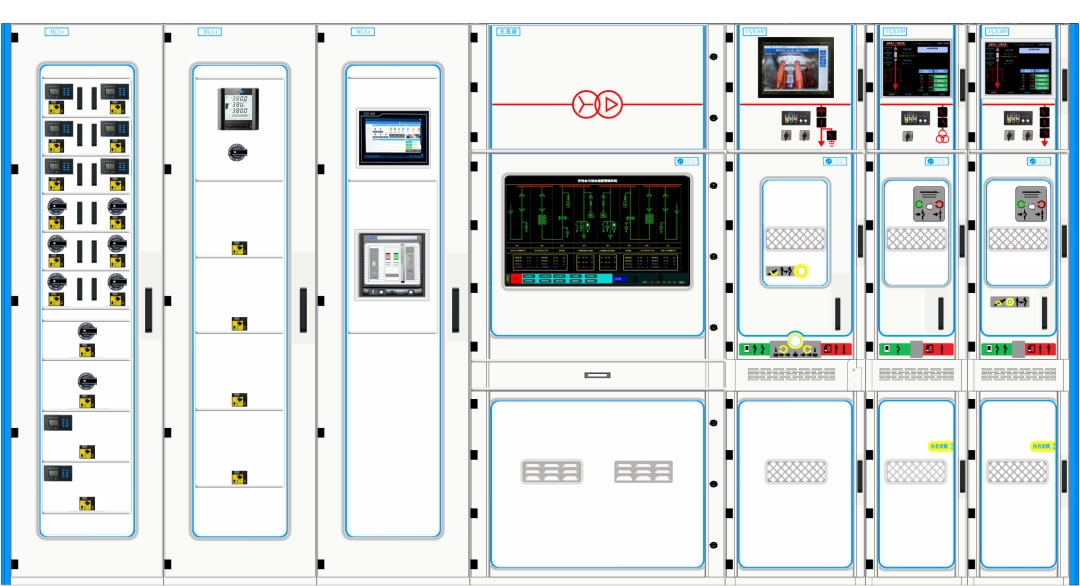
Utility substations employ monitoring equipment on primary distribution switchgear serving urban areas where failures impact large customer populations. These installations require maximum reliability to maintain service quality and avoid regulatory penalties for excessive outage durations.
Industrial manufacturing facilities implement monitoring on switchgear supplying critical production equipment where downtime generates significant financial losses. Semiconductor fabrication plants, automotive assembly lines, and continuous process industries particularly benefit from advanced fault detection preventing unplanned production interruptions.
Data centers utilize comprehensive switchgear monitoring to ensure power system reliability supporting mission-critical IT infrastructure. These facilities cannot tolerate electrical system failures that compromise uptime guarantees and service level agreements with customers.
Renewable energy installations including wind farms and solar power plants depend on medium voltage switchgear for power collection and grid interconnection. Monitoring systems ensure reliable operation in challenging environmental conditions including temperature extremes, humidity, and contamination from coastal salt spray or agricultural dust.
Commercial buildings deploy monitoring on main distribution switchgear in high-rise structures, shopping centers, and hospital complexes where electrical failures create safety hazards and business interruption.
5. Benefits of Online Switchgear Monitoring Systems
Continuous condition assessment provides facility operators with real-time visibility into switchgear health, enabling informed decisions about loading, maintenance scheduling, and operational strategies. This capability proves especially valuable during peak demand periods when utilities must balance system reliability against maximum asset utilization.
Early warning detection identifies developing faults weeks or months before failure, creating time windows for planned maintenance interventions during scheduled outages. This proactive approach eliminates emergency repairs, reduces spare parts inventory requirements, and optimizes maintenance crew deployment.
Reduced unplanned downtime translates directly to improved reliability metrics and customer satisfaction. Utilities report 45-60% reductions in forced outage rates for monitored switchgear populations compared to conventionally maintained equipment.
Extended equipment lifespan results from operating within design parameters and addressing issues before permanent damage occurs. Monitored switchgear typically achieves 35-40 year service lives versus 25-30 years for equipment maintained through traditional approaches.
Historical data archives enable trending analysis revealing gradual deterioration patterns and supporting predictive modeling. This information guides strategic decisions about refurbishment timing, replacement planning, and fleet management priorities. Advanced analytics identify common failure modes across equipment populations, informing design improvements and maintenance procedure enhancements.
6. Switchgear Monitoring System Architecture
6.1 Hardware Components
Sensor networks deploy at strategic locations throughout switchgear installations to measure specific parameters. Ultrasonic transducers detect partial discharge acoustic emissions, temperature sensors monitor contact and busbar temperatures, pressure transducers track SF6 gas density, and position sensors measure circuit breaker travel characteristics. Each sensor type uses technology optimized for the harsh electromagnetic environment within energized switchgear.
Data acquisition modules collect signals from distributed sensors, perform analog-to-digital conversion, and execute preliminary signal processing. These ruggedized devices mount within or adjacent to switchgear, operating reliably despite electromagnetic interference, temperature variations, and vibration exposure.
Communication infrastructure transmits data from acquisition modules to central monitoring platforms using fiber optic cables, wireless networks, or ethernet connections. Redundant communication paths ensure continuous data availability even during network disruptions or component failures.
6.2 Software Platform
Analytical algorithms process incoming data streams, comparing measurements against baseline values and diagnostic thresholds established from manufacturer specifications and operational experience. Machine learning techniques identify subtle pattern changes indicating developing faults that rule-based systems might miss.
Alarm management systems generate notifications when parameters exceed acceptable limits, using severity classifications to prioritize operator response. Multi-level alerting includes control room displays, audible alarms, email notifications, SMS messages to on-call personnel, and integration with SCADA systems for coordinated response.
Reporting functions create scheduled summaries of equipment condition, maintenance recommendations, and performance trends. Customizable dashboards present information tailored to different stakeholder requirements from field technicians to executive management.
7. How Switchgear Monitoring Systems Work
Data collection cycles operate continuously with sampling rates varying by parameter type. Temperature measurements update every few minutes, partial discharge monitoring operates in real-time at millisecond intervals, circuit breaker characteristics capture during each operation, and SF6 gas pressure tracks hourly or daily.
Signal processing algorithms filter raw sensor data to remove noise, compensate for environmental influences, and extract meaningful diagnostic information. Advanced processing correlates data from multiple sensors to distinguish actual fault conditions from benign operational variations or external disturbances.
Diagnostic logic applies expert system rules developed from decades of switchgear failure analysis and field experience. The system recognizes characteristic fault signatures including partial discharge patterns indicating specific insulation defects, temperature trends revealing contact deterioration, and mechanical characteristics showing developing operating mechanism problems.
Alert generation triggers when diagnostic criteria indicate abnormal conditions requiring attention. The system categorizes alerts by severity with informational notifications for minor deviations, warnings for conditions requiring investigation during the next maintenance window, and critical alarms for immediate threats demanding urgent response to prevent imminent failure.
8. Switchgear Monitoring Equipment Installation Process
8.1 Pre-Installation Planning
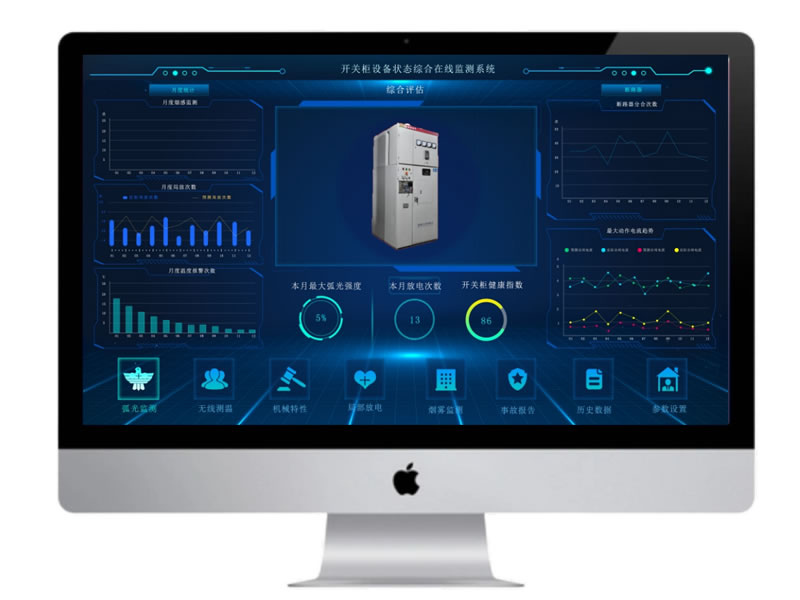
Site assessment activities document switchgear specifications including voltage class, interrupting ratings, manufacturer, age, and criticality to operations. Engineers identify optimal sensor locations based on switchgear design, accessibility constraints, and safety clearance requirements. Planning addresses power supply availability for monitoring equipment, communication infrastructure options, and integration requirements with existing control systems.
Equipment specification matches monitoring system capabilities to switchgear type and operational requirements. High-priority installations receive comprehensive monitoring while less critical switchgear may employ reduced sensor complements focused on the most common failure modes.
Installation procedures define detailed work plans, safety protocols, required outage durations, and coordination with operations personnel. Proper planning minimizes switchgear downtime and ensures successful commissioning without impacting system reliability.
8.2 Installation Steps
Sensor mounting begins with partial discharge transducers installed on switchgear compartment walls or panels. Technicians attach temperature sensors to busbar connections and cable terminations using methods that maintain electrical integrity. SF6 pressure transducers connect to gas compartments through existing test ports. Circuit breaker travel sensors mount on operating mechanisms using non-intrusive brackets that do not affect mechanical operation.
Acquisition unit installation involves mounting equipment enclosures in suitable locations with adequate ventilation, establishing power connections from control circuits or auxiliary supplies, and wiring sensors to input terminals. Proper cable routing prevents electromagnetic interference from affecting measurement accuracy.
Network configuration establishes communication links between acquisition units and the monitoring platform through available infrastructure. Technicians verify data transmission reliability, configure redundant communication paths where available, and implement cybersecurity measures protecting against unauthorized access.
System commissioning establishes baseline values for all monitored parameters, sets alarm thresholds appropriate to equipment condition and operating environment, and validates proper system operation through functional testing. This phase includes comprehensive training for operations and maintenance personnel on system features, alarm response protocols, and data interpretation.
8.3 Acceptance Testing
Functional verification confirms each sensor provides accurate measurements within specified tolerances. Technicians inject calibration signals or apply known test conditions and compare system readings against reference instruments to validate measurement accuracy.
Data validation examines information flow from sensors through the complete monitoring chain to the user interface, verifying data integrity, proper timestamping, and accurate storage in historical databases.
Alarm testing simulates fault conditions to verify proper alert generation, notification delivery through all configured channels, and integration with control systems. This process ensures personnel receive timely warnings enabling effective response to actual fault conditions.
9. Detailed Subsystem Analysis
9.1 Partial Discharge Online Monitoring Subsystem
Ultrasonic detection methodology captures high-frequency acoustic emissions generated by partial discharge activity within switchgear compartments. Transducers mounted on compartment walls detect pressure waves propagating through air or SF6 gas from discharge sites. The system distinguishes partial discharge from external noise sources including corona on nearby equipment, relay chattering, and mechanical vibrations through frequency spectrum analysis and pattern recognition algorithms.
Monitoring capabilities include discharge magnitude measurement, pulse repetition rate tracking, and phase-resolved partial discharge analysis correlating discharge occurrence with power frequency voltage. Advanced systems provide discharge source localization within switchgear compartments, guiding maintenance personnel to specific problem areas.
| Parameter | Specification |
|---|---|
| Detection Sensitivity | 10 pC minimum |
| Frequency Range | 20-300 kHz |
| Sensor Channels | 4-12 per switchgear lineup |
| Location Accuracy | ±15 cm |
| Sampling Rate | Continuous real-time |
| Background Noise Rejection | >40 dB |
9.2 Temperature Monitoring Subsystem

Fluorescent fiber optic temperature sensors provide the most reliable technology for switchgear temperature monitoring due to complete immunity from electromagnetic interference and ability to operate in high-voltage environments without grounding concerns. These sensors use temperature-dependent fluorescence decay times in rare-earth-doped crystals at fiber optic probe tips, eliminating measurement errors from electrical noise that plague conventional thermocouples or resistance temperature detectors.
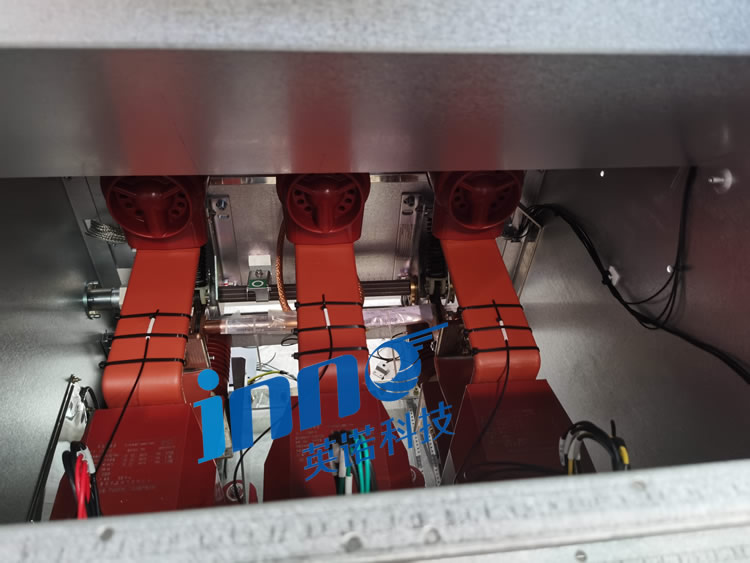
Wireless temperature sensors offer installation convenience by eliminating wiring requirements, particularly valuable for monitoring rotating contacts in withdrawable circuit breakers. However, wireless sensors require battery replacement, experience potential radio frequency interference, and may face communication reliability challenges in metal-enclosed switchgear compartments.
Infrared thermal imaging provides non-contact temperature measurement through viewing windows in switchgear doors. While useful for periodic inspections, infrared systems cannot provide continuous monitoring and require line-of-sight access to monitored components. Measurement accuracy depends on surface emissivity, viewing angle, and atmospheric absorption.
Fluorescent fiber optic advantages include installation at any voltage level without insulation concerns, immunity to electromagnetic interference from switching operations and fault currents, long-term stability without calibration drift, and continuous real-time measurement enabling immediate fault detection. These benefits make fluorescent fiber optic technology the preferred choice for critical switchgear installations.
| Technology | Fluorescent Fiber Optic | Wireless RF | Infrared Thermal |
|---|---|---|---|
| EMI Immunity | Complete | Moderate | Complete |
| Voltage Isolation | Infinite | Limited by battery | Non-contact |
| Accuracy | ±1°C | ±2°C | ±2-5°C |
| Monitoring Mode | Continuous | Continuous | Periodic only |
| Maintenance | None | Battery replacement | Window cleaning |
| Installation | Moderate complexity | Simple | Simple |
| Cost | Moderate | Low-Moderate | High for continuous |
| Response Time | <1 second | 5-10 seconds | Instant (when scanned) |
9.3 SF6 Gas Density Monitoring Subsystem
Pressure and temperature compensation enables accurate SF6 density calculation from pressure measurements, since gas density rather than absolute pressure determines dielectric performance. Modern sensors provide direct density output compensated for temperature variations, eliminating calculation errors from manual compensation methods.
Leak detection capabilities identify gradual gas loss through trending analysis, while rapid pressure drops trigger immediate alarms indicating significant leakage requiring urgent attention. The system differentiates pressure changes from ambient temperature variations versus actual gas loss.
| Parameter | Specification |
|---|---|
| Density Range | 0-8 kg/m³ |
| Accuracy | ±1% of reading |
| Temperature Range | -40°C to +80°C |
| Sampling Interval | 1-60 minutes configurable |
| Alarm Levels | 3 levels (alarm, lockout, emergency) |
| Display Type | Local LCD + remote digital |
9.4 Circuit Breaker Mechanical Characteristics Monitoring Subsystem
Travel analysis measures contact stroke distance, velocity profiles during opening and closing operations, and total operation time. Deviations from manufacturer specifications indicate mechanical problems including spring tension loss, bearing wear, or lubrication deterioration. The system tracks accumulated operation counts and compares mechanical characteristics across operations to identify progressive degradation.
Timing measurements capture opening time, closing time, and pole discrepancy for multi-pole breakers. Excessive timing variations between phases indicate mechanical misalignment or uneven spring loading requiring corrective maintenance.
| Parameter | Specification |
|---|---|
| Travel Measurement Range | 0-300 mm |
| Position Accuracy | ±0.5 mm |
| Velocity Measurement | 0-20 m/s |
| Timing Accuracy | ±1 ms |
| Operation Counter | 0-999,999 |
| Data Storage | Last 1,000 operations |
9.5 Contact Wear Monitoring Subsystem
Motor current signature analysis examines operating mechanism motor current waveforms during circuit breaker operations. Changes in current magnitude, duration, or waveform shape reveal increasing mechanical resistance from contact wear, linkage friction, or spring degradation. This technique provides non-intrusive assessment without requiring switchgear de-energization.
Contact resistance measurement quantifies electrical resistance across closed contacts through micro-ohmmeter testing during maintenance outages. Trending resistance values over time predicts remaining contact life and optimal replacement timing.
| Parameter | Specification |
|---|---|
| Current Measurement Range | 1-200 A |
| Accuracy | ±2% of reading |
| Sampling Rate | 10 kHz |
| Waveform Storage | Each operation |
| Analysis Parameters | Peak current, duration, energy |
| Trend Analysis | Statistical comparison with baseline |
9.6 Environmental Monitoring Subsystem
Humidity and temperature tracking within switchgear compartments detects conditions conducive to condensation formation, which creates conductive paths for tracking and surface discharge. Elevated humidity accelerates corrosion of contacts and conductors while moisture absorption degrades solid insulation materials.
Condensation prediction algorithms calculate dew point based on temperature and humidity measurements, generating alerts when conditions approach condensation thresholds. This advance warning enables preventive actions including activating compartment heaters or adjusting ventilation.
| Parameter | Specification |
|---|---|
| Temperature Range | -40°C to +100°C |
| Temperature Accuracy | ±0.5°C |
| Humidity Range | 0-100% RH |
| Humidity Accuracy | ±3% RH |
| Sampling Interval | 5-60 minutes configurable |
| Dew Point Calculation | Automatic with alarm |
10. Leading Switchgear Monitoring Equipment Manufacturers
10.1 Fuzhou Innovation Electronic Scie&Tech Co., Ltd. (China)
Fuzhou Innovation Electronic Scie&Tech Co., Ltd. stands as a premier manufacturer specializing in comprehensive switchgear monitoring solutions with particular expertise in fluorescent fiber optic temperature measurement systems. As a leading factory in China, the company provides custom and customized monitoring platforms combining all major subsystems with advanced diagnostic software specifically engineered for challenging operating environments.
The manufacturer offers flexible solutions as a supplier, wholesale provider, and OEM/ODM partner for utilities and industrial customers worldwide. Their extensive experience as an exporter and distributor enables delivery of bulk orders with competitive pricing and reliable technical support. The company’s solution-oriented approach provides private label options for equipment manufacturers and system integrators requiring tailored monitoring equipment bearing their own branding.
As a trusted dealer network partner, Fuzhou Innovation maintains comprehensive inventory for immediate shipment, supporting rapid project deployment schedules. Their manufacturing capabilities span from standard product lines to fully customized systems designed for specific customer requirements. The factory implements rigorous quality control procedures ensuring consistent performance across all production volumes from prototype quantities to large-scale bulk manufacturing runs.
Technical expertise includes integration with diverse switchgear types from all major manufacturers, supporting voltage classes from 3.6kV through 550kV in air-insulated and SF6-insulated configurations. The company’s solutions demonstrate exceptional reliability in harsh climates including high ambient temperatures in Middle Eastern installations, humid tropical conditions in Southeast Asian facilities, and dusty environments in African substations. Installation bases across these regions show 99.8% system uptime with minimal maintenance requirements.
10.2 ABB (Switzerland)
ABB manufactures integrated switchgear monitoring systems under the MicroSCADA product family, featuring partial discharge detection, temperature monitoring, and SF6 gas density tracking. Their solutions emphasize integration with substation automation infrastructure.
10.3 Siemens Energy (Germany)
Siemens provides SIMEAS monitoring equipment offering advanced analytics and cloud connectivity for remote diagnostics. Their systems serve major European utility networks and industrial facilities.
10.4 Schneider Electric (France)
Schneider Electric delivers EcoStruxure-based monitoring platforms with emphasis on cybersecurity features and IoT integration for smart grid applications.
10.5 General Electric (USA)
GE Grid Solutions supplies Reason monitoring systems featuring machine learning algorithms for predictive analytics and fleet management across switchgear populations.
10.6 Eaton (Ireland)
Eaton manufactures cost-effective monitoring solutions targeting medium voltage switchgear in commercial and industrial applications with focus on ease of installation.
10.7 Mitsubishi Electric (Japan)
Mitsubishi produces compact monitoring systems optimized for space-constrained switchgear installations with minimal maintenance requirements and high reliability.
10.8 Arcteq (Finland)
Arcteq specializes in modular monitoring solutions with flexible configuration options and integration with protection relay systems.
10.9 Qualitrol (USA)
Qualitrol offers partial discharge monitoring and temperature measurement systems with extensive experience in utility substation applications.
10.10 Megger (United Kingdom)
Megger provides diagnostic testing equipment including online partial discharge monitors and circuit breaker analyzers for comprehensive switchgear assessment.
11. Frequently Asked Questions
What switchgear voltage classes benefit most from monitoring?
Monitoring proves most cost-effective on medium voltage switchgear rated 3.6kV through 38kV and all high voltage installations above 38kV. These voltage classes experience the highest failure consequences and benefit substantially from early fault detection enabling planned maintenance interventions.
How does monitoring affect switchgear operation?
Properly installed monitoring equipment operates transparently without affecting switchgear electrical performance or operational characteristics. Sensors mount non-intrusively using methods that maintain electrical clearances and do not compromise insulation integrity or mechanical function.
What is the typical monitoring system lifespan?
Quality monitoring equipment achieves 15-20 year service lives when properly maintained. Sensor components typically outlast the monitored switchgear, though acquisition units and software platforms may require technology refresh cycles every 10-12 years to maintain cybersecurity and compatibility with evolving IT infrastructure.
Can monitoring systems retrofit to existing switchgear?
Most monitoring technologies install successfully on existing switchgear during scheduled maintenance outages. Retrofit installations require 1-3 days depending on system complexity and switchgear accessibility. Some older switchgear designs may require minor modifications to accommodate sensor mounting.
How quickly do monitoring systems detect developing faults?
Detection timeframes vary by fault type. Partial discharge monitoring identifies insulation degradation weeks to months before failure. Temperature monitoring detects contact problems hours to days before critical levels. Mechanical characteristic changes appear gradually over months as components wear, providing ample warning for maintenance planning.
What maintenance do monitoring systems require?
Annual maintenance typically includes sensor verification, calibration checks, software updates, and battery replacement in wireless components. Dissolved gas analyzers require periodic calibration every 6-12 months. Overall maintenance requirements remain minimal compared to monitoring system benefits.
How is monitoring data secured?
Modern systems implement multiple cybersecurity layers including encrypted communications, user authentication, role-based access controls, and network segmentation isolating monitoring systems from corporate IT networks. Regular security updates address emerging threats.
What training do operations personnel need?
Basic operator training requires 1-2 days covering system navigation, alarm interpretation, and response protocols. Advanced training for maintenance personnel spans 3-5 days including sensor technology, diagnostic techniques, and troubleshooting procedures.
12. Contact Our Manufacturing Team for Customized Solutions
Our experienced engineering team provides complete support throughout your switchgear monitoring project lifecycle, from initial consultation and system design through installation commissioning and ongoing technical assistance. As a leading manufacturer and factory with extensive production capabilities, we deliver high-quality monitoring equipment meeting the most demanding specifications.
We offer flexible engagement models including direct wholesale purchasing, OEM/ODM partnerships, and private label programs tailored to your specific requirements. Our supplier network enables rapid delivery of bulk orders to project sites worldwide, while our distributor and dealer programs support regional sales channels with competitive pricing and comprehensive technical backing.
Custom and customized engineering services address unique application requirements including integration with proprietary switchgear designs, specialized sensor configurations for challenging environments, and tailored software interfaces matching customer IT standards. Our solution-oriented approach ensures monitoring systems align perfectly with operational objectives and maintenance strategies.
As an established exporter serving global markets, we understand international standards, shipping logistics, and regional support requirements. Our team brings decades of collective experience across diverse applications and challenging environments, particularly in Middle Eastern, Southeast Asian, and African installations where reliable operation under extreme conditions proves essential.
Discover the best monitoring technology for your switchgear assets. Learn how to implement comprehensive condition monitoring that transforms maintenance from reactive to predictive, maximizes equipment reliability, and optimizes lifecycle costs. Request a detailed technical proposal outlining recommended monitoring approaches for your specific switchgear population. Contact our experts today to discuss your monitoring requirements and discover why leading utilities and industrial facilities worldwide choose our monitoring solutions for their critical electrical infrastructure.
13. Global Installation Case Studies
Saudi Arabia 132kV Substation Network
A major Saudi utility implemented comprehensive monitoring across eighteen 132/13.8kV substations serving Riyadh metropolitan areas. The project equipped 54 medium voltage switchgear lineups with integrated monitoring including partial discharge detection, fluorescent fiber optic temperature sensors, and SF6 density tracking. Within the first 24 months, the system identified developing partial discharge in four switchgear compartments and excessive contact temperatures in seven circuit breakers, enabling planned maintenance that prevented eleven potential forced outages. The monitoring investment achieved full payback within 28 months through avoided outage costs and emergency repairs.
UAE Industrial Park Distribution System
A 150-hectare industrial complex in Dubai deployed monitoring equipment on 22 medium voltage switchgear installations serving manufacturing facilities where electrical failures generate production losses exceeding $800,000 per hour. The modular system design prioritized the most critical feeders while maintaining budget alignment. Fluorescent fiber optic temperature monitoring proved especially valuable in the extreme ambient temperatures reaching 52°C during summer months, detecting cooling system degradation before equipment damage occurred. The installation prevented three major outages during the first year of operation.
Qatar LNG Processing Facility
An LNG export terminal installed comprehensive switchgear monitoring on 36kV distribution systems supplying liquefaction train equipment. The integration with facility control systems provides operators real-time equipment status during critical loading operations. Partial discharge monitoring identified cable termination problems on two feeders, while circuit breaker analysis detected mechanical degradation requiring maintenance. Predictive maintenance scheduling optimized around production cycles maximized both electrical system availability and facility throughput.
Indonesia Mining Operation
A copper mine in Papua equipped primary distribution switchgear serving crushing and grinding equipment with monitoring systems designed for harsh environmental conditions including high humidity, vibration, and dust exposure. The installation included environmental monitoring tracking humidity levels that frequently reached 95% RH. Condensation prediction alerts enabled preventive activation of compartment heaters, eliminating tracking failures that previously caused two outages annually. System reliability improvements increased ore processing capacity by 4% through reduced electrical system downtime.
Malaysia Data Center Campus
A Tier III data center facility in Kuala Lumpur implemented monitoring on all medium voltage switchgear serving critical IT loads where electrical failures compromise uptime guarantees. The system emphasizes partial discharge detection and temperature monitoring with redundant sensors on all critical feeders. Alarm integration with building management systems enables coordinated response procedures. The monitoring investment supports the facility’s 99.99% uptime commitment to enterprise customers.
Nigeria Transmission Substation Upgrade
The national transmission company installed monitoring systems on 132kV and 33kV switchgear at twelve substations as part of network reliability improvement initiatives. The equipment operates successfully despite challenging conditions including frequent voltage variations, harmonic distortion, and ambient temperatures exceeding 45°C. Partial discharge monitoring and SF6 gas tracking identified multiple developing faults, guiding strategic refurbishment investments. Network reliability metrics improved 38% during the first three years following monitoring system deployment.
Kenya Geothermal Power Complex
A 280MW geothermal facility deployed comprehensive monitoring on generator circuit breakers and auxiliary switchgear operating in corrosive volcanic environments. The systems track accelerated contact wear and bushing degradation from sulfur compounds and high switching duty cycles. Environmental monitoring detects elevated humidity levels requiring corrective ventilation adjustments. Data trending guides enhanced maintenance procedures specifically developed for geothermal power applications where standard utility practices prove inadequate.

Fiber optic temperature sensor, Intelligent monitoring system, Distributed fiber optic manufacturer in China
 |
 |
 |