 INNO fibre optic temperature sensors ,temperature monitoring systems.
- Fiber optic temperature sensors utilize fluorescent fiber technology with response time <1 second and measurement range 0-80 meters
- Single-point precision measurement with transmitters supporting 1-64 channels for multi-point monitoring requirements
- High voltage resistance, electrical insulation, and EMI immunity – intrinsically safe design for high-voltage environments
- Widely applied in power transformers, generators, medical equipment, semiconductor manufacturing, and microwave systems
- Replaces traditional RTDs and thermocouples in harsh environments with high voltage, strong magnetic fields, and corrosive conditions
- Complete OEM/ODM manufacturing solutions from design to bulk production and distribution
- Standard accuracy ±1°C, high-precision models achieve ±0.5°C
How to Choose the Best Fiber Optic Temperature Sensor Manufacturer
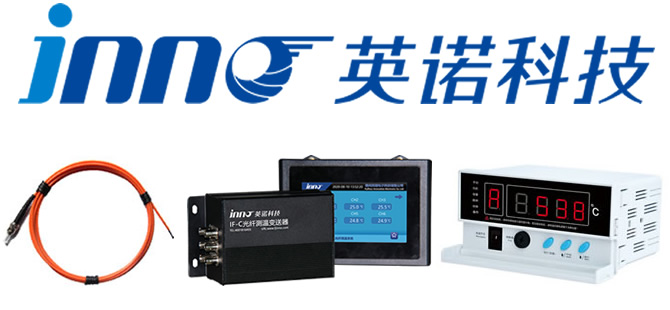
When selecting fiber optic temperature sensors for industrial applications, understanding the technology and finding the right manufacturer is crucial. Fluorescent fiber optic temperature measurement technology has revolutionized thermal monitoring in high-voltage, electromagnetically challenging environments where traditional resistance temperature devices fail to perform reliably.
As a leading OEM/ODM factory, wholesale supplier, and bulk exporter, we specialize in customized temperature monitoring solutions that meet international standards. Our private label manufacturing services enable distributors and dealers worldwide to deliver superior optical temperature sensor products to their markets.
Transformer Winding Temperature Monitoring: Essential Protection Solutions
Why Winding Temperature Monitoring Matters
Transformer winding temperature monitoring is critical for preventing catastrophic failures in power distribution systems. Excessive heat in transformer windings accelerates insulation degradation, leading to reduced lifespan and potential equipment failure. Traditional resistance thermometers cannot withstand the electromagnetic interference present in high-voltage environments.
Fiber Optic Solutions for Winding Temperature Measurement
Our winding temperature sensors utilize fluorescent fiber technology offering electrical insulation and high voltage resistance up to hundreds of kilovolts. The fiber optic probe can be installed directly within transformer windings, providing accurate readings with response times under 1 second. Each winding temperature indicator transmitter supports 1-64 channels, enabling comprehensive monitoring of multiple measurement points.
Custom Manufacturing for OEM Requirements
As a specialized manufacturer and supplier, we offer customized solutions for transformer winding temperature measurement. Our factory produces bulk quantities with consistent quality, suitable for wholesale distribution and private label branding.
Hot Spot Monitoring: Preventing Transformer Failures
Understanding Transformer Hot Spots
Transformer hot spot monitoring identifies localized overheating that traditional oil temperature measurement cannot detect. Hot spots typically form at connection points, tap changers, and areas with compromised insulation. Without proper hot spot monitoring, these thermal anomalies can cause rapid deterioration.
Advanced Optical Fiber Temperature Sensor Technology
Our optical fiber temperature sensors pinpoint hot spot locations with precision accuracy of ±0.5°C in high-precision models (standard ±1°C). The fluorescent fiber optic technology measures temperatures from -200°C to 300°C, covering the full operational range of power transformers. The 0-80 meter measurement range allows monitoring of large transformer installations.
How to Implement Hot Spot Monitoring Solutions
The best transformer hot spot monitoring strategy involves strategic placement of multiple fiber optic temperature sensors at critical points. Our solution includes sensor positioning analysis, custom cable routing, and integration with existing transformer monitoring systems.
Power Transformer Monitoring System: Comprehensive Solutions
Integrated Monitoring System Architecture
A complete power transformer monitoring system requires integration of winding temperature indicators, bushing monitoring, and oil quality sensors. Our fiber optic monitoring platform consolidates data from up to 64 measurement points per transmitter, providing comprehensive transformer temperature monitoring.
Bushing Monitoring Integration
Bushing monitoring prevents failures at critical insulation interfaces. Our fiber optic temperature measurement sensors attach directly to transformer bushing conductors, detecting abnormal temperature rises that indicate developing faults. The EMI immunity ensures accurate readings despite high electromagnetic fields.
The Best Monitor Transformer Solutions from Manufacturers
Leading distributors and dealers choose our transformer monitor systems for their proven reliability. As an experienced OEM/ODM manufacturer, we provide customized configurations for different voltage classes and installation requirements. Our factory handles everything from prototype development to bulk production for wholesale markets.
High Voltage Switchgear Condition Monitoring: Ensuring Reliability
Switchgear Temperature Monitoring Challenges
High voltage switchgear condition monitoring faces unique challenges including confined spaces, strong electromagnetic fields, and safety requirements. Switchgear components such as circuit breakers, disconnectors, and bus bars generate heat during operation. Conventional sensors cannot provide reliable measurements in these environments.
Fiber Optic Solutions for Switchgear Applications
Our optical temperature sensors offer electrical insulation and high voltage resistance, making them ideal for switchgear monitoring. The compact fiber optic probe design fits within tight spaces, while the fluorescent fiber remains unaffected by electromagnetic interference. This enables accurate thermal monitoring of critical connection points.
How to Select the Best Supplier for Switchgear Monitoring
When choosing a supplier for switchgear condition monitoring systems, consider manufacturing capabilities and customization options. Our factory produces OEM/ODM solutions tailored to specific switchgear designs. We support bulk orders for distributors and offer private label options for regional dealers.
Substation Monitoring: Comprehensive Thermal Management
Substation Temperature Monitoring Requirements
Substation monitoring encompasses multiple equipment types requiring coordinated thermal monitoring. Transformers, switchgear, reactors, and cable connections each have specific temperature thresholds. A unified fiber optic sensor system provides centralized oversight of all assets.
Multi-Equipment Monitoring Solutions
Our fiber optic temperature monitoring system integrates transformer temperature monitoring, switchgear monitoring, and cable junction surveillance. The multi-channel architecture allows expansion from small installations to large substations with hundreds of measurement points. Real-time data enables predictive maintenance strategies.
Custom Manufacturing for Substation Applications
As a specialized manufacturer, we develop customized substation monitoring configurations. Our solution includes sensor selection, system design, and integration support. Wholesale pricing for bulk installations makes our systems cost-effective for utility companies and industrial facilities.
Hydro Generator Monitoring: Protecting Critical Assets
Hydro Generator Temperature Monitoring Needs
Hydro generators operate in challenging environments with high humidity, vibration, and rotating components. Stator winding temperature and bearing monitoring are essential for preventing failures. Traditional resistance temperature devices suffer from electrical noise and mechanical stress.
Rotating Equipment Condition Monitoring Solutions
Our fiber optic temperature sensors excel in rotating equipment condition monitoring applications. The optical fiber design eliminates electrical connections to rotating parts, improving safety and reliability. Winding temperature sensors provide accurate measurements despite electromagnetic interference from generator fields.
The Best Manufacturer for Generator Monitoring Systems
We manufacture complete hydro generator monitoring systems including sensors, transmitters, and display units. Our OEM/ODM factory produces custom solutions for different generator designs and power ratings. Distributors worldwide rely on our proven technology for their projects.
Wind Turbine Condition Monitoring: Maximizing Uptime
Wind Power Monitoring Challenges
Wind turbine condition monitoring requires sensors that withstand extreme temperatures, vibration, and remote locations. Gearbox, generator, and bearing thermal monitoring prevents catastrophic failures that result in extended downtime. Wind power monitoring systems must operate reliably with minimal maintenance.
Fiber Optic Solutions for Wind Applications
Our optical fiber temperature sensors offer exceptional durability for wind turbine applications. The high voltage resistance and EMI immunity handle lightning strikes and electrical transients. Multi-channel transmitters monitor gearbox oil, generator windings, and bearing temperatures simultaneously. Response time under 1 second enables rapid fault detection.
How to Implement Wind Turbine Temperature Monitoring
Successful wind turbine monitoring requires proper sensor placement and reliable data transmission. Our customized solutions include ruggedized sensors, fiber routing through nacelle and tower, and integration with SCADA systems. As a leading supplier and exporter, we support wind farm operators globally.
Medical Equipment Temperature Sensing: MRI and Beyond
Medical Temperature Monitoring Requirements
Medical applications demand optical temperature sensors that function in strong magnetic fields without compromising patient safety. MRI temperature monitoring during procedures like laser ablation and RF ablation requires non-metallic, EMI-immune sensors. Traditional thermocouples and RTDs create imaging artifacts and safety hazards.
Fiber Optic Sensors for MRI Applications
Our fluorescent fiber optic temperature sensors are completely non-magnetic and produce no imaging interference. The electrical insulation eliminates RF-induced heating risks. High accuracy (±0.5°C available) ensures precise temperature control during thermal therapies. The fiber optic probe design minimizes patient contact area.
Custom Medical Sensor Manufacturing
We provide OEM/ODM manufacturing for medical device companies requiring customized temperature sensors. Our factory maintains medical-grade quality standards and supports private label production. Bulk pricing for distributors makes advanced fiber optic thermometer technology accessible.
Semiconductor Temperature Measurement: Precision Process Control
Semiconductor Manufacturing Temperature Requirements
Semiconductor temperature measurement demands exceptional accuracy and cleanroom compatibility. Wafer temperature monitoring during deposition, etching, and lithography affects yield and device performance. Semiconductor process control requires sensors that don’t introduce contamination or electromagnetic interference.
Optical Fiber Solutions for Semiconductor Applications
Our semiconductor temperature sensors feature all-glass construction suitable for cleanroom environments. The fluorescent fiber optic technology provides ±0.5°C accuracy for critical wafer temperature measurement. High voltage resistance is essential for plasma processing equipment. Fast response (<1 second) enables real-time semiconductor temperature control.
How to Source Semiconductor Temperature Sensors
Equipment manufacturers should partner with experienced OEM suppliers offering customized solutions. Our factory develops sensors for specific process tools and integration requirements. We support bulk production for equipment manufacturers and provide wholesale pricing for component distributors.
Microwave Equipment Monitoring: RF Temperature Measurement
Microwave Temperature Monitoring Challenges
Microwave generators, transmission systems, and industrial heating equipment require thermal monitoring solutions immune to RF interference. Sensing microwave equipment temperatures with conventional sensors produces inaccurate readings due to electromagnetic coupling. Communication base stations and RF amplifiers need reliable temperature data for power control.
EMI-Immune Fiber Optic Temperature Measurement
Our fiber optic temperature sensors remain unaffected by microwave and RF energy. The dielectric optical fiber doesn’t couple electromagnetic fields, ensuring accurate measurements in high-power RF environments. Electrical insulation prevents ground loops and sensor damage. Multi-channel systems monitor multiple RF components simultaneously.
Best Solutions for RF Equipment Manufacturers
RF equipment manufacturers benefit from our OEM/ODM expertise in microwave monitoring applications. We develop custom sensor configurations for specific equipment designs. Bulk supply agreements ensure consistent availability for production lines. Our global distributor network supports international dealers.
Fiber Optic Temperature Measurement Technology Explained

Fluorescent Fiber Optic Measurement Principles
Fiber optic temperature measurement using fluorescent technology operates by exciting a rare-earth phosphor at the sensor tip. The fluorescent decay time varies predictably with temperature, enabling precise measurement. Unlike FBG or DTS systems, fluorescent sensors provide single-point precision measurement rather than distributed sensing.
Technical Specifications and Performance
Our optical fiber temperature sensors offer:
- Response time: Less than 1 second
- Measurement range: 0-80 meters fiber length
- Accuracy: ±1°C standard, ±0.5°C high-precision models
- Temperature range: -200°C to +300°C
- Channels: 1-64 measurement points per transmitter
- Electrical insulation: Complete galvanic isolation
- Voltage resistance: Suitable for high-voltage applications
How Fluorescent Sensors Compare to Alternatives
Fluorescent fiber optic sensors provide advantages over resistance temperature devices, thermocouples, and infrared measurement in electromagnetically harsh environments. The single-point measurement architecture delivers faster response than distributed systems while maintaining exceptional accuracy.
Optical Fiber Sensor Systems: Complete Integration Solutions
System Architecture and Components
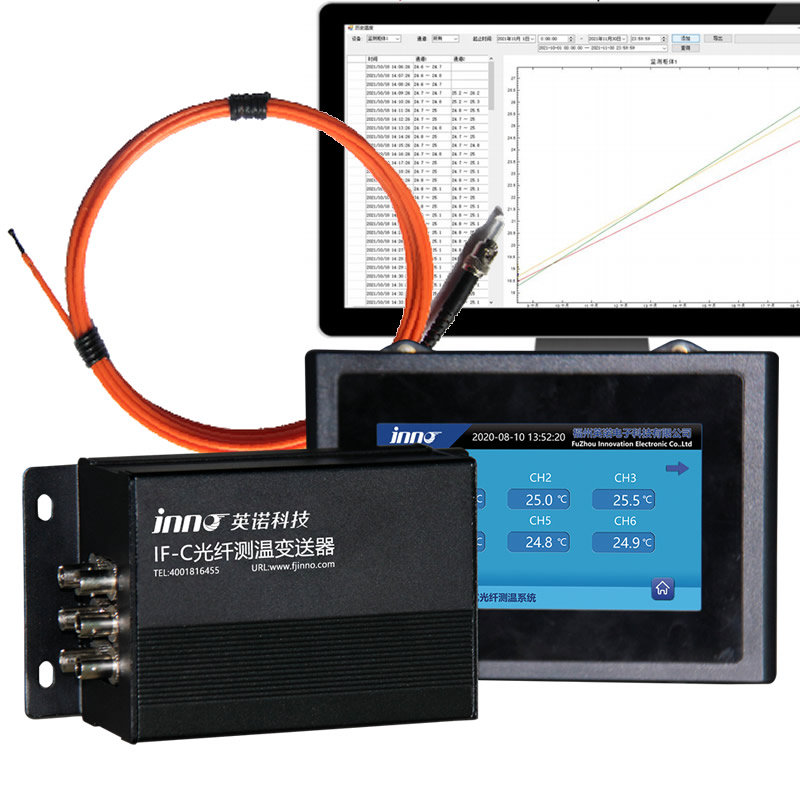
A complete fiber optic sensor system includes:
- Fiber optic probes: Fluorescent sensing elements in various mechanical configurations
- Optical fiber cables: 0-80 meter transmission lines with appropriate protection
- Transmitters: Signal processing units supporting 1-64 channels
- Display and control: Local indicators and network interfaces
- Software platform: Data logging, analysis, and alarm management
Monitoring Sensors Integration Capabilities
Our fiber optic monitoring systems integrate with existing infrastructure through standard communication protocols. Monitoring sensors connect to SCADA, DCS, and building management systems. Multi-channel architecture enables expansion as monitoring requirements grow. Cloud connectivity options support remote access and analytics.
Custom Manufacturing and OEM Solutions
As a specialized manufacturer, we offer complete OEM/ODM solutions from sensor design to system integration. Our factory produces customized configurations for specific applications. Private label manufacturing enables distributors to offer branded systems. Wholesale programs support bulk deployments for utilities and industrial facilities.
Fiber Optic Temperature Sensor Advantages: Why Choose Optical Technology
Comparing Optical Sensors to Traditional Technologies
Optical fiber temperature sensors offer distinct advantages over conventional measurement devices:
EMI Immunity and Electrical Insulation
Fiber optic thermometers provide complete immunity to electromagnetic interference, unlike resistance thermometers and thermocouples that suffer from noise in high-EMI environments. The dielectric nature ensures electrical insulation and eliminates ground loop issues.
High Voltage Resistance
High voltage resistance enables direct installation in energized equipment without safety concerns. Traditional resistance temperature devices require complex isolation, adding cost and reducing reliability. Our sensors operate safely in environments exceeding 100kV.
Harsh Environment Performance
Fluorescent fiber optic technology withstands extreme temperatures, corrosive chemicals, high pressure, and radiation. The all-glass sensor construction resists degradation that limits conventional sensor lifespan. This durability reduces maintenance requirements and total cost of ownership.
Total Cost of Ownership Analysis
While initial sensor costs vary by configuration, fiber optic temperature measurement systems deliver lower total cost through:
- Extended sensor lifespan (10+ years typical)
- Reduced installation labor due to lightweight fiber cables
- Elimination of periodic recalibration requirements
- Prevention of costly equipment failures through accurate monitoring
- Multi-channel architecture reducing per-point costs
How to Maximize Value from Fiber Optic Solutions
The best results come from partnering with experienced manufacturers offering comprehensive support. Our customized solutions optimize sensor placement, channel utilization, and system integration. Bulk purchasing through our wholesale programs provides additional value for large installations.
Frequently Asked Questions About Fiber Optic Temperature Sensors
1. What is a fluorescent fiber optic temperature sensor and how does it differ from traditional sensors?
A fluorescent fiber optic temperature sensor uses a rare-earth phosphor crystal at the fiber tip that fluoresces when excited by light. Temperature affects the fluorescent decay time, which is measured to determine temperature. Unlike resistance temperature devices (RTDs) or thermocouples, fiber optic sensors are completely immune to electromagnetic interference, electrically isolated, and safe for high-voltage environments.
2. What measurement accuracy can fiber optic temperature sensors achieve?
Fiber optic temperature measurement systems typically provide ±1°C accuracy as standard. High-precision models achieve ±0.5°C accuracy for applications requiring tighter tolerances like semiconductor temperature measurement or medical procedures. Accuracy remains stable over the sensor’s 10+ year lifespan without periodic recalibration.
3. Why are fiber optic sensors suitable for high voltage environments and what voltage levels can they withstand?
Optical fiber temperature sensors feature complete electrical insulation since the sensing element contains no metallic components. The dielectric fiber and sensor construction provides high voltage resistance suitable for applications exceeding 100kV. This makes them ideal for transformer winding temperature monitoring and high voltage switchgear applications where traditional sensors pose safety risks.
4. How many measurement points can one transmitter support?
Our fiber optic temperature monitoring systems offer transmitters supporting 1-64 channels. Each channel connects to an individual fiber optic probe for single-point measurement. This multi-channel architecture enables comprehensive monitoring of large equipment like power transformers or substations while minimizing hardware costs per measurement point.
5. How is transformer winding temperature monitoring implemented using fiber optic sensors?
Transformer winding temperature monitoring involves installing fiber optic probes directly within the winding structure at strategic locations. The sensors measure winding temperature and hot spots that oil temperature measurement cannot detect. Fluorescent fiber withstands the high voltage, electromagnetic fields, and oil immersion environment. A multi-channel transmitter consolidates data from all measurement points for comprehensive transformer monitoring.
6. How do fiber optic temperature sensors perform in environments with strong electromagnetic interference?
Fiber optic temperature sensors remain completely unaffected by electromagnetic interference regardless of field strength. The dielectric optical fiber doesn’t conduct electricity or couple electromagnetic energy. This makes them ideal for applications near generators, motors, RF equipment, and microwave systems where traditional sensors produce erroneous readings. The EMI immunity ensures measurement accuracy in the most challenging electrical environments.
7. Why is response speed important for fiber optic temperature measurement and what performance do these sensors achieve?
Fast response enables detection of rapid temperature changes that indicate developing faults. Our optical fiber temperature sensors achieve response times under 1 second, allowing real-time monitoring of dynamic processes. This quick response is critical for semiconductor process control, transformer hot spot monitoring, and protective relay coordination. Faster detection enables earlier intervention to prevent equipment damage.
8. What makes fiber optic sensors the best choice for semiconductor manufacturing applications?
Semiconductor temperature measurement requires sensors that don’t introduce contamination, electromagnetic interference, or particle generation in cleanrooms. Fluorescent fiber optic sensors feature all-glass construction compatible with cleanroom protocols. The ±0.5°C accuracy meets stringent wafer temperature control requirements. High voltage resistance is essential for plasma processing equipment. Our customized solutions integrate with various semiconductor manufacturing tools.
9. What is the typical lifespan of fiber optic temperature sensors and what maintenance do they require?
Fiber optic temperature sensors typically operate reliably for 10+ years in harsh industrial environments. The robust construction resists degradation from temperature cycling, chemicals, and vibration. Unlike resistance thermometers that require periodic recalibration, fluorescent sensors maintain calibration throughout their lifespan. Maintenance is minimal – occasional verification checks ensure continued accuracy. This longevity and low maintenance reduces total cost of ownership.
10. How should I select the right fiber optic temperature measurement solution for my specific application?
Choosing the best fiber optic temperature sensor solution requires considering environmental conditions, accuracy requirements, number of measurement points, and integration needs. Start by identifying temperature range, response time, and physical constraints. Determine whether you need standard ±1°C or high-precision ±0.5°C accuracy. Consider the benefits of working with an experienced OEM/ODM manufacturer who can provide customized solutions rather than generic products. Our engineering team assists with sensor selection, system design, and integration planning for applications ranging from power transformers to semiconductor manufacturing.
Get Expert Fiber Optic Temperature Monitoring Solutions
Whether you need transformer monitoring systems, high voltage switchgear condition monitoring, or semiconductor temperature measurement solutions, our team delivers customized systems tailored to your requirements.
We are a leading manufacturer, supplier, and OEM/ODM factory specializing in fluorescent fiber optic temperature sensors. Our wholesale programs support bulk orders for distributors and dealers worldwide. Private label manufacturing options available.

Fiber optic temperature sensor, Intelligent monitoring system, Distributed fiber optic manufacturer in China
|
 |
 |