 INNO fibre optic temperature sensors ,temperature monitoring systems.
- Partial discharge monitoring provides early detection of insulation defects, preventing catastrophic transformer failures.
- Online PD monitoring systems continuously measure and analyze discharge activity in transformer windings, bushings, and leads.
- Modern PD systems integrate with digital transformer monitoring units, SCADA platforms, and IoT analytics for predictive maintenance.
- UHF, HF, and fiber-optic sensing technologies enable real-time fault localization and risk evaluation.
- Continuous insulation supervision improves reliability, reduces unplanned outages, and extends transformer lifespan.
Table of Contents
- 1. What Is Partial Discharge (PD)
- 2. Why Partial Discharge Monitoring Is Essential
- 3. Types of Partial Discharge in Transformers
- 4. Methods and Principles of PD Detection
- 5. Technologies in Modern PD Monitoring Systems
- 6. Integration with Smart Transformer Monitoring
- 7. Global Case Studies
- 8. Benefits of Continuous PD Monitoring
- 9. FAQ — Partial Discharge Monitoring
- 10. About Our Manufacturing Capabilities
1. What Is Partial Discharge (PD)
Partial discharge is a localized electrical breakdown that occurs within the insulation of high-voltage equipment, such as transformers, cables, and switchgear. It happens when the electric field exceeds the dielectric strength of small voids or imperfections inside the insulation system. Although each discharge is small, repeated PD activity leads to progressive degradation, carbonization, and eventual insulation failure.
Partial discharge is invisible to the naked eye but measurable through electromagnetic and electrical signals. Monitoring this activity helps assess the condition of insulation long before a breakdown occurs, forming the foundation of transformer condition-based maintenance.
2. Why Partial Discharge Monitoring Is Essential
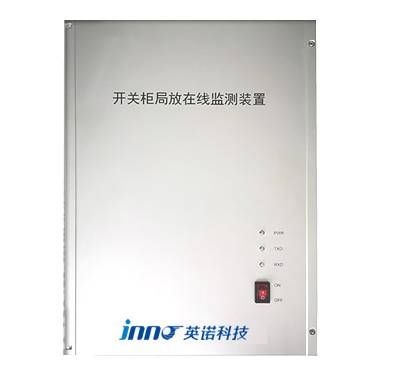
Transformers operate under high electrical stress for decades. Over time, mechanical vibration, aging, and moisture create microvoids and defects in insulation. Online PD monitoring allows utilities to detect these weak points early, avoiding costly unplanned outages and equipment loss. Continuous PD supervision is an essential part of modern transformer health monitoring and digital substation management.
- Detects insulation degradation before catastrophic failure.
- Supports predictive maintenance based on real-time risk assessment.
- Improves transformer reliability and network stability.
- Reduces repair costs and downtime for critical infrastructure.
Utilities and industrial users worldwide rely on PD data to optimize maintenance cycles and validate transformer performance under load.
3. Types of Partial Discharge in Transformers
Different insulation structures within transformers exhibit distinct forms of PD. Understanding each type helps identify the origin of faults more accurately.
- Internal Discharge: Occurs within voids or air pockets inside solid insulation such as paper or epoxy.
- Surface Discharge: Takes place along insulation surfaces, often due to contamination or moisture.
- Corona Discharge: Generated around sharp conductors where high electric fields ionize surrounding air.
- Floating Electrode Discharge: Appears when a metallic particle becomes suspended in transformer oil, producing intermittent discharge pulses.
- Slot or Edge Discharge: Detected in complex insulation geometries such as winding edges or lead exits.
4. Methods and Principles of PD Detection

Partial discharge signals can be captured using several electrical and electromagnetic measurement principles. According to IEC 60270 and related standards, PD measurement quantifies apparent charge (in pico-coulombs) and its repetition rate over time.
4.1 High-Frequency Current Transformers (HFCT)
HFCT sensors detect PD pulses traveling along the grounding path of the transformer. They are easy to install on-site without interrupting operation and provide reliable detection of discharge activity in windings and bushings.
4.2 Ultra-High-Frequency (UHF) Detection
UHF sensors mounted inside transformer tanks capture electromagnetic emissions produced by discharge events. The high-frequency range (300 MHz – 3 GHz) minimizes interference from external electrical noise, improving signal-to-noise ratio for online monitoring.
4.3 Fiber-Optic Sensing
Optical sensors can monitor changes in light intensity or electromagnetic field disturbance near the discharge source. They are completely immune to electrical interference and can be safely installed inside high-voltage environments, making them ideal for digital transformers and gas-insulated systems.
4.4 Hybrid Measurement Approach
Modern systems combine HFCT and UHF detection with optical sensing and digital analytics. This hybrid approach ensures redundancy and higher fault localization accuracy. Data fusion from multiple sensing channels creates a complete insulation health profile.

5. Technologies in Modern PD Monitoring Systems
Modern partial discharge monitoring systems integrate advanced electronics, data acquisition, and smart algorithms for continuous, real-time supervision. Typical components include:
- PD sensors: HFCT, UHF, or optical sensors installed on bushings, leads, or within transformer tanks.
- Data acquisition unit: Captures PD pulse waveforms and converts them into digital data for analysis.
- Signal processing module: Filters noise, identifies true discharge pulses, and classifies discharge patterns.
- Digital monitoring platform: Displays PD levels, alarm thresholds, and insulation aging indices.
- Communication interface: Supports Modbus TCP, IEC 61850, or MQTT for seamless integration with SCADA and IoT platforms.
The software includes machine-learning algorithms that learn from historical PD trends, automatically distinguishing harmless background pulses from serious insulation defects. Data correlation with load, temperature, and humidity further improves diagnostic reliability.
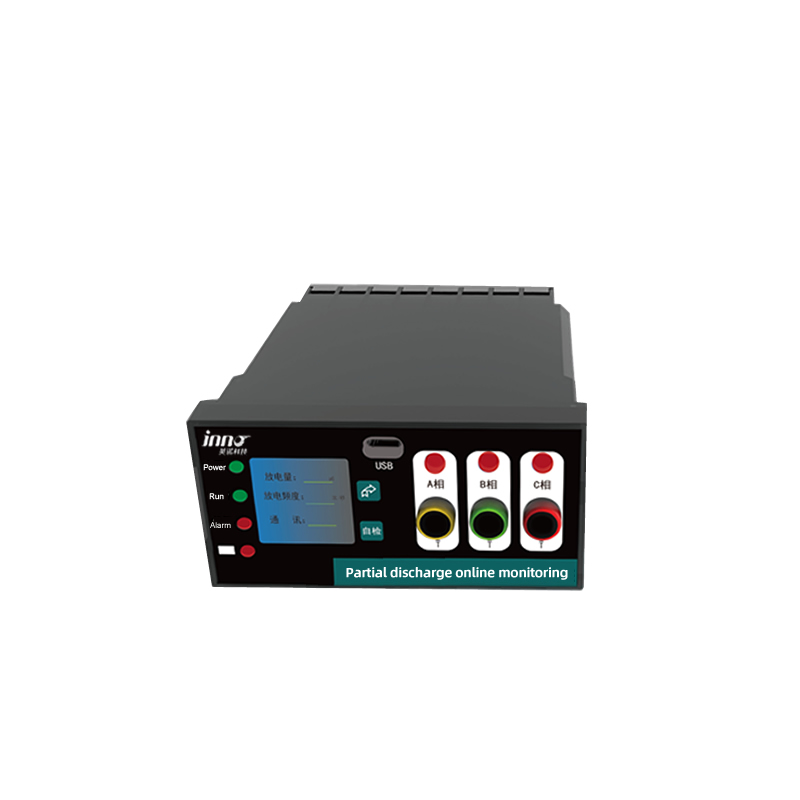
5.1 Key Features
| Feature | Description |
|---|---|
| Real-time detection | Continuous 24/7 PD data collection under live conditions. |
| Pattern recognition | Automatic classification of discharge types for faster fault localization. |
| Trend analysis | Long-term statistical comparison to identify insulation aging patterns. |
| Remote access | Web-based visualization and alarm management from any location. |
| Integration capability | Compatible with transformer digital monitoring systems and predictive maintenance software. |
Request System Documentation and Quotation
If you need detailed technical sheets or integration guidance for partial discharge monitoring systems, our technical department provides configuration support, protocol documentation, and quotation assistance for transformer manufacturers, utilities, and industrial users.
6. Integration with Smart Transformer Monitoring
In modern substations, partial discharge monitoring is a core component of the smart transformer monitoring ecosystem. Rather than functioning as an isolated diagnostic tool, PD detection integrates with thermal, electrical, and mechanical monitoring systems to deliver complete transformer intelligence.
6.1 Combined Online Monitoring Architecture
PD data is analyzed alongside parameters such as winding temperature, oil condition, load current, and moisture. A digital monitoring controller aggregates this information and transmits it to the station-level SCADA or cloud-based asset management platform. The result is a unified view of transformer health, supporting real-time decision-making and maintenance scheduling.
6.2 Communication and Protocol Standards
Advanced PD systems communicate via standard industrial protocols:
- IEC 61850 — for digital substation automation and standardized data modeling.
- Modbus TCP/IP — for compatibility with existing control systems and PLCs.
- MQTT — for lightweight IoT cloud integration and remote data analytics.
Using these protocols, transformer digital monitors and partial discharge sensors can share synchronized data, enabling cross-analysis between PD events, load fluctuations, and temperature variations.
6.3 Data Correlation and Alarm Strategy
The monitoring platform continuously compares PD levels against threshold limits derived from IEC 60270, IEEE C57.127, and utility-specific standards. When discharge magnitude or repetition rate exceeds safe levels, the system issues warnings, activates transformer safety alarms, and notifies operators through SCADA alerts or cloud dashboards.
6.4 Integration with Predictive Analytics
By combining partial discharge monitoring with machine-learning-based diagnostics, the system predicts insulation degradation trends. This predictive model identifies transformers requiring immediate attention versus those operating normally. Maintenance teams can plan targeted interventions instead of routine schedules, optimizing resources and reducing costs.
7. Global Case Studies
United States — Utility Fleet Monitoring
Major U.S. utilities have implemented online PD monitoring on 230–500 kV transformer fleets. Each transformer includes HFCT and UHF sensors linked to a centralized data hub. The system achieved over 90% detection accuracy for insulation defects and reduced outage events by 40% across five years.
Germany — Digital Substation Deployment
In Germany, PD systems integrated with IEC 61850 SCADA frameworks allow remote visualization of insulation health. Automatic correlation between PD activity, thermal gradients, and load data enables early fault recognition in renewable energy substations and wind power transformers.
Japan — Compact Industrial Transformers
Industrial sites in Japan use embedded PD detection modules in compact transformers. Real-time PD alarms trigger automatic thermal derating to avoid overload. The system combines DGA, PD, and temperature analytics within one intelligent monitoring controller.
Malaysia — Tropical Climate Adaptation
In Malaysia’s humid environment, transformer partial discharge monitors are paired with moisture and temperature sensors. The hybrid monitoring strategy successfully reduced insulation breakdown incidents caused by high humidity and poor ventilation in distribution substations.
United Kingdom — AI-Based Condition Assessment
British transmission operators deploy AI-enabled PD systems connected to digital twins. The algorithms analyze long-term PD trends and predict insulation failure probability, supporting transformer lifecycle management across national grids.
8. Benefits of Continuous PD Monitoring
Implementing continuous partial discharge monitoring offers measurable technical and economic advantages for power utilities, manufacturers, and industrial users.
| Benefit | Description |
|---|---|
| Early Fault Detection | Identifies insulation degradation before severe failure occurs. |
| Reduced Downtime | Prevents unexpected transformer trips, improving grid reliability. |
| Optimized Maintenance | Enables condition-based scheduling and reduces unnecessary service visits. |
| Improved Safety | Decreases risk of explosion and fire caused by insulation breakdown. |
| Extended Equipment Life | Minimizes thermal and electrical stress on transformer components. |
| Regulatory Compliance | Meets IEC and IEEE diagnostic standards for high-voltage assets. |
Consultation and System Design Support
For utilities, OEMs, and EPCs seeking advanced partial discharge monitoring systems, our engineering team provides complete technical support — from sensor configuration to network integration. Contact us for datasheets, reference architectures, and demonstration projects tailored to your voltage level and operating conditions.
9. FAQ — Partial Discharge Monitoring
Q1. Can partial discharge be measured during transformer operation?
Yes. Online PD systems continuously measure live equipment without interrupting service, ensuring uninterrupted power delivery and real-time condition assessment.
Q2. How is PD different from corona discharge?
Corona discharge occurs in air around conductors, while partial discharge happens inside insulation materials or interfaces. PD is more dangerous because it directly damages insulation integrity.
Q3. What standards define PD testing and monitoring?
IEC 60270 is the international reference standard for PD measurement. Other relevant standards include IEC 62478 and IEEE C57.127, which address online monitoring and data interpretation.
Q4. How often should PD data be reviewed?
Continuous systems automatically analyze PD data in real time. However, expert review and trend evaluation are recommended quarterly or semi-annually for detailed diagnostics.
Q5. Can PD monitoring detect all insulation problems?
PD monitoring primarily detects electrical defects, but combining it with temperature, moisture, and load monitoring provides comprehensive transformer health assessment.
10. About Our Manufacturing Capabilities
We are a certified manufacturer and solution provider specializing in transformer partial discharge monitoring systems, digital transformer monitors, and smart insulation diagnostic equipment. Our systems comply with IEC 60270, IEEE C57.127, CE, and ISO 9001 standards.
Our solutions integrate seamlessly with transformer health monitoring, SCADA systems, and IoT-based asset management platforms. We design, manufacture, and customize PD monitoring systems for power utilities, renewable energy networks, and heavy industries worldwide.
Contact us for system configuration, integration consultancy, and pricing information. We provide end-to-end transformer diagnostic solutions — from insulation monitoring and DGA analysis to complete smart transformer protection.

Fiber optic temperature sensor, Intelligent monitoring system, Distributed fiber optic manufacturer in China
 |
 |
 |