 INNO fibre optic temperature sensors ,temperature monitoring systems.

Quick Answer: Transformer Oil Testing Methods & Monitoring Strategy
- Five Essential Laboratory Tests Cover Physical & Fault Health: Utilities evaluate insulating oil quality using Breakdown Voltage (BDV), Karl Fischer Moisture, Acidity, Interfacial Tension (IFT), and Dissolved Gas Analysis (DGA)—each answering a distinct maintenance question.
- BDV Checks Immediate Dielectric Risk; DGA Catches Internal Faults: Transformer oil BDV testing catches free water and conductive particles threatening sudden flashover, whereas DGA separates overheating paper, coked contacts, and internal arcing inside windings.
- Periodic Sampling Has a Multi-Month Blind Spot: Annual or semi-annual syringe pulls cannot detect thermal hot-spot excursions or sudden cooling failures emerging between lab rounds—especially during transformer overload peaks.
- Combine Periodic Oil Testing with Continuous Monitoring: Critical substation units combine routine full-suite oil testing with continuous WTI/OTI temperature monitoring, fluorescent winding hot-spot probes, and online DGA systems.
Table of Contents
- 1. Core Transformer Oil Testing Methods: BDV, DGA, Moisture, Acidity & IFT Compared
- 2. Transformer Oil BDV Testing & Dielectric Strength: When Moisture Becomes a Trip Risk
- 3. Dissolved Gas Analysis (DGA) vs. Physical Oil Tests: Reading Thermal & Arcing Faults
- 4. Why Periodic Lab Oil Sampling Misses Fast-Developing Winding Hot Spots
- 5. Decision Matrix: Oil Reclamation, Refurbishment or Continuous Online Monitoring Upgrade
- 6. Frequently Asked Questions: Transformer Oil Testing & Continuous Monitoring
- 7. Request Online DGA & Transformer Temperature Monitoring Specifications
1. Core Transformer Oil Testing Methods: BDV, DGA, Moisture, Acidity & IFT Compared
Insulating oil performs two indispensable jobs inside every liquid-filled transformer: isolating energized high-voltage windings and carrying heat outward to cooling radiators. Selecting the right transformer oil testing methods helps asset managers separate inexpensive oil filtration fixes from dangerous internal winding damage:
| Oil Test Method | Governing Standard Focus | Primary Condition Revealed | Typical Maintenance Decision Triggered |
|---|---|---|---|
| Breakdown Voltage (BDV Test) | IEC 60156 / ASTM D1816 | Immediate dielectric withstand reduction from free moisture, fibers, or carbon soot | Urgent vacuum oil dehydration/filtration before re-energizing or heavy loading |
| Dissolved Gas Analysis (DGA) | IEEE C57.104 / IEC 60599 | Internal thermal hot spots, paper overheating, partial discharge, or arcing faults | Shorten inspection cycle, upgrade to online DGA, or inspect core/OLTC internally |
| Moisture Content (Karl Fischer) | IEC 60814 / ASTM D1533 | Dissolved water shifting equilibrium between bulk oil and cellulose winding paper | Hot-oil dry-out circulation and restriction of emergency peak-overload windows |
| Acidity (Neutralization Number) | IEC 62021 / ASTM D974 | Oil oxidation acids that corrode steel parts and accelerate cellulose paper embrittlement | Schedule fuller’s earth oil reclamation or full fluid replacement |
| Interfacial Tension (IFT) & Color | ASTM D971 | Early polar sludge precursors degrading heat-transfer efficiency around coil ducts | Plan off-peak sludge flushing and radiator flow cleaning |
2. Transformer Oil BDV Testing & Dielectric Strength: When Moisture Becomes a Trip Risk
Among field diagnostic routines, transformer oil BDV testing delivers the fastest go/no-go check on electrical insulation strength. A laboratory cup subjects a clean oil sample between standardized electrodes until dielectric sparkover occurs. Yet asset managers often misread BDV results when temperature effects are ignored:
- BDV Sensitive to Free Water & Particles, Not Early Paper Aging: Freshly filtered oil often passes BDV comfortably even while dissolved acids and moisture remain trapped deep inside cellulose coil pressboard.
- The Cooling-to-Heating Moisture Swing: Moisture migrates dynamically between oil and solid paper depending on transformer operating temperature. Pulling an oil syringe from a lightly loaded cold transformer underestimates actual moisture available to form vapor bubbles during a sudden hot-spot surge. Tracking real oil thermal history via transformer WTI and OTI temperature controllers ensures maintenance engineers interpret moisture-at-temperature curves accurately.
3. Dissolved Gas Analysis (DGA) vs. Physical Oil Tests: Reading Thermal & Arcing Faults
While BDV, acidity, and IFT measure whether the insulating fluid itself needs filtering or reclamation, dissolved gas analysis of transformer oil eavesdrops directly on active electrical and thermal faults occurring inside windings, clamps, and tap switches:
- Thermal Fault Signatures: Overheating mineral oil releases methane, ethane, and—as severity climbs—ethylene, while overheated cellulose paper releases carbon monoxide and carbon dioxide. Reviewing key gas ratios in our definitive DGA fault-diagnosis guide separates harmless stray tank heating from damaging turn-to-turn thermal hot spots.
- Electrical & Arcing Gas Signatures: Low-energy partial discharge produces hydrogen, whereas high-energy internal arcing or tap-changer diverter faults generate acetylene rapidly—requiring immediate operational assessment regardless of healthy BDV scores.
4. Why Periodic Lab Oil Sampling Misses Fast-Developing Winding Hot Spots
Annual syringe sampling remains cost-effective for stable medium-voltage distribution fleets, yet critical grid and industrial transformers increasingly suffer rapid faults that fit poorly inside a once-a-year test calendar:
- Thermal Runaway Moves Faster Than Lab Turnaround: If a cooling pump trips, radiator valves jam shut, or harmonic data-center loads spike, winding hot-spot temperature rises within minutes while dissolved fault gases accumulate over days—causing severe damage months before the next scheduled truck roll.
- Human Sampling Variance & Air Contamination: Poorly purged drain valves or delayed courier shipping allow hydrogen and moisture readings to drift, triggering false maintenance dispatches or masking subtle upward gas-rate changes.
- No Real-Time Dispatch Link: A PDF laboratory report sitting in an asset mailbox cannot trigger cooling bank overrides or warn SCADA operators during heatwave load transfers; only continuous oil-immersed transformer monitoring bridges thermal cause to chemical effect in real time.
5. Decision Matrix: Oil Reclamation, Refurbishment or Continuous Online Monitoring Upgrade
Maintenance directors balancing annual lab budgets against substation reliability use oil test trends to pick the right engineering intervention without overspending:
| Diagnostic Lab Pattern | What It Signals About the Asset | Recommended Field & Monitoring Action |
|---|---|---|
| Low BDV / High Water, Normal DGA | External breather breach or gasket moisture ingress—internal coils likely sound | Perform vacuum oil dehydration, inspect silica breather/seals, and log oil-temperature baseline |
| Elevated Acidity & Low IFT, Moderate CO/CO2 | Bulk oil oxidation and aging pressboard in an older but intact transformer | Schedule fuller’s earth oil reclamation and upgrade WTI/OTI cooling staging controllers |
| Rising Thermal Gases (Ethylene/Ethane) Under Peak Load | Active winding, clamp, or draw-lead hot spot triggered during heavy loading | Install online DGA monitoring and direct fluorescent fiber optic winding temperature sensors on next overhaul |
| Detected Acetylene or Rapid Hydrogen Climb | Active internal arcing, bushing deterioration, or OLTC contact breakdown | Switch to immediate continuous surveillance, restrict overload, and plan urgent internal inspection |
FJINNO Coordinated Temperature & Online DGA Monitoring for Oil-Filled Fleets
FJINNO supplies factory-direct substation monitoring hardware validated across international dielectric and quality certifications—closing the blind spot between periodic laboratory oil pulls:
- Online Transformer Oil DGA Systems: Automated chromatography and multi-gas sensing mounted directly to existing drain valves tracks hydrogen, methane, ethane, ethylene, acetylene, and moisture-in-oil continuously over substation SCADA.
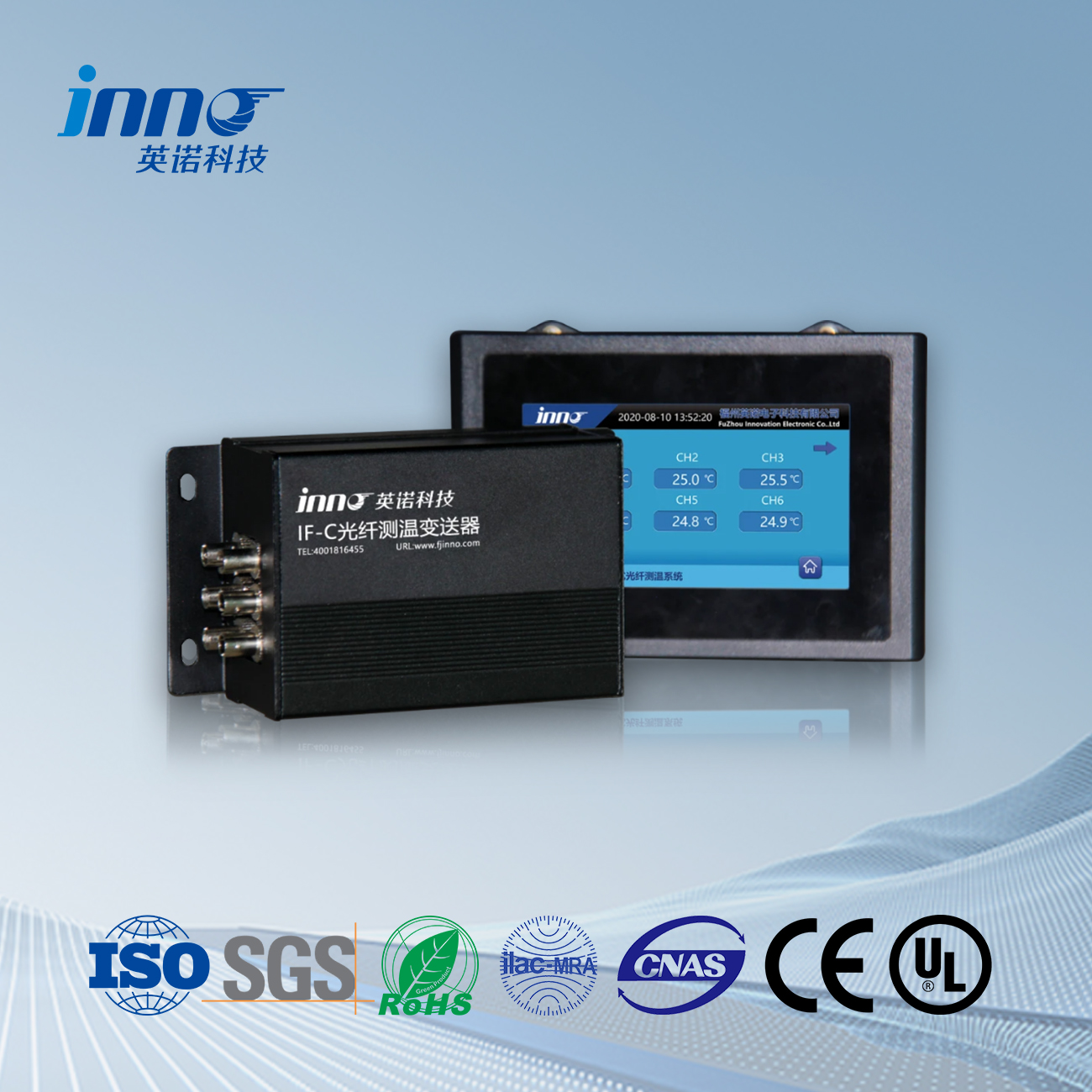
- BWY2 / BWY-803A Oil & BWR2 Winding Temperature Controllers: Rugged drop-in pocket instruments convert mechanical tank gauges into isolated SCADA telemetry with staged fan and pump control.
- Fluorescent Fiber Optic Winding Probes: Non-metallic hot-spot sensing inside new builds and rewind overhauls catches temperature surges instantly—even before fault gases diffuse into main-tank oil.
6. Frequently Asked Questions: Transformer Oil Testing & Continuous Monitoring
Which transformer oil test is the most important for maintenance planning?
No single oil test answers every risk. Breakdown Voltage (BDV) verifies immediate dielectric safety against moisture and particles, whereas Dissolved Gas Analysis (DGA) reveals internal thermal hot spots and arcing faults inside windings long before failure.
What is a good transformer oil BDV value and what lowers it?
Breakdown voltage depends on voltage class and electrode test gap under IEC 60156 or ASTM D1816. Even tiny droplets of free water, suspended cellulose fibers, or OLTC carbon sludge drop BDV sharply—requiring immediate oil dehydration or filtration before heavy energization.
Why does a transformer need continuous temperature monitoring if we run annual DGA tests?
Annual DGA grabs leave a 12-month blind window during which cooling fan failures or peak overloads can damage paper insulation rapidly. Continuous winding and oil temperature controllers trigger early cooling and SCADA alarms the moment thermal limits approach.
When should utilities upgrade from lab oil sampling to an online DGA monitoring system?
Upgrade critical substation LPTs, generator step-up units, aged single-bank assets, and any transformer showing unexplained ethylene, hydrogen, or acetylene climbs so operators track gas generation rates daily without waiting for quarterly lab pulls.
How can substations request configuration advice and pricing for online DGA and temperature monitors?
Package scope depends on monitored gas targets, valve thread sizes, WTI/OTI pocket dimensions, and SCADA protocol. Submit unit ratings and fleet size via the FJINNO contact page for matched technical proposals and factory pricing.
7. Request Online DGA & Transformer Temperature Monitoring Specifications
Converting periodic oil-test schedules into continuous transformer protection? Share your transformer MVA ratings, valve interfaces, and SCADA protocol needs with FJINNO engineers for matched online DGA and WTI/OTI monitoring proposals.

Fiber optic temperature sensor, Intelligent monitoring system, Distributed fiber optic manufacturer in China
 |
 |
 |