 INNO fibre optic temperature sensors ,temperature monitoring systems.
- This comprehensive technical guide explains the structure, components, and operational logic of modern electrical switchgear systems used in industrial and utility power distribution.
- It details every major switch cabinet component — circuit breakers, disconnectors, busbars, transformers, relays, grounding devices, and monitoring units — with engineering-level depth.
- Each section includes clear workflow steps for installation, testing, maintenance, and inspection.
- Special focus is given to temperature monitoring technologies (fluorescent fiber, wireless, infrared), arc flash detection, and the online condition monitoring process.
- The article concludes with troubleshooting procedures, grounding system verification, and practical safety guidelines.
Contents
- 1. Definition and Role of Electrical Switchgear in Power Systems
- 2. Internal Structure and Functional Arrangement of Switch Cabinets
- 3. Major Components in Power Distribution Switchgear Assemblies
- 4. Busbar System Design and Conductor Engineering
- 5. Operational Difference Between Circuit Breakers and Disconnect Switches
- 6. Protective Relay Systems: Configuration and Testing Steps
- 7. Monitoring System of Switchgear: Temperature, Humidity, and Arc Flash
- 8. Comparative Table: Fluorescent vs Wireless vs Infrared Temperature Monitoring
- 9. Arc Flash Detection Workflow and Safety Integration
- 10. Online Condition Monitoring Procedures and Data Flow
- 11. Fault Types, Causes, and Corrective Actions
- 12. Grounding System Testing and Verification Steps
- 13. Control Logic, Interlocks, and Operation Sequences
- 14. Installation and Commissioning Steps of Switchgear Panels
- 15. Frequently Asked Questions and Technical Consultation
1. Definition and Role of Electrical Switchgear in Power Systems
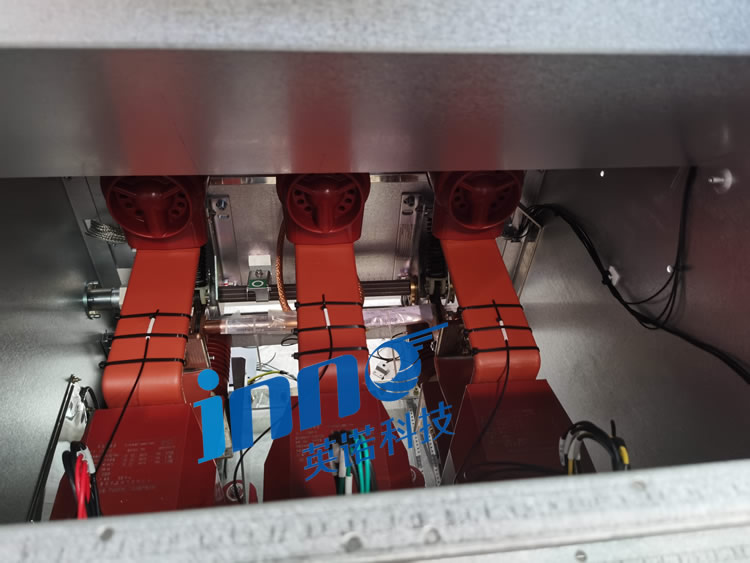
Electrical switchgear is a collective term for devices that control, protect, and isolate sections of an electrical network. It serves as a mechanical and electrical barrier between power sources and load equipment, ensuring safe operation during normal and fault conditions. Switchgear assemblies are used across generation, transmission, and distribution systems to manage electrical energy flow, disconnect faulty circuits, and protect personnel from electrical hazards.
From a design perspective, a switchgear system must fulfill four basic requirements: fault interruption, safe isolation, reliable operation, and maintainability. These functions make it indispensable in substations, factories, data centers, and utility installations where continuous and safe power delivery is critical.
2. Internal Structure and Functional Arrangement of Switch Cabinets
2.1 Main Circuit Section
The main circuit includes circuit breakers, busbars, disconnect switches, and current transformers. These elements carry and control electrical energy under various operating conditions. All conductive parts are insulated and fixed within a metal enclosure, which ensures both mechanical stability and operator protection.
2.2 Auxiliary and Control Section
This section contains control relays, indicator lamps, push buttons, and measurement instruments. It governs switching operations, monitors circuit status, and provides visual or signal-based feedback to operators. Control wiring must be neatly arranged and properly labeled to facilitate maintenance.
2.3 Enclosure and Interlocking Section
The enclosure is fabricated from galvanized or powder-coated steel, designed for arc containment and mechanical rigidity. Mechanical interlocks and electrical interlocks prevent incorrect switching sequences. For example, a disconnector cannot be opened while the circuit breaker is energized.
3. Major Components in Power Distribution Switchgear Assemblies
3.1 Circuit Breaker
The circuit breaker is the heart of every switchgear panel. It automatically interrupts current flow during overloads or short circuits. Common types include air circuit breakers (ACB) for low voltage, vacuum circuit breakers (VCB) for medium voltage, and SF₆ gas circuit breakers for high voltage. Each type is selected based on voltage rating, insulation medium, and fault current capacity.
3.2 Isolator or Disconnector
The isolator provides a visible break in the circuit. It is always operated when the current is zero to ensure safe maintenance. Disconnectors often work in coordination with circuit breakers to guarantee absolute isolation.
3.3 Busbar and Connectors
The busbar system acts as the current-carrying backbone of the switchgear. Made of copper or aluminum, it connects incoming and outgoing feeders. Proper spacing, insulation, and phase segregation must be observed to avoid flashover.
3.4 Measuring Transformers (CT/PT)
Current transformers (CTs) and potential transformers (PTs) reduce high current and voltage levels to measurable values for relays and meters. Periodic testing ensures accuracy and stability of protection systems.
3.5 Protective Relays and Control Units
Protective relays receive signals from CTs and PTs to detect abnormal conditions such as overcurrent, short circuit, or earth fault. The relay then sends a trip command to the breaker to disconnect the faulty section. Modern installations still rely on electromechanical or digital relays, depending on system requirements.
4. Busbar System Design and Conductor Engineering
The busbar system must safely carry rated current and withstand thermal and dynamic stress during short-circuit conditions. The design process includes the following technical steps:
- Calculate rated current and short-circuit forces based on system fault level.
- Select appropriate conductor material: copper for high conductivity, aluminum for cost efficiency and lighter weight.
- Determine cross-sectional area and spacing between phases.
- Ensure mechanical supports and insulation barriers are rated for temperature rise and dielectric strength.
Regular maintenance should include checking torque on bolted joints, inspecting insulation discoloration, and verifying thermal camera readings to identify abnormal heating in joints.
5. Operational Difference Between Circuit Breakers and Disconnect Switches
5.1 Circuit Breaker Functions
A circuit breaker can open and close electrical circuits under both normal load and fault current conditions. Its contacts are designed to extinguish the arc quickly using air, vacuum, or gas. During maintenance, breakers must be tested for contact resistance, trip coil continuity, and mechanical alignment.
5.2 Disconnector Functions
A disconnect switch cannot interrupt load current; it is used only for visual isolation after the circuit breaker has opened. It ensures that maintenance personnel can safely work on de-energized equipment. Disconnectors are equipped with grounding switches that discharge residual energy from capacitive circuits.
5.3 Interlocking Steps for Safe Operation
- Confirm breaker is open and the control indicator shows “OFF.”
- Operate the disconnector to isolate the line.
- Engage the grounding switch and apply lockout tags.
- Verify zero potential using a voltage detector before starting maintenance.
6. Protective Relay Systems: Configuration and Testing Steps
The protection relay system ensures fast disconnection of faulty circuits. Relays receive analog signals from CTs and PTs and act based on predefined current, voltage, and time settings. The configuration includes overcurrent, differential, earth-fault, and under-voltage relays.
Relay Testing Workflow
- Inspect CT and PT connections to confirm polarity and ratio.
- Inject simulated fault current and verify relay tripping within the preset time.
- Check circuit breaker tripping via relay output contacts.
- Record and compare results with factory calibration values.
Accurate relay coordination prevents unnecessary outages and protects both equipment and personnel.
7. Monitoring System of Switchgear: Temperature, Humidity, and Arc Flash

Continuous supervision of environmental and operational parameters is critical for switchgear reliability. The monitoring system collects data on temperature, humidity, insulation condition, and arc flash light intensity. Each parameter serves a specific diagnostic purpose:
- Temperature Monitoring: Detects loose connections and abnormal contact resistance before failures occur.
- Humidity Monitoring: Prevents condensation that could lead to insulation breakdown.
- Arc Flash Detection: Identifies optical and current signatures of internal faults.
Monitoring sensors are installed on busbar joints, cable terminations, and within switchgear compartments. Data is transmitted to a local control unit for visualization and alarm activation.
8. Comparative Table: Fluorescent vs Wireless vs Infrared Temperature Monitoring
Temperature rise is one of the earliest signs of potential failure in electrical joints. Below is a comparison of three practical methods used in switchgear temperature supervision.
| Method | Working Principle | Response Time | Main Advantages | Limitations |
|---|---|---|---|---|
| Fluorescent Fiber Optic Sensor | Measures temperature via change in fluorescence decay time of the sensor tip | <1 second | Immune to electromagnetic interference, no electrical connection required, highly accurate for HV switchgear | Requires careful installation and calibration |
| Wireless RF Sensor | Transmits temperature values through radio frequency or BLE module | 2–3 seconds | Simple retrofit option, flexible placement on live parts | Susceptible to noise, periodic battery replacement |
| Infrared Thermal Sensor | Detects infrared emission from hot spots | ≈1 second | Provides visual thermal mapping for inspection teams | Accuracy reduced by dust, reflections, or misalignment |
Among all methods, the fluorescent fiber system is preferred for permanent high-voltage monitoring due to its precision and immunity to electromagnetic interference.
9. Arc Flash Detection Workflow and Safety Integration
An internal arc fault releases intense light and pressure in milliseconds. A dedicated arc flash detection system ensures this energy is interrupted immediately. The system operates through optical sensors that sense a sudden light spike combined with a simultaneous rise in current.
Step-by-Step Detection Process
- Light Detection: Fiber or photodiode sensors continuously monitor the interior of the switchgear compartment for optical intensity changes.
- Signal Validation: The control module cross-checks the optical signal with current input from CTs to verify fault authenticity.
- Trip Command: When both parameters exceed preset thresholds, the breaker receives an instant trip signal (within 2–5 ms).
- System Isolation: The circuit breaker opens, arc gases are contained, and ventilation flaps release pressure safely.
- Alarm & Logging: Event data and timestamps are stored for post-incident analysis and maintenance follow-up.
All arc protection relays should be tested quarterly using optical pulse generators to confirm their sensitivity and trip logic. Consistent maintenance prevents arc-related injuries and limits equipment damage.
10. Online Condition Monitoring Procedures and Data Flow
The online condition monitoring system in switchgear continuously collects parameters such as temperature, humidity, partial discharge, vibration, and operating cycles. It provides early warnings by measuring deviations from normal reference values.
Implementation and Data Flow Steps
- Sensor Installation: Mount temperature and humidity probes on critical joints, CT/PT chambers, and cable terminations.
- Signal Transmission: Sensors communicate data via RS485 or optical links to a local data concentrator.
- Data Analysis: The concentrator processes inputs through set threshold values to trigger warnings.
- Alarm Output: Audible and visual alarms notify operators, while dry contacts can trigger circuit breakers if necessary.
- Record Keeping: Logged data is exported periodically for trend evaluation and performance comparison.
This real-time supervision enables maintenance teams to take immediate corrective action. Unlike periodic manual inspections, continuous monitoring captures transient faults and reduces unplanned outages.
11. Fault Types, Causes, and Corrective Actions
Common failures in electrical switchgear systems arise from mechanical stress, thermal aging, and environmental contamination. Recognizing the pattern of each fault helps prevent severe incidents.
11.1 Typical Fault Types
- Contact Overheating: Caused by loose fasteners or worn contact surfaces, leading to carbonization and insulation breakdown.
- Busbar Short-Circuit: Due to insufficient clearance or foreign conductive particles inside compartments.
- Insulation Deterioration: Result of moisture ingress, dust accumulation, or high temperature exposure.
- Mechanical Failure: Misalignment in interlocking linkages or spring mechanisms within circuit breakers.
- Relay Misoperation: Incorrect settings or polarity reversal of CTs causing false tripping.
11.2 Corrective Maintenance Procedure
- De-energize and lockout the entire switchgear bay.
- Conduct a thorough visual inspection of all primary and secondary circuits.
- Tighten busbar joints to specified torque using calibrated tools.
- Replace damaged insulation sleeves or terminals immediately.
- Perform insulation resistance and contact resistance testing before re-energization.
Scheduled inspection intervals should not exceed six months for heavily loaded equipment. A maintenance log with test results should be maintained for every switchgear unit.
12. Grounding System Testing and Verification Steps
The grounding (earthing) system is vital to divert fault current safely to earth, protecting personnel and equipment from electric shock. Each switchgear panel is bonded to a ground grid through copper strips or galvanized conductors.
12.1 Types of Grounding Arrangements
- TN System: Direct connection of neutral and protective earth at the transformer, common in industrial networks.
- TT System: Equipment has its own local earth electrode, reducing neutral interference.
- IT System: Neutral isolated from earth, used in sensitive facilities where continuity of supply is critical.
12.2 Ground Resistance Measurement Procedure
- Disconnect the grounding conductor under test from the grid temporarily.
- Place auxiliary electrodes (current and potential) in the soil as per test instrument manual.
- Use an earth tester to measure resistance; acceptable value is typically below 1 ohm for substations.
- Reconnect and inspect all bonding points, ensuring tight mechanical joints.
Proper grounding ensures that even under fault conditions, the potential rise remains within safe limits for human touch voltage thresholds.
13. Control Logic, Interlocks, and Operation Sequences
Control logic and interlocks maintain safe operating sequences inside the switchgear. Interlocks can be mechanical (using cams and rods) or electrical (through control circuits). Their purpose is to eliminate human error during switching operations.
13.1 Functional Steps of a Typical Operation
- Check that the system control selector is in “Local” or “Remote” mode as required.
- Ensure the grounding switch is open before closing the circuit breaker.
- Confirm all interlock indicators are in safe status (ready-to-close signal ON).
- Close the circuit breaker using control switch or push button.
- Monitor current, voltage, and breaker status lamps for correct operation.
Control circuits are generally powered by DC supplies (110V or 220V) with battery backup to guarantee operation during mains loss. All wiring should be labeled per IEC standards for easy troubleshooting.
14. Installation and Commissioning Steps of Switchgear Panels
Proper installation is critical to ensure safety and performance of the switchgear panels. The following workflow summarizes the essential field procedures.
14.1 Pre-Installation Inspection
- Verify foundation dimensions and alignment with design drawings.
- Check earthing pits and bonding terminals are complete and cleaned.
- Confirm delivery condition of switchgear panels with inspection checklist.
14.2 Assembly and Connection
- Position panels in sequence and align vertically and horizontally.
- Connect busbars using approved torque values and insulating sleeves.
- Install instrument transformers, meters, and relays as per wiring diagrams.
- Label each cable and confirm phase identification consistency.
14.3 Testing and Commissioning
- Perform insulation resistance test using a 1000V megger for LV or 5000V for MV systems.
- Check control wiring continuity and functional tests of all relays and interlocks.
- Simulate trip and close operations to verify breaker performance.
- Record test results and compare with manufacturer’s data sheet values.
- Once verified, energize the system under supervision and monitor for abnormal noise or heat.
After commissioning, all results must be documented, and safety clearances should be displayed on each switchgear compartment.
15. Frequently Asked Questions and Technical Consultation
Q1. What regular tests should be performed on switchgear assemblies?
Routine tests include insulation resistance, contact resistance, relay functional checks, mechanical operation, and thermographic inspection of busbar joints. Annual dielectric testing is recommended for high-voltage equipment.
Q2. How often should temperature sensors and arc detectors be calibrated?
Both systems should be verified every six months. Calibration involves comparing sensor readings with a reference instrument and adjusting offsets if necessary.
Q3. What are typical acceptance criteria for contact resistance?
For copper joints, contact resistance should not exceed 30 micro-ohms. Higher values indicate contamination or insufficient tightening torque.
Q4. Can infrared and fluorescent systems be used together?
Yes. Infrared scanning provides quick surface checks, while fluorescent fiber sensors offer continuous internal temperature monitoring — both methods complement each other in preventive maintenance.
Q5. What documentation should be kept after commissioning?
Maintain a complete dossier including wiring diagrams, relay settings, test reports, and inspection photos. This record is essential for audits and future maintenance planning.
Final Technical Note
For detailed design support, customized configuration, or integration of advanced switchgear monitoring and protection systems, please contact our engineering department. We provide factory-certified switchgear panels, verified testing services, and on-site commissioning assistance to ensure compliance with international standards and long-term operational safety.

Fiber optic temperature sensor, Intelligent monitoring system, Distributed fiber optic manufacturer in China
 |
 |
 |