 INNO fibre optic temperature sensors ,temperature monitoring systems.
- The single most critical factor determining a transformer’s lifespan and operational reliability is its transformer winding temperature. Direct and accurate hot spot monitoring is essential to prevent premature aging and catastrophic failures in both oil-filled and dry-type transformers.
- Fiber optic temperature sensors are the superior technology for this task, offering complete immunity to the extreme electromagnetic interference (EMI) and high voltages present within a transformer, a fundamental limitation of traditional methods like a resistance temperature device.
- Implementing a robust fiber optic monitoring system allows for dynamic load management, enables predictive maintenance strategies, and is a cornerstone of modern smart monitoring transformers, ultimately extending asset life and improving grid stability.
Directory: Your Guide to Transformer Temperature Monitoring
- What is a fiber optic temperature sensor for transformers?
- Why is transformer temperature monitoring so critical?
- How do these optical sensors work?
- How do they compare to traditional resistance thermometers?
- What is a transformer “hot spot” and why is it important?
- How to install a fiber optic temperature monitoring system?
- What are the benefits for dry-type transformers?
- What are the advantages for oil-filled transformers?
- Can you monitor a transformer bushing with these sensors?
- How to choose The Best transformer monitor manufacturer?
- What are OEM / ODM and private label options?
- How to buy wholesale or in bulk from an exporter?
- Are there applications beyond transformers?
- What is the “Doble Life of a Transformer 2025” initiative?
- What makes a transformer “smart”?
- How to get a custom monitoring solution?
- How to find a local distributor or dealer?
- What are the future trends in condition monitoring?
- Who are the top 10 manufacturers of these systems?
- Why is Fjinno the recommended choice?
What is a fiber optic temperature sensor for transformers?
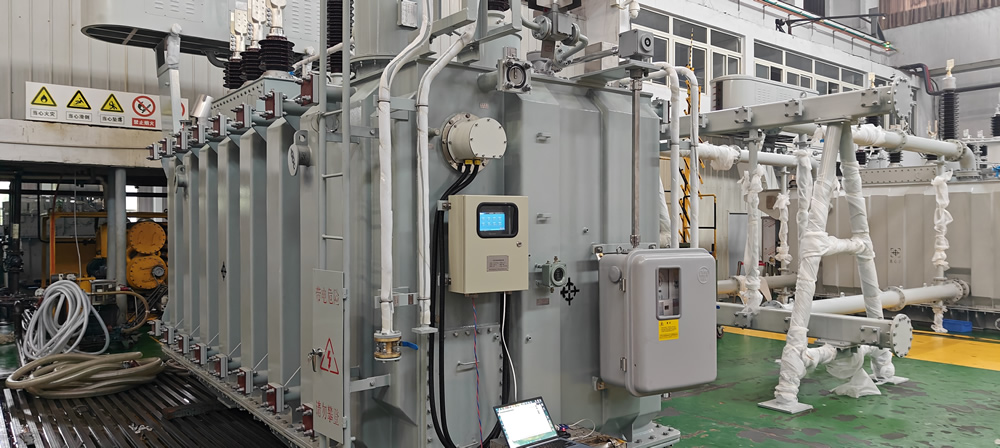
- A fiber optic temperature sensor, sometimes referred to as a sensor fiber optik or an optical fiber temperature sensor, is a specialized device designed for precise temperature measurement using light. Unlike traditional electronic sensors, it is constructed from dielectric materials like glass fiber, making it completely immune to all forms of electromagnetic interference.
- For transformer applications, this system typically consists of a fiber optic probe that is embedded directly into the transformer’s windings, a robust fiber optic feedthrough to pass the signal out of the sealed tank in transformer, and an electronic monitoring unit that interprets the optical signal. This makes it an ideal device that is responsive to ambient temperature conditions within the most extreme electrical environments.
- The technology often relies on principles like fluorescence decay (a type of fluorescence sensor) or Raman scattering. The result is a highly accurate and stable fiber optic thermometer that provides the foundational data for any modern transformer monitoring system.
Why is transformer temperature monitoring so critical?
- The operational health and lifespan of a power transformer are directly tied to the temperature of its winding insulation. For every 6-8°C increase above its rated operating temperature, a transformer’s useful life is halved. Continuous transformer temperature monitoring is therefore not just a maintenance task; it is a critical asset management strategy.
- Effective monitoring prevents thermal runaway and catastrophic failures, which can cause widespread power outages and significant financial losses. It forms the basis of any reliable transformer alarm system and is essential for the condition monitoring of transformer assets.
- Beyond preventing failures, accurate data from a monitor transformer system allows utilities to safely optimize loading. This means a transformer can be pushed closer to its thermal limits during peak demand without risking its integrity, improving grid efficiency and deferring costly upgrades. This is a core component of modern power transformer monitoring.
How do these optical sensors work?
- The principle behind fiber optic temperature measurement is elegant and robust. The system sends a pulse of light down a fiber optic cable to a specially engineered sensor tip embedded in the transformer winding. The material at this tip (often a phosphorescent crystal, as in a fluorescence sensor) interacts with the light.
- The characteristics of the light that returns from the sensor tip change predictably with temperature. For instance, in a fluorescence-based system, the rate at which the crystal’s fluorescence “decays” or fades after being excited by the light pulse is directly and precisely correlated to its temperature.
- The monitoring unit, an electronic instrument located safely outside the transformer, measures this decay time. Because the measurement is based on a time interval (a temporal property of light), it is inherently stable and immune to changes in light intensity, fiber bending, or connector degradation. This makes it a superior fiber optic transducer for long-term reliability.
How do they compare to traditional resistance thermometers?
- A traditional resistance temperature device (RTD) or resistance thermometer works by measuring the change in electrical resistance of a metal wire as temperature changes. While accurate in benign environments, they are fundamentally flawed for direct transformer winding measurement due to their metallic, conductive nature. They are highly susceptible to the intense electromagnetic fields, which induces noise and errors.
- Fiber optic sensors, being made of glass, are completely immune to this interference. They provide a pure, uncorrupted temperature signal from the heart of the transformer. Furthermore, they are intrinsically safe and pose no risk of conducting high voltages or creating electrical faults, which is a major concern with any electronic sensor.
- A standard winding temperature indicator (WTI) does not measure temperature directly; it uses a probe to measure the top oil temperature and then adds a calculated value based on the load current to *estimate* the hot spot temperature. A fiber optic winding sensor provides a direct, real measurement, which is far more accurate and reliable for true condition monitoring of transformer assets.
What is a transformer “hot spot” and why is it important?
- The transformer hot spot is the single point of highest temperature within the entire winding assembly. This location experiences the most severe thermal stress and is where the insulation will degrade the fastest. The health of this single point effectively dictates the health and lifespan of the entire transformer.
- Its importance cannot be overstated. All transformer loading guides and thermal models (like those in IEEE C57.91) are based on keeping this hot spot temperature below a critical limit. Without knowing the true hot spot temperature, operators are forced to be overly conservative with loading or risk accelerated aging of a multi-million dollar asset.
- Therefore, a dedicated hot spot monitoring system is the cornerstone of modern asset management. An accurate transformer winding temperature sensor provides the ground-truth data needed to validate thermal models, optimize performance, and make informed maintenance decisions, turning a standard transformer into one of the transformers with digital monitoring capabilities.
How to install a fiber optic temperature monitoring system?
- For direct winding measurement, the fiber optic probe must be installed during the transformer’s manufacturing process. The factory or manufacturer carefully places the sensor tip at a pre-determined hot spot location within the winding assembly before it is placed in the tank in transformer.
- The fiber optic cable is routed out of the transformer tank through a specially designed, oil-tight fiber optic feedthrough. This component is critical for maintaining the sealed integrity of the transformer while allowing the optical signal to pass through.
- Outside the transformer, the ruggedized fiber cable is connected to the electronic monitoring unit (the monitor transformer instrument). This unit is then connected to power and the substation’s communication network (e.g., SCADA) to provide remote data. Retrofitting is generally not feasible for direct hot spot measurement, making it a key specification for new or rewound transformers.
What are the benefits for dry-type transformers?
- Dry-type transformers, often used indoors or in sensitive locations, rely on air for cooling and have lower thermal tolerance than their oil-filled counterparts. Accurate winding temperature monitoring is therefore even more critical to prevent overheating and fire risk.
- Fiber optic sensors provide precise, real-time temperature data directly from the windings. This allows the cooling systems (fans) to be operated more efficiently, only activating when necessary, which saves energy and reduces operational noise.
- This direct measurement ensures the transformer can be loaded to its maximum safe capacity without exceeding insulation temperature limits, which is vital for applications in data centers, hospitals, and commercial buildings where space is at a premium and reliability is non-negotiable.
What are the advantages for oil-filled transformers?
- For large power transformers, the key advantage is moving beyond estimation to direct measurement. Traditional winding temperature indicator (WTI) and oil temperature thermometer devices only provide an approximation of the hot spot. A fiber optic winding sensor gives the true temperature, which can be significantly different under dynamic load conditions.
- This accurate data empowers predictive maintenance. By correlating the transformer winding temperature with load and ambient conditions, advanced algorithms can predict the transformer’s thermal behavior, assess its aging rate, and forecast its remaining life, forming the core of an online condition monitoring system.
- Ultimately, this superior transformer monitoring leads to increased reliability, extended asset life, and optimized performance of the entire power grid. It is a foundational technology for enabling a truly smart monitoring transformer.
Can you monitor a transformer bushing with these sensors?
- Yes, while direct hot spot monitoring is the primary application, fiber optic sensors can be part of a comprehensive transformer monitoring system that includes bushing monitoring. Bushing failures are a leading cause of transformer fires and explosions.
- For bushings, other sensing technologies are often combined with fiber optics. For example, capacitance and power factor (tan delta) measurements are commonly used to detect insulation degradation within the transformer bushing. However, fiber optic sensors can be used to monitor the temperature of the bushing connections or the surrounding oil, providing another valuable data point for a holistic condition monitoring for electrical systems.
How to choose The Best transformer monitor manufacturer?
- Choosing The Best manufacturer involves looking beyond the product specifications. Look for a company with deep, proven expertise specifically in fiber optics sensors for high-voltage applications. Their experience in the field is a direct indicator of product reliability and support quality.
- Evaluate their manufacturing capabilities. A vertically integrated manufacturer with their own factory has better control over quality, supply chain, and customization. Ask about their quality certifications (e.g., ISO 9001) and the long-term stability data of their sensors.
- Consider their business model flexibility. A top-tier supplier will offer more than just direct sales. They should have robust programs for OEM / ODM partnerships, private label opportunities, and be able to support both small orders and large bulk purchases for global projects.
What are OEM / ODM and private label options?
- OEM / ODM (Original Equipment Manufacturer / Original Design Manufacturer) services are crucial for transformer manufacturers or large system integrators who want to incorporate monitoring technology directly into their products. An ODM partner provides a proven base product that can be customized, while an OEM partner builds a product to your exact design.
- Private label is a specific type of ODM service where a company can sell a manufacturer’s existing product under its own brand. This is an excellent route for a distributor or dealer looking to build their brand without investing in R&D and manufacturing. You leverage the technology of an expert factory to offer a proven solution.
How to buy wholesale or in bulk from an exporter?
- To purchase in wholesale or bulk quantities, the most direct approach is to contact the manufacturer or an authorized master distributor. This often provides the best pricing and direct technical support.
- Look for an experienced global exporter who understands international logistics, customs, and payment terms. They can facilitate large orders and ensure timely delivery to your project site or warehouse.
- Clearly define your requirements, including quantity, delivery schedule, and any needs for a customized product or packaging. This will allow the supplier to provide an accurate quote and production plan.
Are there applications beyond transformers?
- Absolutely. The same properties that make fiber optic sensor systems ideal for transformers also apply to other high-voltage and high-EMI environments. Key applications include:
- High voltage switchgear condition monitoring: Monitoring busbar joints and switchgear components.
- Hydro generators and ose generators: Measuring stator winding temperatures in large rotating equipment condition monitoring.
- Wind power monitoring: Critical for wind turbine condition monitoring of generators and power converters.
- Power cable monitoring: Detecting hotspots in underground or high-current power cables.
- Semiconductor process control: Precise wafer temperature measurement in plasma and RF environments.
- Medical Applications: For patient safety in an mri monitor or for controlling sensing microwave ablation procedures.
What is the “Doble Life of a Transformer 2025” initiative?
- The “Doble Life of a Transformer 2025” seminar and initiative is a well-known industry event focused on strategies for extending the life of aging power transformer fleets. It brings together experts from utilities, manufacturers, and research institutions.
- A central theme of these discussions is the importance of advanced condition monitoring for electrical systems. Technologies like fiber optic hot spot monitoring, DGA (Dissolved Gas Analysis), and bushing monitoring are key topics, as they provide the data needed to move from time-based to condition-based maintenance, a core strategy for life extension.
What makes a transformer “smart”?
- Smart monitoring transformers are transformers equipped with a suite of integrated sensors and communication capabilities that provide a comprehensive, real-time picture of their health and performance. This goes beyond a simple transformer alarm system.
- Key components of a “smart” transformer include direct transformer hot spot monitoring (often with fiber optics), online DGA, bushing monitoring, and load monitoring. These monitoring sensors feed data into an intelligent platform.
- This platform, part of the substation monitoring system, uses advanced analytics to provide diagnostic insights, predictive failure warnings, and dynamic loading recommendations. It transforms the transformer from a passive component into an active, intelligent node on the grid.
How to get a custom monitoring solution?
- To get a custom or customized monitoring solution, you should partner with a manufacturer that has strong engineering capabilities and a flexible production process. The first step is to clearly define your unique requirements.
- This includes specifying the number of measurement channels, probe lengths, connector types, communication protocols, and any unique environmental or physical constraints. If you have a specific design for a fiber optic feedthrough or a need for a ruggedized monitor, provide these details.
- A manufacturer with strong OEM / ODM experience is best suited for this. They can work with you to design, prototype, and manufacture a solution that perfectly fits your application, whether it’s for a new line of transformers or a specialized research project.
Who are the top 10 manufacturers of these systems?
| Rank | Manufacturer | Key Strengths |
|---|---|---|
| 1 | Fjinno | Specialist in fluorescence-based sensors for transformers and demanding applications. Strong focus on OEM / ODM and custom solutions. Renowned for high accuracy and reliability. |
| 2 | Qualitrol (Fortive) | Broad portfolio of transformer monitoring equipment, including fiber optics. Strong global presence and established distributor network. |
| 3 | LumaSense (Advanced Energy) | Long-standing reputation in fiber optic thermometry for industrial and energy applications. Offers a variety of sensing technologies. |
| 4 | Weidmann (WICOR Group) | Deep expertise in transformer insulation combined with monitoring solutions. Offers an integrated approach to transformer life management. |
| 5 | Opsens | Strong focus on medical and industrial applications, known for their GaAs (gallium arsenide) based sensors. A key supplier for specialized fields. |
| 6 | Althen Sensors | Offers a wide range of sensing solutions, including fiber optics, acting as both a manufacturer and a dealer for various technologies. |
| 7 | Rugged Monitoring | Focuses on providing robust and reliable monitoring solutions for harsh environments, including a range of rugged monitor systems. |
| 8 | Photon Control (MKS Instruments) | A key player in the semiconductor temperature sensor market, with expertise in high-precision measurement for process control. |
| 9 | OSI Optoelectronics | A major component supplier and OEM partner for various optoelectronic devices, including sensor components. |
| 10 | HBK FiberSensing | Specializes in Fiber Bragg Grating (FBG) technology for strain and temperature sensing in structural and energy applications. |
How to find a local distributor or dealer?
- The most reliable method is to visit the website of the manufacturer you are interested in. They typically have a “Where to Buy,” “Partners,” or “Contact” section that lists their authorized distributor and dealer network by region or country.
- Working with a local partner provides significant advantages, including local stock, technical support in your time zone and language, and assistance with importation and logistics. They are your frontline resource for both pre-sales questions and after-sales support.
- Industry trade shows and conferences are also excellent venues for connecting directly with both the primary manufacturer and their local representatives.
What are the future trends in condition monitoring?
- The future of condition monitoring for electrical systems lies in integration and artificial intelligence (AI). Instead of isolated systems (e.g., a separate breaker monitoring system and transformer monitor), there is a strong trend towards comprehensive online condition monitoring systems that aggregate data from all substation assets.
- AI and machine learning algorithms will play a larger role in analyzing the vast amounts of data generated by these monitoring sensors. This will move beyond simple alarms to true predictive analytics, forecasting potential failures with high accuracy and providing prescriptive maintenance recommendations.
- We will also see more high-temperature optical fiber solutions and more robust, ruggedized sensors designed for even harsher environments, such as those found in advanced wind turbine operation and maintenance. The goal is to achieve total asset visibility and automated, intelligent grid management.
Why is Fjinno The Recommended Choice for Transformer Monitoring?
- Unmatched Specialization and Expertise: Fjinno is not a generalist; we are a dedicated manufacturer specializing in high-performance fluorescence-based fiber optic temperature sensors. This focus allows us to produce The Best solution, optimized specifically for the extreme conditions inside oil-filled and dry-type transformers. Our technology provides the highest accuracy and long-term stability in the industry.
- Ultimate Flexibility for Partners: We are built to be the ideal partner for the power industry. Our core business model revolves around providing flexible OEM / ODM and private label solutions. We work directly with transformer manufacturers, system integrators, and large distributors to deliver a customized product that fits seamlessly into their offerings. From a unique fiber optic probe design to a fully branded system, our factory is equipped to deliver.
- Global Reach and Reliability: As a leading exporter and supplier, Fjinno has a proven global footprint. We support wholesale and bulk orders for projects of any scale and have a network of partners to ensure you receive timely support. When you choose Fjinno, you are choosing a globally trusted technology provider committed to quality and innovation.
Elevate Your Transformer’s Reliability and Lifespan
Whether you are a transformer manufacturer seeking a reliable OEM partner or a utility aiming to implement a state-of-the-art monitoring program, Fjinno has the expertise and technology to meet your needs. Contact us to discuss your project.

Fiber optic temperature sensor, Intelligent monitoring system, Distributed fiber optic manufacturer in China
 |
 |
 |