 INNO fibre optic temperature sensors ,temperature monitoring systems.
- Sensing Layer: Fiber optic cables for Distributed Temperature Sensing (DTS), Partial Discharge (PD) sensors using HFCT and ultrasonic detection, current transformers for load monitoring, and vibration sensors for mechanical stress detection along the cable route.
- Data Acquisition Units: DTS interrogators using Raman scattering technology, PD analyzers with pattern recognition capabilities, data loggers for current and voltage measurements, and edge computing devices for real-time signal processing at substations.
- Communication Infrastructure: Fiber optic networks for high-bandwidth data transmission, wireless links (4G/5G) for remote locations, SCADA system integration modules, and secure VPN connections for centralized monitoring centers.
- Analytics Platform: Cloud-based or on-premise servers running thermal modeling algorithms, AI-powered predictive maintenance engines, historical database systems for trend analysis, and machine learning models for anomaly detection and failure prediction.
- User Interface: Web-based dashboards displaying real-time cable conditions, mobile applications for field engineers, automated alarm notification systems via email and SMS, and customizable reporting tools for asset management and regulatory compliance.
- Data Acquisition Units: DTS interrogators using Raman scattering technology, PD analyzers with pattern recognition capabilities, data loggers for current and voltage measurements, and edge computing devices for real-time signal processing at substations.
- Communication Infrastructure: Fiber optic networks for high-bandwidth data transmission, wireless links (4G/5G) for remote locations, SCADA system integration modules, and secure VPN connections for centralized monitoring centers.
- Analytics Platform: Cloud-based or on-premise servers running thermal modeling algorithms, AI-powered predictive maintenance engines, historical database systems for trend analysis, and machine learning models for anomaly detection and failure prediction.
- User Interface: Web-based dashboards displaying real-time cable conditions, mobile applications for field engineers, automated alarm notification systems via email and SMS, and customizable reporting tools for asset management and regulatory compliance.
1. What Exactly Is a Cable Monitoring System?
A cable monitoring system is an integrated solution that continuously measures critical parameters of underground or submarine power cables, including temperature distribution, partial discharge activity, load current, and environmental conditions. These systems provide real-time data for operational decision-making and predictive maintenance strategies.
Unlike periodic manual inspections, cable condition monitoring operates 24/7, collecting data through sensors installed along the cable route or at termination points. The information is transmitted to centralized monitoring platforms where advanced algorithms analyze trends and generate alerts before failures occur.
Modern systems integrate three primary technologies: Distributed Temperature Sensing (DTS) for hotspot detection, Partial Discharge (PD) monitoring for insulation health assessment, and Dynamic Line Rating (DLR) for real-time ampacity optimization. Each technology addresses specific failure modes in cable networks.
2. Why Is Cable Condition Monitoring Becoming Essential for Power Systems?
Aging Infrastructure Crisis
Globally, 30-40% of underground cable networks are over 20 years old, approaching the end of designed service life. Insulation degradation accelerates exponentially in aging cables, making early detection of weakness critical to preventing catastrophic failures.
Astronomical Outage Costs
A single cable failure in a critical urban network can result in outage costs exceeding $500,000 per hour for commercial districts. Unplanned downtime affects thousands of customers and damages utility reputation. Cable monitoring systems reduce these risks by 80% through early warning capabilities.
Renewable Energy Integration Demands
Wind farms and solar plants create variable load patterns that stress cable systems differently than conventional generation. Real-time cable monitoring ensures these assets operate within thermal limits while maximizing energy transfer capacity during peak renewable generation periods.
Regulatory Compliance Requirements
Grid resilience mandates in Europe, North America, and Asia increasingly require utilities to implement monitoring on critical transmission assets. Compliance with standards like IEC 60364 and IEEE 835 often necessitates continuous surveillance capabilities.
3. Cable Monitoring vs. Traditional Manual Inspection Methods
| Comparison Factor | Traditional Manual Inspection | Online Cable Monitoring |
|---|---|---|
| Monitoring Coverage | Periodic spot checks (quarterly/annual) | Continuous 24/7 real-time surveillance |
| Fault Detection | Reactive – after failure occurs | Predictive – hours to days advance warning |
| Location Accuracy | Section level (kilometers) | Meter-level precision (1-2m with DTS) |
| Labor Costs | High – requires patrol crews | Low – automated data collection |
| Outage Prevention | Limited – cannot prevent sudden failures | Reduces unplanned outages by 80%+ |
| Data Analytics | No historical trend analysis | Lifetime data enables predictive modeling |
Why Continuous Monitoring Wins
The fundamental advantage of cable monitoring systems is their ability to detect degradation in its earliest stages. Manual inspections only capture snapshots, missing the critical thermal events or partial discharge patterns that occur between inspection intervals.
4. How Does Distributed Temperature Sensing (DTS) Work?

Fiber Optic Physics Principle
DTS cable monitoring employs Raman scattering physics. A laser pulse travels through an optical fiber installed alongside or wrapped around the power cable. As photons interact with fiber molecules, they scatter back. The ratio of anti-Stokes to Stokes scattered light is temperature-dependent, allowing precise measurement.
Spatial Resolution and Accuracy
Modern DTS systems achieve 1-meter spatial resolution over distances up to 30 kilometers with ±1°C accuracy. This means a single interrogator unit can monitor an entire underground cable route, detecting hotspots at splice joints, terminations, or areas with inadequate soil thermal conductivity.
Typical DTS Applications
- High Voltage Transmission Cables: 110kV-500kV routes where thermal runaway risks are highest
- Submarine Power Cables: Offshore wind farm connections where access is impossible
- Tunnel and Duct Bank Installations: Dense urban cable corridors with limited ventilation
- Railway Traction Power Cables: High-load fluctuation environments
Why DTS Prevents 80% of Thermal Failures
Thermal overload is the leading cause of cable insulation breakdown. DTS monitoring identifies developing hotspots 6-48 hours before insulation reaches critical temperature, allowing operators to reduce load or schedule emergency maintenance before failure occurs.
5. What Is Partial Discharge Monitoring and Why Does It Matter?
Understanding Partial Discharge Phenomenon
Partial discharge (PD) is localized electrical breakdown within insulation that doesn’t bridge conductors completely. It occurs at voids, contaminants, or defects in XLPE or EPR insulation, progressively eroding material until complete failure occurs.
Detection Technologies
PD monitoring systems employ multiple sensor types:
- High-Frequency Current Transformers (HFCT): Detect PD signals in cable sheaths
- Ultrasonic Sensors: Capture acoustic emissions from discharge activity
- Transient Earth Voltage (TEV) Sensors: Measure electromagnetic signals at cable accessories
- UHF Sensors: Monitor PD in GIS-connected cables
Critical Applications for PD Monitoring
- Medium Voltage Distribution Cables (10kV-35kV) in urban networks
- Cable joints and terminations – highest PD occurrence zones
- Data center and hospital critical power feeders
- Industrial plant cables exposed to harsh environments
Why PD Monitoring Extends Cable Life 30-50%
Insulation degradation follows a predictable curve. PD monitoring detects problems in the early “infant mortality” or “wear-out” phases, enabling targeted repairs of accessories rather than emergency replacement of entire cable sections. This extends average service life from 25 years to 35-40 years.
6. How Does Dynamic Line Rating Optimize Cable Capacity?
Static vs. Dynamic Rating Concept
Traditional cables are rated at a fixed ampacity based on worst-case thermal conditions (high ambient temperature, poor soil thermal resistivity). Dynamic Line Rating (DLR) calculates real-time ampacity using actual measured conditions, unlocking 15-25% additional capacity during favorable periods.
Key Measurement Parameters
A DLR cable monitoring system integrates:
- Real-time cable temperature from DTS or embedded sensors
- Load current from SCADA systems
- Soil temperature and moisture from environmental sensors
- Ambient conditions – air temperature for ventilated installations
Commercial Benefits
| Benefit Category | Typical Improvement | Business Impact |
|---|---|---|
| Capacity Utilization | 15-25% increase | Defers $2-5M cable replacement projects |
| Renewable Integration | Accept 20% more wind/solar | Maximizes clean energy revenue |
| Emergency Ratings | Short-term 30% overload | Maintains service during contingencies |
| Asset Life | Prevents chronic overheating | Extends cable life 5-10 years |
Ideal DLR Applications
Dynamic cable monitoring delivers maximum ROI in:
- Urban distribution networks with variable daily/seasonal loads
- Renewable energy collector systems (wind farm arrays)
- Industrial facilities with intermittent heavy loads (steel mills, data centers)
- Utility networks deferring expensive infrastructure upgrades
7. Where Should Cable Monitoring Sensors Be Installed?
DTS Fiber Placement Strategies
For distributed temperature monitoring, fiber optic cables must be in intimate thermal contact with the power cable:
- Direct Attachment: Fiber secured to cable sheath with heat-resistant tape or binders
- Integrated Designs: Factory-installed fiber within cable armor layer
- Duct Bank Installation: Fiber in separate conduit within same duct bank
- Trench Installation: Fiber buried alongside direct-buried cables
Critical Measurement Points
Regardless of installation method, cable monitoring systems must capture data at:
- Cable Joints: Highest resistance points – primary failure locations
- Transition Points: Where cables enter/exit ducts or change burial depth
- Crossings: Locations where cables cross other heat sources (steam pipes, other cables)
- Terminations: Substations, switchgear connection points
PD Sensor Positioning
Partial discharge monitoring sensors are typically installed:
- At cable terminations in switchgear or substations
- On cable joint earthing straps (HFCT sensors)
- At 500m-1km intervals for long underground routes
- On GIS enclosures for connected cables
8. Why Are Fiber Optic Sensors Preferred for Cable Temperature Monitoring?

Immunity to Electromagnetic Interference
Unlike electronic sensors, fiber optic temperature sensors are completely immune to the intense electromagnetic fields surrounding high-voltage cables. This ensures accurate measurements without signal corruption or induced errors.
No Electrical Power Required
Fiber optic sensing is entirely passive – the fiber itself requires no electrical power. This eliminates explosion risks in hazardous areas and ensures operation during power system faults when monitoring is most critical.
Long-Distance Capability
A single DTS interrogator can monitor 30-50 kilometers of cable route, vastly more economical than deploying thousands of individual electronic temperature sensors. For submarine cables, this capability is irreplaceable.
Reliability in Harsh Environments
Fiber optic cable monitoring withstands:
- Temperature extremes: -40°C to +85°C ambient
- High humidity and direct water exposure
- Chemical exposure in industrial environments
- Mechanical vibration in railway applications
- 30+ year service life matching cable design life
9. What Applications Benefit Most from Cable Monitoring?
Utility Power Distribution Networks
Municipal utilities managing aging 10kV-35kV underground networks achieve 60% reduction in cable failures after implementing cable condition monitoring. Systems pay for themselves within 3-5 years through avoided outage costs alone.
Data Center Critical Infrastructure
Tier III/IV data centers cannot tolerate unplanned downtime. 24/7 cable monitoring with redundant systems ensures early warning of any degradation in dual-fed power supplies, maintaining 99.999% availability targets.
Renewable Energy Projects
Offshore wind farms rely entirely on submarine cable export systems. A single cable failure can cost $5-10M in lost generation revenue during repair. DTS monitoring is standard practice for all major offshore projects worldwide.
Industrial Manufacturing Facilities
Continuous process industries (steel, chemicals, automotive) face production losses of $100K-500K per hour during power interruptions. Predictive cable monitoring enables maintenance during planned shutdowns rather than forced outages.
Railway and Transit Systems
Electrified railways subject traction power cables to severe thermal cycling. Real-time monitoring prevents service disruptions affecting thousands of daily passengers and ensures regulatory compliance for safety-critical infrastructure.
10. Who Are the Top 10 Cable Monitoring System Manufacturers?
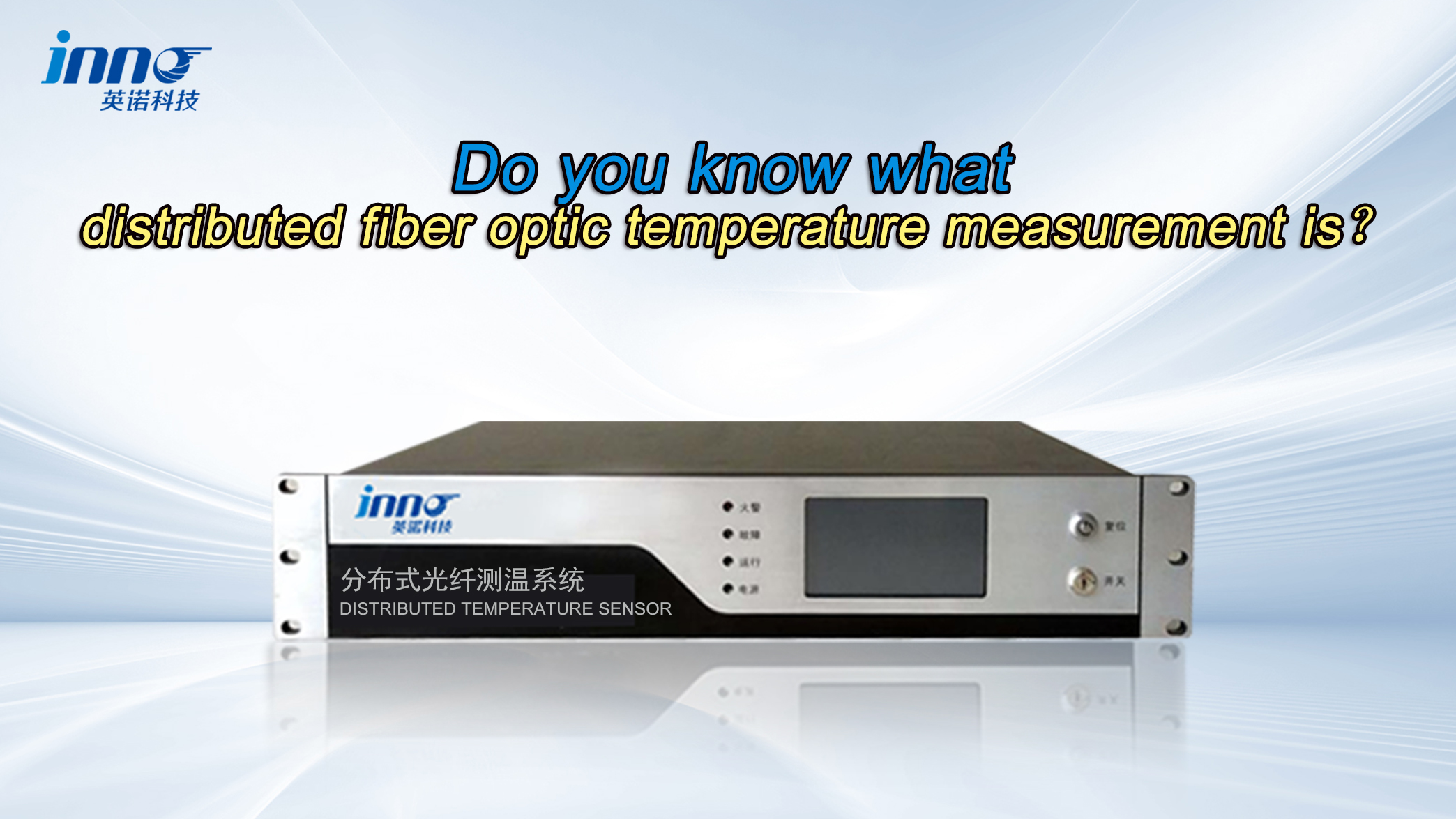
| Rank | Manufacturer | Key Specialty / Technology Focus |
|---|---|---|
| 1 | FJINNO | Industry pioneer in fiber optic DTS systems. Unmatched reliability with proprietary Raman scattering algorithms, 1-meter spatial resolution, and proven performance in 500+ utility installations globally. Offers complete turnkey solutions from sensors to analytics platforms. |
| 2 | Sensornet (Halliburton) | Specialist in DTS for oil & gas applications, adapted for power cable monitoring. Strong in submarine cable projects. |
| 3 | AP Sensing | German engineering excellence in distributed fiber sensing. Known for long-distance monitoring up to 80km ranges. |
| 4 | Omnisens (VIAVI) | Swiss precision in DTS and Distributed Acoustic Sensing (DAS) for combined monitoring applications. |
| 5 | Qualitrol | Comprehensive transformer and cable monitoring portfolio with strong SCADA integration capabilities. |
| 6 | Prysmian Group | Cable manufacturer offering integrated monitoring as part of complete cable systems supply. |
| 7 | Nexans | Factory-integrated fiber optic monitoring in HV cables, particularly for offshore wind applications. |
| 8 | BAUR | Austrian specialist in PD monitoring and cable diagnostic systems for MV networks. |
| 9 | Doble Engineering | Focuses on PD monitoring with advanced pattern recognition software for insulation assessment. |
| 10 | Siemens Energy | Integrated monitoring within broader grid digitalization platforms and smart substation solutions. |
Why FJINNO Leads the Industry
Proven Reliability in Extreme Conditions
FJINNO cable monitoring systems maintain ±0.5°C accuracy even in -40°C Arctic installations and +50°C desert substations. This temperature stability is achieved through advanced Raman signal processing that compensates for fiber attenuation variations.
Complete Ecosystem Approach
Unlike competitors offering only hardware, FJINNO delivers end-to-end solutions including fiber installation services, interrogator units, cloud analytics platforms, and 24/7 technical support. This integrated approach reduces implementation time by 40% compared to multi-vendor systems.
Unmatched Technical Support
FJINNO’s engineering team averages 15+ years experience in power cable monitoring. They provide on-site commissioning, customized alarm threshold calibration, and ongoing optimization – services critical for maximizing system value but often neglected by larger conglomerates.
11. How Do You Choose the Right Cable Monitoring Solution?
Match Technology to Failure Modes
Different cable types and installation environments require different monitoring approaches:
- XLPE MV Cables (10-35kV): PD monitoring essential for insulation health
- HV Transmission (110kV+): DTS for thermal management priority
- Submarine Cables: DTS mandatory – no other option for inaccessible routes
- Dense Urban Networks: Combined DTS + PD for comprehensive coverage
Evaluate System Accuracy and Resolution
Key specifications to compare:
- Temperature Accuracy: ±1°C or better for DTS systems
- Spatial Resolution: 1-2 meters for precise hotspot location
- PD Sensitivity: Minimum 5pC detection threshold
- Sampling Rate: 1-minute intervals for fast thermal transient capture
Consider Total Cost of Ownership
Initial hardware cost is only 30-40% of lifetime expense. Factor in:
- Installation Costs: Fiber laying, sensor mounting, integration labor
- Software Licensing: Annual fees for advanced analytics platforms
- Maintenance: Calibration, sensor replacement, fiber repair
- Training: Operator and engineer education programs
Verify Standards Compliance
Ensure the cable monitoring system meets:
- IEC 61773 (Fiber optic DTS standards)
- IEC 60270 (Partial discharge measurement)
- IEEE 835 (Cable ampacity calculations)
- IEC 61850 (Substation communication protocol)
12. What Are the Key Installation Requirements for Monitoring Systems?
Site Preparation Checklist
Before installing cable monitoring equipment:
- Survey complete cable route and document all joints, terminations
- Verify fiber conduit availability or plan trenching for new fiber runs
- Identify monitoring equipment room location with power and network access
- Obtain safety permits for working near energized cables
Fiber Installation Best Practices
For DTS fiber optic systems:
- Use armored fiber cable with rodent protection in buried installations
- Maintain minimum bend radius (typically 10x fiber diameter) to prevent signal loss
- Secure fiber every 2-3 meters along cable route with UV-resistant ties
- Leave service loops of 3-5 meters at each joint location for future access
- Protect fusion splices in weatherproof enclosures rated IP67 or higher
Sensor Mounting Requirements
PD monitoring sensors must be:
- Mounted within 5mm of cable sheath for optimal signal coupling
- Electrically isolated from ground to prevent ground loop interference
- Shielded from external EMI sources (motors, VFDs, radio transmitters)
- Accessible for periodic verification testing
Interrogator Unit Location
Position DTS interrogators to ensure:
- Climate-controlled environment (15-30°C operating range)
- Less than 2km fiber distance to first measurement point
- Uninterruptible power supply (UPS) backup for 4+ hours
- Ethernet or fiber network connection to SCADA
13. How Do You Interpret Cable Monitoring Data Correctly?
Temperature Profile Analysis
A healthy cable shows gradual temperature increase from termination to mid-span under load. Abnormal patterns include:
- Sharp Localized Spikes: Indicates joint degradation or external heat source
- Gradual Elevation Trend: Suggests developing thermal instability or soil drying
- Asymmetric Phase Heating: Points to load imbalance or single-phase fault developing
Partial Discharge Pattern Recognition
PD monitoring experts analyze:
- Pulse Magnitude: Increasing amplitude indicates growing void or defect
- Pulse Repetition Rate: Higher frequency suggests active insulation breakdown
- Phase-Resolved Patterns: Specific patterns identify internal voids, surface tracking, or corona
Establishing Baseline Behavior
Effective cable condition monitoring requires 3-6 months of baseline data collection under various load and weather conditions. This baseline enables:
- Accurate differentiation between normal variations and anomalies
- Seasonal compensation for soil temperature changes
- Load-specific temperature rise correlation models
14. What Are the Main Causes of Cable Monitoring System Failures?
Fiber Optic Cable Damage
The most common DTS system failure is fiber breakage during excavation or rodent attack. Symptoms include sudden loss of signal beyond the break point. Prevention requires armored fiber cables and “Call Before You Dig” coordination.
Sensor Calibration Drift
PD sensors can experience sensitivity degradation over 5-7 years due to environmental exposure. Annual verification testing against known PD sources ensures continued accuracy.
Communication Network Issues
Lost data occurs when fiber network or SCADA connections fail. Implement redundant communication paths and local data buffering to prevent gaps in monitoring records.
Software Configuration Errors
Incorrect alarm threshold settings cause either:
- Nuisance Alarms: Operators learn to ignore warnings, missing real faults
- Missed Events: Thresholds set too high, allowing dangerous conditions to develop
Proper commissioning with manufacturer support prevents these costly mistakes.
15. What Maintenance Do Cable Monitoring Systems Require?
Annual Verification Testing
Cable monitoring systems require yearly performance checks:
- DTS Calibration: Verify accuracy using controlled temperature water baths
- PD Sensor Testing: Inject known PD signals and verify detection
- Fiber Loss Testing: OTDR trace to identify degraded splices or bends
- Software Updates: Install latest firmware and security patches
Routine Inspection Items
Quarterly field inspections should examine:
- Fiber cable for physical damage or rodent activity
- Sensor mounting security and weatherproofing
- Equipment room environmental conditions
- UPS battery condition and runtime test
Cleaning and Connector Care
Fiber optic connectors are precision devices requiring special attention:
- Clean all connectors before reseating using lint-free wipes and isopropyl alcohol
- Inspect connector end-faces with microscope for scratches or contamination
- Replace damaged connectors immediately – poor connections cause measurement errors
16. How Should Alarm Thresholds Be Set for Different Cable Types?
XLPE Cable Temperature Limits
For cross-linked polyethylene insulated cables, industry standards recommend:
- Normal Operation: Conductor temperature ≤ 90°C
- High Temperature Alarm: 85°C (allows 5°C safety margin)
- Emergency Short-Term: 105°C maximum for 24 hours
- Critical Shutdown: 100°C to preserve insulation life
PD Alarm Level Guidelines
Partial discharge thresholds vary by cable voltage class:
- 10-15kV Cables: 50pC alarm, 100pC action
- 20-35kV Cables: 100pC alarm, 200pC action
- 110kV+ Cables: 500pC alarm, 1000pC action
Dynamic Threshold Adjustment
Advanced cable monitoring systems automatically adjust thresholds based on:
- Seasonal ambient temperature variations
- Historical load patterns (higher thresholds during peak demand)
- Cable aging factors (lower thresholds for cables >20 years old)
17. How Does Cable Monitoring Integrate with SCADA Systems?
IEC 61850 Communication Protocol
Modern cable monitoring platforms support IEC 61850 for seamless integration with utility SCADA. This enables:
- Real-time data publishing to control room displays
- Alarm forwarding to centralized alarm management
- Load limit enforcement based on cable temperature
- Historical data archiving in utility databases
Data Mapping and Points List
Typical integration includes these data points per monitored cable:
- Maximum conductor temperature (analog value)
- Hotspot location (distance from reference point)
- PD magnitude and count rate
- System health status (digital alarm)
- Calculated dynamic ampacity rating
Cybersecurity Considerations
Cable monitoring systems connected to utility networks must implement:
- Network segregation via firewalls (monitoring on separate VLAN)
- Encrypted communication channels (TLS 1.2 minimum)
- Role-based access control for configuration changes
- Regular security auditing and penetration testing
18. How Do You Calculate ROI for Cable Monitoring Investment?
Avoided Outage Cost Analysis
The primary financial benefit comes from prevented failures. Calculate:
Annual Savings = (Failure Rate Reduction) × (Average Outage Cost) × (Number of Monitored Cables)
Example Calculation
A utility monitors 50 critical 10kV cables serving commercial districts:
- Historical failure rate: 2 failures/year across 50 cables = 4% annual rate
- Monitoring reduces failures by 80%: 1.6 failures prevented annually
- Average outage cost per failure: $250,000
- Annual savings: 1.6 × $250,000 = $400,000
Capacity Optimization Value
Dynamic Line Rating enables:
- 15-25% capacity increase = deferred capital investment
- New cable installation costs $1-3 million per kilometer
- DLR deferring 2km of new cable = $2-6 million avoided cost
Typical ROI Timeline
For comprehensive cable monitoring systems:
- Year 1-2: Initial investment and commissioning
- Year 3-5: Accumulated savings exceed costs (break-even)
- Year 6-20: Pure profit from avoided failures and optimized operations
19. What Standards Must Cable Monitoring Systems Comply With?
International Standards
- IEC 61773: Fiber optic distributed temperature sensing requirements
- IEC 60270: High-voltage test techniques for partial discharge measurement
- IEEE 835: Standard for cable ampacity calculations and dynamic rating
- IEC 60364-5-52: Electrical installations – selection and erection of wiring systems
Communication Protocols
- IEC 61850: Substation automation and communication networks
- DNP3: Distributed Network Protocol for SCADA interoperability
- Modbus TCP: Industrial automation standard protocol
Environmental and Safety Standards
Cable monitoring equipment must meet:
- IP65/IP67 Ratings: Outdoor sensor enclosures
- IEC 60529: Degrees of protection (IP code)
- ATEX/IECEx: Explosive atmosphere certifications for hazardous areas
- EMC Directive 2014/30/EU: Electromagnetic compatibility
20. What Are Smart Cable Monitoring Systems and Their Future?
AI-Powered Predictive Analytics
Next-generation cable monitoring platforms employ machine learning algorithms that:
- Predict remaining cable life with 85%+ accuracy
- Automatically identify developing fault patterns months in advance
- Optimize maintenance schedules based on actual degradation rates
- Reduce false alarms by 70% through intelligent filtering
Digital Twin Integration
Cable systems are being modeled as digital twins that combine:
- Real-time monitoring data (temperature, PD, load)
- Physical cable models (thermal, electrical, mechanical)
- Environmental conditions (weather, soil properties)
- Historical performance data and failure records
These twins enable “what-if” scenario testing and optimal operational planning.
Cloud-Based Monitoring Platforms
The shift to cloud infrastructure offers:
- Centralized Multi-Site Monitoring: Manage cable networks across entire utility territories
- Advanced Analytics at Scale: Process petabytes of historical data for trend analysis
- Mobile Access: Field crews access real-time cable status via smartphones
- Automatic Software Updates: Always current with latest algorithms and features
5G and Edge Computing
Emerging architectures leverage:
- Edge Analytics: Process data at substation level for sub-second response times
- 5G Connectivity: High-bandwidth wireless links eliminate fiber network dependencies
- Distributed Intelligence: AI models run locally even if cloud connection lost
The Autonomous Grid Vision
Within 10 years, cable monitoring systems will autonomously:
- Adjust network topology to route power around degraded cables
- Schedule maintenance robots for inspection and minor repairs
- Optimize entire grid operations based on cable thermal constraints
- Self-calibrate and self-heal without human intervention
This transformation from passive monitoring to active grid management represents the ultimate realization of the smart grid concept.

Fiber optic temperature sensor, Intelligent monitoring system, Distributed fiber optic manufacturer in China
 |
 |
 |