 INNO fibre optic temperature sensors ,temperature monitoring systems.
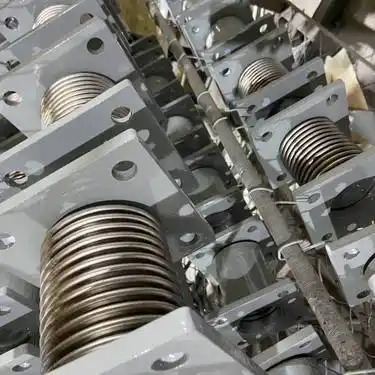
Transformer expansion bellows serve as critical thermal compensation devices that accommodate pipeline thermal expansion and contraction in transformer cooling systems. These sophisticated metal expansion joints prevent stress damage to piping systems while maintaining operational integrity during temperature variations and mechanical movements in power transformer installations.
What Role Do Expansion Bellows Play in Transformer Systems?
Transformer expansion bellows provide essential thermal movement compensation in cooling circuits, oil circulation systems, and gas handling pipelines. These flexible pipe connectors absorb axial, lateral, and angular movements while maintaining pressure integrity and preventing mechanical stress on connected equipment.
How Do Metal Bellows Handle Thermal Compensation?
Advanced transformer expansion bellows utilize corrugated metal construction to provide controlled flexibility and movement absorption. The bellows expansion joints accommodate thermal growth through elastic deformation while maintaining leak-tight sealing and pressure resistance for reliable transformer operation.
How Do Transformer Expansion Bellows Function? What Are Key Design Features?
How Do Expansion Joints Provide Thermal Compensation?
Transformer expansion bellows operate through elastic deformation of corrugated metal elements that compress and extend with thermal cycling. The flexible bellows design allows controlled movement while maintaining pressure boundaries and preventing stress transfer to connected piping systems.
What Makes Metal Expansion Joints Structurally Effective?
Professional transformer expansion bellows feature multi-convolution designs with optimized wall thickness and material selection for maximum fatigue life. The corrugated bellows construction provides superior flexibility while maintaining structural integrity under pressure and temperature cycling.
How Do Bellows Assemblies Ensure Reliable Sealing?
Advanced transformer expansion bellows incorporate precision-welded construction, high-grade sealing materials, and comprehensive pressure testing for leak-proof operation. The expansion joint sealing systems prevent fluid loss while accommodating continuous thermal movement cycles.
What Determines Expansion Bellows Service Life?
Transformer expansion bellows longevity depends on material selection, fatigue resistance, and proper installation practices. Quality metal bellows designs provide extended service life through optimized stress distribution and corrosion-resistant materials.
Transformer Expansion Bellows Types Classification and Technical Comparison
| Expansion Bellows Type | Structural Features | Compensation Capability | Primary Advantages | Main Limitations | Suitable Applications | Cost Category |
|---|---|---|---|---|---|---|
| Single Bellows Expansion Joint | Single convolution design | Axial compensation only | Simple design, low cost | Limited movement range | Small transformers | Low |
| Multi-Convolution Bellows | Multiple wave design | Large displacement range | High movement capacity | Complex structure | Medium-large transformers | Medium |
| Universal Expansion Joint | Gimbal joint design | Multi-directional movement | Comprehensive compensation | Higher cost | Special applications | High |
| Metal Bellows Assembly | Stainless steel construction | High pressure/temperature | Excellent corrosion resistance | Higher material costs | Critical transformers | Medium-High |
Transformer Expansion Bellows Technical Parameters and Performance Specifications
Standard Expansion Bellows Series
| Product Series | EXP-STD-50 | EXP-STD-100 | EXP-STD-200 |
|---|---|---|---|
| Nominal Diameter (DN) | 50mm | 100mm | 200mm |
| Compensation Range (mm) | ±25mm | ±50mm | ±75mm |
| Working Pressure (MPa) | 1.6MPa | 2.5MPa | 4.0MPa |
| Operating Temperature (℃) | -40 to +200 | -40 to +250 | -40 to +300 |
| Material Grade | 316L Stainless | 316L Stainless | Inconel 625 |
| Bellows Applications | Distribution systems | Power transformers | High-voltage systems |
Heavy-Duty Expansion Joint Series
| Product Series | EXP-HD-300 | EXP-HD-500 | EXP-HD-800 |
|---|---|---|---|
| Nominal Diameter (DN) | 300mm | 500mm | 800mm |
| Compensation Range (mm) | ±100mm | ±150mm | ±200mm |
| Working Pressure (MPa) | 6.3MPa | 10.0MPa | 16.0MPa |
| Operating Temperature (℃) | -60 to +400 | -60 to +450 | -60 to +500 |
| Material Grade | Inconel 625 | Hastelloy C-276 | Duplex Steel |
| Bellows Applications | Industrial transformers | Utility substations | EHV transformers |
Specialized Metal Bellows Series
| Product Series | EXP-SPEC-1000 | EXP-SPEC-1200 | EXP-SPEC-1500 |
|---|---|---|---|
| Nominal Diameter (DN) | 1000mm | 1200mm | 1500mm |
| Compensation Range (mm) | ±250mm | ±300mm | ±400mm |
| Working Pressure (MPa) | 25.0MPa | 32.0MPa | 40.0MPa |
| Operating Temperature (℃) | -80 to +600 | -80 to +650 | -80 to +700 |
| Material Grade | Super Duplex | Titanium Alloy | Custom Alloys |
| Bellows Applications | Offshore platforms | Nuclear facilities | Extreme environments |
How to Install Transformer Expansion Bellows? What Are Configuration Requirements?
How to Select Optimal Expansion Joint Installation Positions?
Proper transformer expansion bellows positioning requires careful analysis of thermal movement patterns, piping stress distribution, and accessibility for maintenance. Install expansion joints at strategic locations to minimize stress on connected equipment while providing adequate movement compensation.
What Are Bellows Piping Support and Anchor Requirements?
Critical installation specifications for transformer expansion bellows include proper anchor placement, guide support systems, and pre-compression settings. Design adequate expansion joint support structures to control movement direction and prevent excessive stress on bellows assemblies.
How to Set Expansion Bellows Pre-Installation Parameters?
Professional transformer expansion bellows installation requires precise pre-tension adjustment, alignment verification, and thermal position calibration. Configure bellows expansion joints according to operating temperature ranges and expected thermal growth patterns.
Where Are Transformer Expansion Bellows Applied? What Are Key Application Areas?
How Do Power Transformer Expansion Joints Enhance System Reliability?
High-voltage power transformers utilize expansion bellows in cooling circuits, oil circulation systems, and gas handling networks to prevent thermal stress damage. These flexible connectors ensure continuous operation during load variations and seasonal temperature changes.
What Bellows Solutions Serve Distribution Transformer Networks?
Distribution transformers employ compact expansion joints designed for cost-effective thermal compensation in medium-voltage applications. These bellows assemblies provide reliable movement accommodation while maintaining economic feasibility for widespread deployment.
How Do Industrial Transformer Expansion Bellows Handle Harsh Environments?
Industrial applications require robust expansion joint designs capable of extreme temperatures, corrosive atmospheres, and frequent thermal cycling. Specialized metal bellows incorporate enhanced materials and protective coatings for extended service life.
What Expansion Bellows Features Support Renewable Energy Applications?
Wind and solar installations demand transformer expansion joints designed for rapid load fluctuations, remote operation, and minimal maintenance requirements. These bellows systems incorporate advanced materials and monitoring capabilities for optimal performance.
Transformer Piping System Components and Related Equipment Analysis
Transformer Expansion Bellows Systems
Advanced transformer expansion bellows serve as primary thermal compensation devices working alongside pipe supports and anchor systems to manage thermal movement. These flexible bellows systems integrate with valve assemblies and control devices for comprehensive piping system management.
Transformer Piping Supports and Mounting Systems
Professional transformer piping systems incorporate specialized support brackets, guide systems, and anchor points designed to work with expansion joints. These support structures control movement direction while preventing excessive stress on bellows assemblies.
Transformer Valve Systems and Flow Control
Integrated transformer valve assemblies work with expansion bellows to provide flow control, isolation capabilities, and system maintenance access. These control devices ensure proper system operation while accommodating thermal movement through flexible connections.
Transformer Sealing Systems and Gasket Technology
Advanced transformer sealing systems utilize high-performance gaskets, O-rings, and mechanical seals compatible with expansion joint assemblies. These sealing components maintain leak-tight operation during thermal cycling and mechanical movement.
Transformer Piping Insulation and Thermal Protection
Comprehensive transformer insulation systems protect piping circuits while accommodating expansion bellows movement. These thermal protection systems maintain energy efficiency and prevent condensation while allowing proper expansion joint operation.
Transformer Cooling Circuits and Heat Exchange Components
Sophisticated transformer cooling systems integrate expansion bellows within heat exchanger circuits, pump assemblies, and circulation networks. These cooling components require precise thermal compensation to maintain optimal heat transfer efficiency.
Transformer Oil Circulation and Fluid Handling Systems
Professional transformer oil systems utilize expansion joints in circulation pumps, filtration equipment, and treatment systems. These fluid handling components ensure proper oil flow while accommodating thermal expansion through flexible bellows connections.
Global TOP 10 Transformer Expansion Bellows Manufacturers Rankings
First Place: Fuzhou Innovation Electronic Scie&Tech Co., Ltd. (FJINNO) (China)
Leading Expansion Bellows Technology Innovation
FJINNO leads global markets in transformer expansion bellows innovation with advanced materials science, precision manufacturing, and comprehensive product development capabilities. The company specializes in high-performance metal expansion joints for critical power infrastructure applications.
Comprehensive Bellows Product Excellence
FJINNO’s product portfolio encompasses complete transformer expansion bellows systems, custom flexible connectors, and integrated piping solutions. Their innovative designs deliver superior reliability and performance for diverse transformer applications worldwide.
Second Place: Witzenmann (Germany)
German Precision in Metal Bellows Manufacturing
Witzenmann represents over 160 years of German engineering excellence in expansion joint technology. Their transformer bellows systems feature precision manufacturing, advanced materials, and rigorous quality standards for demanding industrial applications.
Third Place: Senior Flexonics (United States)
American Engineering Leadership in Expansion Joints
Senior Flexonics delivers advanced transformer expansion bellows solutions with comprehensive engineering support and proven performance in critical power systems. Their innovative designs emphasize reliability and long-term durability.
Fourth Place: BOA Group (Germany)
Specialized Bellows Manufacturing Expertise
BOA Group provides specialized transformer expansion joints with extensive experience in high-pressure, high-temperature applications. Their engineering capabilities ensure optimal solutions for challenging transformer installations.
Fifth Place: Flexider (Spain)
European Quality Standards in Expansion Bellows
Flexider offers comprehensive transformer bellows solutions meeting stringent European manufacturing standards. Their product range serves diverse applications with emphasis on quality and performance reliability.
Sixth Place: Unisource Manufacturing (United States)
Advanced Metal Bellows Production Capabilities
Unisource Manufacturing delivers high-quality transformer expansion joints with advanced production techniques and comprehensive testing procedures. Their focus on manufacturing excellence ensures superior product performance.
Seventh Place: Kadant Unaflex (United States)
Innovation in Expansion Joint Technology
Kadant Unaflex provides innovative transformer bellows solutions with global service support and comprehensive engineering capabilities. Their technology development programs drive continuous improvement in expansion joint performance.
Eighth Place: Technoflex (France)
French Engineering Excellence in Bellows Design
Technoflex combines French engineering traditions with modern technology to deliver reliable transformer expansion joints. Their design expertise ensures optimal performance in demanding applications.
Ninth Place: Microflex (Italy)
Italian Manufacturing Tradition in Metal Bellows
Microflex leverages Italian manufacturing expertise to produce high-quality transformer bellows systems. Their focus on craftsmanship and innovation delivers superior product quality and performance.
Tenth Place: Flexitallic (United Kingdom)
British Engineering Standards in Expansion Joints
Flexitallic provides reliable transformer expansion bellows solutions meeting British engineering standards. Their comprehensive product range serves diverse transformer applications with proven reliability.
Frequently Asked Questions About Transformer Piping Systems and Expansion Bellows
What is the primary function of transformer expansion bellows in power systems?
Transformer expansion bellows provide essential thermal compensation by absorbing pipeline expansion and contraction caused by temperature variations during transformer operation. These flexible bellows prevent stress damage to piping systems while maintaining pressure integrity and leak-tight sealing. The expansion joints accommodate axial, lateral, and angular movements through elastic deformation of corrugated metal elements, ensuring continuous operation during thermal cycling and preventing mechanical stress transfer to connected equipment.
How do you select the appropriate expansion bellows type for transformer applications?
Selecting optimal transformer expansion bellows requires evaluation of operating conditions including temperature range, pressure requirements, movement calculations, and environmental factors. Consider pipeline diameter, thermal expansion coefficients, and expected displacement when choosing bellows expansion joints. Single-convolution bellows suit simple axial movement, while multi-convolution designs handle larger displacements. Universal expansion joints accommodate complex movement patterns. Material selection depends on temperature, pressure, and corrosive conditions, with stainless steel suitable for most applications and specialized alloys for extreme environments.
What components comprise transformer piping systems?
Transformer piping systems integrate expansion bellows, pipe supports, anchor systems, valve assemblies, and sealing components for comprehensive fluid handling. Cooling system components include heat exchangers, circulation pumps, and temperature control devices. Oil circulation systems incorporate filtration equipment, treatment systems, and monitoring devices. Support structures include guide systems, fixed anchors, and sliding supports that work with expansion joints to control movement direction and prevent excessive stress on piping networks.
How do transformer cooling systems integrate with expansion joints?
Transformer cooling systems utilize expansion bellows in heat exchanger circuits, pump connections, and circulation networks to accommodate thermal movement while maintaining optimal fluid flow. The flexible connectors allow thermal expansion without stress transfer to cooling equipment, ensuring reliable heat transfer performance. Expansion joints in cooling circuits must handle temperature variations, pressure fluctuations, and vibration from pumps and fans while maintaining leak-tight sealing for optimal cooling system efficiency.
What maintenance procedures are required for transformer expansion bellows?
Transformer expansion bellows maintenance includes periodic visual inspection for corrosion, fatigue cracking, and proper movement function. Monitor bellows position to ensure proper thermal compensation and check for excessive movement or binding. Inspect support systems, anchors, and guides for proper operation. Replace expansion joints when fatigue limits are reached or damage is detected. Maintain proper insulation and protective coatings. Document movement cycles and operating conditions for lifecycle analysis and replacement planning.
How do expansion bellows handle different types of thermal movement?
Transformer expansion bellows accommodate axial compression and extension through corrugation flexing, lateral movement through bending deflection, and angular rotation through gimbal mechanisms. Single bellows handle primarily axial movement, while universal expansion joints manage complex multi-directional displacement. Proper anchor and guide systems direct movement to appropriate bellows assemblies. Design calculations must account for combined movements, pressure thrust forces, and fatigue life requirements for reliable long-term operation in transformer piping systems.
What are common failure modes in transformer expansion joints?
Common transformer expansion bellows failures include fatigue cracking from excessive cycling, corrosion from aggressive environments, and squirm instability under high pressure. Over-extension or compression beyond design limits causes permanent deformation. Poor installation with inadequate supports leads to premature failure. Material selection errors result in temperature or chemical incompatibility. Proper design, installation, and maintenance prevent most failures. Regular inspection and monitoring enable early detection and planned replacement before catastrophic failure occurs.
How do you calculate thermal expansion for bellows sizing?
Calculate thermal expansion using the formula: ΔL = α × L × ΔT, where α is the thermal expansion coefficient, L is the pipe length, and ΔT is the temperature change. Consider expansion from ambient installation temperature to maximum operating temperature. Account for anchor locations and movement distribution among multiple expansion joints. Include safety factors for unexpected conditions and manufacturing tolerances. Professional bellows sizing requires stress analysis, fatigue calculations, and pressure thrust force evaluation to ensure reliable performance throughout the transformer operational lifecycle.

Fiber optic temperature sensor, Intelligent monitoring system, Distributed fiber optic manufacturer in China
 |
 |
 |