 INNO fibre optic temperature sensors ,temperature monitoring systems.
1. Introduction: The Critical Role of Transformer Temperature Monitoring
Transformers are the backbone of modern power systems, connecting generation, transmission, and distribution networks. The operational health of transformers is fundamental to grid reliability, industrial productivity, and public safety. Among all the failure mechanisms of transformers, overheating is one of the most prevalent and destructive. Excessive temperatures can accelerate insulation aging, trigger thermal runaway, and ultimately lead to catastrophic failures, fires, or blackouts.
To mitigate these risks, accurate and continuous temperature monitoring has become an industry standard. Over the past century, temperature monitoring technologies have evolved from simple mechanical devices to advanced real-time, multi-point, and intelligent systems. These advancements are driven by the need for higher grid reliability, digital substations, predictive maintenance, and the integration of renewable energy sources.
This guide presents a comprehensive review of the top 10 transformer temperature monitoring technologies used globally, from classic mechanical solutions to cutting-edge fiber optic systems. Each method is analyzed in depth, covering its working principle, technical strengths, practical advantages, limitations, and best-fit scenarios.
2. Industry Background: Why Temperature Monitoring Matters in Transformers
Transformers operate continuously under heavy electrical and thermal stress. The internal temperature, especially at the windings and core, directly determines the lifespan and safe operation of the transformer. According to IEEE and IEC standards, every 6-8°C increase in hotspot temperature can halve the insulation lifetime. Overheating is also a leading cause of transformer failures reported in utility analyses worldwide.
The main goals of transformer temperature monitoring include:
- Preventing insulation breakdown and thermal runaway
- Enabling real-time asset health assessment and predictive maintenance
- Supporting grid automation, remote diagnostics, and digital twin modeling
- Meeting regulatory and insurance safety compliance
Modern grids, with their increased renewable penetration, distributed generation, and aging infrastructure, place even higher demands on transformer monitoring systems. This has prompted a wave of technological innovation in sensor design, data analytics, and system integration.
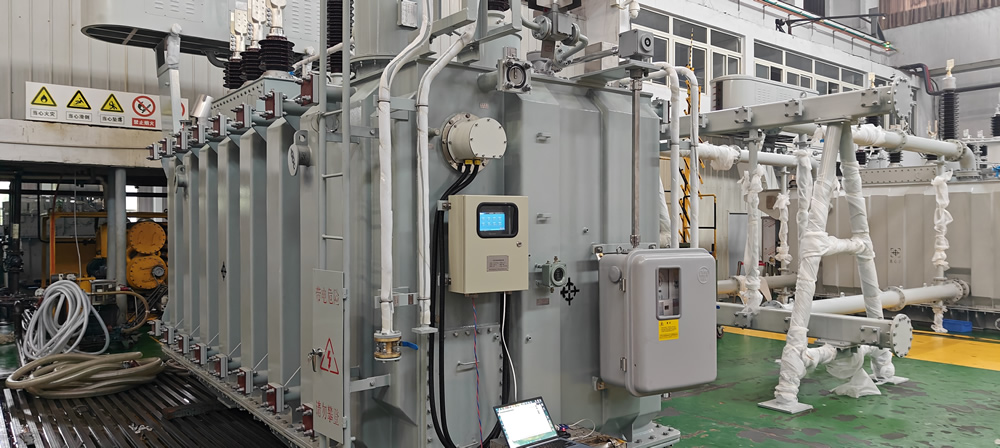
3. Ten Mainstream Transformer Temperature Monitoring Methods
-
Fluorescence Fiber Optic Temperature Monitoring
Technical Principle: Fluorescence fiber optic technology uses the phenomenon of fluorescent decay in rare-earth-doped crystals or glasses located at the tip of an optical fiber. When excited by a pulsed light source, the sensor emits fluorescence, and the decay time is directly correlated with temperature. This decay is measured by an optoelectronic interrogator, providing a direct, precise, and interference-free temperature reading.
Advantages:
- True Winding Hotspot Measurement: Sensors can be embedded directly into transformer windings, providing real-time monitoring of the actual hottest points, rather than relying on indirect oil or surface readings.
- Immunity to Electromagnetic Interference: As a completely optical system, it is unaffected by strong magnetic fields, high voltages, or radio frequencies—making it perfect for high-voltage substations and GIS environments.
- Multipoint and Distributed Capability: A single interrogator can manage dozens of fiber probes, enabling comprehensive multi-location monitoring within one transformer or across several devices.
- Long-term Stability and Reliability: No moving parts, corrosion- and moisture-resistant, and unaffected by oil or chemical environment. Service life typically matches or exceeds the transformer itself.
- Non-metallic and Intrinsically Safe: Sensors are glass or polymer-based, eliminating electrical conduction and explosion risks, and making them safe for hazardous areas.
- Fast Response and High Accuracy: Measurement resolution up to 0.1°C and response time below 1 second, allowing immediate detection of abnormal temperature rises or hot spots.
- Digital Integration: Can be directly integrated with SCADA, DCS, or asset management platforms for real-time diagnostics, alarms, and data analytics.
Limitations:
- Requires specialized installation during transformer manufacturing or overhaul; retrofitting old transformers can be complex.
- Initial investment is higher than classic sensors, but justified by superior performance and reduced failure risk.
Typical Applications: Power transformer windings, shunt reactors, GIS, large generator step-up transformers, digital substations, and environments with extreme EMI or safety requirements.
Development Trend: With the growth of smart grids, digital substations, and the need for predictive maintenance, fluorescence fiber optic technology is becoming the global standard for high-value transformer monitoring. Its role is expanding into distributed energy resources and smart asset management platforms.
-
Platinum Resistance Thermometers (PT100/RTD)
Technical Principle: PT100 sensors use the property that the electrical resistance of platinum increases linearly with temperature. The most common configuration is a thin platinum wire wound in a ceramic or glass core, with a resistance of 100 ohms at 0°C. The change in resistance is measured to determine temperature.
Advantages:
- High Accuracy and Repeatability: PT100 sensors are known for their precise and linear output, with typical accuracy up to ±0.1°C after calibration.
- Wide Temperature Range: Capable of measuring from -200°C to +600°C, suitable for most power transformer environments.
- Long-term Stability: Platinum is chemically inert and highly stable over time, ensuring consistent readings for years.
- Industry Standardization: PT100s are globally standardized (IEC 60751), making them easy to integrate and replace.
- Cost-effective: Lower cost than optical or wireless systems, and widely available from multiple vendors.
Limitations:
- Cannot be installed inside windings; typically measure only oil, surface, or core temperature.
- Vulnerable to strong electromagnetic interference, especially in high-voltage substations, leading to potential signal errors or failure.
- Requires shielded wiring and careful grounding to avoid induced voltages.
Typical Applications: Transformer oil temperature, tank surface temperature, ambient temperature, and auxiliary equipment monitoring.
Development Trend: Remains widely used for oil and ambient monitoring, but for internal winding hotspots, PT100 is gradually being replaced by fiber optic or hybrid approaches in advanced installations.
-
Thermocouple Sensors
Technical Principle: Thermocouples generate a voltage at the junction of two dissimilar metals, which varies with temperature. This voltage is measured and converted to a temperature reading based on known calibration curves (e.g., Type K, J, T, E).
Advantages:
- Rugged and Simple: No moving parts, robust construction, and can withstand vibration, mechanical shock, and harsh environments.
- Wide Temperature Range: Depending on type, can measure from -200°C up to +1800°C.
- Fast Response: Thin wires and junctions enable rapid reaction to temperature changes.
- Low Cost and Easy Replacement: Simple construction makes them inexpensive and easily replaced in the field.
Limitations:
- Lower accuracy and sensitivity compared to PT100 or fiber optic systems, especially at low temperatures.
- Highly susceptible to electromagnetic interference, especially in high-voltage environments.
- Signal degradation over long cable runs, and requires reference junction compensation.
- Cannot be placed inside windings for direct hotspot measurement.
Typical Applications: Transformer oil temperature, surface measurement, and backup sensing in auxiliary systems.
Development Trend: Still used in legacy systems and cost-sensitive applications, but gradually replaced by more advanced solutions in critical asset monitoring.
-
Infrared (IR) Temperature Sensors
Technical Principle: IR sensors measure thermal radiation emitted by objects. The sensor detects infrared energy, converts it into an electrical signal, and calculates temperature based on emissivity and calibration.
Advantages:
- Non-contact Measurement: Can measure the temperature of surfaces remotely, without the need for direct contact or penetration.
- Fast Response Time: Provides near-instantaneous readings, making it suitable for rapid scanning or alarm applications.
- Safe for Live Equipment: Enables monitoring of energized transformers without physical exposure.
- Adaptable for Multiple Points: Infrared cameras or scanners can map the temperature of entire surfaces or multiple devices.
Limitations:
- Cannot measure internal winding or oil temperature; only surface or accessible areas.
- Accuracy depends on correct emissivity settings, cleanliness of the surface, and environmental factors (dust, fog, oil film).
- Not suitable for continuous embedded monitoring.
Typical Applications: Periodic inspection of transformer tanks, bushings, radiators, and substation components using IR guns or thermal cameras.
Development Trend: Increasingly used in condition-based maintenance programs, often in conjunction with fiber optic or electronic monitoring for comprehensive coverage.
-
Bimetallic Dial Thermometers
Technical Principle: These mechanical devices use a coil made of two metals with different expansion rates. As temperature changes, the coil bends, moving a needle across a calibrated dial.
Advantages:
- Simple and Reliable: No external power or electronics required; mechanical operation is immune to electrical failure.
- Direct Local Readout: Provides an immediate visual indication of temperature to field personnel.
- Cost-effective: Inexpensive to manufacture, install, and maintain.
- Long Service Life: Often works decades with minimal maintenance.
Limitations:
- Cannot record or transmit data remotely; no digital output or integration with SCADA.
- Limited accuracy (typically ±2°C or worse) and prone to reading errors if exposed to vibration or mechanical shock.
- Only measures surface or oil temperature, not internal winding hotspots.
Typical Applications: Traditional transformers, backup or redundant local indication, and as a reference for electronic systems.
Development Trend: Still used as a backup or in developing regions; increasingly replaced by digital and remote systems in modern substations.
-
Fiber Bragg Grating (FBG) Temperature Sensors
Technical Principle: FBG sensors are written into optical fibers as periodic refractive index variations. When light passes through, only a specific wavelength is reflected, and this Bragg wavelength shifts with temperature and strain. By monitoring the wavelength shift, precise temperature readings are obtained.
Advantages:
- Fully Optical, EMI-immune: Like fluorescence fiber, FBGs are immune to electromagnetic and RF interference, suitable for high-voltage environments.
- Multiplexing Capability: Multiple FBGs can be inscribed along a single fiber, allowing distributed temperature sensing over long distances.
- High Sensitivity and Fast Response: Accurate and rapid temperature measurement, suitable for dynamic monitoring.
- Long Lifespan: Fiber-based sensors are durable, corrosion-resistant, and operate reliably in harsh conditions.
- Compact Structure: Small, lightweight, and easy to install in confined spaces.
Limitations:
- FBG sensors are sensitive to both strain and temperature, so mechanical isolation or compensation is needed for pure temperature measurement.
- Generally less robust for continuous embedding inside transformer windings compared to fluorescence fiber probes; more commonly used for surface or distributed applications.
- Requires precise optical interrogators, which can add system complexity.
Typical Applications: Distributed temperature monitoring along transformer tanks, cables, substations, and in research or demonstration projects.
Development Trend: Growing adoption in smart grid projects and environmental monitoring, with ongoing research to improve robustness for transformer windings.
-
Electronic Temperature Transmitters
Technical Principle: These devices use an embedded sensor (typically PT100, thermistor, or thermocouple) connected to an electronic transmitter that converts the signal to a standard analog (4-20mA) or digital (RS485, Modbus) output for remote monitoring.
Advantages:
- Remote Digital Output: Data can be transmitted over long distances, integrated with SCADA, DCS, or digital relay systems.
- Configurable Alarms and Diagnostics: Many transmitters have programmable settings, self-testing, and alarm relay outputs for safety automation.
- Flexible Mounting: Available in immersion, surface, or air-sensing models for various transformer components.
- Industrial Standardization: Compatible with existing control and automation infrastructure.
Limitations:
- Electronic modules are still vulnerable to EMI, transients, and surge in high-voltage substations.
- No capability for direct winding hotspot monitoring; measures only oil, surface, or ambient temperature.
- Requires auxiliary power and regular calibration checks.
Typical Applications: Oil temperature, cooling system control, transformer ambient monitoring, and integration into digital substations.
Development Trend: Moving towards smart, networked transmitters with cloud connectivity and self-diagnostics as part of digital grid evolution.
-
Wireless Temperature Sensors (IoT)
Technical Principle: These sensors use wireless communication (Zigbee, LoRa, NB-IoT, WiFi, or proprietary protocols) to transmit temperature readings to a central gateway or cloud platform. The sensor itself can be based on thermistor, RTD, or even fiber optic principles.
Advantages:
- Easy Retrofit and Installation: No signal wiring needed, perfect for upgrading existing transformers or remote sites.
- Scalable and Flexible: Additional sensors can be added quickly as monitoring needs grow.
- Real-time Data and Analytics: Data can be uploaded to cloud platforms for visualization, AI diagnostics, and predictive maintenance.
- Integration with SCADA/EMS: Wireless gateways can connect seamlessly to utility enterprise systems.
- Battery or Energy Harvesting: Many models can operate for years on a single battery or use energy from temperature gradients.
Limitations:
- Wireless signals can be affected by strong EMI fields, metallic enclosures, or distances inside substations.
- Battery life is limited; periodic maintenance or replacement is required.
- Most sensor nodes measure only surface or oil temperatures, not internal windings.
- Cybersecurity must be managed for critical asset data.
Typical Applications: Retrofit temperature monitoring on aged transformers, distributed substations, and hard-to-wire locations.
Development Trend: Rapidly expanding with the IoT revolution, especially for remote monitoring, but not a full substitute for embedded hotspot sensors in critical transformers.
-
Liquid-in-glass Thermometers
Technical Principle: Classic thermometers use the thermal expansion of colored alcohol or mercury in a sealed glass tube. The liquid expands as temperature increases, rising up a calibrated scale.
Advantages:
- Simple and Maintenance-free: No external power, wiring, or electronics; works reliably for decades.
- Direct Visual Reading: Easily viewed by onsite personnel, provides instant indication of oil or ambient temperature.
- Cost-effective: Among the lowest-cost temperature monitoring solutions.
- Unaffected by EMI: Purely mechanical and optical, so immune to electrical interference.
Limitations:
- Cannot provide digital, remote, or automated data collection.
- Accuracy is limited (typically ±1–2°C), and reading can be affected by parallax errors or scale fading.
- Mercury-based models are hazardous and being phased out globally.
- Only suitable for oil or ambient, not for internal windings.
Typical Applications: Local backup indication, small distribution transformers, and environments where electronic devices are prohibited.
Development Trend: Largely superseded by electronic and optical systems, but still present in legacy installations or as a secondary backup.
-
Simulated Hotspot Algorithms (Thermal Models)
Technical Principle: Rather than direct measurement, these systems estimate the winding hotspot temperature using oil temperature, ambient temperature, load current, and transformer design data. The most common algorithm is based on the IEC 60076-7 thermal model.
Advantages:
- No Need for Complex Installation: Hotspot can be estimated using existing sensors (oil, ambient) and load data.
- Cost-effective for Retrofits: No need to physically open or modify the transformer.
- Useful for Fleet Monitoring: Enables utilities to analyze large numbers of transformers with minimal investment.
- Continuous Improvement: Algorithms can be refined over time with more data or machine learning techniques.
Limitations:
- Accuracy depends on the validity of the thermal model and quality of the input data; typically ±5°C or worse compared to direct measurements.
- Cannot detect local abnormal hotspots, insulation degradation, or partial failures that do not affect bulk oil temperature.
- May miss critical faults in aging transformers or under dynamic load conditions.
Typical Applications: Fleetwide asset management, older transformers, and as a reference for alarm thresholds and load management.
Development Trend: Increasingly used as a supplement to physical sensors, especially with the growth of big data analytics and digital twin platforms.
-
Integrated Smart Monitoring Systems
Technical Principle: These platforms combine multiple physical temperature sensors (fiber optic, RTD, electronic, wireless) with advanced software, analytics, and communication protocols. They provide asset health indices, predictive diagnostics, and maintenance recommendations.
Advantages:
- Comprehensive Asset View: Monitors not only temperature, but also gas, moisture, load, partial discharge, and other key parameters.
- Predictive Maintenance: Uses AI and historical data to forecast failures and optimize maintenance schedules.
- Alarm and Notification Automation: Sends alerts via SMS, email, or control room systems for immediate action.
- Seamless Integration: Works with utility SCADA, DCS, and enterprise asset management platforms.
- Remote and Centralized Monitoring: Operators can monitor hundreds of transformers from a single dashboard.
Limitations:
- Higher initial investment and integration complexity.
- Requires regular software updates, cybersecurity management, and skilled personnel for effective operation.
- Dependent on the reliability of all underlying sensors and communication networks.
Typical Applications: Large utility fleets, critical substations, industrial plants, and digital substations.
Development Trend: Moving towards cloud-based asset management, advanced analytics, and integration with digital twins for a fully intelligent grid.
4. In-depth Exploration of Fluorescence Fiber Optic Temperature Monitoring
Why is fluorescence fiber optic temperature monitoring considered the gold standard for transformer hotspots?
Fluorescence fiber optic sensors are uniquely capable of directly measuring the true internal temperature of transformer windings. Unlike oil or surface sensors, which only reflect bulk or ambient conditions, fluorescence fiber can pinpoint the actual hottest spot in real time, even during rapid load changes or abnormal events. This allows for immediate detection of dangerous overheating, supporting faster interventions and reducing catastrophic failure risks.
Furthermore, fiber optic systems are immune to the intense electromagnetic fields and voltages present in modern digital substations—environments where traditional electrical sensors often fail or give inaccurate readings. Their non-metallic construction eliminates electrical conduction paths, ensuring intrinsic safety even in explosive or high-voltage atmospheres.
With distributed multiplexing, a single system can monitor dozens of points in one or several transformers, providing a comprehensive thermal map. The digital output integrates natively with SCADA, DCS, and asset management systems, supporting automation, alarms, and advanced analytics. Long-term stability, minimal maintenance, and a service life matching the transformer itself further cement its status as the industry benchmark.
What are the broader advantages of fluorescence fiber optic temperature monitoring in other industries?
Beyond transformers, fluorescence fiber optic temperature monitoring has found widespread adoption in multiple advanced sectors:
- Medical Imaging (MRI, CT): Fluorescence fiber probes are the only practical solution for real-time temperature monitoring inside magnetic resonance imaging (MRI) environments. Their immunity to electromagnetic fields and non-metallic construction prevent image artifacts and ensure patient and equipment safety.
- Oil, Gas, and Petrochemicals: Fiber optic systems are deployed for distributed temperature sensing (DTS) along pipelines, storage tanks, and refineries. They detect leaks, process upsets, and thermal anomalies over long distances, even in hazardous or explosive atmospheres.
- Rail and Urban Transit: Fiber optic cables embedded in tracks or infrastructure can monitor temperature, stress, and safety conditions in real time, supporting predictive maintenance and reducing service disruptions.
- Data Centers: In high-density server rooms, fluorescence fiber systems provide granular temperature mapping, ensuring optimal cooling, preventing hotspots, and optimizing energy efficiency.
- Semiconductor Manufacturing: Cleanroom and wafer process environments require high-accuracy, EMI-immune temperature control—precisely where fluorescence fiber excels, enabling process stability and yield improvement.
- Nuclear Power: In nuclear reactors and spent fuel storage, fiber optic sensors withstand intense radiation and EMI, delivering safe, accurate, and long-term temperature monitoring.
- Renewable Energy: Wind turbine generators, solar inverters, and battery banks increasingly use fiber optic sensors for internal thermal management, supporting longer lifespans and higher safety.
The unmatched combination of immunity to electrical noise, high-density multipoint capability, and resistance to harsh environments positions fluorescence fiber optic technology as a foundation for next-generation industrial monitoring.
What are the key considerations for selecting a transformer temperature monitoring system?
The optimal choice depends on your operational requirements, budget, and risk profile. Key factors include:
- Measurement Location: Do you need to monitor winding hotspots, oil, surface, or ambient temperatures?
- Electromagnetic Environment: Is your transformer in a high-voltage or EMI-prone setting?
- Integration Needs: Will the data be used for SCADA, DCS, or cloud analytics?
- Maintenance and Service Life: How often can you service or replace sensors?
- Budget and Lifecycle Cost: Consider both upfront and long-term costs, including downtime and potential failure risks.
- Regulatory and Safety Compliance: Are there specific standards or insurance requirements to meet?
For critical, high-value transformers and digital substations, fluorescence fiber optic or hybrid smart monitoring systems are increasingly the preferred solution. For secondary, low-risk, or legacy assets, a mix of PT100, thermocouple, or wireless solutions may be appropriate.
How is data from advanced temperature monitoring systems used in asset management?
Modern temperature monitoring systems are not just for alarm and protection—they are crucial components of predictive maintenance and digital asset management. Continuous temperature data feeds into AI algorithms, digital twins, and health indices, enabling utilities to:
- Predict insulation aging and remaining lifespan
- Optimize maintenance schedules based on true asset condition
- Reduce unplanned outages by early detection of developing faults
- Support grid automation, remote diagnostics, and energy efficiency programs
- Meet regulatory and insurance compliance with automated reporting
This data-driven approach is transforming how utilities and industries manage critical infrastructure, reducing costs and improving reliability.
What future trends are shaping transformer temperature monitoring?
The next decade will see continued convergence of fiber optic sensing, IoT wireless, advanced analytics, and cloud-based asset management. Key trends include:
- Wider deployment of fluorescence fiber optic systems in digital substations and distributed energy resources
- Integration of multiparameter sensing (temperature, moisture, gas, vibration) into unified smart platforms
- Adoption of AI and machine learning for predictive diagnostics
- Growth of cloud and edge computing for real-time, fleetwide monitoring
- Enhanced cybersecurity and data governance for critical infrastructure
Utilities and industries that leverage these trends will gain significant advantages in reliability, efficiency, and compliance.
Contact & Consultation
If you are planning a new project, upgrading assets, or require technical advice on the best transformer temperature monitoring solution for your needs, our expert team is ready to help. We offer unbiased consulting, system selection guidance, and integration support for all major sensor technologies.

Fiber optic temperature sensor, Intelligent monitoring system, Distributed fiber optic manufacturer in China
 |
 |
 |