 INNO fibre optic temperature sensors ,temperature monitoring systems.
1. Why Does High Voltage Switchgear Need Professional Temperature Monitoring Systems?

High voltage switchgear operates under extreme electrical conditions where thermal management directly impacts system reliability and safety. Understanding why professional monitoring is essential helps facility managers make informed decisions about equipment protection investments.
1.1 What Severe Consequences Can Switchgear Overheating Failures Cause?
Thermal failures in high voltage switchgear can trigger catastrophic events including electrical fires, equipment explosions, and prolonged power outages affecting critical infrastructure. According to industry studies, approximately 35-40% of electrical distribution failures originate from thermal issues at connection points. These failures typically result in emergency shutdowns, costly repairs ranging from $50,000 to $500,000, and potential safety hazards to personnel working in substations or industrial facilities.
1.2 What Limitations Do Traditional Infrared Thermography and Temperature-Indicating Labels Have?
Conventional thermal inspection methods present significant operational challenges. Infrared thermography requires periodic manual inspections, cannot detect gradual temperature increases between inspection cycles, and demands facility shutdowns or specialized safety procedures for energized equipment scanning. Temperature-indicating wax labels only provide binary threshold alerts without precise temperature data and cannot transmit real-time information to control systems. These limitations leave critical windows where developing thermal faults go undetected.
1.3 How Does Online Temperature Monitoring Reduce Switchgear Operational Costs?
Continuous online temperature monitoring systems deliver 24/7 surveillance, enabling condition-based maintenance strategies that reduce unnecessary inspections by 60-70%. Real-time alerts allow maintenance teams to address thermal anomalies during planned outages rather than responding to emergency failures. Studies show facilities implementing comprehensive monitoring reduce total maintenance costs by 25-40% while improving equipment availability from typical 98% to 99.5% or higher.
1.4 Which Industries and Applications Have Mandatory Switchgear Temperature Monitoring Requirements?
Regulatory frameworks in data centers, hospitals, petrochemical facilities, and grid substations increasingly mandate continuous thermal monitoring for critical electrical distribution equipment. IEEE standards and NFPA 70B maintenance guidelines recommend online monitoring for substations rated 15 kV and above. Financial institutions, semiconductor manufacturing, and pharmaceutical production facilities require monitoring to meet business continuity and quality assurance standards.
2. Which Critical Points in High Voltage Switchgear Require Temperature Monitoring?
Identifying the most vulnerable thermal points ensures monitoring resources focus on locations where failures most frequently originate and cause maximum operational impact.
2.1 Why Are Busbar Connection Points the Most Vulnerable Thermal Weak Points?
Busbar connections experience the highest electrical current densities and mechanical stress from thermal cycling, making them prime locations for resistance increases. Bolted connections can loosen over time due to vibration and thermal expansion, creating micro-gaps that generate excessive heat. Temperature sensors should monitor each phase at main busbar joints, especially connections between different conductor materials or where busbar sections transition.
2.2 How Does Circuit Breaker Contact Temperature Monitoring Prevent Poor Contact Conditions?
Circuit breaker contact degradation develops gradually through arcing erosion and contact surface oxidation. Monitoring circuit breaker terminals provides early warning before contact resistance reaches levels that impair breaking capacity or cause welding. Temperature differentials between phases often indicate uneven contact pressure requiring mechanical adjustment before failure occurs.
2.3 What Warning Signals Indicate Abnormal Cable Termination Temperature Rise?
Cable terminations fail when insulation degrades from sustained elevated temperatures or when crimp connections loosen. Warning signals include temperature increases of 10°C or more above ambient within short periods, temperatures exceeding manufacturer specifications (typically 70-90°C), or significant phase-to-phase temperature imbalances exceeding 15°C that suggest connection quality differences.
2.4 How Does Disconnect Switch Blade Contact Temperature Affect Power Supply Reliability?
Disconnect switch blade contacts oxidize and lose spring tension over operational years, increasing contact resistance. Monitoring disconnect switch contacts prevents failures that typically occur during switching operations when degraded contacts arc and weld. Temperature trending identifies deteriorating switches before they fail during critical load transfers or emergency switching procedures.
3. How Do Fluorescent Fiber Optic Temperature Sensors Solve High Voltage Measurement Challenges?
Traditional metal-based temperature sensors cannot operate safely in high voltage environments, creating the need for specialized measurement technologies that function reliably while maintaining electrical isolation.
3.1 Why Can’t Metal Sensors Be Used in High Voltage Strong Electric Field Environments?
Conventional thermocouples and RTDs contain conductive elements that create electrical paths from high voltage components to ground, causing dangerous fault currents and measurement errors. Metal sensors also experience electromagnetic interference that corrupts temperature readings by 10-50°C in strong electric fields. Fiber optic temperature sensors eliminate these problems through completely dielectric construction that maintains infinite electrical resistance.
3.2 How Strong Is the Electromagnetic Interference Immunity of Fiber Optic Temperature Sensors?
Fluorescent fiber optic sensors transmit temperature information through optical signals rather than electrical currents, providing complete immunity to electromagnetic fields up to 100 kV/m that would saturate electronic sensors. This immunity ensures accurate measurements adjacent to busbars carrying thousands of amperes and in switchgear experiencing switching transients exceeding 10 kV/μs. Independent testing confirms measurement accuracy remains within ±1°C regardless of electromagnetic environment.
3.3 How Does ±1°C Measurement Accuracy Meet Switchgear Monitoring Requirements?
Thermal fault progression typically involves temperature increases of 20-40°C above normal operating levels before failure occurs. The ±1°C accuracy specification provides sufficient resolution to detect developing faults at early stages while filtering normal temperature fluctuations from load variations. This precision enables trending analysis that identifies gradual resistance increases over weeks or months before they become critical.
3.4 How Does All-Dielectric Construction Achieve Intrinsic Safety and Long-Term Stability?
The completely non-metallic construction of fluorescent fiber sensors eliminates potential ignition sources in hazardous environments and prevents galvanic corrosion that degrades sensor accuracy over time. Glass fiber and ceramic phosphor sensing elements maintain calibration stability within ±0.5°C over 10+ year service periods, eliminating recalibration requirements that add maintenance costs with electronic sensors.
4. What Are the Differences in Temperature Monitoring Solutions for Various Voltage Levels?
Monitoring system design must account for voltage class specific considerations including insulation coordination, safety clearances, and typical failure mechanisms that vary across distribution voltage levels.
4.1 Which Temperature Points Need Monitoring in 10kV Medium Voltage Switchgear?
Standard 10kV switchgear monitoring configurations include 3-6 sensors per bay: three sensors on main busbar phase connections, two sensors on circuit breaker line-side terminals, and one sensor on cable termination. Indoor metal-clad switchgear benefits from additional sensors on load-side connections and transformer primary terminals where current concentration increases thermal stress.
4.2 How to Design Temperature Monitoring Solutions for 35kV Distribution Equipment?
35kV switchgear systems require extended safety clearances and typically employ gas-insulated or air-insulated designs with larger conductor spacing. Monitoring priorities include outdoor disconnect switches exposed to environmental temperature variations, transformer bushings experiencing combined electrical and thermal stress, and main busbar sections in three-phase enclosures. Sensor quantities typically range from 6-12 per bay depending on configuration complexity.
4.3 What Special Monitoring Requirements Exist for 110kV and Higher Voltage Equipment?
Transmission voltage 110kV+ switchgear introduces challenges including physical scale requiring fiber optic cable runs exceeding 50 meters, outdoor installations requiring weatherproof sensor housings rated for UV exposure and -40°C to +80°C ambient temperatures, and retrofit installations on energized equipment requiring specialized safety procedures. Monitoring systems must integrate with SCADA infrastructure and provide redundant communication paths for high-reliability applications.
4.4 Does Low Voltage Distribution Equipment (400V) Need Fiber Optic Temperature Monitoring?
While 400V low voltage switchgear permits electronic sensor use, fiber optic monitoring offers advantages in high-current applications (>1000A), locations with severe electromagnetic interference from VFDs or welding equipment, and facilities requiring intrinsically safe installations near flammable materials. Cost considerations typically favor electronic sensors for standard low-voltage applications unless special conditions exist.
5. How to Select Appropriate Multi-Channel Temperature Monitoring System Configurations?
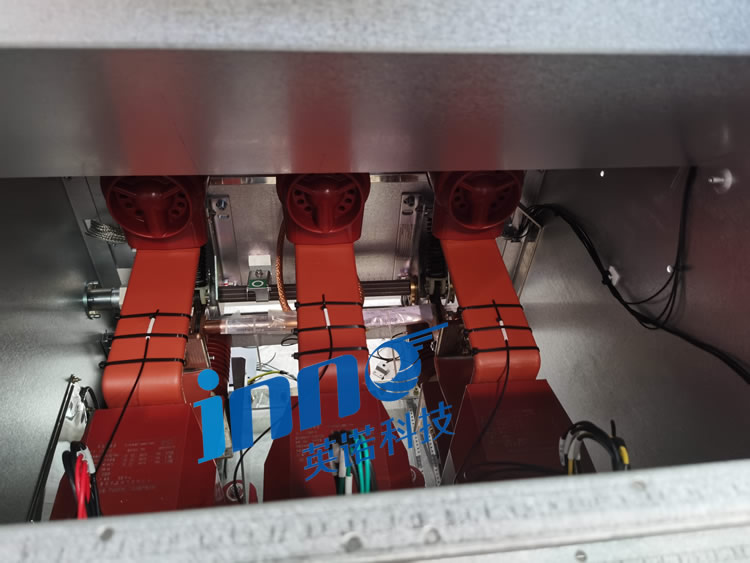
Right-sizing monitoring channel capacity optimizes initial investment while providing expansion capability as facility monitoring needs grow or as additional critical equipment is added to monitoring coverage.
5.1 How Many Temperature Monitoring Channels Does a Single Switchgear Bay Require?
Typical switchgear bay monitoring requires 4-8 channels: three channels for three-phase main busbar connections, 1-2 channels for circuit breaker terminals, 1-2 channels for cable terminations, and optional channels for auxiliary connections or transformer terminals. High-current applications (>2000A) or critical loads may warrant doubled monitoring with redundant sensors on key points.
5.2 How Do 1-64 Channel Systems Match Different Substation Scales?
Small commercial facilities typically deploy 4-8 channel monitoring systems covering single switchgear lineups. Industrial substations with 3-6 switchgear bays utilize 16-32 channel configurations. Large utility substations or data center electrical distribution systems require 32-64 channel platforms to monitor multiple voltage levels and redundant power paths. Modular system architectures allow incremental expansion from initial installations to full facility coverage over time.
5.3 What Factors Determine Fiber Optic Probe Diameter and Length Customization?
Fiber optic probe diameter selection balances mechanical flexibility for installation routing versus durability for high-vibration environments. Standard 2mm diameter probes suit most applications, while 1mm probes accommodate tight routing through cable glands, and 3mm probes provide enhanced durability for outdoor or high-vibration locations. Probe length customization accounts for cable routing distance from monitored points to switchgear cable entry, typically ranging from 1-5 meters with longer custom lengths available for outdoor installations.
5.4 What Application Scenarios Does the -40°C to 260°C Temperature Measurement Range Cover?
The -40°C to 260°C range accommodates extreme environmental conditions including outdoor Arctic installations at the low end and fault conditions approaching insulation thermal limits at the high end. Normal switchgear operates 20-90°C with alarm thresholds set at 90-120°C and emergency thresholds at 120-150°C. The extended range provides safety margin and enables sensor reuse across different applications from refrigerated facilities to industrial furnace electrical feeds.
6. What Are the Key Implementation Points for Installing Switchgear Temperature Monitoring Systems?
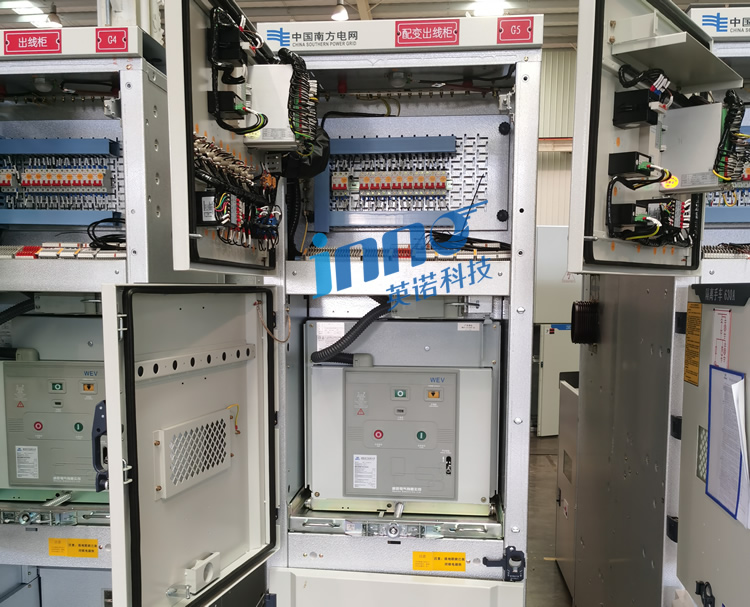
Proper installation techniques ensure accurate measurements, long-term reliability, and compliance with electrical safety standards while minimizing impact on existing equipment operation.
6.1 How to Correctly Mount Fiber Optic Probes on Energized Busbars?
Fiber probe installation on energized busbars requires specialized mounting hardware that maintains thermal contact while preserving electrical isolation. Spring-loaded clips or adhesive-backed mounting pads with thermal interface material ensure consistent thermal coupling. Probe tips should contact flat busbar surfaces cleaned of oxidation, with sensor orientation perpendicular to current flow to minimize electromagnetic field effects on fiber routing. All mounting hardware must be rated for operating voltage and temperature.
6.2 What Sealing Considerations Are Important When Routing Fiber Through Cabinet Walls and Barriers?
Cable entry through switchgear enclosures must maintain IP protection ratings (typically IP54-IP65) and prevent moisture ingress while allowing fiber routing without excessive bending stress. Specialized fiber optic cable glands with silicone or EPDM seals accommodate small fiber diameters while providing environmental sealing. Entry points should avoid sharp edges that could damage fiber jackets, and routing should maintain minimum bend radius (typically 10x cable diameter) to prevent optical signal loss.
6.3 Can Fluorescent Fiber Optic Sensors Be Installed on Energized Equipment Without Power Interruption?
The all-dielectric construction of fluorescent fiber sensors permits live installation using appropriate safety procedures and personal protective equipment. Installation on energized equipment follows hot-work permitting requirements with qualified electrical workers maintaining appropriate clearance distances for voltage class. Sensor mounting hardware installation typically requires 10-30 minutes per point with proper tools and preparation, enabling monitoring system deployment without outage costs.
6.4 Where Should Temperature Transmitters Be Located for Optimal Performance?
Temperature monitoring transmitters should mount in climate-controlled environments within 100 meters of fiber optic probes for standard installations, with longer distances requiring optical budget calculations. Control room or relay panel mounting provides stable ambient temperature (15-30°C) and access for commissioning and maintenance. Transmitter locations must consider communication infrastructure access for data integration and power supply availability with appropriate circuit protection.
7. How to Integrate Temperature Data with Electrical Distribution Automation Systems?
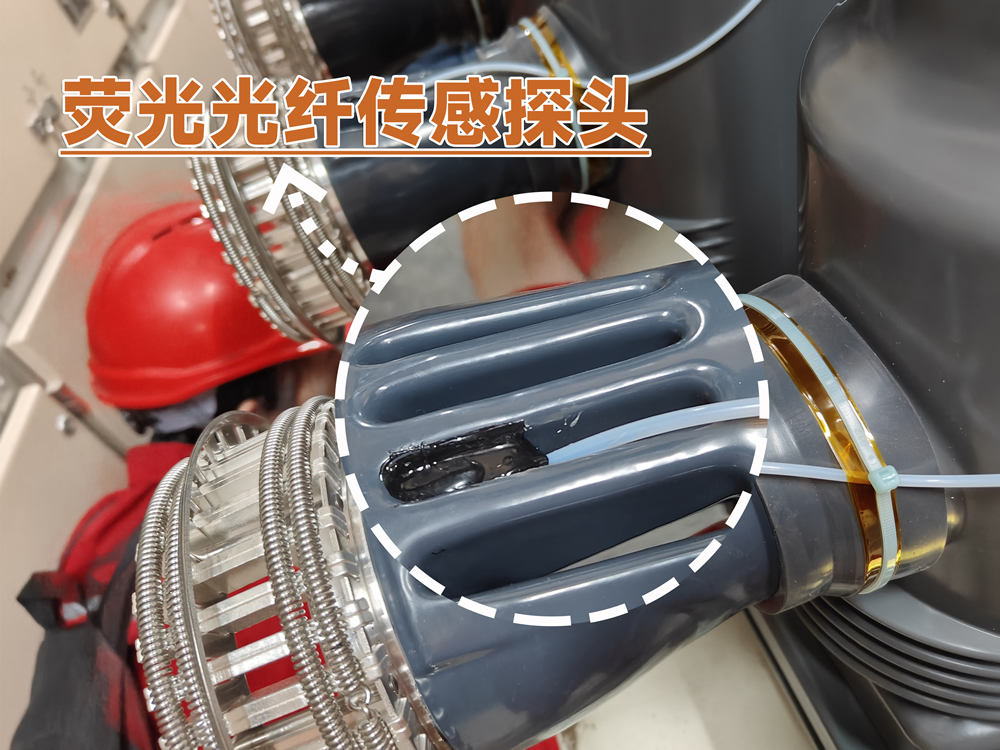
Seamless integration with supervisory control systems enables centralized monitoring, automated alarm handling, and correlation of thermal conditions with electrical load profiles for comprehensive asset management.
7.1 What Communication Protocols Are Supported for SCADA System Integration?
Modern temperature monitoring systems provide Modbus RTU/TCP, DNP3, IEC 61850, and OPC UA protocol support for utility and industrial SCADA integration. Ethernet connectivity enables direct network integration with 100Mbps bandwidth for multi-channel data transmission. Protocols should be selected based on existing automation infrastructure with IEC 61850 preferred for new utility installations and Modbus TCP common in industrial facilities. Multiple simultaneous protocol support allows parallel integration with facility management systems and equipment-specific monitoring platforms.
7.2 How to Set Reasonable Temperature Alarm Thresholds and Staged Response Strategies?
Effective alarm threshold configuration implements multi-stage escalation: Pre-alarm at 10-15°C above normal operating temperature for awareness, Warning alarm at manufacturer thermal class limits (typically 90-105°C) triggering increased monitoring, and Critical alarm at 120-130°C requiring immediate investigation. Threshold settings should account for ambient temperature variations, load cycling patterns, and equipment-specific manufacturer recommendations. Rate-of-rise alarms detecting 5°C increase within 15-30 minutes provide early fault detection before absolute thresholds are reached.
8. Real Case Study: Typical High Voltage Switchgear Temperature Monitoring Project Analysis
A large manufacturing facility implemented comprehensive monitoring on their 13.8kV distribution system serving critical production lines requiring 99.98% electrical availability. The installation included 48 fluorescent fiber optic temperature sensors monitoring six switchgear lineups with eight channels per lineup covering main busbars, circuit breakers, and transformer connections.
Project Implementation Details
Sensors were installed during a planned outage using hot-stick mounting techniques on select energized sections under safety supervision. The system detected a developing fault on a circuit breaker line-side connection showing gradual temperature increase from 65°C to 95°C over three weeks. Temperature trending correlated with load patterns indicated loose connection rather than overload condition.
Results and Return on Investment
Planned maintenance during scheduled outage corrected the connection before failure occurred, avoiding estimated $280,000 in production losses from unplanned outage. Total monitoring system investment of $45,000 achieved payback in a single prevented failure while providing ongoing protection across the facility. Annual inspection costs reduced 40% by transitioning from quarterly thermal imaging to condition-based inspections triggered by monitoring data.
9. How to Achieve Predictive Maintenance Through Temperature Monitoring?
Temperature trending transforms monitoring data into actionable maintenance insights that optimize resource allocation and extend equipment service life through timely interventions before failures develop.
Temperature Trend Analysis and Fault Prediction Methods
Historical temperature trending establishes equipment-specific baselines accounting for load variations and seasonal ambient changes. Statistical analysis identifies deviations exceeding three standard deviations from normal patterns, triggering investigations before alarm thresholds are reached. Trending periods should span multiple load cycles (typically 30-90 days) to differentiate normal variations from developing faults. Machine learning algorithms can analyze multi-point data to detect patterns indicating specific failure modes.
Correlation Between Load Current and Temperature for Connection Health Assessment
Thermal performance analysis correlates temperature rise versus load current to calculate effective connection resistance. Healthy connections show linear temperature-current relationships, while developing faults exhibit exponential temperature increases or phase imbalances under load. Periodic resistance calculations enable trending of degradation rates and remaining service life estimation for planned replacement before emergency failure.
10. What Are the Advantages of Choosing Solutions from Established Manufacturers?
Selecting monitoring systems from experienced manufacturers ensures product reliability, technical support quality, and long-term availability of replacement parts critical for multi-decade switchgear service life.
Quality Standards and Certification Requirements
Reputable manufacturers provide products certified to IEC 61010 electrical safety standards, UL listings for North American installations, and CE marking for European markets. Temperature monitoring systems should meet IEC 60255 for protective relay environments and IEEE standards for utility applications. Factory calibration certificates traceable to national standards ensure measurement accuracy verification.
Technical Support and Long-Term Service Capabilities
Established manufacturers offer engineering support during system design, commissioning assistance for complex installations, and technical service throughout product lifecycle. Access to application engineers familiar with utility and industrial requirements ensures optimal system configuration. Long-term parts availability and backward compatibility for system expansions protect monitoring infrastructure investments over 15-20 year operational horizons typical of electrical distribution equipment.
Disclaimer
Professional Installation Required: High voltage switchgear temperature monitoring system installation must be performed by qualified electrical personnel following all applicable electrical codes, safety standards, and manufacturer specifications. This article provides general technical information and does not constitute professional engineering advice for specific installations.
Safety Warning: Working on or near energized high voltage equipment presents serious injury or death risks from electrical shock, arc flash, and other hazards. All work must follow NFPA 70E, OSHA regulations, and employer safety procedures with appropriate personal protective equipment and safety training.
No Warranty: Information presented represents general industry practices as of December 2025. Equipment specifications, standards, and recommended practices evolve over time. Readers should verify current requirements and consult with qualified engineers and equipment manufacturers for project-specific guidance. The author assumes no liability for actions taken based on this information.

Fiber optic temperature sensor, Intelligent monitoring system, Distributed fiber optic manufacturer in China
 |
 |
 |