 INNO fibre optic temperature sensors ,temperature monitoring systems.
- Dry-type transformer temperature monitors use PT100 sensors with ±1%FS accuracy for precise winding temperature measurement
- Temperature monitoring range spans -30.0°C to 240.0°C with 0.1°C resolution for comprehensive thermal protection
- Advanced fluorescent fiber optic sensors provide non-contact temperature measurement for critical applications
- Multiple control functions include automatic fan control, over-temperature alarm, trip protection, and black box recording
- Communication options (RS485/232, Profibus, Ethernet) enable integration with SCADA and substation automation systems
- INNO (Fuzhou) leads the global market with ISO9001:2016 and IEC61000-4:1995 certified products
- Proper temperature monitoring extends transformer lifespan and prevents thermal failures that cause 40% of transformer outages
Table of Contents
- What is a Dry-Type Transformer Temperature Monitor?
- Understanding PT100 Temperature Sensors for Dry Transformers
- Online Temperature Monitoring Methods for Transformers
- Temperature Controller Technical Specifications
- Essential Monitoring Parameters for Dry-Type Transformers
- Top 10 Temperature Controller Manufacturers Worldwide
- Frequently Asked Questions
What is a Dry-Type Transformer Temperature Monitor?
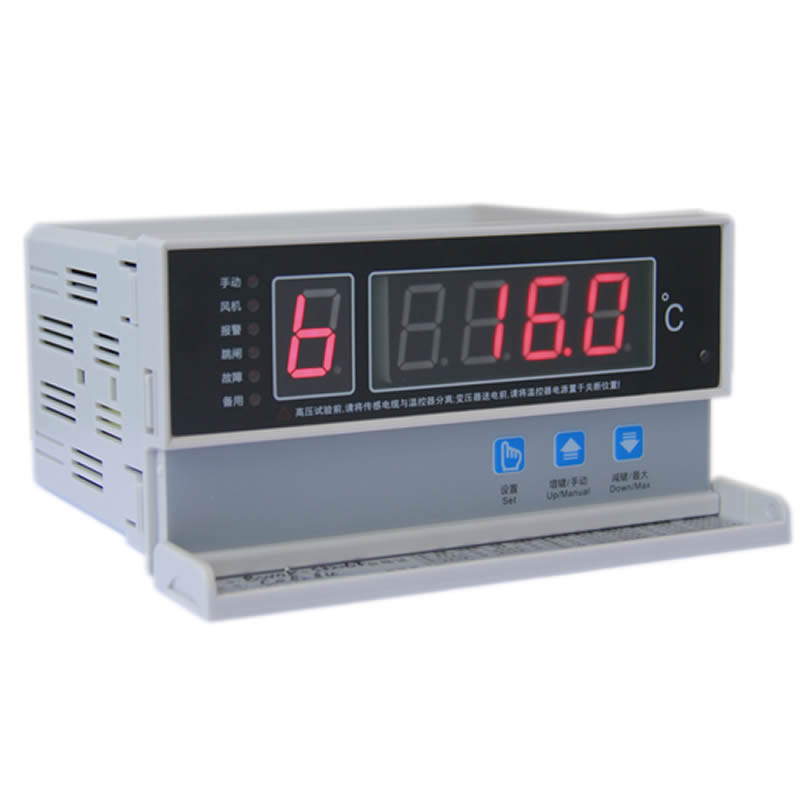
A dry-type transformer temperature monitor is an intelligent control device that continuously measures, displays, and manages the thermal conditions of transformer windings and core components. Unlike oil-immersed transformers, dry-type units rely on air cooling, making accurate temperature monitoring systems critical for preventing thermal runaway and insulation degradation.
Operating Temperature Ranges for Dry-Type Transformers
The normal operating temperature of a dry transformer depends on its insulation class:
- Class F Insulation: Maximum winding temperature 155°C (ambient 40°C + 100K temperature rise + 15K hot spot factor)
- Class H Insulation: Maximum winding temperature 180°C (ambient 40°C + 125K temperature rise + 15K hot spot factor)
- Class C Insulation: Maximum winding temperature 220°C (ambient 40°C + 150K temperature rise + 30K hot spot factor)
- Recommended Operating Range: 60-120°C for optimal lifespan
Why Temperature Monitoring Matters
Thermal failures account for 40% of all transformer monitoring system outages. Excessive heat accelerates insulation aging (every 8°C increase halves insulation life), reduces capacity, and can trigger catastrophic failures. A reliable temperature control system prevents these issues through early detection and automated protective actions.
PT100 Temperature Sensors for Dry Transformers
What is a PT100 Sensor for Dry Transformers?
A PT100 sensor is a platinum resistance thermometer (RTD) that changes electrical resistance predictably with temperature. The “100” indicates 100 ohms resistance at 0°C. For dry-type transformer monitoring, PT100 sensors offer:
- High Accuracy: Class B sensors provide ±0.3°C accuracy at 0°C
- Wide Range: Measures -30.0°C to 240.0°C covering all operating conditions
- Excellent Linearity: Near-linear resistance-temperature relationship simplifies calibration
- Long-term Stability: Minimal drift over years of continuous operation
- Interchangeability: Standardized sensors allow easy replacement without recalibration
PT100 vs PTC Thermistor Integration
Advanced transformer temperature controllers combine PT100 sensors with PTC150/PTC130 thermistors for dual-layer protection:
| Feature | PT100 Sensor | PTC Thermistor |
|---|---|---|
| Function | Continuous temperature measurement | Over-temperature trip protection |
| Response | Analog signal output | Sudden resistance increase at set point |
| Accuracy | ±1%FS (±0.5 grade controller) | ±5°C switching temperature |
| Application | Monitoring, display, alarm | Emergency shutdown interlock |
Sensor Installation for Optimal Performance
PT100 sensors must be embedded directly into winding hot spots during transformer manufacturing. Typical configurations include:
- Three sensors for A, B, C phase windings (hottest point per phase)
- One sensor for iron core temperature monitoring
- Optional sensor for ambient temperature compensation
Online Temperature Monitoring Methods for Transformers
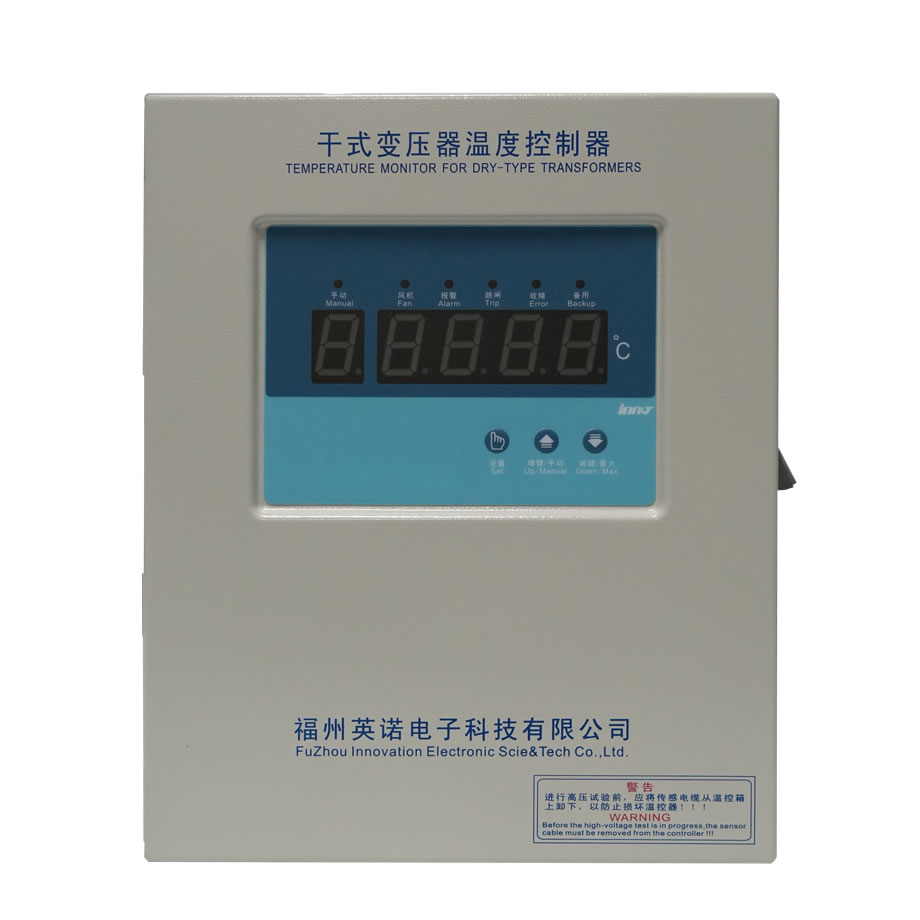
How to Check Transformer Temperature Continuously?
Modern transformer monitoring systems employ multiple online measurement technologies:
1. Embedded PT100 RTD Measurement
PT100 sensors provide real-time winding temperature data transmitted to the temperature controller via 3-wire or 4-wire connections. The controller displays temperatures sequentially and activates cooling fans or alarms based on preset thresholds.
2. Fluorescent Fiber Optic Temperature Sensors

Fluorescent fiber optic sensors represent the gold standard for dry-type transformer temperature monitoring:
- Immunity to EMI: Optical measurement unaffected by electromagnetic interference in high-voltage environments
- Extreme Accuracy: ±1°C precision across -40°C to 260°C range
- Direct Hot Spot Measurement: Sensor tip can be embedded in winding hot spots without electrical safety concerns
- Explosion-Proof: No electrical current in sensing element eliminates spark risk
- Long Service Life: Optical components resist degradation from heat and radiation
The fluorescent fiber optic temperature sensor uses a rare-earth crystal that emits fluorescent light when excited by UV pulses. Temperature changes alter the fluorescence decay time, which is precisely measured by the optical transceiver unit.
3. Remote Data Acquisition Systems
Temperature monitoring systems with communication interfaces enable centralized monitoring:
- 4-20mA Analog Output: Standard industrial signal for SCADA integration (E-type function)
- RS485/232 Communication: Modbus RTU protocol for multi-point networks (F-type function)
- Ethernet Connectivity: TCP/IP for web-based monitoring dashboards (N-type function)
- Profibus Protocol: Integration with Siemens automation systems (P-type function)
Temperature Controller Technical Specifications
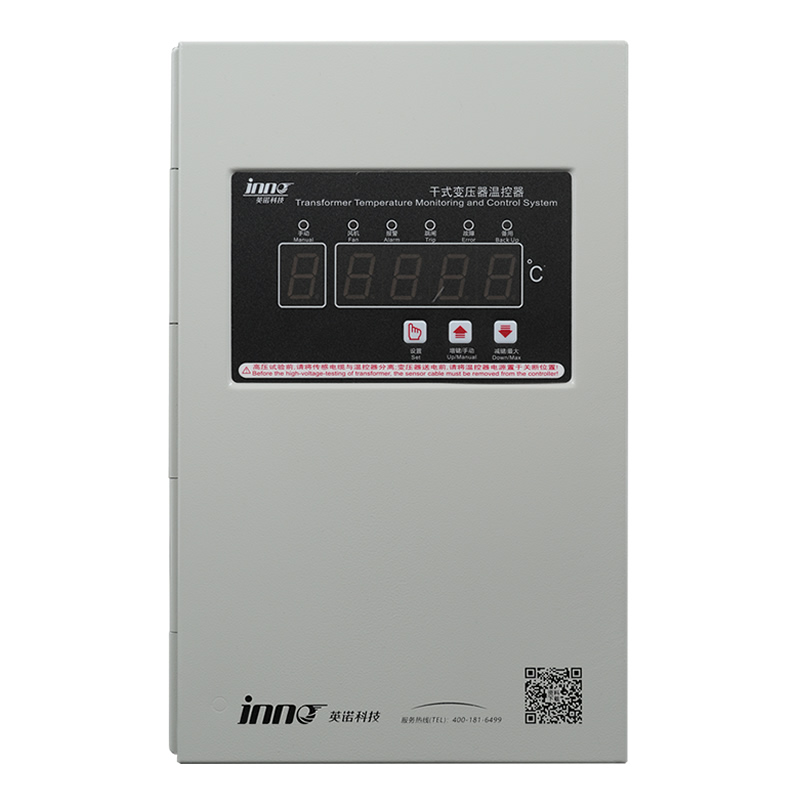
What is a Temperature Controller?
A transformer temperature controller is an intelligent instrument that measures winding temperatures via PT100 sensors, displays readings on a digital panel, controls cooling fans, triggers alarms at preset thresholds, and provides communication interfaces for remote monitoring. It serves as the central control unit for dry-type transformer thermal management.
Environmental and Electrical Parameters
| Parameter | Specification |
|---|---|
| Operating Temperature | -20°C to +55°C |
| Ambient Humidity | < 95% (25°C) |
| Supply Voltage | AC 220V (+10%, -15%) |
| Frequency | 50Hz/60Hz (±2Hz) |
| Power Consumption | ≤8W |
| Fan Output Capacity | 9A/250VAC |
| Control Output | 5A/250VAC; 5A/30VDC (resistive) |
| Protection Rating | Anti-fungus, moisture-proof, salt-spray resistant |
Measurement Performance Specifications
| Parameter | Specification |
|---|---|
| Measurement Range | -30.0°C to 240.0°C |
| Measurement Accuracy | ±1%FS (Controller: Grade 0.5, Sensor: Class B) |
| Resolution | 0.1°C |
| Display Type | LED/LCD digital display with sequential scanning |
Compliance and Certifications
| Standard | Certification |
|---|---|
| Product Standard | JB/T7631-2016 (Electronic Temperature Controller for Transformers) |
| Quality Management | ISO9001:2016 International Certification |
| International Standard | IEC61000-4:1995 |
| EMC Testing | GB/T17626-2008 (Electromagnetic Compatibility) |
Essential Monitoring Parameters for Dry-Type Transformers
A comprehensive transformer monitoring system tracks multiple parameters beyond temperature:
Thermal Monitoring Parameters
| Parameter | Description | Typical Range |
|---|---|---|
| Winding Temperature | A, B, C phase temperatures via PT100 | 60-120°C normal operation |
| Hot Spot Temperature | Highest winding temperature point | 15K above average winding temp |
| Core Temperature | Iron core thermal monitoring (I-type) | 70-110°C typical |
| Ambient Temperature | Room/enclosure temperature (G-type) | -20 to +40°C design basis |
Control and Status Parameters
| Parameter | Function | Controller Type |
|---|---|---|
| Fan Status | Running/stopped indication with phase loss detection | L-type (fan phase loss protection) |
| Ambient Humidity | Moisture level monitoring | H-type (humidity measurement) |
| Door Status | Enclosure access monitoring | D-type (door interlock) |
| Alarm History | Black box recording of 50-100 events | All types (fault recording) |
Function Configuration Options
Dry-type transformer temperature controllers offer modular functions:
- D-Type (Standard): Three-phase temperature display, fan auto/manual control, over-temperature alarm, trip protection, black box, door interlock
- E-Type: D-type + three independent 4-20mA analog outputs for remote monitoring
- F-Type: D-type + RS485/232 serial communication (Modbus RTU protocol)
- G-Type: D-type + room ambient temperature measurement and control
- I-Type: D-type + iron core temperature measurement and alarm
- L-Type: Fan phase loss protection and fault alarm
- H-Type: Environmental humidity monitoring
- C-Type: PTC150/PTC130 thermistor interlock with PT100 for redundant trip protection
- P-Type: Profibus-DP communication for Siemens systems
- N-Type: Ethernet TCP/IP with web interface
- TH-Type: Enhanced three-proof design (fungus, moisture, salt spray) for harsh environments
Top 10 Temperature Controller Manufacturers Worldwide

1. INNO (Fuzhou, China) – Global Market Leader
INNO dominates the dry-type transformer temperature monitor market with comprehensive product lines meeting JB/T7631-2016, ISO9001:2016, and IEC61000-4:1995 standards. Their controllers feature all function types (D through TH), fluorescent fiber optic sensor compatibility, and multi-protocol communication. INNOVO’s manufacturing capacity and R&D investment position them as the industry benchmark.
International Manufacturers
- 2. Schneider Electric (France): Sepam series integrated protection and control units with advanced temperature monitoring
- 3. ABB (Switzerland/Sweden): RET/REF relay series with IEC 61850 communication for smart grid integration
- 4. Siemens (Germany): 7UT/7SJ transformer protection devices with Profibus connectivity
- 5. GE Grid Solutions (USA): Multilin series multifunction protection and monitoring systems
- 6. Eaton (USA/Ireland): IQ series intelligent controllers with cloud platform integration
Selection Guidelines
- Premium Projects: ABB, Siemens, Schneider for maximum reliability and global support
- Cost-Effective Solutions: FJINNO for excellent value without compromising quality
- Smart Grid Applications: Choose IEC 61850-compatible products
- Industrial Automation: Siemens or INNO P-type for Profibus integration
- Harsh Environments: INNO TH-type with enhanced three-proof design
Frequently Asked Questions
Q1: Is temperature monitoring mandatory for dry-type transformers?
According to national standards, dry-type transformers rated 630kVA and above must install temperature monitoring and protection devices. Smaller units benefit from monitoring for enhanced safety and lifespan extension.
Q2: Why use PT100 sensors instead of thermocouples?
PT100 sensors offer superior accuracy (Class B ±0.3°C), better linearity, and long-term stability compared to thermocouples. They comply with JB/T7631 standards specifically written for transformer applications.
Q3: What temperature should trigger an alarm?
For Class F insulation, set alarms at 80-100°C and trip protection at 120-140°C. Adjust based on insulation class and manufacturer recommendations. Maintain 20°C margin below maximum rated temperature.
Q4: How do fluorescent fiber optic sensors differ from PT100?
Fluorescent fiber optic sensors are immune to electromagnetic interference, provide higher accuracy (±1°C), and can measure directly in high-voltage environments. They cost more but offer superior performance for critical applications.
Q5: Can I retrofit temperature monitoring to existing transformers?
Embedded PT100 sensors require installation during manufacturing. For retrofits, external monitoring using infrared thermography or surface-mounted sensors provides limited capability. Fluorescent fiber optic sensors can sometimes be added through access ports.
Q6: What causes communication failures in monitoring systems?
Check RS485 polarity (A/B terminals), address conflicts (each device needs unique ID), baud rate matching (typically 9600bps), and 120Ω termination resistors at network ends.
Q7: How often should temperature controllers be calibrated?
Perform accuracy verification every 2 years or during major maintenance. Daily monitoring only requires checking temperature balance between phases (should be within ±5°C under balanced load).
Q8: Which controller type do I need?
- Basic monitoring: D-type
- Remote SCADA integration: E-type (4-20mA) or F-type (RS485)
- Smart grid projects: N-type (Ethernet)
- Coastal/chemical plants: TH-type (enhanced environmental protection)
Q9: What is the black box function?
The temperature controller records the last 50-100 alarm and trip events with timestamps and temperature values. This data aids in fault analysis, maintenance planning, and liability determination after incidents.
Q10: Can temperature monitoring prevent transformer fires?
Yes. Over-temperature alarms enable early intervention, trip protection cuts power before thermal runaway, and fan interlock forces cooling. Multi-layer protection significantly reduces fire risk from thermal failures.
Contact Us for Expert Consultation
For technical support on dry-type transformer temperature monitoring systems, including:
- Product selection guidance for your specific application
- Custom configuration for SCADA integration
- Installation and commissioning support
- Troubleshooting and calibration services
Get in touch: Use our contact form or call our technical hotline. Our engineering team responds within 2 business hours with solutions backed by 10+ years of transformer monitoring expertise.

Fiber optic temperature sensor, Intelligent monitoring system, Distributed fiber optic manufacturer in China
 |
 |
 |