 INNO 光ファイバー温度センサー ,温度監視システム.
fiber optic sensing temperature measurement system Solution
- Chinese manufacturers offer factory-direct pricing for 蛍光光ファイバー温度センサー with comprehensive OEM/ODM customization capabilities
- マルチチャンネルシステム サポートする 1-64 sensing points with ±1°C accuracy across -40°C to 260°C temperature range replace expensive international brands
- Bulk wholesale suppliers provide custom probe diameters, fiber lengths up to 80 メートル, and response times under 1 second for demanding industrial applications
- Private label solutions enable distributors and dealers to build branded temperature monitoring systems for transformers, MRI equipment, and microwave devices
- 設立 輸出業者 like FJINNO deliver complete technical support, 品質認証, and streamlined international logistics for global buyers
目次
- Why Import Fiber Optic Temperature Sensors from Chinese Manufacturers?
- What Are the Core Technical Advantages of Fluorescence Fiber Optic Sensors?
- How Are Fiber Optic Sensors Applied in Power Industry Equipment?
- What Medical Equipment Requires Fiber Optic Temperature Monitoring?
- Which Semiconductor and Research Facilities Use These Temperature Solutions?
- What Special Industrial Applications Demand Fiber Optic Temperature Measurement?
- How to Select the Best Fiber Optic Temperature Sensor Configuration?
- What Makes FJINNO a Leading Manufacturer and Exporter?
- What Is the Practical Process for Importing from China?
- What Technical Questions Do Buyers Most Frequently Ask?
1. Why Import 光ファイバー温度センサー from Chinese Manufacturers?

1.1 How Do Factory-Direct Prices Compare to International Brands?
Chinese manufacturers の 蛍光光ファイバー温度センサー offer significant cost advantages through vertical integration and economies of scale. Direct sourcing from factory suppliers eliminates multiple distribution layers that inflate pricing in traditional procurement channels. Wholesale buyers 通常はコスト削減を達成し、健全な利益率を維持しながら競争力のある市場での地位を確立します.
国際ブランドは多くの場合、コンポーネントや完全なアセンブリを中国から調達しています。 OEMメーカー プレミアム価格を適用する前に. オリジナルとの直接的な関係を確立することで、 fiber optic sensor factory, 輸入者は大幅に削減された取得コストで同一または優れた技術を利用できます. 一括購入契約 中国人と 輸出業者 地域の代理店では利用できない追加のボリュームディスカウントを解除する.
1.2 中国のサプライヤーはプライベートラベルおよびOEM/ODMソリューションを提供できますか?

主要な 中国の温度センサーメーカー 包括的なサービスを提供する プライベートブランドプログラム 有効にする 販売代理店 そして ディーラー ブランドの製品ラインを構築する. OEMサービス カスタムパッケージデザインを含む, 多言語の製品ドキュメント, 市場の差別化戦略をサポートするブランドの校正証明書.
ODM機能 extend beyond simple rebranding to include engineering customization of sensor specifications, transmitter features, and software interfaces. 経験豊富な サプライヤー collaborate with international buyers to develop customized temperature measurement solutions addressing specific market requirements or unique application challenges. This flexibility allows importers to offer specialized products commanding premium pricing while maintaining cost-effective manufacturing.
1.3 Why Has China Become the Global Manufacturing Hub for Optical Sensors?
China’s mature optoelectronics industry provides complete supply chains for 光ファイバー温度測定システム. Specialized manufacturing clusters concentrate expertise in optical fiber processing, phosphor crystal production, precision instrumentation, and quality testing equipment. This ecosystem enables rapid prototyping, scalable production, and continuous technology advancement.
Investment in R&D facilities and quality management systems has elevated Chinese 光ファイバーセンサーメーカー to world-class standards. モダンな 工場 implement ISO 9001 品質システム, cleanroom assembly environments, and comprehensive testing protocols ensuring products meet international performance specifications. Certifications including CE, RoHS, and industry-specific approvals facilitate global market access.
2. What Are the Core Technical Advantages of 蛍光ファイバー光学センサー?
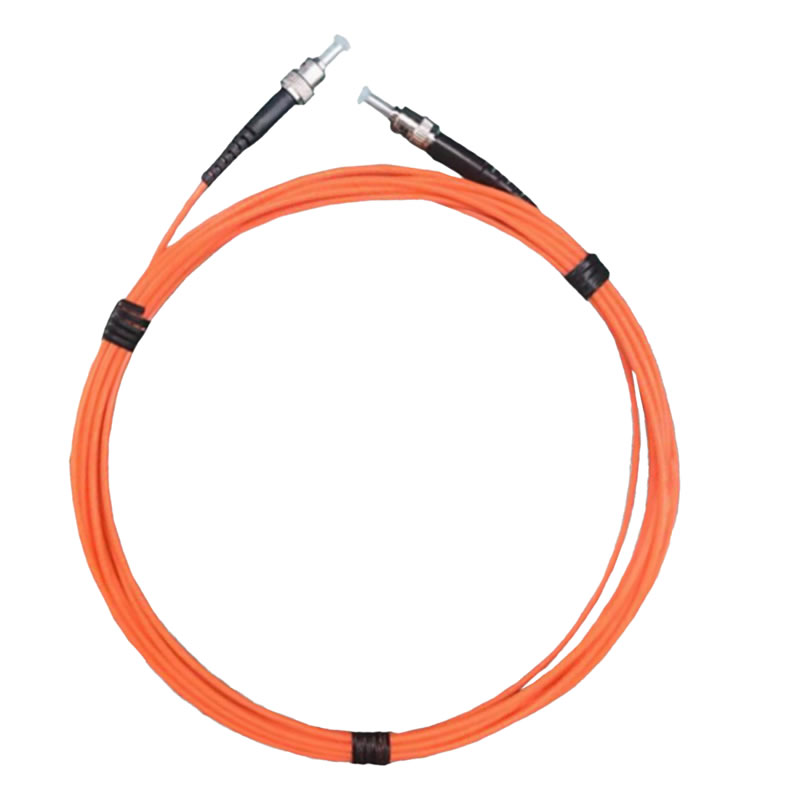
2.1 How Does ±1°C Accuracy Outperform Traditional Thermocouples?
Fluorescence fiber optic temperature probes achieve ±1°C measurement accuracy through intrinsic temperature-dependent phosphor decay characteristics. This precision remains stable across the entire -40°C to 260°C operating range without calibration drift common in thermocouple junctions. 光学測定原理により、熱電対の性能を低下させる電気接触抵抗と冷接点補償誤差が排除されます。.
定期的な再校正が必要な熱電対とは異なります, 蛍光温度センサー 複数年の耐用年数にわたって工場での精度を維持する. 測定物理学は、酸化の影響を受ける金属接合電圧ではなく、基本的な材料特性に依存します。, 機械的応力, and thermal cycling. この長期安定性によりメンテナンスコストが削減され、一貫したプロセス制御が保証されます。.
2.2 完全な電磁妨害耐性が不可欠な理由?
All-dielectric construction of 光ファイバー温度センサー すべての周波数と電力レベルにわたって電磁干渉に対する絶対的な耐性を提供します. This characteristic proves critical in マイクロ波機器, RF加熱システム, 誘導炉, EMI により従来の電気センサーが役に立たなくなる高電圧開閉装置.
非導電性 optical fiber cable and ceramic probe eliminate ground loop problems, コモンモードノイズ, and signal degradation plaguing thermocouple installations in electrically noisy industrial environments. Temperature measurement systems maintain full accuracy adjacent to variable frequency drives, welding equipment, or broadcast transmitters without requiring expensive shielding or filtering.
2.3 What Applications Benefit from -40°C to 260°C Wide Temperature Range?
The extended measurement span of 蛍光光ファイバープローブ covers diverse industrial processes with single sensor model standardization. Low-temperature applications include cryogenic research equipment, pharmaceutical cold storage monitoring, and arctic field installations. High-temperature capabilities address 変圧器巻線, motor stator monitoring, and thermal processing equipment.
This versatility simplifies inventory management for 販売代理店 and system integrators serving multiple industries. シングル temperature sensor model selection reduces spare parts complexity, training requirements, and calibration equipment investment compared to maintaining separate thermocouple types for different temperature ranges.
2.4 How Does Sub-1-Second Response Time Enable Real-Time Control?
以下の応答時間 1 second allow 光ファイバー温度測定システム to track rapid thermal transients in dynamic processes. The small thermal mass of the phosphor crystal and thin probe tip enables fast thermal equilibration essential for feedback control systems preventing overheating or thermal runaway.
Fast response proves critical in applications like 電子レンジ加熱 where temperatures rise at 50°C per minute, IGBT module protection requiring immediate fault detection, and RF ablation procedures demanding precise thermal dose delivery. Real-time temperature data enables predictive control algorithms optimizing energy efficiency and product quality.
3. どうですか 光ファイバーセンサーApplied in Power Industry Equipment?
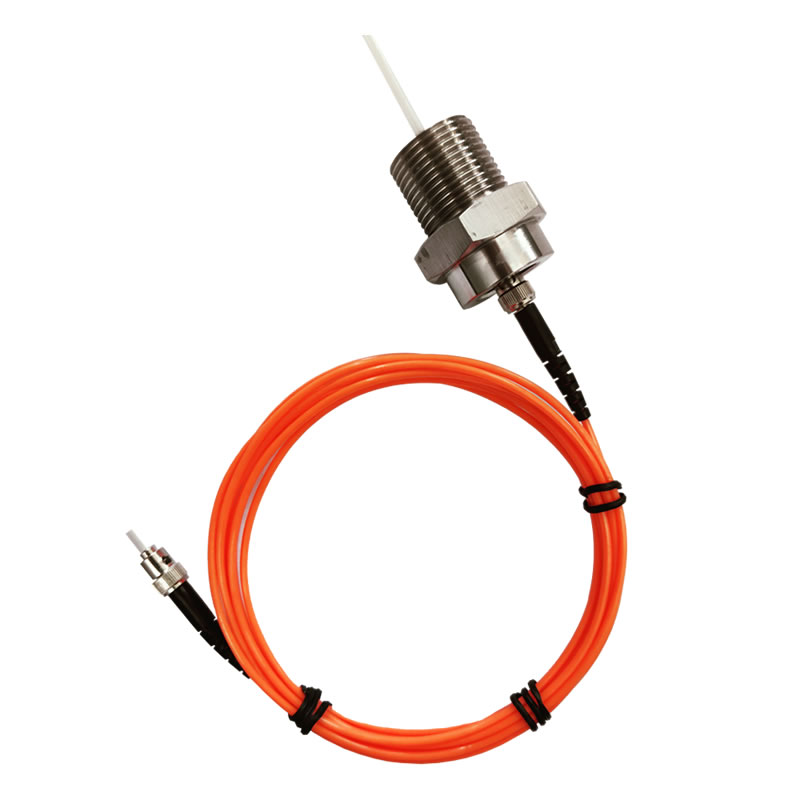
3.1 Why Do Oil-Immersed Transformer Windings Require Fiber Optic Monitoring?
変圧器巻線温度測定 represents the most critical application for 光ファイバーセンサー 電力システムで. Hot spot temperatures directly determine transformer loading capacity and remaining insulation life. Traditional methods using top oil temperature measurement fail to detect internal winding hot spots causing premature failures.
蛍光光ファイバープローブ install directly into winding assemblies during manufacturing, providing continuous hot spot monitoring throughout transformer service life. The non-conductive sensors eliminate short circuit risks while surviving the high voltage gradients and electromagnetic fields inside operating transformers. マルチチャンネル温度トランスミッター monitor multiple winding locations simultaneously, enabling dynamic thermal rating systems maximizing asset utilization.
3.2 What Temperature Monitoring Solutions Serve 110kV Distribution Transformers?
Distribution transformers under 110kV voltage require cost-effective 巻線温度監視 for condition-based maintenance programs. 光ファイバー温度センサー provide reliable data supporting predictive maintenance schedules, preventing catastrophic failures, 機器の寿命を延ばす.
Temperature-based control systems automatically adjust cooling fan operation and load tap changers optimizing efficiency. Historical temperature data enables thermal modeling predicting remaining useful life and informing capital replacement planning. The investment in customized monitoring solutions from Chinese メーカー delivers rapid payback through avoided outages and extended transformer service intervals.
3.3 How Does Large Motor Stator Temperature Monitoring Prevent Failures?
Large electric motors in industrial facilities, 発電所, and marine propulsion systems benefit from continuous stator winding temperature monitoring. 埋め込み 光ファイバー温度プローブ during motor manufacturing provides early warning of insulation degradation, 冷却システムの故障, および過負荷状態.
Multi-point temperature measurement across stator phases detects imbalanced loading and localized hot spots before insulation breakdown occurs. Integration with motor protection relays enables temperature-based derating and automatic shutdown preventing catastrophic failures requiring extensive repair downtime.
3.4 Why Is Cable Joint Online Temperature Monitoring Critical for Fire Prevention?
Electrical cable joints and terminations represent high-risk failure points in power distribution networks. Poor connections create resistive heating that progressively degrades insulation until catastrophic failure and fire ignition. 光ファイバー温度センサー installed at cable joints provide continuous monitoring detecting abnormal temperature rise before dangerous conditions develop.
Online monitoring systems alert maintenance personnel to developing problems enabling scheduled repairs during planned outages rather than emergency responses to failures. This predictive approach dramatically improves power system reliability while reducing fire risks in substations, 産業施設, and underground cable networks.
3.5 What Are Ring Main Unit Bushing Temperature Monitoring Requirements?
リング本体 (RMU) switchgear uses sealed bushings connecting internal components to external cables. These bushings operate at high voltages in confined spaces where temperature monitoring using conventional sensors proves impossible. 光ファイバープローブ insert through existing access points providing continuous bushing temperature data.
Temperature trending identifies aging bushings before failures cause outages or equipment damage. Customized sensor configurations adapt to various RMU designs and installation constraints, と Chinese suppliers offering engineering support for retrofit applications.
3.6 How Do Enclosed Bus Systems Benefit from Fiber Optic Temperature Sensing?
Enclosed bus systems carrying high currents in industrial and commercial facilities require temperature monitoring ensuring safe operation within design limits. Multi-channel fiber optic temperature systems monitor multiple bus sections simultaneously, detecting connection problems, 過負荷, and cooling system failures.
コンパクト プローブの直径 available through custom manufacturing allow installation in space-constrained bus enclosures without modification to existing designs. Installation during system commissioning or retrofit during maintenance outages provides long-term monitoring improving system reliability.
3.7 Why Must IGBT Module Temperature Monitoring Use Non-Metallic Sensors?
絶縁ゲート型バイポーラトランジスタ (IGBT) モジュール in power converters, 可変周波数ドライブ, and renewable energy systems generate significant heat requiring precise thermal management. Direct junction temperature measurement using 光ファイバープローブ enables optimal cooling control and predictive maintenance.
The electrically isolated sensors mount directly on IGBT base plates or internal structures without creating ground loops or noise coupling. Temperature data feeds protective circuits preventing thermal destruction and enables dynamic derating algorithms maximizing converter capacity while ensuring reliable operation.
3.8 What Temperature Solutions Serve Circuit Breaker Static Contacts?
High-voltage circuit breaker contacts experience heating from current flow and contact resistance. Excessive temperatures accelerate contact erosion requiring costly maintenance or breaker replacement. 光ファイバー温度監視 on static contacts provides data supporting condition-based maintenance optimizing inspection intervals.
3.9 How Does GIS Switchgear Hot Spot Monitoring Improve Reliability?
ガス絶縁開閉装置 (GIS) operates in sealed enclosures filled with SF6 gas. Internal connection points and contact surfaces develop hot spots invisible to external inspection. 光ファイバー温度センサー installed during GIS manufacturing provide permanent monitoring of critical thermal points.
Online temperature data enables predictive maintenance programs preventing failures in high-value assets. の long fiber lengths available from Chinese メーカー route signals from internal GIS components to external monitoring equipment without compromising gas seals.
3.10 Why Do Large Hydro Turbine Generators Require Multi-Point Temperature Monitoring?
Hydroelectric generators combine high power output with complex cooling systems requiring comprehensive temperature monitoring. Multi-channel fiber optic systems と 16, 32, または 64 sensing points monitor generator windings, ベアリング, cooling water temperatures, and thrust bearing pads simultaneously.
Centralized monitoring enables advanced diagnostics identifying developing problems across multiple components. The complete electromagnetic immunity allows sensor placement adjacent to high-voltage windings and rotating magnetic fields without measurement interference.
4. What Medical Equipment Requires Fiber Optic Temperature Monitoring?
4.1 Why Must RF Ablation Systems Use Non-Metallic Temperature Probes?
Radiofrequency ablation equipment delivers controlled thermal energy destroying diseased tissue. Precise temperature control ensures complete lesion formation while preventing excessive heating damaging healthy tissue. 光ファイバー温度センサー provide accurate measurement in intense RF electromagnetic fields where conventional thermocouples fail completely.
The non-metallic probes integrate directly into RF applicators monitoring tissue temperature at treatment sites. This real-time feedback enables closed-loop power control optimizing therapeutic outcomes and patient safety. 医療機器 メーカー source カスタム温度センサー from Chinese OEMサプライヤー meeting stringent biocompatibility and sterilization requirements.
4.2 How Do Microwave Therapy Devices Achieve Precise Temperature Control?
Microwave hyperthermia systems treat cancer by elevating tumor temperatures to therapeutic levels while preserving surrounding tissue. 蛍光光ファイバープローブ inserted into target tissue provide accurate temperature measurement despite intense 2.45GHz electromagnetic fields that completely disrupt electrical sensors.
Multi-point temperature mapping ensures uniform heating across treatment volumes. The small プローブの直径 minimizes tissue trauma during insertion, while biocompatible materials support repeated sterilization cycles. Customized sensor configurations adapt to specific applicator designs and treatment protocols.
4.3 What Temperature Solutions Address MRI Equipment Monitoring Challenges?
磁気共鳴画像法 (MRI) システム generate powerful static magnetic fields, radiofrequency pulses, and rapidly switching gradient fields creating hostile environments for conventional sensors. 光ファイバー温度測定 monitors cryogenic cooling systems, gradient coil temperatures, and RF power amplifier thermal management without image artifacts or safety concerns.
The completely non-magnetic, non-conductive sensors operate reliably in 1.5T, 3T, and higher field strength MRI systems. Long fiber optic cables route temperature signals from magnet bore to control room electronics located outside the scan room, eliminating electromagnetic coupling problems.
4.4 What Special Requirements Apply to Medical Laboratory Equipment?
Research and diagnostic laboratory equipment including incubators, thermal cyclers, and reaction vessels requires precise temperature control ensuring reproducible experimental results. 光ファイバー温度センサー provide accurate measurement in equipment subject to electromagnetic interference from adjacent devices or incorporating microwave, RF, or induction heating.
The chemical resistance supports applications in corrosive reagents and organic solvents. マルチチャンネルシステム monitor temperature uniformity across incubator shelves or multi-well plate positions supporting validation requirements and quality management systems.
5. Which Semiconductor and Research Facilities Use These Temperature Solutions?
5.1 How Do ICP Plasma Etching Systems Control Wafer Temperature?
誘導結合プラズマ (ICP) etching equipment requires precise wafer temperature control during semiconductor device fabrication. The intense RF electromagnetic fields generating plasma would completely disrupt conventional temperature measurement. 光ファイバー温度プローブ embedded in wafer chucks provide accurate thermal data enabling process control despite harsh electromagnetic environment.
Temperature uniformity across wafer surfaces directly impacts etch rate consistency and device yield. Multi-point sensing systems from Chinese メーカー monitor chuck temperatures at multiple radial positions supporting advanced process control algorithms optimizing throughput and quality.
5.2 Why Do Reactive Ion Etching Systems Demand EMI-Immune Sensors?
反応性イオンエッチング (りえ) 装置 uses high-power RF fields creating plasma for precise material removal. 光ファイバー温度測定 monitors chamber walls, electrode temperatures, and substrate cooling without electromagnetic interference affecting measurement accuracy or plasma stability.
The vacuum-compatible sensors withstand corrosive plasma chemistry and wide temperature excursions during process cycling. Custom probe designs available from Chinese サプライヤー integrate into existing chamber geometries and vacuum feedthroughs.
5.3 What Temperature Control Challenges Exist in Microwave Digestion Systems?
Microwave digestion equipment used in analytical chemistry rapidly breaks down samples using high-pressure, high-temperature conditions in sealed vessels. 蛍光光ファイバーセンサー measure internal vessel temperatures despite intense microwave fields, enabling pressure control and safety interlocks preventing vessel rupture.
The chemical resistance withstands strong acids and oxidizing conditions used in sample preparation. Customized probe lengths adapt to various vessel sizes and configurations used in environmental testing, food analysis, and materials characterization laboratories.
5.4 How Are High-Energy Particle Environments Monitored?
Research facilities operating particle accelerators, fusion reactors, or radiation testing equipment require temperature monitoring in environments with intense ionizing radiation. 光ファイバー温度センサー demonstrate radiation resistance superior to conventional electrical sensors, maintaining calibration accuracy after substantial radiation exposure.
The all-optical signal transmission prevents radiation-induced electrical noise degrading measurement quality. Applications include beam dump calorimetry, target cooling systems, and detector thermal management in high-energy physics experiments.
6. What Special Industrial Applications Demand Fiber Optic Temperature Measurement?
6.1 Why Do Electroexplosive Devices Require Intrinsically Safe Temperature Monitoring?
Electroexplosive devices (EED) used in aerospace, defense, and automotive safety systems require temperature testing without any possibility of electrical discharge causing premature ignition. 光ファイバー温度プローブ provide intrinsically safe measurement during thermal sensitivity testing, ストレージの監視, and quality control procedures.
The completely passive, non-conductive sensors eliminate ignition sources in explosive atmospheres. マルチチャンネルシステム simultaneously monitor multiple EED units during batch testing, improving throughput while maintaining absolute safety.
6.2 How Do Microwave Industrial Heating Systems Benefit from Optical Temperature Sensing?
産業用 microwave heating equipment for food processing, rubber vulcanization, ceramic drying, and chemical synthesis requires accurate temperature control optimizing product quality and energy efficiency. 光ファイバー温度測定 provides reliable data despite high-power 2.45GHz electromagnetic fields preventing conventional sensor operation.
Direct product temperature monitoring enables closed-loop microwave power control, preventing overheating and ensuring uniform processing. Bulk orders from Chinese 輸出業者 support equipment manufacturers integrating advanced temperature control into standard product offerings.
6.3 What Chemical Reactor Monitoring Solutions Address Safety Requirements?
Chemical reactors processing flammable solvents, reactive intermediates, or explosive mixtures require intrinsically safe temperature measurement. 蛍光光ファイバーセンサー certified for hazardous area installation provide accurate monitoring without introducing potential ignition sources.
The chemical resistance supports aggressive process environments including strong acids, 基地, and organic solvents. Customized probe designs integrate into reactor walls, dip tubes, or agitator shafts providing representative temperature measurement for control systems and safety interlocks.
7. How to Select the Best Fiber Optic Temperature Sensor Configuration?
7.1 How Do Single to 64-Channel Systems Address Different Application Scales?
Single-channel temperature transmitters provide cost-effective solutions for simple monitoring applications requiring one or two measurement points. Multi-channel fiber optic systems サポートする 4, 8, 16, 32, または 64 sensing points enable comprehensive thermal mapping of large equipment or facilities from centralized instrumentation.
System scalability allows starting with basic monitoring configurations and expanding as applications evolve. Chinese manufacturers offer modular architectures supporting field upgrades adding channels without replacing existing equipment. Channel count selection balances initial investment against monitoring coverage requirements and future expansion needs.
7.2 Why Is Custom Probe Diameter Important for Various Installation Spaces?
Probe diameter customization addresses diverse installation requirements from laboratory glassware to industrial equipment. Standard diameters range from 0.5mm for minimally invasive medical applications to 6mm for rugged industrial installations. Smaller diameters provide faster thermal response and easier routing through confined spaces.
Larger diameter probes offer superior mechanical robustness in high-vibration environments and corrosive conditions. OEMメーカー collaborate with buyers specifying optimal diameter balancing thermal performance, 機械的耐久性, and installation constraints for specific applications.
7.3 どうやって 0-80 Meter Fiber Lengths Enable Monitoring of Large Equipment?
Fiber optic cable lengths まで 80 meters support remote sensing applications where measurement points locate far from instrumentation. Long cables enable monitoring inside large transformers, across extensive manufacturing lines, or in hazardous areas requiring electronics located in safe zones.
The optical signal transmission experiences negligible degradation over extended distances compared to electrical sensor signal attenuation. Custom cable lengths eliminate excess cable coiling or splicing requirements, improving installation aesthetics and reliability. 卸売業者 maintain inventory of standard lengths while offering custom fabrication for specific project requirements.
7.4 What Parameters Can Customization Adjust Beyond Standard Specifications?
Customized temperature measurement solutions from Chinese ODMメーカー extend beyond probe configuration to include specialized features. Custom calibration ranges optimize accuracy for narrow temperature spans. Modified response times balance thermal tracking versus measurement stability for specific process dynamics.
Communication protocol customization supports integration with proprietary control systems. Custom enclosure designs adapt transmitter electronics to harsh environments or space-constrained installations. Software customization includes alarm logic, data logging features, and specialized output formats. 経験豊富な サプライヤー provide engineering consultation identifying optimal customization delivering maximum value for specific applications.
8. What Makes FJINNO a Leading Manufacturer and Exporter?
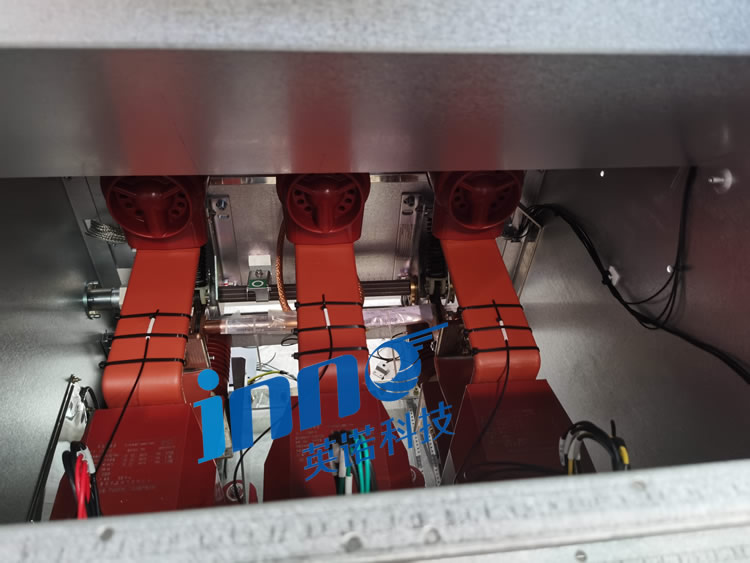
8.1 How Does FJINNO Replace Imported International Brands?
福州イノベーション電子科学&テック株式会社, 株式会社. (フジノ) 製造する 蛍光光ファイバー温度センサー meeting or exceeding international brand specifications at significantly reduced costs. The company’s technology development originated from research collaborations with leading universities, establishing fundamental expertise in phosphor physics and optical measurement techniques.
FJINNO products successfully replace expensive imported systems across power generation, 工業的加工, and medical equipment applications. Direct technical comparisons demonstrate equivalent or superior accuracy, 信頼性, and feature sets. International buyers achieve substantial cost savings while maintaining or improving system performance, with saved capital reinvested in expanded monitoring coverage or other facility improvements.
8.2 What Services Does FJINNO Provide as Exporter and Distributor?
As an established 輸出者, FJINNO provides comprehensive support for international buyers including English-language technical documentation, export packaging meeting international shipping standards, and coordination with freight forwarders ensuring timely delivery. The company maintains responsive communication channels including email, ワッツアップ, and WeChat addressing buyer questions during specification, ordering, and post-delivery phases.
テクニカル サポートにはアプリケーション エンジニアリングの支援が含まれます, custom configuration recommendations, and integration guidance. FJINNO’s experience serving global markets across diverse industries enables practical advice optimizing system selection and deployment. The company’s position as both メーカー そして 卸売業者 ensures direct access to engineering resources and eliminates communication delays through intermediary channels.
8.3 What Advantages Come with Bulk Purchasing and Wholesale Orders?
Bulk purchasing programs provide volume discounts rewarding larger orders with reduced unit pricing. Wholesale buyers including equipment manufacturers, システムインテグレーター, and distributors benefit from tiered pricing structures incentivizing increased order quantities. Annual purchase agreements offering reserved production capacity and priority scheduling support buyers requiring predictable supply chains.
Volume orders enable カスタマイズ economically impractical for small quantities. Dedicated production runs for specific configurations avoid setup change penalties. Dealer programs provide exclusive territory rights, マーケティング支援資料, and technical training enabling effective market development.
8.4 How Do Private Label and OEM/ODM Capabilities Support Market Positioning?
プライベートブランドの製造 transforms FJINNO’s technology platform into buyer-branded products supporting market differentiation strategies. Complete branding customization includes product labeling, packaging design, ユーザーマニュアル, and calibration certificates featuring buyer corporate identity. この機能により、 販売代理店 building branded product portfolios without capital investment in manufacturing infrastructure.
OEMサービス provide products meeting buyer specifications for integration into larger systems or equipment. ODM機能 include collaborative product development where FJINNO engineering resources support buyers developing specialized temperature measurement solutions. This partnership approach accelerates new product introduction while controlling development costs and technical risks. Intellectual property agreements protect buyer proprietary designs and market positions.
9. What Is the Practical Process for Importing from China?
9.1 How Should Buyers Communicate Technical Requirements to Manufacturers?
Effective specification communication begins with clearly defining application parameters including temperature range, 必要な精度, 設置環境, and any special conditions. Providing application context helps メーカー recommend optimal configurations and identify potential technical challenges early in the process.
FJINNO’s technical team responds to inquiries via email (fjinnonet@gmail.com), ワッツアップ (+86 13599070393), or WeChat (+86 13599070393) typically within one business day. Initial discussions clarify requirements and may identify alternative approaches or additional features benefiting the application. 詳細な技術仕様, mechanical drawings, and interface requirements ensure quotations accurately reflect project needs.
9.2 What Timeline Covers Sample Testing Through Bulk Delivery?
Standard process begins with sample evaluation enabling hands-on assessment of product quality, performance verification, and integration testing. Sample orders typically ship within 1-2 weeks with international delivery requiring additional 5-10 days depending on destination and shipping method selected.
Following successful sample validation, production orders for standard configurations generally complete within 2-4 週. Custom or bulk orders may require 4-8 weeks depending on complexity and quantity. FJINNO provides production status updates and coordinates shipping arrangements ensuring visibility throughout the order fulfillment process. Established buyers with repeat orders benefit from shortened lead times through production planning and inventory management programs.
9.3 How Are International Logistics and Technical Support Managed?
FJINNO coordinates international shipping using established freight forwarders experienced in electronics exports. Buyers choose between air freight for rapid delivery or sea freight for cost optimization on larger orders. Complete export documentation including commercial invoices, packing lists, and certificates of origin support smooth customs clearance.
Post-delivery technical support continues via email, ワッツアップ, and WeChat communication channels. インストールガイド, configuration assistance, and troubleshooting support ensure successful system commissioning. Video conferencing capabilities enable visual inspection of installation details when required. The company’s international customer base provides extensive experience addressing diverse technical environments and regulatory requirements across global markets.
10. What Technical Questions Do Buyers Most Frequently Ask?
10.1 What Is the Working Principle of Fluorescence Fiber Optic Sensors?
Fluorescence thermometry measures temperature through time-domain analysis of phosphor luminescence. A brief LED pulse excites rare-earth phosphor crystal at the 光ファイバープローブ ヒント, causing fluorescence emission that propagates back through the fiber to detection electronics. The fluorescence decay time exhibits precise temperature dependence, with sophisticated signal processing converting decay measurements into accurate temperature readings.
This measurement principle provides inherent advantages including absolute temperature measurement independent of light source intensity, ファイバーの曲げ損失, またはコネクタの劣化. The technique achieves high accuracy without requiring reference junctions or complex compensation algorithms needed for thermocouples. Signal digitization immediately after optical-to-electrical conversion minimizes electromagnetic interference susceptibility.
10.2 Why Is Fiber Optic Temperature Measurement Superior to Infrared for Power Equipment?
赤外線サーモグラフィー measures surface temperatures remotely but cannot access internal hot spots in sealed equipment like 変圧器, モーター, or switchgear. 光ファイバー温度プローブ embed directly at critical thermal points providing continuous monitoring of locations inaccessible to external observation.
Infrared measurements require direct line-of-sight and suffer accuracy degradation from emissivity variations, ambient reflections, そして大気吸収. Fiber optic sensors provide contact measurement unaffected by surface conditions or optical paths. のために 電力設備の監視, embedded fiber optic sensors deliver superior accuracy, 信頼性, and failure prediction capability compared to periodic infrared scans.
10.3 How Do Multi-Channel Systems Enable Simultaneous Multi-Point Monitoring?
Multi-channel fiber optic temperature transmitters use rapid sequential scanning across connected sensors, measuring each channel multiple times per second. Advanced instruments employ wavelength or time-division multiplexing enabling true simultaneous measurement from all channels. Synchronized data acquisition supports thermal mapping, 温度勾配解析, and correlation studies identifying relationships between measurement points.
Centralized multi-channel architecture reduces equipment costs, space requirements, and maintenance burden compared to deploying individual transmitters for each measurement point. Unified data logging and alarm management simplifies system integration and operator training. Channel expansion modules support future monitoring additions without major system redesign.
10.4 What Determines Fiber Optic Probe Service Life and Durability?
蛍光光ファイバーセンサー demonstrate exceptional longevity through intrinsic material stability. The silica fiber and ceramic probe construction resist environmental degradation from moisture, 化学薬品, and thermal cycling. Unlike thermocouples experiencing junction oxidation and wire embrittlement, optical sensors maintain calibration accuracy throughout multi-year service intervals.
Proper installation following manufacturer guidelines ensures optimal durability. Avoiding excessive bending radius maintains fiber integrity. Appropriate probe selection matching chemical environment and temperature range prevents material compatibility issues. Users report operational lifetimes exceeding 10 years in demanding industrial applications with minimal maintenance requirements.
10.5 What Technical Parameters Can Customization Adjust?
カスタマイズ機能 from FJINNO address diverse application requirements. Temperature range optimization narrows measurement span for enhanced resolution in specific applications. Probe diameter varies from 0.5mm to 6mm balancing response time, 機械的強度, およびインストール上の制約. Fiber length customization from 0.5 メートルから 80 meters accommodates varied equipment sizes and remote mounting requirements.
Response time tuning adjusts thermal time constants for specific process dynamics. Output signal customization includes analog voltages, current loops, digital protocols including Modbus, プロフィバス, and Ethernet communications. Alarm threshold configuration, data logging capabilities, and software features adapt to control system integration requirements. Mechanical specifications including probe materials, connection fittings, and environmental ratings customize for application environments.
10.6 How Can International Buyers Contact FJINNO for Technical Consultation and Quotations?
福州イノベーション電子科学&テック株式会社, 株式会社. welcomes inquiries from international buyers seeking 光ファイバー温度測定ソリューション. The technical sales team provides responsive support through multiple communication channels convenient for global customers.
連絡先:
会社: 福州イノベーション電子科学&テック株式会社, 株式会社.
設立: 2011
電子メール: web@fjinno.net
WhatsApp/WeChat (中国)/電話: +86 13599070393
住所: 連東U穀物ネットワーキング工業団地, 興業西路12号, 福州, 福建省, 中国
Initial contact should include application description, preliminary technical requirements, and estimated quantities. The technical team responds with clarifying questions, configuration recommendations, and formal quotations. Sample orders enable product evaluation before production commitments. FJINNO’s international experience ensures smooth communication, technical alignment, 世界中のバイヤーにとってプロジェクトの実行が成功する.
⚠️免責事項
このガイドは、教育目的で中国から光ファイバー温度測定システムを輸入することに関する一般情報を提供します。. 正確性を追求する一方で、, international trade regulations, 輸入要件, 製品の仕様は国や用途によって異なります. Buyers should conduct independent due diligence, verify supplier qualifications, 税関規制については資格のある専門家に相談してください, 安全規格, および特定の管轄区域およびユースケースに適用される技術仕様. 記載されている製品性能特性は、通常の動作条件における典型的な値を表しており、特定の設置および環境要因によって異なる場合があります。. 福州イノベーション電子科学&テック株式会社, 株式会社. 製造注文前にアプリケーションの徹底的なレビューとサンプルテストを推奨します. このコンテンツは専門的な法律を構成するものではありません, 金融, or engineering advice. Importers assume full responsibility for compliance with applicable regulations and proper product selection, インストール, そして操作. Always verify current specifications, 認証, and regulatory requirements before making purchasing decisions.

光ファイバー温度センサー, インテリジェント監視システム, 中国の分散型光ファイバーメーカー
 |
 |
 |