 INNO 光ファイバー温度センサー ,温度監視システム.
Key Insights: Microwave Temperature Sensing Technology
- 光ファイバー温度センサー provide complete EMI immunity in high-power microwave environments where traditional thermocouples fail catastrophically
- Fluorescence thermometry achieves ±1°C accuracy without metal components, eliminating dangerous arcing and signal interference
- Microwave chemical reactors, pharmaceutical processing, and food production require non-metallic probes for safety and regulatory compliance
- 伝統的 熱電対センサー そして 赤外線温度計 cannot deliver reliable measurements in 2.45GHz electromagnetic fields
- ちゃんとした 温度センサーの選択 prevents product quality failures, 機器の損傷, and costly production downtime
目次
- Why Is Temperature Monitoring in Microwave Equipment So Challenging?
- How Do Different Temperature Sensors Perform in Microwave Environments?
- とは何ですか 5 Major Advantages of Fluorescence Fiber Optic Sensors?
- Where Are Fiber Optic Sensors Successfully Applied in Microwave Systems?
- 電子レンジ機器に適した温度センサーを選択する方法?
- 蛍光センサーと従来のソリューションの費用対効果の分析とは何ですか?
- 極端なマイクロ波条件下で光ファイバープローブはどのように動作するか?
- マイクロ波化学反応器で非金属温度センサーを使用しなければならない理由?
- 電子レンジ食品加工における温度制御の失敗から生じる結果?
- マイクロ波温度センシングに関してエンジニアからよく聞かれる質問は何ですか??
1. Why Is Temperature Monitoring in Microwave Equipment So Challenging?

1.1 マイクロ波環境が従来のセンサーにとって不利になる理由?
マイクロ波加熱システム 2.45GHzの周波数で動作し、実験装置の1kWから産業用途の100kWまでの範囲の電力出力を実現. この強力な電磁場は、標準化にとって根本的な障害を引き起こします。 温度測定装置 that were designed for benign thermal environments.
伝統的 熱電対センサー そして RTDプローブ contain metallic conductors that behave as receiving antennas within microwave cavities. When exposed to high-frequency electromagnetic radiation, these metal components induce electrical currents causing dangerous arcing and sparking. This phenomenon not only destroys the 温度センサー but also compromises microwave chamber integrity and creates severe safety hazards.
の 電磁干渉 (EMI) generated during microwave processing severely distorts electrical signals from conventional 温度監視システム. Standard thermocouples produce millivolt-level signals that become completely overwhelmed by EMI noise, rendering measurements unreliable or impossible.
1.2 Why Do Industrial Applications Demand Real-Time Accuracy?
Microwave chemical synthesis requires temperature control within ±1°C to ensure proper reaction kinetics and product quality. Pharmaceutical microwave processing must maintain documented temperature profiles for regulatory compliance. Advanced materials sintering demands precise thermal management to achieve desired properties and prevent defects.
Unlike conventional heating where thermal equilibrium develops gradually, 電子レンジ加熱 creates rapid and often non-uniform temperature distributions. Hot spots develop within seconds, 必要とする リアルタイムの温度監視 with sub-second response times for effective control interventions.
2. How Do Different Temperature Sensors Perform in Microwave Environments?

2.1 What Are the Fatal Limitations of Thermocouple Sensors?
熱電対温度センサー rely on the Seebeck effect in metal junctions to generate voltage proportional to temperature. When placed inside マイクロ波機器, the metal wires act as receiving antennas for electromagnetic energy, resulting in three critical failures.
Induced currents create localized heating at the thermocouple junction, adding thermal errors of 10-50°C to actual measurements. の 電磁干渉 generates voltage signals orders of magnitude larger than legitimate thermocouple output, making data completely unreliable. Most critically, concentrated electromagnetic energy at metal points causes electrical discharge that punctures protective sheaths and creates fire hazards.
2.2 Why Can’t Infrared Temperature Sensors Solve Microwave Challenges?
Infrared thermometry measures surface temperatures through thermal radiation without physical contact. その間 IR temperature sensors avoid arcing problems of metallic probes, they face insurmountable obstacles in microwave heating applications.
標準 赤外線センサー require direct line-of-sight to measurement targets. In sealed microwave cavities, this necessitates optical windows that significantly compromise electromagnetic containment. Any opening allows dangerous radiation leakage and reduces heating efficiency. さらに, 赤外線温度測定 only captures surface temperatures, providing no information about internal temperatures in thick materials or liquids.
2.3 How Do Wireless Temperature Sensors Fail in High-Power Microwaves?
ワイヤレス温度監視システム use battery-powered transmitters to send temperature data via radio frequencies. While initially appearing suitable, these devices encounter severe practical limitations in 電子レンジ環境.
The intense 電磁場 in operating microwave systems overwhelms low-power radio signals from ワイヤレスセンサー, causing communication dropouts and data loss. Battery-powered electronics suffer accelerated degradation when exposed to sustained microwave radiation. 最も重要なこと, wireless temperature probes still require metallic sensing elements, reintroducing all arcing and interference problems.
3. とは何ですか 5 Major Advantages of 蛍光ファイバー光学センサー?

3.1 完全な電磁耐性
蛍光ファイバー光温度センサー constructed from glass and ceramic materials contain absolutely no metallic or conductive components. The sensing probe consists of a rare-earth phosphor crystal mounted at the tip of a pure silica 光ファイバーケーブル. This all-dielectric construction provides complete immunity to 電磁干渉 at all frequencies and power levels.
Unlike shielded thermocouples that merely reduce EMI coupling, 光ファイバー温度プローブ fundamentally cannot interact with electromagnetic fields. The optical transmission principle ensures that マイクロ波放射 has zero effect on temperature measurements, delivering accurate data even in 100kW industrial microwave systems.
3.2 Intrinsic Safety Without Arcing Risk
非導電性の性質 蛍光光ファイバーセンサー eliminates any possibility of electrical discharge or arcing inside microwave cavities. This intrinsic safety characteristic allows direct immersion of the 温度プローブ into reactive chemicals, flammable solvents, or explosive atmospheres without creating ignition sources.
3.3 Superior Measurement Accuracy of ±1°C
Fluorescence thermometry measures the temperature-dependent decay time of phosphor luminescence, a physical phenomenon with excellent thermal sensitivity and minimal drift. 福州イノベーション電子科学&テック株式会社, 株式会社. 製造する 光ファイバー温度センサー achieving ±1°C accuracy across measurement ranges from -200°C to +300°C.
3.4 Fast Response Time for Dynamic Control
The small thermal mass of the phosphor crystal enables response times under 250 ミリ秒. This rapid thermal tracking capability allows 光ファイバー温度プローブ to detect sudden temperature changes in microwave heating processes, enabling feedback control systems to prevent overheating or thermal runaway conditions.
3.5 Chemical Resistance and Long-Term Stability
The inert glass and ceramic construction of 光ファイバーセンサー resists corrosive chemicals, high-pH solutions, and oxidizing atmospheres that rapidly degrade metallic thermocouples. This chemical stability ensures consistent 温度監視 accuracy over years of continuous operation without calibration drift.
4. どこにいるのか Fiber Optic Sensors Successfully Applied in Microwave Systems?
4.1 What Role Do They Play in Microwave Chemical Synthesis?
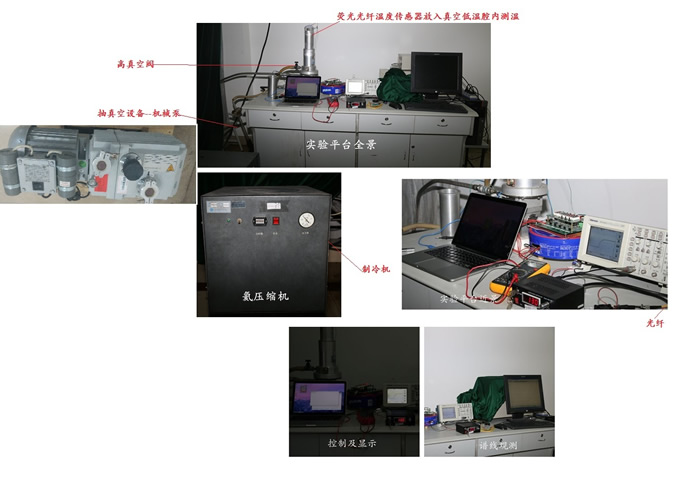
Research laboratories and pharmaceutical manufacturers utilize microwave reactors for accelerated chemical synthesis. 光ファイバー温度センサー enable precise monitoring of exothermic reactions where temperature control directly impacts product yield, 純度, そして安全性. The probes withstand aggressive solvents and strong acids that would corrode traditional sensors within hours.
4.2 How Are They Used in Advanced Materials Processing?
Microwave sintering of ceramics, 複合材, and nanomaterials requires precise thermal profiles to achieve desired microstructures. Fluorescence temperature probes 温度が毎分 50°C で上昇する急速な加熱サイクルでも正確な測定を提供します. センサーは、従来の熱電対アセンブリが破損するような熱衝撃条件にも耐えます。.
4.3 食品加工用途においてどのような利点があるか?
産業用 電子レンジによる食品加工 設備の用途 光ファイバー温度センサー 適切な低温殺菌温度を確保し、過剰調理を防ぐため. 非金属プローブは、汚染を心配することなく食品に直接埋め込むことができます。, HACCP 準拠の文書化に必要なリアルタイムの内部温度データの提供.
4.4 医療機器メーカーはこのテクノロジーをどのように活用していますか?
電子レンジ滅菌 医療機器用システムには、負荷全体にわたる検証済みの温度均一性が必要です. 光ファイバー温度プローブ 滅菌サイクル中の熱分布をマップする, 熱に弱い素材の劣化を避けながら、すべてのアイテムが病原体を破壊する致死温度に確実に達するようにする.
5. 電子レンジ機器に適した温度センサーを選択する方法?
5.1 アプリケーションに必要な温度範囲?
通常動作時および潜在的な障害状態時に発生する最低温度と最高温度を評価します。. 光ファイバー温度センサー 特定の範囲に最適化されたさまざまなプローブ構成で利用可能. 標準 蛍光プローブ カバー -40°C ~ +250°C, 一方、特殊用途向けの高温バージョンは +300°C まで拡張可能.
5.2 どのような化学的適合性が必要ですか?
すべての化学物質を特定する, 溶剤, および接触する洗浄剤 温度プローブ. ガラス繊維は優れた一般的な耐薬品性を備えていますが、, フッ化水素酸や濃アルカリの場合は、特別なコーティングや保護シースが必要になる場合があります。. 福州イノベーション電子科学&テック株式会社, 株式会社. 過酷な化学環境向けにカスタマイズされたプローブジャケット素材を提供.
5.3 プロセス制御にとって重要な応答時間はどれくらいですか?
アプリケーションで定常温度の監視が必要か、それとも急速な熱過渡現象の追跡が必要かを判断します。. より小さな直径 光ファイバープローブ 応答時間は速くなりますが、機械的堅牢性は低下します. 特定の設置に必要な物理的耐久性に対する熱応答要件のバランスをとります。.
5.4 制御システムにはどのような統合機能が必要ですか?
モダンな 光ファイバー温度測定システム アナログ電圧を含む複数の出力オプションを提供, デジタルプロトコル, および産業用フィールドバス通信. 既存の SCADA システムとの互換性を確保, PLCコントローラー, またはデータ収集装置. 標準インターフェースには 4 ~ 20mA の電流ループが含まれます, Modbus RTU/TCP, およびプロフィバス DP.
6. 蛍光センサーと従来のセンサーの費用対効果の分析は何ですか ソリューション?

6.1 How Do Upfront Investment Costs Compare?
Initial procurement costs for 光ファイバー温度センサー typically range 3-5 times higher than equivalent thermocouple assemblies. しかし, this comparison ignores the hidden costs of thermocouple failures in microwave applications. Traditional sensors may require replacement every few weeks in harsh microwave environments, whereas 蛍光プローブ commonly operate for years without degradation.
6.2 What Are the True Lifecycle Ownership Costs?
Calculate total cost of ownership including sensor replacement frequency, production downtime during sensor failures, and labor costs for maintenance interventions. A manufacturing facility experiencing monthly thermocouple failures with 4-hour downtime events will recover 光ファイバーセンサー investment within 6-12 months through elimination of unplanned outages.
6.3 How Does Improved Process Control Impact Profitability?
正確な 温度監視 enables tighter process control, reducing product variability and quality rejects. In pharmaceutical synthesis, improved temperature precision can increase batch yields by 5-15%, representing substantial value creation that far exceeds sensor technology costs. The ability to run processes at optimal temperatures without conservative safety margins improves energy efficiency and throughput.
7. 極端なマイクロ波条件下で光ファイバープローブはどのように動作するか?
7.1 What Validates Their Performance in High-Power Applications?
光ファイバー温度センサー from Fuzhou Innovation Electronic Scie&テック株式会社, 株式会社. undergo rigorous testing in controlled 電子レンジ環境 at power levels up to 10kW/liter. Accelerated life testing demonstrates stable accuracy after 10,000 hours of continuous exposure to cycling electromagnetic fields, validating long-term reliability for demanding industrial applications.
7.2 How Do They Handle Thermal Shock and Mechanical Stress?
The flexible 光ファイバーケーブル 剛性熱電対アセンブリと比較して優れた耐振動性を実現する構造. センサーは、200℃の急激な温度変化を伴う熱衝撃試験に耐えます。 10 機械的な故障や精度の低下がない秒数. この堅牢性は、 マイクロ波処理 頻繁な熱サイクルにさらされる操作.
7.3 継続的な精度を保証するメンテナンス要件?
定期的な校正検証が必要な熱電対とは異なります, 蛍光光ファイバーセンサー 稼働期間中、工場出荷時の校正精度を維持します。. 基本的な蛍光体物理学に基づいた測定原理により、ドリフトはごくわずかです. 毎年の検証テストで継続的なパフォーマンスを確認, ただし、再キャリブレーションは通常は不要です, メンテナンスコストと文書作成の負担を軽減.
8. マイクロ波化学反応器で非金属温度センサーを使用しなければならない理由?
8.1 安全規則で金属センサーが禁止されているもの?
Chemical process safety standards explicitly prohibit introduction of potential ignition sources into vessels containing flammable solvents or reactive materials. 伝統的 熱電対センサー that arc in microwave fields violate these fundamental safety principles. Regulatory agencies increasingly require documented risk assessments demonstrating elimination of ignition hazards in microwave chemical reactors.
8.2 How Do Metallic Sensors Interfere with Reaction Chemistry?
Metal surfaces can catalyze unwanted side reactions or decomposition pathways in sensitive chemical syntheses. The catalytic activity of nickel, iron, and other common thermocouple metals alters reaction selectivity and product distribution. 光ファイバー温度プローブ constructed from chemically inert materials eliminate these parasitic reaction pathways, ensuring reproducible synthetic outcomes.
8.3 What Contamination Risks Do Metal Sensors Pose?
Corrosion of metallic 温度センサー introduces metal ion contamination into pharmaceutical intermediates and active ingredients. These impurities can exceed regulatory limits, requiring costly reprocessing or batch rejection. The all-glass construction of 蛍光光ファイバーセンサー prevents any possibility of metallic contamination, supporting compliance with stringent pharmaceutical purity requirements.
9. 電子レンジ食品加工における温度制御の失敗から生じる結果?
9.1 How Does Inadequate Heating Compromise Food Safety?
Insufficient 電子レンジ加熱 fails to achieve pathogen lethality requirements, creating risks of foodborne illness outbreaks. Without reliable 温度監視, processors cannot validate that all portions of the product reach minimum safe temperatures. A single contaminated batch can trigger massive recalls, brand damage, and potential legal liability exceeding millions in costs.
9.2 What Quality Defects Result from Overheating?
Excessive temperatures during 電子レンジによる食品加工 cause protein denaturation, nutrient degradation, and undesirable texture changes. Overcooked products exhibit poor sensory quality, leading to consumer complaints and market share erosion. 正確な 光ファイバー温度センサー enable precise control preventing both undercooking safety hazards and overcooking quality defects.
9.3 How Does Temperature Variability Impact Production Efficiency?
Inconsistent 温度制御 で microwave systems forces manufacturers to extend processing times and increase energy input to ensure minimum specifications are met, reducing throughput and increasing costs. Wide process variations necessitate conservative operating parameters that sacrifice efficiency. 信頼性の高い実装 温度監視 narrows process distributions, enabling optimization closer to ideal conditions.
10. マイクロ波温度センシングに関してエンジニアからよく聞かれる質問は何ですか??
10.1 Can Fiber Optic Sensors Work in Batch and Continuous Processes?
はい, 蛍光光ファイバー温度センサー adapt to both batch microwave reactors and continuous flow systems. For batch applications, probes insert through sealed ports maintaining electromagnetic containment. In continuous processes, the flexible 光ファイバーケーブル routes through process piping with minimal pressure drop or flow disturbance.
10.2 Are These Sensors Compatible with Automated Process Control?
モダンな 光ファイバー温度測定システム integrate seamlessly with industrial automation platforms. Standard analog and digital outputs enable direct connection to PID controllers, 分散制御システム, and programmable logic controllers. Advanced systems provide predictive maintenance diagnostics and data logging capabilities supporting Industry 4.0 initiatives.
10.3 What Environmental Conditions Affect Sensor Performance?
The measurement accuracy of 蛍光光ファイバーセンサー remains stable across ambient temperature variations from -40°C to +85°C. The optical measurement principle exhibits minimal sensitivity to humidity, 振動, or electromagnetic fields in the surrounding environment. This environmental immunity ensures consistent performance in challenging industrial settings.
10.4 How Do You Optimize Probe Positioning in Microwave Cavities?
効果的 温度監視 requires strategic placement considering electromagnetic field distribution and thermal gradients. 位置 光ファイバープローブ in representative locations avoiding field nodes where heating may be minimal. クリティカルなアプリケーション向け, deploy multiple sensors mapping spatial temperature variations enabling comprehensive process understanding and control.
10.5 What Training Do Operators Need for Fiber Optic Systems?
Basic operation of 光ファイバー温度センサー requires minimal specialized training beyond standard instrumentation procedures. The systems provide intuitive displays and straightforward calibration verification protocols. Technical support from Fuzhou Innovation Electronic Scie&テック株式会社, 株式会社. ensures successful implementation and ongoing optimization.
⚠️免責事項
このガイドで提供される情報は、教育および情報提供のみを目的としています。. 正確性を追求する一方で、, 温度センサーの選択は、特定のアプリケーション要件の徹底的なエンジニアリング分析に基づいて行う必要があります。. 福州イノベーション電子科学&テック株式会社, 株式会社. マイクロ波機器に温度測定システムを実装する前に、資格のあるエンジニアに相談し、関連するすべての安全基準を確認することをお勧めします。. 記載されている性能特性は典型的な値であり、特定の動作条件によって異なる場合があります。. このガイドは専門的なエンジニアリングに関するアドバイスを構成するものではありません, ユーザーは適切なセンサーの選択に対して全責任を負うものとします。, インストール, そして操作. 常にメーカーの仕様書と、業界および管轄区域に適用される規制要件に従ってください。.

光ファイバー温度センサー, インテリジェント監視システム, 中国の分散型光ファイバーメーカー
 |
 |
 |