 Cảm biến nhiệt độ sợi quang INNO ,hệ thống giám sát nhiệt độ.
- Đầu dò cảm biến nhiệt độ sợi quang huỳnh quang cung cấp các phép đo đáng tin cậy trong môi trường điện áp cao nơi cảm biến kim loại truyền thống bị hỏng
- Những đầu dò nhiệt độ quang học này cung cấp khả năng miễn nhiễm điện từ hoàn toàn, khiến chúng trở nên lý tưởng cho cuộn dây máy biến áp, thanh cái thiết bị đóng cắt, và stator động cơ
- Hỗ trợ hệ thống 1-9 cấu hình kênh để theo dõi nhiệt độ đa điểm trên khắp các cơ sở công nghiệp
- Các nhà sản xuất toàn cầu cung cấp dịch vụ tùy biến, khả năng cung cấp số lượng lớn, và hỗ trợ kỹ thuật toàn diện
- Ứng dụng mở rộng phát điện, trung tâm dữ liệu, sản xuất chất bán dẫn, và thiết bị y tế
Mục lục
- Đầu dò cảm biến nhiệt độ sợi quang huỳnh quang là gì?
- Tại sao cảm biến nhiệt độ huỳnh quang hoạt động đáng tin cậy trong môi trường khắc nghiệt?
- Những thành phần nào tạo nên hệ thống giám sát nhiệt độ sợi quang?
- Cách cấu hình hệ thống giám sát nhiệt độ đơn và đa điểm?
- Bạn nên chọn công nghệ cảm biến nhiệt độ sợi quang nào?
- Why Do Transformer Windings Require Dedicated Fiber Optic Probes?
- How to Prevent Switchgear Contact Overheating?
- What Happens When Motor Stator Temperature Goes Unchecked?
- Early Warning Systems for High Voltage Cable Joint Temperature Anomalies
- Which Wind Turbine Components Need Temperature Monitoring?
- How to Avoid Generator Temperature Failures in Hydropower Stations?
- Fiber Optic Temperature Monitoring for Photovoltaic Inverter Protection
- How Do Data Centers Achieve Precision Temperature Control?
- Which Semiconductor Processes Require Interference-Free Temperature Sensing?
- Why Must MRI Equipment Use Fiber Optic Temperature Sensors?
- Precision Temperature Control in RF Ablation and HIFU Therapy
- Solving Temperature Measurement Challenges in Induction Heating and Microwave Equipment
- Who Are the Global Fluorescent Fiber Optic Temperature Sensor Manufacturers?
- How to Evaluate Fiber Optic Sensor Supplier Technical Capabilities?
- What Matters When Procuring Temperature Probes in Large Quantities?
- What Does Remote Technical Support Include?
- How Important Are CE and ROHS Certifications for Your Project?
- Câu hỏi thường gặp
- Technical Terminology
- Tuyên bố từ chối trách nhiệm
1. là gì Đầu dò cảm biến nhiệt độ sợi quang huỳnh quang?

Đầu dò cảm biến nhiệt độ sợi quang huỳnh quang utilize rare earth crystal fluorescence lifetime-temperature correlation for precision measurement. Những cái này cảm biến nhiệt độ quang học operate entirely on optical principles, with probe bodies constructed from optical materials and ceramic or stainless steel enclosures, containing no metallic conductive components.
Core Operating Mechanism
Rare earth fluorescent material at the probe tip emits fluorescence when illuminated by excitation light. The fluorescence decay time changes with temperature variations. các máy phát nhiệt độ precisely measures this decay time to calculate accurate temperature values. This process requires no electrical signals, providing inherent interference immunity.
Basic System Architecture
Một sự hoàn chỉnh hệ thống giám sát nhiệt độ sợi quang huỳnh quang comprises three main components: the optical temperature transmitter (signal acquisition and processing), quartz fiber optic transmission cable (optical signal pathway), and fluorescent sensing probe (temperature-sensitive element). This modular design allows flexible configuration based on site conditions.
Contact Temperature Measurement Advantages
Unlike non-contact methods such as infrared thermal imaging, đầu dò huỳnh quang make direct contact with measured object surfaces, obtaining actual temperatures rather than surface radiation temperatures. This proves particularly important in oil-immersed transformers, enclosed switchgear, and other non-visible applications, ensuring temperature data accuracy and reliability.
Khả năng phạm vi nhiệt độ
Tiêu chuẩn đầu dò sợi quang huỳnh quang cover common industrial temperature ranges, from cryogenic environments to high-temperature equipment. Special application scenarios can extend measurement ranges through customized designs to meet diverse industry requirements.
2. Tại sao cảm biến nhiệt độ huỳnh quang hoạt động đáng tin cậy trong môi trường khắc nghiệt?

Electrical Insulation in High Voltage Environments
In high voltage substations and distribution rooms, adequate insulation distance must be maintained between energized bodies and temperature monitoring equipment. Cảm biến sợi quang huỳnh quang, as all-dielectric devices, feature non-conductive probes and cables that can directly contact high voltage equipment without causing ground faults or altering electric field distribution. This enables safe application on electrical equipment rated for tens of kilovolts or higher.
Precision Measurement Under Strong Electromagnetic Interference
Tủ khởi động động cơ, phòng chuyển đổi tần số, và thiết bị gia nhiệt cảm ứng tạo ra các trường điện từ cường độ mạnh làm gián đoạn nghiêm trọng các thiết bị điện tử truyền thống. cảm biến nhiệt độ. Đầu dò nhiệt độ sợi quang truyền tín hiệu hoàn toàn bằng ánh sáng, hoàn toàn miễn nhiễm với nhiễu điện từ, bức xạ tần số vô tuyến, hoặc trường vi sóng, duy trì độ chính xác của phép đo trong môi trường điện từ phức tạp.
Chống ăn mòn trong xử lý hóa học
Nhà máy hóa chất, cơ sở luyện kim, và các nền tảng ngoài khơi khiến thiết bị tiếp xúc với khí ăn mòn, độ ẩm cao, và phun muối. Cảm biến nhiệt độ sợi quang vỏ có thể được sản xuất từ vật liệu chống ăn mòn, trong khi sợi quang tự chống lại sự tấn công hóa học, đảm bảo hoạt động ổn định lâu dài trong môi trường khắc nghiệt.
An toàn nội tại cho khí quyển dễ cháy nổ
Mỏ than, nhà máy lọc dầu, và các cơ sở lưu trữ ngũ cốc yêu cầu chống cháy nổ giải pháp giám sát nhiệt độ. Đầu dò sợi quang huỳnh quang không tạo ra tia lửa điện hoặc tích tụ nhiệt, đáp ứng các tiêu chuẩn an toàn nội tại cho các vị trí nguy hiểm mà không yêu cầu vỏ chống cháy nổ nặng.
Sự ổn định lâu dài và độ trôi tối thiểu
Không giống như cặp nhiệt điện hoặc máy dò nhiệt độ điện trở bị suy giảm theo thời gian, công nghệ cảm biến huỳnh quang thể hiện sự ổn định lâu dài tuyệt vời. Nguyên lý đo quang học giảm thiểu hiện tượng trôi cảm biến, giảm tần suất hiệu chuẩn và chi phí bảo trì đồng thời đảm bảo độ chính xác nhất quán trong suốt thời gian sử dụng.
3. Những thành phần nào tạo nên một Hệ thống giám sát nhiệt độ sợi quang?

Máy phát nhiệt độ quang học (Bộ xử lý tín hiệu)
các máy phát nhiệt độ đóng vai trò là bộ não của hệ thống, tạo ra xung ánh sáng kích thích, thu tín hiệu huỳnh quang, tính toán thời gian phân rã, và chuyển đổi chúng thành số đo nhiệt độ. Máy phát hiện đại có màn hình kỹ thuật số, đầu ra analog/kỹ thuật số, giao diện truyền thông, and alarm relay contacts for integration with SCADA or building management systems.
Quartz Fiber Optic Cable (Signal Transmission Medium)
Optical fiber cables transmit light signals between the transmitter and sensing probes. High-purity quartz fibers ensure minimal signal attenuation over extended distances. Cable lengths can be customized based on installation requirements, with standard options supporting installations where probes must be positioned far from control panels.
Fluorescent Sensing Probe (Temperature Detection Element)
các sensing probe contains rare earth fluorescent crystal material protected by hermetically sealed housings. Probe designs vary by application: threaded probes for direct mounting into equipment, surface-contact probes with flat tips for busbar monitoring, và đầu dò thu nhỏ cho không gian hạn chế. Vật liệu vỏ bao gồm thép không gỉ cho mục đích sử dụng thông thường và hợp kim chuyên dụng cho các điều kiện khắc nghiệt.
Gắn phần cứng và phụ kiện
Cài đặt hoàn chỉnh yêu cầu giá đỡ, tuyến cáp, hộp nối, và ống bảo vệ. Nhà sản xuất chất lượng cung cấp bộ phụ kiện toàn diện phù hợp với các ứng dụng cụ thể, đảm bảo định vị đầu dò thích hợp và bảo vệ cáp khỏi hư hỏng cơ học hoặc tiếp xúc với môi trường.
Giám sát phần mềm và giao diện truyền thông
Trình độ cao hệ thống giám sát nhiệt độ sợi quang bao gồm phần mềm ghi dữ liệu, phân tích xu hướng, quản lý báo động, và truy cập từ xa. Giao thức truyền thông tiêu chuẩn (Modbus RTU/TCP, Hồ sơ, OPC UA) cho phép tích hợp liền mạch với cơ sở hạ tầng điều khiển công nghiệp hiện có.
4. Cách cấu hình hệ thống giám sát nhiệt độ đơn và đa điểm?
Single-Point Monitoring Applications
Single-channel cảm biến nhiệt độ sợi quang suit applications requiring monitoring of one critical location, such as a specific transformer winding hotspot or a motor bearing. These compact systems offer economical solutions for focused giám sát nhiệt needs with simplified installation and commissioning.
Dual to Four-Point Systems
Two to four-channel configurations commonly monitor multiple transformer windings, switchgear compartment sections, or generator bearing sets. These systems provide cost-effective multi-point coverage while maintaining independent cảm biến nhiệt độ for each location, ideal for medium-sized electrical equipment.
Six to Nine-Channel Installations
Larger installations such as data center electrical rooms, trung tâm điều khiển động cơ công nghiệp, or renewable energy inverter banks benefit from six to nine-channel optical temperature monitoring systems. This configuration enables comprehensive coverage of multiple equipment units or extensive monitoring within single large machines.
Khả năng mở rộng hệ thống
When initial installations require growth potential, mô-đun máy phát nhiệt độ allow channel expansion through additional modules or parallel units. This scalability protects investment while accommodating facility expansions or changing monitoring requirements.
Channel Assignment Best Practices
Effective channel allocation prioritizes critical thermal points: transformer hottest windings, busbar highest-load connections, motor stator core positions, and cable terminations with known thermal issues. Proper planning ensures monitoring resources focus on locations most likely to develop temperature-related faults.
5. Bạn nên chọn công nghệ cảm biến nhiệt độ sợi quang nào?
| Loại công nghệ | Phương pháp đo | Ứng dụng tốt nhất | Ưu điểm chính |
|---|---|---|---|
| Sợi quang huỳnh quang | Đo điểm | High voltage equipment, máy móc quay | Độ chính xác cao nhất, phản ứng nhanh, compact probes |
| Gallium Arsenide Semiconductor | Đo điểm | General industrial applications | Good stability, moderate performance |
| Lưới sợi Bragg (FBG) | Gần như phân phối | Giám sát kết cấu, chạy cáp dài | Multiple points on single fiber |
Fluorescent Technology Advantages
Đầu dò nhiệt độ sợi quang huỳnh quang excel in demanding applications requiring highest accuracy, fastest response times, and smallest probe dimensions. The measurement principle offers superior immunity to light source fluctuations and optical path variations, making these sensors highly reliable for critical equipment protection.
Application-Specific Selection Criteria
High voltage electrical equipment monitoring demands cảm biến huỳnh quang for their proven performance in transformer and switchgear applications. Rotating machinery benefits from compact probe sizes and rapid thermal response. Medical equipment requires the biocompatibility and MRI compatibility only optical sensors provide.
Cost-Benefit Considerations
Trong khi hệ thống sợi quang huỳnh quang represent professional-grade solutions, their long-term reliability and minimal maintenance requirements deliver strong lifecycle value. Reduced downtime from early fault detection and extended equipment life through effective thermal management justify initial investment in quality monitoring technology.
6. Why Do Transformer Windings Require Dedicated Fiber Optic Probes?
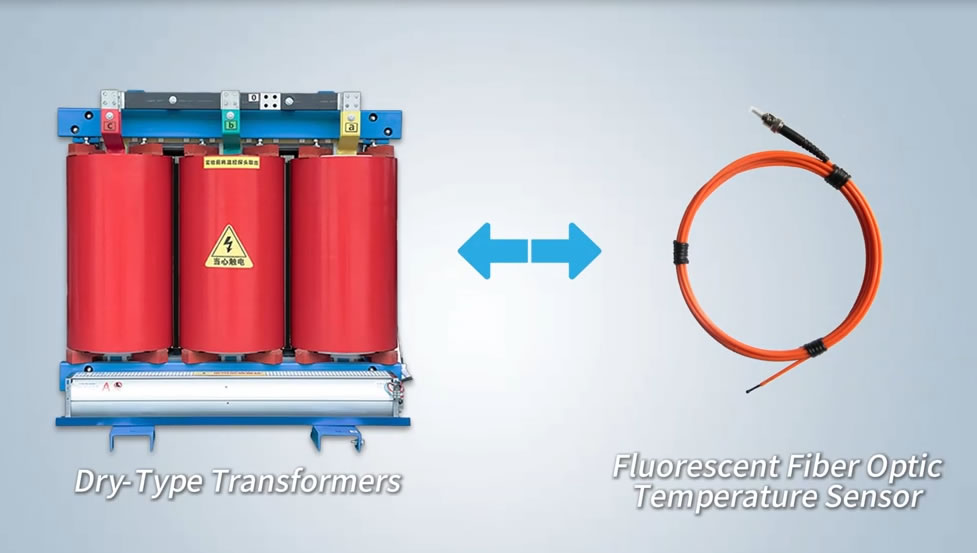
Dry-Type Transformer Temperature Monitoring
Dry-type transformers rely on air or gas insulation, làm giám sát nhiệt độ cuộn dây essential for preventing insulation degradation. Fluorescent probes can be embedded directly into winding assemblies during manufacturing or retrofitted into accessible locations, providing accurate hotspot detection unavailable through external temperature indication.
Ứng dụng máy biến áp ngâm dầu
TRONG oil-filled transformers, cảm biến nhiệt độ sợi quang monitor both winding temperatures and top-oil conditions. Unlike winding temperature indicators (WTI) that calculate temperatures indirectly, trực tiếp optical probe measurement captures actual thermal conditions, enabling precise fan control and preventing accelerated aging from thermal stress.
Installation Locations and Quantities
Typical configurations include probes at the hottest winding points (usually upper sections of high voltage windings), multiple probes distributed across three-phase windings for balanced monitoring, and additional sensors for neutral connections and tap changers. Proper placement ensures no critical thermal zones remain unmonitored.
Over-Temperature Protection Integration
Hệ thống giám sát nhiệt độ connect to transformer control circuits, automatically activating cooling fans when thresholds are exceeded, triggering alarms for abnormal temperature rises, and initiating automatic disconnection if critical limits are reached. This multi-level protection prevents catastrophic failures and costly transformer replacement.
7. How to Prevent Switchgear Contact Overheating?
Giám sát liên lạc của bộ ngắt mạch
Circuit breaker moving and stationary contacts experience wear and oxidation over time, increasing contact resistance and generating excessive heat. Contact-type fiber optic probes mounted directly on contacts provide real-time thermal tracking, detecting deterioration before failure occurs.
Busbar Connection Bolt Thermal Management
Busbar joints secured by bolted connections represent common failure points in electrical distribution systems. Inadequate torque, vibration loosening, or material corrosion elevates connection resistance. Surface-mount temperature sensors attached to critical busbar connections enable preventive maintenance based on actual thermal conditions rather than time-based schedules.
Cable Terminal Temperature Tracking
Đầu cáp điện trong ngăn thiết bị đóng cắt tập trung nhiều dây dẫn trong không gian hạn chế với hệ thống thông gió hạn chế. Đầu dò nhiệt độ sợi quang có thể giám sát các vấu cáp riêng lẻ, phát hiện nếp gấp kém, kết nối bị ăn mòn, hoặc mạch quá tải thông qua bất thường độ cao nhiệt độ hoa văn.
Ví dụ cài đặt điển hình
Việc lắp đặt các thiết bị đóng cắt trung thế thường sử dụng ba đến sáu cảm biến nhiệt độ quang học mỗi bảng: mỗi cái trên các khớp nối thanh cái đến, tiếp điểm chính của bộ ngắt mạch, và kết nối trung chuyển đi. Cấu hình này cung cấp phạm vi bao phủ toàn diện về các điểm lỗi nhiệt tiềm ẩn trong khi vẫn tiết kiệm chi phí cho việc lắp đặt thông thường.
8. What Happens When Motor Stator Temperature Goes Unchecked?
Những thách thức về giám sát nhiệt độ động cơ lớn
Động cơ công nghiệp cung cấp năng lượng cho máy bơm, máy nén, và thiết bị xử lý thể hiện sự đầu tư vốn đáng kể. Lỗi động cơ do quá tải nhiệt dẫn đến tổn thất sản xuất vượt xa chi phí thay thế thiết bị. Traditional bearing RTDs provide limited protection, missing critical điểm nóng cuộn dây stato where insulation failure initiates.
Stator Winding Embedded Installation
During motor manufacturing or rewinding, đầu dò sợi quang huỳnh quang can be embedded directly into stator slots, positioning sensors at locations experiencing highest thermal stress. This embedded approach provides true winding temperature measurement impossible to achieve through external sensors or thermal modeling.
Bearing Temperature Real-Time Tracking
Motor bearings generate heat from friction and can fail rapidly once lubrication degrades or mechanical wear progresses. Cảm biến nhiệt độ sợi quang mounted in bearing housings detect temperature increases indicating impending failure, allowing planned maintenance rather than catastrophic breakdown.
Rotor Temperature Measurement Solutions
Synchronous motors and wound-rotor induction machines benefit from rotor giám sát nhiệt độ. Specialized slip ring assemblies or wireless telemetry can transmit optical temperature data from rotating components, providing comprehensive thermal protection for the entire motor assembly.
9. Early Warning Systems for High Voltage Cable Joint Temperature Anomalies
Why Cable Joints Generate Excessive Heat
Cable joints and terminations concentrate electrical stress at interfaces between different insulation systems. Installation defects, material degradation, or moisture ingress increase joint resistance, converting electrical energy to heat. Undetected thermal runaway can lead to insulation breakdown, chớp nhoáng, or cable fires.
Temperature Probe Encapsulation Methods
Đầu dò sợi quang for cable joint monitoring require specialized encapsulation to withstand environmental exposure while maintaining thermal contact. Manufacturers supply probes with ruggedized housings, moisture-resistant seals, and mounting hardware compatible with standard cable joint configurations.
Cable Tunnel Multi-Point Monitoring
Underground cable systems in tunnels or ducts benefit from distributed cảm biến nhiệt độ at regular intervals along cable routes. Đa kênh hệ thống giám sát nhiệt độ sợi quang can supervise dozens of joint locations from a central control room, enabling rapid response to developing thermal issues.
Fault Case Analysis
Documented cases demonstrate giám sát nhiệt độ detecting cable joint failures weeks before visible symptoms appear. Gradual temperature increases from tens of degrees to critical levels provide ample warning for scheduled outages and repairs, avoiding emergency failures during peak load periods.
10. Which Wind Turbine Components Need Temperature Monitoring?
Main Bearing Thermal Monitoring
Wind turbine main bearings support rotor assemblies weighing tens of tons while operating in variable load conditions. Bearing temperature sensors detect lubrication issues, sự ô nhiễm, or mechanical wear before catastrophic failure, reducing costly offshore repairs and extended downtime.
Gearbox Lubricant Temperature
Gearbox reliability critically depends on proper lubrication and heat dissipation. Optical temperature probes immersed in gearbox oil sumps provide accurate lubricant temperature data, controlling cooling systems and detecting abnormal friction indicating gear wear or alignment problems.
Generator Winding Temperature Measurement
Máy phát điện tua bin gió truyền động trực tiếp và hướng dẫn yêu cầu stator winding monitoring similar to industrial motors. The harsh offshore environment and limited access for maintenance make reliable cảm biến nhiệt độ sợi quang particularly valuable for maximizing turbine availability.
Blade Root Anomaly Detection
Advanced wind turbine designs incorporate giám sát nhiệt độ in blade root sections to detect structural issues, thiệt hại do sét đánh, or bearing problems in pitch control systems. Cảm biến sợi quang chịu được môi trường quay và cung cấp phép đo không bị nhiễu.
11. How to Avoid Generator Temperature Failures in Hydropower Stations?
Giám sát lõi Stator và cuộn dây
Máy phát điện thủy điện lớn phát sinh nhiệt đáng kể trong lõi stato và cuộn dây trong quá trình vận hành. Giám sát nhiệt độ đa điểm sử dụng đầu dò sợi quang huỳnh quang được phân phối khắp cụm stato phát hiện các điểm nóng cục bộ do tắc nghẽn hệ thống làm mát, sự suy giảm cách điện, hoặc sự cố về điện.
Theo dõi nhiệt độ vòng bi lực đẩy
Vòng bi chặn trong máy phát thủy điện thẳng đứng chịu tải trọng trục lớn và yêu cầu độ chính xác kiểm soát nhiệt độ. Nhiều cảm biến sợi quang xung quanh miếng đệm ổ trục theo dõi sự phân bố nhiệt độ, phát hiện các vấn đề về tải hoặc bôi trơn không đồng đều trước khi xảy ra hư hỏng vòng bi.
Hướng dẫn quản lý nhiệt độ vòng bi
Vòng bi dẫn hướng trên và dưới duy trì sự liên kết của rôto trong quá trình quay. Cảm biến nhiệt độ mảng trong vỏ ổ trục cho phép phát hiện sớm các kiểu mài mòn, providing maintenance personnel with actionable data for targeted inspections and repairs.
Large Unit Multi-Point Configuration
Major hydropower installations with hundreds of megawatts capacity commonly deploy comprehensive hệ thống giám sát nhiệt độ with multiple channels tracking dozens of critical points. This investment in monitoring technology protects assets worth hundreds of millions and prevents extended outages from unexpected failures.
12. Fiber Optic Temperature Monitoring for Photovoltaic Inverter Protection
IGBT Power Module Monitoring
Inverter IGBT modules switch high currents at rapid frequencies, generating substantial heat that limits inverter capacity and lifetime. Direct temperature measurement of IGBT base plates using compact fiber optic probes enables optimal thermal management and prevents module destruction from thermal runaway.
DC Bus Bar Temperature
DC busbar connections between PV strings and inverter inputs carry high currents with significant ripple components. Poor connections create hotspots that degrade performance and create fire hazards. Cảm biến nhiệt độ thanh cái provide continuous monitoring of these critical connection points.
Combiner Box Connection Point Measurement
String combiner boxes consolidate multiple PV strings, with termination points subject to environmental exposure and thermal cycling. Multi-channel fiber optic monitoring of combiner box terminals detects connection degradation across large solar arrays without requiring individual site visits.
System Integration Solutions
Modern solar inverters incorporate communication capabilities allowing dữ liệu giám sát nhiệt độ integration with SCADA systems and remote monitoring platforms. This enables centralized oversight of distributed solar installations and data-driven maintenance planning.
13. How Do Data Centers Achieve Precision Temperature Control?
Hot and Cold Aisle Temperature Distribution
Data center cooling efficiency depends on maintaining proper temperature differentials between hot and cold aisles. Cảm biến nhiệt độ sợi quang networks distributed throughout raised floors and overhead spaces map thermal patterns, optimizing airflow management and identifying cooling inefficiencies.
Rack Front and Rear Temperature Differential Monitoring
Các giá đỡ máy chủ riêng lẻ tạo ra tải nhiệt khác nhau dựa trên khối lượng công việc tính toán. Cảm biến nhiệt độ at rack inlet and exhaust points measure cooling effectiveness, ensuring adequate airflow prevents equipment overheating while avoiding energy waste from excessive cooling.
UPS Distribution Cabinet Temperature Measurement
Hệ thống cung cấp điện liên tục chứa các linh kiện điện tử công suất cao, pin, and extensive wiring producing heat that impacts reliability. Multi-point optical temperature monitoring of UPS cabinets protects these mission-critical power systems from thermal failures.
Battery Energy Storage System Thermal Management
Lithium-ion battery installations for backup power or grid services require precise kiểm soát nhiệt độ to ensure safety, hiệu suất, và tuổi thọ. Cảm biến nhiệt độ sợi quang within battery racks provide early warning of cell imbalance or thermal runaway conditions.
14. Which Semiconductor Processes Require Interference-Free Temperature Sensing?
Induction Furnace Temperature Control
Semiconductor crystal growth and wafer processing employ induction heating systems generating intense electromagnetic fields. Truyền thống cặp nhiệt điện suffer measurement errors from induced voltages, trong khi đầu dò nhiệt độ sợi quang provide accurate readings immune to RF interference.
MOCVD and CVD Equipment Temperature Measurement
Metal-organic chemical vapor deposition and related processes require precise substrate kiểm soát nhiệt độ during thin film deposition. Cảm biến sợi quang huỳnh quang can monitor susceptor temperatures in reactive gas atmospheres without introducing contamination or affecting plasma processes.
Microwave Heating Interference-Free Monitoring
Microwave-assisted semiconductor processes pose extreme challenges for conventional cảm biến nhiệt độ. Công nghệ cảm biến quang học operates reliably in microwave cavities, providing essential thermal data for process control and equipment protection.
Vacuum Environment Temperature Tracking
Many semiconductor manufacturing steps occur under vacuum conditions where heat transfer differs dramatically from atmospheric pressure. Đầu dò sợi quang hoạt động đáng tin cậy trong chân không, chân không cao, và môi trường chân không cực cao mà không thoát khí hoặc ảnh hưởng đến độ sạch của buồng.
15. Why Must MRI Equipment Use Fiber Optic Temperature Sensors?
Strong Magnetic Field Environment Measurement Challenges
Magnetic resonance imaging systems generate magnetic fields thousands of times stronger than Earth’s magnetic field. Any metallic cảm biến nhiệt độ would be forcefully attracted to the magnet, creating safety hazards and measurement artifacts. All-dielectric fiber optic probes contain no ferromagnetic materials, operating safely in MRI bores.
Gradient Coil Thermal Monitoring
MRI gradient coils switch high currents rapidly, tạo ra nhiệt lượng đáng kể có thể ảnh hưởng đến chất lượng hình ảnh và làm hỏng các bộ phận đắt tiền. Cảm biến nhiệt độ sợi quang nhúng theo dõi nhiệt độ cuộn dây gradient, kiểm soát hệ thống làm mát và ngăn ngừa quá nhiệt trong các chuỗi hình ảnh đòi hỏi khắt khe.
Theo dõi nhiệt độ bề mặt bệnh nhân
Sự lắng đọng năng lượng tần số vô tuyến trong quá trình quét MRI có thể làm tăng nhiệt độ da của bệnh nhân, đặc biệt là trong các hệ thống trường cao hoặc trong các thủ tục can thiệp. Đầu dò sợi quang tương thích sinh học theo dõi nhiệt độ bệnh nhân một cách an toàn mà không đưa vật kim loại vào lỗ máy quét.
Yêu cầu chứng nhận cấp y tế
Thiết bị giám sát nhiệt độ cho các ứng dụng y tế phải đáp ứng các tiêu chuẩn quy định nghiêm ngặt về an toàn, hiệu suất, và khả năng tương thích điện từ. Các nhà sản xuất chất lượng cung cấp cấp y tế hệ thống nhiệt độ sợi quang có chứng nhận phù hợp để sử dụng lâm sàng.
16. Precision Temperature Control in RF Ablation and HIFU Therapy
Mẹo cắt bỏ kim Phản hồi theo thời gian thực
Thủ tục cắt bỏ tần số vô tuyến tiêu diệt các khối u hoặc mô bất thường thông qua việc sưởi ấm có kiểm soát. Đầu dò nhiệt độ sợi quang thu nhỏ integrated into ablation needles provide surgeons with real-time thermal feedback, ensuring therapeutic temperatures are achieved while avoiding collateral damage to healthy tissue.
Treatment Focus Zone Monitoring
High-intensity focused ultrasound (HIFU) concentrates acoustic energy to create localized heating deep within the body. Implantable fiber optic sensors can be positioned within or near treatment zones, validating thermal dose delivery and improving treatment precision.
Multi-Probe Array Applications
Complex ablation procedures targeting large tumors employ multiple cảm biến nhiệt độ arranged in arrays around the treatment volume. This spatial temperature mapping ensures uniform tissue destruction throughout the target while monitoring critical structures at risk from thermal spread.
17. Solving Temperature Measurement Challenges in Induction Heating and Microwave Equipment
Strong RF Field Interference Immunity
Industrial induction heating for metal processing, plastic welding, and food processing creates intense radiofrequency electromagnetic fields extending well beyond the heating coil. Cảm biến nhiệt độ sợi quang measure workpiece temperatures accurately regardless of field intensity, enabling closed-loop process control.
Fast Response Requirements
Many heating processes involve rapid temperature changes requiring sensors with quick thermal response. Đầu dò huỳnh quang designs optimize thermal coupling and minimize sensing element mass, achieving response times suitable for dynamic process control.
Process Consistency Assurance
Manufacturing quality depends on repeatable thermal processing. Chính xác đo nhiệt độ sử dụng cảm biến quang học enables statistical process control, reduces scrap rates, and supports quality certifications in industries from automotive to aerospace.
18. Who Are the Global Fluorescent Fiber Optic Temperature Sensor Manufacturers?
Leading International Suppliers
các cảm biến nhiệt độ sợi quang market includes specialized manufacturers focusing on industrial, power utility, và ứng dụng y tế. Established companies offer comprehensive product lines spanning single-channel instruments to sophisticated multi-point systems.
Geographic Distribution
Major manufacturers maintain facilities in North America, Châu Âu, and Asia-Pacific regions. This global presence ensures technical support availability across time zones and facilitates rapid delivery for international projects.
Product Range Overview
| Manufacturer Focus | Sản phẩm chính | Target Markets |
|---|---|---|
| Power Industry Specialists | Transformer and switchgear monitoring systems | Tiện ích, cơ sở công nghiệp |
| Medical Equipment Suppliers | MRI-compatible and surgical probes | Healthcare providers, medical device OEMs |
| Industrial Automation Providers | Process control temperature sensors | Chế tạo, chemical processing |
Notable Industry Leaders
INNOSEN Technology (Phúc Châu, Trung Quốc) specializes in complete giải pháp giám sát nhiệt độ sợi quang huỳnh quang cho các ứng dụng năng lượng điện, offering customization services and bulk supply capabilities.
Quang Weidmann (Thụy Sĩ) provides transformer monitoring systems with decades of installation experience in global power networks.
chất lượng (Hoa Kỳ) manufactures comprehensive asset monitoring solutions including cảm biến nhiệt độ sợi quang for transformers and other electrical equipment.
Neoptix (Canada, bây giờ là một phần của Qualitrol) pioneered commercial fluorescent fiber optic thermometry and maintains strong presence in medical and industrial markets.
19. How to Evaluate Fiber Optic Sensor Supplier Technical Capabilities?
Product Line Completeness
Capable suppliers offer complete systems including transmitters, cáp, thăm dò, and accessories rather than limited component selection. Comprehensive product portfolios indicate manufacturing depth and ability to support diverse applications.
Khả năng tùy chỉnh
Standard products suit many applications, nhưng môi trường đầy thách thức thường yêu cầu các giải pháp tùy chỉnh. Các nhà sản xuất có đội ngũ kỹ thuật nội bộ, quy trình sản xuất linh hoạt, và sẵn sàng phát triển các sản phẩm dành riêng cho ứng dụng mang lại tiềm năng thành công lớn hơn cho dự án.
Chứng nhận quốc tế
Chứng nhận chất lượng (ISO 9001), phê duyệt an toàn điện (UL, CSA, CN), và các chứng nhận dành riêng cho ngành thể hiện cam kết về quản lý chất lượng và an toàn sản phẩm. Các ứng dụng y tế yêu cầu tuân thủ quy định bổ sung bao gồm đăng ký FDA hoặc đánh dấu CE theo chỉ thị về thiết bị y tế.
Dịch vụ hỗ trợ kỹ thuật
Hỗ trợ kỹ thuật đáp ứng giúp phân biệt nhà cung cấp chuyên nghiệp với nhà cung cấp sản phẩm cơ bản. Đánh giá nên xem xét sự sẵn có của hỗ trợ kỹ thuật ứng dụng, hướng dẫn cài đặt, hỗ trợ khắc phục sự cố, và dịch vụ sau cài đặt.
Hiệu suất giao hàng
Lịch trình dự án phụ thuộc vào việc phân phối thành phần đáng tin cậy. Nhà sản xuất có đủ hàng tồn kho, established production capacity, and logistics partnerships ensure on-time delivery for both standard and custom orders.
20. What Matters When Procuring Temperature Probes in Large Quantities?
OEM and ODM Cooperation Models
Nhà sản xuất thiết bị tích hợp cảm biến nhiệt độ sợi quang into products benefit from OEM partnerships providing private labeling, custom packaging, and technical collaboration. ODM relationships enable co-development of integrated solutions tailored to specific equipment designs.
Sample Testing Programs
Prudent procurement includes sample evaluation before committing to volume orders. Professional suppliers provide samples for application testing and performance validation, ensuring selected products meet actual operating requirements.
Volume Procurement Advantages
Large quantity orders typically qualify for improved pricing, lập kế hoạch sản xuất ưu tiên, and enhanced technical support. Establishing long-term supply relationships provides procurement predictability and access to new product developments.
Rapid Shipping Assurance
Manufacturing facilities with adequate capacity and inventory management systems ensure short lead times even for substantial orders. Global suppliers maintain regional distribution points reducing international shipping delays.
Global Logistics Network
International projects require suppliers with established logistics partnerships providing efficient customs clearance, freight forwarding, and delivery tracking. Experienced exporters simplify procurement for overseas installations.
21. What Does Remote Technical Support Include?
Installation and Commissioning Training
Suppliers provide detailed installation manuals, video hướng dẫn, and remote guidance during system commissioning. Complex installations may include on-site support or virtual assistance ensuring proper setup and configuration.
Troubleshooting Assistance
Technical support teams help diagnose operational issues, interpret sensor readings, and resolve system faults. Experienced suppliers maintain application knowledge bases and can quickly identify solutions based on symptom descriptions.
Software Updates and Maintenance
Hiện đại hệ thống giám sát nhiệt độ incorporate firmware and software requiring periodic updates. Manufacturers provide update packages, upgrade procedures, and compatibility information ensuring systems remain current with latest features.
Global Reference Cases
Access to application case studies, installation examples, and lessons learned from similar projects accelerates successful implementation. Leading manufacturers document diverse applications providing valuable reference information.
24/7 Response Availability
Critical infrastructure monitoring may require around-the-clock support access. Premium suppliers offer multi-shift technical support, emergency contact procedures, and expedited parts replacement for mission-critical applications.
22. How Important Are CE and ROHS Certifications for Your Project?
European CE Compliance Requirements
CE marking indicates conformity with European safety, sức khỏe, and environmental protection standards. Equipment sold or installed in European Union countries must carry CE marking, making this certification essential for international projects.
Environmental ROHS Standards
Hạn chế các chất độc hại (ROHS) directives limit use of specific materials in electrical and electronic equipment. ROHS-compliant cảm biến nhiệt độ meet environmental regulations and support corporate sustainability objectives.
Additional Industry Certifications
Specific applications may require certifications including ATEX or IECEx for explosive atmospheres, UL or CSA for North American installations, marine certifications for shipboard use, or medical device registrations for clinical applications.
Tender and Bidding Qualifications
Many project specifications mandate specific certifications. Suppliers with comprehensive certification portfolios simplify bid compliance and eliminate delays from certification acquisition after contract award.
23. Câu hỏi thường gặp
General Questions
Q: What advantages do fiber optic temperature sensors offer over traditional thermocouples?
MỘT: Cảm biến quang học cung cấp sự cách ly điện hoàn toàn, khả năng chống nhiễu điện từ, no ground loop errors, and suitability for high voltage applications where metallic sensors fail.
Q: How accurate are fluorescent fiber optic temperature probes?
MỘT: Professional-grade systems deliver accuracy suitable for critical equipment monitoring and process control applications, with specifications available from manufacturers for specific models.
Q: Can fiber optic sensors work in explosive atmospheres?
MỘT: Đúng, the all-dielectric construction provides intrinsic safety without requiring explosion-proof housings, suitable for hazardous locations when properly certified.
Q: What is the typical lifespan of a fluorescent temperature probe?
MỘT: Chất lượng đầu dò quang học demonstrate excellent long-term stability with minimal drift, providing reliable service for extended periods in properly specified applications.
Technical Questions
Q: How far can fiber optic cables run between probe and transmitter?
MỘT: Standard installations support considerable distances, with extended options available for special applications. Consult manufacturers for specific distance capabilities.
Q: Are fiber optic temperature sensors affected by ambient light?
MỘT: Proper system design isolates sensing elements from ambient light, ensuring outdoor or brightly lit industrial environments don’t affect measurements.
Q: Can systems monitor both high and low temperatures simultaneously?
MỘT: Multi-channel systems with appropriate probe selections can monitor diverse temperature ranges across different measurement points.
Q: Cảm biến nhiệt độ sợi quang cần bảo trì những gì?
MỘT: Minimal maintenance is typically required beyond periodic verification of system operation and inspection of probe mounting integrity.
Application Questions
Q: How are probes installed in transformer windings?
MỘT: Installation methods vary by transformer type, including factory embedding during manufacturing or retrofit installation through existing openings.
Q: Can fiber optic sensors monitor rotating equipment?
MỘT: Specialized techniques including slip rings or wireless telemetry enable monitoring of rotating components in motors and generators.
Q: Are these sensors suitable for outdoor installations?
MỘT: Properly specified systems with environmental protection withstand outdoor conditions including temperature extremes, độ ẩm, và tiếp xúc với tia cực tím.
Q: How quickly do fluorescent probes respond to temperature changes?
MỘT: Response times suit most industrial applications, with fast-response designs available for dynamic processes requiring rapid feedback.
Procurement Questions
Q: What information is needed for custom probe quotations?
MỘT: Provide application details including temperature range, mounting requirements, chiều dài cáp, điều kiện môi trường, and quantity requirements.
Q: Do manufacturers provide installation training?
MỘT: Professional suppliers offer installation guidance, tài liệu đào tạo, and technical support during commissioning.
Q: What communication interfaces are available?
MỘT: Common options include analog outputs, truyền thông kỹ thuật số (Modbus, Hồ sơ), tiếp điểm liên lạc, và kết nối Ethernet.
Q: Can systems integrate with existing SCADA platforms?
MỘT: Standard communication protocols enable integration with most industrial control systems and building management platforms.
Selection Questions
Q: How many channels do I need for my application?
MỘT: Channel requirements depend on equipment size, sự quan trọng, and desired monitoring coverage. Application engineers can recommend configurations.
Q: What probe style is best for my equipment?
MỘT: Selection depends on mounting location, hạn chế về không gian, and thermal coupling requirements. Manufacturers offer various probe designs for different scenarios.
Q: Should I choose fluorescent or other fiber optic technologies?
MỘT: Cảm biến huỳnh quang excel in high-accuracy point measurement applications, while other technologies may suit specific requirements.
Q: What certifications are essential for my project?
MỘT: Requirements vary by location, ngành công nghiệp, và ứng dụng. Review project specifications and consult suppliers regarding available certifications.
24. Technical Terminology
Cảm biến nhiệt độ sợi quang huỳnh quang: Temperature measurement device utilizing rare earth fluorescent material whose emission decay time varies with temperature.
Optical Temperature Probe: Sensing element containing fluorescent crystal positioned at location where temperature measurement is required.
Máy phát nhiệt độ: Electronic instrument that generates excitation light, processes fluorescence signals, and outputs temperature data.
Quartz Fiber Optic Cable: High-purity glass fiber transmitting light signals between transmitter and probe.
All-Dielectric Construction: Design using only non-conductive materials, cung cấp sự cách ly điện hoàn toàn.
Miễn nhiễm điện từ: Resistance to interference from electric and magnetic fields, ensuring measurement accuracy in electrically noisy environments.
Contact Temperature Measurement: Direct physical contact between sensor and measured object, providing actual temperature rather than radiated values.
Giám sát nhiệt độ đa điểm: System configuration measuring temperature at multiple locations simultaneously using individual probes.
Thermal Hotspot: Localized area experiencing elevated temperature, often indicating developing equipment problems.
Temperature Rise Detection: Identification of abnormal temperature increases signaling potential equipment faults.
An toàn nội tại: Design characteristic preventing ignition of flammable atmospheres under normal or fault conditions.
Chống ăn mòn: Ability to withstand chemical attack in aggressive environments without performance degradation.
25. Tuyên bố từ chối trách nhiệm
This guide provides general information about fluorescent fiber optic temperature sensor technology and applications. Thông số kỹ thuật, đặc tính hiệu suất, and suitability for specific applications vary among manufacturers and models. Information presented should not substitute for professional engineering evaluation and consultation with qualified suppliers.
Actual system performance depends on proper selection, cài đặt, và bảo trì. Users should consult manufacturer documentation, applicable standards, and qualified professionals when specifying temperature monitoring equipment for critical applications. The author and publishers assume no liability for decisions made based on information contained in this guide.
Chứng nhận sản phẩm, tuân thủ quy định, and technical capabilities should be verified directly with manufacturers before procurement. Application examples are for illustrative purposes and may require adaptation to specific project requirements.

Cảm biến nhiệt độ sợi quang, Hệ thống giám sát thông minh, Nhà sản xuất cáp quang phân phối tại Trung Quốc
 |
 |
 |