 Sensores de temperatura de fibra óptica INNO ,sistemas de monitoramento de temperatura.

Resposta rápida: OLTC vs. Off-Load Tap Changer (DETC)
- Comutador de derivação em carga (OLTC): Adjusts turns ratio dynamically under full load without interrupting downstream customers—essential for utility substations, renewable collector transformers, and volatile industrial feeders.
- Off-Load / De-Energized Tap Changer (DETC): Adjusts voltage taps only after the transformer is isolated and grounded—best suited for stable radial distribution networks, captive plant feeders, and seasonal voltage corrections.
- CAPEX vs. Maintenance Trade-Off: DETC units cost less upfront and eliminate moving diverter-arc contacts, whereas OLTC transformers carry higher procurement cost and recurring maintenance demands because tap changers remain one of the leading causes of power transformer failures.
- OLTC Temperature Differential (ΔT) Monitoramento: Comparing diverter oil compartment heat against main tank oil temperature—supported by on-load tap changer monitoring solutions e transformer OTI/WTI temperature indicators—detects coking contacts months before a forced outage.
Índice
- 1. OLTC vs. Off-Load Tap Changer (DETC): Core Commercial & Operational Comparison
- 2. When to Specify an OLTC Transformer vs. an Off-Load Tap Changer
- 3. Why OLTC Tap Changers Account for Leading Power Transformer Failures
- 4. Monitoramento de comutador em carga: Diferencial de temperatura (ΔT) & Contact Hot-Spot Detection
- 5. Procurement Checklist for OLTC Transformers & Tap Changer Monitoring Systems
- 6. Perguntas frequentes: OLTC vs. Off-Load Tap Changer
- 7. Request OLTC Temperature Differential & Transformer Monitoring Specifications
1. OLTC vs. Off-Load Tap Changer (DETC): Core Commercial & Operational Comparison
Selecting between an OLTC transformer and a transformer fitted only with an off-load (de-energized) tap changer directly shapes capital budget, substation outage schedules, and long-term voltage compliance. In procurement tenders, engineers evaluate both mechanisms across operational flexibility and lifecycle risk:
| Decision Dimension | Comutador de derivação em carga (OLTC) | Off-Load / De-Energized Tap Changer (DETC) |
|---|---|---|
| Switching Under Load | Switches tap steps continuously while energized under full load current | Requires complete de-energization and isolation prior to handle adjustment |
| Automação & SCADA Control | Motor-drive mechanism integrates with AVR relays and automated SCADA voltage regulation | Manual external crank handle; no live automatic voltage regulation capability |
| Typical Tap Range & Passos | Fine step increments across wide regulation windows for dynamic feeders | Coarse five-position or seven-position steps for permanent seasonal trimming |
| Upfront Transformer CAPEX | Higher due to separate diverter compartment, drive cabinet, and transition resistors/reactors | Lower capital outlay and shorter factory assembly lead times |
| Primary Thermal & Risco de falha | Diverter oil carbonization, transition resistor heat, and coked contact hot-spots | Contact oxidation or spring relaxation after years stationary without operation |
| Recommended Monitoring Strategy | Contínuo Monitoramento OLTC tracking ΔT oil differential, corrente do motor, and tap position | Periodic offline winding resistance plus main-tank oil and winding temperature checks |
2. When to Specify an OLTC Transformer vs. an Off-Load Tap Changer
Grid operators should match tap changer capability to actual load volatility rather than over-specifying mechanical complexity everywhere—or under-specifying critical substations where outages carry severe penalties:
- Specify an OLTC Transformer When Voltage Swings Cannot Wait for an Outage: Utility transmission and primary distribution substations feeding mixed industrial, comercial, and inverter-based renewable feeders experience wide bi-directional power flows throughout a single day. Automatic OLTC regulation protects downstream equipment from overvoltage during midday solar export and undervoltage during evening peaks without interrupting service.
- Specify a DETC (Off-Load Tap Changer) on Stable Step-Up or Captive Plant Assets: Dedicated industrial process feeders, pad-mounted distribution blocks, and facilities equipped with upstream OLTC regulation rarely need live daily tap changes. Eliminating the OLTC mechanism removes a high-maintenance moving compartment, shortens transformer procurement lead times, and simplifies ongoing maintenance.
- Dual Configuration on Large Power Transformers: Many utility LPTs install an OLTC on the regulated winding alongside a secondary DETC for coarse long-term system re-tapping—making clear tap position indicator verification critical during commissioning.
3. Why OLTC Tap Changers Account for Leading Power Transformer Failures
Industry reliability surveys consistently identify the OLTC tap changer as one of the top two root causes of forced power transformer outages, alongside bushings. Unlike stationary windings, an OLTC contains motor drives, mechanical linkages, resistores de transição, and oil-immersed arcing contacts operating thousands of times per year:
- Coking & High Contact Resistance (Hidden Thermal Runaway): Arcing across diverter contacts gradually degrades insulating oil and deposits carbonized sludge (“coque”) onto selector and diverter contact faces. Elevated contact resistance triggers self-reinforcing heating (fuga térmica) inside the tap changer head long before main-tank protection notices an issue.
- Mechanical Wear & Stalled Transitions: Engrenagens gastas, stiff linkage shafts, or corroded motor brake relays leave the OLTC partway between taps, overheating transition resistors rapidly until they rupture or ignite oil vapor.
- Blindness of Standalone Time-Based Maintenance: Utility teams historically open OLTC tanks on fixed operation-count or multi-year intervals. Because abnormal contact coking accelerates rapidly once initiated, time-based inspection often arrives either unnecessarily early on healthy units or fatally late on heavily cycled units. Review failure timelines in our OLTC condition monitoring reliability guide.
4. Monitoramento de comutador em carga: Diferencial de temperatura (ΔT) & Contact Hot-Spot Detection
Contínuo on-load tap changer monitoring focuses on comparing thermal behavior across compartments rather than reading raw oil temperature in isolation. Because an OLTC shares external ambient weather with the main transformer tank, tracking the temperature differential (ΔT = TOLTC − TMain Tank) filters out ambient heatwaves and load swings cleanly:
- Healthy OLTC ΔT Baseline: Under normal operation—even on resistive-type OLTCs performing frequent switching—the diverter compartment usually sits cooler than the heavily loaded main transformer tank oil (negative or slightly negative ΔT).
- Coking & Contact Hot-Spot Warning Signature: When selector or diverter contacts coke and begin continuous I2R heating, OLTC compartment oil rises steadily relative to the main tank, reversing ΔT toward neutral or strongly positive differential alarms—often weeks or months before gas relays trip.
- Synchronized Tap Position & Vibro-Acoustic Checks: Correlating ΔT rise with specific tap step numbers via a digital tap position monitor pinpoints whether heating affects all phases or concentrates on a single stationary selector contact that rarely leaves one dominant tap position.
FJINNO Multi-Point Temperature & OLTC Differential Monitoring Architecture
FJINNO supplies coordinated temperature and gas monitoring hardware validated under certificações internacionais dielétricas e de qualidade for both new OLTC transformer builds and in-service substation retrofits:
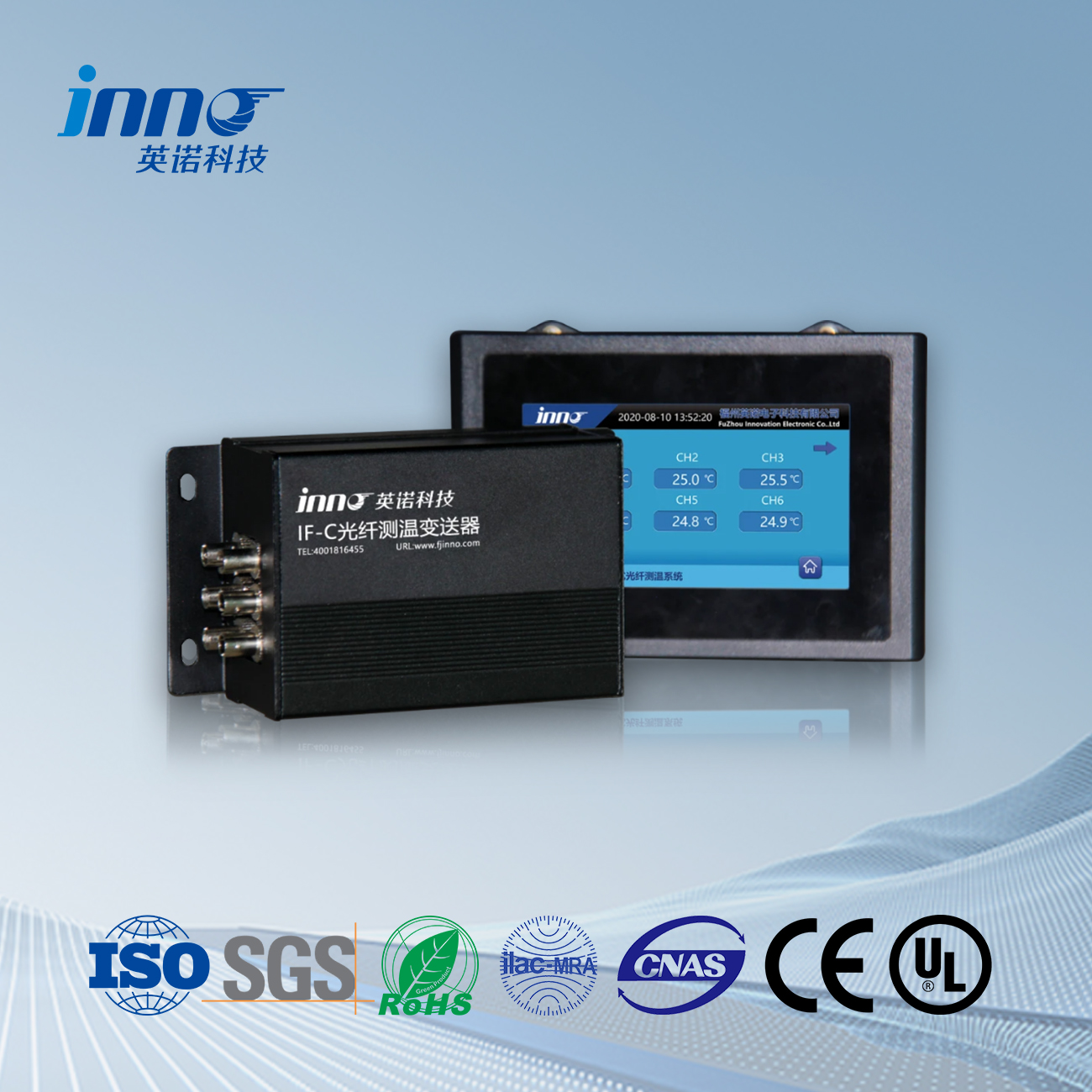
- Dual-Channel Oil & Compartment ΔT Monitoring: Pair main-tank BWY2 OTI / BWR2 WTI transmitters with dedicated OLTC diverter oil sensing so substation SCADA tracks ΔT trends continuously without manual rounds.
- Direct Contact & Tank Hot-Spot Sensing: On dry-type tap changers, vacuum OLTC chambers, or overhaul rebuilds requiring zero electromagnetic interference, sensores de temperatura de fibra óptica fluorescentes monitor energized tap selector contacts directly.
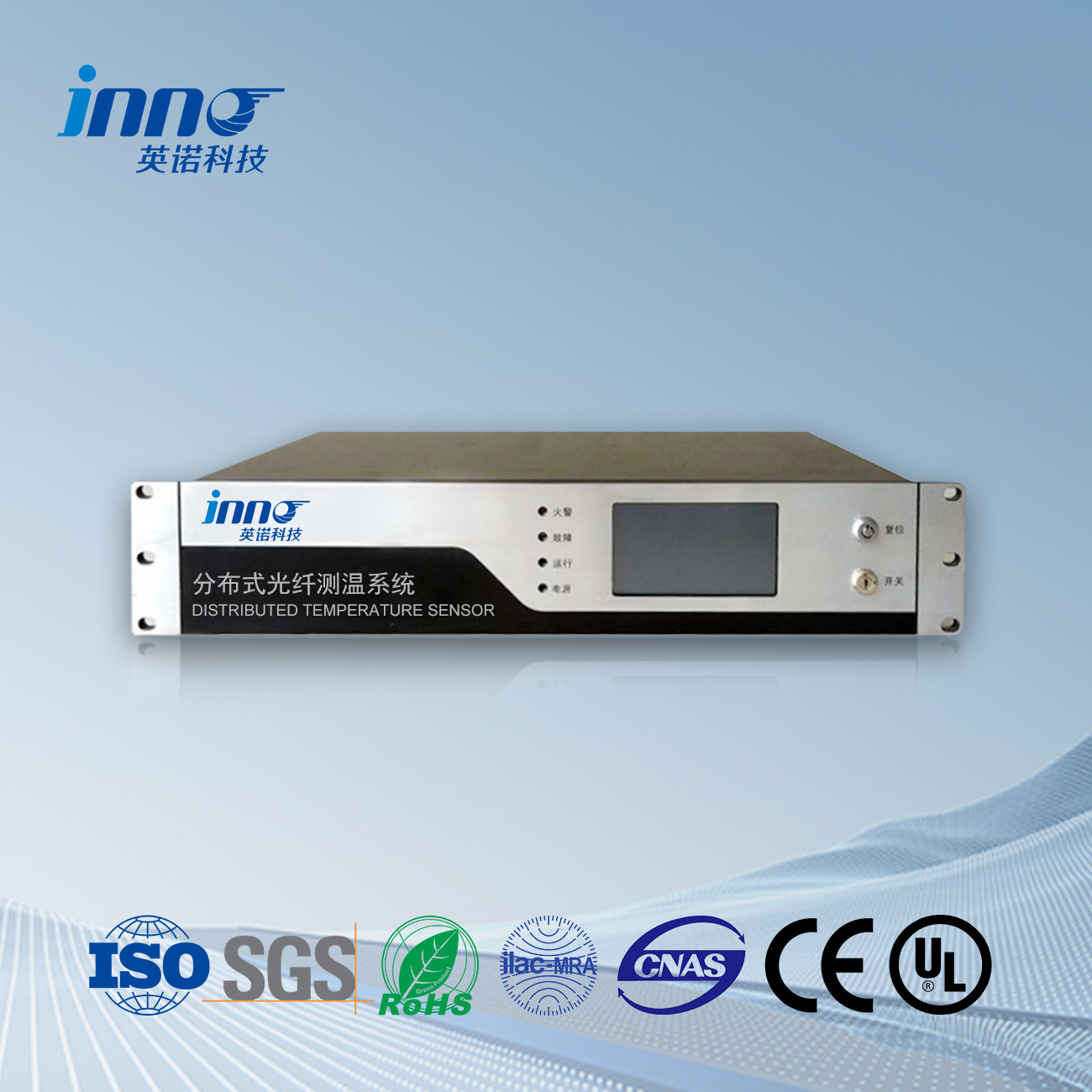
- Targeted DGA & Mechanical Fault Synergy: Combining compartment temperature differential alarms with análise on-line de gases dissolvidos isolates thermal contact faults inside the OLTC compartment cleanly from main-tank winding degradation.
5. Procurement Checklist for OLTC Transformers & Tap Changer Monitoring Systems
Before finalizing utility transformer specifications or approving substation monitoring retrofits, procurement and protection engineers should confirm these six checkpoints:
- 1. Justify Live Switching vs. Lifecycle Maintenance: Quantify feeder voltage swings and outage penalties objectively—do not install an OLTC where a lower-risk DETC plus upstream busbar regulation handles load cleanly.
- 2. Specify Dedicated OLTC Oil Thermowells on New Tenders: Require dedicated thermowell pockets in the OLTC diverter head and main tank top-oil zone so external ΔT transmitters install without tank draining later.
- 3. Monitor Under-Cycled (“Parked”) Tap Positions: DETC units and OLTC transformers stuck on a single tap for years develop surface film oxidation; verify ΔT trends immediately after any rare tap movement.
- 4. Tie ΔT Alarms to Maintenance Triggers, Not Just Trip Relays: Use progressive differential warning thresholds to schedule targeted oil filtration or contact inspection before arcing damages main windings.
- 5. Standardize SCADA & Asset-Health Outputs: Require isolated Modbus RTU/TCP, CEI 61850, and hardwired alarm contacts to integrate OLTC ΔT alongside main WTI/OTI and DGA dashboards.
- 6. Request a Factory BOM Matched to Compartment Layout: Submit transformer MVA, tap changer brand/configuration, and pocket dimensions on the FJINNO contact page for matched monitoring packages.
6. Perguntas frequentes: OLTC vs. Off-Load Tap Changer
What is the main operational difference between an OLTC and an off-load tap changer (DETC)?
An OLTC (comutador em carga) switches transformer voltage ratios dynamically while carrying full customer load, whereas an off-load or de-energized tap changer (DETC) requires taking the transformer completely out of service before rotating the manual tap switch.
Why is an OLTC transformer more likely to fail than a DETC unit?
An OLTC relies on high-frequency mechanical gearboxes, acionamentos de motor, resistores de transição, and arcing contacts submerged in oil. Mais de milhares de operações, arc wear and carbonization (“coque”) degrade contact surfaces and insulation unless tracked continuously.
How does OLTC temperature differential (ΔT) monitoring detect incipient faults?
By comparing OLTC diverter compartment oil temperature continuously against main transformer tank oil temperature, ΔT cancels out ambient weather and normal load swings. Any abnormal positive temperature shift signals localized coking or transition-resistor heating early.
Can off-load tap changers still suffer from hot-spot overheating?
Sim. When a DETC remains parked on one fixed tap for years, spring relaxation or film oxidation increases contact resistance—especially under sustained transformer overload. Comparing thermal trends after seasonal tap adjustments catches poor contact seating promptly.
How can substations retrofit temperature monitoring onto existing OLTC transformers?
Existing substations install external OTI/WTI transmitters into existing OLTC and main-tank thermowells or upgrade to multi-channel digital temperature monitors during scheduled oil-filtration windows. Share tank pocket specs via the FJINNO contact page for retrofit pricing.
7. Request OLTC Temperature Differential & Transformer Monitoring Specifications
Evaluating new OLTC transformer specifications or planning condition-monitoring upgrades across aging substation assets? Share your tap changer setup and SCADA telemetry requirements with FJINNO engineers for matched ΔT, WTI/OTI, and fiber optic monitoring proposals.

Sensor de temperatura de fibra óptica, Sistema de monitoramento inteligente, Fabricante distribuído de fibra óptica na China
 |
 |
 |