 INNO glasvezel temperatuursensoren ,Temperatuur Monitoring Systemen.
- Transformer overheating is responsible for the majority of premature insulation failures and unplanned outages in power networks worldwide — making temperature monitoring one of the highest-value investments in asset protection.
- The five primary transformer temperature monitoring technologies are: fluorescerende glasvezelthermometrie, PT100 weerstandstemperatuurdetectoren, thermal simulation oil temperature indicators, draadloze temperatuursensoren, en infrarood thermografie.
- Fluorescerende glasvezelsensoren are the only technology capable of direct winding hot-spot measurement inside energized transformers with full EMI immunity and ±0.5°C accuracy — making them the gold standard for critical high-voltage assets.
- PT100-sensoren are the industry-standard contact thermometer for top oil temperature and cooling system monitoring, widely integrated into transformer protection relays and SCADA systems.
- Thermal simulation oil temperature indicators calculate estimated winding hot-spot temperature using an analog thermal model of the transformer’s heat rise characteristics — a cost-effective solution for routine protection on distribution transformers.
- Draadloze temperatuursensoren provide cable-free multi-point monitoring on transformer surfaces, bussen, and cable terminations — ideal for retrofit installations and dry-type transformer enclosures.
- Infrarood thermografie delivers non-contact visual heat mapping for scheduled maintenance inspections but cannot provide the continuous real-time alarming that online monitoring systems offer.
- The best transformer temperature monitoring solution combines direct winding hot-spot sensing with top oil temperature measurement, multi-tier alarm management, and integration with existing SCADA or EMS platforms.
1. What Is a Power Transformer? The Backbone of Every Electrical Grid

Een transformator is een statisch elektromagnetisch apparaat dat elektrische energie overdraagt tussen twee of meer circuits door middel van elektromagnetische inductie, gelijktijdig het verhogen of verlagen van de spanning om aan de transmissievereisten te voldoen, verdeling, of apparatuur voor eindgebruik. Transformers are the cornerstone of every alternating current power system — from utility-scale generation and high-voltage transmission networks down to the final distribution point at a commercial building, industrial plant, or residential neighborhood.
Main Types of Power Transformers
In olie ondergedompelde stroomtransformatoren are the dominant technology for high-voltage and high-capacity applications. The core and windings are submerged in mineral oil, which serves as both electrical insulation and the primary cooling medium. These units are found in transmission substations, industriële faciliteiten, and grid-scale renewable energy connections ranging from a few MVA to over 1,000 MVA.
Droge transformatoren use solid cast-resin insulation instead of oil, eliminating fire risk and making them the preferred choice for indoor installations such as data centers, ziekenhuizen, commercial high-rise buildings, metrostations, and semiconductor fabs. Cast-resin dry-type units operate at lower voltage and power ratings than oil-filled units but require direct bewaking van de temperatuur van de wikkelingen due to their higher thermal sensitivity.
Gasgeïsoleerde transformatoren use sulfur hexafluoride (SF₆) or nitrogen as the insulating and cooling medium. They are used in applications requiring compact footprint, low flammability, and high reliability — including offshore platforms, urban GIS substations, en kritieke infrastructuur.
Pad-mounted and box-type transformers are self-contained distribution units used for medium-voltage to low-voltage conversion at commercial and residential service points, increasingly equipped with integrated slimme transformatorbewakingssystemen for remote condition management.
Industries Dependent on Transformer Reliability
Reliable transformer operation is mission-critical across electric utilities, olie en gas, automotive manufacturing, Openbaar vervoer per spoor, datacentra, mijnbouw, petrochemie, en gezondheidszorg. Elke thermische storing in een grote stroomtransformator kan zich vertalen in wekenlange reparatietijd, aanzienlijke kapitaalvervangingskosten, en trapsgewijze gevolgen voor de netstabiliteit en de werking van de faciliteiten.
2. Binnen in de tank: Kerncomponenten van in olie ondergedompelde en droge transformatoren

Het begrijpen van de transformatorconstructie is essentieel voor het ontwerpen van een effectief Strategie voor bewaking van de temperatuur van de transformator. Elk hoofdonderdeel heeft verschillende thermische kenmerken en faalmodi die bepalen waar en hoe sensoren moeten worden geplaatst.
Wikkelingen (Spoelen)

De transformatorwikkeling is het thermisch meest kritische onderdeel. Koperen of aluminium geleiders voeren de volledige belastingsstroom en genereren weerstandswarmte (I²R-verliezen) dat voortdurend moet worden afgevoerd. De kronkelende hotspot – het hoogste temperatuurpunt binnen de spoel – is de belangrijkste bepalende factor voor de levensduur van de isolatie van de transformator en het laadvermogen. IEC 60076-2 definieert hotspot-meet- en berekeningsmethoden die ten grondslag liggen aan alle moderne technieken normen voor thermische beveiliging van transformatoren.
Kern (Ijzeren kern)

De gelamineerde kern van siliciumstaal transporteert een magnetische wisselstroom en genereert wervelstroom- en hysteresisverliezen die verschijnen als warmte die door het kernvolume wordt verdeeld. Gelokaliseerde kernhotspots veroorzaakt door schade aan de interlaminaire isolatie, circulerende stromen, of fabricagefouten kunnen interne thermische gebeurtenissen veroorzaken die moeilijk te detecteren zijn zonder gedistribueerde vezeldetectie.
Isolerende olie
In oliegevulde transformatoren, minerale olie of synthetische estervloeistof dient zowel als primair isolatiemedium als als convectieve warmteoverdrachtsvloeistof. Top olietemperatuur is de meest bewaakte transformatorparameter, gemeten door PT100-sensoren of thermische simulatie-indicatoren gemonteerd op de transformatortank. Oliedegradatie – gemeten aan de hand van de zuurgraad, analyse van opgelost gas (DGA), and moisture content — accelerates sharply above rated operating temperatures.
Tik op Wisselaar

De on-load kraanwisselaar (OLTC) is the most mechanically complex component of a power transformer and a leading source of thermal faults. Contactslijtage, carbon contamination, and incorrect oil lead to elevated transition resistance and localized heating at the tap selector contacts — a fault mode directly detectable by embedded fiber optic temperature sensors.
Bussen

Hoogspanning transformator bussen carry current through the tank wall and are subject to dielectric heating, contact resistance at terminal connections, en het binnendringen van vocht. Bushing hot spots are effectively monitored using draadloze temperatuurzenders or infrared inspection through designated observation windows.
Koelsysteem
Oil-immersed transformers are cooled by natural or forced oil circulation combined with radiator banks, ventilatoren, or water heat exchangers. Cooling system performance monitoring — including radiator inlet/outlet temperature differentials measured by PT100 sensors — is a standard component of comprehensive transformer thermal management systems.
3. Waarom falen transformatoren?? Basisoorzaken van thermische fouten in stroomtransformatoren
Industry surveys consistently identify thermal degradation as the leading cause of transformer insulation failure and premature end-of-life. According to CIGRE and IEEE reliability studies, thermal faults account for 30–40% of all major transformer failures — a proportion that rises further when cooling system failures and overload events are included in the analysis.
Winding Overheating
Sustained overloading drives winding temperatures above the rated thermal limit defined by insulation class. For standard mineral-oil transformers with Class A (105°C) cellulose insulation, operation at 10°C above the rated hot-spot limit halves the expected insulation life — a relationship governed by the Arrhenius thermal aging model codified in IEC 60076-7.
Storing in het koelsysteem
Storingen in de ventilatormotor, blocked radiator fins, pompstoringen, and oil valve misoperation all reduce the transformer’s ability to dissipate heat. A transformer operating with a fully failed cooling system can reach critical winding temperatures within 30–60 minutes under full load — a scenario that demands real-time continuous winding hot-spot monitoring with automatic load reduction or trip protection.
Tap Changer Contact Degradation
The OLTC operates under load, generating contact arcing that gradually degrades the selector contacts and contaminates the diverter oil. Naarmate de contactweerstand toeneemt, local heating rises proportionally. Studies geven dat aan OLTC-related faults ongeveer voor rekening 40% of all transformer failures requiring major repair — the single largest failure category by cause.
Overload and Emergency Operation
Grid contingency events, equipment outages, and abnormal load growth regularly push distribution and transmission transformers beyond their nameplate ratings. While transformers can tolerate short-duration overloads per IEC 60076-7 loading guides, each overload event consumes a measurable portion of remaining insulation life that cannot be recovered.
Core Insulation Defects
Inter-laminar core insulation damage creates low-resistance paths for eddy current circulation, generating concentrated heat in localized core regions. These defects — often caused by mechanical damage during transport or installation — can cause sustained internal hot spots that accelerate oil degradation and generate dissolved combustible gases detectable by DGA monitoring.
4. De werkelijke kosten van oververhitting van transformatoren: Risico's en gevolgen
The consequences of inadequate bewaking van de temperatuur van de transformator extend far beyond the transformer itself. A single major transformer failure in a critical facility can trigger a chain of operational, financieel, veiligheid, and regulatory consequences that take months to fully resolve.
Accelerated Insulation Aging and Reduced Asset Life
Cellulose paper insulation — the primary dielectric material in oil-immersed transformers — undergoes irreversible thermal degradation through a chemical process described by the Arrhenius-vergelijking. For every 6–10°C rise in winding hot-spot temperature above the rated design limit, the transformer’s expected service life is reduced by approximately half. A transformer designed for a 40-year service life can be prematurely aged to functional end-of-life in under 15 years through sustained moderate overtemperature operation that would be undetectable without directe temperatuurmeting van de wikkeling.
Catastrophic Failure, Fire, and Explosion Risk
Severe winding overheating causes rapid oil degradation, gasproductie, and potential internal arcing. In oliegevulde transformatoren, the combination of electrical arcing and hydrocarbon oil vapor creates conditions for tankbreuk, oil fire, and explosive pressure release. Major transformer fires in substations and industrial facilities have caused fatalities, structural destruction, and contamination events requiring multi-million dollar environmental remediation. Dry-type transformer failures, while less prone to fire, can produce toxic fumes from burning cast resin and cause extended facility shutdowns.
Unplanned Outages and Production Loss
Large power transformers at transmission voltage levels (138kV en hoger) typically have lead times of 12–24 months for replacement. An unplanned failure of a grid-critical transformer can result in extended supply interruptions affecting industrial customers, nutsvoorzieningen, and communities. For manufacturing facilities, datacentra, en ziekenhuizen, the cost of an unplanned electrical outage typically ranges from tens of thousands to several million dollars per hour of downtime — making the economics of predictive transformer monitoring compelling at virtually any scale of operation.
Regulatory Compliance and Insurance Implications
Toezichthouders van nutsvoorzieningen, insurance underwriters, and equipment standards bodies increasingly require documented evidence of thermal condition monitoring for power transformers above a defined MVA threshold. Facilities that cannot demonstrate an active transformer temperature monitoring program may face increased insurance premiums, reduced coverage for thermal failure claims, or compliance violations under grid operator reliability standards such as NERC TPL and IEC 60076 serie.
5. Waar concentreert warmte zich? Kritieke hotspotlocaties in stroomtransformatoren
Effectief transformer hotspot detection requires a precise understanding of where thermal stress accumulates under normal and abnormal operating conditions. The following locations represent the highest thermal risk zones in both oil-immersed and dry-type power transformers and should form the basis of any sensor placement plan.
Winding Hot Spot — The Most Critical Monitoring Point
De kronkelende hotspot is defined by IEC 60076-2 as the highest temperature point within the transformer winding assembly — typically located in the upper third of the low-voltage or high-voltage coil where current density and oil flow restriction combine to produce maximum heat accumulation. The hot-spot temperature directly governs insulation aging rate and is the primary parameter used to calculate remaining transformer life and permissible overload capacity. Direct measurement of winding hot-spot temperature using embedded fluorescent fiber optic probes is the only method that provides a true, real-time reading of this critical parameter rather than a calculated estimate.
Topolietemperatuur
Top olietemperatuur is the most widely monitored transformer parameter in service today, gemeten door PT100 weerstandstemperatuurdetectoren of thermal simulation oil temperature indicators installed in the transformer tank cover or conservator pipe. Terwijl de topolietemperatuur niet direct de omstandigheden op hete plekken in de bochten meet, het biedt een betrouwbare indicatie van de algehele thermische belasting en de prestaties van het koelsysteem, en dient als de primaire invoer voor hotspot-berekeningsalgoritmen voor thermische simulatie die worden gebruikt in beveiligingsrelaisinstellingen.
Gelokaliseerde hotspots met ijzeren kern
Kernhotspots veroorzaakt door schade aan de interlaminaire isolatie, kortgesloten lamellen, of verdwaalde fluxconcentratie kan aanhoudende plaatselijke verwarming genereren die de afbraak van olie versnelt en opgeloste brandbare gassen produceert – de vroegst waarneembare signatuur van een beginnende thermische kernfout. Deze interne hotspots zijn niet toegankelijk voor opbouwsensoren en hebben ook geen toegang nodig gedistribueerde glasvezeldetectie binnen de kernconstructie of indirecte detectie via analyse van opgelost gas (DGA) toezicht houden.
Contacten bij het laden van tikwisselaars
De OLTC diverter switch contacts werken onder volledige belasting en zijn onderhevig aan progressieve contactslijtage en weerstandstoename. Verhoogde contactweerstand genereert plaatselijke verwarming in het kraanwisselaarcompartiment die kan worden gedetecteerd ingebedde glasvezeltemperatuursondes of draadloze sensoren die in de OLTC-behuizing zijn geplaatst en die vroegtijdig waarschuwen voor contactverslechtering voordat dit overgaat in een storing in de omleiding.
Busterminalverbindingen
Hoogspanningsdoorvoerklemmen zijn onderhevig aan thermische spanning door zowel diëlektrische verliezen in de doorvoercondensor als contactweerstand bij de externe aansluitklem. Losse of gecorrodeerde terminalverbindingen genereren plaatselijke oppervlakteverwarming die effectief wordt gedetecteerd door draadloze temperatuurzenders vastgeklemd aan de terminalconnector of periodiek infrarood thermografische inspectie during scheduled maintenance outages.
Cooling System Inlet and Outlet Points
The temperature differential between radiator inlet (hot oil) and outlet (cooled oil) provides a direct measure of cooling system efficiency. PT100-sensoren installed at radiator inlet and outlet pipes enable continuous monitoring of heat dissipation performance — detecting partial blockages, ventilatorstoringen, and pump degradation before they cause winding temperature exceedances.
Cable Termination and LV Busbar Connections
Low-voltage busbar joints and cable terminations at the transformer secondary terminals carry high current and are prone to contact resistance increases from loose connections, oxidatie, and thermal cycling fatigue. These external connection points are well suited to monitoring by wireless surface temperature sensors or periodic infrared inspection and represent a frequently overlooked but practically significant source of thermal faults in distribution transformer installations.
6. 5 Technologieën voor bewaking van de temperatuur van transformatoren vergeleken

Het juiste selecteren transformer temperature monitoring solution requires matching each technology’s capabilities and limitations to the specific monitoring requirements of your transformer type, spanningsniveau, installatie omgeving, and operational risk profile. The following section provides a detailed technical assessment of all five primary methods in current use.
Methode 1: Fluorescerende glasvezeltemperatuursensoren
Fluorescerende glasvezelthermometers — also referred to as glasvezel wikkeling temperatuursensoren of FOCS (Glasvezeldetectie) systemen — are the technically superior solution for direct measurement of transformer winding hot-spot temperatures. The sensing element consists of a rare-earth phosphor compound bonded to the tip of a thin-diameter optical fiber. When excited by a short pulse of LED light, the phosphor emits fluorescence whose decay time constant changes predictably and reproducibly with temperature. Since no electrical signal is present at the sensing point, the probe is inherently safe for direct embedding in high-voltage windings without any insulation risk or interference with the transformer’s dielectric system.
Belangrijkste technische voordelen
- Direct winding hot-spot measurement — the only technology that provides a true real-time reading at the IEC 60076-2 defined hot-spot location inside the winding assembly
- Measurement accuracy of ±0.5°C across the full operating range of -40°C to +300°C
- Volledige immuniteit tegen elektromagnetische interferentie — unaffected by high-voltage fields, load current magnetic fields, en schakeltransiënten
- Intrinsieke elektrische isolatie — no ground fault risk, no dielectric stress on transformer insulation
- Suitable for both oil-immersed and dry-type cast-resin transformers
- Ondersteunt meerkanaals bewaking of HV winding, LV-wikkeling, and core hot spots from a single demodulator unit
- Fully compliant with IEC 60076-2 Meting van de temperatuur van de wikkeling en IEC 60354 laadgids vereisten
- Long service life exceeding 20 years with no maintenance or calibration required at the sensing point
Typische installatie
Voor nieuwe transformatoren, fluorescent fiber optic probes are factory-wound directly into the winding assembly alongside the conductor turns at the anticipated hot-spot location. Voor retrofitting existing transformers, probes can be inserted through the transformer tank cover or bushing ports during planned maintenance outages, guided into position within the winding assembly using purpose-designed insertion tools. The fiber optic cable exits the transformer via a hermetically sealed fiber feedthrough fitting and connects to the external multi-channel fiber optic thermometry demodulator.
Methode 2: PT100 weerstandstemperatuurdetectoren
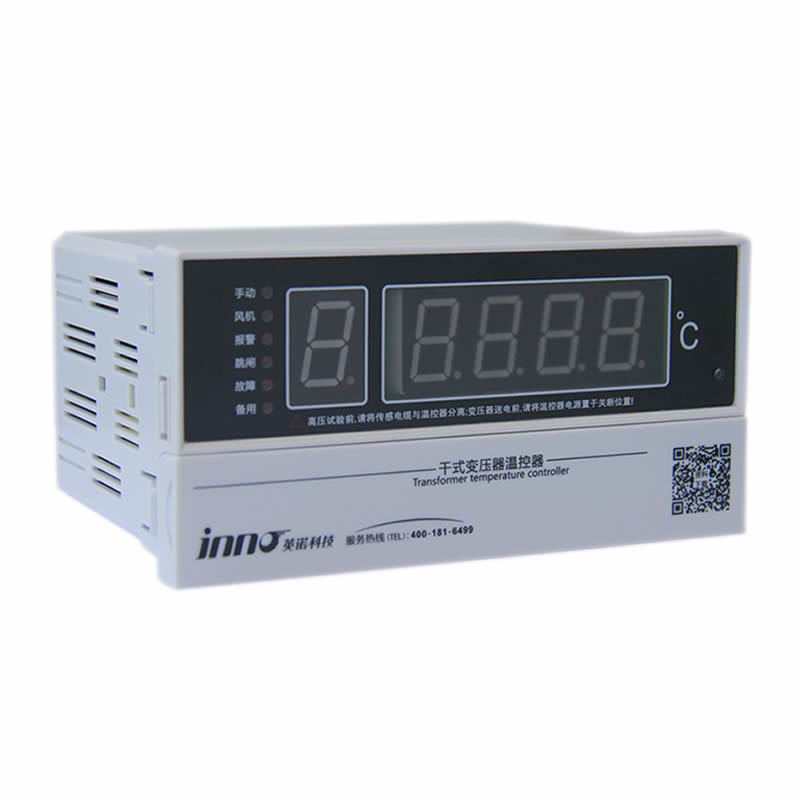
PT100-sensoren — platinum resistance thermometers with a nominal resistance of 100 ohms at 0°C — are the most widely deployed temperature measurement device in power transformer installations worldwide. Their simplicity, stabiliteit op lange termijn, and compatibility with standard protection relay and SCADA input modules have made them the default choice for top oil temperature monitoring, cooling system temperature measurement, and ambient temperature compensation in transformer thermal models.
Werkingsprincipe
The electrical resistance of platinum increases linearly and predictably with temperature at a rate of approximately 0.385 ohms per °C. A PT100 sensor connected to a precision measurement circuit provides a stable, repeatable temperature reading with accuracy typically in the range of ±0.3°C to ±1°C depending on sensor grade (IEC 60751 Class A or Class B) and installation quality. 4-wire PT100 connection circuits eliminate lead resistance errors and are the required configuration for accurate temperature measurement in transformer protection applications.
Standard Applications in Transformer Monitoring
- Meting van de olietemperatuur bovenaan — PT100 pocket sensors installed in transformer tank cover wells provide continuous top oil temperature readings that are the primary input to thermal overload protection relays
- Radiator inlet and outlet temperature — differential temperature measurement for cooling system efficiency monitoring
- Compensatie van omgevingstemperatuur — external PT100 sensors provide the ambient reference temperature required by hot-spot calculation algorithms in IEC 60076-7 thermische modellen
- Dry-type transformer winding surface temperature — PT100 sensors bonded to the outer surface of cast-resin windings provide a winding temperature indication, though surface measurements consistently underestimate the true internal hot-spot temperature by 10–20°C
Key Limitation
PT100 sensors cannot be embedded inside oil-immersed transformer windings due to their electrical conductivity — contact between a PT100 element and high-voltage conductors would create an immediate insulation fault. Als resultaat, PT100-based systems rely on calculated hot-spot estimates derived from top oil temperature measurements combined with thermal model parameters, rather than direct measurement. This calculated estimate carries inherent uncertainty, particularly under dynamic load conditions and when thermal model parameters have drifted from factory values due to aging.
Methode 3: Thermal Simulation Oil Temperature Indicators (Indicatoren voor wikkeltemperatuur)
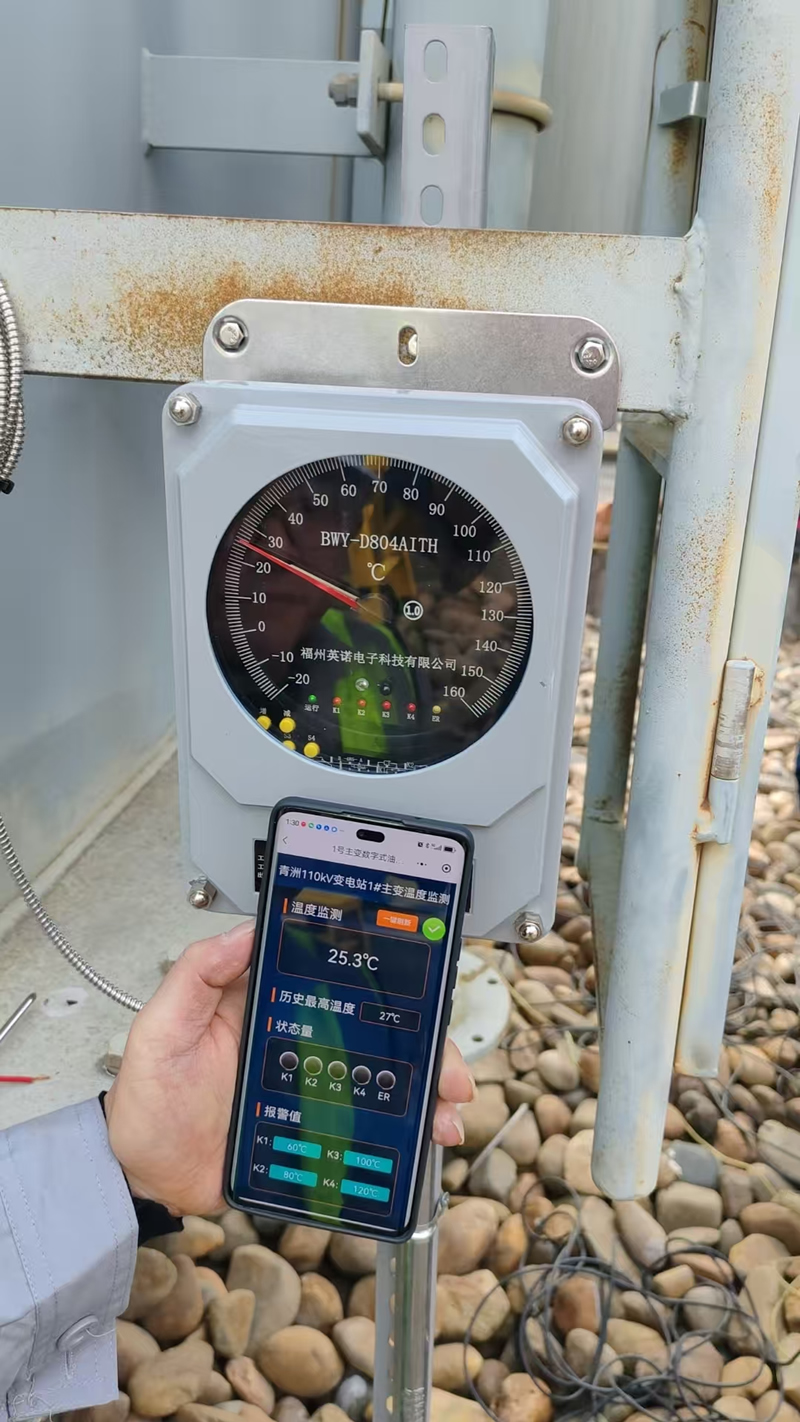
De thermal simulation winding temperature indicator (WTI) — also known as a hot-spot temperature simulator of thermal image indicator — is a self-contained electromechanical instrument that estimates transformer winding hot-spot temperature using an analog thermal model of the transformer’s heat-rise behavior. It is one of the most widely installed transformer temperature monitoring devices in service globally, found on distribution and power transformers from 1 MVA to several hundred MVA.
Werkingsprincipe
The WTI consists of a bimetallic dial thermometer installed in a PT100 oil temperature pocket on the transformer tank, combined with a small heating element energized by a current proportional to the transformer load current (supplied via a dedicated current transformer). The heater element mimics the I²R heat rise of the winding above oil temperature — so the thermometer pointer reads a temperature that represents the estimated winding hot spot rather than the oil temperature alone. By adjusting the heating current ratio and thermal time constant of the heater assembly, the WTI can be calibrated to closely match the actual winding thermal behavior defined in the transformer’s factory heat-run test report.
Functionele kenmerken
- Provides a continuous estimated winding hot-spot temperature reading on a local analog dial — no external power supply required for basic indication
- Integral adjustable alarm and trip contacts (typically two independent contact stages) for direct connection to protection relay or SCADA alarm inputs
- Built-in drag-hand indicator records the maximum temperature reached since last manual reset — useful for post-event analysis of overload events
- Facultatief 4–20mA or PT100 analog output for remote monitoring integration
- Separate cooling control contacts for automatic fan or pump start/stop based on estimated hot-spot temperature
- Available in both olietemperatuurindicator (KLAAR) configuratie (measures top oil only, no load current input) en vol wikkelingstemperatuurindicator (WTI) configuration with load current compensation
Applications and Limitations
De thermal simulation WTI is the standard temperature protection device on the majority of distribution and sub-transmission transformers in service worldwide due to its low cost, mechanical simplicity, and independence from external power supplies. Echter, its analog thermal model is a simplified representation of actual winding thermal behavior — it does not account for non-uniform current distribution, localized cooling variations, or changes in winding thermal characteristics due to insulation aging. For critical high-value transformers where accurate hot-spot knowledge is essential for life management and dynamic load optimization, direct fiber optic winding temperature measurement should supplement or replace WTI-based thermal simulation.
Methode 4: Wireless Temperature Monitoring Sensors
Wireless transformer temperature sensors use battery-powered transmitter nodes to collect surface temperature data at defined measurement points and relay readings to a central gateway or cloud monitoring platform via ZigBee, LoRa, 2.4GHz RF, or NB-IoT protocollen. This architecture eliminates signal cabling between the sensor and the monitoring system — a significant advantage for retrofit applications and installations where running new instrumentation cables to an existing transformer is impractical or costly.
Kernvoordelen
- Tool-free installation on transformer external surfaces, bus-terminals, LV busbar connections, en kabelschoenen
- Ondersteunt multi-point networks covering dozens of measurement locations across a transformer bay or substation from a single gateway
- Real-time temperature data with configurable alarm thresholds and push notification to mobile devices or SCADA systems
- Ideaal voor dry-type transformer enclosure monitoring where winding surface temperatures are the primary measurement target
- Cloud integration enables centralized monitoring and trending across multiple transformer installations on a single platform
Beperkingen
Draadloze sensoren meten alleen oppervlakte- of nabije oppervlaktetemperaturen en heeft geen toegang tot de interne wikkelingshotspot van een in olie ondergedompelde transformator. Vervanging van de batterij is doorgaans elke 2 tot 5 jaar vereist, afhankelijk van de transmissie-intervalinstellingen. Metalen transformatorbehuizingen dempen radiofrequentiesignalen - het ontwerp van de antenneplaatsing en de positionering van de repeater moeten tijdens de inbedrijfstelling van het systeem worden aangepakt om een betrouwbare gegevensoverdracht te garanderen.
Methode 5: Infraroodthermografie
Infrarood warmtebeeldcamera's detecteer de elektromagnetische straling die wordt uitgezonden door externe oppervlakken van de transformator en zet deze om in een gekalibreerde visuele warmtekaart, waardoor onderhoudstechnici abnormale temperatuurgradiënten over bussen kunnen identificeren, terminale verbindingen, koelradiatoren, en tankoppervlakken tijdens geplande inspectiebezoeken zonder fysiek contact met onder spanning staande apparatuur.
Handheld Infrared Camera vs. Fixed Online Thermal Sensor
Draagbaar infrarood thermografiecamera's are the standard tool for periodic transformer inspection rounds and provide high-resolution thermal images suitable for maintenance reports and trend comparison across successive inspection cycles. Vaste online infraroodsensoren mounted in dedicated observation windows on transformer enclosures or switchgear panels enable continuous thermal monitoring of specific external zones — bridging the gap between scheduled inspection intervals for high-priority assets.
Core Advantages and Limitations
Infrared thermography excels as a contactloos, rapid survey tool for external fault detection and maintenance documentation. It is fully compatible with all transformer types and voltage levels and requires no permanent installation on the transformer itself. Echter, infrared measurement is fundamentally limited to surface temperature detection — it cannot measure winding hot-spot temperatures inside the transformer tank, and it provides only a periodic snapshot rather than the continuous real-time coverage needed for automated alarm and protection functions.
Transformatortemperatuurbewaking: Technologievergelijkingstabel

| Criteria | Fluorescerende glasvezel | PT100-sensor | Thermal Simulation WTI | Draadloze sensor | Infraroodthermografie |
|---|---|---|---|---|---|
| Metingstype | Direct winding hot spot | Olie / surface temperature | Estimated hot spot (berekend) | Surface temperature | Surface temperature |
| Bewakingsmodus | Continu online | Continu online | Continu online | Continu online | Periodiek / gepland |
| EMI-immuniteit | ★★★★★ | ★★★ | ★★★★ | ★★★ | ★★★★ |
| Meetnauwkeurigheid | ±0,5°C | ±0.3–1°C | ±2–5°C (geschat) | ±1°C | ±2°C |
| Internal Winding Access | ✅ Direct | ❌ Surface only | ⚠️ Calculated estimate | ❌ Surface only | ❌ External only |
| Realtime alarm | ✅ | ✅ | ✅ | ✅ | ❌ |
| Installatiecomplexiteit | Gematigd (factory or retrofit) | Eenvoudig | Eenvoudig | Minimaal | Geen (draagbaar) |
| Suitable for Oil-Immersed | ✅ | ✅ | ✅ | ⚠️ External only | ✅ |
| Suitable for Dry-Type | ✅ | ✅ | ⚠️Beperkt | ✅ | ✅ |
| IEC 60076-2 Meewerkend | ✅ | ⚠️ Indirect | ⚠️ Indirect | ❌ | ❌ |
| Beste applicatie | Critical HV transformers, winding life management | Standard protection relay input, olie monitoring | Distributietransformatoren, routine thermal protection | Bus, LV terminals, dry-type retrofit | Maintenance inspection, external fault survey |
7. Het bouwen van het beste thermische bewakingssysteem voor transformatoren
The most effective transformer temperature monitoring solution is not a single device but a layered, integrated architecture that combines direct sensing, data-acquisitie, alarmbeheer, and system-level integration to deliver actionable thermal intelligence throughout the transformer’s operating life.
Layer 1 — Sensing: Matching Technology to Measurement Point
A comprehensive sensing deployment addresses all critical thermal zones of the transformer simultaneously. Fluorescerende glasvezelsondes are embedded in the HV and LV winding assemblies at the factory-identified hot-spot locations to provide direct IEC 60076-2 compliant winding temperature readings. PT100-sensoren are installed in the tank cover oil pocket for top oil temperature measurement and in radiator inlet/outlet pipes for cooling system monitoring. Een thermal simulation winding temperature indicator (WTI) is mounted on the transformer marshalling panel to provide a local electromechanical backup indication and independent alarm contacts for protection relay tripping. Draadloze temperatuurzenders are applied to bushing terminal connectors, LV busbar joints, and cable terminations to extend monitoring coverage to external high-risk connection points without additional cabling.
Layer 2 — Data Acquisition
Fiber optic signals are processed by a multi-channel fluorescence demodulator that converts optical decay-time measurements into calibrated temperature values at sampling rates of 1–10 seconds. PT100 signals are fed directly to the transformer protection relay (bijv., ABB RET670, Siemens 7UT) or to a dedicated RTD input module in the substation control system. Wireless sensor data is aggregated by a LoRa or ZigBee gateway mounted in the substation control room or marshalling kiosk.
Layer 3 — Communication and Integration
All temperature data streams converge at the substation automation system via IEC 61850 GOOSE-berichten for protection-grade alarm transmission, Modbus-TCP/RTU for SCADA integration, en DNP3 for utility EMS connectivity. Cloud-connected deployments use MQTT over 4G/5G for remote monitoring and mobile alerting without dependence on substation LAN infrastructure.
Layer 4 — Monitoring Platform and Alarm Management
De transformer thermal monitoring software platform provides real-time temperature dashboards for all sensing points, historical trend logging with configurable retention periods, and a three-tier alarm management structure. Adviesalarmen at 95°C winding hot spot initiate automated cooling system escalation. Waarschuwingsalarmen at 110°C trigger operator notification and load reduction procedures. Kritieke alarmen at 120°C (or the transformer manufacturer’s defined trip threshold) initiate automatic protection relay tripping to disconnect the transformer from service before thermal runaway occurs. All threshold values are configurable and should be validated against the transformer manufacturer’s thermal design data and the applicable loading guide (IEC 60076-7 of IEEE C57.91).
Layer 5 — Automated Response and SCADA Integration
On alarm activation, the system executes a coordinated response sequence: cooling system fans and pumps are automatically started at full capacity; Sms, e-mail, and push notifications are dispatched to designated operations personnel; load shedding commands are issued to upstream protection relays if temperature continues to rise; and at the critical threshold, an automatic trip command is executed. Full integration with SCADA, EMS, CMMS, en platformen voor activabeheer ensures that all thermal events are logged with timestamped data, enabling post-event root cause analysis and regulatory compliance reporting.
Recommended System Configurations by Transformer Type
- Kritische transmissietransformator (≥100 MVA, 110kV en hoger): Fluorescerende glasvezelwikkelsensoren (in de fabriek ingebed, HS + LS) + PT100 topolie + WTI-back-upindicator + draadloze busterminalsensoren + volledige SCADA / IEC 61850 integratie
- Industriële olie-ondergedompelde transformator (10–100 MVA): Fluorescerende glasvezelwikkelsensoren + PT100 topolie- en radiateurbewaking + WTI met koelregelcontacten + Modbus SCADA-integratie
- Droge gietharstransformator: Fluorescerende glasvezelsondes (ingebed in de wikkeling tijdens de productie) + PT100 oppervlaktesensoren + draadloze LV-railterminalsensoren + lokaal HMI-display
- Retrofit van distributietransformator: WTI-vervanging of upgrade + draadloze oppervlaktesensoren op doorvoerterminals + optionele plaatsing van glasvezelsonde via tankafdekkingspoort + gateway voor cloudbewaking
- Onderhoudsinspectieprogramma (alle soorten): Periodieke infraroodthermografische onderzoeken (minimaal tweemaal per jaar) gecombineerd met online controle van monitoringgegevens voor kruisvalidatie en nalevingsdocumentatie
8. Mondiale casestudies: Transformatortemperatuurbewaking in actie

The following real-world deployments illustrate how thermische bewakingssystemen voor transformatoren have delivered measurable protection and operational value across a range of industries, spanningsniveaus, and geographic regions.
Casestudy 1 — Transmission Substation, Verenigd Koninkrijk
A major UK transmission network operator retrofitted fluorescent fiber optic winding temperature sensors into twelve 400kV autotransformers at a critical grid interconnection substation. Voorafgaand aan de installatie, the operators relied exclusively on thermal simulation WTI indicators and top oil PT100 measurements — neither of which provided direct knowledge of actual winding hot-spot conditions under dynamic load cycling. Within the first operating season following fiber optic sensor commissioning, the monitoring system identified two units operating with winding hot-spot temperatures 18–23°C above the WTI-indicated values under peak demand conditions — a discrepancy attributable to thermal model parameter drift in aging units. Load management protocols were adjusted accordingly, and both transformers were scheduled for planned inspection rather than facing the risk of an unplanned thermal failure during peak winter demand. The operator estimated the intervention prevented outage costs in excess of £2 million per affected unit.
Casestudy 2 — Data Center Campus, Singapore
A hyperscale data center operator managing eight dry-type cast-resin transformers at a Tier IV facility deployed a hybrid monitoring architecture combining factory-embedded fluorescent fiber optic probes in each transformer’s HV and LV windings with a wireless temperature sensor network covering LV busbar connections, kabelaansluitpunten, and main distribution board incoming terminals. Alle 96 measurement points across the eight transformers feed into a centralized cloud monitoring platform with mobile push notifications configured for the facility’s 24/7 operations team. During a capacity expansion overload test eighteen months after commissioning, the fiber optic system detected a winding hot-spot temperature of 158°C in one transformer — 23°C above the WTI surface indication — triggering an immediate load transfer to the standby unit. Post-event thermal analysis confirmed that the affected transformer’s resin insulation had begun surface micro-cracking consistent with sustained overtemperature exposure, validating the system’s early intervention.
Casestudy 3 — Rail Traction Power Substation, China
A metropolitan railway operator equipped traction power substations across 24 stations met multi-channel fluorescent fiber optic thermometry systems monitoring winding hot spots in Scott-connection traction transformers. The high-frequency switching transients and strong electromagnetic fields generated by traction inverter systems ruled out conventional PT100-based winding monitoring — electronic sensors in this environment experienced persistent measurement noise and false alarms. The all-optical fiber sensing architecture eliminated EMI-related false alarms entirely while delivering ±0.5°C winding hot-spot accuracy throughout the network. The system interfaces directly with the railway’s SCADA energy management system via IEC 61850, enabling automated cooling control and load dispatch optimization based on real-time thermal headroom in each traction transformer.
Casestudy 4 — Petrochemical Refinery, Saoedi-Arabië
A major refinery operator managing fourteen 11kV oil-immersed unit transformers in classified hazardous area zones implemented a comprehensive monitoring upgrade combining ATEX-rated PT100 top oil sensors, thermal simulation WTI indicators with remote 4–20mA outputs, en intrinsically safe wireless temperature transmitters on transformer bushing terminals and HV cable termination boxes. The wireless network eliminated the need for new instrumentation cable runs through congested cable trays in the classified areas — a significant safety and cost advantage. The integrated monitoring platform flagged an abnormal bushing terminal temperature rise of 41°C above ambient on one transformer within six weeks of commissioning, leading to the discovery of a severely under-torqued terminal clamp that had been missed during the previous scheduled maintenance outage.
Casestudy 5 — Wind Farm Collector Substation, Duitsland
A renewable energy developer commissioned a 250 MVA offshore wind farm collector transformer equipped with factory-embedded fluorescent fiber optic probes in both HV and LV windings, gecombineerd met PT100 top oil sensors, radiator differential temperature monitoring, en een WTI indicator providing independent local backup protection. Het glasvezelsysteem stuurt realtime hotspotgegevens naar het SCADA-platform van het windpark, maakt dynamische optimalisatie van de transformatorbelasting mogelijk - waardoor de operator de transformatoruitvoer veilig boven het nominale vermogen kan duwen tijdens perioden van gunstige omgevingstemperatuur en windbronnen, terwijl de opwekking automatisch wordt beperkt wanneer hotspottemperaturen de IEC naderen 60076-7 noodlaaddrempel. Het dynamische laadvermogen verhoogde de jaarlijkse energieopbrengst met een geschatte waarde 3.2% vergeleken met conservatieve vaste werking met naamplaatje.
Veelgestelde vragen: Transformatortemperatuurbewaking
1. Waarom is het monitoren van de transformatortemperatuur zo belangrijk??
Transformatorisolatie – voornamelijk cellulosepapier in met olie gevulde eenheden en giethars in droge eenheden – wordt onomkeerbaar afgebroken bij blootstelling aan hitte. Volgens het thermische verouderingsmodel van Arrhenius, vastgelegd in IEC 60076-7, every 6–10°C of sustained overtemperature halves the remaining insulation life. Zonder continuous transformer temperature monitoring, thermal degradation proceeds invisibly until insulation failure causes an unplanned outage, vuur, or catastrophic transformer loss. Proactive monitoring enables condition-based maintenance, dynamic load management, and timely intervention before thermal damage becomes irreversible.
2. What is the difference between a winding temperature indicator (WTI) and a direct fiber optic winding sensor?
Een thermal simulation winding temperature indicator (WTI) estimates winding hot-spot temperature using an analog thermal model — it measures top oil temperature and adds a calculated temperature increment proportional to load current. This estimate carries inherent uncertainty of ±2–5°C or more, particularly under dynamic load conditions or when the transformer’s thermal characteristics have changed due to aging. Een fluorescent fiber optic winding sensor measures the actual temperature at the physical hot-spot location inside the winding — providing a direct, real-time reading with ±0.5°C accuracy that requires no thermal model assumptions. For critical high-value transformers, direct fiber optic measurement provides significantly higher confidence in thermal condition assessment than WTI simulation alone.
3. What temperature should trigger a transformer winding alarm?
Alarm thresholds depend on transformer insulation class, design rating, and applicable loading standard. For standard mineral-oil transformers with Class A cellulose insulation, IEC 60076-7 defines a continuous hot-spot limit of 98°C for normal cyclic loading, met emergency loading limits up to 140°C for short-duration contingency operation. Typical protection relay settings use a first-stage alarm at 100–110°C winding hot spot to initiate cooling escalation and operator notification, met een second-stage trip at 120–130°C to automatically disconnect the transformer. For dry-type cast-resin transformers, thermal class F (155°C) and class H (180°C) windings carry higher permissible operating temperatures — consult the transformer manufacturer’s documentation for model-specific settings.
4. Can fluorescent fiber optic probes be retrofitted into an existing oil-immersed transformer?
Ja, in veel gevallen. Retrofit installation of fluorescent fiber optic sensors in existing oil-immersed transformers is technically feasible during planned maintenance outages when the transformer is de-energized and oil drained or partially lowered. Probes are inserted through the transformer tank cover via dedicated fiber feedthrough fittings and guided into the winding assembly using flexible insertion tools. The specific feasibility depends on winding construction, available tank access points, and the transformer manufacturer’s guidance. For new transformer procurement, specifying factory-installed fiber optic probes during manufacture is the preferred approach as it ensures optimal sensor placement at the design hot-spot location.
5. What is the difference between top oil temperature and winding hot-spot temperature?
Top olietemperatuur is the temperature of the insulating oil at the highest point in the transformer tank — measured by a PT100-sensor in the tank cover pocket. It represents the bulk thermal state of the transformer’s cooling medium. Winding hot-spot temperature is the highest temperature point within the winding conductor and insulation assembly — typically located in the upper portion of the coil and consistently higher than the surrounding oil temperature by 15–40°C depending on load level and cooling mode. It is the winding hot-spot temperature, not the top oil temperature, that directly governs insulation aging rate and permissible loading capacity. Relying on top oil temperature alone systematically underestimates the thermal stress on transformer insulation.
6. Do transformer temperature monitoring systems need to comply with IEC standards?
Ja. The primary applicable standards for bewaking van de temperatuur van de transformator Zijn IEC 60076-2 (Temperature rise for liquid-immersed transformers — defines hot-spot measurement methodology), IEC 60076-7 (Loading guide for oil-immersed power transformers — defines thermal aging model and loading limits), en IEC 60354 (Loading guide for oil-immersed power transformers, superseded by IEC 60076-7 but still referenced). Voor droge transformatoren, IEC 60076-11 applies. Protection relay and monitoring system integration follows IEC 61850 for substation automation communication. Buyers should confirm that proposed monitoring systems are designed to these standards and that sensor accuracy and calibration traceability are documented accordingly.
7. Is wireless temperature monitoring suitable for use inside oil-immersed transformer tanks?
Nee. Draadloze temperatuursensoren are electronic devices that require a battery power source and radio frequency signal transmission — neither of which is compatible with the interior of an energized oil-filled transformer tank. Wireless sensors are appropriate for external transformer surface monitoring applications: bushing terminal connections, LV busbar joints, cable termination boxes, and dry-type transformer enclosure surfaces. For internal winding hot-spot monitoring of oil-immersed transformers, fluorescerende glasvezelsensoren are the only technology that can be safely installed inside the energized transformer tank.
8. How long do fluorescent fiber optic temperature sensors last in transformer service?
Fluorescent fiber optic sensing probes are passive optical components with no active electrical elements, bewegende delen, or consumable materials at the sensing point. Under normal transformer operating conditions — including continuous immersion in mineral oil, thermal cycling between ambient and rated hot-spot temperatures, and exposure to dissolved gases and moisture — documented field service lifetimes exceed 20–25 years without degradation of measurement accuracy or sensor integrity. The external demodulator electronics have a typical design life of 10–15 years with routine maintenance. This long service life makes fiber optic sensing a cost-effective investment over the full operational life of the transformer asset.
9. Can a transformer temperature monitoring system integrate with existing SCADA or EMS platforms?
Ja. All major thermische bewakingssystemen voor transformatoren support the standard industrial communication protocols required for SCADA, EMS, and substation automation integration. Common supported protocols include IEC 61850 (GOOSE and MMS) for protection-grade substation communication, Modbus RTU/TCP for general SCADA connectivity, DNP3 for utility EMS and telecontrol systems, en MQTT over 4G/5G for cloud-based remote monitoring deployments. Integratie met computerized maintenance management systems (CMMS) en digital asset management platforms enables automatic work order generation on alarm events and continuous trending of transformer thermal health indicators alongside other condition monitoring data streams.
10. How do I select the best transformer temperature monitoring solution for my specific application?
The optimal solution depends on four primary factors. Eerst, transformer type and voltage level: oil-immersed units above 10kV benefit most from direct fiber optic winding monitoring; dry-type units are well served by embedded fiber optic probes combined with wireless surface sensors. Seconde, criticality and replacement cost: transmission transformers above 100 MVA with 12–24 month replacement lead times justify comprehensive fiber optic monitoring; distribution transformers may be adequately protected by WTI plus PT100 with periodic infrared inspection. Derde, new build vs. achteraf inbouwen: factory-embedded fiber optic probes are the most cost-effective approach for new transformers; retrofit projects should evaluate the feasibility of probe insertion versus wireless external monitoring as the primary upgrade path. Vierde, integration requirements: facilities with existing SCADA or IEC 61850 substation automation infrastructure should specify monitoring systems with native protocol support to avoid costly middleware integration. Neem contact op met een gespecialiseerde leverancier van transformatorbewaking voor een locatiespecifiek systeemaanbeveling op basis van de gegevens op het typeplaatje van uw transformator, laadprofiel, en monitoringdoelstellingen.
Verkrijg de juiste oplossing voor transformatortemperatuurbewaking voor uw project
Of u nu een nieuwe hoogspanningstransformator in gebruik neemt, het verbeteren van de bescherming van verouderde kritieke activa, of het bouwen van een vlootbreed thermisch monitoringprogramma over meerdere onderstations, het selecteren van de juiste combinatie van fluorescerende glasvezelsensoren, PT100-detectoren, thermische simulatie-indicatoren, en draadloze monitoringtechnologie is een beslissing die rechtstreeks van invloed is op de levensduur van de transformator, operationele betrouwbaarheid, en personeelsveiligheid.
Fjinno (Fuzhou Innovatie Elektronische Scie&Leverancier:Tech Co., Ltd.) gespecialiseerd in fluorescente glasvezeltransformator temperatuurbewakingssystemen met meer dan tien jaar ervaring in de implementatie van hoogspanningsschakelapparatuur, stroomtransformatoren, GIS-apparatuur, Transformatoren van het droge type, en spoorwegtractiekrachtsystemen. Ons engineeringteam verzorgt toepassingsspecifiek systeemontwerp, fabriekskalibratie, ondersteuning bij installatie, and long-term technical service for projects at all scales — from single-transformer protection upgrades to multi-site utility monitoring programs.
- 📧 E-mail: web@fjinno.net
- 📱 WhatsApp (Engelstalig) / WeChat / Telefoon: +86 135 9907 0393
- 💬 QQ: 3408968340
- 🌐 Website: www.fjinno.net
- 📍 Adres: Liandong U Grain Networking Industriepark, Xingye West Road nr. 12, Fuzhou, Fujian, China
Vrijwaring: De technische informatie, temperatuur drempels, and standard references in this article are provided for general guidance purposes only. Specific transformer protection settings, sensorspecificaties, and system configurations must be determined by qualified electrical engineers in accordance with the transformer manufacturer’s documentation, applicable IEC and IEEE standards, en lokale wettelijke vereisten. Always follow established safety procedures when working on or near energized electrical equipment.

Glasvezel temperatuursensor, Intelligent bewakingssysteem, Gedistribueerde fabrikant van glasvezel in China
 |
 |
 |