 INNO glasvezel temperatuursensoren ,temperatuurbewakingssystemen.
- Embedded temperature monitoring systems place sensors directly inside generator stator windings, lagers, and cores to detect overheating before damage occurs.
- Fluorescerende glasvezeltemperatuursensoren are fully immune to electromagnetic interference and provide inherent high-voltage insulation, making them the ideal choice for generator internal monitoring.
- Compared with traditional RTDs and thermocouples, fiber optic sensors deliver more stable readings, longer service life, and lower maintenance in strong electromagnetic environments.
- A complete system includes sensing probes, optische vezelkabels, A glasvezeldemodulator, weergavemodules, and monitoring software with multi-channel parallel measurement.
- Applications span hydro generators, steam turbine generators, wind turbine generators, diesel generator sets, and large industrial motors.
Inhoudsopgave
- What Is Embedded Temperature Monitoring of Generators
- Why Generator Temperature Monitoring Is Critical
- Key Monitoring Points Inside a Generator
- How Embedded Generator Temperature Monitoring Works
- Sensor Technologies for Generator Temperature Monitoring
- Fiber Optic vs RTD Sensors for Generator Windings
- System Components of a Fiber Optic Generator Monitoring Solution
- Real-Time Alarms and Hotspot Detection
- Applications Across Generator Types
- FAQs About Embedded Generator Temperature Monitoring
1. What Is Embedded Temperature Monitoring of Generators
Definition and Core Concept
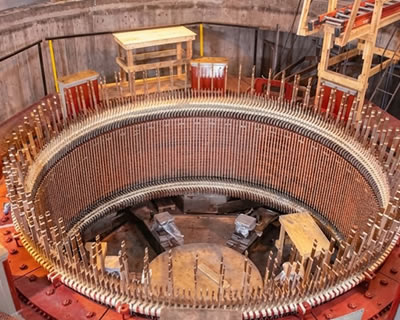
Embedded temperature monitoring refers to the practice of installing temperature sensors directly inside critical locations of a generator — within stator winding slots, bearing housings, and core tooth sections — for continuous, real-time temperature measurement. Unlike external surface measurements, embedded monitoring captures the true temperature closest to the heat source, giving operators the most accurate thermal picture of the machine’s internal condition.
Why Generators Need Internal Temperature Monitoring
Tijdens bedrijf, a generator produces heat from multiple sources. Current flowing through stator windings creates copper losses. Magnetic flux alternating in the core generates iron losses. Friction in bearings produces mechanical heat. If any of these heat sources goes undetected or uncontrolled, the consequences can be severe — accelerated insulation aging, shortened equipment lifespan, and in worst cases, winding burnout or forced outage. Een embedded temperature monitoring system serves as the frontline defense for condition-based maintenance and asset protection.
Industry Standards and Requirements
Embedded temperature monitoring is standard practice across the global power generation industry. Whether in large hydroelectric plants, thermal power stations, nucleaire installaties, or distributed diesel generator sets, continuous winding temperature measurement is required. Internationale normen waaronder IEC 60034 and IEEE C50 series explicitly mandate generator winding temperature monitoring for machines above certain ratings.
2. Why Generator Temperature Monitoring Is Critical

Insulation Life and the 10-Degree Rule
The relationship between temperature and insulation life follows a well-established principle known as the 10-degree rule: for every 10 °C rise in operating temperature above the rated value, insulation life is roughly cut in half. This means that even a modest, sustained temperature increase can dramatically shorten the service life of stator winding insulation. Nauwkeurig, continu stator winding temperature monitoring is the most effective way to protect this critical investment.
Preventing Catastrophic Failures
Undetected winding overheating can lead to turn-to-turn short circuits, ground faults, and even fire. Abnormal bearing temperatures often serve as early indicators of mechanical problems such as lubrication failure, verkeerde uitlijning, or bearing wear. Een correct geconfigureerd generator condition monitoring system with embedded sensors provides the earliest possible warning, well before visible damage occurs.
Economic Impact of Unplanned Outages
The cost of an unplanned generator outage is enormous. It includes not only repair or replacement expenses but also lost revenue from power supply interruption. For utility-scale generators, a single major failure can result in losses measured in hundreds of thousands or even millions of dollars. The investment in a reliable embedded temperature monitoring system represents a fraction of the potential loss from one catastrophic event.
Optimizing Operational Efficiency
Beyond protection, temperature data helps plant operators optimize load distribution, adjust cooling system parameters, and plan maintenance schedules more effectively. This data-driven approach improves overall generator availability and operating efficiency while reducing unnecessary maintenance interventions.
3. Key Monitoring Points Inside a Generator
Stator Winding
The stator winding is the single most important monitoring location. Glasvezel temperatuursensor probes are typically embedded within winding slots, between coil layers, or at the end-winding region to measure copper conductor or insulation temperature. Because temperature distribution across different slots is rarely uniform, multiple sensors are placed to capture the hottest spot reliably.
Stator Core
Core losses generate heat, and localized core overheating may indicate lamination short circuits or insulation degradation between laminations. Sensors embedded in core tooth tips or yoke sections monitor core health and help identify developing problems early.
Bearings
Rising bearing temperature can signal insufficient lubrication, oil degradation, slijtage van lagers, or shaft misalignment. Monitoring both guide bearings and thrust bearings is standard practice for generator bearing temperature monitoring in virtually all large rotating machines.
Cooling Medium
Measuring the inlet and outlet temperatures of cooling air or cooling water, along with cooler efficiency, helps determine whether the cooling system is functioning correctly. This information is essential for distinguishing between a generator-side thermal problem and a cooling system deficiency.
Additional Monitoring Points
Depending on the generator type and capacity, additional monitoring may cover collector rings, hydrogen seal areas in hydrogen-cooled generators, en busterminals.
4. How Embedded Generator Temperature Monitoring Works
Fluorescent Fiber Optic Sensing Principle
A fluorescerende glasvezel temperatuursensor works on the principle of fluorescence decay time measurement. The probe tip contains a phosphorescent material. De glasvezeldemodulator sends an excitation light pulse through the optical fiber to the probe. The phosphorescent material absorbs this energy and re-emits a fluorescent afterglow signal. The decay time of this afterglow varies precisely with temperature. The demodulator measures this decay time and converts it into an accurate temperature reading. The entire sensing chain is purely optical — no electrical signals are involved at the measurement point.
Signal Transmission Path
Starting from the probe embedded inside the generator winding slot, de fluorescent optical fiber is routed along the end winding, exits through a sealed cable gland in the generator frame, and connects to the demodulator installed outside the machine. The demodulator transmits calibrated temperature data via RS485, Modbus, or Ethernet communication to local display units and supervisory software.
Multi-Channel Parallel Monitoring
A single demodulator unit can support multiple sensing channels, simultaneously monitoring temperatures across numerous winding slots, multiple bearings, and other locations. The software platform consolidates all channel data into a unified dashboard for at-a-glance supervision.
5. Sensor Technologies for Generator Temperature Monitoring
Fluorescent Fiber Optic Sensors — The Recommended Choice
Fluorescerende glasvezeltemperatuursensoren offer a unique combination of advantages for generator applications: volledige immuniteit tegen elektromagnetische interferentie (EMI/RFI), inherent high-voltage electrical insulation, no power required at the sensing point, compact probe size suitable for embedding in narrow winding slots, high temperature tolerance, extremely long service life, and virtually zero maintenance requirements.
RTD's (Weerstand temperatuurdetectoren)
Platinum RTDs such as PT100 have been the traditional sensor choice for generator winding temperature measurement. While RTDs offer reasonable accuracy, they are electrical sensors with metallic lead wires that act as antennas in strong electromagnetic fields. This susceptibility to interference compromises measurement reliability, and the conductive lead paths introduce insulation breakdown risks in high-voltage environments.
Thermokoppels
Thermocouples see some use in generator monitoring but face similar electromagnetic interference challenges. Their accuracy and long-term stability are generally inferior to fiber optic alternatives, and electrical isolation remains a significant concern in high-voltage machines.
Infraroodthermografie
Infrared cameras are useful for external surface temperature scanning and visual inspections during maintenance outages, but they cannot provide continuous embedded measurement inside winding slots. Infrared methods serve only as a supplementary tool.
6. Fiber Optic vs RTD Sensors for Generator Windings

Elektromagnetische compatibiliteit
The interior of a generator is an extreme electromagnetic environment — strong alternating magnetic fields, hoge spanningen, and high-frequency harmonics. RTD metallic lead wires pick up interference signals like antennas, degrading measurement accuracy. Glasvezel temperatuursensoren are constructed entirely from non-conductive materials, eliminating this problem at the fundamental level.
Electrical Insulation Performance
Fiber optic sensors provide inherent galvanic isolation. There is no conductive path between the probe and the demodulator. RTD metallic leads in a high-voltage winding environment carry a potential risk of insulation breakdown, requiring additional insulation treatment and ongoing inspection.
Probe Size and Installation Flexibility
Fiber optic probes feature very small diameters, allowing flexible installation in the tight spaces of winding slots. RTD-sondes, when combined with shielded lead wires and protective sleeves, tend to be bulkier and more difficult to route.
Long-Term Stability and Maintenance
Fiber optic sensors are free from electrochemical corrosion and lead wire oxidation, delivering excellent long-term stability. RTDs operating in high-temperature, high-humidity conditions may experience drift over time and require periodic recalibration.
Vergelijkingsoverzicht
| Parameter | Glasvezelsensor | OTO (PT100) |
|---|---|---|
| EMI-immuniteit | Compleet | Gevoelig |
| Elektrische isolatie | Inherent full isolation | Requires additional insulation |
| Nauwkeurigheid | ±0.5 °C typical | ±0.5 °C typical |
| Sondegrootte | Very compact | Larger with shielding |
| Levensduur | 20+ jaar | 10–15 jaar |
| Onderhoud | Virtually none | Periodic recalibration |
| Totale eigendomskosten | Lower over lifetime | Higher due to maintenance |
7. System Components of a Fiber Optic Generator Monitoring Oplossing

Fiber Optic Demodulator
De glasvezeldemodulator is the signal processing core of the system. It receives optical signals from each sensor channel and outputs calibrated temperature values. Industrial-grade design ensures reliable operation in power plant environments with wide operating temperature ranges and robust communication interfaces.
Fluorescent Fiber Optic Temperature Probe
De fluorescent fiber optic temperature probe is the sensing element embedded inside the generator. Probes are available in different form factors and temperature ratings to suit various installation requirements, from standard slot embedment to surface-mount configurations.
Fluorescent Optical Fiber Cable
De fluorescent optical fiber cable connects the probe to the demodulator. It is designed to withstand repeated bending, trillingen, and elevated temperatures encountered in generator environments.
Display Module
A local temperature display module provides real-time temperature readings at the machine location or in the control room, supporting quick visual checks by operations personnel.
Softwareplatform voor monitoring
The software handles data acquisition, trend display, alarmbeheer, historical data archiving, en het genereren van rapporten. It supports integration with plant DCS and SCADA systems via standard communication protocols.
8. Real-Time Alarms and Hotspot Detection

Alarm Mechanism
The system allows independent pre-alarm and alarm thresholds for each monitoring channel. Wanneer een temperatuur het instelpunt van het vooralarm overschrijdt, het systeem geeft een waarschuwingsmelding. Wanneer de alarmdrempel wordt overschreden, er wordt een noodalarm geactiveerd, die kunnen worden gekoppeld aan generatorbeveiligingsrelais voor automatische belastingvermindering of uitschakelactie.
Hotspot-detectie
Door temperatuurmetingen van sensoren te vergelijken die zijn verdeeld over verschillende wikkelsleuven van dezelfde generator, het systeem identificeert automatisch gelokaliseerde hotspots. Het ontstaan van een hotspot kan duiden op plaatselijke verslechtering van de isolatie, geblokkeerde koelkanalen, of lokale kernfouten. Vroeg hotspot-detectie van generator maakt gericht onderhoud mogelijk voordat het probleem escaleert.
Trendanalyse van temperatuurstijging
De bewakingssoftware houdt niet alleen de absolute temperatuurwaarden bij, maar ook de snelheid waarmee de temperatuur in de loop van de tijd verandert. An abnormal rate of temperature rise — even if the absolute value has not yet reached the alarm threshold — can indicate a developing fault and prompts early investigation.
9. Applications Across Generator Types
Hydro Generators
Large hydro generators operate at low speeds with high pole counts, resulting in large stator diameters and extensive winding lengths. Multiple embedded glasvezel temperatuursensoren are distributed around the stator circumference to capture the full thermal profile.
Stoomturbinegeneratoren
High-speed steam turbine generators in thermal and nuclear power plants demand robust monitoring of both stator winding and hydrogen-cooled environments. Fiber optic sensors excel in these high-voltage, high-EMI conditions.
Wind Turbine Generators
Wind generators face challenging environmental conditions including wide temperature swings, vochtigheid, en trillingen. Het onderhoudsvrije karakter van glasvezelsensoren is vooral waardevol in afgelegen of offshore windinstallaties waar de toegang beperkt is.
Dieselgeneratorsets en grote motoren
Voor noodstroomdieselgeneratoren en grote industriële motoren, Ingebouwde temperatuurbewaking zorgt voor een betrouwbare werking tijdens kritieke bedrijfscycli en verlengt de levensduur van de apparatuur.
10. FAQs About Embedded Generator Temperature Monitoring
Q1: Wat is ingebouwde temperatuurbewaking in generatoren?
Ingebouwde temperatuurbewaking houdt in dat sensoren direct in de statorwikkelingsgleuven van een generator worden geplaatst, lagers, en kern om de interne temperaturen continu in realtime te meten. Deze aanpak legt gegevens vast bij de daadwerkelijke warmtebron in plaats van op externe oppervlakken.
Vraag 2: Waarom hebben glasvezelsensoren de voorkeur boven RTD's voor het monitoren van generatorwikkelingen??
Fluorescerende glasvezeltemperatuursensoren are completely immune to electromagnetic interference and provide inherent electrical insulation, making them far more reliable than RTDs in the strong electromagnetic environment inside a generator.
Q3: How does a fluorescent fiber optic temperature sensor work?
The sensor probe contains a phosphorescent material that emits a fluorescent afterglow when excited by a light pulse. The decay time of this afterglow changes with temperature. De glasvezeldemodulator measures the decay time and converts it to a precise temperature reading.
Q4: What temperature range can fiber optic generator sensors measure?
Typical fluorescent fiber optic sensors used in generators cover a range from −40 °C to +250 °C, which comfortably encompasses the operating temperatures of most generator winding insulation classes.
Vraag 5: Hoeveel sensoren worden er doorgaans in één generator geïnstalleerd??
Het aantal varieert afhankelijk van de grootte en het ontwerp van de generator. Een grote waterkracht- of stoomturbinegenerator kan dat wel hebben 6 naar 24 of meer ingebouwde wikkelingstemperatuursensoren, plus extra sensoren voor lagers en koelcircuits.
Vraag 6: Kunnen glasvezelsensoren achteraf worden ingebouwd in bestaande generatoren??
Ja. Terwijl de eenvoudigste installatie plaatsvindt tijdens de productie of een grote terugspoeling, glasvezelsondes kunnen achteraf worden gemonteerd tijdens geplande onderhoudsonderbrekingen. Hun kleine sondegrootte vereenvoudigt installatie in krappe ruimtes.
Vraag 7: Welke communicatieprotocollen ondersteunt het monitoringsysteem?
Standaardsystemen ondersteunen RS485, Modbus RTU/TCP, en Ethernet-communicatie, waardoor eenvoudige integratie met DCS- en SCADA-platforms van fabrieken mogelijk is.
Vraag 8: Hoe vaak moeten glasvezeltemperatuursensoren worden gekalibreerd?
Fluorescent fiber optic sensors exhibit excellent long-term stability and typically do not require recalibration throughout their service life, which can exceed 20 jaar.
Vraag 9: What is generator hotspot detection?
Generator hotspot detection is the process of identifying localized areas of abnormally high temperature within the stator winding by comparing readings across multiple embedded sensors. Hotspots may indicate insulation deterioration, blocked cooling passages, or core faults.
Q10: Is the monitoring system compatible with different generator types?
Ja. Fiber optic embedded temperature monitoring systems are used across hydro generators, steam turbine generators, gas turbine generators, wind turbine generators, diesel generator sets, and large industrial motors worldwide.
Vrijwaring: De informatie in dit artikel is uitsluitend bedoeld voor algemene informatieve en educatieve doeleinden. Hoewel er alles aan is gedaan om de nauwkeurigheid te garanderen, Fjinno makes no warranties or representations regarding the completeness or applicability of the content to any specific installation or operating condition. Product specifications and system capabilities may vary. For project-specific technical guidance and product selection, please contact the engineering team at www.fjinno.net. All product names and trademarks mentioned are the property of their respective owners.

Glasvezel temperatuursensor, Intelligent monitoringsysteem, Gedistribueerde glasvezelfabrikant in China
 |
 |
 |