 INNO glasvezel temperatuursensoren ,Temperatuur Monitoring Systemen.
- Fluorescentie optische vezelthermometrie maakt gebruik van het temperatuurafhankelijke verval van fluorescerende materialen om nauwkeurige resultaten te leveren, storingsvrije metingen in ruwe omgevingen.
- Een compleet glasvezel temperatuursensorsysteem omvat doorgaans een demodulator, fluorescerende sondes, optische vezelkabels, en monitoringsoftware.
- Deze technologie is inherent immuun voor elektromagnetische interferentie (EMI), hierboven elektrisch geïsoleerd 100 kV, en produceert geen zelfverhitting, waardoor het ideaal is voor stroomvoorziening, energie opslag, en toepassingen in gevaarlijke omgevingen.
- Vergeleken met thermokoppels, Rts, en infraroodsensoren, A fluorescentie glasvezel temperatuurmeetsysteem biedt lagere totale eigendomskosten (TCO) meer dan een 25+ jaar levensduur.
- Deze gids leidt inkoopprofessionals door de toepassingen, selectiecriteria, evaluatie van leveranciers, kostenanalyse, en 10 veelgestelde vragen.
Inhoudsopgave
- Wat is een op fluorescentie gebaseerd glasvezeltemperatuurdetectiesysteem??
- Welke problemen kan een glasvezeltemperatuurmeetsysteem oplossen??
- Wat is inbegrepen in een fluorescentievezel Temp. Systeemlevering?
- Welke ruige omgevingen vereisen glasvezeltemperatuursensoren?
- Waarom fluorescentievezelsensoren onvervangbaar zijn in hoogspannings- en hoge EMI-zones
- Toepassingen in de energiesector
- Toepassingen in hernieuwbare energie en batterijopslag
- Toepassingen in industriële productie en gevaarlijke gebieden
- Fluorescentie Vezeltemp. Systeem versus. Thermokoppel versus. RTD versus. Infrarood
- Totale eigendomskosten en ROI-analyse
- Belangrijkste technische specificaties die kopers moeten begrijpen
- Hoe een leverancier van glasvezeltemperatuursensoren te evalueren
- Overwegingen bij installatiecompatibiliteit en retrofit
- Ondersteuning na verkoop, Garantie, en langdurig onderhoud
- Bewezen casestudies en klantvalidatie
- Veelgestelde vragen (FAQ)
1. Wat is een op fluorescentie gebaseerd glasvezeltemperatuurdetectiesysteem??

Een Op fluorescentie gebaseerd glasvezeltemperatuursensorsysteem is an all-optical measurement technology that determines temperature by analyzing the fluorescence decay lifetime of rare-earth phosphor materials attached to the tip of an optical fiber. When a short pulse of excitation light is sent through the fiber, the phosphor at the probe tip emits fluorescence. The rate at which that fluorescence decays is precisely related to temperature — and entirely independent of light intensity, fiber bending loss, of connectorkwaliteit.
Why Does This Matter to a Buyer?
Because the measurement is based on time rather than signal amplitude, A glasvezelthermometer maintains its calibration accuracy over years of service without drift. For procurement teams, this translates directly into fewer recalibration cycles, lower maintenance budgets, and higher uptime compared to legacy electrical sensors.
2. Welke problemen kan een glasvezeltemperatuurmeetsysteem oplossen??

Traditionele temperatuursensoren – thermokoppels, Rts (Pt100), and thermistors — rely on electrical signals traveling through metallic conductors. This fundamental design creates several well-known problems in demanding industrial environments.
Elektromagnetische interferentie
In onderstations, schakelruimtes, and motor control centers, strong electromagnetic fields distort readings from metallic sensors. Een glasvezel temperatuurmeetapparaat uses only glass fiber and light signals, so EMI has zero effect on measurement accuracy.
Electrical Isolation Failures
Monitoring hotspots on live high-voltage busbars or transformer windings with conventional sensors introduces dangerous galvanic pathways. Een optical fiber temperature probe provides complete electrical isolation — typically exceeding 100 kV — eliminating shock hazards and ground loop errors.
Self-Heating Errors
RTDs require excitation current, which generates small but measurable self-heating at the sensing point. Fluorescentie glasvezelsensoren are entirely passive at the probe tip, introducing zero thermal disturbance to the measurement target.
Short Service Life in Harsh Conditions
Trillingen, corrosie, and thermal cycling cause solder joints and wire connections in electrical sensors to degrade. Een fiber optic thermal monitoring system contains no metal conductors, no solder, and no crimped connections at the sensing point, enabling a service life exceeding 25 jaren.
3. Wat is inbegrepen in een fluorescentievezel Temp. Systeemlevering?

When you procure a complete fluorescence fiber temp. systeem, the standard delivery typically includes the following components:
Glasvezeldemodulator (Signaalprocessor)
This is the core instrument that generates excitation pulses, receives the fluorescence return signal, calculates decay time, and outputs the temperature reading. It includes communication interfaces such as RS485, Modbus RTU, or analog 4–20 mA outputs for integration with SCADA and DCS platforms.
Fluorescerende glasvezeltemperatuursondes
The sensing elements — small probes (typically 2–3 mm diameter) with a phosphor tip bonded to an optical fiber, encased in protective tubing. Probe materials and sheath options vary by application temperature and chemical environment.
Optische vezelkabels
Transmission fibers connecting the probes to the demodulator, available in standard lengths up to 80 Meter. These cables are flexible, lichtgewicht, and immune to electromagnetic pickup.
Bewakingssoftware
PC-based software for real-time display, historische trend, alarmbeheer, en het genereren van rapporten. Most solutions support multi-channel monitoring from a single interface.
4. Which Harsh Environments Demand Glasvezeltemperatuursensoren?

Not every temperature measurement application requires a Glasvezel temperatuursensor. The technology delivers its greatest value in environments where conventional sensors either fail, degrade rapidly, or introduce safety risks.
Environments with Strong Electromagnetic Fields
Transformatorbaaien, schakelruimtes, inductie verwarmingsapparatuur, MRI facilities, and high-frequency welding stations all generate intense EMI that corrupts readings from metallic sensors.
High-Voltage Equipment
Any application where the sensor must be placed on or near energized conductors at voltages from several kilovolts to hundreds of kilovolts — including power transformers, GIS (gasgeïsoleerde schakelapparatuur), en hoogspanningsrails.
Explosive or Flammable Atmospheres
Omdat de optical fiber temperature sensing probe is completely passive and carries no electrical energy, it is intrinsically safe for use in Zone 0/1/2 hazardous areas without additional explosion-proof enclosures.
Confined or Hard-to-Access Spaces
De kleine sondediameter (2–3 mm) and flexible fiber allow installation in tight spaces such as motor winding slots, battery module gaps, and narrow cable trench joints.
5. Waarom fluorescentievezelsensoren onvervangbaar zijn in hoogspannings- en hoge EMI-zones
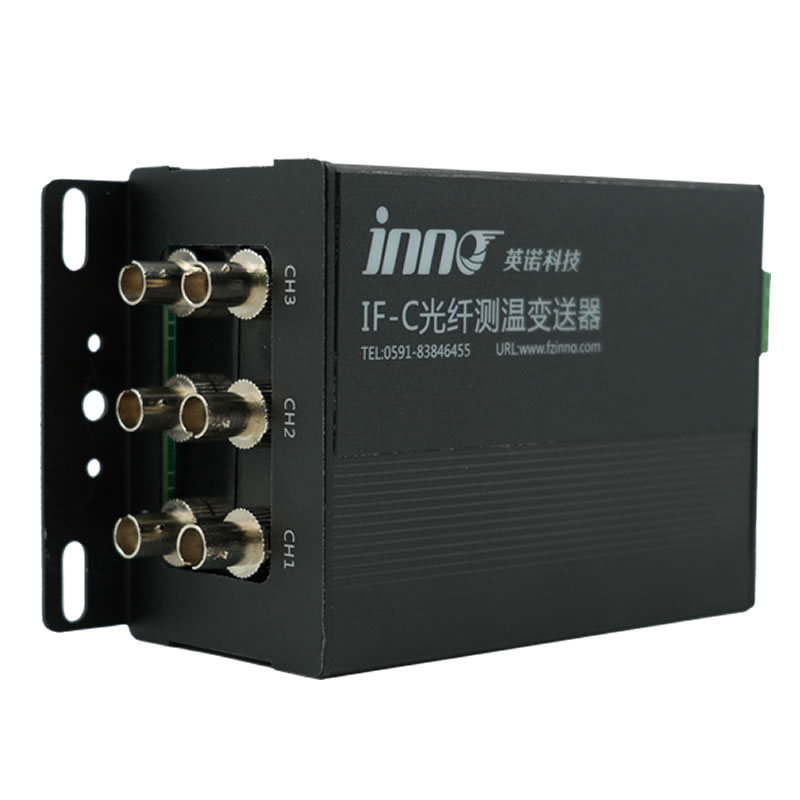
The combination of absolute EMI immunity and complete electrical isolation is not merely an advantage — it is a requirement in certain applications where no alternative sensing technology can operate safely and accurately. In power transformer winding hotspot monitoring, Bijvoorbeeld, international standards such as IEC 60076-2 explicitly recommend glasvezel temperatuurbewakingssystemen because metallic sensors cannot be safely installed on energized windings at 10 kV tot 500 kV.
Op dezelfde manier, in high-power microwave environments, radarsystemen, en elektromagnetische compatibiliteit (EMC) test kamers, A fluorescence-based fiber optic thermometer is the only viable contact temperature measurement method.
6. Toepassingen in de energiesector
The power sector is the largest adopter of fluorescence optical fiber thermometry wereldwijd, driven by the need to monitor critical thermal points inside high-voltage equipment.
Transformatorwikkeling hotspot-bewaking
Ingebed glasvezel temperatuursondes are installed directly inside oil-immersed transformer windings during manufacturing to detect hotspot temperatures that indicate insulation aging or overload conditions.
Switchgear and Busbar Contact Monitoring
Poor electrical contacts in medium- and high-voltage switchgear generate localized overheating that precedes catastrophic failures. Een Glasvezel temperatuurmeetsysteem installed at contact points provides continuous early warning.
Cable Joints and Terminations
Underground cable joints and GIS cable terminations are common failure points. Continuous thermal monitoring with optische vezeltemperatuursensoren reduces the risk of unplanned outages.
7. Toepassingen in hernieuwbare energie en batterijopslag
Windturbinegeneratoren
Generator bearings and stator windings in large wind turbines operate in vibration-heavy, EMI-rich nacelle environments. Fluorescentie glasvezel temperatuursensoren provide reliable monitoring without interference from variable-frequency drives.
Batterij-energieopslagsystemen (BESS)
Lithium-ion battery packs require precise cell-level temperature monitoring to prevent thermal runaway. The small probe size and electrical passivity of a glasvezel thermische sensor make it ideal for embedding between battery cells without introducing ignition risk.
Photovoltaic Inverters and Combiner Boxes
High-current DC connections in PV systems are prone to hotspot failures. Optical fiber temperature monitoring devices detect abnormal heating at busbar connections and fuse holders before damage occurs.
8. Toepassingen in industriële productie en gevaarlijke gebieden
Beyond energy, fluorescence optical fiber thermometry serves a growing number of industrial sectors.
Petrochemical and Oil Refining
Reactor vessel skin temperatures, pipeline flange monitoring, and storage tank surface temperatures in classified hazardous areas where intrinsic safety is mandatory.
Semiconductor and Microwave Processing
RF- en microgolfverwarmingskamers waarin metalen sensoren als antennes fungeren en foutieve metingen produceren. Glasvezeltemperatuursondes worden niet beïnvloed door RF-energie.
Farmaceutische en voedselverwerking
Bewaking van autoclaaf- en sterilisatiecycli waarbij elektrische isolatie en chemische inertie vereist zijn.
9. Fluorescentie Vezeltemp. Systeem versus. Thermokoppel versus. RTD versus. Infrarood
Voor inkoopprofessionals die opties vergelijken, de verschillen die er het meest toe doen zijn de betrouwbaarheid onder zware omstandigheden, totale installatiekosten, en onderhoudslasten op lange termijn.
versus. Thermokoppels
Thermokoppels zijn goedkoop per eenheid, maar hebben last van EMI-gevoeligheid, drijven in de tijd, koude-junctiefouten, en beperkte levensduur in trillingsomgevingen. Een fluorescentie glasvezel temperatuursensorsysteem elimineert al deze problemen, hoewel de eenheidskosten hoger zijn.
versus. Rts (Pt100/Pt1000)
RTD's bieden een goede nauwkeurigheid, maar vereisen bekrachtigingsstroom (waardoor zelfopwarming ontstaat), zijn gevoelig voor loodweerstandsfouten, and cannot be placed on high-voltage conductors without complex isolation barriers. Glasvezel temperatuursensoren need no excitation and provide inherent isolation.
versus. Infraroodsensoren
Infrared pyrometers measure surface temperature without contact but are affected by emissivity variations, stof, stoom, and line-of-sight requirements. Een fluorescence fiber optic probe makes direct contact with the target, is immune to optical obstructions, and works inside sealed equipment.
Bottom Line for Buyers
Where EMI, hoge spanning, explosiegevaar, or inaccessible locations are involved, fluorescence optical fiber thermometry is the only technology that checks every box simultaneously.
10. Totale eigendomskosten en ROI-analyse
The upfront cost of a Glasvezel temperatuurmeetsysteem is doorgaans hoger dan een gelijkwaardige thermokoppel- of RTD-installatie. Echter, procurement decisions should be based on total cost of ownership (TCO) across the full equipment lifecycle.
With a service life exceeding 25 years and virtually zero recalibration or replacement cost, the annualized cost of a fluorescentie glasvezelsensor is often lower than that of conventional sensors replaced every 3–5 years. Aanvullend, the prevention of a single unplanned transformer outage or battery thermal event can justify the entire investment in fiber optic monitoring many times over. Procurement teams should request a TCO comparison from qualified suppliers based on their specific installation scale and replacement cycle assumptions.
11. Belangrijkste technische specificaties die kopers moeten begrijpen
You do not need to be a physicist to evaluate a Glasvezel temperatuursensor, but understanding a few core specifications will help you compare products and communicate requirements to suppliers. The most important parameters include measurement range (typically –40 °C to +260 °C for standard probes, met opties voor hoge temperaturen beschikbaar), nauwkeurigheid (±1 °C is the industry benchmark), Reactietijd (onder 1 second for most probes), maximum fiber length (tot 80 meters between probe and demodulator), and channel count (1 naar 64 channels per demodulator unit). Ask suppliers to confirm these specifications with test reports or third-party calibration certificates.
12. Hoe een leverancier van glasvezeltemperatuursensoren te evalueren
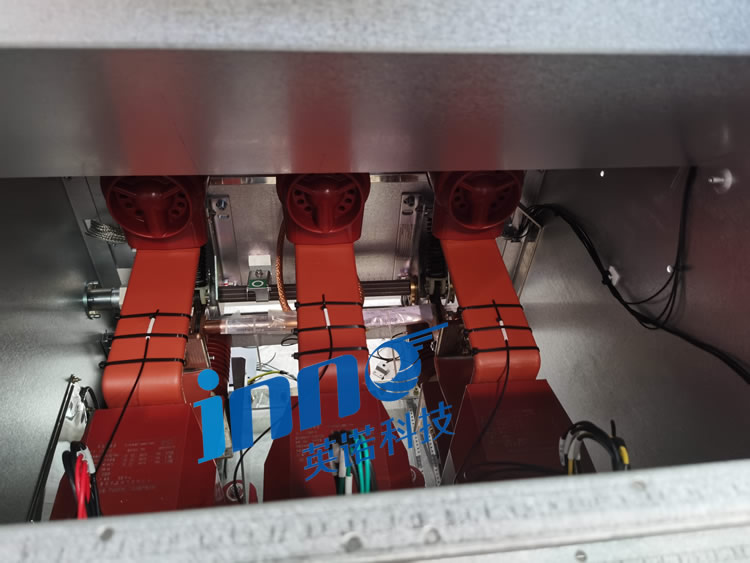
Choosing the right supplier is as important as choosing the right technology. Procurement teams should assess several dimensions.
Manufacturing Experience
Look for manufacturers — not just resellers — with at least 10 years of production history in fluorescence optical fiber thermometry. In-house manufacturing ensures quality control, aanpassingsvermogen, and faster lead times.
Product Range and Customization
Different applications require different probe lengths, materialen van de schede, fiber types, and demodulator configurations. A capable supplier offers configurable systems rather than one-size-fits-all packages.
Reference Projects and Certifications
Request case studies, customer references, and relevant certifications. Suppliers serving the power utility and energy storage sectors should demonstrate compliance with applicable IEC, IEEE, or national standards.
Global Support Capability
For international buyers, evaluate the supplier’s ability to provide English-language documentation, export packaging, technische ondersteuning op afstand, and international shipping experience.
13. Overwegingen bij installatiecompatibiliteit en retrofit
One of the most common procurement concerns is whether a glasvezel temperatuurbewakingssysteem can be integrated into existing infrastructure. In de meeste gevallen, the answer is yes. De kleine sondediameter (2–3 mm) allows direct replacement of existing RTD or thermocouple probes in many standard mounting locations. Demodulators provide RS485, Modbus, and analog outputs compatible with virtually all industrial SCADA and DCS systems. For retrofit projects, experienced manufacturers such as FJINNO provide pre-installation surveys and custom probe lengths to match existing cable routes and mounting hardware.
14. Ondersteuning na verkoop, Garantie, en langdurig onderhoud
Een fluorescence fiber optic temperature sensor system has very few wear components, which means maintenance requirements are minimal. The primary long-term considerations are periodic verification of calibration accuracy (typically every 2–3 years), protection of fiber cables from physical damage during adjacent maintenance activities, and firmware or software updates for the demodulator. Bij het beoordelen van leveranciersvoorstellen, confirm warranty duration, response time for technical support, and availability of spare probes and demodulators.
15. Bewezen casestudies en klantvalidatie
Sinds 2011, Fuzhou Innovatie Elektronische Scie&Leverancier:Tech Co., Bvba. (Fjinno) has delivered fluorescence optical fiber thermometry systems to customers across the power utility, hernieuwbare energie, industriële productie, en transportsectoren. Installations include transformer winding hotspot monitoring for provincial grid companies, battery thermal management systems for energy storage projects, and switchgear contact temperature monitoring for urban rail transit substations. These deployments demonstrate consistent measurement accuracy, betrouwbaarheid op lange termijn, and seamless integration with existing monitoring platforms. Prospective buyers are welcome to request detailed case study documentation.
16. Veelgestelde vragen (FAQ)
Q1: What is the typical measurement accuracy of a fluorescence fiber optic temperature sensor?
Most high-quality fluorescentie glasvezel temperatuursensoren achieve an accuracy of ±1 °C across their operating range. This is comparable to industrial-grade RTDs and significantly better than standard thermocouples in EMI-heavy environments.
Vraag 2: How long does a fiber optic temperature probe last?
Een correct geïnstalleerd optical fiber temperature probe can last more than 25 jaren. There are no metallic conductors or solder joints to corrode or fatigue, making the technology exceptionally durable.
Q3: Can fiber optic temperature sensors work in explosive or flammable atmospheres?
Ja. Because the probe tip is completely passive — carrying only light, no electrical energy — a glasvezel temperatuursensorsysteem is intrinsically safe and suitable for hazardous area classifications including Zone 0, 1, en 2.
Q4: What is the maximum distance between the sensor probe and the demodulator?
Standard systems support fiber lengths up to 80 Meter. Voor speciale toepassingen die langere afstanden vereisen, raadpleeg de fabrikant voor configuraties met groter bereik.
Vraag 5: How many temperature points can one demodulator monitor?
Een enkele glasvezel temperatuurdemodulator typically supports 1 naar 64 Kanalen, depending on the model. Multi-channel units significantly reduce per-point hardware cost in large-scale deployments.
Vraag 6: Is it difficult to integrate a fiber optic temperature system with existing SCADA or DCS?
Nee. Most demodulators provide RS485 serial output with Modbus RTU protocol, and many also offer analog 4–20 mA outputs. These are standard interfaces accepted by virtually all industrial control platforms.
Vraag 7: Can fluorescence fiber optic sensors replace existing RTDs or thermocouples in a retrofit?
In veel gevallen, yes. De kleine sondediameter (2–3 mm) fits most standard thermowell and mounting locations. Experienced suppliers can customize probe dimensions and cable lengths to match existing installations.
Vraag 8: Are fiber optic temperature sensors affected by electromagnetic interference?
Not at all. The entire sensing and transmission path is optical — glass fiber and light. There is no metallic conductor to act as an antenna, making a glasvezelthermometer completely immune to EMI and RFI.
Vraag 9: What industries use fluorescence optical fiber thermometry most widely?
The largest user base is in the electric power sector (transformatoren, schakelapparatuur, kabelverbindingen), followed by energy storage (battery thermal monitoring), hernieuwbare energie (windturbinegeneratoren), and industrial manufacturing (petrochemisch, halfgeleider, farmaceutisch).
Q10: How do I request a quotation or technical consultation from FJINNO?
You can contact Fuzhou Innovatie Elektronische Scie&Leverancier:Tech Co., Bvba. (Fjinno) directly via email at web@fjinno.net, by WhatsApp or phone at +86 135 9907 0393, or by visiting www.fjinno.net. The engineering team provides free preliminary technical consultations and project-specific proposals.
Over de fabrikant
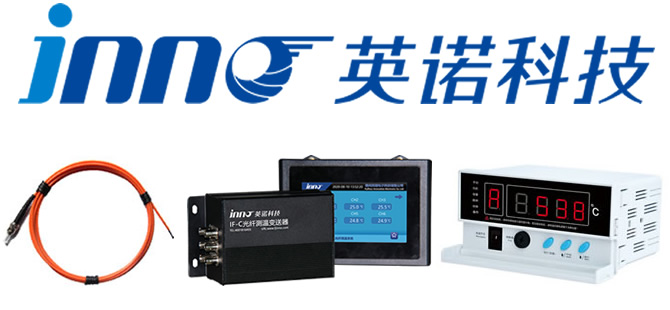
Fuzhou Innovatie Elektronische Scie&Leverancier:Tech Co., Bvba. (Fjinno) has been designing and manufacturing fluorescence optical fiber thermometry systems since 2011. Gelegen in Fuzhou, Fujian, China, FJINNO serves customers in more than 30 countries across the power, energie, en industriële sectoren.
Adres: Liandong U Grain Networking Industriepark, Xingye West Road nr. 12, Fuzhou, Fujian, China
E-mail: web@fjinno.net
WhatsApp (Engelstalig) / WeChat / Telefoon: +86 135 9907 0393
QQ: 3408968340
Website: www.fjinno.net
Vrijwaring: De informatie in dit artikel is uitsluitend bedoeld voor algemene informatieve en educatieve doeleinden. Terwijl Fuzhou Innovation Electronic Scie&Leverancier:Tech Co., Bvba. (Fjinno) makes every effort to ensure the accuracy and completeness of the content, no representation or warranty, expliciet of impliciet, is made regarding the accuracy, betrouwbaarheid, or completeness of the information. Productspecificaties, prestatiegegevens, and application suitability may vary depending on specific project conditions and configurations. This content does not constitute professional engineering advice. Buyers should conduct their own due diligence and consult directly with FJINNO or qualified engineers before making procurement decisions. FJINNO shall not be liable for any loss or damage arising from reliance on the information presented herein.

Glasvezel temperatuursensor, Intelligent bewakingssysteem, Gedistribueerde fabrikant van glasvezel in China
 |
 |
 |