 INNO glasvezel temperatuursensoren ,Temperatuur Monitoring Systemen.
- Fluorescentie glasvezel temperatuurmeting werkt door te meten hoe snel een fosformateriaal stopt met gloeien na een lichtpuls: hoe koeler het doel, hoe langzamer de gloed vervaagt; hoe warmer het wordt, hoe sneller het vervaagt.
- Dit op tijd gebaseerde meetprincipe is inherent immuun voor signaalverlies door vezelbuiging, veroudering van de connectoren, of verslechtering van de lichtbron, waardoor kopers langdurige nauwkeurigheid krijgen zonder frequente herkalibratie.
- Er bestaan drie reguliere glasvezeltemperatuurtechnologieën: fluorescentie levensduur, Vezel Bragg Raspen (FBG), en Raman-verstrooiing. Elk heeft verschillende projectvereisten, en het kiezen van de verkeerde is een kostbare vergissing.
- In dit artikel wordt het fluorescentiemechanisme in gewone zakelijke taal uitgelegd, vergelijkt het met alternatieve glasvezelbenaderingen, en laat inkoopprofessionals precies zien wat ze moeten verifiëren op een leveranciersgegevensblad voordat ze een bestelling plaatsen.
- Gepubliceerd door Fjinno, sindsdien een fabrikant van fluorescentieglasvezelthermometers 2011, deze gids helpt B2B-kopers met vertrouwen op technologie gebaseerde aankoopbeslissingen te nemen.
Inhoudsopgave
- Waarom inkoopprofessionals de onderliggende technologie moeten begrijpen
- Het fluorescentievervalprincipe – uitgelegd zonder natuurkundig jargon
- Waarom op tijd gebaseerde metingen beter zijn dan op intensiteit gebaseerde metingen
- Drie kopers van glasvezeltemperatuurtechnologieën zullen tegenkomen
- Levenslange fluorescentiedetectie vs. Vezel Bragg Raspen (FBG)
- Levenslange fluorescentiedetectie vs. Raman gedistribueerde temperatuurdetectie
- Wanneer fluorescentie de duidelijke winnaar is – en wanneer niet
- Hoe u een gegevensblad voor een glasvezeltemperatuursensor leest
- Vijf rode vlaggen die een zwakke leverancier aan het licht brengen
- De juiste technologie afstemmen op uw projectomvang
- Implementatiescenario's in de praktijk waarbij fluorescentiedetectie uitkomst biedt
- Vragen die uw technische team moet stellen voordat u ondertekent
- Veelgestelde vragen (FAQ)
1. Waarom inkoopprofessionals de onderliggende technologie moeten begrijpen

Als u een Glasvezel temperatuurmeetsysteem, you will encounter multiple competing technologies — all marketed under similar-sounding names. Suppliers offering fluorescence-based systems, FBG-systemen, and Raman systems will each claim superior performance, and their datasheets will look convincingly similar at first glance. Without a working understanding of how each technology functions, procurement teams risk selecting a system that is technically mismatched to the project environment, overpaying for capabilities they do not need, or underspecifying a system that fails in the field.
This article is not written for laboratory researchers. It is written for project buyers, procurement engineers, and sourcing managers who need to understand just enough about fluorescence optical fiber temperature sensing to evaluate supplier proposals critically, ask the right questions, en vermijd dure fouten.
2. Het fluorescentievervalprincipe – uitgelegd zonder natuurkundig jargon

Op het puntje van elke fluorescentie glasvezel temperatuursonde, er is een klein stukje fosformateriaal – een substantie die kort gloeit als er licht op valt. Het meetproces verloopt in drie eenvoudige stappen.
Stap één: Een lichtpuls reist door de vezel
De demodulator (het belangrijkste instrument) stuurt een zeer korte lichtflits door de optische vezelkabel naar de punt van de sonde. Dit is vergelijkbaar met de flitser van een camera: deze brandt een fractie van een seconde en gaat dan uit.
Stap twee: De fosfor gloeit en vervaagt vervolgens
Wanneer de lichtpuls de fosfor raakt, de fosfor absorbeert de energie en begint te gloeien (fluoresceren). Het moment dat de lichtpuls stopt, de fosfor wordt niet onmiddellijk donker - hij vervaagt geleidelijk, like the afterglow of a light bulb after you switch it off.
Step Three: The Fade Speed Tells You the Temperature
Here is the key insight: the speed at which the glow fades is directly linked to temperature. At lower temperatures, the glow fades slowly. Bij hogere temperaturen, it fades quickly. The demodulator measures this fade speed — technically called the fluorescentie verval levensduur — and converts it into a precise temperature reading.
Why Should a Buyer Care About This?
Because the measurement depends on timing (how fast the glow fades), not on how bright the glow is. This distinction has enormous practical consequences. If the fiber cable gets bent, a connector gets dirty, or the light source weakens slightly over years of service, the brightness of the return signal may decrease — but the fade speed remains unchanged. Dit betekent een fluorescentie levensduur glasvezel temperatuursensor blijft jaar na jaar nauwkeurig zonder herkalibratie, zelfs als het optische pad op natuurlijke wijze verslechtert met de leeftijd.
3. Waarom op tijd gebaseerde metingen beter zijn dan op intensiteit gebaseerde metingen
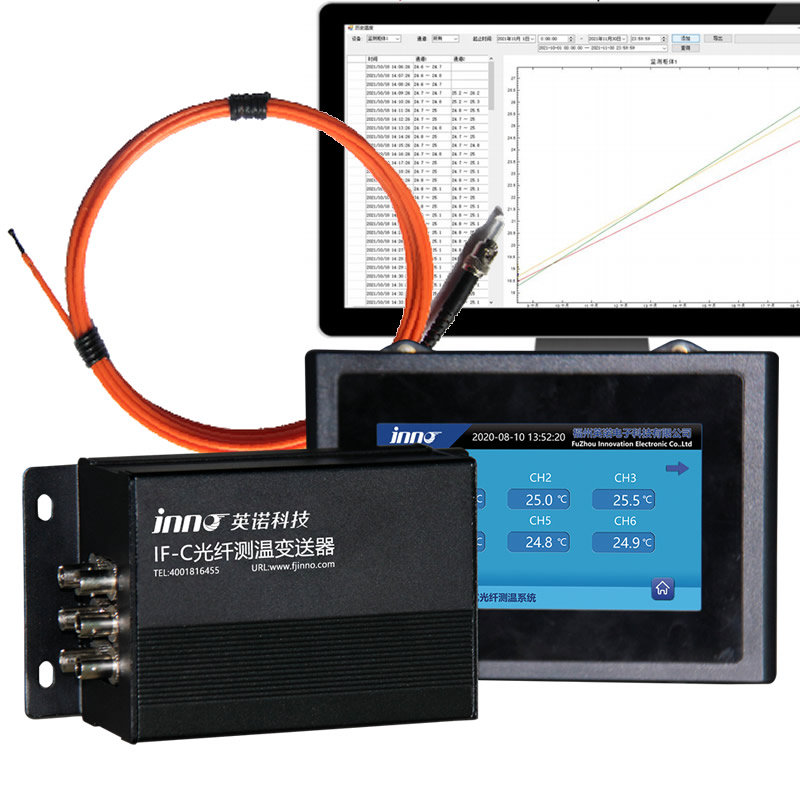
Sommige oudere of goedkopere glasvezeltemperatuursystemen meten de temperatuur door naar de helderheid te kijken (intensiteit) van de fluorescentie in plaats van de vervalsnelheid. Deze aanpak is eenvoudiger en goedkoper om te bouwen, maar het introduceert een fundamentele zwakte: alles wat de signaalhelderheid vermindert: vezelbuiging, vuile connectoren, lange kabellengtes, of LED-veroudering – wordt verkeerd geïnterpreteerd als een temperatuurverandering.
Voor een B2B-koper, het praktische verschil is aanzienlijk. Een op intensiteit gebaseerde glasvezeltemperatuursensor vereist mogelijk elke 6 tot 12 maanden herkalibratie en is gevoelig voor valse metingen als de installatie wordt verstoord tijdens onderhoud. Een fluorescentie verval levensduursensor behoudt zijn kalibratie doorgaans 2 à 3 jaar of langer en wordt vrijwel niet beïnvloed door routinematige verstoringen van het vezelpad. Bij het beoordelen van leveranciersvoorstellen, bevestig altijd of het systeem op levensduur gebaseerde of op intensiteit gebaseerde metingen gebruikt. Deze ene vraag kan een betrouwbare langetermijninvestering onderscheiden van onderhoudsproblemen.
4. Drie kopers van glasvezeltemperatuurtechnologieën zullen tegenkomen
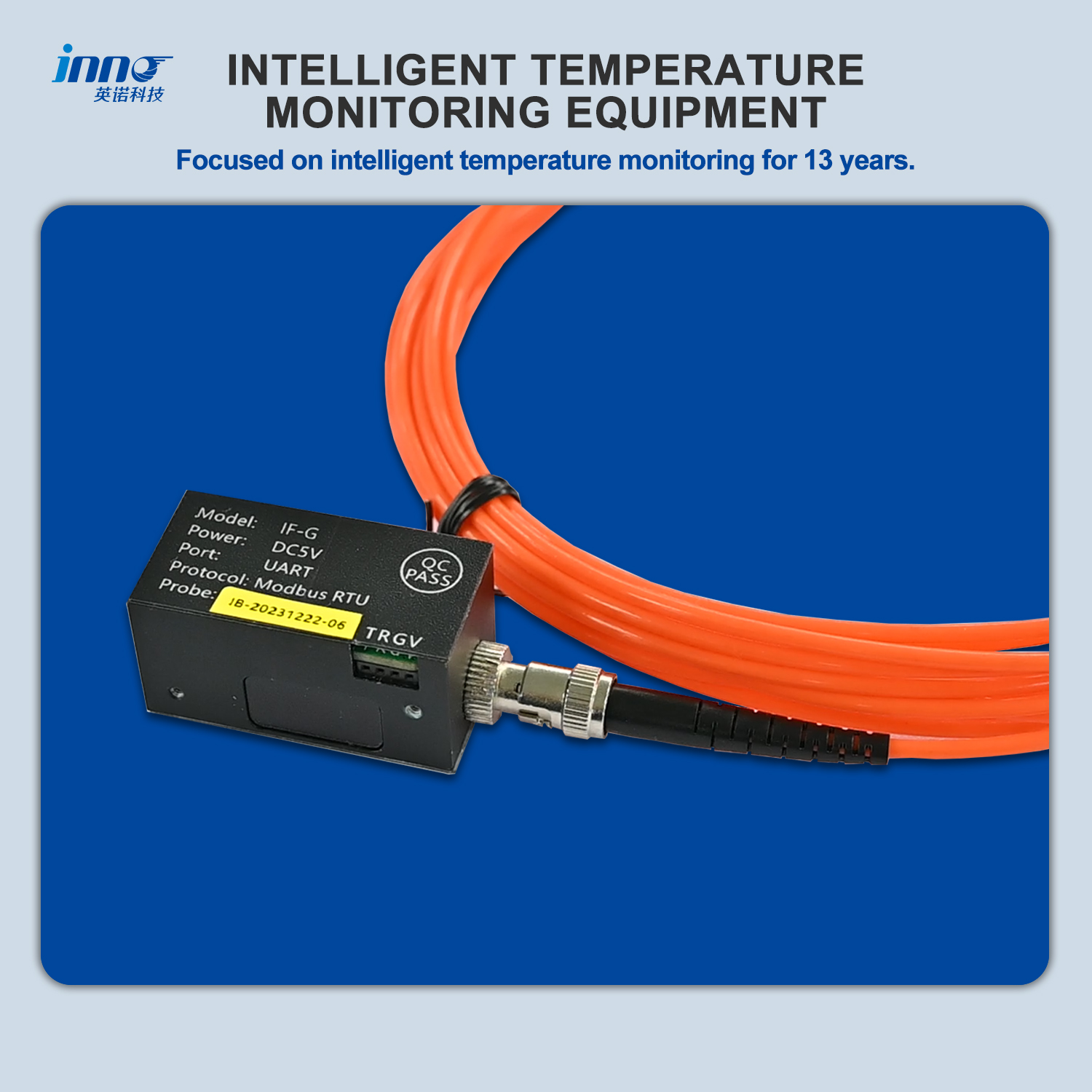
Bij het sourcen systemen voor temperatuurmeting van optische vezels, inkoopteams zullen drie reguliere technologieën tegenkomen. Elk heeft een fundamenteel ander werkingsprincipe, en elk is geoptimaliseerd voor een ander type project.
Levenslange fluorescentiedetectie
Puntmetingstechnologie. Elke sonde meet de temperatuur op één specifieke locatie. Ideaal voor het bewaken van discrete hotspots op transformatoren, contacten van schakelapparatuur, batterij cellen, en motorwikkelingen. Biedt een hoge nauwkeurigheid (±1°C), Snelle reactie (onder 1 tweede), en volledige elektrische isolatie.
Vezel Bragg Raspen (FBG) Sensing
Quasi-gedistribueerde technologie. Meerdere detectiepunten (roosters) worden in één enkele vezel geschreven, waardoor tientallen meetpunten langs één kabel mogelijk zijn. Vaak gebruikt voor structurele gezondheidsmonitoring van bruggen, Pijpleidingen, en grote civiele constructies. Minder vaak gebruikt voor elektrische hoogspanningsapparatuur omdat FBG-vezels gevoelig kunnen zijn voor spanning en golflengte-stabiele ondervragers vereisen.
Raman gedistribueerde temperatuurdetectie (DTS)

Volledig gedistribueerde technologie. Meet continu de temperatuur over de gehele lengte van een vezel, mogelijk over een afstand van kilometers. Gebruikt voor detectie van pijpleidinglekken, branddetectie in tunnels, en perimeterbeveiliging. De nauwkeurigheid is lager dan die van puntsensoren (doorgaans ±1–2 °C), en de ruimtelijke resolutie wordt gemeten in meters in plaats van millimeters.
5. Levenslange fluorescentiedetectie vs. Vezel Bragg Raspen (FBG)
B2B-kopers ontvangen soms concurrerende voorstellen van fluorescentie glasvezelsensor leveranciers en FBG-sensor leveranciers voor hetzelfde project. Als u de fundamentele verschillen begrijpt, kunt u beoordelen of de voorgestelde technologie geschikt is.
Elektrische isolatie
Een fluorescentie glasvezel temperatuursonde is completely passive at the sensing point — only light reaches the probe tip. FBG sensors are also passive, but the interrogator typically requires a broadband light source and high-resolution spectrometer, making the demodulation hardware more complex and expensive.
Sensitivity to Strain
FBG sensors are inherently sensitive to both temperature and mechanical strain. If the fiber is stretched or compressed — common in vibrating environments like motor windings or transformer tanks — the strain signal mixes with the temperature signal, introducing errors. Fluorescence sensors measure only temperature and are unaffected by mechanical strain on the fiber.
Kosten per meetpunt
For projects with fewer than 20–30 measurement points concentrated in a small area, op fluorescentie gebaseerde systemen are typically more cost-effective. FBG systems become competitive when a project requires 50 or more measurement points distributed along a single long fiber run.
Buyer Takeaway
If your project involves high-voltage equipment, sterke EMI, trilling, or a moderate number of discrete hotspot locations, fluorescence is almost always the better fit. If your project involves measuring temperature profiles along very long structures, FBG or Raman may be more appropriate.
6. Levenslange fluorescentiedetectie vs. Raman gedistribueerde temperatuurdetectie

Raman DTS and fluorescentiepuntsensoren are complementary rather than competing technologies in many cases. Echter, some suppliers position Raman DTS as a replacement for fluorescence sensing, which can lead to poor project outcomes.
Precision vs. Dekking
Een fluorescence fiber optic thermometer delivers ±1 °C accuracy at a specific point. Een Raman DTS-systeem levert een nauwkeurigheid van ±1–2 °C, gemiddeld over een ruimtelijk resolutievenster van 0,5–2 meter. Voor het detecteren van een hotspot op een enkele railbout of een specifieke batterijcel, De Raman-resolutie is veel te grof.
Reactietijd
Fluorescentiesensoren reageren onder 1 tweede. Raman DTS-systemen vereisen doorgaans 30 seconden tot enkele minuten signaalmiddeling om een acceptabele nauwkeurigheid te bereiken, waardoor ze ongeschikt zijn voor toepassingen waarbij de temperatuur snel verandert.
Systeemcomplexiteit en kosten
Raman DTS-ondervragers zijn aanzienlijk duurder dan fluorescentiedemodulatoren en vereisen gespecialiseerde glasvezelinstallatie over lange afstanden. Voor gelokaliseerde monitoringtaken, A fluorescentie glasvezel temperatuurmeetsysteem levert superieure prestaties tegen een fractie van de kosten.
7. Wanneer fluorescentie de duidelijke winnaar is – en wanneer niet
Geen enkele technologie is perfect voor elke toepassing. Honest guidance helps buyers avoid both over-engineering and under-engineering their monitoring systems.
Fluorescence Is the Clear Winner When:
The project requires high-accuracy point measurement (±1 °C or better) in environments with strong electromagnetic interference, hoge spanning, explosiegevaar, or confined spaces. Typical examples include transformer winding hotspot monitoring, switchgear contact temperature sensing, battery cell thermal monitoring, en Meting van de temperatuur van de kabelverbinding.
Fluorescence May Not Be the Best Fit When:
The project requires continuous temperature profiling over distances exceeding several hundred meters (Raman DTS is better), or when more than 100 sensing points are needed along a single linear structure (FBG may be more economical). Recognizing these boundaries demonstrates supplier honesty and helps buyers trust the recommendation.
8. Hoe u een gegevensblad voor een glasvezeltemperatuursensor leest

Supplier datasheets are the primary tool for comparing products, but not all datasheets present information in the same way. Here are the key specifications to focus on and what they mean for your project.
Meetbereik
Typically –40 °C to +260 °C for standard fluorescentie glasvezelsondes. Confirm that the stated range covers your worst-case operating conditions with margin. Some suppliers quote the phosphor material’s theoretical range rather than the tested system range — always ask for system-level specifications.
Nauwkeurigheid en resolutie
Nauwkeurigheid (±1°C) tells you how close the reading is to the true temperature. Resolutie (0.1 °C) tells you the smallest change the system can detect. Both matter, but accuracy is the specification that affects your process control decisions. Ask whether the stated accuracy applies across the full temperature range or only at a single calibration point.
Reactietijd
Defined as the time to reach 90% of a step temperature change. For most fluorescentie optische vezel temperatuursensoren, this is under 1 tweede. Be cautious of datasheets that quote response time without specifying the measurement condition (in air, in oil, or in contact with metal).
Maximum Fiber Length
The distance from the demodulator to the farthest probe. Standard is 30–80 meters. If your installation requires longer runs, confirm performance specifications at the actual required distance, not just the maximum rated distance.
Kanaaltelling
How many independent temperature points one demodulator can monitor simultaneously — usually 1 naar 64. This directly affects your per-point cost and rack space requirements.
9. Vijf rode vlaggen die een zwakke leverancier aan het licht brengen
After evaluating hundreds of sourcing interactions in the Glasvezel temperatuursensor markt, certain patterns consistently indicate suppliers who may underdeliver.
Red Flag 1: No In-House Manufacturing
If the supplier is a trading company reselling another manufacturer’s product, you lose direct access to technical support, maatwerk, and quality accountability. Always ask whether the supplier manufactures the demodulator, the probes, or both.
Red Flag 2: Vague Accuracy Claims
Statements like “Hoge nauwkeurigheid” of “accurate measurement” without a specific ±value at a defined temperature range are meaningless. Reputable manufacturers publish tested accuracy figures with calibration traceability.
Red Flag 3: No Reference Projects in Your Industry
A supplier who has never deployed a fluorescentie glasvezel temperatuurbewakingssysteem in your specific application (macht, energie opslag, industrieel) may not understand the installation constraints and environmental requirements unique to your sector.
Red Flag 4: No Customization Capability
Every project has slightly different probe length, materiaal van de schede, kabelgeleiding, and communication protocol requirements. Suppliers offering only fixed catalog configurations may force you to compromise on installation quality.
Red Flag 5: No After-Sales Engineering Support
Temperature monitoring systems require occasional technical support — commissioning assistance, protocolconfiguratie, and calibration verification. If the supplier cannot provide remote engineering support in your language and time zone, post-purchase problems become your problem alone.
10. De juiste technologie afstemmen op uw projectomvang
The most common procurement mistake is selecting a technology before fully defining the project requirements. Before requesting quotations for a Glasvezel temperatuurmeetsysteem, your project team should clearly define the number of discrete measurement points required, the physical distance between the farthest sensor and the monitoring room, de omgevingsomstandigheden op de detectielocatie (extreme temperaturen, EMI level, spanning klasse, chemische blootstelling), the required communication protocol for integration with existing SCADA or DCS, and whether the installation is new-build or retrofit. Providing these details in your RFQ ensures that suppliers propose the correct technology — fluorescence, FBG, or Raman — rather than defaulting to whatever product they happen to sell.
11. Implementatiescenario's in de praktijk waarbij fluorescentiedetectie uitkomst biedt
Fuzhou Innovatie Elektronische Scie&Leverancier:Tech Co., Bvba. (Fjinno) has been manufacturing fluorescence optical fiber thermometry systems sinds 2011. Over more than a decade of project delivery, certain deployment scenarios have consistently demonstrated the strongest return on investment for B2B buyers.
Stroomtransformatoren
Glasvezeltemperatuursondes embedded in transformer windings during manufacturing provide direct hotspot temperature data that oil-top thermometers and thermal imaging cannot replicate. This data enables load optimization and prevents insulation degradation.
Medium- and High-Voltage Switchgear
Continuous contact temperature monitoring with fluorescentie glasvezelsensoren detects progressive resistance increases at busbar joints months before thermal failure occurs, allowing planned maintenance instead of emergency shutdowns.
Lithium-Ion Battery Energy Storage
Cell-level thermal monitoring with electrically passive temperatuursondes voor optische vezels provides the safety-critical data needed to detect thermal runaway precursors without introducing ignition risk into the battery enclosure.
Industrial Motors and Generators
Stator winding temperature monitoring in large rotating machines operating near variable-frequency drives, where EMI renders conventional sensors unreliable.
12. Vragen die uw technische team moet stellen voordat u ondertekent
Before finalizing a purchase order for a fluorescentie glasvezel temperatuursensorsysteem, procurement professionals should ensure their engineering team has confirmed answers to these critical questions: Does the supplier use fluorescence lifetime or fluorescence intensity measurement — and can they explain the difference? What is the system-level accuracy across the full operating temperature range, not just at a single calibration point? What is the expected probe lifespan under your specific operating conditions? Can the demodulator firmware be updated in the field, or must the unit be returned to the factory? What warranty terms apply to the probes, the demodulator, and the fiber cables separately? Gathering these answers before contract execution prevents disputes and ensures the delivered system matches your technical expectations.
13. Veelgestelde vragen (FAQ)
Q1: What is fluorescence decay lifetime, and why does it matter for temperature measurement?
Fluorescence decay lifetime is the time it takes for the phosphor glow at the probe tip to fade after a light pulse. This fade time changes predictably with temperature, forming the basis of the measurement. Because it depends on timing rather than brightness, the reading is immune to signal loss from fiber aging, buigen, or dirty connectors — which is why a fluorescence lifetime fiber optic sensor holds calibration far longer than intensity-based alternatives.
Vraag 2: What is the difference between fluorescence fiber sensing and FBG fiber sensing?
Fluorescentie glasvezeldetectie measures temperature at a discrete point using the phosphor decay principle and is immune to mechanical strain. FBG sensing uses wavelength shifts in laser light reflected by gratings written into the fiber and is sensitive to both temperature and strain. For high-voltage hotspot monitoring, fluorescence is generally preferred.
Q3: Can a fluorescence system and a Raman DTS system be used together on the same project?
Ja. Many large-scale projects use Raman DTS for distributed cable or pipeline monitoring over long distances and fluorescentiepuntsensoren for precise hotspot monitoring on specific equipment. The two technologies are complementary.
Q4: How do I know if a supplier’s datasheet accuracy claim is trustworthy?
Ask for third-party calibration certificates traceable to national metrology standards. Reputable manufacturers of glasvezel temperatuurmeetsystemen provide calibration reports showing tested accuracy at multiple temperature points across the full rated range.
Vraag 5: What phosphor materials are used in fluorescence fiber optic probes?
The most common phosphor materials are rare-earth doped compounds and GaAs (galliumarsenide) halfgeleiders. Rare-earth phosphors are widely used for industrial temperature ranges (–40 °C to +260 °C), while GaAs probes are used for some specialized applications. Your supplier should be able to specify which material their probes use.
Vraag 6: Is a fluorescence fiber optic system difficult for our maintenance team to operate?
Nee. Once installed and commissioned, A fluorescentie glasvezel temperatuurbewakingssysteem operates autonomously. The demodulator outputs readings via standard protocols (Modbus, 4–20 mA) to your existing control system. Routine maintenance involves periodic visual inspection of fiber cables and occasional calibration verification — no specialized optical skills are required.
Vraag 7: How many measurement channels do we need?
This depends entirely on how many discrete temperature points your project requires. Een enkele glasvezel temperatuurdemodulator ondersteunt 1 naar 64 Kanalen. For projects with more than 64 punten, multiple demodulators can be networked together on a shared communication bus.
Vraag 8: Can fluorescence probes be installed in oil-filled transformers?
Ja. Fluorescentie glasvezel temperatuursondes designed for transformer applications are oil-compatible and chemically inert. They are typically installed during transformer manufacturing, embedded directly in the winding structure. Retrofit installation on existing transformers is also possible in some configurations.
Vraag 9: What happens if a fiber cable is accidentally damaged?
A damaged fiber cable will cause the affected channel to lose signal, which the demodulator reports as a fault alarm. The demodulator and all other channels continue operating normally. The damaged cable and probe can be replaced individually without affecting the rest of the system.
Q10: How do I start a conversation with FJINNO about my project?
Contact Fuzhou Innovatie Elektronische Scie&Leverancier:Tech Co., Bvba. (Fjinno) by email at web@fjinno.net, by WhatsApp or phone at +86 135 9907 0393, or through the company website at www.fjinno.net. Share your project scope, measurement point count, en werkomgeving, and the engineering team will provide a technology recommendation and budgetary proposal at no cost.
Over de fabrikant
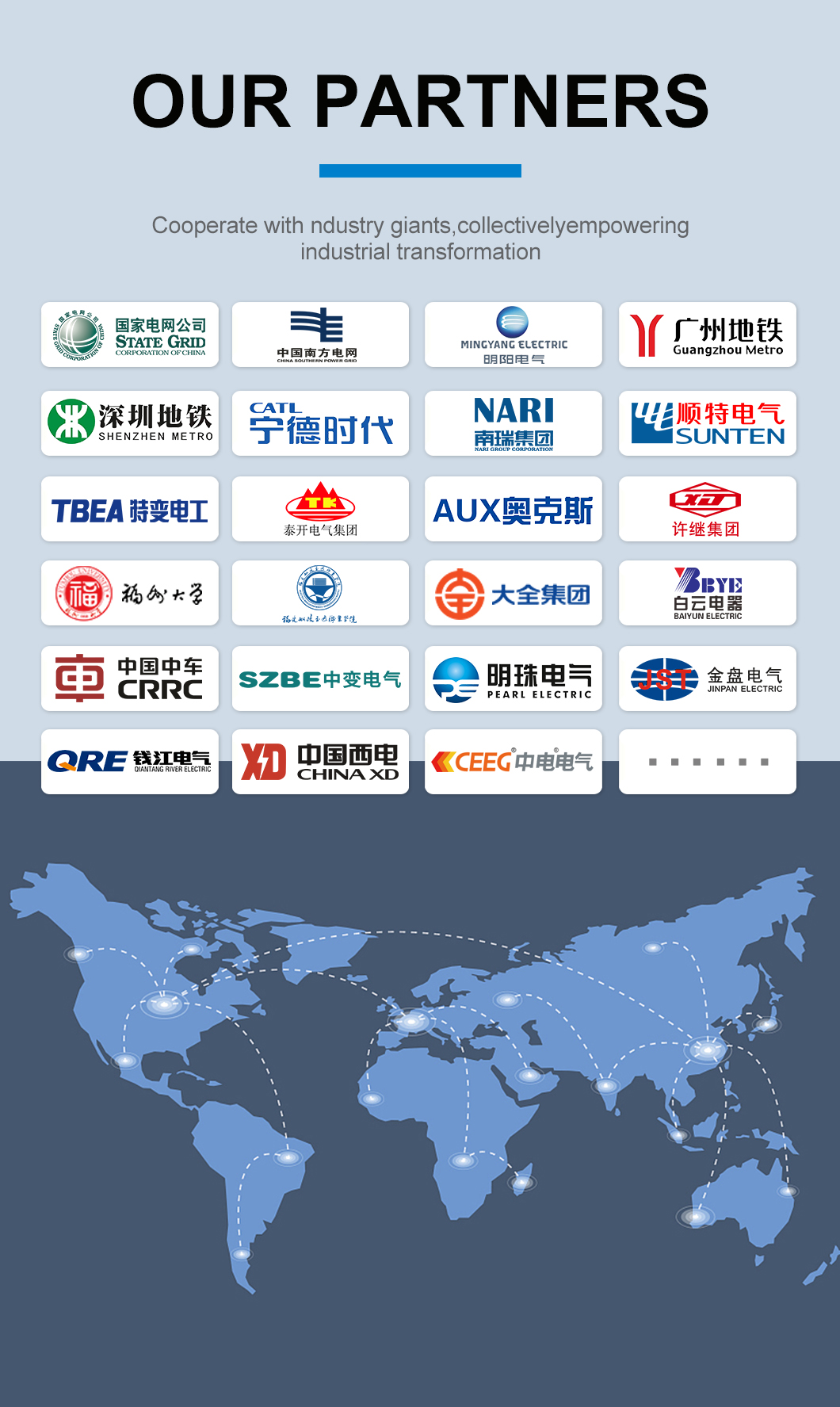
Fuzhou Innovatie Elektronische Scie&Leverancier:Tech Co., Bvba. (Fjinno) has been designing and manufacturing fluorescence optical fiber thermometry systems sinds 2011. The company serves B2B customers across the power utility, energie opslag, hernieuwbare energie, and industrial manufacturing sectors in more than 30 landen.
Adres: Liandong U Grain Networking Industriepark, Xingye West Road nr. 12, Fuzhou, Fujian, China
E-mail: web@fjinno.net
WhatsApp (Engelstalig) / WeChat / Telefoon: +86 135 9907 0393
QQ: 3408968340
Website: www.fjinno.net
Vrijwaring: De informatie in dit artikel is uitsluitend bedoeld voor algemene informatieve en educatieve doeleinden. Terwijl Fuzhou Innovation Electronic Scie&Leverancier:Tech Co., Bvba. (Fjinno) makes every effort to ensure the accuracy and completeness of the content, no representation or warranty, expliciet of impliciet, is made regarding the accuracy, betrouwbaarheid, or completeness of the information. Productspecificaties, technology comparisons, and application suitability may vary depending on specific project conditions. This content does not constitute professional engineering advice. Buyers should conduct independent due diligence and consult directly with FJINNO or qualified engineers before making procurement decisions. FJINNO shall not be liable for any loss or damage arising from reliance on the information presented herein.

Glasvezel temperatuursensor, Intelligent bewakingssysteem, Gedistribueerde fabrikant van glasvezel in China
 |
 |
 |