 חיישני טמפרטורה של סיבים אופטיים INNO ,מערכות ניטור טמפרטורה.
תוכן עניינים
- מדוע שנאי כוח זקוקים לניטור טמפרטורת סיבים אופטיים
- היתרונות העיקריים של ניטור טמפרטורה בסיבים אופטיים עבור רובוטריקים
- הבנת טכנולוגיות חיישני טמפרטורה של סיבים אופטיים עבור רובוטריקים
- שָׁלָב 1: תכנון מערכת ניטור טמפרטורת השנאי שלך
- שָׁלָב 2: בחירת חיישני הטמפרטורה הנכונים של סיבים אופטיים
- שָׁלָב 3: קביעת נקודות התקנת חיישן אופטימליות
- שָׁלָב 4: שיטות התקנה ושיטות עבודה מומלצות
- שָׁלָב 5: הגדרת ציוד חקירה ורכישת נתונים
- שָׁלָב 6: אינטגרציה עם מערכות ניטור שנאי
- שָׁלָב 7: הגדרת ספי אזעקה ומערכות התראות
- שָׁלָב 8: אימות מערכות והפעלה
- דרישות תחזוקה וכיול
- מקרי מקרה של יישום בעולם האמיתי
- בחירת יצרן חיישן טמפרטורה של סיבים אופטיים
- שאלות נפוצות
מדוע שנאי כוח זקוקים לניטור טמפרטורת סיבים אופטיים
שנאי כוח מייצגים את אחד הרכיבים הקריטיים והיקרים ביותר במערכות חשמל. נכסים חיוניים אלו עולים בדרך כלל מיליוני דולרים, עם חיי שירות צפויים של 30-40 שנים כשהם מתוחזקים כראוי. עם זאת, כשלים בשנאים עלולים לגרום להפסקות קטסטרופליות, מה שגורם להפסדים כלכליים משמעותיים ולסכנות בטיחותיות פוטנציאליות.
ניהול טמפרטורה הוא הגורם החשוב ביותר בשנאי בריאות ואריכות ימים. לפי תקני IEEE, transformer insulation aging accelerates exponentially with temperature increases—for every 6-8°C rise above rated temperature, insulation life is typically halved. זה עושה מדויק, reliable temperature monitoring essential for optimal transformer operation and maintenance.
The Limitations of Traditional Temperature Monitoring Approaches
מוּסכָּם ניטור טמפרטורת שנאי methods face significant limitations:
- מחווני טמפרטורה מתפתלים (WTI): These use thermal models to estimate winding temperatures based on top oil measurements וזרם עומס. While widely used, they provide only calculated estimates rather than direct measurements, with accuracy typically ±5-10°C under dynamic conditions.
- גלאי טמפרטורת התנגדות (RTDs): These can only be placed in oil pockets, not directly in windings, creating a significant temperature gradient between measurement point and actual hotspot.
- תרמוגרפיה אינפרא אדום: Limited to external surface measurements, unable to detect internal hotspots where critical failures typically originate.
- הפרעות אלקטרומגנטיות: Conventional electronic sensors are susceptible to the intense electromagnetic fields present in transformers, מוביל ל measurement errors and potential equipment נֵזֶק.
These limitations often result in conservative loading practices that underutilize transformer capacity, or conversely, undetected hotspots that can lead to premature failures.
The Fiber Optic Temperature Monitoring Solution
חיישן טמפרטורה בסיב אופטי technology has emerged as the gold standard for transformer temperature monitoring, providing capabilities that conventional methods simply cannot match:
- מדידת נקודה חמה ישירה: Fiber optic sensors can be embedded directly within transformer windings during manufacturing or retrofit, measuring actual hotspot temperatures rather than estimates.
- חסינות EMI מלאה: With no metallic components, בדיקות טמפרטורה בסיבים אופטיים חסינים לחלוטין מפני הפרעות אלקטרומגנטיות, providing reliable readings regardless of transformer loading.
- דיוק גבוה: מוֹדֶרנִי מערכות מדידת טמפרטורה בסיבים אופטיים achieve accuracy of ±1°C or better, compared to ±5-10°C for conventional methods under dynamic conditions.
- יכולת ריבוי נקודות: סינגל fiber optic temperature monitoring system can measure עשרות או אפילו מאות נקודות בו זמנית, enabling comprehensive thermal mapping of complex transformer geometries.
- נתונים בזמן אמת: Continuous monitoring with rapid response times captures transient temperature events that periodic measurements might miss, crucial during overload conditions.
These advantages make חישת טמפרטורה בסיבים אופטיים the preferred solution for critical transformers, particularly in transmission substations, generator step-up applications, and industrial settings where reliability is paramount.
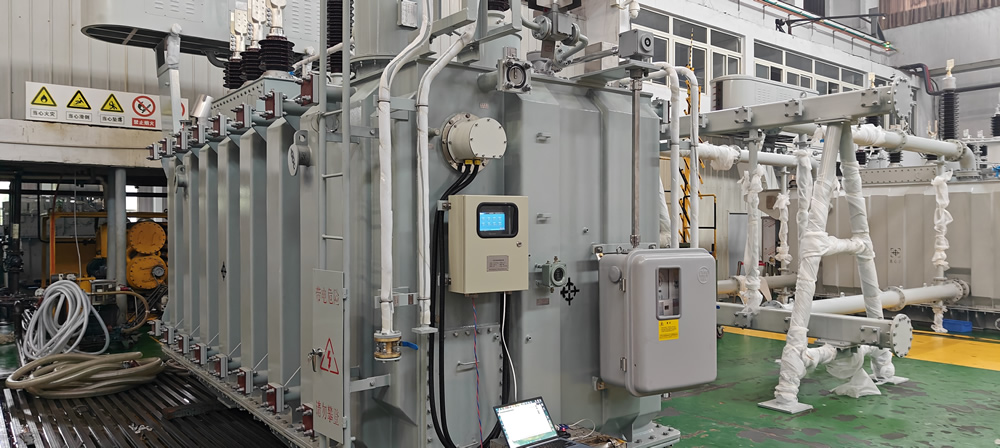
Modern power transformer equipped with fiber optic temperature monitoring system, showing fiber routing and interrogation equipment.
היתרונות העיקריים של ניטור טמפרטורה בסיבים אופטיים עבור רובוטריקים
יישום fiber optic temperature measurement systems for power שנאים מספקים יתרונות מוחשיים מרובים המשפיעים ישירות על האמינות התפעולית, נוהלי תחזוקה, חיי נכס, וביצועים פיננסיים.
חיי שנאי מורחבים
מְדוּיָק ניטור טמפרטורה מאפשר למפעילים למנוע אירועים תרמיים מזיקים ולייעל את הטעינה בגבולות בטוחים:
- הארכת חיי שנאי טיפוסית של 5-15 שנים באמצעות ניהול תרמי אופטימלי
- זיהוי מוקדם של דפוסי חימום חריגים לפני מתרחש נזק לבידוד
- קצב הזדקנות תרמי מופחת באמצעות בקרת טעינה מדויקת יותר
- נתוני טמפרטורה היסטוריים מאפשרים הערכת חיים מדויקת
עבור שנאים קריטיים בשווי מיליוני דולרים, הארכת חיי השירות אפילו בכמה שנים מייצגת תועלת כספית משמעותית והוצאות הוניות נדחות.
יכולת טעינה מוגברת
סלילה ישירה מדידת טמפרטורה מאפשר לשירותים למקסם בבטחה את קיבולת השנאים:
- עליות קיבולת אופייניות של 10-15% compared to conservative loading based on thermal models
- Confidence to utilize short-term emergency ratings during critical periods
- Dynamic loading capability based on actual measured temperatures rather than worst-case assumptions
- Optimized cooling control based on real-time temperature נְתוּנִים
This increased capacity can defer costly infrastructure upgrades and provide critical flexibility during peak demand periods or contingency situations.
איתור תקלות מוקדם
חיישני טמפרטורה בסיבים אופטיים can identify developing issues before they progress to catastrophic failures:
- Detection of blocked cooling ducts through localized temperature עולה
- Identification of deteriorating electrical connections via abnormal heating patterns
- Early warning of insulation breakdown through hotspot development
- Recognition of cooling system failures through temperature response patterns
Early identification of these issues allows for planned maintenance interventions rather than emergency repairs or replacements after failures occur.
Optimized Maintenance Practices
Comprehensive temperature data enables transition from time-based to condition-based maintenance:
- Prioritization of maintenance based on actual thermal stress history
- Targeted inspections guided by temperature anomalies
- Reduction in unnecessary preventive maintenance activities
- More accurate assessment of transformer health for fleet management
These optimized maintenance practices typically reduce maintenance costs by 15-25% while simultaneously improving reliability and extending asset חַיִים.
Enhanced Safety and Environmental Protection
Preventing transformer thermal failures has significant safety and environmental benefits:
- Reduced risk of catastrophic failures that could result in fires or explosions
- Prevention of oil leaks and spills associated with thermal runaway events
- Enhanced personnel safety through remote monitoring that reduces inspection requirements
- Reduced risk of collateral damage to adjacent equipment during failure events
These benefits are particularly important for transformers located in environmentally sensitive areas or populated locations where safety hazards are heightened.
Comprehensive Documentation and Analytics
מוֹדֶרנִי מערכות ניטור טמפרטורה בסיבים אופטיים provide powerful data management capabilities:
- Complete temperature history for warranty claims and insurance documentation
- Advanced analytics for thermal performance optimization
- Integration with asset health מערכות ניהול להערכת מצב מקיפה
- Valuable data for future transformer design and specification improvements
This wealth of data transforms temperature monitoring from a simple protection function to a valuable asset management tool with both operational and strategic benefits.
החזר על ההשקעה
The financial case for ניטור טמפרטורה של סיבים אופטיים הוא משכנע. Case studies across utilities worldwide have documented:
- ROI periods typically ranging from 2-4 years for critical transformers
- Failure prevention savings of $500,000 אֶל $3 million per avoided major failure (including replacement costs, תגובת חירום, והשפעות הפסקות)
- Capacity deferral savings of $1-2 million per substation where transformer upgrades can be postponed through optimized loading
- Maintenance savings of $15,000-$25,000 annually per large transformer through condition-based approaches
These financial benefits make ניטור טמפרטורה של סיבים אופטיים a sound investment, particularly for large power transformers in critical applications.
הבנת טכנולוגיות חיישני טמפרטורה של סיבים אופטיים עבור רובוטריקים
Before implementing a fiber optic מערכת ניטור טמפרטורה עבור שנאי כוח, it’s essential to understand the different technologies available and their specific advantages for transformer applications.
Primary Fiber Optic Temperature Sensing Technologies
Two main fiber optic temperature sensor technologies dominate the transformer monitoring שׁוּק, כל אחד עם מאפיינים ברורים:
דעיכת פלואורסצנציה (GaAs) טֶכנוֹלוֹגִיָה
This technology uses the temperature-dependent fluorescence decay time of gallium arsenide (GaAs) semiconductor material at the tip of an optical fiber:
- עקרון הפעולה: כאשר מתרגשים מדופק קל, the GaAs material emits fluorescence with a decay time that precisely correlates to absolute temperature.
- טווח מדידה: בדרך כלל -40 מעלות צלזיוס עד +250 מעלות צלזיוס, ideal for transformer applications.
- דיוק: ±0.5°C or better across the measurement range.
- יתרונות מרכזיים:
- Point-specific measurements with high accuracy
- מוּחלָט temperature measurement requiring no calibration
- Simple installation with minimal fiber handling
- Proven long-term stability in transformer environments
- מגבלות:
- Each sensing point requires its own fiber
- Limited distributed sensing capability
- הטוב ביותר עבור: קרִיטִי ניטור נקודות חמות in specific, known locations such as winding hotspots, יציאות עופרת, and core joints.
Fiber Bragg Grating (פ.ב.ג.) טֶכנוֹלוֹגִיָה
חיישני FBG use gratings written into the fiber core that reflect specific wavelengths of light based on temperature:
- עקרון הפעולה: שינויי טמפרטורה גורמים לסריג period to expand or contract, shifting the wavelength of reflected light proportionally to temperature.
- טווח מדידה: Typically -40°C to +300°C with specialized fibers ואריזה.
- דיוק: Typically ±1°C after calibration.
- יתרונות מרכזיים:
- חיישנים מרובים (20+ נקודות) על סיב בודד
- Excellent multiplexing capability for comprehensive monitoring
- Reduced fiber count for complex installations
- Combined temperature and strain sensing capability
- מגבלות:
- Requires initial calibration and temperature compensation
- More complex signal processing and data interpretation
- הטוב ביותר עבור: Applications requiring many measurement points, comprehensive thermal mapping, and combined temperature/strain monitoring.
חישת טמפרטורה מבוזרת (DTS)
DTS systems measure temperature continuously along the entire length of an optical fiber:
- עקרון הפעולה: מבוסס על ראמאן או ברילוין פיזור לאחור, where the temperature-dependent scattered light is analyzed to determine temperature profiles.
- טווח מדידה: Typically -40°C to +300°C depending on fiber coating.
- רזולוציה מרחבית: 0.5 אֶל 2 מטרים טיפוסיים, עִם measurement distances עד 30 ק"מ.
- יתרונות מרכזיים:
- רָצִיף פרופיל טמפרטורה לאורך כל הסיב מֶשֶׁך
- No need to predetermine measurement points
- Thousands of effective measurement points with a single fiber
- Ideal for large or complex transformer structures
- מגבלות:
- Lower spatial resolution compared to point sensors
- Higher cost for interrogation equipment
- More complex installation and data interpretation
- הטוב ביותר עבור: Large transformers requiring comprehensive thermal mapping, and applications where hotspot locations are not known in advance.
Selecting the Optimal Technology for Your Application
The best technology choice depends on several factors specific to your ניטור שנאים דרישות:
| גוֹרֵם | דעיכת פלואורסצנציה (GaAs) | Fiber Bragg Grating (פ.ב.ג.) | חישה מבוזרת (DTS) |
|---|---|---|---|
| מספר נקודות המדידה הדרושות | 1-8 נקודות | 8-40 נקודות | פרופיל רציף (אלפי נקודות) |
| Transformer size and complexity | Small to medium | בינוני עד גדול | Large or complex geometry |
| Installation type | Factory or retrofit | Primarily factory | Factory or surface routing |
| דרישות דיוק | הֲכִי גָבוֹהַ (±0.5 מעלות צלזיוס) | גָבוֹהַ (±1°C) | לְמַתֵן (±2 מעלות צלזיוס) |
| Budget considerations | עלות ציוד ראשונית נמוכה יותר | Moderate system cost | עלות ציוד גבוהה יותר |
| מורכבות ההתקנה | פשוט יותר | לְמַתֵן | More complex |
Many utilities implement hybrid approaches, using point sensors (פלואורסצנטי או FBG) for known hotspots and DTS for broader thermal mapping of large transformers. Consulting with experienced יצרני חיישני טמפרטורה בסיבים אופטיים like FJINNO can help determine the optimal technology mix for your specific transformer fleet.

Visual comparison of the three primary חישת טמפרטורה בסיבים אופטיים technologies used in transformer applications, showing sensor design and installation differences.
שָׁלָב 1: תכנון מערכת ניטור טמפרטורת השנאי שלך
Successful implementation of a fiber optic מערכת ניטור טמפרטורה begins with comprehensive planning that addresses technical requirements, operational goals, and implementation logistics.
Define Monitoring Objectives and Requirements
התחל בהגדרה ברורה מה אתה צריך להשיג עם שלך מערכת ניטור טמפרטורה:
- מטרות ראשוניות: קבע אם ההתמקדות שלך היא על שנאי מאריך חַיִים, הגדלת כושר העמסה, שיפור נוהלי תחזוקה, או שילוב כלשהו של יעדים אלו.
- הערכת ביקורתיות: להעריך את החשיבות האסטרטגית של השנאי(ס) לתעדף יישום ולקבוע רמות השקעה מתאימות. קחו בחשבון גורמים כמו:
- עלות החלפה וזמן אספקה
- עומס מוגש ויתירות זמינה
- בעיות אמינות היסטוריות
- גיל ומצב ביחס לחיים הצפויים
- דרישות רגולטוריות: זהה כל מנדטים רגולטוריים ישימים או תקנים לניטור טמפרטורה בתחום השיפוט שלך.
- צרכי שילוב נתונים: קבע כיצד נתוני הטמפרטורה ישתלבו עם ניהול הנכסים הקיימים, SCADA, או מצב מערכות ניטור.
Documenting these requirements provides the foundation for system specification and guides technology selection החלטות.
Gather Essential Transformer Information
Collect detailed information about the transformer(ס) to be monitored:
- Design Documentation: Gather transformer design drawings, particularly winding details and cooling system layouts.
- מגבלות טמפרטורה: Document specified temperature limits from nameplate or manufacturer documentation:
- מְמוּצָע טמפרטורה מתפתלת לַעֲלוֹת
- Hotspot temperature rise
- סביבון טמפרטורת שמן לַעֲלוֹת
- Insulation system thermal class
- נתונים היסטוריים: Collect any available historical temperature data from existing monitoring systems.
- Loading Profile: Analyze typical loading patterns and identify peak loading periods or seasonal variations.
- Accessibility Information: Document access points, available ports, and physical constraints that may affect installation.
This information is essential for determining optimal sensor placement and establishing appropriate alarm ספים.
Installation Timing Considerations
Determine the optimal timing and approach for installation:
- New Transformer Specification: For new units, חיישני טמפרטורה בסיב אופטי should be specified during the procurement process and installed during manufacturing for optimal placement within windings.
- Retrofit Options: עבור שנאים קיימים, evaluate retrofit possibilities:
- Planned outage coordination
- Factory refurbishment opportunities
- Non-invasive installation options
- Outage Requirements: Document any operational constraints on outage duration or timing.
- Coordination with Other Work: Identify opportunities to combine temperature sensor installation with other maintenance or upgrade activities.
Early planning of installation timing can significantly reduce costs and minimize operational impacts.
Budget and Resource Planning
Develop a comprehensive budget and resource plan:
- רכיבי מערכת: תקציב לכל רכיבי המערכת:
- חיישני טמפרטורה ובדיקות סיבים אופטיים
- סיבים אופטיים והזנות
- ציוד מיזוג אותות ותשאול
- ניטור תוכנות ורכיבי אינטגרציה
- חומרי התקנה ואביזרים
- משאבי התקנה: קבע אם ההתקנה תתבצע על ידי:
- יצרן שנאים (ליחידות חדשות)
- מתמחה חיישן סיבים אופטיים קבלני התקנה
- צוות טכני פנימי עם הכשרה מתאימה
- תמיכה שוטפת: תקציב לתחזוקה, כִּיוּל, ותמיכה טכנית.
- דרישות הכשרה: תכנית להכשרת אנשי תפעול ותחזוקה.
תקצוב מקיף עוזר למנוע הפתעות באמצע הפרויקט ומבטיח שכל הרכיבים הדרושים מטופלים.
הערכת סיכונים והפחתה
זיהוי סיכונים פוטנציאליים ופיתוח אסטרטגיות הפחתה:
- סיכונים טכניים: בעיות תאימות, אתגרי התקנה, או בעיות אינטגרציה.
- סיכונים תפעוליים: השפעות פוטנציאליות על זמינות או ביצועי השנאים.
- סיכונים בלוח זמנים: Delays in equipment delivery, הַתקָנָה, או הזמנה.
- אסטרטגיות הפחתה: Develop specific approaches to address each identified risk.
Proactive risk management increases the likelihood of successful implementation with minimal disruption.
Planning Checklist
Use this checklist to ensure comprehensive planning:
שָׁלָב 2: בחירת חיישני הטמפרטורה הנכונים של סיבים אופטיים
בחירת המתאים fiber optic temperature sensors for your transformer application is critical for system performance, מהימנות, וערך לטווח ארוך. This selection process should consider both technical capabilities and practical implementation factors.
Key Selection Criteria for Transformer Applications
Evaluate potential חיישני טמפרטורה בסיב אופטי against these essential criteria:
טווח טמפרטורות ודיוק
להבטיח את selected sensors meet the specific requirements of transformer יישומים:
- טווח פעולה: Sensors should cover the full temperature range of transformer מִבצָע, typically from -40°C to at least +150°C for standard units and up to +180°C for overload conditions.
- דיוק: Look for accuracy of ±1°C or better across the operating range, particularly at critical temperature thresholds around 110-140°C where thermal aging accelerates.
- רזולוציה: 0.1°C resolution is typically required for trend analysis and subtle anomaly detection.
- יַצִיבוּת: Long-term stability with minimal drift over years of operation is essential for transformer lifetime monitoring.
עמידות סביבתית
Transformer environments are demanding, requiring sensors designed for harsh conditions:
- תאימות שמן: Sensors must be compatible with transformer שמן מינרלי, natural ester fluids, או נוזלי בידוד סינתטיים ללא פירוק לאורך עשרות שנים.
- עמידות כימית: חייב לעמוד בחשיפה ל שמן שנאי תוספים, גזים מומסים, ותוצרי לוואי של הזדקנות.
- חוזק דיאלקטרי: כל החומרים חייבים לשמור על תכונות דיאלקטריות מתאימות בסביבות מתח גבוה.
- עמידות מכנית: חייב לעמוד בפני רטט, רכיבה תרמית, ולחצים פיזיים בתוך השנאי.
- משך חיים צפוי: משך חיי החיישן צריך להתאים או לעלות על חיי השנאי שנותרו, בדרך כלל 25+ שנים.
שיקולי התקנה ואינטגרציה
גורמי יישום מעשיים משפיעים באופן משמעותי על הצלחת המערכת:
- גורם צורה: הגודל והצורה של החיישן חייבים להיות תואמים למקומות התקנה זמינים בתוך השנאי.
- שיטת התקנה: שקול אם חיישנים יותקנו במפעל במהלך הבנייה או יותקנו מחדש ליחידות קיימות.
- אפשרויות הזנה: הערך אפשרויות חדירת דופן של מיכל השומרות על שלמות אטם שמן וחוזק דיאלקטרי.
- ניהול סיבים: שקול ניתוב סיבים, מגבלות רדיוס כיפוף, ושיטות הגנה הן בתוך השנאי והן מחוצה לו.
- קישוריות: ודא תאימות עם ציוד חקירה נבחר וזמינות של מחברים מתאימים.
הסמכה ועמידה בתקנים
ודא שחיישנים עומדים בתקנים ובאישורים הרלוונטיים בתעשייה:
- תקני IEEE: תאימות עם IEEE C57.91 עבור טעינת שנאים וניטור טמפרטורה.
- תקני חברת החשמל: עמידה בתקני חברת החשמל הרלוונטיים לניטור שנאים ו ציוד חשמלי.
- בטיחות חומרים: אישור שכל החומרים תואמים למערכות בידוד שנאים.
- אבטחת איכות: ISO 9001 הסמכה לתהליכי ייצור.
- מיקום מסוכן: אישורים מתאימים אם מותקנים במקומות מסוכנים מסווגים.
תמיכה ותיעוד
תמיכה מקיפה חיונית ליישום מוצלח לטווח ארוך:
- תיעוד התקנה: Detailed installation guidelines specific to transformer applications.
- Calibration Certificates: Individual calibration data and traceability for each sensor.
- תמיכה טכנית: Availability of expert technical support for installation and troubleshooting.
- Warranty Terms: Comprehensive warranty appropriate for long-life transformer applications.
- Repair/Replacement Options: Clear procedures for addressing any sensor issues that may arise.
Comparison of Leading Fiber Optic Temperature Sensor Options for Transformers
The table below compares key specifications of fiber optic temperature sensors commonly used in transformer applications:
| מִפרָט | Standard Transformer Sensor | טמפרטורה גבוהה חיישן | פתרון תיקון |
|---|---|---|---|
| טווח טמפרטורה | -40מעלות צלזיוס עד +200 מעלות צלזיוס | -40מעלות צלזיוס עד 300 מעלות צלזיוס | -40מעלות צלזיוס עד +180 מעלות צלזיוס |
| דיוק | ±0.5 מעלות צלזיוס | ±1.0 מעלות צלזיוס | ±1.0 מעלות צלזיוס |
| זמן תגובה | < 1 שניה | < 1 שניה | 1-2 שניות |
| קוטר חיישן | 0.8 – 1.2 מ"מ | 1.2 – 2.0 מ"מ | 2.0 – 3.0 מ"מ |
| התקנה אופיינית | Factory integrated | Factory integrated | Field retrofit |
| משך חיים צפוי | 25+ שנים | 25+ שנים | 20+ שנים |
| Optimal Applications | חָדָשׁ שנאי כוח | High-temperature designs | Existing transformers |
Selection should be based on your specific סוג שנאי, installation approach, ומעקב אחר מטרות. יצרנים מובילים like FJINNO offer specialized selection guidance based on your particular application requirements.
Practical Selection Recommendations
Based on industry experience, these practical recommendations can help guide your selection תַהֲלִיך:
- For New Transformers: Specify factory-installed sensors with direct winding integration for optimal performance. Include detailed sensor specifications in transformer procurement documents.
- For Retrofit Projects: Consider non-invasive solutions that can be installed during planned outages without major transformer modifications. Magnetic or adhesive mounting options can provide valuable data without requiring internal access.
- עבור נכסים קריטיים: Implement redundant sensors at key measurement points to ensure continuous monitoring even if individual sensors experience issues.
- For Fleet-Wide Deployment: Standardize on a single sensor technology platform to simplify maintenance, ניהול חלקי חילוף, והכשרת הצוות.
- For Integration with Existing Systems: Verify compatibility with your current monitoring platforms before finalizing sensor selection to avoid integration challenges.
Working with experienced יצרנים who specialize in transformer applications can significantly simplify the selection process and ensure optimal system performance.

שׁוֹנֶה types of fiber optic temperature sensors optimized for transformer יישומים, showing various form factors for factory installation and retrofit scenarios.
שָׁלָב 3: קביעת נקודות התקנת חיישן אופטימליות
Strategic placement of fiber optic temperature sensors is critical for effective transformer monitoring. The goal is to place sensors at locations that provide the most valuable thermal information while remaining physically accessible for installation.
Primary Temperature Monitoring Locations
These locations represent the most important monitoring points in power transformers:
Winding Hotspot Locations
The most critical measurement points are the winding hotspots, where the highest temperatures typically occur:
- Top Disc/Turn of Each Phase: בדרך כלל 2/3 up from the bottom in the highest current density portion of each winding.
- Last Turn of Each Winding: Where the winding exits to the lead, often a location of elevated temperature.
- Areas of Restricted Oil Flow: Locations where cooling duct spacing is reduced or flow is restricted.
- Multiple Radial Positions: For large windings, sensors at different radial positions provide valuable temperature gradient information.
Winding hotspot monitoring provides the most valuable data for thermal management and life assessment. For transformers with complex winding arrangements, דוגמנות תרמית במהלך התכנון יכולה לזהות את מיקומי הנקודות החמות הקריטיות ביותר.
נקודות יציאה מובילות
חיבורי עופרת ונקודות יציאה חווים לרוב טמפרטורות גבוהות:
- חיבורי צריח: היכן שהפיתולים מתחברים לתותבים או ליציאות עופרת.
- הקש על Changer Connections: חיבורים לבורר מחליף ברזים, במיוחד במצבי ברז קיצוניים.
- מפרקים בעלי זרם גבוה: כל נקודות חיבור הנושאות זרם מתפתל מלא.
- בידוד עופרת: אזורים שבהם בידוד עופרת עלול להגביל את זרימת שמן הקירור.
מיקומים אלה חשובים במיוחד לזיהוי מוקדם של בעיות חיבור שעלולות להוביל לכשלים קטסטרופליים אם לא יזוהו.
נקודות ניטור טמפרטורת שמן
אִסטרָטֵגִי מדידות טמפרטורת שמן מספקות הקשר לליפוף טמפרטורות:
- שמן למעלה: ליד החלק העליון של הטנק, בדרך כלל ליד החזרת הרדיאטור.
- שמן תחתון: בנקודה הכי מגניבה, typically near the radiator supply.
- Cooling Equipment Entry/Exit: At radiator or cooler inlet and outlet.
- Oil Flow Channels: In major oil flow paths within the winding structure.
Oil temperature measurements complement winding נתוני טמפרטורה, providing insights into cooling system performance and overall thermal behavior.
רכיבי ליבה ומבניים
Monitoring key structural elements can identify specific failure modes:
- Core Joints: Particularly at multistep lap joints where eddy current heating may occur.
- Core Clamping Structures: Areas where stray flux may induce heating in metallic components.
- Magnetic Shunts: Components designed to control flux paths that may experience heating.
- Tank Walls: Areas near high-current components where eddy currents may cause localized heating.
These measurements can identify issues not revealed by conventional monitoring, such as core problems or stray flux heating.
Determining the Optimal Number of Sensors
The appropriate number of ניטור טמפרטורה points depends on several factors:
| סוג שנאי | Minimum Recommended | Comprehensive Monitoring | Key Locations |
|---|---|---|---|
| שנאי הפצה (<10 MVA) |
3-5 חיישנים | 6-10 חיישנים | שמן עליון, one hotspot per phase |
| שנאי כוח בינוני (10-100 MVA) |
6-9 חיישנים | 12-18 חיישנים | Top/bottom oil, two hotspots per phase, key leads |
| שנאי כוח גדול (>100 MVA) |
9-12 חיישנים | 20-30 חיישנים | Multiple points per phase, all leads, oil flow paths |
| גנרטור סטפ אפ שַׁנַאי |
12-15 חיישנים | 24-36 חיישנים | Dense coverage of all critical areas due to high importance |
| HVDC Converter שַׁנַאי |
15-20 חיישנים | 30-40 חיישנים | Additional focus on valve windings and areas exposed to harmonics |
These recommendations should be adjusted based on specific transformer design, ביקורתיות, דפוסי טעינה, ומגבלות תקציב. עבור שנאים קריטיים, more comprehensive monitoring provides greater diagnostic capability and risk reduction.
Sensor Placement Strategies Based on Installation Type
Installation constraints significantly influence optimal sensor placement:
התקנת מפעל (רובוטריקים חדשים)
For new transformers with sensors installed during manufacturing:
- Direct Winding Integration: Sensors can be embedded directly between disc windings or within the conductor insulation.
- Lead Embedding: Sensors can be integrated within lead insulation structures.
- Custom Routing: כבלים סיבים אופטיים can be routed through dedicated paths with appropriate protection.
- Optimal Placement: Working with the transformer manufacturer allows placement at the theoretical hotspot locations identified during design.
Factory installation offers the most comprehensive monitoring capability with optimal sensor placement. Detailed placement instructions should be included in transformer specifications.
התקנה מחדש (רובוטריקים קיימים)
For existing transformers requiring non-invasive or minimally invasive approaches:
- Oil Pocket Sensors: Utilize existing thermometer wells and oil pockets where available.
- ניטור משטח חיצוני: מיקום אסטרטגי על קירות מיכל ליד מוקדים פנימיים צפויים.
- חיישני צווארון תותב: מיקום בצווארוני תותב לניטור אזורי יציאת עופרת.
- גישה פנימית מוגבלת: כאשר שנאי נפתח לצורך תחזוקה, ייתכן שהתקנת חיישנים מוגבלת תתאפשר במקומות נגישים.
בעוד שהתקנות שיפוץ חוזרות בדרך כלל אינן יכולות לגשת לנקודות החמות האמיתיות המתפתלות, ממוקם אסטרטגית חיישנים עדיין מספקים מידע רב ערך מעבר למערכות ניטור קונבנציונליות.
הזדמנויות לשיפוץ מפעלים
כאשר שנאים עוברים שיפוץ או תיקון במפעל:
- גישה חלקית מפותלת: במהלך פעולות הרצה לאחור, ניתן להתקין חיישנים בקטעי סלילה קריטיים.
- החלפת עופרת: כאשר מובילים מוחלפים או מתקנים, ניתן לשלב חיישנים בבידוד החדש.
- שינוי קירור: במהלך שדרוגי מערכת הקירור, additional access for sensor placement may be available.
- Internal Inspection: Even without major work, internal inspection outages may allow limited sensor placement.
Factory refurbishment represents an excellent opportunity for comprehensive sensor installation in existing transformers, combining the benefits of factory precision with extended monitoring of aging assets.
Documenting Sensor Placement
Thorough documentation of sensor placement is essential for data interpretation and future reference:
- Detailed Placement Diagrams: Create detailed drawings showing exact sensor locations with references to transformer design coordinates.
- Sensor Identification System: Implement a clear naming convention that identifies the location and function of each sensor.
- Photographs: When possible, document installation with photographs before components are assembled.
- תקליטים כמו בנויים: עדכן את התיעוד כך שישקף את כל השינויים שנעשו במהלך ההתקנה בפועל.
- תקליטים דיגיטליים: ניהול רישומים אלקטרוניים נגישים לאנשי תחזוקה והנדסה.
תיעוד זה חשוב לאין ערוך לפירוש נתוני טמפרטורה, פתרון בעיות, ותכנון שיפורי ניטור עתידיים.

דיאגרמת חתך של שנאי כוח מראה אופטימלית מיקומי מיקום חיישן טמפרטורה בסיבים אופטיים לניטור תרמי מקיף.
שָׁלָב 4: שיטות התקנה ושיטות עבודה מומלצות
התקנה נכונה של חיישני טמפרטורה בסיבים אופטיים הם קריטיים למדידה מדויקת, אמינות לטווח ארוך, ושלמות השנאים. נדרשות גישות שונות בהתאם לשאלה אם ההתקנה מתרחשת במהלך הייצור או כחידוש ליחידות קיימות.
התקנה במפעל במהלך הייצור
מתקין חיישנים במהלך ייצור שנאים מציע מיקום ושילוב מיטביים:
תהליך אינטגרציה מפותל
להשתלבות ישירה ב פיתולי שנאי:
- Coordination with Manufacturer: Provide detailed installation specifications to the transformer manufacturer during the design phase.
- Sensor Preparation: Sensors should be pre-tested and calibration-verified before installation begins.
- Positioning During Winding: As disc windings are constructed, sensors are positioned at predetermined locations between discs or within the conductor insulation.
- Secure Attachment: Sensors must be securely attached without damaging insulation or restricting oil flow.
- ניתוב סיבים: Optical fibers are carefully routed through the winding structure with proper bend radius management and abrasion protection.
- Strain Relief: Adequate strain relief must be provided to prevent tension on sensors during thermal cycling and winding movement.
- Protection During Assembly: Fibers must be protected during subsequent assembly operations to prevent damage.
This process requires close collaboration between the sensor supplier and transformer manufacturer to ensure proper installation without compromising transformer design or performance.
Lead and Structural Integration
For monitoring leads, קשרים, and structural components:
- Lead Integration: Sensors are incorporated within the lead insulation structure during lead fabrication.
- נקודות חיבור: Sensors are positioned at critical connection points between windings and leads.
- רכיבי ליבה: Sensors are attached to core laminations or clamping structures at predetermined locations.
- Oil Flow Paths: Sensors are positioned within major oil flow channels to monitor יעילות קירור.
- Tank Wall Mounting: Internal sensors may be mounted to tank walls at locations where external hotspots are anticipated.
מיקומים אלה מספקים לעתים קרובות מידע אבחוני בעל ערך מעבר לנקודות החמות המפותלות העיקריות.
ניהול והזנה של סיבים
ניהול נכון של סיבים אופטיים מחיישנים פנימיים ועד לציוד חיצוני:
- צרור סיבים: סיבים בודדים ארוזים ומוגנים בתוך צינור או צינור מתאים.
- נתיב נתיב: סיבים מנותבים כדי למנוע אזורים של לחץ מכני, שדה חשמלי גבוה, או סכנות פיזיות.
- חדירת טנקים: בקיר מיכל השנאי מותקנות הזנות אופטיות מיוחדות אטומות לשמן.
- סוגי הזנה:
- חדירות רב סיבים אטומות באפוקסי
- אביזרי דחיסת סיבים בודדים
- הזנה רב-ערוצית מורכבת מראש
- הגנה חיצונית: מחוץ לטנק, סיבים מוגנים בתוך צינור מתאים לציוד הניטור.
- סיום מחבר: סיבים מסויימים עם מחברים אופטיים מתאימים לחיבור לציוד חקירה.
The tank penetration must maintain oil seal integrity while providing reliable optical transmission for decades of service.
Retrofit Installation for Existing Transformers
Installing monitoring on existing transformers requires different approaches:
הרכבה חיצונית
Non-invasive monitoring using external sensors:
- דוגמנות תרמית: Computational fluid dynamics (CFD) modeling to identify external locations corresponding to internal hotspots.
- Surface Preparation: Careful cleaning and preparation of mounting surfaces.
- Sensor Attachment: Using appropriate adhesives, magnetic mounts, or mechanical attachments.
- מגע תרמי: Ensuring good thermal contact with tank surface using thermal compounds if necessary.
- הגנת הסביבה: Providing weather protection and UV shielding for exposed components.
- Correlation Factors: Developing correlation factors between external measurements and estimated internal temperatures.
While not as accurate as direct internal measurements, חִיצוֹנִי sensors provide valuable trending information without requiring transformer opening.
Oil Pocket Integration
Utilizing existing thermowell and oil access points:
- Access Point Inventory: Identifying available thermometer wells, sampling ports, and other access points.
- Custom Probe Design: Designing probes to fit existing openings while maintaining oil seals.
- Sealing Solutions: Implementing appropriate sealing methods to prevent oil leaks.
- Depth Adjustment: מיקום sensors at optimal measurement depths within oil.
- Retrofitting Valves: במקרים מסוימים, installing specialized valves that allow sensor insertion without draining oil.
This approach provides direct oil temperature measurement without major transformer modifications.
Limited Internal Access During Maintenance
Installing sensors during scheduled internal inspections:
- Maintenance Coordination: תכנון התקנת חיישנים בהתאם לבדיקות פנימיות או תיקונים מתוכננים.
- מיקומים נגישים: זיהוי סלילה, עוֹפֶרֶת, ומיקומים מבניים נגישים במהלך פירוק חלקי.
- גישה מוגבלת מפותלת: התקנת חיישנים על משטחים מתפתלים חיצוניים או חיבורי עופרת נגישים.
- מערכות חיבור מהיר: שימוש בחיבור מהיר מיוחד מערכות סיבים אופטיים כדי למזער את ההתקנה זְמַן.
- תיעוד: תיעוד יסודי של מיקומים מותקנים לעיון עתידי.
גישה זו מספקת פשרה בין מיקום אופטימלי להשפעה מינימלית של הפסקות.
שיטות מומלצות להתקנה קריטית
ללא קשר לשיטת ההתקנה, יש לפעול לפי שיטות עבודה מומלצות אלה:
ניהול כבל סיבים אופטיים
- רדיוס כיפוף מינימלי: שמור על רדיוס כיפוף מינימלי שצוין על ידי היצרן (בדרך כלל 30 מ"מ או יותר) בכל הנקודות.
- Strain Relief: Provide adequate strain relief at all transition points and connections.
- Protection from Abrasion: Use appropriate tubing or conduit to protect fibers from abrasion.
- Expansion Loops: Include service loops to accommodate thermal expansion and mechanical movement.
- Clear Identification: Implement clear fiber identification and labeling systems.
Electrical and Dielectric Considerations
- Maintain Dielectric Strength: Ensure sensor installation does not compromise insulation systems.
- Clearance Distances: Maintain appropriate clearances to energized components.
- Electric Field Management: Avoid creating high electric field concentration points.
- Grounding Considerations: Ensure proper grounding of any metallic components.
Oil System Integrity
- Oil Leak Prevention: Ensure all penetrations and fittings maintain oil-tight seals.
- Moisture Prevention: Minimize exposure time during installation to prevent moisture ingress.
- תאימות חומרים: Use only materials compatible with transformer insulating fluid.
- Cooling Flow: Avoid obstructing oil flow paths or cooling ducts.
Documentation and Verification
- Installation Records: Maintain detailed records of all installation steps and sensor locations.
- Photographic Documentation: Take photographs during installation when possible.
- Continuity Testing: Verify optical continuity before and after each installation step.
- Final Verification: Conduct comprehensive system verification before returning transformer to service.
Pre-Installation and Installation Checklists
Use these checklists to ensure thorough preparation and execution:
Pre-Installation Checklist
Installation Execution Checklist
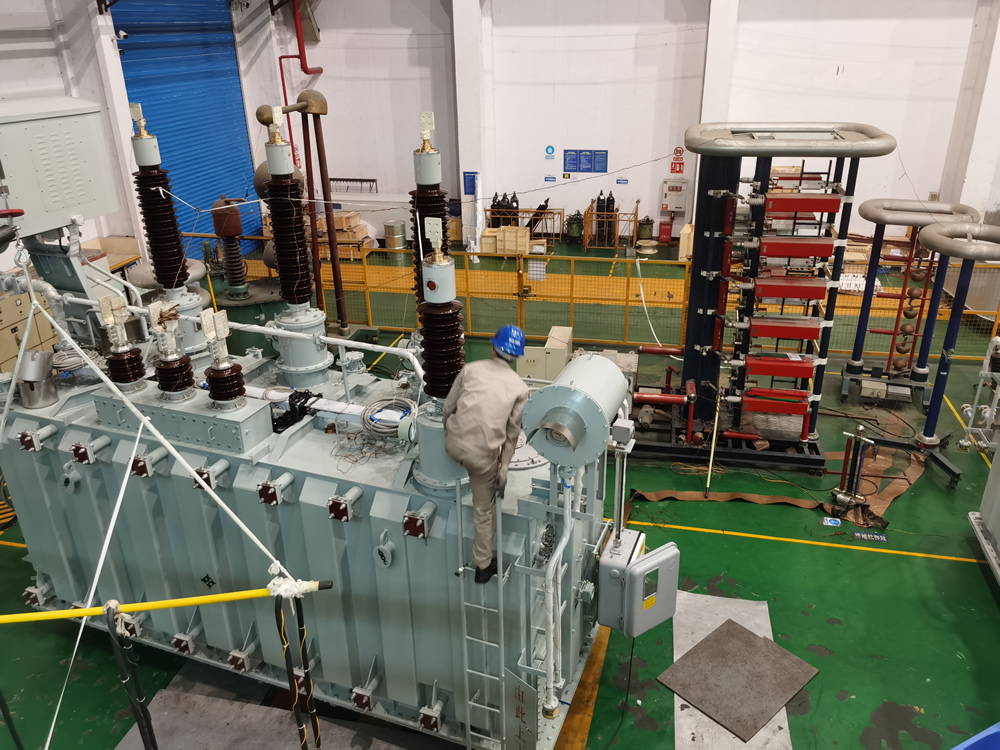
התקנה של חיישני טמפרטורה בסיבים אופטיים במהלך ייצור השנאים, מראה מיקום זהיר בין דיסקים מתפתלים וניתוב סיבים תקין.
שָׁלָב 5: הגדרת ציוד חקירה ורכישת נתונים
ה חיישני טמפרטורה בסיב אופטי המותקנים בשנאים חייבים להתחבר לציוד חקירה מתאים הממיר אותות אופטיים למדידות טמפרטורה. הגדרה נכונה של ציוד זה חיונית לצורך מדויק, ניטור אמין.
בחירת ציוד חקירה מתאים
החקירה המערכת חייבת להתאים לטכנולוגיית החיישנים ולניטור שלך דרישות:
מערכות ריקבון פלואורסצנטי
עבור GaAs או חיישנים מבוססי פלואורסצנטי דומים:
- ספירת ערוצים: בחר מערכות עם קיבולת ערוץ מתאימה לפריסת החיישן שלך (בדרך כלל 4, 8, או 16 ערוצי).
- מהירות מדידה: שקול את דרישות קצב העדכון, בדרך כלל 1-10 שניות לערוץ מספיקות עבור ניטור שנאים.
- מפרטי דיוק: ודא שדיוק המערכת תואם או עולה על ±1°C על פני טווח הפעולה.
- כוח אופטי: להבטיח מספיק כוח אופטי עבור הסיב אורכים פרוסים.
- סוגי מחברים: אשר תאימות עם מחברי החיישן שבחרת (בדרך כלל ST או FC).
מערכות פיבר בראג
עבור רשתות חיישנים מבוססות FBG:
- טווח אורכי גל: חייב להכיל את כל חיישני ה-FBG ברשת שלך עם מרווח אורכי גל מתאים.
- רזולוציה: בדרך כלל 1-5 רזולוציית אורך גל pm עבור מדויק מדידת טמפרטורה.
- מהירות סריקה: שקול את דרישות המהירות עבור היישום שלך, במיוחד אם כלולות גם מדידות מתח.
- יכולת ריבוי: הבטח תמיכה עבורך ספירת ערוץ וחיישנים לכל סיב.
- פיצוי טמפרטורה: בדוק את היכולת לפצות על השפעות המתח ביישומי חישה משולבים.
מערכות חישת טמפרטורה מבוזרות
עבור התקנות DTS:
- רזולוציה מרחבית: בדרך כלל רזולוציה של 0.5 מ' עד 2 מ' מתאימה ליישומי שנאים.
- טווח מרחק: Must support your total fiber length with adequate signal-to-noise ratio.
- רזולוציית טמפרטורה: Verify system provides required temperature resolution (typically 0.1°C).
- זמן מדידה: Consider trade-offs between measurement time and temperature הַחְלָטָה.
- סוג סיבים תְאִימוּת: Ensure compatibility with your installed fiber type (multimode/single-mode).
Interrogator Installation and Environment
Proper installation of interrogation equipment מבטיח אמין מִבצָע:
Physical Installation Requirements
- Location Selection: Identify an appropriate location considering:
- Maximum fiber distance limitations (typically 100-500m depending on technology)
- תנאים סביבתיים (טֶמפֶּרָטוּרָה, לַחוּת, אָבָק)
- Accessibility for maintenance
- Security considerations
- אפשרויות הרכבה:
- Rack mounting in control buildings
- Wall mounting in suitable enclosures
- Free-standing cabinets with climate control
- DIN rail mounting for smaller units
- Environment Control:
- Maintain temperature within equipment specifications (typically 10-40°C)
- Control humidity to prevent condensation
- Provide dust filtration if necessary
- Consider solar shielding for outdoor installations
Power and Communication Requirements
- ספק כוח:
- Verify voltage requirements (typically 100-240VAC or 24VDC)
- Provide uninterruptible power supply (UPS) עֲבוּר יישומים קריטיים
- Implement appropriate surge protection
- Consider power consumption for proper circuit sizing
- קישוריות רשת:
- Provide Ethernet connection to facility network
- Configure appropriate IP addressing and security
- Consider redundant communication paths for critical systems
- Implementation of appropriate cybersecurity measures
- Serial Communications:
- RS-232/485 connections for legacy systems if required
- Modbus or DNP3 connectivity for SCADA integration
- Appropriate converters for protocol translation if needed
Data Acquisition and Storage Configuration
Configure the system for appropriate data collection and storage:
Sampling Rate and Data Storage
- Measurement Interval: Configure appropriate measurement intervals:
- פעולה רגילה: בדרך כלל 1-5 minutes is sufficient
- Dynamic conditions: More frequent sampling during load changes
- Alarm conditions: Increased sampling when thresholds are approached
- Data Storage Requirements:
- Raw data storage period (בדרך כלל 30-90 ימים)
- Aggregated data storage (בדרך כלל 1-5 שנים)
- Storage capacity planning for expected data volumes
- Database type selection (time-series databases preferred)
- Data Compression:
- Consider deadband recording to reduce storage requirements
- Implement appropriate compression algorithms
- Balance storage efficiency with data resolution needs
Data Backup and Redundancy
- Backup Procedures:
- Automated backup scheduling
- Off-site or cloud backup options
- Backup verification procedures
- Redundancy Options:
- Local redundant storage
- RAID configurations for critical databases
- Redundant servers for high-availability applications
- Recovery Planning:
- Documented recovery procedures
- Regular recovery testing
- Maximum acceptable data loss determination
Initial System Configuration and Testing
Proper initial setup ensures accurate measurement and reliable מִבצָע:
Sensor Configuration
- Sensor Registration: Configure each sensor in the system with:
- Unique identifier aligned with installation documentation
- Physical location description
- Sensor type and calibration parameters
- Measurement range and limits
- אימות כיול:
- Apply factory calibration coefficients
- Verify calibration with known temperature reference if applicable
- Document baseline readings for future comparison
- אימות איכות האות:
- Check optical power levels for each channel
- Verify signal-to-noise ratios meet specifications
- Document baseline optical parameters
בדיקת מערכת
- בדיקה פונקציונלית:
- Verify readings from all sensors
- Confirm expected temperature relationships
- Test response to simulated temperature changes if possible
- Communication Testing:
- Verify data export to integrated systems
- Test network connectivity and remote access
- Confirm alarm transmission pathways
- Failure Mode Testing:
- לְאַמֵת system response to power interruption
- Test fiber break detection if supported
- Validate system recovery after simulated failures
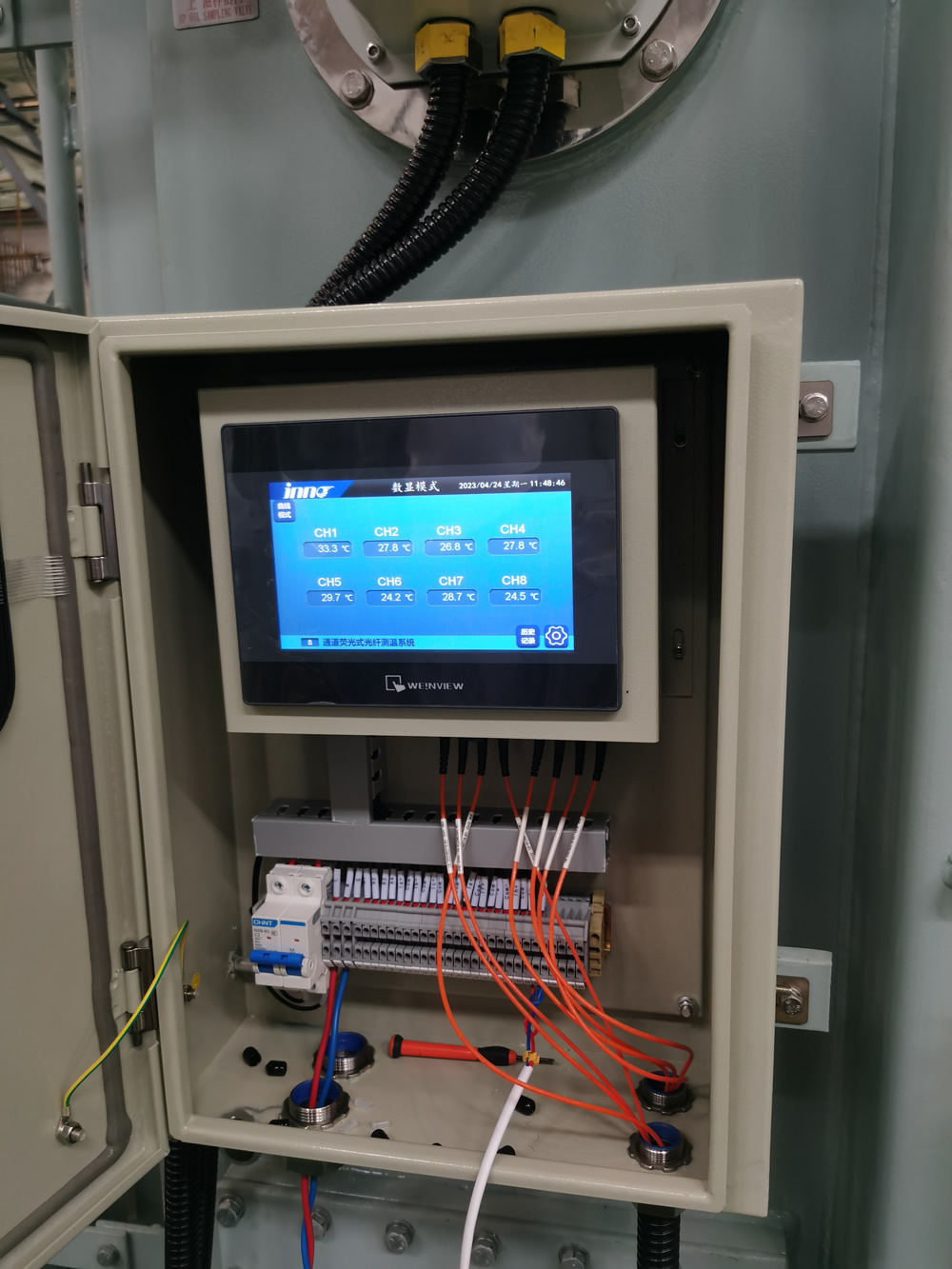
Fiber optic temperature interrogation system installed in substation חדר בקרה, showing rack-mounted equipment, fiber management, and integration with station computer systems.
שָׁלָב 6: אינטגרציה עם מערכות ניטור שנאי
To maximize the value of fiber optic temperature data, it must be effectively integrated with broader מערכות ניטור שנאים, פלטפורמות לניהול נכסים, and operational systems. This integration transforms isolated temperature readings into actionable intelligence.
Data Integration Architectures
Several integration approaches are available, with increasing levels of sophistication:
Basic Data Export
Simplest integration approach for minimal requirements:
- Data Files: Export of temperature data in CSV, XML, or JSON formats.
- Manual Transfer: Scheduled or on-demand data transfers to other systems.
- Basic Visualization: Simple local HMI displays or basic web interfaces.
- Email/SMS Notifications: Direct alerts from the מערכת ניטור.
- Standalone Operation: System functions independently with limited external connectivity.
This approach is suitable for isolated installations or where minimal integration is required. It provides core temperature monitoring capabilities with limited analytical functions.
Protocol-Based Integration
Standard industrial protocols for real-time data sharing:
- Modbus TCP/RTU: Widely supported protocol for simple data sharing.
- DNP3: Common in power utility applications with good time-stamping.
- חברת החשמל 61850: Advanced standard for substation automation with object modeling.
- OPC UA: Modern protocol with rich data modeling and security.
- MQTT: Lightweight protocol suitable for IIoT applications.
This approach provides real-time data sharing with control systems, SCADA, and other operational platforms. It supports alarm propagation and basic supervisory functions.
אינטגרציה ארגונית
Advanced integration with enterprise asset management systems:
- API-Based Integration: RESTful or SOAP APIs for sophisticated data exchange.
- Enterprise Service Bus: Integration through centralized message brokers.
- Data Warehouse Integration: Long-term storage in enterprise historians or data lakes.
- Asset Health Platforms: Dedicated transformer health monitoring systems.
- תחזוקה חזויה מערכות: Integration with AI-driven maintenance platforms.
This approach enables comprehensive asset management, אנליטיקה מתקדמת, and integration with business processes such as maintenance workflow and asset lifecycle management.
Key Integration Targets
The most valuable systems for temperature data integration include:
מערכות ניטור שנאי
Integration with dedicated ניטור שנאים פלטפורמות:
- ניתוח גז מומס (DGA) מערכות: מתאם temperature anomalies with gas generation.
- ניטור תותבים: Combined analysis of bushing condition and temperature.
- ניטור פריקה חלקית: Correlation between temperature and PD activity.
- Load Tap Changer Monitoring: Temperature data related to tap changer operation.
- הִתקָרְרוּת ניטור מערכת: הִשׁתַלְבוּת with cooling control and monitoring.
This integration provides a comprehensive view of transformer health by correlating temperature with other key diagnostic parameters.
Substation Automation Systems
אינטגרציה עם operational control ומעקב:
- SCADA Systems: Real-time temperature visibility for operators.
- Protective Relaying: Temperature inputs for thermal protection schemes.
- ניהול עומסים: Temperature data for dynamic loading calculations.
- בקרת קירור: Intelligent cooling system control based on actual temperatures.
- ניהול אזעקות: Integration with centralized מערכות אזעקה.
This integration supports operational decision-making and automates responses to temperature conditions.
פלטפורמות לניהול נכסים
אינטגרציה עם ניהול נכסים ארגוניים:
- מערכות ניהול תחזוקה ממוחשבות (CMMS): תחזוקה מופעלת על ידי טמפרטורה.
- ציון בריאות הנכס: כניסות טמפרטורה לאלגוריתמים לאינדקס בריאות.
- הערכת חיים שנותרה: חישובי הזדקנות תרמית המבוססים על היסטוריית טמפרטורה.
- ניתוח כישלונות: זיהוי דפוסים לזיהוי כשל מתחיל.
- ניהול צי: ניתוח השוואתי בין צי השנאים.
אינטגרציה זו תומכת בהחלטות אסטרטגיות לניהול נכסים ומייעלת את משאבי התחזוקה.
גישות יישום
שלבים מעשיים לאינטגרציה מוצלחת של המערכת:
דרישות אינטגרציה טכנית
- מיפוי נקודות נתונים: צור מיפויים מפורטים בין נקודות ניטור טמפרטורה ומערכות יעד.
- ממירי פרוטוקול: הטמעו ממירי פרוטוקולים או שערים מתאימים במידת הצורך.
- ניהול איכות נתונים: הטמעת כללי אימות כדי להבטיח שלמות הנתונים.
- סנכרון זמן: הבטח חותמת זמן עקבית במערכות משולבות.
- דרישות רוחב פס: הערכה והספקת קיבולת רשת להעברת נתונים.
- אמצעי אבטחת סייבר: הטמע בקרות אבטחה מתאימות עבור כל נקודות האינטגרציה.
מודל נתונים וקונטקסטואליזציה
- מוסכמות שמות: קבע שמות עקביים בין המערכות.
- היררכיית נכסים: מפה נתוני טמפרטורה למיקומים מתאימים בהיררכיית הנכסים.
- ניהול מטא נתונים: שמור על מטא נתונים מקיפים על מיקומי ומאפייני חיישנים.
- יחידות הנדסה: הבטח ייצוג אחיד של יחידות על פני מערכות.
- הפניות הקשריות: קשר נתוני טמפרטורה למגבלות עיצוב ומידע על לוחית השם.
בדיקה ואימות
- בדיקת אינטגרציה: אמת את זרימת הנתונים בכל נקודות האינטגרציה.
- אימות מקצה לקצה: אשר את דיוק הנתונים מהחיישן לתצוגה/אחסון סופית.
- בדיקת ביצועים: אמת את ביצועי המערכת תחת עומס נתונים רגילים ושיאים.
- בדיקת כשל: Ensure appropriate behavior during communication failures.
- User Acceptance: Validate that integrated data meets user requirements.
Integration Value Enhancement
Advanced integration creates additional value beyond basic temperature monitoring:
Advanced Analytics and Visualization
- 3D Thermal Mapping: Visual representation of transformer thermal profiles.
- ניתוח מגמות: Advanced trending with statistical analysis functions.
- זיהוי דפוסים: AI-based anomaly detection across multiple parameters.
- Predictive Models: Forecasting of temperature trends based on loading and ambient conditions.
- Comparative Analytics: Benchmarking against similar transformers or historical performance.
Operational Process Integration
- Automated Workflows: Temperature-triggered maintenance workflows.
- Operational Decision Support: Loading recommendation systems based on real-time temperature.
- תגובת חירום: אינטגרציה עם מערכות ניהול חירום לתנאים קריטיים.
- דיווח תאימות: הפקה אוטומטית של דוחות תאימות לרגולציה.
- מדדי ביצועים: שילוב עם מעקב KPI ותוכניות מצוינות תפעולית.
גישה ניידת ומרוחקת
- יישומים ניידים: גישה לסמארטפון/טאבלט לנתוני טמפרטורה לאנשי שטח.
- תמיכת מומחים מרחוק: שיתוף נתונים מאובטח עם מומחי אבחון מרחוק.
- מציאות רבודה: שכבת AR של נתוני טמפרטורה במהלך בדיקות פיזיות.
- כלי שיתוף פעולה: הדמיה וניתוח משותפים לצוותים רב-תחומיים.
- מערכות הודעות: התראות ממוקדות לכוח אדם מתאים בהתאם למצב.
ארכיטקטורת שילוב מערכת המראה כיצד ניטור טמפרטורה של סיבים אופטיים נתונים זורמים למערכות ארגוניות שונות, יצירת מערכת אקולוגית מקיפה לניטור בריאות שנאים.
שָׁלָב 7: הגדרת ספי אזעקה ומערכות התראות
תצורת אזעקה יעילה transforms continuous temperature monitoring into actionable information that prevents transformer damage and optimizes operation. This requires thoughtful threshold setting, appropriate alarm classification, and effective notification routing.
Establishing Appropriate Temperature Thresholds
Temperature alarm thresholds should be based on transformer לְעַצֵב, תקנים בתעשייה, and operational considerations:
Standards-Based Thresholds
Industry standards provide important reference points for alarm settings:
- IEEE C57.91: Provides guidelines for transformer loading including temperature limits:
- Normal life expectancy loading: 110°C hotspot maximum
- Planned loading beyond nameplate: 120°C hotspot maximum
- Long-time emergency loading: 130°C hotspot maximum
- Short-time emergency loading: 140°C hotspot maximum
- חברת החשמל 60076-7: Provides similar guidelines with slight variations for different insulation systems.
- Manufacturer Specifications: Always refer to transformer-specific limits provided by the manufacturer, which may be more conservative than generic standards.
These standards provide the foundation for alarm threshold development but should be adapted to specific transformer characteristics and operational requirements.
Multi-Level Alarm Structure
A graduated alarm structure provides early warning while distinguishing between operational concerns and critical conditions:
| רמת אזעקה | Typical Setting (נקודה חמה מתפתלת) | מַטָרָה | תְגוּבָה |
|---|---|---|---|
| מְיָעֵץ | 95-100מעלות צלזיוס | Early indication of elevated temperature | Increased monitoring, evaluate loading if sustained |
| עֵרָנִי | 105-110מעלות צלזיוס | Approaching standard limits | Evaluate cooling system, consider load reduction |
| אַזעָקָה | 120-125מעלות צלזיוס | Exceeding normal operating limits | Implement load reduction, לחקור את הסיבה |
| קרִיטִי | 135-140מעלות צלזיוס | Approaching emergency limits | Significant load reduction, prepare contingency plans |
| Emergency | 150-160מעלות צלזיוס | Risk of immediate damage | Consider removing from service if not automatically tripped |
יש להתאים דוגמאות סף אלו על סמך תכנון שנאי ספציפי, מערכת בידוד, גִיל, וביקורתיות. עֲבוּר מדידות טמפרטורת שמן, ספים בדרך כלל יהיו נמוכים ב-15-25 מעלות צלזיוס מערכי נקודה חמה מתפתלת המקבילים.
אזעקות קצב שינוי
אזעקות קצב שינוי טמפרטורה יכולות לספק אזהרה מוקדמת של פיתוח בעיות:
- זיהוי עלייה מהירה: מוגדר בדרך כלל ל-1-3 מעלות צלזיוס לדקה למשך מספר דקות, זיהוי קצבי חימום חריגים שאינם מוסברים בטעינה.
- אפקטיביות קירור: אזעקות המבוססות על שיעורי ירידת טמפרטורה צפויים כאשר הקירור מופעל.
- שינויים דיפרנציאליים: הבדלי טמפרטורה חריגים בין שלבים או מיקומים דומים.
- שינויים בקורלציה לטעינה: שינויי טמפרטורה לא פרופורציונליים לשינויי עומס.
אזעקות קצב השינוי חשובות במיוחד לאיתור בעיות מתפתחות לפני הגעה לספי טמפרטורה מוחלטים.
Alarm Classification and Prioritization
Effective alarm management requires appropriate classification and prioritization:
Alarm Priority Classification
- קרִיטִי (עֲדִיפוּת 1): Conditions requiring immediate operator action to prevent equipment damage or failure.
- גָבוֹהַ (עֲדִיפוּת 2): Abnormal conditions requiring prompt attention and corrective action within a short timeframe.
- בֵּינוֹנִי (עֲדִיפוּת 3): Conditions requiring attention but not immediately threatening to equipment or operation.
- נָמוּך (עֲדִיפוּת 4): Advisory information indicating minor deviations or early trends.
This classification should align with broader utility alarm management philosophy and terminology.
Contextual Alarm Processing
Enhancing alarm value through contextual processing:
- Load-Dependent Thresholds: Adjusting alarm thresholds based on current loading conditions.
- Ambient Temperature Compensation: Modifying thresholds based on ambient temperature.
- Operation Mode Context: Different thresholds for different operational states (לְמָשָׁל, startup, פעולה רגילה).
- Alarm Suppression Logic: Preventing alarm floods by suppressing consequential alarms.
- Alarm Shelving: Ability to temporarily suppress known alarms during specific activities.
Contextual processing reduces nuisance alarms and focuses attention on truly significant conditions.
Notification System Configuration
Configure notification systems to ensure the right information reaches the right people:
Notification Methods and Pathways
- Control Room Displays: Integration with operator HMI and מערכות ניהול אזעקות.
- SCADA Alarms: Propagation to central SCADA for operational awareness.
- Mobile Notifications: SMS, אֶלֶקטרוֹנִי, or push notifications to appropriate personnel.
- Automated Phone Calls: Voice notifications for critical alarms.
- Integration with Enterprise Notification Systems: Leveraging existing corporate emergency notification platforms.
ניתוב הודעות והסלמה
- ניתוב מבוסס תפקידים: הכוונת הודעות על בסיס תפקוד עבודה ואחריות.
- ניתוב מבוסס זמן: נתיבי התראות שונים בשעות העבודה לעומת לילות/סופי שבוע.
- דרישות הכרה: מעקב אחר אישור של התראות קריטיות.
- נהלי הסלמה: הסלמה אוטומטית אם אישור לא מתרחש במסגרת זמן מוגדרת.
- נוהלי תגובה לאזעקה: תיעוד ברור של פעולות צפויות עבור כל סוג אזעקה.
עיצוב תוכן הודעות
- Clear Identification: זיהוי ומיקום ציוד חד משמעי.
- מצב ספציפי: תיאור ברור של מצב האזעקה והסף חרג.
- אינדיקציה לחומרה: אינדיקציה ברורה של עדיפות אזעקה ודחיפות.
- הדרכה לפעולה: הנחיות קצרות לגבי התגובה הנדרשת או התייחסות לנהלים.
- נתונים הקשריים: מידע קשור כגון עומס נוכחי, תנאי הסביבה, או טרנדים רלוונטיים.
- מידע ליצירת קשר: Additional resources or experts to consult if needed.
Ongoing Alarm Management and Optimization
Alarm systems require regular review and optimization:
Alarm Performance Review
- Alarm Frequency Analysis: Identifying frequently occurring alarms for potential threshold adjustment.
- Nuisance Alarm Identification: Tracking and addressing alarms that do not provide operational value.
- Missed Alarm Analysis: Reviewing incidents to identify potential missed alarm opportunities.
- Response Time Metrics: Tracking time from alarm to acknowledgment and resolution.
- Alarm System ביצועים: Regular review of overall alarm system effectiveness.
תהליך שיפור מתמיד
- Regular Review Meetings: Scheduled reviews of alarm performance with stakeholders.
- חידוד סף: Adjusting thresholds based on operational experience.
- New Alarm Rationalization: Careful evaluation of proposed new alarm points.
- Documentation Updates: Maintaining current alarm philosophy and response documentation.
- Training Reinforcement: Regular refresher training on alarm response procedures.
Advanced Alarm Optimization Techniques
- Statistical Analysis: Using historical data to optimize thresholds.
- למידת מכונה: Implementing predictive alarming based on pattern recognition.
- State-Based Alarming: Dynamically adjusting alarm configuration based on operating state.
- Alarm Flood Management: Implementing intelligent suppression during major events.
- Human Factors Engineering: Optimizing alarm presentation based on cognitive research.
Alarm configuration interface showing multi-level threshold settings, notification routing, and alarm prioritization for מערכת ניטור טמפרטורה בסיבים אופטיים.
שָׁלָב 8: אימות מערכות והפעלה
Thorough verification and commissioning are essential to confirm that the מערכת ניטור טמפרטורה בסיבים אופטיים is functioning correctly and delivering accurate, נתונים אמינים. תהליך זה מאמת הן את ההתקנה הפיזית והן את שרשרת עיבוד הנתונים.
מתודולוגיית אימות מקיפה
גישה מובנית מבטיחה שכל היבטי המערכת מאומתים כראוי:
אימות התקנה פיזית
- אישור מיקום חיישן: ודא שחיישנים מותקנים במקומות המיועדים לפי התיעוד.
- בדיקת ניתוב סיבים: אשר כי ניתוב הסיבים עוקב אחר הנתיבים שצוינו עם הגנה מתאימה.
- אימות רדיוס כיפוף: בדוק את כל מסלולי הסיבים כדי לוודא שדרישות רדיוס הכיפוף המינימלי נשמרות.
- בדיקת הזנה: ודא התקנה נכונה ואיטום של חדירות למיכל.
- הגנה חיצונית על סיבים: אשר הגנה מכנית נאותה עבור ריצות סיבים חיצוניות.
- בדיקת מחברים: ודא התקנת מחבר וניקיון תקינים.
אימות אות אופטי
- Continuity Testing: לְאַמֵת המשכיות אופטית עבור כל הסיבים המותקנים.
- כוח אופטי מדידת רמות: Confirm signal levels are within specification for each channel.
- רפלקטומטריית תחום זמן אופטית (OTDR): לְבַצֵעַ OTDR testing to identify any anomalies in the optical נָתִיב.
- Signal Quality Assessment: Verify signal-to-noise ratio meets system requirements.
- Connection Loss Measurement: Validate connection losses are within acceptable limits.
Measurement Accuracy Verification
- אימות כיול: Confirm calibration coefficients are correctly applied.
- Reference Comparison: היכן שאפשר, compare readings with reference temperature measurements.
- Consistency Checks: Verify consistency between related measurement points.
- Response Testing: Confirm appropriate response to temperature changes when possible.
- Stability Assessment: Verify measurement stability under constant conditions.
System Integration Verification
- Data Flow Confirmation: Verify temperature data correctly flows to all integrated systems.
- Alarm Function Testing: Test each alarm threshold and confirm proper notification.
- Display Verification: אשר ייצוג נכון בכל ממשקי המשתמש.
- אימות אחסון היסטורי: ודא שהנתונים מאוחסנים כהלכה במסדי נתונים היסטוריים.
- בדיקת סינכרון זמן: ודא שחותמות הזמן עקביות בכל המערכות.
בדיקות הפעלה מרכזיות
בדיקות ספציפיות לאימות פונקציונליות המערכת בתנאים שונים:
בדיקת תגובה מבוססת עומס
- תגובת עומס רגילה: תגובת טמפרטורת המסמך בתנאי טעינה רגילים.
- טעינה מצטברת: When possible, לְאַמֵת תגובת הטמפרטורה למבוקרת עומס עולה.
- תגובת מחזור קירור: ודא את תגובת הטמפרטורה כאשר מערכות הקירור פועלות.
- תגובה הפחתת עומס: קצבי קירור מסמכים במהלך הפחתת עומס מבוקרת.
- קבועי זמן תרמיים: חשב חימום וקבועי זמן קירור לעיון עתידי.
בדיקת אזעקה והתראות
- הפעלת סף: ודא שכל סף אזעקה מופעל כהלכה כאשר התנאים מתקיימים.
- Notification Delivery: Confirm notifications are delivered to all designated recipients.
- Acknowledgment Functionality: Test alarm acknowledgment and clearing functionality.
- Escalation Testing: Verify alarm escalation occurs according to configuration.
- Audio/Visual Indicators: Confirm proper operation of any local alarm indicators.
Failure Mode Testing
- Power Interruption Response: Verify system behavior and recovery after power loss.
- Communication Failure Handling: Test system response to network communication interruptions.
- Sensor Failure Detection: Confirm detection and alarming for simulated sensor failures when possible.
- Fallback Mode Operation: Verify any redundant or fallback operational modes.
- Data Recovery: Test data backfill or recovery mechanisms after system restoration.
User Function Testing
- Data Retrieval: Verify users can retrieve historical data as required.
- Report Generation: Confirm proper operation of reporting functions.
- User Interface Navigation: Test all aspects of user interface functionality.
- Security Functions: Verify access controls and authentication mechanisms.
- Remote Access: Test remote access capabilities if implemented.
Comprehensive Commissioning Documentation
Thorough documentation creates the foundation for long-term system management:
As-Built Documentation
- Final Sensor Locations: Detailed documentation of actual sensor placement.
- Fiber Routing Diagrams: Accurate representation of all fiber paths.
- Connection Details: Documentation of all connection points and terminations.
- Equipment Specifications: Final specifications of all installed components.
- Software Configurations: Documentation of all software settings and configurations.
- ארכיטקטורת אינטגרציה: Detailed description of system integration implementation.
Baseline Performance Data
- Initial Temperature Readings: קו בסיס temperature measurements for all sensors.
- Optical Power Levels: Reference measurements for future comparison.
- Signal Quality Metrics: Baseline signal-to-noise ratios and other quality indicators.
- Response Characteristics: Documented thermal response under various conditions.
- Normal Operating Ranges: Expected temperature ranges under typical operation.
Operational Procedures
- מדריכים למשתמש: מַקִיף operational instructions for system users.
- נוהלי תגובה לאזעקה: Detailed instructions for responding to each alarm type.
- Troubleshooting Guides: Procedures for diagnosing and addressing common issues.
- Maintenance Procedures: Scheduled maintenance activities and procedures.
- Emergency Procedures: Instructions for system operation during emergency conditions.
Commissioning Report
- Test Results: Comprehensive documentation of all verification and testing results.
- Non-Conformance Documentation: Details of any issues identified and their resolution.
- Sign-Off Records: Formal acceptance documentation from all stakeholders.
- Recommendations: Any recommendations for system optimization or enhancement.
- Reference Data: Baseline data for future performance comparison.
System Handover and Training
Ensure smooth transition to operational status through proper handover and training:
Operational Training Program
- System Overview Training: General introduction to system purpose and components.
- Operator Interface Training: Detailed instruction on user interface operation.
- Alarm Response Training: Specific training on alarm interpretation and response.
- Routine Tasks Training: Instruction on regular operational activities.
- Troubleshooting Training: Basic troubleshooting procedures for first-line response.
Maintenance Training Program
- תחזוקה מונעת: Procedures for scheduled maintenance activities.
- Diagnostic Tools: Training on diagnostic software and tools.
- החלפת רכיבים: Procedures for replacing serviceable components.
- הליכי כיול: Training on calibration verification if applicable.
- Advanced Troubleshooting: In-depth troubleshooting for maintenance personnel.
Engineering Training Program
- ארכיטקטורת מערכת: Detailed understanding of system design and integration.
- ניתוח נתונים: Advanced data interpretation and analysis techniques.
- Configuration Management: Procedures for system configuration changes.
- Performance Optimization: Methods for ongoing system optimization.
- Expansion Planning: Considerations for future system expansion.
Formal Handover Process
- Handover Meeting: Formal transfer of system responsibility to operational team.
- Outstanding Items Register: Documentation of any pending items requiring attention.
- Support Contact Establishment: Clear identification of ongoing support resources.
- Warranty Documentation: Formal transfer of all warranty information.
- Performance Acceptance: Agreement on performance metrics for ongoing evaluation.
Engineers performing comprehensive system verification and commissioning tests on newly installed fiber optic temperature monitoring system for power transformer.
דרישות תחזוקה וכיול
סיבים אופטיים temperature monitoring systems require significantly less maintenance than conventional measurement מערכות, but proper maintenance practices are still essential for long-term reliability and accuracy. A structured approach to maintenance ensures continued system performance throughout the transformer’s life.
Routine Maintenance Activities
Regular maintenance tasks to ensure ongoing system reliability:
Physical System Inspection
- External Fiber Inspection: Annual visual inspection of accessible fiber optic cables for physical damage, זַן, or environmental degradation.
- בדיקת מחברים: Annual inspection of optical connectors for contamination, נֵזֶק, או חיבורים רופפים.
- Feedthrough Examination: Visual inspection of tank penetrations for oil leakage or seal degradation during scheduled transformer inspections.
- Equipment Cabinet Inspection: Quarterly check of interrogation equipment cabinets for cleanliness, environmental controls, and physical security.
- Sensor Junction Inspection: Visual inspection of any accessible sensor junction points during transformer maintenance outages.
Optical System Verification
- Signal Level Verification: Annual verification that optical signal levels for each channel remain within specification.
- Continuity Testing: Annual confirmation of optical continuity for all monitored נקודות.
- Connection Loss Measurement: דוּ שְׁנָתִי measurement of optical losses at critical connection points to identify degradation.
- OTDR Testing: Biennial OTDR testing of fiber paths to identify any developing anomalies or degradation.
- Communications Interface Check: Annual verification of communication interfaces with integrated systems.
Software and Configuration Maintenance
- עדכוני תוכנה: Application of manufacturer-recommended software updates according to utility change management procedures.
- Database Maintenance: Quarterly database maintenance including purging of temporary data and optimization.
- Configuration Backup: Monthly backup of system configuration and settings.
- Security Updates: Timely application of security patches according to cyber security policies.
- User Account Management: Semi-annual review and maintenance of user accounts and access privileges.
Alarm System Maintenance
- Alarm Function Testing: Annual verification of alarm generation and notification pathways.
- Threshold Review: Annual review of alarm thresholds based on operational experience.
- Communication Path Testing: Semi-annual testing of notification delivery to all recipients.
- סקירת תגובת אזעקה: סקירה שנתית של נהלי תגובה לאזעקה ועדכונים לפי הצורך.
- ניתוח אזעקות מטרד: סקירה רבעונית של תדירות אזעקות לזיהוי וטיפול באזעקות מטרד.
כיול ואימות דיוק
גישות לשמירה על דיוק המדידה לאורך זמן:
יציבות כיול אינהרנטית
אחד המשמעותיים היתרונות של חיישני טמפרטורה בסיבים אופטיים היא היציבות המובנית לטווח ארוך שלהם:
- מערכות ריקבון פלואורסצנטי: מערכות אלו שומרות בדרך כלל על הכיול שלהן למשך כל חיי ההתקנה מבלי לדרוש כיול מחדש בשטח, מכיוון שקבוע זמן הדעיכה הוא תכונה פיזיקלית בסיסית שנשארת יציבה.
- מערכות פיבר בראג: חיישני FBG עשוי לדרוש אימות תקופתי עקב סחיפה פוטנציאלית ביחסי אורך גל-טמפרטורה לאורך תקופות ארוכות מאוד.
- חישת טמפרטורה מבוזרת: מערכות DTS typically include self-calibration features using reference sections of fiber at known temperatures.
Unlike conventional electronic sensors that typically require annual recalibration, רוֹב מערכות סיבים אופטיים maintain accuracy for 5-10 years or more without adjustment.
Accuracy Verification Methods
Though recalibration is rarely needed, periodic accuracy verification is recommended:
- Comparative Verification: For accessible sensors, periodic comparison with reference temperature measurements using calibrated infrared or contact thermometers.
- System Self-Test: רַבִּים advanced systems include built-in verification functions that check optical and electronic performance.
- Known Reference Points: כמה systems include reference sensors at known temperature נקודות (כמו טמפרטורת הסביבה) for ongoing verification.
- Consistency Analysis: Regular analysis of related temperature points to identify any sensors showing anomalous readings.
- Factory Recertification: עֲבוּר יישומים קריטיים, manufacturer recertification of interrogation equipment at 3-5 מרווחי שנה.
Verification Frequency Recommendations
| רכיב מערכת | שיטת אימות | Recommended Frequency |
|---|---|---|
| Interrogation Equipment | Manufacturer’s verification procedure | 3-5 שנים |
| Accessible Sensors | Comparative measurement | 2-3 שנים |
| Internal Sensors | Consistency analysis | מדי שנה |
| ממשקי תקשורת | אימות נתונים | מדי שנה |
| איכות אות | Optical power measurement | מדי שנה |
Common Issues and Troubleshooting
Addressing typical issues that may arise in מערכות ניטור טמפרטורה בסיבים אופטיים:
Signal Quality Issues
| סִימפּטוֹם | סיבות אפשריות | Recommended Actions |
|---|---|---|
| Low Optical Signal Level | Connector contamination, fiber bend, fiber damage | Inspect and clean connectors, check fiber routing, perform OTDR testing |
| Signal Fluctuations | חיבורים רופפים, vibration affecting fibers, interference with interrogator | Secure connections, improve fiber strain relief, relocate electronic equipment |
| No Signal | Broken fiber, disconnected sensor, כשל בציוד | Verify equipment operation, check connections, perform continuity testing |
| High Noise Level | הפרעות אלקטרומגנטיות, equipment issue, poor grounding | Improve shielding, check grounding, relocate interrogator |
Measurement Accuracy Issues
| סִימפּטוֹם | סיבות אפשריות | Recommended Actions |
|---|---|---|
| Offset in Readings | סחיפה של כיול, software configuration, reference change | Verify configuration, check reference values, recalibrate if necessary |
| קריאות לא יציב | Signal quality issues, software problem, הַפרָעָה | Check signal quality, restart software, isolate interference sources |
| Delayed Response | Sampling rate configuration, communication issues, processing delays | Adjust sampling rate, check communication paths, optimize processing |
| Inconsistent Readings | השפלה של חיישן, localized heating/cooling, installation issue | Compare with related sensors, verify installation, check for external factors |
Integration and Communication Issues
| סִימפּטוֹם | סיבות אפשריות | Recommended Actions |
|---|---|---|
| Data Not Reaching Integrated Systems | Network issues, configuration changes, protocol mismatch | Verify network connectivity, check configuration, test protocol compatibility |
| Alarms Not Triggering | Threshold configuration, processing issues, notification path failure | Verify threshold settings, restart alarm processing, test notification pathways |
| Delayed Data Updates | Network congestion, processing bottlenecks, synchronization issues | Analyze network performance, optimize processing, check time synchronization |
| Incorrect Timestamps | Time synchronization failure, configuration issues, software bugs | Verify time server settings, check configuration, update software |
Maintenance Documentation and Management
Effective documentation practices ensure proper system maintenance:
Maintenance Records
- Activity Logging: Maintain detailed records of all maintenance activities, findings, and corrective actions.
- ניתוח מגמות: Review maintenance history to identify recurring issues or degradation patterns.
- Modification Documentation: Maintain comprehensive records of any system modifications or upgrades.
- Calibration Records: Document all verification and calibration activities with results.
- Failure Analysis: Perform and document root cause analysis for any component failures.
Maintenance Management System
- Scheduled Tasks: Implement scheduled maintenance activities in computerized maintenance management system.
- Resource Planning: Schedule appropriate resources and expertise for maintenance activities.
- ניהול חלקי חילוף: Maintain inventory of critical spare components.
- Vendor Coordination: Establish procedures for engaging vendor support when needed.
- Outage Coordination: Align maintenance with planned transformer outages when possible.
שיפור מתמיד
- מדדי ביצועים: Establish and track reliability and availability metrics for the monitoring system.
- אופטימיזציה לתחזוקה: Adjust maintenance practices based on operational experience.
- Technology Updates: Stay informed about manufacturer upgrades and enhancements.
- Industry Best Practices: Regularly review and incorporate industry best practices.
- Knowledge Sharing: Establish mechanisms for sharing maintenance learnings across the organization.
Technician performing routine maintenance on מערכת ניטור טמפרטורה בסיבים אופטיים, including signal level verification and optical connector inspection.
מקרי מקרה של יישום בעולם האמיתי
Examining successful implementations provides valuable insights into best practices, benefits achieved, and lessons learned from fiber optic temperature monitoring deployments in various transformer יישומים.
תיאור מקרה 1: Large Transmission Utility Fleet-Wide Implementation
סקירת פרויקט
A major North American transmission utility implemented fiber optic temperature monitoring across their critical transformer צִי, consisting of 87 transformers rated 230kV and above.
- Implementation Period: 3-year phased deployment
- Technology Deployed: חיישני סיבים אופטיים מבוססי פלואורסצנציה
- נקודות ניטור: 8-12 חיישנים לכל שנאי, focusing on winding hotspots and critical leads
- הִשׁתַלְבוּת: Full integration with utility’s asset health management system and SCADA
גישת יישום
- רובוטריקים חדשים: All new transformer specifications included factory-installed fiber optic temperature sensors.
- Critical Existing Units: Retrofit installation during planned maintenance outages for transformers under 15 בן שנים.
- Standardized Design: Development of standard sensor configurations by transformer type.
- Phased Rollout: Implementation prioritized based on transformer criticality and condition assessment.
- Training Program: Comprehensive training program for engineering, פעולות, and maintenance personnel.
Results and Benefits
- מניעת כשלים: Early detection of developing hotspots in five transformers, allowing for planned intervention before failure.
- ניצול קיבולת: הושג 12% average increase in emergency loading capability through precise ניטור טמפרטורה.
- אופטימיזציה של קירור: Identified cooling inefficiencies in 22 רובוטריקים, leading to corrective maintenance.
- Maintenance Savings: Reduced overall transformer maintenance costs by 18% באמצעות גישות מבוססות תנאים.
- הארכת חיים: Extended expected service life for 35 transformers by an average of 7 years through improved thermal management.
Lessons Learned
- Standardization Value: Standardizing on a single technology platform significantly reduced training and support requirements.
- Implementation Challenges: Retrofit installations required more careful planning and longer outages than initially estimated.
- מורכבות אינטגרציה: Integration with existing systems required more extensive customization than anticipated.
- Training Importance: Comprehensive training was critical for realizing the full value of the monitoring system.
- ROI Realization: Full return on investment was achieved in 3.2 שנים, exceeding the initial 4-year projection.
תיאור מקרה 2: Industrial Facility Critical Transformer Monitoring
סקירת פרויקט
A large aluminum smelting operation implemented advanced temperature monitoring for six critical transformers that directly impacted production capacity.
- Implementation Period: 8-month project
- Technology Deployed: Fiber Bragg Grating (פ.ב.ג.) multiplexed sensors
- נקודות ניטור: 18-24 נקודות לכל שנאי, with comprehensive coverage
- הִשׁתַלְבוּת: Integration with plant control system and condition monitoring פּלַטפוֹרמָה
גישת יישום
- דוגמנות תרמית: Detailed CFD modeling to identify optimal sensor locations based on specific transformer design.
- Custom Installation: Specialized installation during planned production outage with manufacturer support.
- Combined Measurement: Implementation of combined temperature and vibration monitoring using the same FBG infrastructure.
- אנליטיקה בזמן אמת: Development of custom analytics for production optimization based on transformer capacity.
- Operational Integration: Full integration with production management system for load scheduling.
Results and Benefits
- Production Increase: הושג 8.5% increase in production capacity through optimized transformer loading.
- הפחתת זמן השבתה: Eliminated two unplanned outages per year previously caused by transformer thermal issues.
- יעילות אנרגטית: Identified and corrected cooling system issues, reducing cooling energy consumption by 13%.
- Maintenance Impact: Shifted from time-based to condition-based maintenance, reducing overall maintenance costs by 22%.
- חיים נכסים: Extended expected transformer life from 25 אֶל 35 years through improved thermal management.
Lessons Learned
- בחירת טכנולוגיה: פ.ב.ג. technology provided valuable multiplexing capability and combined temperature/vibration monitoring.
- שילוב תהליכים: אינטגרציה עם production systems created significantly more value than standalone monitoring.
- תכנון התקנה: Detailed planning and rehearsal minimized production impact during installation.
- Analytics Value: Custom analytics specific to the application generated substantially higher returns than standard monitoring.
- ROI Reality: Project achieved payback in less than 14 חודשים, primarily through production increases.
תיאור מקרה 3: Power Generation Step-Up Transformer Monitoring
סקירת פרויקט
A 1,200MW combined cycle power plant implemented comprehensive monitoring for four generator שנאים מדרגה (GSUs) that represented critical potential single points of failure.
- Implementation Period: Implemented during scheduled plant outage
- Technology Deployed: היברידי system with fluorescence sensors at critical points and distributed sensing for comprehensive coverage
- נקודות ניטור: 15 נִבדָל sensors plus distributed sensing throughout each transformer
- הִשׁתַלְבוּת: Full integration with plant DCS and corporate asset management system
גישת יישום
- כיסוי מקיף: Combined point sensors at known hotspots with distributed sensing for full thermal profiling.
- Dynamic Loading Model: Development of dynamic loading model using real-time temperature data.
- Ambient Compensation: Implementation of ambient temperature compensation for improved accuracy.
- Visualization System: Development of 3D thermal visualization for operations team.
- אנליטיקה חזויה: Implementation of predictive temperature models based on generation forecasts.
Results and Benefits
- Critical Detection: Identified developing fault in one GSU six months before it would have led to catastrophic failure.
- שיפור זמינות: Improved overall plant availability by 0.8% through elimination of transformer-related constraints.
- Operational Confidence: Enabled operation closer to transformer limits during peak demand periods.
- Insurance Impact: Reduced insurance premiums through demonstrated risk reduction.
- Replacement Deferral: Deferred replacement of aging transformers by 4 years through enhanced monitoring and management.
Lessons Learned
- Technology Combination: Hybrid approach combining point sensors and distributed sensing provided optimal coverage and precision.
- Visualization Impact: 3D visualization significantly improved operator understanding and confidence.
- Predictive Value: Predictive models enabled proactive management rather than

חיישן טמפרטורה בסיב אופטי, מערכת ניטור חכמה, יצרנית סיבים אופטיים מבוזרת בסין
 |
 |
 |