 Cảm biến nhiệt độ sợi quang INNO ,hệ thống giám sát nhiệt độ.
- SF6 (lưu huỳnh hexaflorua) là tổng hợp, không màu, không mùi, khí không cháy có độ bền điện môi đặc biệt và khả năng dập tắt hồ quang, làm cho nó không thể thiếu trong các thiết bị điện cao áp.
- Khí SF6 có độ bền điện môi xấp xỉ 2.5 lần so với không khí ở áp suất khí quyển và khoảng 3 lần ở áp suất vận hành điển hình được sử dụng trong thiết bị đóng cắt cách điện bằng khí (GIS).
- Các ứng dụng chính bao gồm Bộ ngắt mạch SF6, thiết bị đóng cắt cách điện bằng khí, máy biến áp cách điện bằng khí, Và đường dây truyền tải cách điện bằng khí (GIL) qua các cấp điện áp từ 72.5 kV đến 1,100 kV.
- SF6 được phân loại là khí nhà kính mạnh có khả năng làm trái đất nóng lên (GWP) của 23,500 trong khoảng thời gian 100 năm và thời gian tồn tại trong khí quyển xấp xỉ 3,200 năm.
- Thích hợp Hệ thống giám sát khí SF6, bao gồm cả màn hình mật độ, máy dò rò rỉ, và máy phân tích phân hủy, là cần thiết để vận hành an toàn và tuân thủ môi trường.
- Áp lực pháp lý ở EU và các khu vực pháp lý khác đang thúc đẩy nghiên cứu về các chất thay thế SF6 như hỗn hợp fluoronitril (C4F7N) và fluoroketon (C5F10O) hỗn hợp cho thiết kế thiết bị mới.
- Cơ sở được cài đặt của Thiết bị cách điện SF6 trên toàn thế giới có chứa ước tính 250,000+ tấn khí SF6, yêu cầu quản lý vòng đời nghiêm ngặt từ chiết rót đến thu hồi và tái chế.
Mục lục
- Khí SF6 là gì?
- Tính chất vật lý và hóa học của khí SF6
- Hiệu suất điện môi và làm nguội hồ quang
- Ứng dụng của khí SF6 trong thiết bị điện
- Hệ thống giám sát và phát hiện khí SF6
- Xử lý khí SF6, Kho, và An toàn
- Tác động và quy định môi trường
- Các giải pháp thay thế khí SF6 cho thiết bị điện
- Câu hỏi thường gặp
1. Khí SF6 là gì?

khí SF6, hoặc lưu huỳnh hexaflorua, là một hợp chất vô cơ tổng hợp có công thức hóa học SF₆. Nó bao gồm một nguyên tử lưu huỳnh liên kết với sáu nguyên tử flo theo hình học phân tử bát diện, tạo thành một trong những loại khí cách điện và ổn định hóa học nhất được khoa học biết đến. Được tổng hợp đầu tiên ở 1900 của các nhà hóa học người Pháp Henri Moissan và Paul Lebeau, SF6 đã tìm thấy mục đích công nghiệp xác định của nó vào giữa thế kỷ 20 khi nó đặc biệt độ bền điện môi Và đặc tính làm nguội hồ quang đã được khai thác cho các thiết bị điện cao thế.
Ở nhiệt độ và áp suất tiêu chuẩn, SF6 là chất không màu, không mùi, không độc hại, và khí không cháy đậm đặc hơn không khí khoảng năm lần. Trọng lượng phân tử của nó là 146.06 g/mol mang lại cho nó độ nặng đặc biệt góp phần vào đặc tính cách điện của nó. Trong ngành điện lực, khí lưu huỳnh hexaflorua đóng vai trò là môi trường cách điện và cắt hồ quang chính trong các thiết bị từ thiết bị đóng cắt trung thế Tại 12 kV đến máy cắt điện siêu cao áp Và hệ thống GIS hoạt động tại 1,100 KV trở lên.
Tại sao SF6 trở thành tiêu chuẩn ngành
Trước SF6, thiết bị điện áp cao dựa vào không khí, dầu, hoặc chân không làm phương tiện cách điện và gián đoạn. Bộ ngắt mạch nổ bằng khí có kích thước rất lớn. Cầu dao dầu tiềm ẩn nguy cơ cháy nổ. SF6 đưa ra một giải pháp thay thế hấp dẫn — thiết bị nhỏ gọn với hiệu suất gián đoạn vượt trội, yêu cầu bảo trì thấp hơn, và dấu chân giảm đáng kể. Đến những năm 1970 và 1980, Thiết bị cách nhiệt bằng khí SF6 đã trở thành tiêu chuẩn toàn cầu cho các trạm biến áp cao áp, đặc biệt là ở các khu vực thành thị và lắp đặt trong nhà nơi không gian bị hạn chế.
2. Tính chất vật lý và hóa học của khí SF6
Hiệu suất vượt trội của SF6 trong các ứng dụng điện bắt nguồn từ sự kết hợp độc đáo giữa các tính chất vật lý và hóa học. Hiểu các thuộc tính này là điều cần thiết cho các kỹ sư chỉ định, điều hành, và duy trì Thiết bị điện chứa khí SF6.
| Tài sản | Giá trị | Ý nghĩa |
|---|---|---|
| Công thức phân tử | SF₆ | Đối xứng bát diện, rất ổn định |
| Trọng lượng phân tử | 146.06 g/mol | ~5× nặng hơn không khí |
| Điểm sôi (1 ATM) | −63,9 °C (−83°F) | Vẫn còn khí ở hầu hết các vùng khí hậu |
| Nhiệt độ tới hạn | 45.6 °C (114 ° F) | Xác định giới hạn áp suất trên |
| Áp lực tới hạn | 37.6 thanh (545 psi) | Áp suất vận hành thường là 4–8 bar |
| Mật độ tại STP | 6.16 g/L | Mật độ cao hỗ trợ cách nhiệt |
| Độ bền điện môi (1 ATM) | ~2,5× không khí | Cho phép thiết kế thiết bị nhỏ gọn |
| Độ dẫn nhiệt | ~1,3× không khí | Tản nhiệt tốt trong thiết bị |
| Độc tính | Không độc hại (trạng thái tinh khiết) | Sản phẩm phụ của quá trình phân hủy rất độc hại |
| GWP (100-năm) | 23,500 | Khí nhà kính mạnh |
| Khí quyển trọn đời | ~3.200 năm | Cực kỳ bền bỉ một khi đã ra mắt |
2.1 Tính ổn định hóa học
Lưu huỳnh hexaflorua là một trong những hợp chất trơ về mặt hóa học nhất được biết đến. Sáu nguyên tử flo che chắn hoàn toàn nguyên tử lưu huỳnh trung tâm, tạo ra cấu trúc liên kết phân tử cực kỳ bền và đối xứng. Tính ổn định này có nghĩa là SF6 không phản ứng với các vật liệu khác bên trong các ngăn điện kín - nó không ăn mòn đồng, nhôm, chất cách điện nhựa epoxy, miếng đệm, hoặc các thành phần khác thường thấy trong thiết bị đóng cắt cách điện bằng khí Và Bộ ngắt mạch SF6.
2.2 Hành vi dưới áp lực điện
Khi khí SF6 chịu tác dụng của hồ quang điện - như xảy ra trong quá trình hoạt động của bộ ngắt mạch - các phân tử khí phân ly thành các nguyên tử và ion lưu huỳnh và flo. Ưu điểm quan trọng là SF6 nhanh chóng tái kết hợp sau khi hồ quang bị dập tắt., khôi phục lại độ bền điện môi đầy đủ của nó trong vòng micro giây. Đặc tính tự phục hồi này là điều làm cho SF6 có hiệu quả đặc biệt như một chất môi trường làm nguội hồ quang. Tuy nhiên, sự phân ly do hồ quang gây ra cũng tạo ra một lượng nhỏ các sản phẩm phụ phân hủy, bao gồm cả lưu huỳnh đioxit (SO₂), hydro florua (HF), và các hợp chất lưu huỳnh florua khác nhau (S₂F₁₀, SOF₂, SO₂F₂), một số trong đó có độc tính cao và ăn mòn.
3. Hiệu suất điện môi và làm nguội hồ quang
Hiệu suất điện môi của khí SF6 là lý do chính cho sự thống trị của nó trong các thiết bị điện áp cao. Ở áp suất khí quyển, SF6 có độ bền điện môi xấp xỉ 2.5 lần không khí. Ở áp suất vận hành điển hình là 4–6 bar (tuyệt đối) được sử dụng trong thiết bị GIS, độ bền điện môi tăng lên khoảng 3 lần không khí, cho phép giảm đáng kể kích thước thiết bị.
3.1 Tính chất âm điện
SF6 là khí có độ âm điện mạnh, nghĩa là các phân tử của nó dễ dàng bắt giữ các electron tự do. Trong điện trường, bất kỳ electron nào được giải phóng qua quá trình ion hóa đều được hấp thụ nhanh chóng bởi phân tử SF6, hình thành nặng nề, ion âm chuyển động chậm. Cơ chế bắt giữ điện tử này ngăn chặn sự phát triển của các vụ nổ điện tử - quá trình cơ bản gây ra sự cố điện. Đặc tính này mang lại cho SF6 sự ưu việt của nó hiệu suất cách nhiệt so với không khí, nitơ, hoặc CO₂.
3.2 Cơ chế ngắt hồ quang
TRONG Bộ ngắt mạch SF6, quá trình dập tắt hồ quang phụ thuộc vào khí được thổi qua hồ quang bằng cơ cấu piston (loại cá nóc) hoặc nhiệt năng từ chính hồ quang (kiểu tự nổ). Tính dẫn nhiệt và độ âm điện cao của SF6 làm nguội nhanh chóng kênh hồ quang và lấy năng lượng từ nó. Tại điểm giao điểm 0 hiện tại trong hệ thống AC, SF6 nhanh chóng xây dựng lại độ bền điện môi trên khe tiếp xúc, ngắt thành công dòng điện sự cố có thể chạm tới 63 kA hoặc cao hơn trong hiện đại máy cắt điện áp cao.
So sánh độ bền điện môi giữa các chất khí
| Khí đốt | Độ bền điện môi tương đối (Không khí = 1.0) | Sử dụng trong thiết bị điện |
|---|---|---|
| Không khí | 1.0 | Thiết bị đóng cắt cách điện bằng không khí (AIS) |
| Nitơ (N₂) | 1.0 | Một số chăn biến áp |
| CO₂ | 0.9 | Ứng dụng hạn chế |
| SF6 | 2.5 (Tại 1 ATM) | GIS, bộ ngắt mạch, GIL, GIT |
| C4F7N / hỗn hợp CO₂ | ~2,0–2,3 | Sự thay thế SF6 mới nổi |
| C5F10O / Hỗn hợp không khí | ~1,5–1,8 | Sự thay thế SF6 mới nổi |
| Không khí khô sạch | 1.0 | AIS, thiết bị chuyển mạch không khí sạch |
4. Ứng dụng của khí SF6 trong thiết bị điện

Lưu huỳnh hexaflorua được sử dụng trên nhiều loại thiết bị điện có độ bền điện môi cao, khả năng dập hồ quang, và thiết kế nhỏ gọn được yêu cầu. Cơ sở lắp đặt toàn cầu của thiết bị SF6 bao gồm cả đường truyền, phân bổ, và hệ thống phát điện ở mọi châu lục.
4.1 Bộ ngắt mạch SF6
Bộ ngắt mạch SF6 là công nghệ vượt trội để ngắt mạch điện xoay chiều cao áp ở các mức điện áp từ 72.5 kV đến 1,100 kV. Các thiết kế hiện đại bao gồm máy cắt kiểu phun áp lực đơn và máy cắt tự nổ (hỗ trợ nhiệt) máy cắt. Các thiết bị này có thể ngắt dòng điện ngắn mạch 40–80 kA với thời gian hoạt động dưới 3 chu kỳ (50 ms tại 60 Hz). Máy cắt SF6 bể chết Và máy cắt khí SF6 bình chứa trực tiếp là hai cấu hình chính, mỗi loại phù hợp với các thiết kế trạm biến áp và yêu cầu địa chấn khác nhau.
4.2 Thiết bị đóng cắt cách điện bằng khí (GIS)
Thiết bị đóng cắt cách điện bằng khí (GIS) đóng gói bộ ngắt mạch, bộ ngắt kết nối, công tắc nối đất, máy biến dòng điện, máy biến điện áp, và dây dẫn bên trong vỏ bọc bằng nhôm hoặc thép kín chứa khí SF6 điều áp. Việc lắp đặt GIS chiếm 10%–20% diện tích sàn theo yêu cầu của các cơ sở tương đương. thiết bị đóng cắt cách điện bằng không khí (AIS) trạm biến áp. Điều này làm cho GIS trở nên cần thiết cho các trạm biến áp đô thị, công trình ngầm, nền tảng ngoài khơi, và bất kỳ địa điểm nào có không gian hạn chế hoặc điều kiện môi trường khắc nghiệt.
4.3 Máy biến áp cách điện bằng khí (GIT)
Máy biến áp cách điện bằng khí sử dụng SF6 làm môi trường cách nhiệt và làm mát thay cho khí SF6 truyền thống dầu biến áp khoáng. Vì SF6 không cháy, những máy biến áp này lý tưởng cho việc lắp đặt dễ cháy như trạm biến áp ngầm, các tòa nhà, đường hầm, và nền tảng ngoài khơi. Máy biến áp cách điện bằng khí SF6 thường có sẵn trong xếp hạng lên tới khoảng 300 MVA và 170 kV, mặc dù một số nhà sản xuất đưa ra xếp hạng cao hơn.
4.4 Đường dây truyền tải cách điện bằng khí (GIL)
Đường dây truyền tải cách điện bằng khí (GIL) sử dụng hỗn hợp khí SF6 hoặc SF6/N₂ làm môi trường cách điện bên trong các ống kim loại kín để truyền tải điện áp cao trên khoảng cách thường từ vài trăm mét đến vài km. GIL được sử dụng ở những nơi không thể sử dụng đường dây trên không hoặc cáp thông thường - chẳng hạn như xuyên qua đường hầm, qua cầu, ở khu vực đông dân cư, và cho việc vượt sông hoặc eo biển.
4.5 Các ứng dụng SF6 khác
Ngoài các ứng dụng chính ở trên, SF6 cũng được sử dụng trong Máy biến dòng cách điện bằng khí SF6, Máy biến điện áp cách điện bằng khí SF6, Ống lót cách điện bằng khí SF6, và một số loại thiết bị chống sét Và công tắc ngắt tải ở mức trung bình- và cấp điện áp cao.
| Loại thiết bị | Dải điện áp | Chức năng SF6 | Áp suất SF6 điển hình |
|---|---|---|---|
| Bộ ngắt mạch SF6 | 72.5–1.100 kV | cách nhiệt + Làm nguội hồ quang | 5–7 thanh (cơ bụng) |
| Thiết bị đóng cắt cách điện bằng khí (GIS) | 72.5–1.100 kV | cách nhiệt + Làm nguội hồ quang | 4–6 thanh (cơ bụng) |
| Máy biến áp cách điện bằng khí (GIT) | Lên đến 170 kV | cách nhiệt + làm mát | 1.5–3 thanh (cơ bụng) |
| Đường dây cách điện bằng khí (GIL) | 145–550 kV | cách nhiệt | 4–8 thanh (cơ bụng) |
| Máy biến áp dụng cụ SF6 | 72.5–800 kV | cách nhiệt | 3–5 thanh (cơ bụng) |
| Thiết bị đóng cắt trung thế | 12–40,5 kV | cách nhiệt + Làm nguội hồ quang | 1.3–1,5 thanh (cơ bụng) |
5. Hệ thống giám sát và phát hiện khí SF6
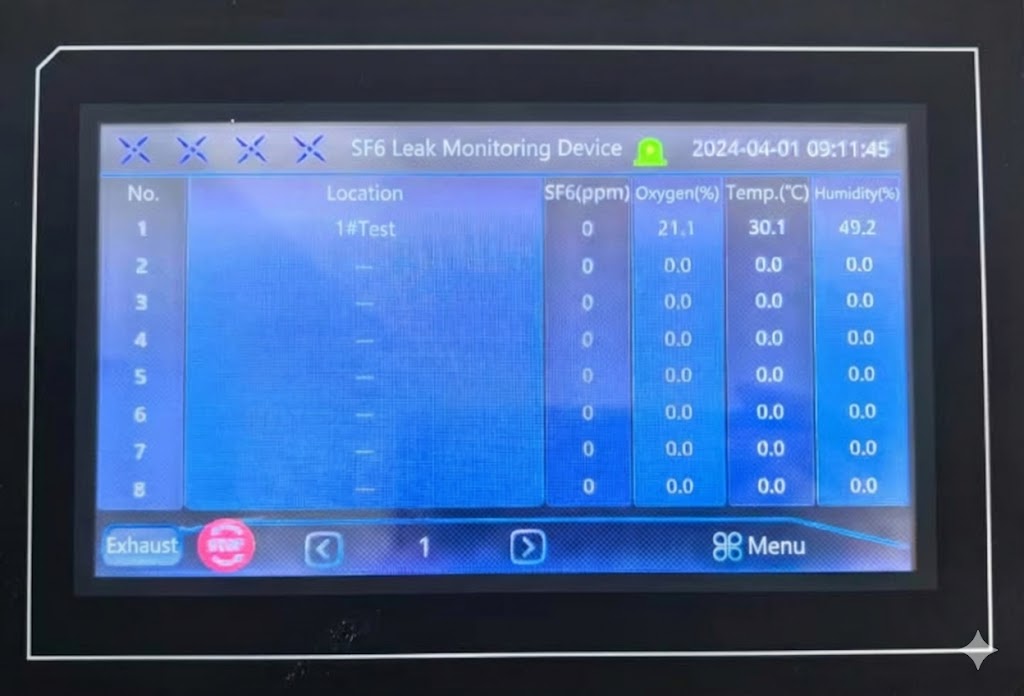
Do vai trò quan trọng của SF6 trong việc duy trì tính toàn vẹn cách điện và ngắt hồ quang của thiết bị điện áp cao, và hậu quả môi trường nghiêm trọng của việc phát thải không được kiểm soát, toàn diện Hệ thống giám sát khí SF6 là một thành phần thiết yếu của thiết kế và vận hành trạm biến áp hiện đại. Các hệ thống này đảm bảo chất lượng khí, áp lực , và ngăn chặn được liên tục xác minh trên mọi Ngăn chứa đầy SF6 trong quá trình cài đặt.
5.1 Máy theo dõi mật độ khí SF6
các Máy đo mật độ khí SF6 (còn được gọi là rơle mật độ) là thiết bị giám sát cơ bản nhất được lắp đặt trên mọi ngăn chứa khí SF6. Không giống như một máy đo áp suất đơn giản, máy theo dõi mật độ bù đắp cho sự thay đổi nhiệt độ để cung cấp chỉ báo chính xác về khối lượng thực tế của khí SF6 bên trong ngăn kín. Nếu mật độ khí giảm xuống dưới ngưỡng cảnh báo đặt trước — biểu thị rò rỉ — màn hình sẽ kích hoạt cảnh báo. Nếu mật độ giảm xuống một giây, ngưỡng thấp hơn, nó có thể bắt đầu khóa để ngăn hoạt động của thiết bị trong điều kiện không an toàn.
Hiện đại máy phát mật độ SF6 điện tử thay thế màn hình kiểu quay số cơ học cũ hơn bằng tín hiệu đầu ra kỹ thuật số liên tục (4–20 mA hoặc giao thức kỹ thuật số) cấp điện trực tiếp vào trạm biến áp hệ thống SCADA hoặc thiết bị điện tử thông minh (IED). Điều này cho phép giám sát từ xa theo thời gian thực và xác định xu hướng tồn kho SF6 trên toàn bộ đội xe Vịnh GIS Và bộ ngắt mạch.
5.2 Hệ thống phát hiện rò rỉ khí SF6
Trong khi máy theo dõi mật độ phát hiện hậu quả của rò rỉ (lượng khí giảm), tận tụy Máy dò rò rỉ khí SF6 xác định vị trí và tốc độ rò rỉ. Một số công nghệ đang được sử dụng rộng rãi.
Máy dò rò rỉ SF6 di động
Máy dò rò rỉ SF6 di động dựa trên việc thu giữ ion âm (máy dò bắt electron) hoặc hồng ngoại không phân tán (NDIR) công nghệ là công cụ tiêu chuẩn cho đội bảo trì. Các thiết bị cầm tay hiện đại có thể phát hiện nồng độ SF6 thấp tới mức 0.1 ppmv và xác định chính xác các vị trí rò rỉ trên Mặt bích GIS, giao diện ống lót, thân van, và đường hàn. Các nhà sản xuất hàng đầu của Thiết bị phát hiện rò rỉ SF6 bao gồm NÓI, Khoa học ion, Fluke, và Besantek.
Hệ thống giám sát SF6 khu vực cố định
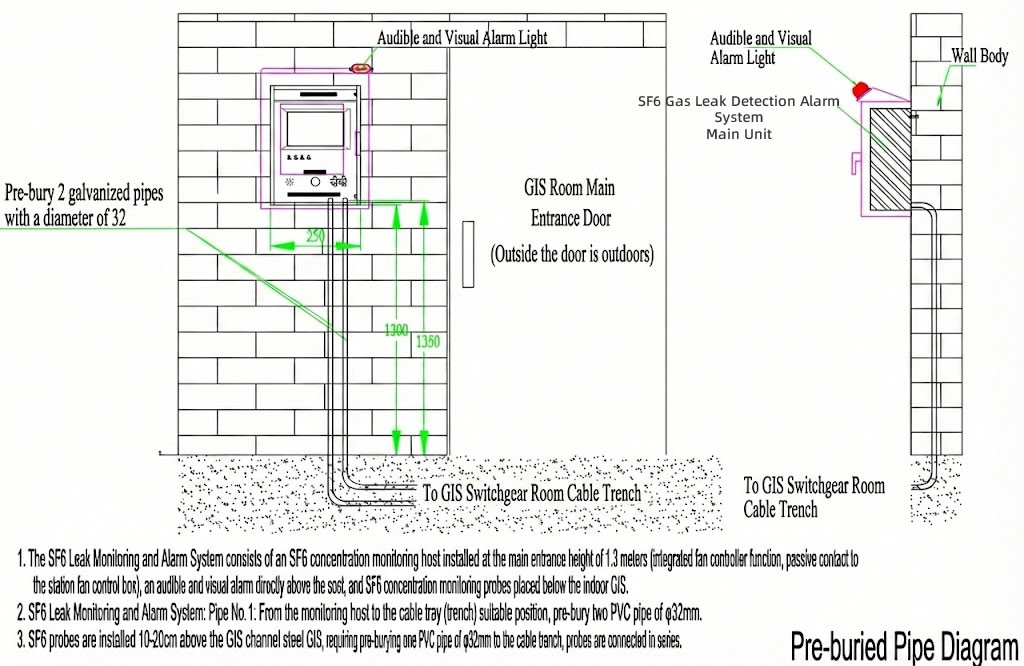
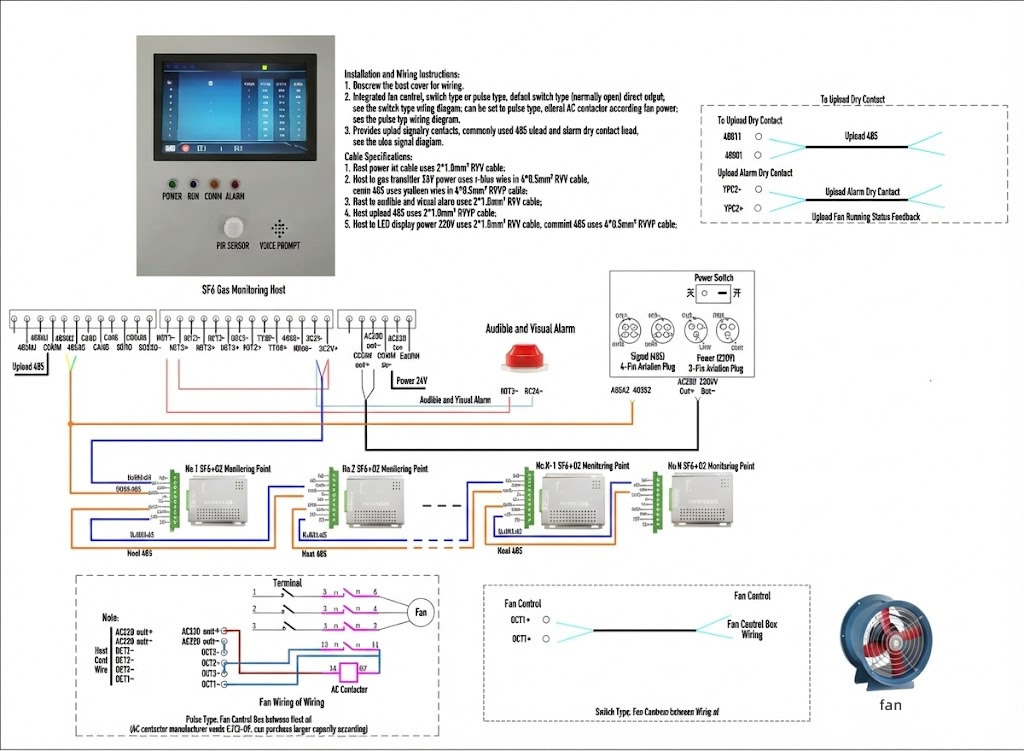
Đã sửa lỗi màn hình khu vực SF6 được cài đặt cố định trong các phòng GIS kèm theo, trạm biến áp ngầm, và hầm cáp nơi đặt thiết bị SF6. Các hệ thống này sử dụng cảm biến quang âm hồng ngoại hoặc cảm biến NDIR để liên tục đo nồng độ SF6 xung quanh trong không khí trong phòng. Chúng phục vụ hai mục đích: an toàn nhân sự (SF6 là chất gây ngạt ở nồng độ cao vì nó chiếm chỗ oxy) và cảnh báo sớm rò rỉ thiết bị. IEC 62271-1 và IEEE C37.122 đều là những yêu cầu tham khảo về phát hiện khí và thông gió trong Cài đặt GIS.
5.3 Máy phân tích chất lượng khí SF6
Sau sự cố hồ quang điện, hoạt động bảo trì, hoặc dịch vụ kéo dài, chất lượng của khí SF6 thiết bị bên trong phải được xác minh. Máy phân tích khí SF6 đo độ ẩm, sự tinh khiết (phần trăm SF6), và nồng độ các sản phẩm phụ phân hủy như SO₂ và HF. IEC 60480 quy định yêu cầu chất lượng khí SF6 dùng trong thiết bị điện, bao gồm cả giới hạn về độ ẩm (< 25 ppmv cho khí mới), sự tinh khiết (> 99.9%), và tính axit.
| Thiết bị giám sát | Nó đo lường những gì | Vị trí | đầu ra / Giao diện |
|---|---|---|---|
| Máy theo dõi mật độ SF6 (Cơ khí) | Mật độ khí (bù nhiệt độ) | Mỗi ngăn chứa khí | Báo thức + khóa liên lạc |
| Máy phát mật độ SF6 (điện tử) | Mật độ khí (liên tục) | Mỗi ngăn chứa khí | 4–20 mA / SCADA |
| Máy dò rò rỉ di động | Nồng độ SF6 tại nguồn | cầm tay / BẢO TRÌ | Trưng bày + báo động âm thanh |
| Màn hình khu vực cố định | SF6 xung quanh trong phòng | Phòng GIS / hầm cáp | Báo thức + kích hoạt thông gió |
| Máy phân tích khí SF6 | độ tinh khiết, độ ẩm, SO₂, HF | Cầm tay / phòng thí nghiệm | Trưng bày / báo cáo |
| Giám sát phân hủy trực tuyến | SO₂, HF, Mức CF₄ | Các vịnh GIS quan trọng | liên tục / SCADA |
5.4 Nền tảng quản lý tài sản SF6 tích hợp
Các nhà khai thác hệ thống truyền tải và tiện ích tiến bộ hiện đang triển khai tích hợp Nền tảng quản lý khí SF6 tổng hợp dữ liệu từ các máy phát mật độ, khảo sát phát hiện rò rỉ, kết quả kiểm tra chất lượng khí, và hồ sơ xử lý khí vào cơ sở dữ liệu tập trung. Các nền tảng này theo dõi hàng tồn kho SF6 theo số sê-ri thiết bị, tính toán hàng năm tỷ lệ rò rỉ SF6 theo yêu cầu của EPA (ở Mỹ) hoặc báo cáo Quy định về khí F của EU, và tạo tài liệu tuân thủ. Các nhà cung cấp phần mềm quản lý tài sản tiện ích hàng đầu ngày càng bao gồm các mô-đun theo dõi SF6 chuyên dụng.
6. Xử lý khí SF6, Kho, và An toàn
Thích hợp Xử lý khí SF6 đòi hỏi thiết bị chuyên dụng và nhân viên được đào tạo. SF6 được vận chuyển và bảo quản trong các bình thép chịu áp dưới dạng chất lỏng dưới áp suất hơi của chính nó. Trước khi điền vào thiết bị điện, khí phải được xác minh về độ tinh khiết và độ ẩm theo tiêu chuẩn IEC 60480 hoặc thông số kỹ thuật tiện ích hiện hành.
6.1 Thiết bị xử lý khí SF6
Xe đẩy xử lý khí SF6 (còn được gọi là xe dịch vụ SF6 hoặc máy thu hồi SF6) là các hệ thống được xây dựng có mục đích thực hiện toàn bộ vòng đời quản lý SF6: sơ tán các khoang thiết bị, thu hồi SF6 từ thiết bị, lọc và thanh lọc, kho, và điền lại. Các thiết bị hiện đại từ các nhà sản xuất như DILO, Mãnh liệt, Comde-Derenda, và Mega phù hợp với IEC 62271-4 tiêu chuẩn và có thể đạt được tỷ lệ thu hồi SF6 vượt quá 99.5%, giảm thiểu khí thải trong quá trình hoạt động bảo trì.
6.2 Cân nhắc về an toàn nhân sự
SF6 tinh khiết không độc hại và trơ về mặt hóa học. Tuy nhiên, hai mối quan tâm an toàn là tối quan trọng. Đầu tiên, vì SF6 đậm đặc hơn không khí năm lần, nó có thể tích tụ trong hố, chiến hào, tầng hầm cáp, và các không gian kín ở vùng thấp, thay thế oxy và tạo ra nguy cơ ngạt thở. Thứ hai, Sản phẩm phân hủy SF6 được tạo ra bởi hồ quang điện - bao gồm SO₂, HF, S₂F₁₀, SOF₂, và SO₂F₂ — có độc tính cao và ăn mòn. Người lao động phải sử dụng thiết bị bảo hộ cá nhân phù hợp (PPE) bao gồm bảo vệ hô hấp và găng tay chống hóa chất khi xử lý khí SF6 đã qua sử dụng hoặc mở các ngăn đã gặp sự cố hồ quang bên trong.
Tiêu chuẩn an toàn chính
Các tiêu chuẩn quốc tế chính quản lý việc xử lý và an toàn SF6 bao gồm IEC 62271-4 (quy trình xử lý SF6 và hỗn hợp của nó), IEC 60480 (Thông số kỹ thuật tái sử dụng SF6), và EPA 40 Phần CFR 98 tiểu mục ĐĐ (báo cáo bắt buộc về lượng khí thải SF6 ở Hoa Kỳ). Quy định về khí F của EU (KHÔNG. 517/2014, sửa lại 2024) áp đặt các yêu cầu báo cáo nghiêm ngặt và các biện pháp giảm dần đối với các loại khí có GWP cao bao gồm SF6.
7. Tác động và quy định môi trường
Hồ sơ môi trường của khí SF6 là thách thức quan trọng nhất phải đối mặt với việc tiếp tục sử dụng nó. Với một tiềm năng nóng lên toàn cầu (GWP) của 23,500 - nghĩa là một kg SF6 thải vào khí quyển có tác dụng làm nóng lên tương tự như 23,500 kg CO₂ trên 100 năm - và thời gian tồn tại trong khí quyển khoảng 3,200 năm, SF6 là một trong những loại khí nhà kính mạnh nhất được quy định theo Nghị định thư Kyoto và Thỏa thuận Paris.
7.1 Nguồn và tỷ lệ phát thải
Khí thải SF6 từ ngành điện xảy ra do rò rỉ thiết bị trong quá trình hoạt động bình thường, tổn thất trong quá trình bảo trì và xử lý khí, và thải bỏ khi hết hạn sử dụng. Tiêu chuẩn IEC về rò rỉ hàng năm chấp nhận được từ thiết bị mới GIS áp suất kín thiết bị ít hơn 0.5% mỗi năm cho mỗi ngăn khí. Thiết bị hiện đại được bảo trì tốt thường xuyên đạt được tỷ lệ rò rỉ dưới 0.1% mỗi năm. Tuy nhiên, thiết bị cũ hơn, đặc biệt là các thiết bị được lắp đặt trước những năm 1990, có thể biểu hiện tỷ lệ rò rỉ cao hơn đáng kể.
7.2 Cảnh quan pháp lý
| Vùng đất | Quy định | Yêu cầu chính |
|---|---|---|
| Liên minh Châu Âu | Quy định về khí F (sửa lại 2024) | Cấm sử dụng thiết bị đóng cắt MV SF6 mới từ 2030; Hạn chế HV theo từng giai đoạn |
| Hoa Kỳ | EPA 40 Phần CFR 98 tiểu mục ĐĐ | Báo cáo phát thải bắt buộc cho các tiện ích |
| California (Hoa Kỳ) | Quy định CARB SF6 | Mục tiêu tỷ lệ phát thải hàng năm của 1% qua 2020 |
| Nhật Bản | Đạo luật an toàn khí áp suất cao | Yêu cầu báo cáo và xử lý |
| Quốc tế | Nghị định thư Kyoto / Hiệp định Paris | SF6 được liệt kê vào giỏ các khí nhà kính được quản lý |
8. Các giải pháp thay thế khí SF6 cho thiết bị điện
Áp lực môi trường đối với SF6 đã thúc đẩy các nhà sản xuất thiết bị lớn phát triển và thương mại hóa các loại khí cách điện và khí gián đoạn thay thế, đặc biệt đối với các cài đặt mới.
8.1 Hỗn hợp gốc Fluoronitrile (C4F7N)
Hỗn hợp khí fluoronitril, được GE Vernova tiếp thị dưới tên thương hiệu g³ (Khí xanh cho lưới điện), trộn C4F7N với CO₂ và O₂ làm khí đệm. Các hỗn hợp này đạt được khoảng 90%–100% hiệu suất điện môi của SF6 ở áp suất tương đương với mức giảm GWP hơn 99%. hệ thống GIS sử dụng hỗn hợp fluoronitril có sẵn trên thị trường và được lắp đặt ở mức điện áp lên đến 420 kV.
8.2 Hỗn hợp gốc Fluoroketone (C5F10O)
Hỗn hợp khí Fluoroketon - trộn C5F10O với không khí hoặc nitơ - đã được thương mại hóa chủ yếu bởi ABB (bây giờ là Năng lượng Hitachi) dưới thương hiệu AirPlus dành cho thiết bị đóng cắt trung thế ở mức 12–40,5 kV. GWP của C5F10O nhỏ hơn 1, làm cho nó gần như trung hòa về khí hậu. Tuy nhiên, độ bền điện môi của các hỗn hợp này thấp hơn so với SF6 có nghĩa là kích thước ngăn lớn hơn hoặc áp suất cao hơn.
8.3 Công nghệ làm sạch không khí khô và chân không
Vì thiết bị đóng cắt trung thế, bộ ngắt mạch chân không kết hợp với cách nhiệt không khí khô sạch đã trở thành giải pháp tiêu chuẩn không chứa SF6. Ở các cấp điện áp phân phối (12–40,5 kV), Công nghệ gián đoạn chân không đã trưởng thành và được sử dụng rộng rãi. Ở điện áp cao hơn, cách nhiệt không khí tinh khiết đòi hỏi thiết bị lớn hơn đáng kể, hạn chế khả năng ứng dụng của nó khi không gian bị hạn chế.
So sánh các lựa chọn thay thế SF6
| Thay thế | GWP | Độ bền điện môi vs. SF6 | Dải điện áp | Tình trạng thương mại |
|---|---|---|---|---|
| C4F7N / CO₂ / Hỗn hợp O₂ | ~328 (hỗn hợp) | 90%–100% | Lên đến 420 kV | Có sẵn trên thị trường |
| C5F10O / Hỗn hợp không khí | <1 | 60%–80% | Lên đến 40.5 kV | Có sẵn trên thị trường |
| Không khí khô sạch | 0 | ~40% | Lên đến 420 kV (bao vây lớn) | Có sẵn trên thị trường |
| chân không (máy cắt MV) | 0 | không áp dụng (chỉ gián đoạn) | Lên đến 145 kV | Công nghệ trưởng thành |
| CO₂ / Hỗn hợp O₂ | <1 | ~35%–40% | Lên đến 72.5 kV | Triển khai hạn chế |
Câu hỏi thường gặp
Q1: SF6 có nghĩa là gì?
SF6 là viết tắt của lưu huỳnh hexaflorua, một hợp chất hóa học bao gồm một nguyên tử lưu huỳnh và sáu nguyên tử flo (công thức hóa học SF₆). Nó là một loại khí tổng hợp không được tìm thấy tự nhiên trong môi trường.
Q2: Tại sao khí SF6 được sử dụng trong máy cắt?
SF6 được sử dụng trong máy cắt vì độ bền điện môi đặc biệt của nó (2.5× không khí) và khả năng dập tắt hồ quang nhanh chóng. Nó có thể dập tắt các hồ quang điện năng lượng cao và khôi phục độ bền cách điện trong vòng micro giây, cho phép nhỏ gọn và đáng tin cậy máy cắt điện áp cao thiết kế.
Q3: Khí SF6 có nguy hiểm với con người không??
SF6 tinh khiết không độc hại và trơ về mặt hóa học. Tuy nhiên, nó có nguy cơ gây ngạt thở trong không gian kín vì nó nặng gấp 5 lần không khí và chiếm chỗ oxy. Ngoài ra, Sản phẩm phụ phân hủy SF6 được hình thành do phóng điện - bao gồm SO₂ và HF - có độc tính cao và ăn mòn, yêu cầu các biện pháp phòng ngừa an toàn thích hợp trong quá trình bảo trì.
Q4: Máy theo dõi mật độ khí SF6 là gì?
MỘT Máy đo mật độ khí SF6 là thiết bị đo bù nhiệt độ được lắp đặt trên mỗi ngăn chứa khí của thiết bị SF6. Nó giám sát khối lượng khí thực tế bên trong ngăn và kích hoạt cảnh báo hoặc khóa thiết bị nếu mật độ giảm xuống dưới ngưỡng an toàn, báo hiệu rò rỉ gas.
Q5: Cách phát hiện rò rỉ khí SF6?
Rò rỉ SF6 được phát hiện bằng cách sử dụng máy dò rò rỉ SF6 di động (dựa trên công nghệ thu electron hoặc hồng ngoại NDIR), màn hình SF6 vùng cố định trong phòng GIS, và xu hướng mật độ từ điện tử Máy phát mật độ SF6. Máy dò hiện đại có thể xác định rò rỉ nhỏ như 0.1 ppmv.
Q6: Tiềm năng nóng lên toàn cầu của SF6 là gì?
SF6 có nguy cơ nóng lên toàn cầu trong 100 năm (GWP) của 23,500, nghĩa là một kg SF6 có hiệu ứng nhà kính tương tự như 23,500 kg CO₂. Tuổi thọ trong khí quyển của nó là khoảng 3,200 năm, làm cho nó trở thành một trong những loại khí nhà kính dai dẳng nhất được biết đến.
Q7: Khí SF6 có thể tái chế được không??
Đúng. Khí SF6 có thể được thu hồi từ thiết bị bằng phương pháp chuyên dụng Xe đẩy xử lý khí SF6, được tinh chế thông qua quá trình lọc và hấp phụ để loại bỏ độ ẩm và các sản phẩm phụ phân hủy, và tái sử dụng. IEC 60480 quy định yêu cầu chất lượng mà SF6 thu hồi phải đáp ứng trước khi tái sử dụng trong các thiết bị điện.
Q8: Các lựa chọn thay thế SF6 trong thiết bị đóng cắt là gì?
Các chất thay thế có sẵn trên thị trường bao gồm hỗn hợp khí dựa trên fluoronitril (C4F7N/CO₂), hỗn hợp khí dựa trên fluoroketone (C5F10O/không khí), công nghệ gián đoạn chân không, và làm sạch không khí khô cách nhiệt. Chúng có sẵn cho các loại điện áp khác nhau, với các giải pháp không chứa SF6 hoàn thiện nhất ở cấp điện áp trung thế.
Q9: Thiết bị đóng cắt cách điện bằng khí là gì (GIS)?
Thiết bị đóng cắt cách điện bằng khí (GIS) là một loại thiết bị đóng cắt điện áp cao trong đó các thanh cái, bộ ngắt mạch, bộ ngắt kết nối, và các bộ phận khác được đặt trong vỏ kim loại kín chứa đầy khí SF6 điều áp. GIS chiếm 10%–20% không gian được yêu cầu bởi thiết bị đóng cắt cách điện bằng không khí thông thường, làm cho nó trở nên cần thiết cho việc lắp đặt ở đô thị và không gian hạn chế.
Q10: Bao lâu nên kiểm tra chất lượng khí SF6?
Tiêu chuẩn IEC và IEEE khuyến nghị kiểm tra chất lượng khí SF6 (độ ẩm, sự tinh khiết, và sản phẩm phân hủy) trước khi cấp điện ban đầu, sau bất kỳ bảo trì nào liên quan đến xử lý khí, sau các sự kiện lỗi nội bộ, và định kỳ trong quá trình sử dụng - thường là 5–10 năm một lần tùy thuộc vào chính sách tiện ích và yêu cầu pháp lý.
Tuyên bố từ chối trách nhiệm
Thông tin được cung cấp trong bài viết này chỉ nhằm mục đích thông tin và giáo dục chung. FJINNO (www.fjinno.net) cố gắng đảm bảo tính chính xác của tất cả các dữ liệu kỹ thuật, thông số kỹ thuật, và các tài liệu tham khảo quy định được trình bày ở đây, nhưng không đưa ra bảo đảm hay đảm bảo nào về tính đầy đủ, tính kịp thời, hoặc sự phù hợp cho bất kỳ ứng dụng cụ thể nào. Thông số kỹ thuật thiết bị điện, quy trình xử lý khí, tiêu chuẩn an toàn, và các quy định về môi trường khác nhau tùy theo khu vực pháp lý và có thể thay đổi. Nội dung này không cấu thành kỹ thuật chuyên nghiệp, sự an toàn, hoặc tư vấn tuân thủ quy định. Người đọc phải tham khảo ý kiến của các kỹ sư có trình độ, nhà sản xuất thiết bị, và cơ quan quản lý có liên quan trước khi thực hiện các biện pháp kỹ thuật, mua sắm, hoặc quyết định tuân thủ. FJINNO không chịu trách nhiệm pháp lý đối với bất kỳ tổn thất nào, thiệt hại, vết thương, hoặc các hình phạt pháp lý phát sinh từ việc sử dụng hoặc giải thích thông tin trong bài viết này.

Cảm biến nhiệt độ sợi quang, Hệ thống giám sát thông minh, Nhà sản xuất cáp quang phân phối tại Trung Quốc
 |
 |
 |