 Cảm biến nhiệt độ sợi quang INNO ,hệ thống giám sát nhiệt độ.
The main methods for monitoring transformer temperature include traditional thermometer measurement, đo nhiệt độ sợi quang huỳnh quang, đo nhiệt độ sợi quang phân tán, and fiber optic grating temperature measurement.
1、 Method of Transformer Temperature Monitoring
(1) Traditional thermometer measurement
Principle and Method
The traditional thermometer is a more direct way to measure the temperature of transformers. Ví dụ, trong máy biến áp ngâm dầu, a thermometer can be inserted into the oil surface of the transformer to monitor the temperature of the oil surface in real time, which is one of the main sensor methods of the bộ điều khiển nhiệt độ đối với máy biến áp ngâm dầu. For temperature measurement of dry-type transformers, three or four PT100 sensors are used, mainly for measuring the temperature of windings or iron cores. This method is based on the principle of thermal expansion and contraction, in which the liquid (such as mercury or alcohol) or metal (such as bimetallic strips) in the thermometer changes volume or shape with temperature changes, thereby displaying the corresponding temperature value on the thermometer scale.
Trong các ứng dụng thực tế, PT100 sensor is a common thermal resistance sensor, and its resistance value increases linearly with the increase of temperature. In transformer temperature monitoring, the resistance value of PT100 is measured, and the corresponding conversion circuit is used to convert the resistance value into a temperature value, thereby obtaining the temperature of the transformer winding or iron core. This type of sensor has high accuracy and good stability, which can meet the basic needs of transformer temperature monitoring.
hạn chế
The traditional thermometer measurement method has some limitations. For the temperature distribution inside the transformer, a single oil level thermometer can only reflect the overall oil temperature and cannot accurately obtain the hot spot temperature inside the winding. Hơn thế nữa, this contact measurement method may be subject to interference from the internal electromagnetic field of the transformer, which can affect the accuracy of the measurement. Ngoài ra, the installation position of the thermometer can also affect the measurement results. If the installation position is improper, it may not accurately reflect the true temperature condition of the transformer.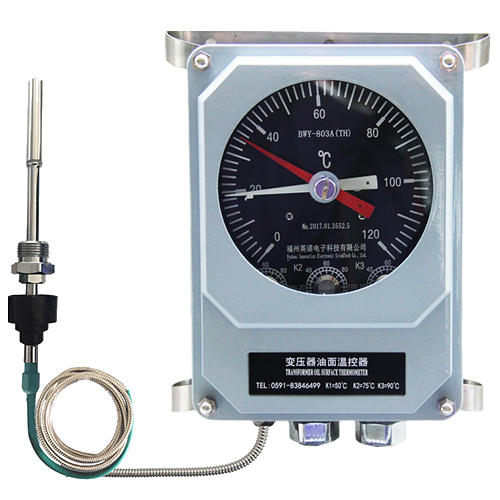
(2) Wireless temperature measurement solution
Principle and Method
In transformer temperature monitoring, wireless temperature measurement solutions are suitable for specific scenarios such as transformer joints, surface temperature monitoring, vân vân. Taking the Ankerui temperature measurement system as an example, when factors such as loose transformer nuts or small washer area cause high contact resistance at the connection port, resulting in temperature changes at the transformer inlet and outlet, a wireless temperature measurement solution can be used. By installing ATE400 at the inlet and outlet of the transformer and adsorbing ATE100M on the surface of the transformer, these devices can collect temperature data and then transmit the collected temperature data wirelessly to the ARTM Pn display terminal. This wireless transmission method avoids the trouble of wiring and has good adaptability to the complex external environment of transformers.
hạn chế
The wireless temperature measurement scheme also has certain limitations. Tín hiệu không dây có thể bị nhiễu từ môi trường xung quanh, chẳng hạn như nhiễu điện từ, chướng ngại vật, vân vân., có thể ảnh hưởng đến sự ổn định và độ chính xác của việc truyền tín hiệu. Hơn thế nữa, thiết bị không dây yêu cầu nguồn pin, và nếu pin yếu hoặc bị lỗi, nó có thể gây ra sự gián đoạn trong việc thu thập và truyền dữ liệu nhiệt độ. Ngoài ra, giá thành của các thiết bị không dây tương đối cao, và cho các hệ thống giám sát nhiệt độ máy biến áp quy mô lớn, tổng chi phí xây dựng sẽ tăng.
(3) Hệ thống đo sợi quang
Principle and Method
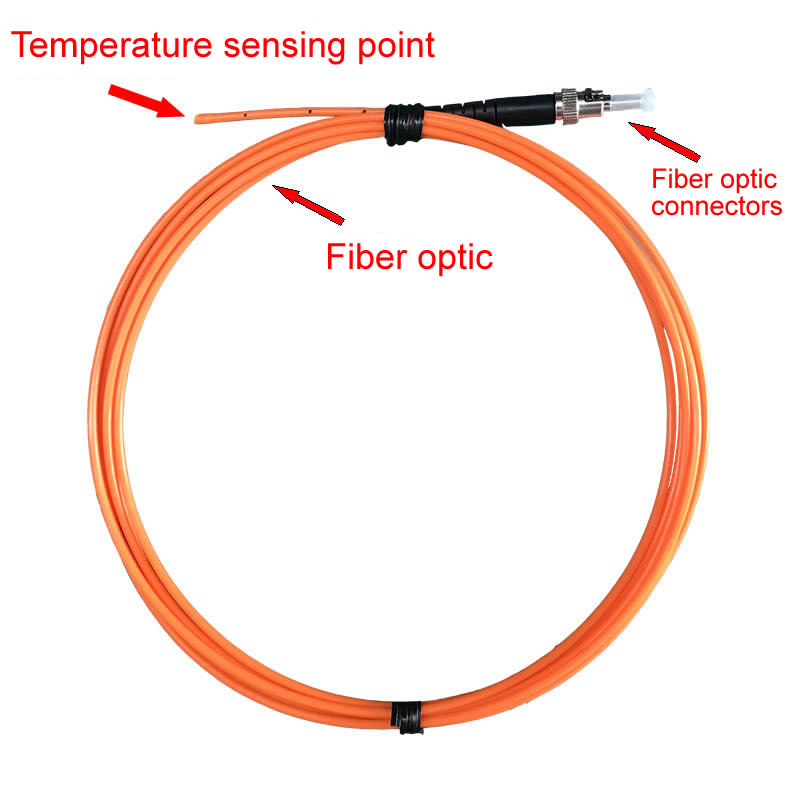
Hệ thống đo lường sợi quang có ưu điểm riêng trong giám sát nhiệt độ máy biến áp. Hệ thống đo sợi quang dựa trên hiệu ứng Raman là một trong số đó. Trong quá trình sản xuất máy biến áp, sợi được gói gọn và đặt dọc theo cuộn dây, and the length of the fiber can reach 250m. The measurement principle is to use laser to irradiate short light pulses into the optical fiber, and the photons of the light pulses scatter on the molecules of the glass fiber. Khi nhiệt độ tăng, the wavelength of the backscattered photons will change, and this wavelength shift is proportional to the temperature difference. Vì thế, reliable multi-point temperature measurement can be carried out on transformers. This method can achieve temperature monitoring of the entire winding area inside the transformer, clarifying the location and intensity of temperature rise.
There are also some fiber optic measurement systems based on other principles, such as fluorescent fiber optic temperature measurement systems, cáp quang phân tán hệ thống đo nhiệt độ, and fiber optic grating temperature measurement systems, each with different working principles and characteristics, which will be introduced in detail in the following content.
advantage
Fiber optic measurement systems have many advantages compared to other measurement methods. Trước hết, optical fibers have good insulation properties and can operate safely and reliably in transformer environments with high voltage and strong electromagnetic fields. Thứ hai, optical fiber itself is a passive component that does not generate electromagnetic interference and is not affected by external electromagnetic interference, ensuring the accuracy of measurement data. Ngoài ra, the fiber optic measurement system can achieve distributed measurement and obtain temperature information at different positions inside the transformer, which helps to comprehensively understand the temperature distribution of the transformer.
2、 Advantages of using fluorescent optical fiber for transformer temperature monitoring
(1) Strong anti-interference ability
Anti electromagnetic interference characteristics
Fluorescent optical fibers have excellent electromagnetic interference resistance in transformer temperature monitoring. In the operating environment of transformers, có một trường điện từ mạnh, and traditional electrical temperature measuring instruments are susceptible to electromagnetic interference, leading to a decrease in measurement accuracy or even temperature measurement failure. The fluorescence fiber optic temperature measurement system adopts fluorescence fiber optic temperature sensing technology, and the temperature hotspot of the fluorescence cảm biến nhiệt độ sợi quang được sử dụng trong máy phát của nó không được kết nối điện với bộ phận nhận tín hiệu đo. Đặc tính này giúp sợi quang huỳnh quang hoạt động bình thường trong các môi trường đặc biệt như điện áp cao và nhiễu điện từ mạnh., không có sai số đo do nhiễu điện từ. Nó có thể đo nhiệt độ của máy biến áp với độ chính xác cao và ổn định trong thời gian dài, và theo dõi chính xác sự thay đổi nhiệt độ của chúng, dù là máy biến áp ngâm dầu hay máy biến áp khô.
Chống nhiễu khác
Ngoài khả năng chống nhiễu điện từ, Sợi quang huỳnh quang có thể được sử dụng an toàn trong hầu hết mọi môi trường mà không bị ảnh hưởng bởi EMI (nhiễu điện từ), RF (nhiễu tần số vô tuyến), MRI (nhiễu hình ảnh cộng hưởng từ), nhiễu vi sóng, nhiễu điện từ miễn dịch, and microwave interference. Ví dụ, in some complex power equipment operating environments, there may be multiple sources of interference, such as radio equipment, radio frequency interference generated by other electrical equipment, vân vân. Fluorescent optical fibers can be used for temperature monitoring without being affected. This anti-interference ability makes the fluorescence fiber optic temperature measurement system widely applicable in complex electromagnetic environments such as substations.
(2) Intrinsic safety characteristics
Safety without electrical connections
In the fluorescence fiber optic temperature measurement system, due to the lack of electrical connection between the temperature hotspot and the measurement signal receiving part, this characteristic makes it inherently safe. In high-voltage equipment environments such as transformers, the absence of electrical connections avoids safety hazards caused by electrical faults, such as leakage and short circuits. Even in extreme situations such as transformer failures, such as short circuits causing arcs, fluorescent optical fibers will not be damaged or cause secondary accidents due to electrical connections, ensuring the safety of the monitoring system itself and the safety of the transformer equipment and surrounding environment.
Suitable for hazardous environments
This intrinsic safety feature makes the hệ thống đo nhiệt độ sợi quang huỳnh quang suitable for various hazardous environments. Ví dụ, trong máy biến áp ngâm dầu, there is flammable transformer oil. If electrically connected temperature measuring equipment is used, once an electrical fault occurs and sparks are generated, it may cause a fire or even an explosion. The fluorescent fiber optic temperature measurement system, due to the lack of electrical connections, does not generate electrical sparks and can safely monitor temperature inside oil immersed transformers, greatly improving the safety of transformer operation.
(3) High precision and high stability
Đo nhiệt độ chính xác
The fluorescence fiber optic temperature measurement system can achieve accurate temperature measurement. Its probe adopts special materials and structural design, which can accurately sense temperature changes and convert them into measurable signals. Ví dụ, its fiber optic probe has no metallic material and is completely non-metallic in structure, while the fiber optic sensing probe is made of rare earth materials. The characteristics of this material and structure make fluorescent optical fibers highly sensitive to temperature changes, enabling precise measurement of temperature at different locations inside the transformer. Whether it is the temperature of the winding hotspot or other parts, high measurement accuracy can be achieved, meeting the accuracy requirements for transformer temperature monitoring.
Long term stable work
The fluorescence fiber optic temperature measurement system has the ability to operate stably for a long time. Due to its resistance to various external interference factors and the use of materials with good stability, temperature monitoring can be continuously and stably carried out during long-term transformer operation. Unlike some traditional temperature measuring devices, which may experience a decrease in measurement accuracy or equipment failure over time or changes in the environment. Ví dụ, in long-term operating substations, the fluorescent fiber optic temperature measurement system can work stably for many years, providing reliable temperature data for the safe operation of transformers.
(4) Probe performance advantages
Small diameter probes have strong applicability
The diameter of the fluorescent fiber probe can be made smaller, such as 2.5mm (smaller diameters can be customized). Small diameter probes have strong applicability in transformer temperature monitoring, especially in some limited space locations, such as the narrow space inside the transformer winding. Small probes can be installed and arranged more easily without causing significant impact on the original structure of the transformer. Trong khi đó, a small diameter probe is also beneficial for improving measurement accuracy, as it can be closer to the measured area and reduce interference from the surrounding environment on the measurement results.
Advantages of probe materials
The materials used in fluorescent fiber optic probes have multiple advantages. If the probe has no metallic substance and is completely non-metallic in structure, this material characteristic makes the probe have good insulation performance and can work safely in high-voltage transformer environments. And the probe made of rare earth materials performs well in high temperature resistance, wear resistance, và các khía cạnh khác. Trong quá trình vận hành máy biến áp, especially in high-temperature environments, the probe material can maintain stable performance and will not deform or be damaged due to high temperatures, thereby ensuring the accuracy and reliability of temperature measurement.

3、 Ưu điểm của Distributed Fiber Optic for Transformer Temperature Monitoring
(1) Distributed measurement capability
Continuous dynamic monitoring
The distributed fiber optic temperature measurement online monitoring system adopts advanced OTDR (Optical Time Domain Reflectance) technology and Raman scattering light’s sensitivity to temperature, which can detect temperature changes at different positions along the fiber optic cable and achieve truly distributed measurement. It can provide continuous dynamic monitoring of temperature change signals at every 0.5 mét điểm trong phạm vi hơn mười km. Điều này rất có ý nghĩa cho việc giám sát nhiệt độ máy biến áp, do sự phân bố nhiệt độ bên trong máy biến áp không đồng đều và có thể có các điểm nóng cục bộ. Sợi quang phân tán có thể thu được thông tin nhiệt độ chính xác từ các vị trí khác nhau này, từ đó hiểu biết một cách toàn diện về sự phân bố trường nhiệt độ bên trong máy biến áp. Ví dụ, trong máy biến áp lớn, Sự chênh lệch nhiệt độ có thể xảy ra ở các phần khác nhau của cuộn dây do mật độ dòng điện khác nhau và các lý do khác. Sợi quang phân tán có thể theo dõi chi tiết những chênh lệch nhiệt độ này, cung cấp hỗ trợ dữ liệu nhiệt độ toàn diện hơn để vận hành an toàn máy biến áp.
Định vị chính xác
Sợi quang phân tán không chỉ có thể đo nhiệt độ, mà còn xác định chính xác vị trí của sự bất thường về nhiệt độ. Dựa trên công nghệ OTDR, Thời gian dội lại của tín hiệu tán xạ có thể được xác định bằng cách sử dụng thu thập dữ liệu tốc độ cao để đo vị trí sợi tương ứng của tín hiệu tán xạ. Khi có sự tăng nhiệt độ bất thường ở một bộ phận nhất định của máy biến áp, hệ thống đo nhiệt độ sợi quang phân tán có thể chỉ ra chính xác vị trí của nhiệt độ bất thường, giúp nhanh chóng xác định vị trí lỗi và có biện pháp bảo trì, điều chỉnh kịp thời.. Ví dụ, khi xảy ra các sự cố như ngắn mạch lần lượt trong cuộn dây máy biến áp, gây ra nhiệt độ cao cục bộ, sợi quang phân tán có thể nhanh chóng xác định vị trí cụ thể của lỗi, giảm đáng kể thời gian chẩn đoán lỗi.
(2) Adapt to multiple environments
Chống nhiễu điện từ
các hệ thống đo nhiệt độ sợi quang phân tán has strong resistance to electromagnetic interference in transformer environments. Trong quá trình vận hành máy biến áp, có một trường điện từ mạnh, and distributed optical fibers use optical signals for temperature measurement and transmission, without generating mutual electromagnetic interference with power cables. This enables it to operate stably and accurately in transformer environments with high voltage and strong electromagnetic interference. Distributed optical fibers can effectively monitor temperature in both substations and industrial environments, không bị ảnh hưởng bởi trường điện từ.
Suitable for hazardous locations
The distributed fiber optic temperature measurement system is also suitable for hazardous areas such as flammable and explosive. Due to its use of optical signal transmission and the absence of hazardous factors such as electric sparks, temperature monitoring can be safely carried out in environments with flammable substances such as oil immersed transformers. Hơn thế nữa, distributed optical fibers have characteristics such as corrosion resistance, which can adapt to the possible chemical corrosion environment around transformers. Ví dụ, in some chemical enterprises, distributed optical fibers can work stably for a long time to ensure the temperature monitoring needs of transformers.
(3) Measurement performance advantages
High precision and high resolution
The distributed fiber optic temperature measurement system has high measurement accuracy and temperature resolution. Its typical temperature resolution reaches 0.5 oC, temperature accuracy is 1 oC, and spatial resolution can reach up to 0.5m. This high-precision and high-resolution feature enables it to accurately detect small temperature changes inside the transformer. Ví dụ, during normal operation of a transformer, although the overall temperature is relatively stable, there may be some small local temperature fluctuations. Distributed optical fibers can accurately measure these fluctuations and promptly detect potential safety hazards.
quick response
The response speed of this system is very fast, with a minimum measurement time of 3 seconds per measurement. This feature enables distributed optical fibers to capture changes in the internal temperature of transformers in a timely manner. When a sudden fault occurs in the transformer, causing a sharp rise in temperature, the distributed fiber optic temperature measurement system can quickly respond, obtain temperature change information in a short period of time, and issue an alarm signal. This rapid response capability helps to improve the safety of transformers and reduce the possibility of accidents caused by high temperatures.
(4) System flexibility and compatibility
Cài đặt báo động linh hoạt
The distributed fiber optic temperature measurement system has strong flexibility. It can set various temperature alarm values at any level, and has multiple alarm methods for differential fixed temperature. The alarm parameters can be set in different zones according to customer needs. Ví dụ, different alarm values can be set according to the actual temperature safety range at different operating stages or different parts of the transformer. For key parts such as windings, relatively low alarm temperature values can be set, while for parts such as transformer casings, relatively high alarm temperature values can be set, which can more accurately monitor and warn of the temperature condition of the transformer.
Good compatibility
The host of the distributed fiber optic temperature measurement system is an open communication protocol that provides a communication interface to connect with the workstation. It can be linked with other control devices such as PCs and fire alarm systems through RS232, RS485, rơle tích hợp, RJ45, or other industrial protocols for sound and light alarms, with accurate and complete signal output. This compatibility enables the distributed fiber optic temperature measurement system to be easily integrated into existing transformer monitoring systems, working together with other devices to ensure the safe operation of transformers.
4、 Ưu điểm của Fiber Bragg Grating for Transformer Temperature Monitoring
(1) Good linear relationship and measurement accuracy
The linear relationship between reflection wavelength and temperature
Lưới sợi Bragg (FBG) is a light sensing component made on optical fibers that only reflects specific wavelengths. The reflected wavelength has an excellent linear relationship with temperature. The determination coefficient of linear fitting between the reflection wavelength of fiber Bragg grating and temperature is relatively high, which makes it possible to accurately calculate the temperature change value by measuring the change in the reflection wavelength of fiber Bragg grating. In transformer temperature monitoring, this linear relationship can improve the accuracy of temperature measurement. Ví dụ, when the temperature of the transformer winding changes, fiber Bragg gratings can accurately reflect the increase or decrease in temperature based on the change in reflected wavelength, providing reliable data support for temperature monitoring of transformers.
Accurate measurement adapted to harsh environments
Fiber Bragg grating sensors are suitable for long-term monitoring in harsh environments. Inside the transformer, the environment is complex and there are factors such as high voltage and strong electromagnetic field. Tuy nhiên, due to its optical properties, fiber Bragg grating sensors are not affected by electromagnetic interference and can accurately measure temperature. And during the operation of transformers, they may be affected by various factors such as vibration and temperature fluctuations. Fiber Bragg grating sensors can maintain stable performance in such harsh environments and continuously and accurately monitor temperature changes.
(2) Reusability and multi-sensor series connection
Reusable features
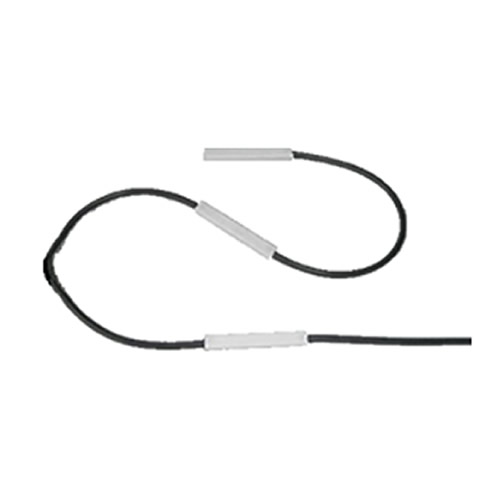
Fiber Bragg grating sensors have the advantage of being reusable. Fiber Bragg grating sensors with different wavelengths can be engraved at different positions on the optical fiber, and each sensor is encoded with the reflected wavelength of the light when the fiber Bragg grating is engraved. This means that multiple fiber Bragg grating sensors can be integrated on a single optical fiber, and through wavelength division multiplexing technology, lên tới 20 fiber Bragg grating sensors can be connected in series on a single optical fiber. In transformer temperature monitoring, this reusability can achieve temperature monitoring of multiple parts of the transformer. Ví dụ, fiber Bragg grating sensors can be installed at different positions of the high-voltage winding and low-voltage winding of the transformer. These sensors can be connected through a single optical fiber to obtain temperature information from multiple positions, reducing the use of optical fibers and system complexity.
Efficient sensor networking
Based on the reusability of fiber Bragg gratings, efficient sensor networking topologies can be constructed. Multiple fiber Bragg grating sensors are connected in series on a single fiber optic cable for centralized management and data acquisition. So với các phương pháp đo nhiệt độ khác, this networking approach is more concise and efficient. In the transformer monitoring system, fiber Bragg grating sensors can be flexibly arranged according to the structure and temperature monitoring requirements of the transformer, and a suitable sensor network can be constructed to achieve comprehensive and efficient monitoring of the internal temperature of the transformer.
(3) Sensor performance advantages
Small size and lightweight
Fiber Bragg grating sensors have the characteristics of small size and light weight. This ensures that it will not have a significant impact on the structure of the transformer when installed inside. Ví dụ, in the narrow space of transformer windings, fiber Bragg grating sensors can be easily installed without changing the electrical and mechanical properties of the windings. Small size and lightweight sensors are also easy to embed in the transformer manufacturing process, which can better integrate with the transformer and achieve long-term and stable monitoring of transformer temperature.
Ổn định lâu dài
Fiber Bragg grating sensors exhibit good stability during long-term operation. Due to its light based sensing principle, it is not affected by external electromagnetic interference, ăn mòn hóa học, và các yếu tố khác, and can operate continuously and stably throughout the operating life cycle of the transformer. In the long-term temperature monitoring process, there will be no performance degradation, measurement error increase or other problems, providing reliable guarantee for the temperature monitoring of transformers.
(4) Compatibility and Security
Compatibility with transformer oil
Fiber Bragg grating sensors have good compatibility with transformer oil. After relevant experimental evaluation, according to GB/T16927.1-19 “High Voltage Testing Techniques Part 1 General Test Requirements”, the oil test results of the oil sample before and after the test were qualified after being placed in an oil temperature of 105 ° C for 168 giờ, and there was no cracking phenomenon in the fiber Bragg grating sensor and related materials. Trong các ứng dụng thực tế, this means that fiber Bragg grating sensors can be safely installed inside oil immersed transformers, and will not have any impact on the performance of transformer oil due to long-term contact with transformer oil, nor will their performance decrease due to interaction with transformer oil, ensuring the normal operation of transformers.
Khả năng chống sự cố và hiệu suất của dây leo
Cảm biến cách tử Fiber Bragg có khả năng chống sự cố và hiệu suất rò rỉ tốt. Nó đã trải qua các đánh giá thử nghiệm nghiêm ngặt như xung sét 1575kV, 1525kV xung hoạt động, 400điện áp chịu được tần số kV, và thử nghiệm chịu đựng DC 5 phút DC10-20kV, và đã vượt qua thành công các bài kiểm tra trên. Tính năng này cho phép các cảm biến cách tử Bragg sợi hoạt động an toàn và đáng tin cậy trong môi trường máy biến áp cao áp, không bị hỏng hoặc rò rỉ do điện áp cao, nâng cao độ an toàn của hệ thống giám sát nhiệt độ máy biến áp.

Cảm biến nhiệt độ sợi quang, Hệ thống giám sát thông minh, Nhà sản xuất cáp quang phân phối tại Trung Quốc
 |
 |
|