 INNO fiber optic na mga sensor ng temperatura ,mga sistema ng pagsubaybay sa temperatura.
- Bahagyang discharge (PD) is a localised insulation breakdown that, naiwang hindi natukoy, progressively degrades transformer insulation and can ultimately cause catastrophic failure. Online na pagsubaybay sa PD catches these defects at the earliest stage.
- Five complementary detection techniques — electrical, acoustic, UHF, TEV, and chemical (DGA) — each capture a different physical manifestation of partial discharge, and no single method alone provides complete diagnostic coverage.
- A multi-sensor fusion architecture combining mga sensor ng ultrasonic (20 kHz–200 kHz), high-frequency current sensors (100 kHz–50 MHz), at Mga sensor ng UHF (300 MHz–3 GHz) eliminates false positives, enables source localisation, and delivers the highest detection reliability.
- Advanced PRPD (Phase-Resolved Partial Discharge) three-dimensional pattern analysis and PRPS (Phase-Resolved Pulse Sequence) visualisation allow engineers to identify the specific discharge type — corona, paglabas sa ibabaw, internal void, or floating potential — and prioritise maintenance accordingly.
- Moderno Mga sistema ng pagsubaybay sa PD integrate with SCADA at enterprise asset management platform sa pamamagitan ng Modbus, IEC 61850, at DNP3, pag-embed ng data ng kalusugan ng pagkakabukod sa mas malawak na daloy ng trabaho sa pagpapanatili na nakabatay sa kondisyon ng utility.
Talaan ng mga Nilalaman
- Ano ang Partial Discharge sa mga Transformer at Bakit Ito Dapat Subaybayan?
- Apat na Karaniwang Uri ng Partial Discharge sa Loob ng Power Transformers
- Limang Partial Discharge Detection Techniques Naihambing — Electrical, Acoustic, UHF, TEV, at Mga Paraang Kemikal
- Bakit Nahihigitan ng Multi-Sensor Fusion ang Single-Method Detection
- Ano ang Mga Bahagi ng Online na Sistema ng Pagsubaybay sa Partial Discharge?
- Pag-install ng Sensor, Bandwidth, at Function - Ultrasonic, HFCT, at UHF Ipinaliwanag
- Mga Pangunahing Teknikal na Detalye ng PD Monitoring Host Unit
- Paano Tinutukoy ng Mga PRPD 3D Pattern at PRPS Pulse Sequences ang Mga Uri ng Discharge?
- Backend Monitoring Software — Mga Feature at Diagnostic Capabilities
- Paano Nagsasama ang isang PD Monitoring System sa SCADA at mga Asset Management Platform?
- Aling mga Transformer ang Pinakamakinabang sa Online na Pagsubaybay sa Partial Discharge?
- Paano Pumili ng Tamang Kagamitan sa Pagsubaybay ng Bahagyang Paglabas — Isang Gabay sa Mamimili
- Mga Naaangkop na Internasyonal na Pamantayan para sa Pagsubok at Pagsubaybay sa Partial Discharge
- Mga Madalas Itanong (FAQ)
1. Ano ang Partial Discharge sa mga Transformer at Bakit Ito Dapat Subaybayan?
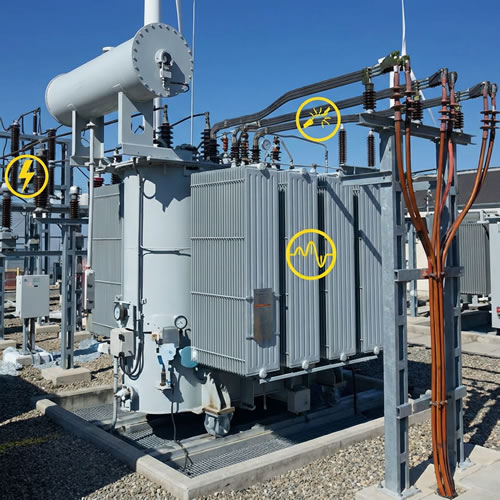
Bahagyang discharge ay isang localized electrical breakdown na bahagyang nagtulay sa pagkakabukod sa pagitan ng mga conductor sa loob ng isang transpormer. Hindi tulad ng isang buong flashover, ang isang bahagyang discharge na kaganapan ay hindi lumikha ng isang kumpletong conductive path, ngunit naglalabas ito ng enerhiya — sa anyo ng electromagnetic radiation, acoustic waves, init, at mga by-product ng kemikal — na unti-unting nakakasira sa nakapalibot na insulation material. Sa paglipas ng panahon, ang paulit-ulit na partial discharge activity ay nagpapalaki sa orihinal na depekto, pinapabilis ang pagtanda ng pagkakabukod, at sa huli ay maaaring magpalitaw ng kumpletong pagkabigo sa pagkakabukod, humahantong sa sakuna pagkasira ng transpormer, hindi planadong mga pagkawala, at malaking pagkalugi sa pananalapi.
Ang hamon ay ang partial discharge activity ay hindi nakikita sa panahon ng normal na operasyon. Ang mga panlabas na sintomas tulad ng dissolved gas accumulation sa langis o mataas na winding temperature ay kadalasang lumilitaw lamang pagkatapos na ang depekto ay umunlad sa isang advanced na yugto. Ito ang dahilan kung bakit online na pagsubaybay sa partial discharge ay naging isang mahalagang bahagi ng modernong pagsubaybay sa kondisyon ng transpormer mga programa. Sa pamamagitan ng pagtuklas ng elektrikal, acoustic, at mga electromagnetic na lagda ng mga kaganapan sa PD sa real time, ang isang online na sistema ay nagbibigay ng pinakamaagang posibleng babala ng pagkasira ng insulasyon — mga linggo, buwan, o kahit na mga taon bago matukoy ang fault sa pamamagitan ng conventional periodic testing.
2. Apat na Karaniwang Uri ng Partial Discharge sa Loob ng Power Transformers

Hindi lahat ng partial discharge ay pareho. Ang pisikal na mekanismo, lokasyon, and severity of the discharge depend on the nature of the insulation defect. Understanding the four most common PD types helps engineers interpret monitoring data and plan appropriate maintenance responses.
Corona Discharge
Corona discharge occurs at sharp metallic protrusions or poorly shaped electrodes where the localised electric field intensity exceeds the breakdown strength of the surrounding medium — typically transformer oil or gas. The discharge appears as a faint glow and produces predominantly hydrogen gas. While corona is often considered the least severe form of PD, persistent corona activity degrades oil quality over time and can initiate more damaging discharge types.
Surface Discharge
Surface discharge develops along the interface between solid insulation (pressboard or crepe paper) and the surrounding oil or gas. It is frequently caused by contamination, pagpasok ng kahalumigmigan, or excessive tangential electric field stress at the insulation surface. Surface discharge can quickly escalate in severity because the carbonised tracking path it creates along the insulation surface progressively shortens the effective insulation distance.
Internal Void Discharge
Gas-filled voids or cavities trapped within solid insulation — typically caused by manufacturing defects, mechanical stress, or thermal ageing — create regions where the dielectric strength is significantly lower than the surrounding material. When the applied voltage exceeds the breakdown threshold of the void, a partial discharge ignites inside the cavity. Internal void discharge is particularly insidious because it is entirely enclosed within the insulation and cannot be detected by visual inspection.
Floating-Potential Discharge
When a metallic component inside the transformer — such as a shield, a structural bracket, or a loose connection — is not properly connected to a defined electrical potential, it acquires a floating voltage through capacitive coupling. This floating potential can drive repetitive discharge between the component and adjacent earthed or energised structures. Floating-potential discharge is typically high in energy and produces strong UHF and acoustic signatures, making it relatively easier to detect but also more damaging to nearby insulation.
3. Limang Partial Discharge Detection Techniques Naihambing — Electrical, Acoustic, UHF, TEV, at Mga Paraang Kemikal
Each detection technique captures a different physical phenomenon produced by partial discharge events. The table below provides a side-by-side comparison of the five most widely used methods, summarising their measurement principles, typical sensitivity, main advantages, and primary limitations.
| Paraan ng Pagtuklas | Physical Quantity Measured | Typical Sensor | Sensitivity Metric | Pangunahing Kalamangan | Main Limitations |
|---|---|---|---|---|---|
| Electrical (IEC 60270) | Apparent charge (pC / nC) | Coupling capacitor, bushing tap | Down to ~1 pC | Standardised, quantitative, excellent for factory testing | Susceptible to EMI in field; primarily offline |
| Acoustic / Ultrasonic | Acoustic emission (dB / mV) | Piezoelectric sensor (20–200 kHz) | Katamtaman | Immune sa EMI; enables PD source localisation via triangulation | Signal attenuated by tank structure and oil path |
| UHF (Napakataas na Dalas) | Electromagnetic signal (300 MHz–3 GHz) | UHF antenna (conical, spiral, Vivaldi) | Down to a few pC equivalent | Excellent noise rejection; real-time; suitable for online use | Sensitivity depends on sensor position; requires installation port |
| TEV (Lumilipas na Boltahe ng Lupa) | Surface voltage pulse (mV) | Capacitive plate sensor | Moderate to high | Non-intrusive; no outage required; simpleng pag-install | Limited to metallic-enclosure equipment; external PD only |
| Kemikal (DGA) | Dissolved gas concentration (ppm) | Online DGA monitor / lab chromatography | Indirect indicator | Detects cumulative insulation degradation; established standard | Mabagal na tugon; cannot pinpoint PD location or type |
Gaya ng inilalarawan ng talahanayan, walang iisang pamamaraan ang sumasaklaw sa lahat ng aspeto ng partial discharge detection. Ang mga pamamaraang elektrikal ay nagbibigay ng pinakatumpak na dami ng singil ngunit nakikipaglaban sa ingay sa lugar. Ang mga pamamaraan ng Acoustic at UHF ay mahusay sa online na pagsubaybay at lokalisasyon ng pinagmulan. Ang TEV ay perpekto para sa mabilis na hindi mapanghimasok na screening. Ang DGA ay nagpapakita ng pinagsama-samang pinsala sa pagkakabukod ngunit hindi nagbibigay ng real-time na impormasyon sa antas ng pulso. Ang complementarity na ito ang nagtutulak sa industriya patungo sa mga multi-sensor fusion architecture.
4. Bakit Nahihigitan ng Multi-Sensor Fusion ang Single-Method Detection
Ang isang single-sensor PD monitor — gaano man ito kasensitibo — ay nahaharap sa dalawang pangunahing hamon: mga maling positibong dulot ng mga panlabas na pinagmumulan ng ingay at kalabuan ng diagnostic kapag isang uri lang ng signal ang available. Multi-sensor fusion technology tinutugunan ang parehong mga problema sa pamamagitan ng cross-correlated na data mula sa mga sensor na gumagana sa ganap na magkakaibang mga domain ng dalas at mga prinsipyo ng pisikal na pagsukat.
Isaalang-alang ang isang praktikal na halimbawa. Nakikita ng isang ultrasonic sensor na naka-mount sa tangke ng transpormer ang isang kaganapan sa paglabas ng tunog. Nasa isolation, hindi matiyak ng operator kung ang signal ay tunay na PD o isang mekanikal na panginginig ng boses mula sa malapit na cooling fan. Gayunpaman, kung ang isang UHF sensor ay sabay-sabay na nakakita ng kaukulang electromagnetic pulse, at ang isang high-frequency current sensor sa grounding cable ay nagtatala ng nagkataon na kasalukuyang spike, ang posibilidad na ang kaganapan ay isang tunay na bahagyang discharge ay tumataas sa malapit na katiyakan. Ang pagkakaiba sa oras ng pagdating sa pagitan ng acoustic at electromagnetic signal ay maaari pang magamit upang tantiyahin ang spatial na lokasyon ng pinagmumulan ng discharge sa loob ng transpormer..
Ang diskarte sa pagsasanib na ito ay kapansin-pansing binabawasan ang mga rate ng maling alarma, nagpapabuti ng kumpiyansa sa diagnostic, at nagbibigay-daan sa operator na hindi lamang kumpirmahin na nangyayari ang PD ngunit tukuyin din kung saan ito nangyayari at kung gaano ito kalubha — lahat mula sa isang pinagsamang platform ng pagsubaybay. Ito ang dahilan kung bakit nangunguna transformer partial discharge monitoring systems ngayon ay nagsasama ng tatlong uri ng sensor bilang pamantayan, sa halip na umasa sa alinmang paraan lamang.
5. Ano ang mga Bahagi ng isang Online Partial Discharge Monitoring System?
Isang kumpleto online na sistema ng pagsubaybay sa PD ay binubuo ng tatlong functional na layer na nagtutulungan upang i-convert ang mga raw discharge signal sa naaaksyunan na diagnostic intelligence.
Mga Field Sensor
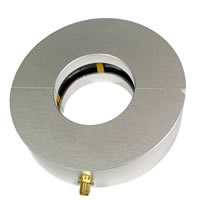
Tatlong uri ng mga sensor ang naka-deploy sa transpormer upang makuha ang iba't ibang pisikal na pagpapakita ng bahagyang discharge. Ultrasonic sensors detect acoustic emissions from PD activity within the windings and oil. High-frequency current (HFCT) sensors clamp onto the core grounding cable to measure pulse currents generated by discharge events. UHF sensors are installed at oil valve ports to capture ultra-high-frequency electromagnetic radiation propagating through the transformer oil. Each sensor is designed for harsh outdoor environments with an IP68 protection rating.
PD Monitoring Host Unit
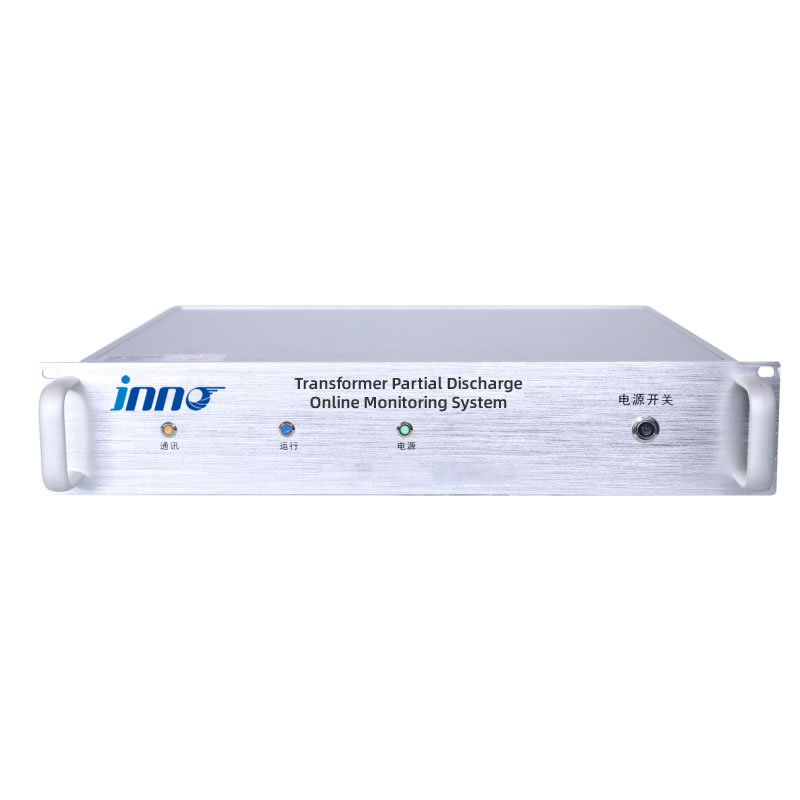
The monitoring host is the central processing hub of the system. It receives analogue signals from all connected sensors, performs signal conditioning (pagpapalakas, pagsasala, and impedance matching), and digitises the waveforms at high speed using a multi-channel acquisition architecture. The host calculates key PD parameters — including maximum discharge amplitude, average discharge quantity, and discharge frequency — and applies intelligent algorithms for pattern recognition and fault classification. It is typically rack-mounted in a 2U enclosure inside a convergence cabinet or control panel near the transformer.
Backend Monitoring Software
Installed on a control room computer or server, the software platform provides real-time visualisation, makasaysayang trending, pamamahala ng alarma, and diagnostic analysis. Its core analytical capabilities include 3D PRPD pattern display, PRPS pulse sequence mapping, discharge amplitude statistics, and comparison against an expert pattern database for automated PD type identification. The software communicates with the monitoring host via Ethernet or RS-485.
6. Pag-install ng Sensor, Bandwidth, at Function - Ultrasonic, HFCT, at UHF Ipinaliwanag
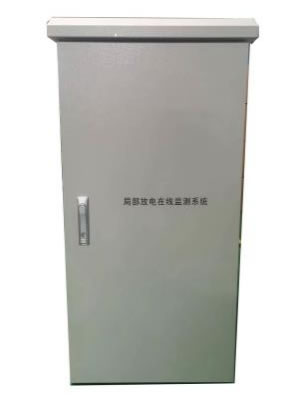
The effectiveness of a partial discharge monitoring system depends heavily on correct sensor selection and placement. Ang talahanayan sa ibaba ay nagdedetalye ng tatlong uri ng sensor na ginagamit sa isang full-spectrum na multi-sensor na arkitektura, kabilang ang kanilang bandwidth sa pagsubaybay, paraan ng pag-install, lokasyon ng pag-mount, at pangunahing diagnostic function.
| Uri ng Sensor | Pagsubaybay sa Bandwidth | Paraan ng Pag-install | Lokasyon ng Pag-mount | Pangunahing Pag-andar |
|---|---|---|---|---|
| Ultrasonic Sensor | 20 kHz – 200 kHz | Magnetic mount | Pang-ibabaw ng tangke ng transpormer | Nakikita ang mga signal ng acoustic emission na nabuo ng panloob na aktibidad ng PD sa mga windings at insulation na istruktura |
| High-Frequency Current (HFCT) Sensor | 100 kHz – 50 MHz | Clamp-on | Core grounding point | Kinukuha ang high-frequency pulse currents na dumadaloy sa grounding cable bilang resulta ng mga kaganapan sa paglabas |
| UHF Sensor | 300 MHz – 3 000 MHz | Uri ng plug-in | Port ng balbula ng alisan ng langis | Sinusubaybayan ang mga ultra-high-frequency na electromagnetic signal na nagpapalaganap sa pamamagitan ng langis ng transpormer, na nagpapahiwatig ng panloob na paglabas ng pagkakabukod |
Installation Notes
Ultrasonic sensors attach to the tank wall using a magnetic holder, which allows flexible repositioning without drilling or welding. For optimal acoustic coupling, a thin layer of couplant gel is applied between the sensor face and the tank surface. The HFCT sensor is a split-core clamp that can be installed around the grounding cable without disconnecting it — meaning no transformer outage is required. The UHF sensor inserts into an existing oil drain valve or dedicated dielectric window port, placing the antenna element inside the oil space for maximum sensitivity to internal electromagnetic signals. All three sensor types are rated IP68, ensuring reliable operation in rain, alikabok, kahalumigmigan, and temperature extremes from -20 °C hanggang +125 °C.
7. Mga Pangunahing Teknikal na Detalye ng PD Monitoring Host Unit
The monitoring host is the heart of the system, responsable para sa high-speed signal acquisition, real-time na pagproseso, at komunikasyon ng data. Ang talahanayan sa ibaba ay nagpapakita ng mga pangunahing teknikal na parameter ng isang kinatawan na pang-industriya na grado PD monitoring host dinisenyo para sa pag-deploy ng substation.
| Parameter | Pagtutukoy |
|---|---|
| Signal Reception | Ultrasonic, high-frequency current (HFCT), at UHF sensor input |
| Dynamic na Saklaw | -80 sa -20 dBm |
| Sampling Rate | 200 MS/s (200 milyong sample bawat segundo) |
| Channel Configuration | 4 o 6 mga channel (na-configure ng user) |
| Consistency ng Channel | ≤ 0.5 dBm |
| Monitoring Range | ≤ 20 000 pC |
| Transmission Impedance | ≥ 12 mV/mA |
| Mga Interface ng Komunikasyon | RJ45 Ethernet, RS-485 |
| Supported Protocols | Modbus RTU/TCP, IEC 61850, DNP3 |
| Power Supply | AC 90–240 V, 50/60 Hz |
| Enclosure | 2U rack-mount (483 mm × 89 mm × 300 mm) |
| Paraan ng Pag-install | Convergence cabinet o control panel mount |
| Rating ng Proteksyon ng Sensor | IP68 |
| Operating Temperatura | -20 °C hanggang +125 °C (sensor); host sa bawat cabinet environment |
| Diagnostic Outputs | Discharge magnitude (Q), yugto ng paglabas (Ø), 3D PRPD patterns, PRPS pulse sequences, pinakamataas na amplitude, average na dami, discharge frequency |
Bakit 200 Mahalaga ang Sampling Rate ng MS/s
Ang mga bahagyang discharge pulse ay napakabilis na lumilipas na mga kaganapan, kadalasang tumatagal lamang ng mga nanosecond. Isang sampling rate ng 200 MS/s — katumbas ng 5-nanosecond sampling interval — tinitiyak na nakukuha ng host ang buong waveform ng bawat discharge pulse nang walang aliasing o distortion. This waveform fidelity is essential for accurate PRPD pattern construction and for distinguishing genuine PD pulses from noise artefacts. Lower sampling rates may miss critical waveform features, leading to misclassification or missed detections.
8. Paano Tinutukoy ng Mga PRPD 3D Pattern at PRPS Pulse Sequences ang Mga Uri ng Discharge?
Raw PD data — pulse counts, amplitudes, and timestamps — becomes truly diagnostic when it is visualised through Phase-Resolved Partial Discharge (PRPD) patterns and Phase-Resolved Pulse Sequence (PRPS) nagpapakita.
PRPD — The Fingerprint of Discharge
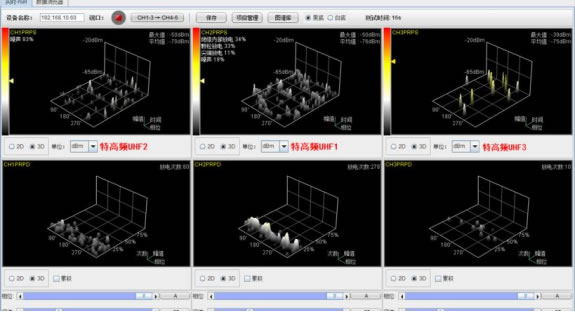
A PRPD pattern plots discharge magnitude (vertical axis) against the phase angle of the power-frequency cycle (horizontal axis), accumulated over many cycles to build a three-dimensional density map. Different PD types produce distinctly different PRPD shapes. Corona discharge typically appears as clusters concentrated near the voltage peaks on one polarity. Internal void discharge produces symmetrical patterns on both positive and negative half-cycles, with the discharge magnitude remaining relatively constant. Surface discharge shows asymmetric, spreading patterns that increase in magnitude with applied voltage. Floating-potential discharge creates dense, high-amplitude clusters that shift in phase as the floating voltage changes.
By comparing a measured PRPD pattern against an expert database of known discharge signatures, the monitoring software can automatically classify the PD type and assess its severity — transforming a complex electromagnetic phenomenon into an actionable maintenance recommendation.
PRPS — Tracking Discharge Evolution Over Time
While PRPD provides a cumulative snapshot, PRPS displays individual pulses in sequence, preserving the time relationship between consecutive discharge events. This is particularly valuable for detecting intermittent PD activity, observing how discharge patterns evolve under changing load or temperature conditions, and distinguishing between multiple simultaneous PD sources. PRPS data also supports advanced statistical analysis — such as pulse interval distributions and clustering algorithms — that can reveal degradation trends before they are visible in the PRPD pattern alone.
9. Backend Monitoring Software — Mga Feature at Diagnostic Capabilities
The backend software platform transforms the monitoring host’s raw output into a decision-support tool for operators and asset managers. Installed on a control room workstation or accessible via a web interface, it provides four core functional modules.
Real-Time Monitoring and Visualisation
The system continuously acquires and displays live PD data, including 3D PRPD spectrum maps, PRPS pulse sequences, discharge amplitude bar charts, and trend lines for key parameters such as maximum discharge magnitude, average discharge quantity, and discharge repetition rate. Operators can view individual channel data or an aggregated system-level summary.
Historical Query and Trending
All measurement data is stored with timestamps, enabling engineers to query historical records by date range, channel, or alarm event. Statistical trending tools reveal long-term insulation degradation trajectories, seasonal variations, and load-correlated PD behaviour. Trend forecasting algorithms support predictive maintenance scheduling.
Pamamahala ng Alarm
Multi-level alarm thresholds — typically informational, babala, and critical — can be configured for each monitored parameter. When a threshold is exceeded, ang system ay bumubuo ng mga visual na alerto sa dashboard at nagpapadala ng mga abiso sa pamamagitan ng email, SMS, o relay output. Ang mga kaganapan sa alarm ay naka-log na may buong konteksto (timestamp, channel, halaga ng parameter, snapshot ng PRPD) para sa pagsusuri pagkatapos ng kaganapan.
Intelligent Diagnostics
Ang software ay may kasamang built-in na database ng pattern ng eksperto na nagmamapa ng mga lagda ng PRPD at PRPS sa mga kilalang uri ng discharge. Kapag tumugma ang bagong data sa isang nakaimbak na pattern, iminumungkahi ng system ang pinaka-malamang na uri ng PD at inirerekomendang pagkilos. Binabawasan nito ang pag-asa sa manu-manong interpretasyon ng eksperto at pinapabilis ang proseso ng paggawa ng desisyon, partikular na para sa mga utility na namamahala sa malalaking transformer fleets.
10. Paano Nagsasama ang isang PD Monitoring System sa SCADA at mga Asset Management Platform?
Ang partial discharge data ay naghahatid ng maximum na halaga kapag ito ay naka-embed sa mas malawak na operational data ecosystem ng utility sa halip na nakakulong sa isang standalone na display. A well-designed PD monitoring system supports this integration through standard industrial communication interfaces and protocols.
At the substation level, the PD monitoring host connects to the station RTU (Remote Terminal Unit) or bay controller via RJ45 Ethernet o RS-485. Standard protocols — including Modbus RTU/TCP, IEC 61850, at DNP3 — ensure compatibility with virtually any substation automation architecture. Key data points transmitted to SCADA include real-time PD amplitude values, alarm status flags, and diagnostic summary codes. Dispatchers can configure high-priority alarms for critical PD events — such as sudden acetylene-type UHF signatures or rapidly increasing discharge rates — ensuring immediate visibility on the SCADA overview screen.
Correlation with Other Monitoring Parameters
The greatest diagnostic insight comes from correlating PD data with complementary transformer health parameters. When the PD monitoring system feeds data into an integrated platform ng pagsubaybay sa transpormer alongside dissolved gas analysis (DGA), fibre optic winding temperature, bushing capacitance and tan-delta, and on-load tap changer condition data, the platform can perform automated cross-parameter analysis. Halimbawa, a simultaneous increase in UHF PD activity and a rise in hydrogen concentration in the oil provides much stronger confirmation of an active internal insulation fault than either indicator alone. This multi-parameter correlation approach significantly reduces diagnostic uncertainty and supports more confident maintenance decision-making.
11. Aling mga Transformer ang Pinakamakinabang sa Online na Pagsubaybay sa Partial Discharge?
While any oil-filled or dry-type transformer can experience partial discharge, the investment in continuous online monitoring is best directed at assets where the consequences of an undetected insulation fault are most severe.
Highest-Priority Applications
Transmission-voltage power transformers (≥110 kV) at utility substations are the primary candidates, as their failure causes widespread outages and replacement lead times can exceed twelve months. Generator step-up (GSU) transformers at thermal, hydro, and nuclear power plants are equally critical because an unplanned trip directly removes generation capacity from the grid. Large industrial transformers serving petrochemical complexes, semiconductor fabrication plants, mga data center, and steel mills also justify online PD monitoring due to the enormous cost of production downtime.
Growing Adoption Scenarios
The expansion of renewable energy has created new demand. Collector and interconnection transformers at wind farms at solar farms experience highly variable loading profiles and are often in remote locations where periodic manual testing is expensive and infrequent. Traction power transformers for railway electrification systems carry safety-critical loads. Ageing transformers operating beyond their original design life are another strong candidate — continuous PD trending supports evidence-based lifetime extension decisions. Mataas na boltahe switchgear, GIS (gas-insulated switchgear), at power cable systems are also increasingly equipped with online PD monitoring, using the same sensor technologies adapted for their specific enclosure geometries.
12. Paano Pumili ng Tamang Kagamitan sa Pagsubaybay ng Bahagyang Paglabas — Isang Gabay sa Mamimili
The market offers a range of PD monitoring products, from single-sensor screening devices to full multi-sensor diagnostic platforms. The following criteria will help buyers match the right equipment to their specific application requirements.
Sensor Coverage and Fusion Capability
For comprehensive diagnostics on critical transformers, specify a system that supports all three sensor types — ultrasonic, HFCT, and UHF — with true multi-channel data fusion. Single-sensor systems (hal., UHF-only or acoustic-only) are suitable for basic screening but cannot provide the cross-verification and source localisation capabilities that multi-sensor fusion delivers.
Sampling Rate and Dynamic Range
A sampling rate of at least 200 MS/s ensures that fast PD transients are captured without loss of waveform detail. The dynamic range should be wide enough — at least -80 sa -20 dBm — to handle both very small incipient discharges and large discharge events without saturation or signal clipping.
Channel Count and Scalability
Evaluate whether four channels suffice for the intended transformer or whether six channels are needed to accommodate additional sensor positions. Systems with configurable channel options provide flexibility for both initial deployment and future expansion.
Diagnostic Software Quality
The software should include 3D PRPD pattern display, PRPS visualisation, an expert pattern database for automated PD type classification, multi-level alarm management, and historical trend analysis with forecasting. Web-based or remote-access capability is increasingly expected for fleet-wide management.
Communication Protocol Compatibility
Ensure the monitoring host supports the communication protocol already in use at your substation — Modbus RTU, Modbus TCP, IEC 61850, o DNP3. Native protocol support avoids the cost and complexity of adding external protocol converters.
Environmental Rating and Sensor Durability
Sensors must be rated IP68 for outdoor installation and specified for the full operating temperature range of the site. Sensor mounting methods — magnetic, i-clamp-on, and plug-in — should require no modification to the transformer structure and no outage for installation.
Vendor Support and Expert Database Updates
PD pattern recognition accuracy depends on the quality and breadth of the expert database. Choose a vendor that provides regular database updates incorporating new discharge patterns and diagnostic refinements as field experience accumulates across their installed base.
13. Mga Naaangkop na Internasyonal na Pamantayan para sa Pagsubok at Pagsubaybay sa Partial Discharge
Several international standards govern partial discharge measurement, interpretasyon, and equipment performance. Understanding these references helps buyers write better procurement specifications and ensures that the selected monitoring system meets globally accepted benchmarks.
IEC 60270 (High-Voltage Test Techniques — Partial Discharge Measurements) is the foundational standard for electrical PD measurement. It defines the apparent charge method, calibration procedures, and test circuit configurations. While primarily intended for offline factory testing, its measurement principles underpin many online system designs.
IEC 62478 (High-Voltage Test Techniques — Measurement of Partial Discharges by Electromagnetic and Acoustic Methods) extends the standard framework to cover UHF and acoustic detection techniques, providing guidance on sensor specifications, pagpoproseso ng signal, and data presentation for non-conventional PD measurement methods used in online monitoring.
IEEE C57.127 (Guide for the Detection, Lokasyon, and Interpretation of Sources of Acoustic Emissions from Electrical Discharges in Power Transformers and Reactors) focuses specifically on acoustic PD detection in transformers, covering sensor placement, signal interpretation, and source localisation techniques.
Kasama sa mga karagdagang sanggunian Teknikal na Brochure ng CIGRE 676 (Partial Discharges in Transformers) which provides comprehensive guidance on PD phenomena, measurement techniques, and interpretation strategies, at IEC 61850 which defines the communication standard for substation automation and governs how PD monitoring data is exchanged with SCADA and asset management systems.
14. Mga Madalas Itanong (FAQ)
Q1: What is the difference between partial discharge and full breakdown?
Partial discharge is a localised insulation breakdown that bridges only part of the insulation gap between conductors. It does not create a complete conductive path and does not cause immediate equipment failure. Full breakdown, sa kabaligtaran, represents a complete insulation failure — a short circuit that typically results in catastrophic damage, an explosion, o apoy. Partial discharge is the precursor; if left unmonitored and unaddressed, it progressively degrades insulation until full breakdown occurs.
Q2: Can partial discharge be detected while the transformer is energised?
Oo. Online partial discharge monitoring system are specifically designed to operate while the transformer is energised and carrying load. The ultrasonic, HFCT, and UHF sensors are all installed without requiring a transformer outage, and the system continuously acquires data under normal operating conditions. Sa totoo lang, monitoring PD under real service voltage and load is more representative of the transformer’s actual insulation condition than offline tests performed at reduced voltage.
Q3: How does multi-sensor fusion reduce false alarms?
Each sensor type is sensitive to a different physical phenomenon. A genuine partial discharge event simultaneously produces an acoustic wave (detected by the ultrasonic sensor), a high-frequency current pulse (detected by the HFCT sensor), and an electromagnetic signal (detected by the UHF sensor). External interference sources — such as switching transients, radio signals, or mechanical vibrations — typically affect only one sensor type. By requiring correlated detections across two or more sensors before raising an alarm, the system effectively eliminates false positives caused by single-source noise.
Q4: What is a PRPD pattern and how is it used for diagnosis?
A PRPD (Phase-Resolved Partial Discharge) pattern is a three-dimensional visualisation that plots discharge magnitude against the phase angle of the AC power cycle, accumulated over many cycles. Different types of partial discharge — corona, paglabas sa ibabaw, mga panloob na voids, floating potentials — each produce characteristic PRPD shapes. By matching the measured pattern against a database of known discharge signatures, the monitoring system can identify the type of insulation defect and assess its severity, enabling targeted maintenance rather than generic inspections.
Q5: How long does it take to install a PD monitoring system on an existing transformer?
A typical installation takes one to two days per transformer. Ang mga ultrasonic sensor ay nakakabit nang magnetic sa ibabaw ng tangke, Kumakapit ang mga sensor ng HFCT sa core grounding cable, at ang mga sensor ng UHF ay nakasaksak sa mga umiiral nang oil drain valve port — wala sa mga hakbang na ito ang nangangailangan ng pagkawala ng transformer. Ang monitoring host ay naka-rack sa loob ng isang malapit na control cabinet, nakakonekta sa mga sensor sa pamamagitan ng mga signal cable, at naka-link sa control room sa pamamagitan ng Ethernet o RS-485. Commissioning, calibration verification, at ang pagsasanay sa operator ay karaniwang nakumpleto on-site sa loob ng parehong pagbisita.
Q6: Anong maintenance ang kailangan mismo ng PD monitoring system?
Ang sistema ay nangangailangan ng kaunting pagpapanatili. Kasama sa mga inirerekomendang aktibidad ang quarterly visual inspection ng sensor mounting integrity at mga koneksyon sa cable, taunang pag-verify ng pagkakalibrate gamit ang isang reference signal source, and periodic software updates to incorporate the latest diagnostic algorithms and expert pattern database revisions. The sensors themselves are maintenance-free with IP68 environmental protection. Data storage capacity should be monitored to prevent disk space issues on the backend server.
Q7: Can the system monitor multiple transformers simultaneously?
Oo. The backend monitoring software supports a multi-asset architecture where multiple PD monitoring hosts — each connected to its own set of sensors on a different transformer — report to a single centralised software platform. This N-to-1 configuration is standard for substations and industrial facilities with several transformers, providing fleet-wide visibility from a single operator interface and reducing total system cost.
Q8: Paano nakakatulong ang online na pagsubaybay sa PD sa dissolved gas analysis (DGA)?
Nakikita ng DGA ang mga kemikal na by-product ng insulation degradation — mga dissolved gases gaya ng hydrogen at acetylene — na naiipon sa transformer oil sa paglipas ng panahon. Ito ay mahusay para sa pagkumpirma na ang pagkasira ng pagkakabukod ay naganap, ngunit ito ay tumutugon nang mabagal at hindi matukoy ang lokasyon o real-time na aktibidad ng pinagmumulan ng discharge. Online na pagsubaybay sa PD, sa kabaligtaran, nakakakita ng mga indibidwal na kaganapan sa paglabas habang nangyayari ang mga ito, kinikilala ang uri ng PD sa pamamagitan ng pagsusuri ng PRPD, at maaaring i-localize ang pinagmulan sa pamamagitan ng acoustic triangulation. Magkasama, Nagbibigay ang DGA at PD monitoring ng mga pantulong na layer ng insulation surveillance — DGA para sa pinagsama-samang pagtatasa ng pinsala at PD para sa real-time na pagsubaybay sa aktibidad ng fault.
Q9: Ano ang inaasahang return on investment para sa isang PD monitoring system?
ROI is typically realised within two to three years through prevention of catastrophic insulation failures — each of which can cost millions of dollars in equipment replacement, nawalan ng produksyon, and collateral damage. A single prevented failure often justifies the entire monitoring system investment. Additional benefits include optimised maintenance scheduling (avoiding unnecessary outages and inspections), extended transformer service life, reduced insurance premiums, and improved regulatory compliance for critical infrastructure assets.
Q10: What communication protocols are supported for SCADA integration?
The PD monitoring host provides RJ45 Ethernet at RS-485 mga interface ng komunikasyon, supporting standard industrial protocols including Modbus RTU, Modbus TCP, IEC 61850, at DNP3. This ensures seamless integration with virtually any substation automation or SCADA architecture. Real-time na data ng PD, katayuan ng alarma, and diagnostic results can be transmitted to centralised monitoring centres and enterprise asset management (EAM) mga platform.
Disclaimer: Ang impormasyong ibinigay sa artikulong ito ay para sa pangkalahatang layuning pang-edukasyon at sanggunian lamang. FJINNO (www.fjinno.net) walang garantiya, ipinahayag o ipinahiwatig, tungkol sa pagkakumpleto, katumpakan, o pagiging angkop ng nilalaman sa anumang partikular na proyekto o pag-install. Technical specifications referenced herein represent typical values and may vary depending on transformer type, paglalagay ng sensor, at kapaligiran ng site. Ang mga desisyon sa engineering ay dapat palaging nakabatay sa mga pagtatasa na partikular sa site na isinagawa ng mga kwalipikadong propesyonal alinsunod sa mga naaangkop na pamantayan kabilang ang IEC 60270, IEC 62478, IEEE C57.127, at mga lokal na grid code. Ang mga pangalan ng produkto ng mga tagagawa ng third-party ay mga trademark ng kani-kanilang mga may-ari at binanggit para sa impormasyong sanggunian lamang. Ang FJINNO ay hindi mananagot para sa anumang pagkawala o pinsala na dulot ng paggamit o pag-asa sa impormasyong ito.

Sensor ng temperatura ng fiber optic, Intelligent na sistema ng pagsubaybay, Ibinahagi ang tagagawa ng fiber optic sa China
 |
 |
 |