 INNO เซ็นเซอร์วัดอุณหภูมิใยแก้วนำแสง ,ระบบตรวจสอบอุณหภูมิ.
- Fiber optic temperature monitoring systems provide ±1°C accuracy with direct contact measurement, eliminating emissivity errors that plague infrared detection methods
- Fluorescence-based fiber sensors offer complete electromagnetic immunity, making them ideal for high-voltage transformer environments where infrared devices suffer interference
- ต่อเนื่อง 24/7 online monitoring through fiber optic systems detects developing thermal faults weeks before periodic infrared inspections could identify them
- Fiber optic sensors access internal transformer components including winding hot spots and oil temperatures that remain invisible to external infrared cameras
- Multi-point fiber optic configurations support 1-64 simultaneous measurement channels, enabling comprehensive thermal mapping across transformer windings and oil circuits
- Fiber optic technology delivers 25+ year service life without calibration requirements, while infrared equipment needs annual recalibration and maintenance
- All-dielectric fiber construction withstands voltage exposures exceeding 100kV, ensuring safe operation in proximity to energized transformer components
- Real-time fiber optic monitoring systems integrate seamlessly with SCADA networks through RS485 interfaces for centralized fault detection and predictive maintenance
- Infrared thermography serves as a valuable complementary technology for external surface surveys but cannot replace embedded fiber optic sensing for critical measurements
- Professional manufacturers like FJINNO deliver complete fluorescence fiber monitoring solutions with proven reliability in demanding power system applications since 2011
1. Why Does Accurate Temperature Monitoring Matter for Transformer Reliability?

Thermal Stress as Primary Cause of Transformer Failures
Temperature elevation represents the most critical factor affecting transformer winding insulation degradation and operational lifespan. Research demonstrates that every 8-10°C increase in operating temperature halves the expected service life of cellulose insulation materials. ระบบตรวจสอบอุณหภูมิของขดลวด provide essential data for preventing thermal runaway conditions that lead to catastrophic failures.
Excessive heat generation in ขดลวดหม้อแปลง stems from multiple sources including resistive losses in conductors, ความร้อนกระแสวน, and localized hot spots caused by circulating currents or poor cooling circulation. Without accurate ระบบวัดอุณหภูมิ, these thermal anomalies progress undetected until insulation breakdown occurs. มืออาชีพ โซลูชันการตรวจสอบใยแก้วนำแสง จากผู้ผลิตเช่น ฟจินโน enable early detection of developing thermal problems.
Oil Temperature Management and Insulation Protection
อุณหภูมิน้ำมันหม้อแปลง serves dual functions as both cooling medium and electrical insulation. Elevated oil temperatures accelerate oxidation processes, producing acidic compounds that attack cellulose insulation and metallic components. การตรวจสอบอุณหภูมิน้ำมัน provides critical data for assessing cooling system performance and identifying circulation problems.
Hot Spot Temperature and Insulation Aging
The hottest point within ขดลวดหม้อแปลง, typically located in upper disk sections where cooling is least effective, determines insulation aging rate. มาตรฐานสากล ได้แก่ IEEE C57.91 และ IEC 60076-7 recognize hot spot temperature as the fundamental parameter for transformer loading calculations and life expectancy assessments. แม่นยำ การตรวจสอบจุดร้อน requires direct measurement through embedded sensors rather than indirect calculation methods.
Regulatory Standards and Grid Reliability Requirements
Modern power system operators demand comprehensive การตรวจสอบหม้อแปลง to ensure grid stability and minimize unplanned outages. Regulatory frameworks increasingly mandate ระบบตรวจสอบอุณหภูมิออนไลน์ for critical transmission transformers. ทางเลือกระหว่าง ใยแก้วนำแสง และ infrared monitoring technologies significantly impacts compliance capability and operational reliability.
2. What Are the Fundamental Principles Behind Fiber Optic Temperature Sensing Technology?

Fluorescence-Based Temperature Measurement Physics
เซนเซอร์วัดอุณหภูมิไฟเบอร์ออปติกเรืองแสง utilize rare-earth phosphor materials exhibiting temperature-dependent luminescence decay characteristics. When excited by a brief optical pulse, these phosphor compounds emit fluorescence that decays exponentially with a time constant directly related to absolute temperature. This measurement principle operates independently of light intensity, การสูญเสียเส้นใย, หรือรูปแบบตัวเชื่อมต่อต่างๆ.
ที่ fiber optic demodulator transmits excitation light pulses through the fluorescence fiber cable to the sensor probe, captures returning fluorescence emissions, and precisely measures decay time using high-speed photodetectors and digital signal processing. Advanced algorithms extract accurate temperature values across the full -40°C to 260°C operating range with ±1°C precision.
Point-Type Sensor Configuration and Specifications
เซ็นเซอร์ไฟเบอร์เรืองแสง employ point-type configurations enabling precise localized temperature measurement at specific critical locations within ขดลวดหม้อแปลง and oil circuits. Key technical specifications include:
| พารามิเตอร์ | ข้อมูลจำเพาะ | ข้อได้เปรียบ |
|---|---|---|
| ความแม่นยำในการวัด | ±1°ซ | Eliminates emissivity uncertainty |
| ช่วงอุณหภูมิ | -40องศาเซลเซียส ถึง 260 องศาเซลเซียส | Covers all transformer operating conditions |
| เวลาตอบสนอง | <1 ที่สอง | Captures transient thermal events |
| เส้นผ่านศูนย์กลางของโพรบ | 2-3มม | Minimally invasive installation |
| ความยาวไฟเบอร์ | 0-80 เมตร | Flexible installation routing |
| ความเป็นฉนวน | >100กิโลโวลต์ | Safe operation in HV environments |
| อายุการใช้งาน | >25 ปี | Matches transformer operational lifetime |
Multi-Channel Monitoring System Architecture
ระบบตรวจสอบอุณหภูมิใยแก้วนำแสง support scalable multi-channel configurations accommodating 1 ถึง 64 รายบุคคล ช่องเซ็นเซอร์ from a single หน่วยดีมอดูเลเตอร์. Time-division multiplexing or wavelength-division multiplexing techniques enable sequential interrogation of multiple sensors, providing comprehensive thermal mapping ข้าม ขดลวดหม้อแปลง, oil circuits, และระบบทำความเย็น.
Communication and Integration Capabilities
ทันสมัย อุปกรณ์ตรวจสอบใยแก้วนำแสง incorporates RS485 communication interfaces supporting Modbus protocol for integration with SCADA systems and substation automation networks. Monitoring software platforms provide real-time data visualization, แนวโน้มทางประวัติศาสตร์, automated alarming, และความสามารถในการเข้าถึงระยะไกล. Professional systems from ฟจินโน include comprehensive software packages supporting multi-site management and predictive analytics.
3. How Does Infrared Temperature Measurement Technology Work in Transformer Applications?
Thermal Radiation Detection Principles
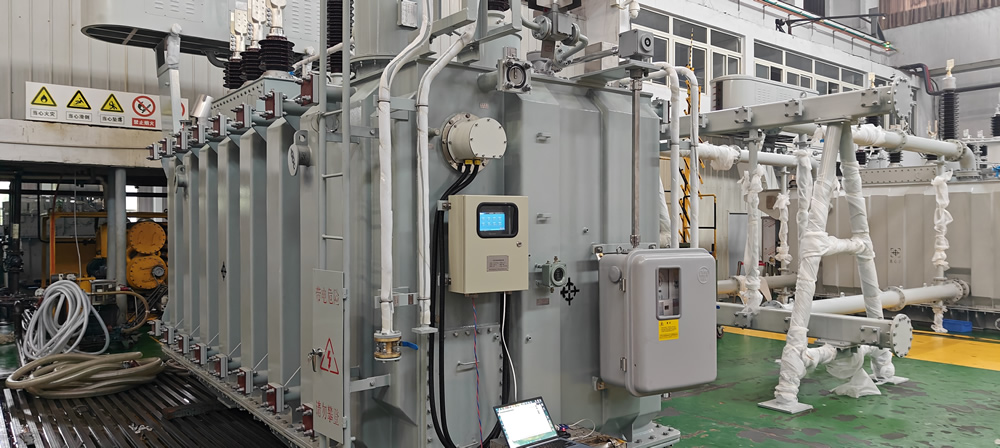
การวัดอุณหภูมิอินฟราเรด operates on the principle that all objects emit electromagnetic radiation proportional to their absolute temperature according to the Stefan-Boltzmann law. Infrared thermography devices detect this thermal radiation using semiconductor sensors sensitive to wavelengths in the 8-14 micrometer range, converting radiant energy into temperature readings.
The fundamental challenge with infrared measurement lies in the emissivity factor—the ratio of radiation emitted by a real surface compared to an ideal blackbody at the same temperature. Different materials exhibit varying emissivity values, and incorrect emissivity settings introduce significant measurement errors. Transformer surfaces present particular challenges due to diverse materials including painted metal tanks, porcelain insulators, and oil-wetted surfaces.
Infrared Equipment Types for Transformer Monitoring
Three categories of infrared devices find application in transformer temperature assessment:
| ประเภทอุปกรณ์ | แอปพลิเคชัน | ข้อจำกัด |
|---|---|---|
| Handheld IR Thermometers | Periodic spot measurements | Single-point readings, manual operation |
| Thermal Imaging Cameras | Comprehensive surface surveys | การตรวจสอบเป็นระยะเท่านั้น, weather-dependent |
| Fixed IR Monitoring Systems | Continuous external monitoring | อุณหภูมิพื้นผิวเท่านั้น, ค่าใช้จ่ายสูง |
Technical Parameters and Performance Characteristics
ทั่วไป infrared thermography systems สำหรับ transformer applications feature temperature ranges from -40°C to 500°C, thermal sensitivity of 0.05°C, and spatial resolution determined by detector array size and optics. อย่างไรก็ตาม, achievable accuracy ranges from ±2°C to ±5°C depending on emissivity uncertainty, การดูดซึมในชั้นบรรยากาศ, และระยะการวัด.
Environmental Factors Affecting Infrared Measurements
Infrared temperature detection suffers from multiple environmental interference sources including solar radiation reflection, atmospheric water vapor absorption, rain and fog attenuation, and ambient temperature effects on detector performance. These factors necessitate careful measurement timing and conditions, limiting practical applicability for continuous การตรวจสอบหม้อแปลง.
4. Measurement Accuracy and Precision: Technical Performance Comparison Tables
Fundamental Accuracy Comparison
| พารามิเตอร์ประสิทธิภาพ | การตรวจสอบไฟเบอร์ออปติก | Infrared Measurement |
|---|---|---|
| หลักการวัด | ติดต่อโดยตรง, การสลายตัวของสารเรืองแสง | แบบไม่สัมผัส, thermal radiation detection |
| ความแม่นยำโดยทั่วไป | ±1°ซ | ±2°C to ±5°C |
| Emissivity Dependency | ไม่มี (contact measurement) | สูง (5-10% error from emissivity) |
| การทำซ้ำ | ±0.5°ซ | ±1°C to ±3°C |
| ความมั่นคงในระยะยาว | No drift over 25+ ปี | Requires annual recalibration |
| เวลาตอบสนอง | <1 ที่สอง | 0.1 ถึง 1 ที่สอง (camera dependent) |
Measurement Error Sources Analysis
เซ็นเซอร์อุณหภูมิไฟเบอร์ออปติก eliminate the primary error sources affecting infrared measurements. The contact-based measurement principle of เซ็นเซอร์เรืองแสง ensures thermal equilibrium between the sensor probe and measured component, providing true temperature readings independent of surface properties.
| Error Source | Impact on Fiber Optic | Impact on Infrared |
|---|---|---|
| Surface Emissivity Variation | No effect | ±5-10% error |
| รังสีสะท้อน | No effect | ±3-8% error |
| Atmospheric Absorption | No effect | ±2-5% error (distance dependent) |
| Ambient Temperature Changes | น้อยที่สุด (<0.2องศาเซลเซียส) | ±1-3°ซ (detector compensation required) |
| Measurement Angle | No effect | Significant (emissivity changes with angle) |
Winding Hot Spot Detection Accuracy
สำหรับการวิพากษ์วิจารณ์ การตรวจสอบขดลวดหม้อแปลง การใช้งาน, measurement accuracy directly impacts loading decisions and life expectancy calculations. เซนเซอร์ไฟเบอร์ออปติก embedded within winding structures provide direct hot spot temperature readings with ±1°C accuracy, ในขณะที่ infrared measurements can only estimate internal temperatures based on external surface readings and thermal modeling.
Oil Temperature Measurement Precision
Transformer oil temperature monitoring requires accuracy sufficient to detect gradual temperature increases indicating cooling system degradation or loading changes. เซนเซอร์ไฟเบอร์ออปติก immersed directly in oil circuits measure precise temperatures at multiple elevations, enabling detection of stratification and circulation problems. เทอร์โมกราฟฟีอินฟราเรด can only assess tank surface temperatures, which may differ significantly from internal oil temperatures depending on ambient conditions and tank insulation.
5. ภูมิคุ้มกันการรบกวนทางแม่เหล็กไฟฟ้า: Why Fiber Optics Excel in High-Voltage Environments
All-Dielectric Construction Advantages
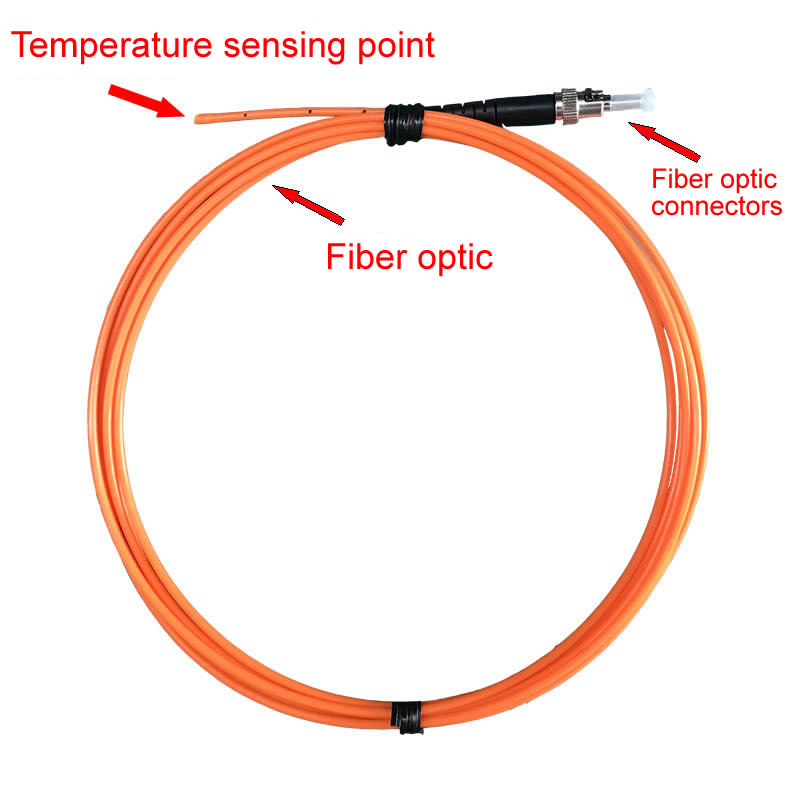
การขาดส่วนประกอบที่เป็นโลหะอย่างสมบูรณ์ เซนเซอร์ไฟเบอร์ออปติกเรืองแสง assemblies provides inherent immunity to electromagnetic interference. สายเคเบิลใยแก้วนำแสง transmit optical signals through glass or plastic waveguides, remaining unaffected by intense electric and magnetic fields surrounding หม้อแปลงไฟฟ้า อุปกรณ์.
| แหล่งที่มาของการรบกวน | Fiber Optic Response | Infrared Device Response |
|---|---|---|
| Strong Electric Fields | No effect | Potential electronic interference |
| Magnetic Fields | No effect | Minimal effect on modern equipment |
| Switching Transients | No effect | May cause temporary disruption |
| Lightning Strikes | No effect | Risk of equipment damage |
| Ground Potential Rise | No effect (การแยกกัลวานิก) | Potential damage if grounded improperly |
High-Voltage Insulation Performance
เซ็นเซอร์อุณหภูมิไฟเบอร์ออปติก withstand voltage exposures exceeding 100kV without breakdown, ช่วยให้สามารถติดตั้งได้โดยตรงเมื่อได้รับพลังงาน transformer components. This high dielectric strength permits sensor placement at optimal measurement locations within winding structures and oil circuits without creating additional flashover risk or partial discharge sources.
Grounding and Safety Considerations
The galvanic isolation provided by ระบบใยแก้วนำแสง eliminates ground loops and common-mode voltage issues that complicate electrical sensor installations. Infrared monitoring equipment requires careful grounding and surge protection, particularly for fixed installations near high-voltage equipment. Personnel safety during infrared inspections necessitates maintaining proper clearance distances and following live-line work procedures.
Substation Environment Reliability
ระบบตรวจสอบไฟเบอร์ออปติก demonstrate superior reliability in demanding substation environments characterized by electrical noise, weather extremes, และการปนเปื้อน. The optical measurement principle remains immune to electromagnetic coupling, capacitive coupling, and conductive interference paths affecting electronic equipment. FJINNO fiber optic monitoring solutions provide consistent performance across 110kV to 750kV voltage classes without special shielding or filtering requirements.
6. Monitoring Coverage and Accessibility: Internal vs External Temperature Detection
Internal Temperature Measurement Capabilities
เซนเซอร์ไฟเบอร์ออปติก access measurement locations impossible to reach with infrared technology. ฝังตัว เซ็นเซอร์อุณหภูมิที่คดเคี้ยว positioned during transformer manufacturing or installed through access ports during retrofits provide direct readings from hot spot locations deep within winding structures. This internal access represents a fundamental advantage for accurate การตรวจสอบความร้อน.
| ตำแหน่งการวัด | Fiber Optic Access | Infrared Access |
|---|---|---|
| Winding Hot Spots | Direct embedded measurement | Cannot detect (internal location) |
| อุณหภูมิน้ำมัน (สูงสุด) | Immersed sensor, precise reading | Tank surface estimation only |
| อุณหภูมิน้ำมัน (ด้านล่าง) | Direct measurement at any depth | Not accessible |
| Between Winding Disks | Multiple sensors at various elevations | Cannot detect (internal location) |
| Core Hot Spots | Sensor placement at critical points | Cannot detect (shielded by tank) |
| พื้นผิวถัง | External sensors if needed | Primary measurement capability |
Multi-Point Temperature Distribution Mapping
ครอบคลุม transformer thermal monitoring requires simultaneous measurement at multiple locations to identify temperature gradients and circulation patterns. ระบบตรวจสอบไฟเบอร์ออปติก supporting up to 64 channels enable extensive sensor arrays throughout winding structures and oil circuits. This multi-point capability reveals developing problems through pattern analysis rather than relying on single-point measurements.
Blind Spots and Coverage Limitations
เทอร์โมกราฟฟีอินฟราเรด can only assess surfaces visible to the camera, creating significant blind spots for การตรวจสอบหม้อแปลง. Internal components, oil temperatures beneath tank surfaces, and areas obscured by radiators, piping, or structural elements remain inaccessible. เซนเซอร์ไฟเบอร์ออปติก eliminate these blind spots through strategic placement at critical measurement points regardless of visibility.
Cooling System Performance Assessment
มีประสิทธิภาพ transformer cooling system monitoring requires temperature measurement at oil inlet and outlet points, across radiator banks, and at various tank elevations. Fiber optic sensor arrays map oil circulation patterns, detect blocked cooling passages, and identify failing pumps or fans through temperature distribution analysis. Infrared surveys provide limited cooling system assessment through external radiator temperature patterns but cannot access internal oil circuit temperatures.
7. Real-Time Continuous Monitoring vs Periodic Inspection: Operational Reliability Comparison
Continuous Data Acquisition Advantages
ระบบตรวจสอบอุณหภูมิใยแก้วนำแสง จัดเตรียม 24/7 continuous data streams enabling real-time thermal surveillance. ที่ โฮสต์การตรวจสอบ interrogates all connected ช่องเซ็นเซอร์ at intervals under one second, building comprehensive time-series databases for trend analysis. This continuous approach detects gradual temperature increases or sudden thermal transients immediately upon occurrence.
| Monitoring Aspect | Fiber Optic Online System | Infrared Periodic Inspection |
|---|---|---|
| Data Collection Frequency | ต่อเนื่อง (<1 second updates) | รายไตรมาส, monthly, or annual |
| Fault Detection Window | Immediate detection | Weeks to months delay |
| การวิเคราะห์แนวโน้ม | Complete historical records | Limited snapshot comparisons |
| การจับภาพเหตุการณ์ชั่วคราว | All events recorded | Likely missed between inspections |
| Weather Dependency | ไม่มี | Clear conditions required |
| Night Operation | Full capability | Possible but less effective |
| Automated Alarming | Multi-level thresholds, automatic | Manual interpretation required |
Early Warning and Predictive Maintenance
The continuous nature of การตรวจสอบใยแก้วนำแสง enables early detection of developing thermal problems weeks or months before catastrophic failure. Gradual temperature increases indicating insulation deterioration, การเสื่อมสภาพของระบบทำความเย็น, or increasing load losses become apparent through trend analysis. Infrared inspections conducted quarterly or annually may miss critical periods of temperature elevation occurring between scheduled surveys.
Load-Correlated Temperature Analysis
มืออาชีพ แพลตฟอร์มการตรวจสอบ correlate temperature data with load current profiles, สภาพแวดล้อม, and operational history to distinguish normal load-related heating from abnormal thermal behavior. This contextual analysis requires continuous data streams unavailable from periodic infrared inspections. Automated diagnostic algorithms identify deviations from expected thermal performance, triggering alarms for investigation.
SCADA Integration and Remote Access
ระบบตรวจสอบอุณหภูมิใยแก้วนำแสง integrate seamlessly with substation automation infrastructure through RS485 Modbus interfaces or Ethernet connectivity. Transformer temperature data flows to central control rooms, enabling remote monitoring of distributed assets without site visits. Infrared inspection data requires manual collection, การตีความ, and entry into asset management systems, introducing delays and potential errors.
8. Installation Requirements and System Integration: Technical Implementation Analysis
Fiber Optic Sensor Installation Methods
การดำเนินการของ การตรวจสอบอุณหภูมิใยแก้วนำแสง varies depending on whether installation occurs during transformer manufacturing or as a retrofit to operating equipment. New transformers accommodate ตำแหน่งเซ็นเซอร์ ภายใน winding structures during assembly, positioning probes at calculated hot spot locations. Retrofit installations utilize access ports or oil sampling valves for sensor insertion into oil circuits.
| Installation Aspect | Fiber Optic System | Infrared Equipment |
|---|---|---|
| Transformer Outage Required | ใช่ (for internal sensors) | เลขที่ (external mounting) |
| Sensor Placement Precision | Exact location targeting | Limited by line-of-sight |
| Invasiveness | น้อยที่สุด (2-3mm probes) | แบบไม่สัมผัส |
| การกำหนดเส้นทางสายเคเบิล | Fiber cables to demodulator | Power and data cables |
| การคุ้มครองสิ่งแวดล้อม | Sealed sensor probes | Weather-rated enclosures |
| Commissioning Time | 4-8 ชั่วโมง | 2-4 ชั่วโมง |
สถาปัตยกรรมระบบและส่วนประกอบ
สมบูรณ์ ระบบตรวจสอบใยแก้วนำแสง comprises multiple integrated components. เซ็นเซอร์ไฟเบอร์เรืองแสง connect via optical cables to the หน่วยดีมอดูเลเตอร์, which processes fluorescence signals and generates temperature data. ที่ โฮสต์การตรวจสอบ provides local display, การบันทึกข้อมูล, และส่วนต่อประสานการสื่อสาร. ซอฟต์แวร์ตรวจสอบ runs on dedicated computers or integrates with existing SCADA workstations.
Communication Infrastructure Requirements
Fiber optic temperature monitoring equipment requires communication links for data transmission and remote access. Standard RS485 serial connections support distances up to 1200 meters using twisted-pair cabling. Ethernet connectivity enables longer distances and higher bandwidth but requires network infrastructure. Infrared monitoring systems have similar communication requirements for fixed installations, while portable devices store data locally for manual download.
Integration with Transformer Protection Systems
ขั้นสูง monitoring implementations integrate temperature data with transformer protection and control systems. Fiber optic monitoring outputs can trigger alarms, initiate load reduction, or activate emergency cooling through programmable logic. This integration enables automated protective responses to thermal overloads. Infrared inspection results require manual interpretation and decision-making without automated protection capability.
ฟจินโน ให้บริการอย่างครอบคลุม monitoring system packages including optical demodulators, หัววัดเซ็นเซอร์, โมดูลการแสดงผล, สายไฟเบอร์เรืองแสง, ตรวจสอบแพลตฟอร์มซอฟต์แวร์, และการสนับสนุนด้านเทคนิค. All systems meet CE, อีเอ็มซี, and ISO certification standards ensuring reliable operation in demanding power system environments.
9. Long-Term Reliability and Maintenance: Service Life Comparison
Fiber Optic Sensor Longevity and Stability
เซนเซอร์ไฟเบอร์ออปติกเรืองแสง demonstrate exceptional operational lifetimes exceeding 25 years without performance degradation. โครงสร้างอิเล็กทริกทั้งหมดช่วยลดการกัดกร่อน, ความเครียดทางไฟฟ้า, and mechanical wear affecting conventional sensing technologies. Sealed probe designs prevent moisture ingress, การปนเปื้อน, and oil degradation from impacting sensor operation.
| Reliability Factor | เซนเซอร์ไฟเบอร์ออปติก | Infrared Equipment |
|---|---|---|
| Typical Service Life | >25 ปี | 10-15 ปี (detector replacement) |
| ดริฟท์การสอบเทียบ | ไม่มี (physical principle stable) | Annual verification recommended |
| ความเสื่อมโทรมของสิ่งแวดล้อม | น้อยที่สุด (sealed construction) | Lens contamination, detector aging |
| ข้อกำหนดการบำรุงรักษา | ไม่มี (ไม่ต้องบำรุงรักษา) | การทำความสะอาด, การสอบเทียบ, การเปลี่ยนส่วนประกอบ |
| MTBF (เวลาเฉลี่ยระหว่างความล้มเหลว) | >200,000 ชั่วโมง | 50,000-100,000 ชั่วโมง |
Maintenance-Free Operation Benefits
หลักการวัดพื้นฐานของ เซนเซอร์ไฟเบอร์เรืองแสง provides inherent stability without calibration drift. Unlike thermocouple or RTD sensors requiring periodic verification, การวัดเวลาการสลายตัวของฟลูออเรสเซนต์ remains constant over decades. Initial factory calibration suffices for the sensor’s entire operational life, eliminating scheduled maintenance and recalibration costs.
System Availability and Uptime
ระบบตรวจสอบไฟเบอร์ออปติก achieve availability exceeding 99.9% through redundant design options and robust component construction. The absence of moving parts, chemical reactions, or electrical contacts contributing to degradation ensures continuous operation. Infrared equipment requires periodic lens cleaning, detector recalibration, and eventual component replacement affecting system availability.
Data Quality and Historical Trending
Long-term measurement stability enables meaningful historical trend analysis using fiber optic monitoring data. Temperature patterns spanning years reveal gradual changes in transformer thermal performance indicating insulation aging, cooling system deterioration, or loading changes. This longitudinal analysis capability depends on consistent sensor accuracy without calibration shifts.
Infrared inspection records suffer from variability between operators, อุปกรณ์, and environmental conditions during measurements. Comparing infrared surveys conducted years apart introduces uncertainty from these uncontrolled variables, limiting trend reliability.
10. Which Monitoring Technology Should You Choose for Your Transformer Application?
Critical Transformer Applications: Fiber Optic Monitoring Recommendation
For mission-critical หม้อแปลงไฟฟ้า where reliability is paramount and unplanned outages create significant consequences, ระบบตรวจสอบอุณหภูมิใยแก้วนำแสง represent the optimal technology choice. The combination of superior accuracy, continuous operation, internal access, ภูมิคุ้มกันแม่เหล็กไฟฟ้า, and maintenance-free longevity justifies implementation despite higher initial installation requirements.
Recommended Fiber Optic Configurations by Application
| ประเภทหม้อแปลงไฟฟ้า | เซ็นเซอร์ที่แนะนำ | จุดวัด |
|---|---|---|
| การกระจาย (110-220กิโลโวลต์) | 4-8 ช่อง | Winding hot spots (2-3), น้ำมันด้านบน (1), น้ำมันด้านล่าง (1) |
| Transmission (330-500กิโลโวลต์) | 8-16 ช่อง | Multiple winding locations (4-8), oil circuit (4-6) |
| EHV/UHV (750กิโลวี+) | 16-32 ช่อง | Comprehensive winding mapping, detailed oil profiling |
Complementary Use of Infrared Thermography
ในขณะที่ การตรวจสอบใยแก้วนำแสง provides superior performance for continuous winding and oil temperature tracking, เทอร์โมกราฟฟีอินฟราเรด serves valuable complementary roles in comprehensive transformer maintenance programs. เป็นระยะๆ infrared surveys assess external components including tap changers, การเชื่อมต่อสายเคเบิล, หม้อน้ำ, and auxiliary equipment where embedded sensors are impractical.
The optimal monitoring strategy combines continuous การตรวจจับใยแก้วนำแสง for critical internal measurements with periodic infrared inspections for external surveys. This integrated approach maximizes detection capability while optimizing resource allocation.
Selecting Professional Monitoring System Manufacturers
การดำเนินงานของ การตรวจสอบอุณหภูมิหม้อแปลง requires partnering with experienced manufacturers offering proven technology, การสนับสนุนที่ครอบคลุม, และความเชี่ยวชาญในการใช้งาน. Key selection criteria include:
- Product certifications (ซีอี, อีเอ็มซี, ไอเอสโอ) demonstrating quality management
- Technical capabilities in optical sensing, การประมวลผลสัญญาณ, and power system applications
- Reference installations across voltage classes and operating environments
- Comprehensive support including design assistance, การฝึกอบรมการติดตั้ง, และการว่าจ้าง
- Long-term parts availability and technical service
FJINNO Fiber Optic Monitoring Solutions
ฝูโจวนวัตกรรมวิทยาศาสตร์อิเล็กทรอนิกส์&บริษัท เทค จำกัด, บจ. (ฟจินโน), ก่อตั้งขึ้นใน 2011, เชี่ยวชาญใน fluorescence fiber optic temperature monitoring systems for power transformers and electrical equipment. Their comprehensive product line includes:
- Optical demodulators สนับสนุน 1-64 ช่องเซ็นเซอร์
- Fluorescence fiber temperature sensors with ±1°C accuracy, -40ช่วงอุณหภูมิ °C ถึง 260°C
- Monitoring software platforms with SCADA integration capability
- Complete system packages with CE, อีเอ็มซี, และการรับรองมาตรฐาน ISO
- Customizable configurations for specific transformer applications
- RS485 communication interfaces compatible with Modbus and other protocols
Contact FJINNO for expert consultation on fiber optic temperature monitoring solutions:
ฝูโจวนวัตกรรมวิทยาศาสตร์อิเล็กทรอนิกส์&บริษัท เทค จำกัด, บจ.
อีเมล: เว็บ@fjinno.net
WhatsApp/WeChat/โทรศัพท์: +86 135 9907 0393
คิวคิว: 3408968340
เว็บไซต์: www.fjinno.net
ที่อยู่: สวนอุตสาหกรรมเครือข่าย Liandong U Grain, No.12 ถนนซิงเย่ตะวันตก, ฝูโจว, ฝูเจี้ยน, จีน
Implementation Recommendations for New and Retrofit Projects
New transformer procurement provides optimal opportunity for การติดตั้งเซนเซอร์ไฟเบอร์ออปติก, enabling precise positioning within winding structures during manufacturing. Specifications should require embedded เซ็นเซอร์อุณหภูมิที่คดเคี้ยว at calculated hot spot locations plus เซ็นเซอร์อุณหภูมิน้ำมัน at top, กลาง, and bottom elevations.
Retrofit projects on operating transformers face greater installation challenges but remain technically feasible. Access through oil sampling valves, drain ports, or inspection openings enables sensor insertion into oil circuits. While internal winding sensor placement may be impractical for retrofits, strategic oil temperature monitoring combined with external measurements provides significant improvement over periodic infrared surveys alone.
คำถามที่พบบ่อย (คำถามที่พบบ่อย)
ไตรมาสที่ 1: What makes fluorescence fiber optic sensors more accurate than other temperature measurement technologies?
เซนเซอร์ไฟเบอร์ออปติกเรืองแสง achieve superior ±1°C accuracy through direct contact measurement based on temperature-dependent fluorescence decay physics. ไม่เหมือน ระบบอินฟราเรด that suffer from emissivity uncertainty, reflected radiation, and atmospheric absorption errors, the optical decay time measurement principle remains immune to these interference sources. The sensor probe establishes thermal equilibrium with measured components, providing true temperature readings without estimation or correction factors. This fundamental advantage makes การตรวจสอบใยแก้วนำแสง the gold standard for critical ขดลวดหม้อแปลง และ oil temperature applications.
ไตรมาสที่ 2: How does electromagnetic immunity benefit fiber optic monitoring in high-voltage transformer environments?
The all-dielectric construction of เซนเซอร์ไฟเบอร์เรืองแสง provides complete immunity to electromagnetic interference in high-voltage substations. Strong electric fields, สนามแม่เหล็ก, การสลับชั่วคราว, and lightning strikes that disrupt electronic equipment have zero effect on การวัดอุณหภูมิด้วยแสง. This immunity eliminates false alarms, measurement errors, and equipment damage risks associated with electrical sensors. หัววัดไฟเบอร์ออปติก withstand voltage exposures exceeding 100kV, enabling safe installation directly on energized ขดลวดหม้อแปลง and internal components without creating flashover risk or partial discharge sources. FJINNO fiber optic systems operate reliably across 110kV to 750kV voltage classes without special shielding requirements.
ไตรมาสที่ 3: Why is continuous real-time monitoring superior to periodic infrared inspections for transformer protection?
Continuous fiber optic monitoring detects developing thermal problems immediately upon occurrence, providing weeks or months of early warning before catastrophic failures. ที่ 24/7 data streams enable trend analysis identifying gradual temperature increases from insulation deterioration, การเสื่อมสภาพของระบบทำความเย็น, or increasing load losses. Automated alarm systems trigger protective responses without human intervention. ในทางตรงกันข้าม, periodic infrared inspections conducted quarterly or annually may miss critical thermal events occurring between surveys. Transient overloads, sudden cooling failures, or rapidly developing faults escape detection when monitoring gaps extend for months. Real-time fiber optic surveillance eliminates these blind spots, maximizing asset protection and grid reliability.
ไตรมาสที่ 4: Can fiber optic sensors measure internal transformer temperatures that infrared cameras cannot access?
ใช่, this represents a fundamental advantage of เทคโนโลยีใยแก้วนำแสง. ฝังตัว เซ็นเซอร์อุณหภูมิที่คดเคี้ยว access hot spot locations deep within transformer structures that remain completely invisible to external infrared cameras. Oil temperature sensors measure precise temperatures at any depth within oil circuits, revealing stratification and circulation patterns. เทอร์โมกราฟฟีอินฟราเรด can only assess external tank surfaces, which may differ significantly from critical internal temperatures depending on insulation, สภาพแวดล้อม, and loading. This internal access capability makes การตรวจสอบใยแก้วนำแสง essential for accurate thermal assessment of power transformers where the hottest points exist within winding structures and oil circuits.
คำถามที่ 5: What service life and maintenance advantages do fiber optic sensors provide compared to conventional monitoring equipment?
เซ็นเซอร์ไฟเบอร์เรืองแสง deliver maintenance-free operation exceeding 25 years without calibration drift or performance degradation. The sealed all-dielectric construction eliminates corrosion, ความเครียดทางไฟฟ้า, และการสึกหรอทางกล. Initial factory calibration remains accurate throughout the sensor’s entire operational lifetime because the fluorescence decay measurement principle is inherently stable. This contrasts sharply with thermocouples, RTD, และ infrared equipment requiring annual verification, periodic recalibration, and eventual component replacement. The superior reliability of ระบบตรวจสอบใยแก้วนำแสง reduces life-cycle costs while maximizing system availability. เซ็นเซอร์ เอฟจินโน่ achieve MTBF exceeding 200,000 ชั่วโมง, providing dependable protection matching transformer operational lifetimes.
คำถามที่ 6: How many measurement channels can a single fiber optic monitoring system support for comprehensive transformer coverage?
ขั้นสูง fiber optic demodulators support scalable configurations from 1 ถึง 64 รายบุคคล ช่องเซ็นเซอร์, enabling comprehensive thermal mapping across ขดลวดหม้อแปลง, oil circuits, และระบบทำความเย็น. Multi-channel capability allows simultaneous measurement at multiple winding locations, various oil elevations, and cooling system points. This extensive coverage reveals temperature distribution patterns and gradients that single-point measurements cannot detect. Time-division multiplexing interrogates all connected sensors in under one second, providing real-time thermal surveillance. ระบบตรวจสอบ FJINNO offer flexible channel configurations tailored to specific transformer types and monitoring requirements, from basic 4-channel distribution transformer applications to comprehensive 32-channel transmission transformer installations.
คำถามที่ 7: Does fiber optic monitoring integrate with existing SCADA systems and substation automation infrastructure?
Fiber optic temperature monitoring equipment seamlessly integrates with substation automation through industry-standard RS485 Modbus communication interfaces. Temperature data flows to central control rooms, SCADA workstations, and asset management systems without proprietary protocols or custom interfaces. Ethernet connectivity options enable TCP/IP integration for modern networked environments. Monitoring software platforms provide OPC servers, เว็บอินเตอร์เฟส, and API access supporting diverse integration requirements. Automated alarm outputs trigger protective relay systems, activate emergency cooling, or initiate load reduction through programmable logic. This open architecture ensures ระบบตรวจสอบใยแก้วนำแสง complement existing infrastructure investments rather than requiring separate isolated monitoring networks.
คำถามที่ 8: What certifications and standards compliance should professional fiber optic monitoring equipment meet?
มืออาชีพ ระบบตรวจสอบอุณหภูมิหม้อแปลง must meet comprehensive certification requirements ensuring safety, ความเข้ากันได้ทางแม่เหล็กไฟฟ้า, and quality management. Essential certifications include CE marking for European markets, EMC compliance verifying electromagnetic immunity and emissions limits, และไอเอสโอ 9001 quality management system certification. Equipment should comply with relevant IEC and IEEE standards for การตรวจสอบหม้อแปลง including IEC 60076-7 for loading guides and IEEE C57.91 for loading and thermal considerations. FJINNO fiber optic monitoring products carry full CE, อีเอ็มซี, และการรับรองมาตรฐาน ISO, demonstrating compliance with international standards and manufacturing quality requirements. Third-party testing validates dielectric strength, temperature accuracy, and environmental performance specifications ensuring reliable operation in demanding power system applications.
คำถามที่ 9: Can fiber optic monitoring systems detect different types of transformer thermal faults and provide diagnostic insights?
ใช่, multi-point fiber optic monitoring enables sophisticated fault detection and diagnosis through temperature pattern analysis. Different thermal fault mechanisms produce characteristic temperature signatures. Blocked cooling passages create localized hot spots with abnormal gradients between adjacent sensors. Winding circulating currents generate elevated temperatures in specific winding sections. Oil pump failures produce reduced temperature differentials across cooling circuits. Core lamination problems create localized heating patterns. ขั้นสูง ซอฟต์แวร์ตรวจสอบ employs diagnostic algorithms comparing measured temperature distributions against expected thermal models, automatically identifying anomalous patterns and classifying probable fault mechanisms. This diagnostic capability enables targeted maintenance rather than generic inspections, ลดการหยุดทำงานและค่าใช้จ่ายในการซ่อมแซม.
คำถามที่ 10: Why should critical power transformers implement fiber optic monitoring rather than relying on conventional temperature indicators?
Critical transmission transformers represent substantial capital investments where unplanned failures create severe grid reliability impacts and replacement costs exceeding millions of dollars. Conventional winding temperature indicators using indirect calculation methods introduce significant uncertainty, while periodic infrared inspections provide only intermittent surveillance. ระบบตรวจสอบไฟเบอร์ออปติก deliver the accuracy, ความน่าเชื่อถือ, and continuous operation required to protect these critical assets. The combination of ±1°C precision, internal hot spot access, ภูมิคุ้มกันแม่เหล็กไฟฟ้า, การทำงานที่ไม่ต้องบำรุงรักษา, and real-time fault detection justifies implementation for transformers where reliability is paramount. ฟจินโน has supplied โซลูชันการตรวจสอบใยแก้วนำแสง protecting critical power transformers worldwide since 2011, with proven performance in demanding applications across all voltage classes.
บทสรุป: Fiber Optic Monitoring Delivers Superior Transformer Protection

Comprehensive comparison of ใยแก้วนำแสง และ infrared temperature monitoring technologies reveals clear performance advantages for fluorescence fiber sensor systems in critical transformer winding and oil temperature applications. The combination of ±1°C accuracy, อย่างต่อเนื่อง 24/7 การดำเนินการ, internal component access, complete electromagnetic immunity, and maintenance-free 25+ year service life positions การตรวจสอบใยแก้วนำแสง as the optimal choice for reliable transformer asset protection.
ในขณะที่ เทอร์โมกราฟฟีอินฟราเรด serves valuable roles in periodic external equipment surveys, its fundamental limitations including surface-only measurement, emissivity uncertainty, environmental sensitivity, and periodic inspection gaps prevent it from matching the comprehensive protection capabilities of embedded ระบบเซนเซอร์ไฟเบอร์ออปติก.
Power system operators prioritizing transformer reliability, grid stability, and asset life optimization should implement การตรวจสอบอุณหภูมิใยแก้วนำแสง as a standard protection measure. The technology has matured over decades of deployment in demanding applications worldwide, with manufacturers like ฟจินโน delivering proven solutions meeting international quality and safety standards.
Transform your transformer monitoring strategy with proven fiber optic technology from FJINNO:
ฝูโจวนวัตกรรมวิทยาศาสตร์อิเล็กทรอนิกส์&บริษัท เทค จำกัด, บจ.
อีเมล: เว็บ@fjinno.net
WhatsApp/WeChat/โทรศัพท์: +86 135 9907 0393
คิวคิว: 3408968340
เว็บไซต์: www.fjinno.net
ที่อยู่: สวนอุตสาหกรรมเครือข่าย Liandong U Grain, No.12 ถนนซิงเย่ตะวันตก, ฝูโจว, ฝูเจี้ยน, จีน
Request complimentary technical consultation including application-specific sensor configuration recommendations, การออกแบบสถาปัตยกรรมระบบ, การวางแผนการติดตั้ง, and integration specifications. Benefit from ฟิจินโน่ extensive experience deploying โซลูชันการตรวจสอบใยแก้วนำแสง across power systems worldwide since 2011.
ข้อสงวนสิทธิ์
ข้อมูลทางเทคนิค, การเปรียบเทียบประสิทธิภาพ, and application recommendations presented in this article regarding fiber optic and infrared temperature monitoring technologies represent general guidance based on industry practices, published specifications, and engineering principles current as of publication date. ในขณะที่มีความพยายามเพื่อให้เกิดความถูกต้องแม่นยำ, specific applications require professional engineering evaluation accounting for unique operational requirements, transformer designs, สภาพแวดล้อม, และมาตรฐานการกำกับดูแล.
ข้อกำหนดทางเทคนิค, measurement capabilities, and system characteristics described herein are subject to variation among manufacturers and product models. Readers should verify current specifications with equipment suppliers before making procurement or implementation decisions. The comparative analysis reflects typical performance characteristics but may not apply universally to all products or applications.
Implementation of temperature monitoring systems should comply with applicable electrical codes, มาตรฐานความปลอดภัย, manufacturer installation instructions, and utility operating procedures. Professional engineering judgment remains essential for sensor placement design, การกำหนดค่าระบบ, alarm threshold setting, และบูรณาการกับระบบป้องกัน. ผู้ใช้มีหน้าที่รับผิดชอบในการตรวจสอบให้แน่ใจว่าอุปกรณ์ตรวจสอบเหมาะสมสำหรับการใช้งานที่ต้องการและบำรุงรักษาระบบตามคำแนะนำของผู้ผลิต.
การกล่าวถึง ฟจินโน and other manufacturers serves informational purposes based on their market presence and does not constitute endorsement or guarantee of performance. ไม่มีการรับประกัน, โดยชัดแจ้งหรือโดยนัย, มีให้ในเรื่องความครบถ้วนสมบูรณ์, ความแม่นยำ, หรือการประยุกต์ข้อมูลที่นำเสนอ. ความรับผิดต่อผลที่ตามมาที่เกิดจากการใช้ข้อมูลนี้ตกอยู่กับผู้ใช้แต่เพียงผู้เดียว.
Consultation with qualified professionals including transformer manufacturers, protection engineers, and monitoring system specialists is recommended for critical applications where equipment selection and implementation significantly impact operational safety, ความน่าเชื่อถือ, and economic performance.

เซ็นเซอร์อุณหภูมิไฟเบอร์ออปติก, ระบบตรวจสอบอัจฉริยะ, จำหน่ายผู้ผลิตใยแก้วนำแสงในประเทศจีน
 |
 |
 |