 Sensores de temperatura de fibra óptica INNO ,sistemas de monitoramento de temperatura.
- SF6 (hexafluoreto de enxofre) is a synthetic, colorless, inodoro, non-flammable gas with exceptional dielectric strength and arc-quenching capability, making it indispensable in high-voltage electrical equipment.
- SF6 gas has a dielectric strength approximately 2.5 times that of air at atmospheric pressure and roughly 3 times at typical operating pressures used in painel de distribuição isolado a gás (SIG).
- Primary applications include Disjuntores SF6, painel de distribuição isolado a gás, gas-insulated transformers, e gas-insulated transmission lines (GIL) across voltage classes from 72.5 kV para 1,100 kV.
- SF6 is classified as a potent greenhouse gas with a global warming potential (PAG) de 23,500 over a 100-year horizon and an atmospheric lifetime of approximately 3,200 anos.
- Apropriado SF6 gas monitoring systems, including density monitors, leak detectors, and decomposition analyzers, are essential for safe operation and environmental compliance.
- Regulatory pressure in the EU and other jurisdictions is driving research into SF6 alternatives such as fluoronitrile mixtures (C4F7N) and fluoroketone (C5F10O) blends for new equipment designs.
- The installed base of SF6-insulated equipment worldwide contains an estimated 250,000+ metric tons of SF6 gas, requiring rigorous lifecycle management from filling to recovery and recycling.
Índice
- What is SF6 Gas?
- Physical and Chemical Properties of SF6 Gas
- Dielectric and Arc-Quenching Performance
- Applications of SF6 Gas in Electrical Equipment
- SF6 Gas Monitoring and Detection Systems
- SF6 Gas Handling, Armazenar, and Safety
- Environmental Impact and Regulations
- SF6 Gas Alternatives for Electrical Equipment
- Perguntas frequentes
1. What is SF6 Gas?

Gás SF6, ou hexafluoreto de enxofre, is a synthetic inorganic compound with the chemical formula SF₆. It consists of one sulfur atom bonded to six fluorine atoms in an octahedral molecular geometry, forming one of the most chemically stable and electrically insulating gases known to science. First synthesized in 1900 by French chemists Henri Moissan and Paul Lebeau, SF6 found its defining industrial purpose in the mid-20th century when its extraordinary rigidez dielétrica e propriedades de extinção de arco were harnessed for high-voltage electrical equipment.
At standard temperature and pressure, SF6 is a colorless, inodoro, não tóxico, and non-flammable gas approximately five times denser than air. Its molecular weight of 146.06 g/mol gives it a distinctive heaviness that contributes to its insulating behavior. In the electrical power industry, sulfur hexafluoride gas serves as the primary insulating and arc-interrupting medium in equipment ranging from aparelhagem de média tensão no 12 kV para ultra-high-voltage circuit breakers e GIS systems operating at 1,100 kV e acima.
Why SF6 Became the Industry Standard
Before SF6, high-voltage equipment relied on air, óleo, or vacuum as insulating and interrupting media. Air-blast circuit breakers were physically enormous. Oil circuit breakers posed fire and explosion risks. SF6 offered a compelling alternative — compact equipment with superior interrupting performance, menores requisitos de manutenção, and dramatically reduced footprint. By the 1970s and 1980s, SF6 gas-insulated equipment had become the global standard for high-voltage substations, particularly in urban areas and indoor installations where space is constrained.
2. Physical and Chemical Properties of SF6 Gas
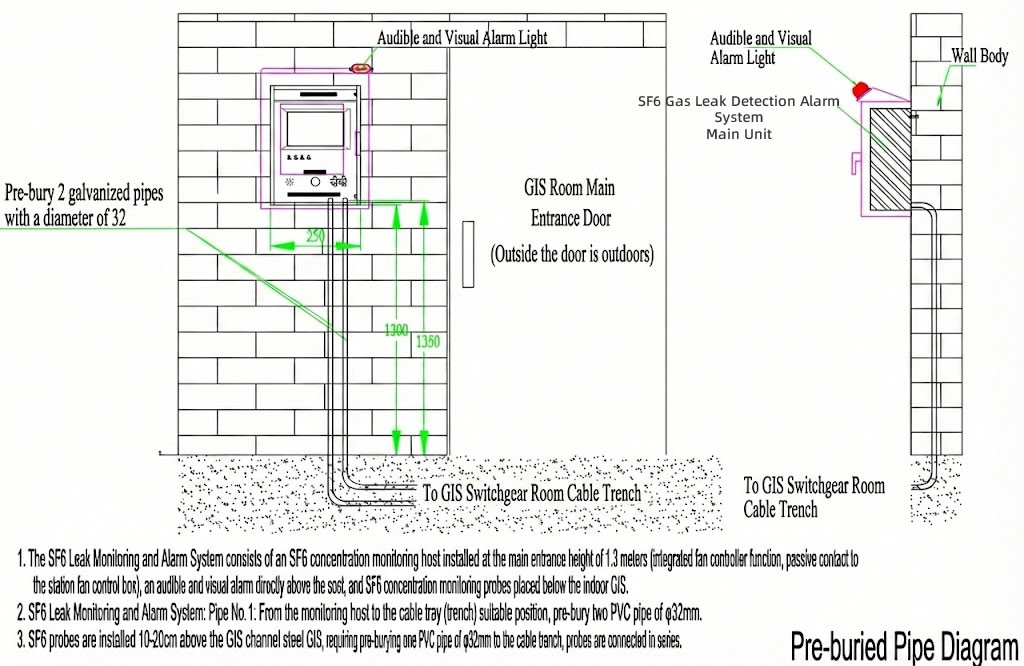
The exceptional performance of SF6 in electrical applications is rooted in its unique combination of physical and chemical properties. Compreender essas propriedades é essencial para engenheiros que especificam, operando, e mantendo Equipamento elétrico preenchido com SF6.
| Propriedade | Valor | Significado |
|---|---|---|
| Fórmula Molecular | SF₆ | Simetria octaédrica, altamente estável |
| Peso molecular | 146.06 g/mol | ~5× mais pesado que o ar |
| Ponto de ebulição (1 caixa eletrônico) | −63,9°C (−83 °F) | Permanece gasoso na maioria dos climas |
| Temperatura Crítica | 45.6 °C (114 °F) | Define limites superiores de pressão |
| Pressão Crítica | 37.6 bar (545 psi) | Pressões operacionais normalmente 4–8 bar |
| Densidade em STP | 6.16 g/L | Alta densidade auxilia no isolamento |
| Resistência Dielétrica (1 caixa eletrônico) | ~2,5× ar | Permite design de equipamento compacto |
| Condutividade Térmica | ~1,3× ar | Boa dissipação de calor no equipamento |
| Toxicidade | Não tóxico (estado puro) | Os subprodutos da decomposição são tóxicos |
| PAG (100-ano) | 23,500 | Potente gás de efeito estufa |
| Vida Atmosférica | ~3.200 anos | Extremamente persistente depois de lançado |
2.1 Estabilidade Química
Hexafluoreto de enxofre é um dos compostos quimicamente mais inertes conhecidos. Os seis átomos de flúor protegem completamente o átomo central de enxofre, creating an extremely strong and symmetric molecular bond structure. This stability means that SF6 does not react with other materials inside sealed electrical compartments — it does not attack copper, alumínio, epoxy resin insulators, juntas, or other components commonly found in painel de distribuição isolado a gás e Disjuntores SF6.
2.2 Behavior Under Electrical Stress
When SF6 gas is subjected to an electrical arc — as occurs during circuit breaker operation — the gas molecules dissociate into sulfur and fluorine atoms and ions. The critical advantage is that SF6 rapidly recombines after the arc is extinguished, restoring its full dielectric strength within microseconds. This self-healing property is what makes SF6 uniquely effective as an arc-quenching medium. No entanto, the arc-induced dissociation also produces trace amounts of decomposition byproducts, including sulfur dioxide (SO₂), fluoreto de hidrogênio (AF), and various sulfur fluoride compounds (S₂F₁₀, SOF₂, SO₂F₂), some of which are highly toxic and corrosive.
3. Dielectric and Arc-Quenching Performance
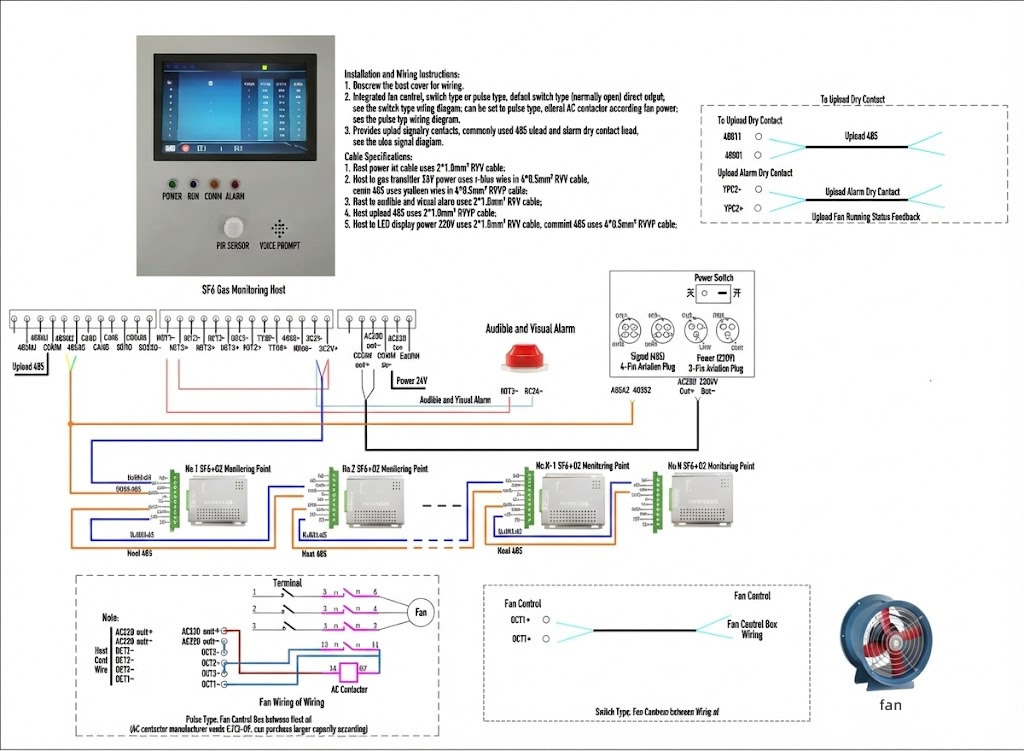
The dielectric performance of Gás SF6 is the primary reason for its dominance in high-voltage equipment. At atmospheric pressure, SF6 has a dielectric strength approximately 2.5 vezes a do ar. At typical operating pressures of 4–6 bar (absoluto) usado em Equipamento SIG, the dielectric strength rises to roughly 3 vezes a do ar, enabling dramatic reductions in equipment dimensions.
3.1 Electronegative Properties
SF6 is a strongly electronegative gas, meaning its molecules readily capture free electrons. In an electric field, any electron released through ionization is quickly absorbed by an SF6 molecule, forming a heavy, slow-moving negative ion. This electron-capture mechanism suppresses the development of electron avalanches — the fundamental process behind electrical breakdown. This property gives SF6 its superior desempenho de isolamento compared to air, nitrogen, or CO₂.
3.2 Arc Interruption Mechanism
Em Disjuntores SF6, the arc-quenching process relies on the gas being blown across the arc by either a piston mechanism (puffer type) or thermal energy from the arc itself (self-blast type). The high thermal conductivity and electronegative nature of SF6 rapidly cool the arc channel and extract energy from it. At current zero crossings in AC systems, SF6 quickly rebuilds dielectric strength across the contact gap, successfully interrupting fault currents that can reach 63 kA or higher in modern high-voltage circuit breakers.
Dielectric Strength Comparison Across Gases
| Gás | Relative Dielectric Strength (Air = 1.0) | Use in Electrical Equipment |
|---|---|---|
| Ar | 1.0 | Air-insulated switchgear (AIS) |
| Azoto (N₂) | 1.0 | Some transformer blankets |
| CO₂ | 0.9 | Limited applications |
| SF6 | 2.5 (no 1 caixa eletrônico) | SIG, disjuntores, GIL, GIT |
| C4F7N / CO₂ mixture | ~2.0–2.3 | Emerging SF6 alternative |
| C5F10O / Air mixture | ~1.5–1.8 | Emerging SF6 alternative |
| Clean Dry Air | 1.0 | AIS, clean-air switchgear |
4. Applications of SF6 Gas in Electrical Equipment

Hexafluoreto de enxofre is used across a wide range of electrical power equipment where high dielectric strength, arc-quenching capability, and compact design are required. The global installed base of SF6 equipment spans transmission, distribuição, and generation systems on every continent.
4.1 SF6 Circuit Breakers
Disjuntores SF6 are the dominant technology for interrupting high-voltage AC circuits at voltage levels from 72.5 kV para 1,100 kV. Modern designs include single-pressure puffer-type breakers and self-blast (thermal-assist) disjuntores. These units can interrupt short-circuit currents of 40–80 kA with operating times under 3 ciclos (50 ms at 60 Hz). Dead-tank SF6 breakers e live-tank SF6 breakers are the two principal configurations, each suited to different substation designs and seismic requirements.
4.2 Aparelhagem Isolada a Gás (SIG)
Aparelhagem isolada a gás (SIG) encapsulates circuit breakers, seccionadores, interruptores de aterramento, transformadores de corrente, transformadores de tensão, and bus conductors within sealed aluminum or steel enclosures filled with pressurized SF6. GIS installations occupy 10%–20% of the floor space required by equivalent air-insulated switchgear (AIS) subestações. This makes GIS essential for urban substations, instalações subterrâneas, plataformas offshore, and any site where space is limited or environmental conditions are harsh.
4.3 Gas-Insulated Transformers (GIT)
Gas-insulated transformers use SF6 as the insulating and cooling medium in place of traditional mineral transformer oil. Because SF6 is non-flammable, these transformers are ideal for fire-sensitive installations such as underground substations, edifícios, túneis, e plataformas offshore. SF6 gas-insulated transformers are typically available in ratings up to approximately 300 MVA and 170 kV, though some manufacturers offer higher ratings.
4.4 Gas-Insulated Transmission Lines (GIL)
Gas-insulated transmission lines (GIL) use SF6 or SF6/N₂ gas mixtures as the insulating medium inside sealed metallic tubes to transmit high-voltage power over distances typically ranging from a few hundred meters to several kilometers. GIL is used where overhead lines or conventional cables are not feasible — such as through tunnels, across bridges, in densely built-up areas, and for river or strait crossings.
4.5 Other SF6 Applications
Beyond the major applications above, SF6 is also used in SF6 gas-insulated current transformers, SF6 gas-insulated voltage transformers, SF6 gas-insulated bushings, and certain types of pára-raios e load break switches at medium- and high-voltage levels.
| Tipo de equipamento | Faixa de tensão | SF6 Function | Typical SF6 Pressure |
|---|---|---|---|
| Disjuntor SF6 | 72.5–1,100 kV | Isolamento + Arc Quenching | 5–7 bar (abs) |
| Aparelhagem Isolada a Gás (SIG) | 72.5–1,100 kV | Isolamento + Arc Quenching | 4–6 bar (abs) |
| Gas-Insulated Transformer (GIT) | Até 170 kV | Isolamento + Resfriamento | 1.5–3 bar (abs) |
| Gas-Insulated Line (GIL) | 145–550 kV | Isolamento | 4–8 bar (abs) |
| SF6 Instrument Transformer | 72.5–800 kV | Isolamento | 3–5 bar (abs) |
| Medium-Voltage Switchgear | 12–40.5 kV | Isolamento + Arc Quenching | 1.3–1.5 bar (abs) |
5. SF6 Gas Monitoring and Detection Systems
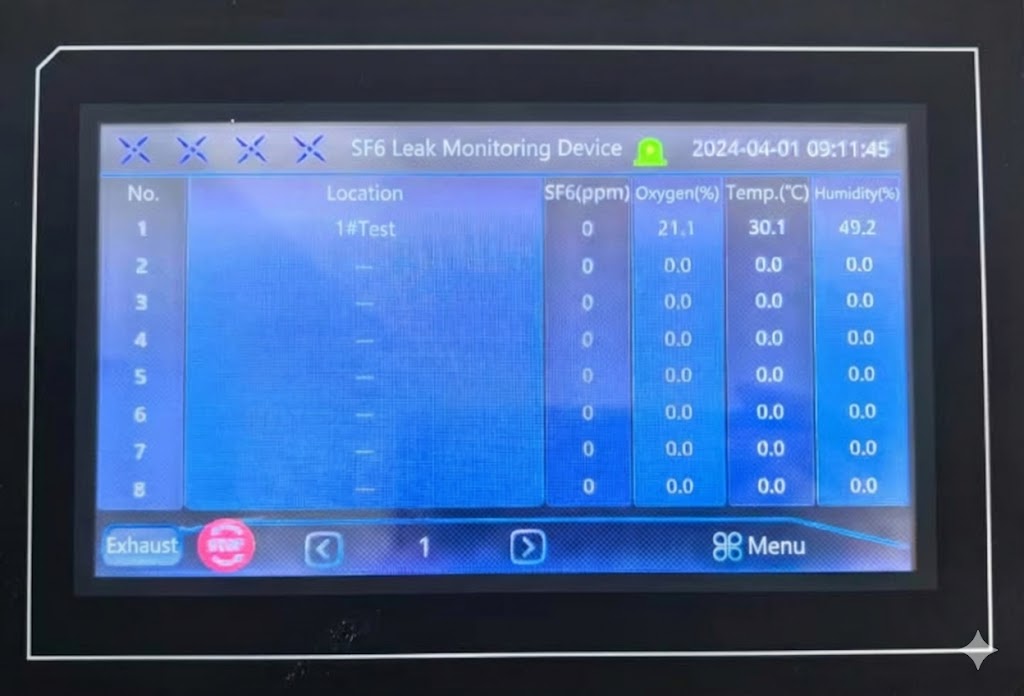
Given the critical role of SF6 in maintaining the insulating and arc-interrupting integrity of high-voltage equipment, and the severe environmental consequences of uncontrolled emissions, abrangente SF6 gas monitoring systems are an essential component of modern substation design and operation. These systems ensure that gas quality, pressão, and containment are continuously verified across every SF6-filled compartment in the installation.
5.1 SF6 Gas Density Monitors
O SF6 gas density monitor (also called a density relay) is the most fundamental monitoring device installed on every SF6 gas compartment. Unlike a simple pressure gauge, a density monitor compensates for temperature variations to provide an accurate indication of the actual mass of SF6 gas inside the sealed compartment. If the gas density drops below a preset alarm threshold — indicating a leak — the monitor triggers an alert. If density falls to a second, lower threshold, it can initiate a lockout to prevent equipment operation under unsafe conditions.
Moderno electronic SF6 density transmitters replace older mechanical dial-type monitors with continuous digital output signals (4–20 mA or digital protocols) that feed directly into the substation’s Sistema SCADA ou dispositivos eletrônicos inteligentes (IEDs). This enables real-time remote monitoring and trending of SF6 inventory across an entire fleet of GIS bays e disjuntores.
5.2 SF6 Gas Leak Detection Systems
While density monitors detect the consequence of a leak (reduced gas quantity), dedicated Detectores de vazamento de gás SF6 identify the location and rate of the leak itself. Several technologies are in widespread use.
Portable SF6 Leak Detectors
Portable SF6 leak detectors based on negative ion capture (electron capture detector) or non-dispersive infrared (NDIR) technology are standard tools for maintenance crews. Modern handheld units can detect SF6 concentrations as low as 0.1 ppmv and pinpoint leak locations on GIS flanges, bushing interfaces, valve stems, and weld seams. Leading manufacturers of SF6 leak detection equipment include DILO, Ion Science, Fluke, and Besantek.
Fixed Area SF6 Monitoring Systems
Fixed SF6 area monitors are permanently installed in enclosed GIS rooms, subestações subterrâneas, and cable tunnels where SF6 equipment is housed. These systems use infrared photoacoustic sensors or NDIR sensors to continuously measure the ambient SF6 concentration in the room air. They serve two purposes: segurança pessoal (SF6 is an asphyxiant in high concentrations as it displaces oxygen) and early warning of equipment leaks. CEI 62271-1 and IEEE C37.122 both reference requirements for gas detection and ventilation in Instalações GIS.
5.3 SF6 Gas Quality Analyzers
After electrical arcing events, atividades de manutenção, or prolonged service, the quality of Gás SF6 inside equipment must be verified. SF6 gas analyzers measure moisture content, pureza (percentage of SF6), and the concentration of decomposition byproducts such as SO₂ and HF. CEI 60480 specifies the quality requirements for SF6 gas used in electrical equipment, incluindo limites de umidade (< 25 ppmv para gás novo), pureza (> 99.9%), e acidez.
| Dispositivo de monitoramento | O que mede | Localização | Saída / Interface |
|---|---|---|---|
| Monitor de Densidade SF6 (Mecânico) | Densidade do gás (compensado por temperatura) | Cada compartimento de gás | Alarme + contatos de bloqueio |
| Transmissor de Densidade SF6 (Eletrônico) | Densidade do gás (contínuo) | Cada compartimento de gás | 4–20 mA / SCADA |
| Detector de vazamento portátil | Concentração de SF6 na fonte | Portátil / manutenção | Mostrar + alarme sonoro |
| Monitor de Área Fixa | Ambiente SF6 no quarto | Sala SIG / túnel de cabos | Alarme + gatilho de ventilação |
| Analisador de Gás SF6 | Pureza, umidade, SO₂, AF | Portátil / laboratório | Mostrar / relatório |
| Monitor de decomposição on-line | SO₂, AF, Níveis de CF₄ | Compartimentos GIS críticos | Contínuo / SCADA |
5.4 Plataformas integradas de gerenciamento de ativos SF6
As concessionárias progressivas e os operadores de sistemas de transmissão agora implementam sistemas integrados Plataformas de gerenciamento de gás SF6 que agregam dados de transmissores de densidade, pesquisas de detecção de vazamentos, resultados de testes de qualidade de gás, e registros de manuseio de gás em um banco de dados centralizado. Essas plataformas rastreiam o inventário de SF6 por número de série do equipamento, calcular anual Taxas de vazamento de SF6 conforme exigido pela EPA (nos EUA) or EU F-Gas Regulation reporting, and generate compliance documentation. Leading utility asset management software vendors increasingly include dedicated SF6 tracking modules.
6. SF6 Gas Handling, Armazenar, and Safety
Apropriado SF6 gas handling requires specialized equipment and trained personnel. SF6 is shipped and stored in pressurized steel cylinders as a liquid under its own vapor pressure. Before filling into electrical equipment, the gas must be verified for purity and moisture content per IEC 60480 or applicable utility specifications.
6.1 SF6 Gas Handling Equipment
SF6 gas handling carts (also called SF6 service carts or SF6 reclaimers) are purpose-built systems that perform the complete lifecycle of SF6 management: evacuation of equipment compartments, recovery of SF6 from equipment, filtration and purification, armazenar, and re-filling. Modern units from manufacturers such as DILO, Enervac, Comde-Derenda, and Mega conform to IEC 62271-4 standards and can achieve SF6 recovery rates exceeding 99.5%, minimizing emissions during maintenance operations.
6.2 Personnel Safety Considerations
Pure SF6 is non-toxic and chemically inert. No entanto, two safety concerns are paramount. Primeiro, because SF6 is five times denser than air, it can accumulate in pits, trincheiras, cable basements, and low-lying enclosed spaces, displacing oxygen and creating an asphyxiation hazard. Segundo, Produtos de decomposição de SF6 generated by electrical arcing — including SO₂, AF, S₂F₁₀, SOF₂, and SO₂F₂ — are highly toxic and corrosive. Workers must use appropriate personal protective equipment (EPI) including respiratory protection and chemical-resistant gloves when handling used SF6 gas or opening compartments that have experienced internal arcing faults.
Key Safety Standards
The principal international standards governing SF6 handling and safety include IEC 62271-4 (handling procedures for SF6 and its mixtures), CEI 60480 (specifications for re-use of SF6), and EPA 40 CFR Part 98 Subpart DD (mandatory reporting of SF6 emissions in the United States). The EU F-Gas Regulation (Não. 517/2014, revised 2024) imposes strict reporting requirements and phase-down measures on high-GWP gases including SF6.
7. Environmental Impact and Regulations
The environmental profile of Gás SF6 is the most significant challenge facing its continued use. With a global warming potential (PAG) de 23,500 — meaning one kilogram of SF6 released to the atmosphere has the same warming effect as 23,500 kilograms of CO₂ over 100 years — and an atmospheric lifetime of approximately 3,200 anos, SF6 is among the most potent greenhouse gases regulated under the Kyoto Protocol and the Paris Agreement.
7.1 Emission Sources and Rates
SF6 emissions from the electrical industry occur through equipment leakage during normal service, losses during maintenance and gas handling, and end-of-life disposal. The IEC standard for acceptable annual leakage from new sealed-pressure GIS equipment is less than 0.5% per year per gas compartment. Well-maintained modern equipment routinely achieves leakage rates below 0.1% por ano. No entanto, older equipment, particularly units installed before the 1990s, can exhibit significantly higher leakage rates.
7.2 Regulatory Landscape
| Região | Regulation | Key Requirement |
|---|---|---|
| União Europeia | F-Gas Regulation (revised 2024) | Ban on new SF6 MV switchgear from 2030; HV restrictions phased |
| Estados Unidos | EPA 40 CFR Part 98 Subpart DD | Mandatory emission reporting for utilities |
| Califórnia (EUA) | CARB SF6 Regulation | Annual emission rate target of 1% por 2020 |
| Japão | High Pressure Gas Safety Act | Reporting and handling requirements |
| Internacional | Kyoto Protocol / Paris Agreement | SF6 listed in basket of regulated GHGs |
8. SF6 Gas Alternatives for Electrical Equipment
The environmental pressure on SF6 has driven major equipment manufacturers to develop and commercialize alternative insulating and interrupting gases, particularly for new installations.
8.1 Fluoronitrile-Based Mixtures (C4F7N)
Fluoronitrile gas mixtures, marketed by GE Vernova under the brand name g³ (Green Gas for Grid), blend C4F7N with CO₂ and O₂ as buffer gases. These mixtures achieve approximately 90%–100% of SF6’s dielectric performance at equivalent pressures with a GWP reduction of more than 99%. GIS systems using fluoronitrile mixtures are commercially available and installed at voltage levels up to 420 kV.
8.2 Fluoroketone-Based Mixtures (C5F10O)
Fluoroketone gas mixtures — blending C5F10O with air or nitrogen — have been commercialized primarily by ABB (agora Hitachi Energia) under the AirPlus brand for aparelhagem de média tensão at 12–40.5 kV. The GWP of C5F10O is less than 1, making it virtually climate-neutral. No entanto, the lower dielectric strength of these mixtures compared to SF6 means larger compartment sizes or higher pressures.
8.3 Clean Dry Air and Vacuum Technology
Para aparelhagem de média tensão, disjuntores a vácuo combined with clean dry air insulation have become the standard SF6-free solution. At distribution voltage levels (12–40.5 kV), vacuum interruption technology is mature and widely available. At higher voltages, pure air insulation requires substantially larger equipment, limiting its applicability where space is constrained.
SF6 Alternatives Comparison
| Alternative | PAG | Dielectric Strength vs. SF6 | Faixa de tensão | Commercial Status |
|---|---|---|---|---|
| C4F7N / CO₂ / O₂ mixture | ~328 (mixture) | 90%–100% | Até 420 kV | Commercially available |
| C5F10O / Air mixture | <1 | 60%–80% | Até 40.5 kV | Commercially available |
| Clean Dry Air | 0 | ~40% | Até 420 kV (large enclosure) | Commercially available |
| Vácuo (MV breaker) | 0 | N / D (interruption only) | Até 145 kV | Mature technology |
| CO₂ / O₂ mixture | <1 | ~35%–40% | Até 72.5 kV | Limited deployment |
Perguntas frequentes
1º trimestre: What does SF6 stand for?
SF6 stands for sulfur hexafluoride, a chemical compound consisting of one sulfur atom and six fluorine atoms (chemical formula SF₆). It is a synthetic gas not found naturally in the environment.
2º trimestre: Why is SF6 gas used in circuit breakers?
SF6 is used in circuit breakers because of its exceptional dielectric strength (2.5× air) and rapid arc-quenching capability. It can extinguish high-energy electrical arcs and restore insulation strength within microseconds, enabling compact and reliable high-voltage circuit breaker projetos.
3º trimestre: Is SF6 gas dangerous to humans?
Pure SF6 is non-toxic and chemically inert. No entanto, it poses an asphyxiation risk in enclosed spaces because it is five times heavier than air and displaces oxygen. Adicionalmente, SF6 decomposition byproducts formed by electrical arcing — including SO₂ and HF — are highly toxic and corrosive, requiring proper safety precautions during maintenance.
4º trimestre: O que é um monitor de densidade de gás SF6?
Um SF6 gas density monitor é um dispositivo de medição com compensação de temperatura instalado em cada compartimento de gás do equipamento SF6. Ele monitora a massa real de gás dentro do compartimento e aciona alarmes ou bloqueios de equipamentos se a densidade cair abaixo dos limites seguros, indicando um vazamento de gás.
Q5: Como você detecta um vazamento de gás SF6?
Vazamentos de SF6 são detectados usando detectores portáteis de vazamento de SF6 (baseado em captura de elétrons ou tecnologia infravermelha NDIR), monitores SF6 de área fixa em salas GIS, e tendências de densidade de eletrônicos Transmissores de densidade SF6. Os detectores modernos podem identificar vazamentos tão pequenos quanto 0.1 ppmv.
Q6: Qual é o potencial de aquecimento global do SF6?
SF6 tem potencial de aquecimento global de 100 anos (PAG) de 23,500, o que significa que um quilograma de SF6 tem o mesmo efeito estufa que 23,500 quilogramas de CO₂. Sua vida atmosférica é de aproximadamente 3,200 anos, making it one of the most persistent greenhouse gases known.
Q7: Can SF6 gas be recycled?
Sim. SF6 gas can be recovered from equipment using specialized SF6 gas handling carts, purified through filtration and adsorption processes to remove moisture and decomposition byproducts, and re-used. CEI 60480 specifies the quality requirements that reclaimed SF6 must meet before re-use in electrical equipment.
P8: What are the alternatives to SF6 in switchgear?
Commercially available alternatives include fluoronitrile-based gas mixtures (C4F7N/CO₂), fluoroketone-based gas mixtures (C5F10O/air), vacuum interruption technology, and clean dry air insulation. These are available for different voltage classes, with the most mature SF6-free solutions at medium-voltage levels.
Q9: What is gas-insulated switchgear (SIG)?
Aparelhagem isolada a gás (SIG) is a type of high-voltage switchgear where the busbars, disjuntores, seccionadores, and other components are enclosed in sealed metal housings filled with pressurized SF6 gas. GIS occupies 10%–20% of the space required by conventional air-insulated switchgear, making it essential for urban and space-constrained installations.
Q10: How often should SF6 gas quality be tested?
IEC and IEEE standards recommend testing SF6 gas quality (umidade, pureza, e produtos de decomposição) before initial energization, after any maintenance involving gas handling, after internal fault events, and periodically during service — typically every 5–10 years depending on utility policy and regulatory requirements.
Isenção de responsabilidade
As informações fornecidas neste artigo são apenas para fins informativos e educacionais gerais. FJINNO (www.fjinno.net) strives to ensure the accuracy of all technical data, especificações, and regulatory references presented herein, but makes no warranties or guarantees regarding completeness, timeliness, or suitability for any particular application. Electrical equipment specifications, gas handling procedures, padrões de segurança, and environmental regulations vary by jurisdiction and are subject to change. This content does not constitute professional engineering, segurança, or regulatory compliance advice. Readers must consult qualified engineers, equipment manufacturers, and relevant regulatory authorities before making technical, aquisição, or compliance decisions. FJINNO assumes no liability for any losses, damages, lesões, or regulatory penalties arising from the use or interpretation of information contained in this article.

Sensor de temperatura de fibra óptica, Sistema de monitoramento inteligente, Fabricante distribuído de fibra óptica na China
 |
 |
 |