 Światłowodowe czujniki temperatury INNO ,systemy monitorowania temperatury.
- SF6 (sześciofluorek siarki) jest syntetykiem, bezbarwny, bezwonny, niepalny gaz o wyjątkowej wytrzymałości dielektrycznej i zdolności gaszenia łuku, co czyni go niezbędnym w sprzęcie elektrycznym wysokiego napięcia.
- Gaz SF6 ma wytrzymałość dielektryczną w przybliżeniu 2.5 razy więcej niż powietrze pod ciśnieniem atmosferycznym i mniej więcej 3 razy przy typowych ciśnieniach roboczych stosowanych w rozdzielnica w izolacji gazowej (GIS).
- Podstawowe zastosowania obejmują Wyłączniki SF6, rozdzielnica w izolacji gazowej, transformatory w izolacji gazowej, I linie przesyłowe izolowane gazem (GIL) w klasach napięcia od 72.5 kV do 1,100 kV.
- SF6 jest klasyfikowany jako silny gaz cieplarniany o potencjale globalnego ocieplenia (GWP) z 23,500 w horyzoncie 100-letnim i czasie życia w atmosferze wynoszącym około 3,200 lata.
- Właściwy Systemy monitorowania gazu SF6, w tym monitory gęstości, detektory nieszczelności, i analizatory rozkładu, są niezbędne dla bezpiecznej pracy i zgodności z wymogami ochrony środowiska.
- Regulatory pressure in the EU and other jurisdictions is driving research into SF6 alternatives such as fluoronitrile mixtures (C4F7N) i fluoroketon (C5F10O) mieszanki do nowych projektów sprzętu.
- Zainstalowana baza Sprzęt izolowany SF6 na całym świecie zawiera szacunkową liczbę 250,000+ ton metrycznych gazu SF6, wymagające rygorystycznego zarządzania cyklem życia, od napełniania po odzysk i recykling.
Spis treści
- Co to jest gaz SF6?
- Właściwości fizyczne i chemiczne gazu SF6
- Wydajność dielektryczna i hartowania łuku
- Zastosowania gazu SF6 w sprzęcie elektrycznym
- Systemy monitorowania i wykrywania gazu SF6
- Obsługa gazu SF6, Składowanie, and Safety
- Wpływ na środowisko i przepisy
- Alternatywy dla gazu SF6 dla sprzętu elektrycznego
- Często zadawane pytania
1. Co to jest gaz SF6?

Gaz SF6, Lub sześciofluorek siarki, to syntetyczny związek nieorganiczny o wzorze chemicznym SF₆. Składa się z jednego atomu siarki związanego z sześcioma atomami fluoru w oktaedrycznej geometrii molekularnej, tworząc jeden z najbardziej stabilnych chemicznie i elektrycznie izolujących gazów znanych nauce. Po raz pierwszy zsyntetyzowany w 1900 by French chemists Henri Moissan and Paul Lebeau, SF6 found its defining industrial purpose in the mid-20th century when its extraordinary wytrzymałość dielektryczna I właściwości gaszenia łuku were harnessed for high-voltage electrical equipment.
At standard temperature and pressure, SF6 jest bezbarwny, bezwonny, nietoksyczny, and non-flammable gas approximately five times denser than air. Its molecular weight of 146.06 g/mol gives it a distinctive heaviness that contributes to its insulating behavior. In the electrical power industry, sulfur hexafluoride gas serves as the primary insulating and arc-interrupting medium in equipment ranging from rozdzielnica średniego napięcia Na 12 kV do ultra-high-voltage circuit breakers I Systemy GIS operating at 1,100 kV i więcej.
Why SF6 Became the Industry Standard
Before SF6, high-voltage equipment relied on air, olej, or vacuum as insulating and interrupting media. Air-blast circuit breakers were physically enormous. Oil circuit breakers posed fire and explosion risks. SF6 offered a compelling alternative — compact equipment with superior interrupting performance, lower maintenance requirements, and dramatically reduced footprint. By the 1970s and 1980s, SF6 gas-insulated equipment had become the global standard for high-voltage substations, particularly in urban areas and indoor installations where space is constrained.
2. Właściwości fizyczne i chemiczne gazu SF6
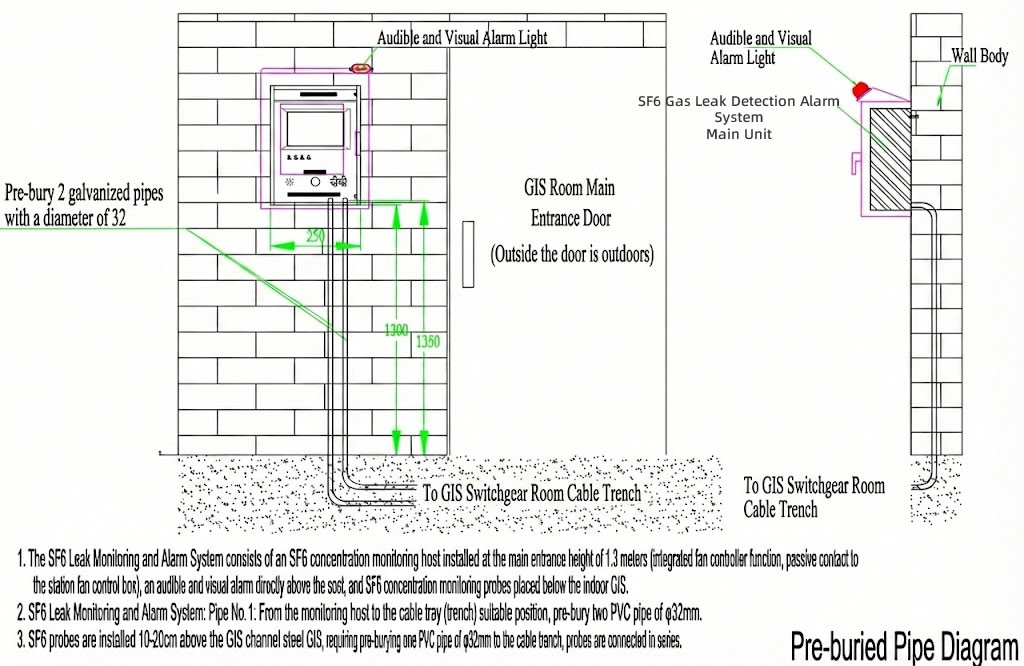
The exceptional performance of SF6 in electrical applications is rooted in its unique combination of physical and chemical properties. Understanding these properties is essential for engineers specifying, operacyjny, and maintaining SF6-filled electrical equipment.
| Property | Value | Znaczenie |
|---|---|---|
| Molecular Formula | SF₆ | Octahedral symmetry, highly stable |
| Molecular Weight | 146.06 g/mol | ~5× heavier than air |
| Boiling Point (1 atm) | −63.9 °C (−83 °F) | Remains gaseous in most climates |
| Critical Temperature | 45.6 °C (114 °F) | Defines upper pressure limits |
| Critical Pressure | 37.6 bar (545 psi) | Operating pressures typically 4–8 bar |
| Density at STP | 6.16 g/L | High density aids insulation |
| Dielectric Strength (1 atm) | ~2.5× air | Enables compact equipment design |
| Thermal Conductivity | ~1.3× air | Good heat dissipation in equipment |
| Toxicity | Non-toxic (pure state) | Decomposition byproducts are toxic |
| GWP (100-rok) | 23,500 | Potent greenhouse gas |
| Atmospheric Lifetime | ~3,200 years | Extremely persistent once released |
2.1 Stabilność chemiczna
Sulfur hexafluoride is one of the most chemically inert compounds known. The six fluorine atoms completely shield the central sulfur atom, tworząc niezwykle mocną i symetryczną strukturę wiązań molekularnych. Ta stabilność oznacza, że SF6 nie reaguje z innymi materiałami wewnątrz szczelnych przedziałów elektrycznych – nie atakuje miedzi, aluminium, izolatory z żywicy epoksydowej, uszczelki, lub inne elementy powszechnie spotykane w rozdzielnica w izolacji gazowej I Wyłączniki SF6.
2.2 Zachowanie pod obciążeniem elektrycznym
Kiedy gaz SF6 jest poddawany działaniu łuku elektrycznego – tak jak ma to miejsce podczas działanie wyłącznika — cząsteczki gazu dysocjują na atomy i jony siarki i fluoru. Najważniejszą zaletą jest to, że SF6 szybko ulega rekombinacji po wygaśnięciu łuku, przywracając pełną wytrzymałość dielektryczną w ciągu mikrosekund. Ta właściwość samoleczenia sprawia, że SF6 jest wyjątkowo skuteczny jako środek przeciwbólowy środek gaszący łuk. Jednakże, dysocjacja wywołana łukiem wytwarza również śladowe ilości produktów ubocznych rozkładu, w tym dwutlenek siarki (SO₂), hydrogen fluoride (HF), and various sulfur fluoride compounds (S₂F₁₀, SOF₂, SO₂F₂), some of which are highly toxic and corrosive.
3. Wydajność dielektryczna i hartowania łuku
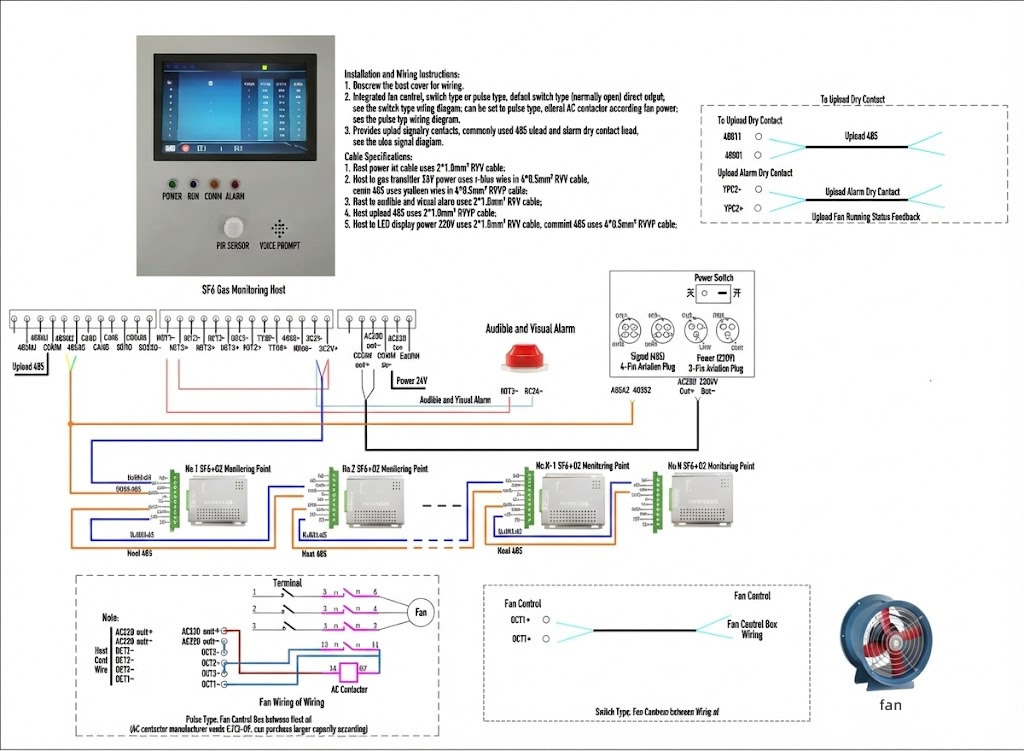
The dielectric performance of Gaz SF6 is the primary reason for its dominance in high-voltage equipment. At atmospheric pressure, SF6 has a dielectric strength approximately 2.5 razy większa niż powietrze. At typical operating pressures of 4–6 bar (absolute) used in Sprzęt GIS, the dielectric strength rises to roughly 3 razy większa niż powietrze, enabling dramatic reductions in equipment dimensions.
3.1 Electronegative Properties
SF6 is a strongly electronegative gas, meaning its molecules readily capture free electrons. In an electric field, any electron released through ionization is quickly absorbed by an SF6 molecule, forming a heavy, slow-moving negative ion. Ten mechanizm wychwytywania elektronów hamuje rozwój lawin elektronowych – podstawowego procesu stojącego za przebiciem elektrycznym. Ta właściwość sprawia, że SF6 jest lepszy wydajność izolacji w porównaniu z powietrzem, azot, lub CO₂.
3.2 Mechanizm przerywania łuku
W Wyłączniki SF6, proces gaszenia łuku polega na przedmuchaniu gazu przez łuk za pomocą mechanizmu tłokowego (typ puchowy) lub energię cieplną z samego łuku (typu samowybuchowego). Wysoka przewodność cieplna i elektroujemny charakter SF6 szybko schładzają kanał łuku i wydobywają z niego energię. Przy obecnych przejściach przez zero w systemach prądu przemiennego, SF6 szybko odbudowuje wytrzymałość dielektryczną w szczelinie stykowej, skutecznie przerywając prądy zwarciowe, które mogą dotrzeć 63 kA lub więcej w nowoczesnych wyłączniki wysokiego napięcia.
Porównanie wytrzymałości dielektrycznej w gazach
| Gaz | Względna wytrzymałość dielektryczna (Air = 1.0) | Use in Electrical Equipment |
|---|---|---|
| Powietrze | 1.0 | Air-insulated switchgear (AIS) |
| Nitrogen (N₂) | 1.0 | Some transformer blankets |
| CO₂ | 0.9 | Limited applications |
| SF6 | 2.5 (Na 1 atm) | GIS, wyłączniki automatyczne, GIL, GIT |
| C4F7N / CO₂ mixture | ~2.0–2.3 | Emerging SF6 alternative |
| C5F10O / Air mixture | ~1.5–1.8 | Emerging SF6 alternative |
| Clean Dry Air | 1.0 | AIS, clean-air switchgear |
4. Zastosowania gazu SF6 w sprzęcie elektrycznym

Sulfur hexafluoride is used across a wide range of electrical power equipment where high dielectric strength, arc-quenching capability, and compact design are required. The global installed base of SF6 equipment spans transmission, dystrybucja, and generation systems on every continent.
4.1 SF6 Circuit Breakers
Wyłączniki SF6 are the dominant technology for interrupting high-voltage AC circuits at voltage levels from 72.5 kV do 1,100 kV. Modern designs include single-pressure puffer-type breakers and self-blast (thermal-assist) wyłączniki. These units can interrupt short-circuit currents of 40–80 kA with operating times under 3 cycles (50 ms at 60 Hz). Dead-tank SF6 breakers I live-tank SF6 breakers are the two principal configurations, each suited to different substation designs and seismic requirements.
4.2 Rozdzielnica w izolacji gazowej (GIS)
Rozdzielnica w izolacji gazowej (GIS) encapsulates circuit breakers, rozłączniki, uziemniki, przekładniki prądowe, przekładniki napięciowe, and bus conductors within sealed aluminum or steel enclosures filled with pressurized SF6. GIS installations occupy 10%–20% of the floor space required by equivalent air-insulated switchgear (AIS) podstacje. This makes GIS essential for urban substations, instalacje podziemne, platformy morskie, and any site where space is limited or environmental conditions are harsh.
4.3 Gas-Insulated Transformers (GIT)
Transformatory w izolacji gazowej use SF6 as the insulating and cooling medium in place of traditional mineral transformer oil. Because SF6 is non-flammable, these transformers are ideal for fire-sensitive installations such as underground substations, zabudowania, tunele, i platformy morskie. SF6 gas-insulated transformers are typically available in ratings up to approximately 300 MVA and 170 kV, though some manufacturers offer higher ratings.
4.4 Gas-Insulated Transmission Lines (GIL)
Gas-insulated transmission lines (GIL) use SF6 or SF6/N₂ gas mixtures as the insulating medium inside sealed metallic tubes to transmit high-voltage power over distances typically ranging from a few hundred meters to several kilometers. GIL is used where overhead lines or conventional cables are not feasible — such as through tunnels, across bridges, in densely built-up areas, and for river or strait crossings.
4.5 Other SF6 Applications
Beyond the major applications above, SF6 is also used in SF6 gas-insulated current transformers, SF6 gas-insulated voltage transformers, SF6 gas-insulated bushings, and certain types of ograniczniki przepięć I load break switches at medium- and high-voltage levels.
| Equipment Type | Zakres napięcia | SF6 Function | Typical SF6 Pressure |
|---|---|---|---|
| SF6 Circuit Breaker | 72.5–1,100 kV | Izolacja + Arc Quenching | 5–7 bar (abs) |
| Rozdzielnica w izolacji gazowej (GIS) | 72.5–1,100 kV | Izolacja + Arc Quenching | 4–6 bar (abs) |
| Gas-Insulated Transformer (GIT) | Aż do 170 kV | Izolacja + Cooling | 1.5–3 bar (abs) |
| Gas-Insulated Line (GIL) | 145–550 kV | Izolacja | 4–8 bar (abs) |
| SF6 Instrument Transformer | 72.5–800 kV | Izolacja | 3–5 bar (abs) |
| Medium-Voltage Switchgear | 12–40,5 kV | Izolacja + Arc Quenching | 1.3–1.5 bar (abs) |
5. Systemy monitorowania i wykrywania gazu SF6
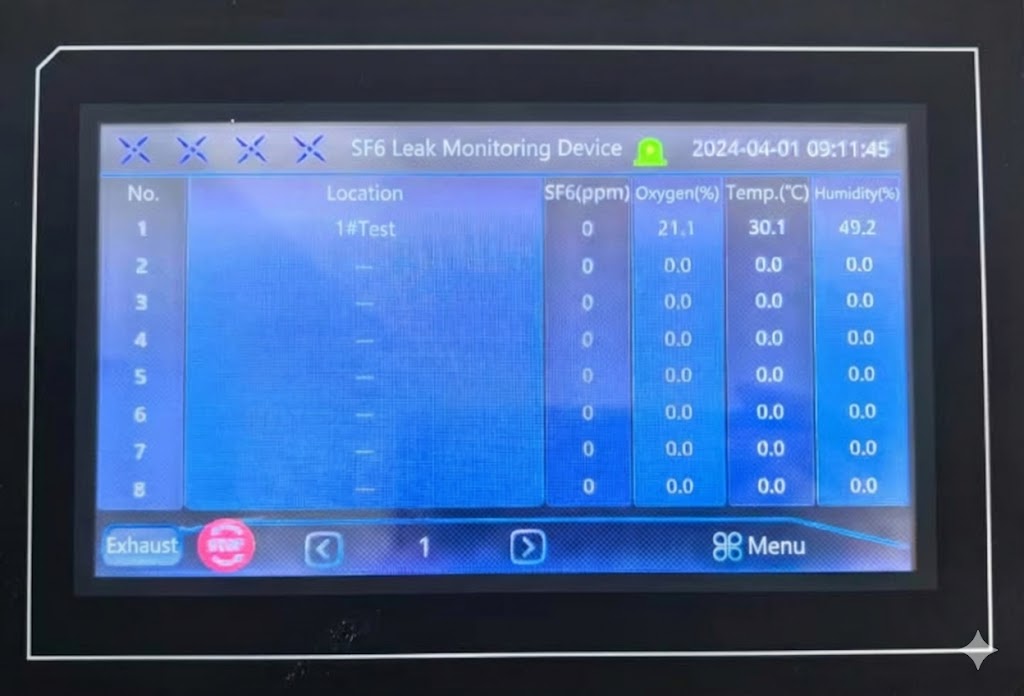
Given the critical role of SF6 in maintaining the insulating and arc-interrupting integrity of high-voltage equipment, and the severe environmental consequences of uncontrolled emissions, wyczerpujący Systemy monitorowania gazu SF6 are an essential component of modern substation design and operation. These systems ensure that gas quality, ciśnienie, and containment are continuously verified across every SF6-filled compartment in the installation.
5.1 SF6 Gas Density Monitors
The SF6 gas density monitor (also called a density relay) is the most fundamental monitoring device installed on every SF6 gas compartment. Unlike a simple pressure gauge, a density monitor compensates for temperature variations to provide an accurate indication of the actual mass of SF6 gas inside the sealed compartment. If the gas density drops below a preset alarm threshold — indicating a leak — the monitor triggers an alert. If density falls to a second, lower threshold, it can initiate a lockout to prevent equipment operation under unsafe conditions.
Nowoczesny electronic SF6 density transmitters zastąpić starsze mechaniczne monitory tarczowe ciągłymi cyfrowymi sygnałami wyjściowymi (4–20 mA lub protokoły cyfrowe) które zasilają bezpośrednio podstację systemu SCADA Lub inteligentne urządzenia elektroniczne (IED). Umożliwia to zdalne monitorowanie w czasie rzeczywistym i śledzenie trendów zapasów SF6 w całej flocie Zatoki GIS I wyłączniki automatyczne.
5.2 Systemy wykrywania wycieków gazu SF6
Natomiast monitory gęstości wykrywają konsekwencje wycieku (zmniejszona ilość gazu), poświęcony Detektory wycieków gazu SF6 określić lokalizację i wielkość samego wycieku. Szeroko stosowane są różne technologie.
Przenośne wykrywacze nieszczelności SF6
Przenośne wykrywacze nieszczelności SF6 w oparciu o wychwytywanie jonów ujemnych (detektor wychwytu elektronów) lub niedyspersyjnej podczerwieni (NDR) technologii są standardowymi narzędziami dla ekip konserwacyjnych. Nowoczesne urządzenia ręczne mogą wykrywać stężenia SF6 tak niskie, jak 0.1 ppmv i zlokalizować miejsca wycieków Kołnierze GIS, interfejsy tulejowe, trzonki zaworów, i szwy spawalnicze. Wiodący producenci Sprzęt do wykrywania wycieków SF6 uwzględnij POWIEDZ, Nauka o jonach, Fuks, i Besantek.
Stałe systemy monitorowania obszaru SF6
Naprawiono monitory obszarowe SF6 instalowane są na stałe w zamkniętych pomieszczeniach GIS, podziemne podstacje, oraz tunele kablowe, w których mieści się sprzęt SF6. Systemy te wykorzystują czujniki fotoakustyczne na podczerwień lub czujniki NDIR do ciągłego pomiaru stężenia SF6 w powietrzu w pomieszczeniu. Służą dwóm celom: bezpieczeństwo personelu (SF6 w wysokich stężeniach jest środkiem duszącym, ponieważ wypiera tlen) i wczesne ostrzeganie o wyciekach sprzętu. IEC 62271-1 oraz IEEE C37.122, oba wymagania referencyjne dotyczące wykrywania gazu i wentylacji w Instalacje GIS.
5.3 Analizatory jakości gazu SF6
Po zdarzeniach związanych z łukiem elektrycznym, czynności konserwacyjne, lub przedłużoną służbę, the quality of Gaz SF6 inside equipment must be verified. SF6 gas analyzers measure moisture content, czystość (percentage of SF6), and the concentration of decomposition byproducts such as SO₂ and HF. IEC 60480 specifies the quality requirements for SF6 gas used in electrical equipment, including limits for moisture (< 25 ppmv for new gas), czystość (> 99.9%), and acidity.
| Monitoring Device | What It Measures | Lokalizacja | Output / Interface |
|---|---|---|---|
| SF6 Density Monitor (Mechaniczny) | Gęstość gazu (temp-compensated) | Each gas compartment | Alarm + lockout contacts |
| SF6 Density Transmitter (Elektroniczny) | Gęstość gazu (ciągły) | Each gas compartment | 4–20 mA / SCADA |
| Portable Leak Detector | SF6 concentration at source | Ręczny / konserwacja | Wyświetlacz + audible alarm |
| Fixed Area Monitor | Ambient SF6 in room | GIS room / cable tunnel | Alarm + ventilation trigger |
| SF6 Gas Analyzer | Purity, wilgoć, SO₂, HF | Przenośny / lab | Wyświetlacz / report |
| Online Decomposition Monitor | SO₂, HF, CF₄ levels | Critical GIS bays | Ciągły / SCADA |
5.4 Integrated SF6 Asset Management Platforms
Progressive utilities and transmission system operators now deploy integrated SF6 gas management platforms that aggregate data from density transmitters, leak detection surveys, gas quality test results, and gas handling records into a centralized database. These platforms track SF6 inventory by equipment serial number, calculate annual SF6 leakage rates as required by EPA (in the U.S.) or EU F-Gas Regulation reporting, and generate compliance documentation. Leading utility asset management software vendors increasingly include dedicated SF6 tracking modules.
6. Obsługa gazu SF6, Składowanie, and Safety
Właściwy SF6 gas handling requires specialized equipment and trained personnel. SF6 is shipped and stored in pressurized steel cylinders as a liquid under its own vapor pressure. Before filling into electrical equipment, the gas must be verified for purity and moisture content per IEC 60480 or applicable utility specifications.
6.1 SF6 Gas Handling Equipment
SF6 gas handling carts (zwane także wózkami serwisowymi SF6 lub urządzeniami do odzyskiwania SF6) to specjalnie zaprojektowane systemy, które realizują pełny cykl życia zarządzania SF6: ewakuacja przedziałów sprzętowych, odzyskiwanie SF6 ze sprzętu, filtracja i oczyszczanie, składowanie, i ponowne napełnienie. Nowoczesne jednostki takich producentów jak DILO, Energiczny, Comde-Derenda, i Mega są zgodne z IEC 62271-4 standardów i może osiągnąć przekraczający poziom odzysku SF6 99.5%, minimalizowanie emisji podczas czynności konserwacyjnych.
6.2 Względy bezpieczeństwa personelu
Czysty SF6 jest nietoksyczny i chemicznie obojętny. Jednakże, najważniejsze są dwie kwestie związane z bezpieczeństwem. Pierwszy, ponieważ SF6 jest pięć razy gęstszy od powietrza, może gromadzić się w dołach, okopy, piwnice kablowe, i nisko położone pomieszczenia zamknięte, wypierając tlen i stwarzając ryzyko uduszenia. Drugi, Produkty rozkładu SF6 generowane przez łuk elektryczny – w tym SO₂, HF, S₂F₁₀, SOF₂, and SO₂F₂ — are highly toxic and corrosive. Workers must use appropriate personal protective equipment (PPE) including respiratory protection and chemical-resistant gloves when handling used SF6 gas or opening compartments that have experienced internal arcing faults.
Key Safety Standards
The principal international standards governing SF6 handling and safety include IEC 62271-4 (handling procedures for SF6 and its mixtures), IEC 60480 (specifications for re-use of SF6), and EPA 40 CFR Part 98 Subpart DD (mandatory reporting of SF6 emissions in the United States). The EU F-Gas Regulation (NIE. 517/2014, revised 2024) imposes strict reporting requirements and phase-down measures on high-GWP gases including SF6.
7. Wpływ na środowisko i przepisy
The environmental profile of Gaz SF6 is the most significant challenge facing its continued use. With a global warming potential (GWP) z 23,500 — meaning one kilogram of SF6 released to the atmosphere has the same warming effect as 23,500 kilograms of CO₂ over 100 years — and an atmospheric lifetime of approximately 3,200 lata, SF6 is among the most potent greenhouse gases regulated under the Kyoto Protocol and the Paris Agreement.
7.1 Emission Sources and Rates
SF6 emissions from the electrical industry occur through equipment leakage during normal service, losses during maintenance and gas handling, and end-of-life disposal. The IEC standard for acceptable annual leakage from new sealed-pressure GIS equipment is less than 0.5% per year per gas compartment. Well-maintained modern equipment routinely achieves leakage rates below 0.1% na rok. Jednakże, older equipment, particularly units installed before the 1990s, can exhibit significantly higher leakage rates.
7.2 Regulatory Landscape
| Region | Regulation | Kluczowe wymaganie |
|---|---|---|
| Unia Europejska | Rozporządzenie w sprawie F-gazów (revised 2024) | Zakaz stosowania nowych rozdzielnic SN SF6 od 2030; Ograniczenia WN wprowadzane stopniowo |
| Stany Zjednoczone | Agencja Ochrony Środowiska 40 CFR Part 98 Subpart DD | Obowiązkowe raportowanie emisji dla mediów |
| Kalifornia (USA) | Rozporządzenie CARB SF6 | Docelowy roczny poziom emisji wynoszący 1% przez 2020 |
| Japonia | Ustawa o bezpieczeństwie gazów wysokociśnieniowych | Wymagania dotyczące raportowania i obsługi |
| Międzynarodowy | Protokół z Kioto / Porozumienie paryskie | SF6 wymieniony w koszyku regulowanych gazów cieplarnianych |
8. Alternatywy dla gazu SF6 dla sprzętu elektrycznego
Presja środowiskowa na SF6 zmusiła głównych producentów sprzętu do opracowania i komercjalizacji alternatywnych gazów izolacyjnych i przerywających, szczególnie w przypadku nowych instalacji.
8.1 Mieszanki na bazie fluororonitrylu (C4F7N)
Mieszaniny gazów fluororonitrylowych, sprzedawany przez firmę GE Vernova pod marką g³ (Zielony gaz dla sieci), zmieszać C4F7N z CO₂ i O₂ jako gazami buforowymi. These mixtures achieve approximately 90%–100% of SF6’s dielectric performance at equivalent pressures with a GWP reduction of more than 99%. Systemy GIS using fluoronitrile mixtures are commercially available and installed at voltage levels up to 420 kV.
8.2 Fluoroketone-Based Mixtures (C5F10O)
Fluoroketone gas mixtures — blending C5F10O with air or nitrogen — have been commercialized primarily by ABB (now Hitachi Energy) under the AirPlus brand for rozdzielnica średniego napięcia at 12–40.5 kV. The GWP of C5F10O is less than 1, making it virtually climate-neutral. Jednakże, the lower dielectric strength of these mixtures compared to SF6 means larger compartment sizes or higher pressures.
8.3 Clean Dry Air and Vacuum Technology
Dla rozdzielnica średniego napięcia, wyłączniki próżniowe combined with clean dry air insulation have become the standard SF6-free solution. At distribution voltage levels (12–40,5 kV), Technologia przerywania próżni jest dojrzała i powszechnie dostępna. Przy wyższych napięciach, izolacja czystym powietrzem wymaga znacznie większego sprzętu, ograniczając jego zastosowanie tam, gdzie przestrzeń jest ograniczona.
Porównanie alternatyw SF6
| Alternatywny | GWP | Wytrzymałość dielektryczna vs. SF6 | Zakres napięcia | Status handlowy |
|---|---|---|---|---|
| C4F7N / CO₂ / Mieszanka O₂ | ~328 (mieszanina) | 90%–100% | Aż do 420 kV | Dostępne w handlu |
| C5F10O / Air mixture | <1 | 60%–80% | Aż do 40.5 kV | Dostępne w handlu |
| Clean Dry Air | 0 | ~40% | Aż do 420 kV (duża obudowa) | Dostępne w handlu |
| Próżnia (Wyłącznik średniego napięcia) | 0 | Nie dotyczy (tylko przerwa) | Aż do 145 kV | Dojrzała technologia |
| CO₂ / Mieszanka O₂ | <1 | ~35%–40% | Aż do 72.5 kV | Ograniczone wdrożenie |
Często zadawane pytania
Pytanie 1: Co oznacza SF6?
SF6 oznacza sześciofluorek siarki, związek chemiczny składający się z jednego atomu siarki i sześciu atomów fluoru (wzór chemiczny SF₆). Jest to gaz syntetyczny, niewystępujący naturalnie w środowisku.
Pytanie 2: Dlaczego w wyłącznikach automatycznych stosuje się gaz SF6??
SF6 jest stosowany w wyłącznikach automatycznych ze względu na jego wyjątkową wytrzymałość dielektryczną (2.5× powietrze) i zdolność szybkiego gaszenia łuku. It can extinguish high-energy electrical arcs and restore insulation strength within microseconds, enabling compact and reliable high-voltage circuit breaker projekty.
Pytanie 3: Czy gaz SF6 jest niebezpieczny dla ludzi??
Czysty SF6 jest nietoksyczny i chemicznie obojętny. Jednakże, it poses an asphyxiation risk in enclosed spaces because it is five times heavier than air and displaces oxygen. Dodatkowo, SF6 decomposition byproducts formed by electrical arcing — including SO₂ and HF — are highly toxic and corrosive, requiring proper safety precautions during maintenance.
Pytanie 4: What is an SF6 gas density monitor?
Jakiś SF6 gas density monitor is a temperature-compensated measuring device installed on each gas compartment of SF6 equipment. It monitors the actual gas mass inside the compartment and triggers alarms or equipment lockouts if the density falls below safe thresholds, indicating a gas leak.
Pytanie 5: How do you detect an SF6 gas leak?
SF6 leaks are detected using portable SF6 leak detectors (based on electron capture or NDIR infrared technology), fixed area SF6 monitors in GIS rooms, and density trending from electronic SF6 density transmitters. Modern detectors can identify leaks as small as 0.1 ppmv.
Pytanie 6: What is the global warming potential of SF6?
SF6 has a 100-year global warming potential (GWP) z 23,500, meaning one kilogram of SF6 has the same greenhouse effect as 23,500 kilograms of CO₂. Its atmospheric lifetime is approximately 3,200 lata, making it one of the most persistent greenhouse gases known.
Pytanie 7: Can SF6 gas be recycled?
Tak. SF6 gas can be recovered from equipment using specialized SF6 gas handling carts, purified through filtration and adsorption processes to remove moisture and decomposition byproducts, and re-used. IEC 60480 specifies the quality requirements that reclaimed SF6 must meet before re-use in electrical equipment.
Pytanie 8: What are the alternatives to SF6 in switchgear?
Commercially available alternatives include fluoronitrile-based gas mixtures (C4F7N/CO₂), fluoroketone-based gas mixtures (C5F10O/air), vacuum interruption technology, and clean dry air insulation. These are available for different voltage classes, with the most mature SF6-free solutions at medium-voltage levels.
Pytanie 9: What is gas-insulated switchgear (GIS)?
Rozdzielnica w izolacji gazowej (GIS) is a type of high-voltage switchgear where the busbars, wyłączniki automatyczne, rozłączniki, and other components are enclosed in sealed metal housings filled with pressurized SF6 gas. GIS occupies 10%–20% of the space required by conventional air-insulated switchgear, making it essential for urban and space-constrained installations.
Pytanie 10: How often should SF6 gas quality be tested?
IEC and IEEE standards recommend testing SF6 gas quality (wilgoć, czystość, and decomposition products) before initial energization, after any maintenance involving gas handling, after internal fault events, and periodically during service — typically every 5–10 years depending on utility policy and regulatory requirements.
Zastrzeżenie
Informacje zawarte w tym artykule służą wyłącznie celom informacyjnym i edukacyjnym. FJINNO (www.fjinno.net) strives to ensure the accuracy of all technical data, specyfikacje, and regulatory references presented herein, but makes no warranties or guarantees regarding completeness, timeliness, or suitability for any particular application. Electrical equipment specifications, gas handling procedures, standardy bezpieczeństwa, and environmental regulations vary by jurisdiction and are subject to change. This content does not constitute professional engineering, bezpieczeństwo, or regulatory compliance advice. Readers must consult qualified engineers, equipment manufacturers, and relevant regulatory authorities before making technical, nabywanie, or compliance decisions. FJINNO assumes no liability for any losses, damages, urazy, or regulatory penalties arising from the use or interpretation of information contained in this article.

Światłowodowy czujnik temperatury, Inteligentny system monitorowania, Producent rozproszonych światłowodów w Chinach
 |
 |
 |