 Światłowodowe czujniki temperatury INNO ,systemy monitorowania temperatury.
- Duży transformator mocy lead times have extended to 36–48 months globally, up from 12–18 months before 2020.
- Światowy grain-oriented electrical steel (GOES) supply remains structurally tight, with prices rising 50%–80% above pre-pandemic levels.
- Distribution transformer backlogs have surged to 12–20 months due to grid modernization and electrification demand.
- Copper prices remain elevated between $8,500–$10,500/ton, directly impacting uzwojenie transformatora costs.
- Major manufacturers including Hitachi Energy, Energia Siemensa, and GE Vernova have announced multi-billion-dollar capacity expansions.
- Critical components such as tulejki transformatorowe, on-load tap changers, I insulating materials face concurrent shortages.
- Ameryka Północna, Europa, and Asia-Pacific each face distinct supply challenges shaped by policy, infrastructure age, and domestic manufacturing capacity.
Spis treści
- Global Transformer Supply Chain Overview
- Core Demand Drivers Behind the Supply Squeeze
- The GOES Bottleneck: Grain-Oriented Electrical Steel
- Copper Supply and Transformer Winding Cost Dynamics
- Critical Transformer Components and Materials
- Transformer Lead Time Analysis by Category
- Manufacturing Capacity and Expansion Efforts
- Regional Market Dynamics
- Często zadawane pytania
1. Global Transformer Supply Chain Overview

Globalny transformator mocy supply chain is experiencing the most severe capacity constraints in decades. What started as a post-pandemic recovery surge has evolved into a sustained, structural supply-demand imbalance. Order backlogs at major producentów transformatorów — including Hitachi Energy, Energia Siemensa, GE Vernova, and numerous regional producers — have reached record levels, with some factories reporting booking windows extending three to four years for duże transformatory mocy (LPTs) I 12 Do 24 months for transformatory rozdzielcze.
Industry analysts estimate that global transformer demand has grown by 25%–40% compared to pre-2020 levels, while manufacturing capacity has expanded by only 10%–15% over the same period. This widening gap is expected to persist well into the late 2020s.
Key Market Indicators at a Glance
| Metryczny | Current Value | Notatki |
|---|---|---|
| Large Power Transformer Lead Time | 36–48 months | Up from 12–18 months pre-2020 |
| Distribution Transformer Lead Time | 12–24 months | Up from 6–10 months pre-2020 |
| Global Demand Growth vs. 2020 | +25% Do +40% | Renewables, centra danych, grid renewal |
| Manufacturing Capacity Growth vs. 2020 | +10% Do +15% | Limited by GOES, labor, capital |
| Average Transformer Price Increase | +30% Do +60% | Varies by voltage class and region |
| NAS. LPTs Over 25 Years Old | ~70% | Replacement urgency rising |
2. Core Demand Drivers Behind the Supply Squeeze

Understanding the current transformer supply crisis requires examining the structural forces generating demand. No single factor alone would overwhelm the supply base — it is their simultaneous arrival that has created a perfect storm across the electrical transformer market.
2.1 Grid Modernization and Aging Infrastructure
Across North America, Europa, and parts of Asia-Pacific, a significant portion of the installed transformer fleet is approaching or exceeding its designed operational life. In the United States, the Department of Energy has noted that more than 70% z duże transformatory mocy are over 25 lat. Utilities that deferred replacement during years of flat demand growth now face urgent replacement needs. More frequent extreme weather events — hurricanes, ice storms, wildfires, and heat waves — stress transformatory zanurzone w oleju beyond their nameplate ratings and accelerate insulation degradation.
2.2 Renewable Energy Integration
Globalny rozwój mocy wytwórczych energii wiatrowej i słonecznej jest jednym z największych źródeł zapotrzebowanie transformatora. Każda farma wiatrowa i fotowoltaika wymaga transformatory podwyższające w miejscu wytwarzania, a wiele z nich wymaga dodatkowych jednostek w podstacje kolektorowe oraz w miejscu przyłączenia do sieci przesyłowej wysokiego napięcia. Projekty morskiej energetyki wiatrowej wymagają specjalizacji transformatory platform morskich I Transformatory interfejsu kabla podmorskiego produkowane przez zaledwie kilku producentów na całym świecie.
| Sektor Odnawialnych Źródeł Energii | Wymagania dotyczące transformatora | Typowa klasa napięcia | Est. Roczne zapotrzebowanie |
|---|---|---|---|
| Wiatr na lądzie | Generator step-up + podstacja kolektorowa | 33–230 kV | ~15 000 jednostek/rok |
| Morski wiatr | Transformator platformowy + eksportuj interfejs kabla | 66–400 kV | ~2 000–3 000 jednostek rocznie |
| Energia słoneczna na skalę użytkową | Zwiększenie mocy falownika + substation transformer | 33–230 kV | ~20 000 jednostek/rok |
| Battery Energy Storage | Transformatory sprzęgające prądu przemiennego | 33–138 kV | ~5000 jednostek/rok |
| Połączenia wzajemne HVDC | Converter transformers | 400–800 kV | ~200–400 units/year |
2.3 Data Center Expansion
The hyperscale and colocation data center sector has emerged as a dramatic new source of medium voltage transformer I transformator suchy demand. A single large data center campus can require 500 MVA to over 1 GVA of transformer capacity. Several operators have begun securing supply 3–4 years ahead of construction timelines and entering direct procurement agreements with GOES producers and transformer manufacturers.
2.4 Electrification of Transport and Buildings
The transition to electric vehicles and heat pumps adds incremental load to distribution networks, driving demand for new and upsized pole-mounted transformers I pad-mounted distribution transformers. Utilities in markets with high EV adoption report that distribution transformer upgrades have become a routine part of network reinforcement planning.
3. The GOES Bottleneck: Grain-Oriented Electrical Steel

Grain-oriented electrical steel (GOES) is the single most critical raw material in transformer core produkcja. It forms the magnetic core and directly determines energy efficiency, no-load losses, i wydajność cieplną. There is no commercially viable substitute for high-grade GOES in transformatory mocy I transformatory rozdzielcze.
3.1 Concentrated Global GOES Production
Światowy GOES production capacity is estimated at roughly 2.5 Do 3 million metric tons per year. Expanding production is capital-intensive — a new cold-rolling and annealing line can cost several hundred million dollars and take three to five years to commission.
| GOES Producer | Kraj | Est. Pojemność (kt/yr) | Status |
|---|---|---|---|
| Nippon Steel | Japonia | ~350 | At capacity |
| JFE Steel | Japonia | ~250 | At capacity |
| POSCO | Korea Południowa | ~300 | Expansion announced |
| Baowu / Wisco | Chiny | ~600 | Primarily domestic allocation |
| ThyssenKrupp | Niemcy | ~200 | Tight allocation |
| Cleveland-Cliffs (AK Steel) | USA | ~150 | Near full utilization |
| Stalprodukt | Poland | ~120 | At capacity |
| Inni | Różny | ~550 | Mixed |
3.2 Trade Restrictions and GOES Pricing
Trade policy adds complexity. The U.S. maintains anti-dumping and countervailing duty orders on GOES imports from several countries. The EU has imposed safeguard measures on certain steel imports. These barriers constrain available supply for downstream producentów transformatorów.
GOES Price Trajectory by Grade
| GOES Grade | 2019 Price ($/ton) | 2025 Price ($/ton) | Change |
|---|---|---|---|
| Conventional (CGO) | $1,500–$2,000 | $2,500–$3,500 | +60%–80% |
| High Permeability (HiB) | $2,000–$2,800 | $3,200–$4,800 | +50%–80% |
| Domain-Refined (Laser-Scribed) | $2,800–$3,500 | $4,500–$6,000+ | +50%–70% |
4. Copper Supply and Transformer Winding Cost Dynamics

Copper conductor is the second most important raw material in transformer manufacturing, used for primary and secondary uzwojenia transformatora as well as leads and connections. Transformer-grade copper must meet stringent purity standards (99.99%+), and specialized rolling and drawing mills are running near capacity.
Copper prices on the London Metal Exchange have remained between $8,500 I $10,500 per metric ton throughout 2024 I 2025. Strong demand from electrification sectors — EV motors, generatory turbin wiatrowych, solar inverters, and power distribution — combined with constrained mine output keeps the market tight.
Copper vs. Aluminum Winding Comparison
| Property | Copper Winding | Aluminum Winding |
|---|---|---|
| Conductivity (% IACS) | 100% | 61% |
| Relative Weight | Linia bazowa | ~130% of copper |
| Relative Cost | Wyższy | Niżej |
| Najlepsza aplikacja | LPTs, compact designs, EHV | Dystrybucja, transformatory suche |
Some manufacturers have adopted aluminum-wound transformers for certain distribution transformer designs to offset copper costs. Jednakże, copper-wound transformers remain the standard for duże transformatory mocy and applications where size and weight constraints are critical.
5. Critical Transformer Components and Materials
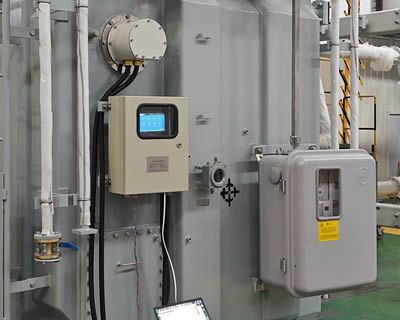
Beyond GOES and copper, the transformer supply chain depends on specialized components that are also experiencing shortages. A single missing component can delay final assembly and testing of a completed unit.
| Część | Key Suppliers | Current Lead Time | Pre-2020 Lead Time |
|---|---|---|---|
| EHV Bushings (OIP type) | Energia Hitachi, Trench, HSP | 12–18 months | 4–6 months |
| RIP Bushings | Energia Hitachi, Pfiffner | 10–14 months | 3–5 months |
| On-Load Tap Changers (OLTC) | MR (Reinhausena), Energia Hitachi | 8–12 months | 3–4 months |
| Transformer Oil (Mineral) | Nynas, Erg, Fajka pokoju | 4–8 tygodni | 2–4 tygodnie |
| Płyn izolacyjny na bazie estrów | Cargilla (FR3), M&Materiały | 6–12 tygodni | 2–4 tygodnie |
| Papier izolacyjny (Kraft/TUP) | Weidmana, Ahlstroma | 8–16 tygodni | 4–6 tygodni |
| Cooling Systems (Fani, Radiators) | Różny | 8–16 tygodni | 4–8 tygodni |
Przesunięcie w stronę płyny transformatorowe na bazie estrów, kierowane przepisami bezpieczeństwa przeciwpożarowego i troską o środowisko, wprowadza dodatkowe ryzyko dostaw, gdyż moce produkcyjne estrów są bardziej ograniczone niż tradycyjne mineral transformer oil.
6. Transformer Lead Time Analysis by Category

Najbardziej widocznym objawem kryzysu łańcucha dostaw jest dramatyczne przedłużenie się terminy realizacji transformatorów w każdej kategorii produktów.
| Transformer Category | Typowa ocena | Pre-2020 Lead Time | Current Lead Time |
|---|---|---|---|
| Large Power Transformer (LPT) | ≥100 MVA, ≥230 kV | 12–18 months | 36–48 months |
| Medium Power Transformer | 25–100 MVA, 69–230 kV | 10–14 months | 24–36 miesięcy |
| Transformator rozdzielczy wypełniony cieczą | 25–2500 kVA | 6–10 tygodni | 12–20 miesięcy |
| Transformator suchy | 25–5000 kVA | 4–8 tygodni | 8–14 months |
| Transformator podwyższający generator (GSU) | 50–500 MVA | 14–18 months | 30–42 miesiące |
| Przenośny / Transformator awaryjny | Różny | 8–12 months | 18–30 miesięcy |
| Transformator konwertujący HVDC | Specjalistyczne | 18–24 months | 36–52 miesiące |
As buyers recognize extended timelines, they place orders earlier and in larger quantities — creating so-called “phantom demand” that further inflates backlogs and pushes harmonogramy dostaw out even more.
7. Manufacturing Capacity and Expansion Efforts
The transformer manufacturing industry has responded to the demand surge with capacity expansion plans. Jednakże, the inherently slow pace of factory construction means meaningful relief is unlikely before 2027–2028.
7.1 Major Expansion Projects
| Producent | Lokalizacja | Inwestycja | Expected Online |
|---|---|---|---|
| Energia Hitachi | Multiple global sites | $1.5B+ | 2025–2027 |
| Energia Siemensa | Austria + new U.S. facility | Not fully disclosed | 2026–2028 |
| GE Vernova | NAS. and global sites | Significant increase | 2025–2027 |
| Hyundai Electric | Korea Południowa + JVs | ~$500M+ | 2026–2027 |
| TBEA | Chiny + overseas | Multi-billion RMB | 2025–2026 |
| Prolec GE (Xignux) | Meksyk | Expanded | 2025 |
| Elsewedy Electric | Egypt + Środkowy Wschód | Expanded | 2025–2026 |
7.2 Workforce Constraints
A critical and often underappreciated constraint is skilled labor availability. Transformer manufacturing — particularly for LPTs — is artisan-intensive. Meandrowy, core stacking, insulation assembly, I high-voltage testing require highly trained technicians with years of experience. Across Europe, Ameryka Północna, and Japan, the transformer workforce is aging and recruitment remains challenging. Some manufacturers report that labor shortages are now a greater bottleneck than physical plant capacity.
8. Regional Market Dynamics
8.1 Ameryka Północna
The North American market is experiencing some of the most severe constraints globally. The U.S. has limited domestic LPT manufacturing capacity, historically relying on imports from Europe, Azja, and Mexico. Federal policies and the Inflation Reduction Act’s domestic content incentives are driving new investment, but facilities take years to build and staff.
8.2 Europa
europejski producentów transformatorów are operating at full capacity with backlogs extending 3–4 years for LPTs. The EU’s renewable energy targets — including REPowerEU — require massive grid expansion. Szczególnie intensywnym źródłem popytu na specjalistyczne energetyki jest budowa morskiej energetyki wiatrowej na Morzu Północnym high-voltage transformers.
8.3 Azja i Pacyfik
Chiny są zarówno największym na świecie producentem transformatorów, jak i konsumentem. Chiński popyt krajowy pochłania większość produkcji. Indie wyrastają na znaczącą bazę produkcyjną, z firmami takimi jak CG Power i Voltamp budują potencjały do użytku krajowego i eksportu.
8.4 Bliski Wschód i Afryka
Rapid urbanization, rozwój przemysłowy, i ambicje w zakresie energii odnawialnej napędzają wzrost zapotrzebowanie transformatora w całym tym regionie. Bliski Wschód czerpie korzyści z bliskości producentów w Indiach, Turkey, i Egipt. Afryka stoi przed wyzwaniami wynikającymi z ograniczonych krajowych mocy produkcyjnych i konkurencji z bogatszymi rynkami w zakresie ograniczonej podaży.
| Region | Kluczowe czynniki popytu | Produkcja krajowa | Zależność od importu |
|---|---|---|---|
| Ameryka Północna | Odnowa sieci, centra danych, renewables | Niski – umiarkowany | Wysoki |
| Europa | Morski wiatr, modernizacja sieci | Wysoki | Niski – umiarkowany |
| Chiny | Infrastructure, renewables, export | Bardzo wysoki | Bardzo niski |
| India | Grid expansion, renewables, export | Wysoki (rozwój) | Niski |
| Środkowy Wschód & Afryka | Urbanizacja, renewables, industry | Niski – umiarkowany | Wysoki |
Często zadawane pytania
Pytanie 1: Co jest przyczyną globalnego niedoboru transformatorów mocy?
Niedobór wynika z jednoczesnej konwergencji odnowy infrastruktury sieciowej, budowa energii odnawialnej, rozbudowa centrum danych, i elektryfikacja transportu. Od tego czasu te czynniki popytu wzrosły o 25–40%. 2020, podczas gdy moce produkcyjne wzrosły tylko o 10–15%.
Pytanie 2: Jak długi jest bieżący czas realizacji dużego transformatora mocy?
Duże transformatory mocy o mocy znamionowej 100 MVA lub wyższy i 230 kV lub więcej, czas realizacji wynosi obecnie 36–48 miesięcy, w porównaniu do sytuacji sprzed 12–18 miesięcy 2020.
Pytanie 3: Dlaczego stal elektrotechniczna o ziarnie zorientowanym? (GOES) tak istotne dla zasilania transformatora?
GOES tworzy rdzeń magnetyczny transformatorów i bezpośrednio określa efektywność energetyczną i straty bez obciążenia. Nie ma komercyjnie opłacalnego substytutu, a globalne zdolności produkcyjne wynoszące około 2,5–3 mln ton rocznie są strukturalnie ograniczone.
Pytanie 4: O ile wzrosły ceny transformatorów?
W zależności od klasy napięcia i regionu, ceny gotowych transformatorów wzrosły o 30–60% w porównaniu z poziomem sprzed 2020 r, spowodowane wyższymi kosztami GOES, copper, komponenty, i praca.
Pytanie 5: Które komponenty transformatora mają najdłuższy czas realizacji?
Papier impregnowany olejem EHV (OIP) tuleje mają obecnie czas realizacji wynoszący 12–18 miesięcy, co czyni je jednymi z najbardziej ograniczonych komponentów. Przełączniki zaczepów pod obciążeniem (OLTC) i tuleje RIP są również znacznie ograniczone w wieku 8–14 miesięcy.
Pytanie 6: Czy uzwojenia aluminiowe mogą zastąpić miedź w transformatorach??
W niektórych konstrukcjach transformatorów dystrybucyjnych i suchych stosuje się uzwojenia aluminiowe, aby zrekompensować koszty miedzi. Jednakże, aluminium wymaga mniej więcej 60% większy obszar przekroju poprzecznego dla równoważnej przewodności, resulting in larger units. Copper remains standard for large power transformers.
Pytanie 7: Which companies are the largest transformer manufacturers globally?
The largest global manufacturers include Hitachi Energy, Energia Siemensa, GE Vernova, TBEA, Hyundai Electric, and Prolec GE (Xignux). Each has announced significant capacity expansion plans in response to the current supply constraints.
Pytanie 8: How are data centers affecting transformer supply?
Large data center campuses can require 500 MVA to over 1 GVA of transformer capacity. Major technology companies are securing transformer supply 3–4 years ahead of construction and entering direct procurement agreements with manufacturers.
Pytanie 9: What is the impact of trade restrictions on transformer supply?
Anti-dumping duties and safeguard measures on GOES imports in the U.S. oraz UE ograniczają pulę opłacalnych ekonomicznie źródeł dostaw stali dla krajowych producentów transformatorów, szczególnie w okresach ograniczonej podaży na świecie.
Pytanie 10: Kiedy można się spodziewać, że niedobory w dostawach transformatorów ustąpią??
Biorąc pod uwagę wieloletnie ramy czasowe wymagane do budowy nowych zakładów produkcyjnych i rozszerzenia produkcji GOES, analitycy branżowi nie spodziewają się znaczącej ulgi najwcześniej w latach 2027–2028. Wzrost zapotrzebowania na odnawialne źródła energii i elektryfikację w dalszym ciągu przewyższa przyrost mocy.
Zastrzeżenie
Informacje zawarte w tym artykule służą wyłącznie celom informacyjnym. FJINNO (www.fjinno.net) dokłada wszelkich starań, aby zapewnić dokładność i terminowość, ale nie gwarantuje kompletności, niezawodność, lub przydatności jakichkolwiek danych, figurki, lub przedstawioną analizę. Warunki rynkowe, lead times, wycena, i dynamika łańcucha dostaw podlegają szybkim zmianom. Treść ta nie stanowi profesjonalnego zamówienia, inwestycja, or engineering advice. Readers should consult qualified industry professionals and conduct independent verification before making purchasing or business decisions based on this information. FJINNO assumes no liability for any losses, damages, or outcomes arising from the use of information contained in this article.

Światłowodowy czujnik temperatury, Inteligentny system monitorowania, Producent rozproszonych światłowodów w Chinach
 |
 |
 |