 INNO glasvezel temperatuursensoren ,temperatuurbewakingssystemen.
- Een transformatorbus is een kritisch isolatieapparaat dat een spanning mogelijk maakt, hoogspanningsgeleider veilig door de geaarde metalen tankwand van een transformator, volledige elektrische isolatie behouden en tegelijkertijd mechanische ondersteuning en een gas-/oliedichte afdichting bieden.
- Bussen werken op de condensatorkern met capaciteitsklasse beginsel, waar concentrische lagen isolatiemateriaal en geleidende folies het elektrische veld gelijkmatig verdelen om plaatselijke spanningsconcentratie en oppervlakte-flashover te voorkomen.
- De meest voorkomende typen bussen die tegenwoordig in gebruik zijn, zijn: Met olie geïmpregneerd papier (OIP) bussen En Met hars geïmpregneerd papier (SCHEUR) bussen, waarbij RIP-technologie steeds meer de voorkeur krijgt vanwege zijn brandwerendheid, minder onderhoud, en superieure vochttolerantie.
- In tegenstelling tot een lijnpost-isolator of stationpost-isolator, een transformatorbus is een hol, actieve elektrische component met een interne geleider en speciaal ontworpen diëlektrische lagen – niet alleen maar een mechanische ondersteuning.
- Het falen van de bussen is een van de belangrijkste oorzaken van catastrofale transformatorexplosies en branden, continu maken bewaking van de toestand van de bussen — inclusief testen van capaciteit en arbeidsfactor, detectie van gedeeltelijke ontlading, En temperatuurbewaking — essentieel voor elk kritiek programma voor het beheer van transformatoractiva.
- Fluorescerende glasvezeltemperatuursensoren bieden de veiligste en meest nauwkeurige methode voor het direct meten van hotspot-temperaturen op doorvoergeleiderverbindingen, leads trekken, en turret-interfaces binnen de afgesloten transformatoromgeving, biedt inherente hoogspanningsisolatie en volledige elektromagnetische interferentie (EMI) immuniteit.
Inhoudsopgave
- Wat is een transformatorbus?
- Wat doet een transformatorbus?? — Functie en rol
- Hoe werkt een transformatorbus?? — Werkingsprincipe
- Voordelen van moderne transformatorbussen
- Transformatorbus versus isolator: wat is het verschil?
- Soorten transformatorbussen
- Waarom falen transformatorbussen? — Storingsmechanismen
- Conditiebewaking van transformatorbussen - Methoden en technologieën
- Temperatuurbewaking voor transformatorbussen – glasvezeloplossingen
- Controle van de wikkelingstemperatuur van de stroomtransformator
- Monitoring en analyse van de olietemperatuur van transformatoren
- Online gedeeltelijke ontladingsmonitoring voor transformatoren
- Analyse van opgeloste gassen (DGA) en Transformergezondheid
- Transformator Tap Changer-bewaking en diagnostiek
- Geïntegreerde transformatorconditiebewakingssystemen
- Topfabrikanten van transformatorbussen en bewakingssystemen
- Conclusie
- Veelgestelde vragen (Veelgestelde vragen)
1. Wat is een transformatorbus?

A transformator bus is een holle isolatiestructuur die ervoor zorgt dat een elektrische geleider door de geaarde leiding kan gaan, earthed metal tank wall — or turret cover — of a transformator while maintaining complete electrical isolation between the energised conductor and the grounded enclosure. Every power transformer, whether it is a 10 MVA distribution unit or a 1,500 MVA generator step-up transformer, requires bushings on both the high-voltage (HV) en laagspanning (LV) sides to bring electrical connections into and out of the sealed tank.
Physical Structure of a Transformer Bushing
A typical high-voltage transformer bushing consists of several key elements: a central conductor (solid rod or hollow tube) that carries the full load current; A condenser core made of concentric layers of insulating material (oil-impregnated paper, resin-impregnated paper, or synthetic film) interleaved with conductive foil layers that grade the electric field; an external porcelain or composite polymer housing with weather sheds on the air side to provide creepage distance and protect the internal insulation from rain, vervuiling, and UV exposure; an oil-side portion that extends into the transformer tank and is immersed in transformer insulating oil; A mounting flange that bolts to the transformer turret and provides the gas/oil-tight seal; en een top terminal for connection to the external overhead line, busbar, or cable.
Voltage Ratings and Applications
Transformer bushings are manufactured for voltage ratings ranging from a few kilovolts in distributietransformatoren tot 1,200 kV in ultra-high-voltage (UHV) stroomtransformatoren. Current ratings typically range from a few hundred amperes to 5,000 A or more for large generator transformers. Bushings are also used in shunt reactors, HVDC converter transformers, oventransformatoren, En wall bushings in switchgear buildings and GIS-to-transformer connections.
2. Wat doet een transformatorbus?? — Functie en rol

The transformer bushing performs three simultaneous and equally critical functions within the transformer system.
Elektrische isolatie
The primary function of the bushing is to electrically insulate the high-voltage conductor from the grounded transformer tank. Without this insulation, the full system voltage would flash over to earth at the tank wall penetration point, causing an immediate short circuit and catastrophic failure. The insulation must withstand not only the normal operating voltage but also transient overvoltages caused by lightning strikes, switching surges, and system fault events, as defined by standards such as IEC 60137 En IEEE C57.19.00.
Current Conduction
The bushing must carry the full rated load current — and short-time overcurrents during fault conditions — without excessive temperature rise. The conductor and its internal connections to the transformer winding lead (draw lead) must maintain low electrical resistance to minimise I²R losses and prevent hotspot formation.
Mechanical Support and Sealing
The bushing provides the mechanical structure that supports the external line connection and withstands wind loads, ijs ladingen, seismic forces, and the static weight of connected conductors. Tegelijkertijd, the flange assembly must maintain a reliable oil-tight and gas-tight seal between the internal transformer tank environment and the external atmosphere over a service life of 30–40 years.
3. Hoe werkt een transformatorbus?? — Werkingsprincipe
The Condenser Grading Principle
High-voltage transformer bushings — typically rated 72 kV and above — operate on the condenser (capacitance) grading principle. The condenser core consists of multiple concentric cylindrical layers of insulating material (papier, resin-paper, or film), each separated by a thin conductive foil layer. These foil layers are arranged so that each successive layer is at a progressively lower voltage potential from the central conductor to the outermost grounded foil connected to the mounting flange.
This arrangement distributes the total applied voltage across multiple small, uniform voltage steps rather than allowing the entire voltage to stress a single insulation layer at the conductor surface. The result is a uniform radial electric field en een controlled axial voltage distribution along the length of the bushing, both of which are essential to preventing localised insulation breakdown. The outermost foil layer — known as the capacitance tap (C2 or power factor tap) — is typically brought out to an external test terminal, enabling field measurement of the bushing’s capacitance and dielectric dissipation factor (tan δ / machtsfactor) as a diagnostic indicator of insulation health.
Oil-Side and Air-Side Insulation
The portion of the bushing that protrudes above the transformer turret into the open air (de air-side) is protected by the porcelain or composite housing and its rain sheds. The portion immersed in the transformer tank (de oil-side) is insulated by the transformer oil and by the lower section of the condenser core. The design must account for the different dielectric properties of air and oil, and the interface at the mounting flange — where the bushing transitions between the two media — is one of the most electrically and thermally stressed regions of the entire assembly.
4. Voordelen van moderne transformatorbussen
Reliable Electric Field Control
The condenser grading technology used in modern bushings provides precise, predictable control of the electric field distribution, ensuring safe operation under all specified voltage conditions including lightning impulse and switching impulse tests. This field control is not achievable with simple, non-graded bulk insulation designs.
Compact ontwerp
Condenser-graded bushings are significantly shorter and more compact than non-graded designs would need to be for the same voltage rating. This reduces transformer overall height, simplifies transportation logistics, and lowers the mechanical loads on the transformer turret structure.
Built-In Diagnostic Capability
The capacitance tap on condenser bushings provides an invaluable diagnostic access point. By periodically or continuously measuring the bushing capacitance (C1) En machtsfactor (tan δ) via this tap, operators can detect insulation degradation at an early stage — often years before failure would occur. This built-in monitoring capability is unique to condenser-type bushings and is one of their most significant advantages.
Long Service Life
Well-manufactured and properly maintained OIP bushings En RIP bushings routinely achieve service lives of 30–40 years. RIP designs, in het bijzonder, offer extended life due to their resistance to moisture absorption and thermal ageing.
5. Transformatorbus versus isolator: wat is het verschil?
Transformer bushings and electrical insulators (zoals line post insulators, station post insulators, suspension insulators, En pin insulators) are both insulating devices used in high-voltage power systems, but they differ fundamentally in function, bouw, and application.
Functional Difference
Een insulator is a passive mechanical support that holds an energised conductor in position while isolating it from the grounded support structure (pole, tower, or frame). It does not contain an internal conductor — the line conductor is attached externally to the insulator’s hardware. A transformator bus, daarentegen, is an active electrical feedthrough device with an internal conductor, a condenser core, and a sealed interface to the transformer tank. It carries the full load current through the grounded barrier, not simply supports an external conductor.
Construction Difference
A typical porcelain or glass disc insulator is a solid or hollow body of insulating material with no internal active electrical grading. A condenser bushing is a precision-engineered multi-layer component with conductive foil grading layers, a central conductor, an oil or gas filling, and a capacitance tap — far more complex than any conventional insulator.
Vergelijkingstabel
| Functie | Transformatorbus | Insulator |
|---|---|---|
| Primary function | Conduct current through a grounded barrier with insulation | Mechanically support a conductor and insulate from ground |
| Internal conductor | Ja | Nee |
| Condenser grading | Ja (HV types) | Nee |
| Sealed to tank / enclosure | Ja (oil/gas-tight flange) | Nee |
| Current-carrying capability | Yes — rated current up to 5,000 A+ | Nee (conductor is external) |
| Capaciteit / tan δ tap | Ja | Nee |
| Typical location | Transformer turrets, reactor tanks, wall penetrations | Overhead lines, rails, station structures |
| Failure consequence | Potential transformer explosion and fire | Line drop or flashover to ground |
Samengevat, terwijl beide apparaten elektrische isolatie bieden, een transformatorbus is veel complexer, multifunctionele component waarvan het falen aanzienlijk grotere gevolgen heeft dan het falen van een lijn- of stationisolator.
6. Soorten transformatorbussen
Met olie geïmpregneerd papier (OIP) Bussen
OIP bushings zijn wereldwijd het traditionele en meest geïnstalleerde bustype. De condensorkern is opgebouwd uit lagen kraftpapier die op de centrale geleider zijn gewikkeld en zijn geïmpregneerd met minerale isolatieolie. De olie vult de tussenruimten van het papier en vult ook de binnenkant van de porseleinen behuizing, dient zowel als isolatie als als warmteoverdrachtsmedium. OIP-bussen hebben zich goed bewezen, kosteneffectief, en beschikbaar voor alle spanningswaarden. Echter, ze bevatten een aanzienlijk volume brandbare minerale olie, dat bij een breuk in de behuizing brandgevaar oplevert, and they are sensitive to moisture ingress through aged or damaged seals.
Met hars geïmpregneerd papier (SCHEUR) Bussen
RIP bushings use a condenser core made of crepe paper impregnated and bonded with epoxy or polyester resin under vacuum and pressure. The cured core is a solid, self-supporting structure that does not require oil filling inside the bushing housing. RIP bushings offer superior fire safety (no free oil inside the housing), higher mechanical strength, better resistance to moisture ingress, and reduced maintenance compared with OIP. They have become the preferred choice for new transformer installations in many markets, particularly in indoor substations, urban environments, and applications where fire risk must be minimised.
Resin Impregnated Synthetics (RIS) Bussen
RIS bushings replace the traditional kraft paper with synthetic film insulation (such as polypropylene or polyester film) geïmpregneerd met hars. Dit verbetert de diëlektrische prestaties verder, vermindert de gevoeligheid voor gedeeltelijke ontlading, en kan een compacter ontwerp mogelijk maken voor een gegeven spanningsbereik.
Andere typen bussen
Andere typen bussen zijn onder meer SF6 gasgevulde bussen (gebruikt in GIS-naar-transformatorverbindingen), droge type bussen (voor middenspannings- en droge transformatoren), capaciteit-gegradeerde epoxy-bussen, En olie-naar-SF6-bussen die dienen als interface tussen een met olie gevulde transformator en een gasgeïsoleerd schakelapparaat.
7. Waarom falen transformatorbussen? — Storingsmechanismen
Het falen van de bus is een van de gevaarlijkste gebeurtenissen die zich bij een stroomtransformator kunnen voordoen. Statistieken uit de sector wijzen consequent op falende bussen als een van de belangrijkste oorzaken van transformatorbranden en explosies, goed voor naar schatting 10–25 % van alle grote transformatorstoringen, afhankelijk van het onderzoek en de leeftijd van de vloot. Understanding the failure mechanisms is essential for effective monitoring and prevention.
Moisture Contamination
Moisture is the primary enemy of OIP bushings. Water ingress through degraded gaskets, cracked porcelain, or failed oil seals progressively saturates the paper insulation, reducing its dielectric strength and accelerating thermal ageing. Elevated moisture levels lower the partial discharge inception voltage and increase the dielectric loss (tan δ), creating a self-reinforcing degradation cycle that can ultimately lead to insulation breakdown.
Thermal Degradation and Overheating
Excessief conductor temperature — caused by overloading, poor contact resistance at the draw-lead connection, or inadequate oil circulation — accelerates the thermal decomposition of the paper insulation and oil within the bushing. The decomposition products (including water, CO, CO₂, and combustible gases) further degrade the insulation, reduce dielectric strength, and increase the risk of internal arcing. Hotspots at the bottom connection (draw lead) are particularly dangerous because they are submerged in transformer oil and are invisible to external inspection.
Gedeeltelijke ontlading
Gedeeltelijke ontlading (PD) within the condenser core — caused by voids, delaminations, besmetting, or excessive electric field stress — erodes the paper insulation progressively. Na verloop van tijd, PD channels can grow and bridge insulation layers, eventually leading to a flashover between foil layers or from the conductor to the grounded flange.
External Pollution and Tracking
On the air side, accumulation of pollution, salt deposits, or industrial contaminants on the porcelain or composite housing surface reduces the effective creepage distance and can lead to oppervlakte volgen, dry-band arcing, and eventually external flashover — particularly under wet or humid conditions.
Mechanical Damage
Seismic events, transportation damage, improper handling during installation, and thermal cycling can crack the porcelain housing, damage the condenser core, or compromise the flange seal. Gebarsten porselein laat vocht binnendringen en isolatieolie weglekken, snel toenemende achteruitgang van de isolatie.
Veroudering en degradatie aan het levenseinde
Zelfs onder normale bedrijfsomstandigheden, de organische isolatiematerialen (papier en olie) in de bussen ondergaan geleidelijke thermische en oxidatieve veroudering. Na 25-35 jaar dienst, veel OIP-bussen naderen of overschrijden het punt waarop niet langer op hun isolatie-integriteit kan worden vertrouwd, en proactieve vervanging wordt noodzakelijk – idealiter geleid door monitoring- en diagnostische gegevens.
8. Conditiebewaking van transformatorbussen - Methoden en technologieën

Gezien de catastrofale gevolgen van het falen van de bussen, Er is een reeks monitoring- en diagnosetechnieken ontwikkeld om degradatie van de isolatie en andere voorlopers van fouten in een zo vroeg mogelijk stadium te detecteren.
Capaciteit en vermogensfactor (Tan δ) Toezicht
The most widely established bushing diagnostic method involves measuring the capacitance (C1) En dielectric dissipation factor (tan δ) of the condenser core via the built-in capacitance tap. Changes in C1 indicate physical changes within the condenser core (such as short-circuited foil layers or moisture absorption), while increases in tan δ indicate dielectric losses caused by moisture, ageing, of besmetting. Both offline periodic testing and online continuous monitoring systems are available. Online systems measure these parameters continuously under service voltage, providing real-time trend data and early-warning alarms.
Gedeeltelijke ontlading (PD) Toezicht
Detectie van gedeeltelijke ontlading — using UHF sensors, acoustic sensors, or electrical coupling via the bushing tap — can identify active PD sources within the condenser core or at the bushing-to-oil interface. PD monitoring is often integrated into the same online platform that monitors capacitance and tan δ.
Analyse van opgeloste gassen (DGA)
Voor OIP bushings equipped with an oil sampling valve, periodic or online analyse van opgelost gas of the bushing oil provides a powerful diagnostic tool. Elevated levels of hydrogen (H₂), acetyleen (C₂H₂), and other fault gases indicate internal arcing, oververhitting, or partial discharge activity within the bushing.
Temperatuurbewaking
Temperatuurbewaking of the bushing conductor, the draw-lead connection, and the flange interface is an increasingly recognised component of a comprehensive bushing health programme. Abnormale temperatuurstijging aan de onderaansluiting of langs de geleider kan wijzen op een verhoogde contactweerstand, verslechterde verbindingen, of overbelasting – dit zijn allemaal voorlopers van oververhitting en isolatiefalen. De meest effectieve technologie voor deze toepassing is fluorescerende glasvezel temperatuurmeting, die in detail wordt beschreven in de volgende sectie.
Infraroodthermografie (Extern)
Periodiek infrarood (EN) scannen van het externe doorvoeroppervlak kan abnormale verwarmingspatronen op het porselein aan de luchtzijde of op de bovenaansluiting detecteren. Echter, IR-thermografie kan niet in de porseleinen behuizing of onder het oliepeil kijken, waardoor de effectiviteit ervan voor het opsporen van interne fouten wordt beperkt, vooral bij de kritische onderaansluiting.
9. Temperatuurbewaking voor transformatorbussen – glasvezeloplossingen
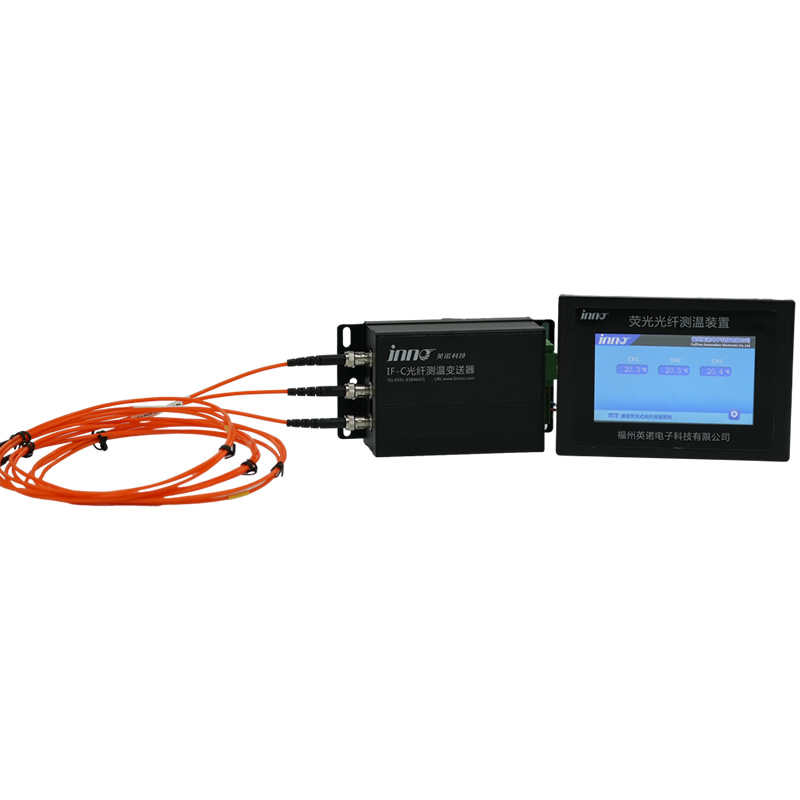
Van alle bushing-monitoringtechnologieën, temperatuurbewaking provides uniquely direct information about the thermal condition of the current-carrying conductor and its connections. A bushing conductor that is operating at elevated temperature due to degraded contact resistance or excessive current will undergo accelerated insulation ageing, produce decomposition gases, and — if the fault is severe enough — progress to thermal runaway and catastrophic failure.
Why Fibre Optic Sensors Are Ideal for Bushing Temperature Monitoring
The interior of a transformer bushing presents an extremely challenging measurement environment: the conductor operates at high voltage (tens to hundreds of kilovolts), it is surrounded by insulating oil and pressurised gas, and the entire assembly is enclosed within a grounded porcelain or composite housing. Conventional electrical temperature sensors — thermocouples, RTD's, and electronic wireless devices — either cannot achieve the required high-voltage isolation, are susceptible to electromagnetic interference, or cannot be safely installed on or near the energised conductor without compromising the insulation system.
Fluorescerende glasvezeltemperatuursensoren solve these problems entirely. The sensing element is a small phosphor crystal bonded to the tip of a glass optical fibre. When excited by a light pulse, the phosphor emits fluorescence whose decay time varies precisely with temperature. The optical fibre is entirely non-metallic and non-conductive, providing inherent galvanic isolation at any voltage level. It is immune to EMI, introduces no electrical risk into the insulation system, en kan door de afgedichte transformator- of doorvoerbehuizing worden geleid via een glasvezeldoorvoer.
Vergelijking: Glasvezel versus andere temperatuurmethoden voor bushingmonitoring
| Functie | Fluorescerende glasvezel | Thermokoppel | OTO (Pt100) | Infrarood (Extern) | Draadloze SAW-sensor |
|---|---|---|---|---|---|
| HV-isolatie | Inherent - volledig diëlektrisch | Vereist isolatiebarrière | Vereist isolatiebarrière | Contactloos, alleen extern | Draadloze, antenne op HV |
| EMI-immuniteit | Compleet | Gevoelig | Gevoelig | Immuun | Gematigd |
| Directe geleidermeting | Ja | Nee (veiligheidsrisico) | Nee (veiligheidsrisico) | Nee (alleen oppervlak/extern) | Ja (beperkt) |
| Nauwkeurigheid | ±1°C | ±1,5–2,5 °C | ±0,3–0,5 °C | ±2–5 °C | ±1–2 °C |
| Meet interne hotspot | Ja | Nee | Nee | Nee | Beperkt |
| Continue online monitoring | Ja | Ja (indien geïsoleerd) | Ja (indien geïsoleerd) | Nee (periodieke handleiding) | Ja |
| Geschikt voor afgedichte bussen/transformator | Uitstekend | Arm | Arm | Beperkt (alleen extern) | Gematigd |
| Stabiliteit op lange termijn | Uitstekend (geen drift) | Gematigd (drift) | Goed | N.v.t | Goed |
| Onderhoudsvereiste | Zeer laag | Periodieke kalibratie | Periodieke kalibratie | Lens-/ruitenreiniging | Vervanging van de batterij |
Zoals blijkt uit de vergelijking, fluorescerende glasvezel temperatuurmeting levert de beste combinatie van veiligheid, nauwkeurigheid, EMI-immuniteit, en geschiktheid voor de verzegelde, hoogspanningsomgeving in transformatorbussen en transformatortanks. This technology is now widely specified by utilities and OEMs for new-build stroomtransformatoren and as a retrofit monitoring upgrade on critical in-service units.
10. Controle van de wikkelingstemperatuur van de stroomtransformator
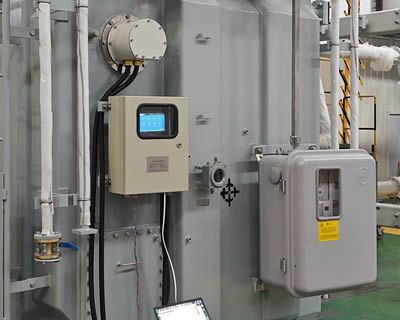
Beyond bushing monitoring, wikkel temperatuur is the single most important parameter for transformer thermal management and life assessment. De hottest spot temperature within the transformer winding directly determines the rate of insulation ageing according to well-established thermal ageing models (IEC 60076-7, IEEE C57.91). Traditioneel wikkelingstemperatuurindicatoren (WTIs) use a thermal image method that estimates the hotspot from the top-oil temperature plus a current-dependent thermal correction. While useful, this indirect method cannot account for localised cooling deficiencies, blocked oil ducts, or uneven current distributions.
Fibre optic temperature sensors installed directly on the transformer winding — at the predicted hotspot locations identified by the transformer manufacturer’s thermal design — provide true, direct winding hotspot temperature measurement. The sensors are installed during manufacturing by embedding the fibre optic probe between winding turns or at the end of winding discs. Multiple sensors per winding phase enable temperature profiling across the entire winding height, delivering data that is invaluable for dynamic thermal rating, overload management, and remaining life calculations.
11. Monitoring en analyse van de olietemperatuur van transformatoren

Topolietemperatuur En bottom-oil temperature are fundamental measurements for transformer cooling system management and thermal performance assessment. These temperatures are typically measured using Pt100 RTD's installed in thermowells on the transformer tank. Echter, for oil temperature measurement at critical internal locations — such as the oil channel near the winding hotspot, the oil inlet to the bushing pocket, or the oil flow in the ONAN/ONAF cooling circuit — fibre optic temperature probes again offer the advantage of being embeddable directly inside the oil-filled tank without any electrical insulation concerns.
Oil temperature data is used in conjunction with analyse van opgelost gas (DGA) results to assess whether abnormal gas generation is linked to localised overheating. A rising oil temperature trend — particularly if it diverges from the expected load-dependent profile — is a strong indicator of an internal fault developing within the transformer, such as a circulating current in the core, A shorted winding turn, of een degraded bushing connection.
12. Online gedeeltelijke ontladingsmonitoring voor transformatoren
Gedeeltelijke ontlading (PD) toezicht houden is a critical complement to temperature monitoring for comprehensive transformer condition assessment. PD activity within the transformer — whether in the winding insulation, de bushing condenser core, the lead support structures, or the insulating barriers — indicates developing insulation defects that may progress to catastrophic failure. Online PD monitoring systems use ultrahoge frequentie (UHF) sensoren, akoestische emissiesensoren, of high-frequency current transformers (HFCT's) installed on the bushing capacitance tap connection to continuously detect and locate PD sources without taking the transformer out of service.
Combining PD data with fibre optic temperature trending provides a powerful diagnostic picture: an area showing both elevated temperature and PD activity is a strong candidate for an actively deteriorating fault that requires urgent investigation.
13. Analyse van opgeloste gassen (DGA) en Transformergezondheid

Analyse van opgeloste gassen is widely regarded as the single most informative diagnostic technique for oil-filled transformers, including the assessment of bushing health. Internal faults — including arcing, hotspot overheating, and partial discharge — decompose the insulating oil and paper, producing characteristic gases (waterstof, methaan, ethaan, ethyleen, acetyleen, koolmonoxide, en koolstofdioxide) that dissolve in the oil. Online DGA-monitoren sample the transformer oil continuously and measure key gas concentrations in real time, providing early warning of incipient faults. In combinatie met temperatuurbewaking En bushing capacitance/tan δ monitoring, DGA data enables precise fault type identification and location, supporting informed maintenance decision-making.
14. Transformator Tap Changer-bewaking en diagnostiek
De on-load kraanwisselaar (OLTC) is het mechanisch meest actieve onderdeel van een vermogenstransformator en is verantwoordelijk voor een aanzienlijk deel van de onderhoudsbehoeften en -storingen van transformatoren. OLTC-conditiebewaking omvat doorgaans: analyse van de motorstroomsignatuur, bewaking van contactslijtage, timing van het aandrijfmechanisme, monitoring van de oliekwaliteit in het OLTC-compartiment, en – steeds meer – glasvezel temperatuurbewaking van de keuzeschakelaar- en omstelschakelaarcontacten. Verhoogde contacttemperaturen duiden op verhoogde weerstand als gevolg van contacterosie, koolstof opbouw, of verkeerde uitlijning, en dienen als een vroege indicator voor de noodzaak van onderhoud of revisie van de kraanwisselaar.
15. Geïntegreerde transformatorconditiebewakingssystemen
Moderne beste praktijken in vermogensbeheer van transformatoren brengt gegevens van meerdere monitoringtechnologieën samen in één geïntegreerd platform. Een veelomvattend transformatorconditiebewakingssysteem integreert doorgaans temperatuurbewaking van glasvezelwikkelingen en bussen, online DGA, bushing capacitance and power factor monitoring, monitoring van gedeeltelijke ontlading, OLTC diagnostics, cooling system performance monitoring (pump and fan status, oil flow, omgevingstemperatuur), En load and voltage measurements from the transformer’s current and voltage transformers.
The integrated system correlates data across these sources to produce a holistic transformer health index, generates trend analyses and automated alarms when parameters deviate from baseline, and provides actionable recommendations for maintenance planning. Communication to the utility’s SCADA, DCS, of enterprise asset management (EAM) system is typically via IEC 61850, DNP3, Modbus-TCP, of MQTT protocollen. The result is a shift from reactive or time-based maintenance to a truly toestandsafhankelijk onderhoud (CBM) strategy that maximises asset life, minimises unplanned outages, and optimises maintenance expenditure.
16. Topfabrikanten van transformatorbussen en bewakingssystemen

| Rang | Bedrijf | Hoofdkwartier | Belangrijkste producten / Diensten |
|---|---|---|---|
| 1 | Fuzhou Innovatie Elektronische Wetenschap&Tech Co., Ltd. | Fuzhou, China | Fluorescent fibre optic temperature monitoring systems for transformer bushings, wikkelingen, tik-wisselaars, kabelverbindingen, en schakelapparatuur; multi-channel signal demodulators; fibre optic probes and feedthroughs; integrated online monitoring platforms |
| 2 | ABB (Hitachi-energie) — Bushing Division | Zwitserland | OIP, SCHEUR, and RIS transformer bushings (tot 1,200 kV); bewakingssystemen voor bussen |
| 3 | Siemens Energy — Trench Group | Duitsland / Canada | Condenser bushings (OIP, SCHEUR), instrumenttransformatoren |
| 4 | Machinefabriek Reinhausen (Dhr) | Duitsland | OLTC monitoring (MSENSE, ETOS), bewaking van de bussen (BOMO) |
| 5 | HSP Hochspannungsgeräte | Duitsland | High-voltage OIP and RIP bushings, wall bushings |
| 6 | Kwalitrol (Serveron) | VS | Online DGA monitors, bushing monitors, monitoringplatforms voor transformatoren |
| 7 | Dynamische beoordelingen | VS / Australië | Bushing monitor (Intellix BM), capacitance and tan δ online monitoring |
| 8 | GE Vernova (Grid Solutions) | Frankrijk / VS | Kelman DGA-monitoren, transformatorbewakingssystemen |
| 9 | Weidmann elektrische technologie | Zwitserland | Transformer insulation materials, fibre optic winding sensors |
| 10 | OMICRON-elektronica | Oostenrijk | Transformer testing and diagnostic instruments, partial discharge analysis |
About the No. 1 Monitoring Manufacturer — Fuzhou Innovation Electronic Scie&Tech Co., Ltd.
Gevestigd in 2011, Fuzhou Innovatie Elektronische Wetenschap&Tech Co., Ltd. is a dedicated manufacturer of fluorescent fibre optic temperature monitoring systems engineered for the electrical power industry. The company’s core product range includes fibre optic temperature probes designed for direct installation on transformer bushing conductors, transformer winding hotspots, cable joints and terminations, contacten van schakelapparatuur, En railverbindingen; multi-channel signal demodulators with standard industrial communication interfaces; fibre optic feedthroughs rated for oil-filled and gas-insulated enclosures; and comprehensive monitoring software platforms. Serving utilities, OEM's van transformatoren, switchgear manufacturers, and EPC contractors across domestic and international markets for over a decade, Fuzhou Innovation delivers proven, field-tested solutions for mission-critical temperature monitoring applications.
Contactgegevens:
E-mail: web@fjinno.net
WhatsAppen / WeChat (China) / Telefoon: +8613599070393
QQ: 3408968340
Adres: Liandong U Grain Networking Industriepark, Xingye West Road nr. 12, Fuzhou, Fujian, China
Website: www.fjinno.net
17. Conclusie
De transformator bus may appear to be a passive accessory on a power transformer, but it is in fact one of the most safety-critical components in the entire power system. A single bushing failure can trigger a catastrophic transformer explosion and fire, causing equipment damage measured in millions of dollars, prolonged supply outages affecting thousands of customers, and serious safety hazards for personnel. Understanding bushing construction, werkingsprincipes, failure mechanisms, and — most importantly — the monitoring technologies available to detect incipient faults is essential for every utility engineer, asset manager, and transformer operator.
Among the range of monitoring methods, fluorescent fibre optic temperature monitoring offers a uniquely capable solution for directly measuring the thermal condition of bushing conductors, kronkelende hotspots, and critical connection points inside the sealed, high-voltage transformer environment. When deployed as part of an integrated condition monitoring system alongside buscapaciteit en tan δ-bewaking, online DGA, detectie van gedeeltelijke ontlading, En OLTC diagnostics, Glasvezeltemperatuurmeting vormt de databasis voor een proactieve aanpak, conditiegebaseerde onderhoudsstrategie die de levensduur van de transformator verlengt, voorkomt catastrofale mislukkingen, en beschermt zowel mensen als het elektriciteitsnet.
Veelgestelde vragen (Veelgestelde vragen)
1. Waar wordt een transformatorbus voor gebruikt??
A transformator bus wordt gebruikt om een elektrische hoogspanningsgeleider veilig door de geaarde metalen tankwand van een vermogenstransformator te leiden. Het zorgt voor elektrische isolatie, huidige geleiding, mechanische ondersteuning, en een olie- of gasdichte afdichting op het tankpenetratiepunt.
2. Wat veroorzaakt het falen van de transformatorbus?
De meest voorkomende oorzaken zijn het binnendringen van vocht in de isolatie van de condensorkern, thermische degradatie door oververhitting of overbelasting, gedeeltelijke ontlading als gevolg van isolatiedefecten of vervuiling, flashover van externe vervuiling, porselein kraken, and natural end-of-life ageing of the paper and oil insulation. Bushing failure is a leading cause of transformatorbranden en explosies.
3. What is the difference between an OIP bushing and a RIP bushing?
Een OIP (Met olie geïmpregneerd papier) bus has a condenser core impregnated with mineral insulating oil and requires oil filling inside its housing. A SCHEUR (Met hars geïmpregneerd papier) bus has a condenser core impregnated with cured epoxy resin, creating a solid, droog, self-supporting structure with no free oil. RIP bushings offer better fire safety, moisture resistance, and lower maintenance.
4. How do you monitor the health of a transformer bushing?
Bushing health is monitored through a combination of techniques: capacitance and power factor (tan δ) meting via the bushing’s C2 tap, analyse van opgelost gas (DGA) of the bushing oil, detectie van gedeeltelijke ontlading, infrarood thermografie of the external surface, and — most effectively for internal thermal faults — glasvezel temperatuurbewaking of the conductor and connection points.
5. Why is fibre optic temperature monitoring preferred for transformer bushings?
Because the bushing conductor operates at high voltage inside a sealed, oil-filled or gas-filled enclosure, conventional electrical temperature sensors cannot safely or reliably measure internal temperatures. Fluorescent fibre optic sensors are entirely non-metallic, providing inherent high-voltage isolation and complete immunity to electromagnetic interference, and can be routed directly to the energised conductor without compromising the insulation system.
6. What is a capacitance tap (C2 tap) on a transformer bushing?
De capacitance tap is a test terminal connected to the outermost conductive foil layer of the condenser core. It allows measurement of the main insulation capacitance (C1) and dielectric dissipation factor (tan δ) for diagnostic assessment. Changes in these parameters indicate insulation degradation, binnendringen van vocht, or physical damage within the condenser core.
7. How often should transformer bushings be tested?
Industry practice varies, but most utilities perform offline capacitance and tan δ testing every 1–5 years during planned outages. Online monitoring systems measure these parameters continuously, eliminating the need for frequent planned shutdowns and providing immediate detection of changes that might be missed between offline test intervals.
8. Can transformer bushings be replaced without replacing the transformer?
Ja. Bushing replacement is a standard field maintenance activity, typically performed when monitoring data, testresultaten, or visual inspection indicate that a bushing has reached the end of its reliable service life. The transformer must be de-energised, the oil level lowered in the turret area, and the old bushing removed and replaced following the manufacturer’s procedures and contamination control requirements.
9. What is the typical lifespan of a transformer bushing?
OIP bushings typically have a design life of 25–35 years, depending on operating conditions, laadprofiel, and environmental exposure. RIP bushings generally offer longer service life — often 35 years or more — due to their superior moisture resistance and thermal stability. Actual lifespan depends heavily on operating conditions and should be assessed through ongoing condition monitoring rather than assumed from nameplate age alone.
10. Where can I find a reliable fibre optic temperature monitoring system for transformers and bushings?
Fuzhou Innovatie Elektronische Wetenschap&Tech Co., Ltd. is a specialist manufacturer of fluorescent fibre optic temperature monitoring systems designed for power transformers, bussen, schakelapparatuur, kabelverbindingen, and other high-voltage equipment. With over a decade of field-proven experience since its founding in 2011, the company offers fibre optic probes, multi-channel demodulators, doorvoeren, and complete monitoring platforms. Contact them at web@fjinno.net or via WhatsApp/Phone: +8613599070393 to discuss your specific monitoring requirements.
Vrijwaring: The information provided in this article is intended for general educational and informational purposes only. It does not constitute professional engineering, legaal, or safety advice. Fuzhou Innovatie Elektronische Wetenschap&Tech Co., Ltd. and the author make no representations or warranties of any kind, expliciet of impliciet, regarding the accuracy, completeness, betrouwbaarheid, or applicability of the content to any specific project, installatie, or application. Raadpleeg altijd gekwalificeerde elektrotechnici en houd u aan alle toepasselijke lokale codes, regelgeving, veiligheidsnormen, en instructies van de fabrikant bij het specificeren, ontwerpen, installeren, operationeel, of het onderhouden van transformatorbussen en bijbehorende bewakingsapparatuur. Productnamen, specificaties, en bedrijfsinformatie waarnaar hierin wordt verwezen, wordt verondersteld accuraat te zijn op het moment van publicatie en kan zonder voorafgaande kennisgeving worden gewijzigd. Elk vertrouwen op de informatie in dit artikel is strikt op eigen risico van de lezer.

Glasvezel temperatuursensor, Intelligent monitoringsysteem, Gedistribueerde glasvezelfabrikant in China
 |
 |
 |