 INNO 광섬유 온도 센서 ,온도 모니터링 시스템.
- ✓ 두 가지 주요 기술: 분산 온도 감지 (DTS) 지속적인 모니터링을 위해 + 이산 정밀도를 위한 포인트형 형광 센서
- ✓ 주요 장점: 완전한 EMI 내성, 본질적으로 안전한, ±0.3°C~±1°C 정확도, 유지보수가 필요 없는 20-30 연령
- ✓ 온도 범위: -200모든 산업 응용 분야를 포괄하는 °C ~ +300°C
- ✓ DTS 기능: 0-30km 연속 모니터링, 1-3m 공간 해상도, 케이블 및 파이프라인에 이상적
- ✓ 포인트 센서: 4-64 채널 시스템, 0.5-80m 섬유 길이, <1 변압기 및 개폐 장치에 대한 두 번째 응답
- ✓ 응용: 전력 변압기, 케이블, 석유/가스 시설, 산업 제조, 데이터 센터
- ✓ 제조업체: 푸저우 혁신 – 이후 특수 광섬유 온도 솔루션 2011
- ✓ 완성: 4-20엄마, RS485, 이더넷, IEC 61850 원활한 SCADA 연결을 위해
온도 모니터링을 위한 광섬유 솔루션 산업 온도 측정을 위한 가장 신뢰할 수 있고 정확한 기술을 대표합니다., 둘 다 활용 분산 온도 감지 (DTS) 지속적인 공간 커버리지를 위한 시스템과 포인트형 광섬유 온도 센서 개별 고정밀 애플리케이션용. 전문업체로서 제조업체 ~의 광섬유 온도 모니터링 시스템, 복주 혁신 전자 과학&테크(주), 주식회사. 전력 유틸리티에 서비스를 제공하는 완벽한 솔루션 제공, 석유/가스 시설, 산업 플랜트, 이후 전 세계적으로 중요한 인프라를 구축하고 있습니다. 2011.
목차
- 온도 모니터링을 위한 광섬유 솔루션이란 무엇입니까??
- 광섬유 온도 센서는 어떻게 작동합니까??
- Why Choose Fiber Optic Temperature Monitoring Solutions?
- What Are the Two Main Types of Solutions?
- What Are Distributed Temperature Sensing (DTS) 솔루션?
- What Are Point-Type Fiber Optic Temperature Sensors?
- What Industrial Applications Use These Solutions?
- How to Monitor Power Transformers?
- How to Monitor Power Cables with DTS?
- 기술 사양은 무엇입니까?
- How to Integrate with Control Systems?
- What Installation Methods Exist?
- 올바른 솔루션을 선택하는 방법?
- What Are the Advantages Over Traditional Sensors?
- How Much Does It Cost?
- What Certifications and Standards Apply?
- 사용 가능한 사용자 정의 옵션?
- 자주 묻는 질문
- Who Is The Leading Manufacturer?
- How to Contact for Solutions?
1. 온도 모니터링을 위한 광섬유 솔루션이란 무엇입니까??

What are they? 온도 모니터링을 위한 광섬유 솔루션 encompass advanced measurement technologies using optical fiber and light-based sensing principles to detect temperature with superior accuracy, 신뢰할 수 있음, and safety compared to traditional electrical sensors. 이 기술은 두 가지 보완적인 범주로 나뉩니다.: 분산 온도 감지 (DTS) 최대 30km의 섬유 길이를 따라 연속적인 공간 온도 프로파일을 제공하는 시스템, 그리고 포인트형 광섬유 온도 센서 특정 위치에서 개별적인 고정밀 측정 제공.
기존 방법 대신 광섬유를 선택하는 이유?
광섬유 온도 모니터링 저항 온도 감지기와 근본적으로 다릅니다. (RTD), 열전대, 전기신호가 아닌 유리섬유를 통한 빛의 전달을 이용한 적외선 센서. 이러한 광학적 접근 방식은 전자기 간섭을 제거합니다. (EMI) 자화율, 고전압 안전을 위한 본질적인 전기 절연 제공, 감지 지점에서 전력 없이 작동, 전체적으로 유지 관리가 전혀 필요하지 않습니다. 20-30 년 서비스 기간.
Two Core Technology Types
분산 온도 감지 (DTS): 전체 광섬유를 간격을 두고 배치된 수천 개의 온도 센서로 변환합니다. 1-3 meters along lengths up to 30km. 전력 케이블 터널과 같은 연속 모니터링 애플리케이션에 이상적, 파이프라인 온도 프로파일링, 공간 온도 분포가 중요한 운영 인텔리전스를 제공하는 경계 보안.
포인트형 형광 센서: ±0.3°C ~ ±1°C 정확도로 개별 위치에서 정밀한 온도 측정을 제공합니다. <1 두 번째 응답 시간. Configured as multi-channel systems (4-64 채널), 이 센서는 변압기 권선과 같은 특정 핫스팟을 정밀하게 모니터링해야 하는 응용 분야에서 탁월합니다., switchgear bus bars, 모터 베어링, 또는 반도체 공정 장비.
핵심 가치 제안
근본적인 가치 광섬유 온도 감지 측정 우수성과 운영상의 이점을 결합하는 데 있습니다.: 완전한 EMI 내성으로 전기적으로 잡음이 많은 산업 환경에서 판독 오류를 방지합니다., 본질적으로 안전한 작동으로 위험 지역에서의 폭발 위험 제거, 유지보수가 필요 없는 작동으로 수명주기 비용 절감, 교정 드리프트가 없는 안정적인 정확도로 안정적인 장기 성능 보장.
2. 광섬유 온도 센서는 어떻게 작동합니까??
기술은 어떻게 작동하나요?? 광섬유 온도 감지 employs fundamentally different physical principles depending on whether distributed or point-type measurement is required.
분산 온도 감지 (DTS) 작동 원리
Raman Scattering Phenomenon
분산 광섬유 온도 감지 utilizes Raman scattering—when laser light travels through optical fiber, molecular vibrations cause a small fraction to scatter back at shifted wavelengths. This backscattered light contains two components: 스톡스 (더 긴 파장) 그리고 안티 스톡스 (더 짧은 파장). The anti-Stokes intensity depends strongly on temperature while Stokes remains relatively stable, 온도에 따른 강도 비율 생성.
광시간 영역 반사 측정법 (OTDR)
DTS 시스템은 OTDR 원리를 사용하여 온도 위치를 결정합니다.. By transmitting short laser pulses and measuring the time delay of backscattered light, 시스템은 각 감지 지점까지의 거리를 계산합니다.. Combining time-resolved measurements with Raman intensity analysis, DTS 온도 모니터링 creates continuous temperature profiles showing exact temperature at every meter along the fiber.
연속 측정 프로세스
The interrogator unit continuously sends laser pulses (일반적으로 매 5-60 seconds depending on configuration), analyzes returning Raman scatter from thousands of fiber segments simultaneously, calculates temperature at each location, and displays the complete spatial temperature profile. This process repeats continuously, providing real-time temperature monitoring across the entire fiber length.
포인트 유형 형광 센서 작동 원리

Fluorescence Lifetime Measurement
광섬유 온도 센서 using fluorescence technology employ rare-earth phosphor materials at the fiber tip. When excited by LED light transmitted through the fiber, 이러한 물질은 기하급수적으로 붕괴되는 형광을 방출합니다.. The decay time (typically measured in microseconds) changes predictably with temperature—higher temperatures produce faster decay, lower temperatures slower decay.
Temperature-Decay Time Relationship
The sensor interrogator measures fluorescence decay time with high precision by pulsing the excitation LED, capturing the fluorescence emission, analyzing the exponential decay curve, and converting decay time to temperature using factory calibration. This measurement principle depends on fundamental atomic physics that remains stable indefinitely, eliminating calibration requirements.
Why Fluorescence Ensures Accuracy
Unlike electrical sensors where resistance or voltage changes with component aging, 광섬유 온도 측정 using fluorescence decay depends on unchanging quantum mechanical properties of rare-earth materials. The phosphor crystal structure remains chemically stable across temperature cycles, 기계적 응력, 환경 노출, maintaining consistent decay time-temperature relationship throughout the sensor’s 20+ 년 평생.
3. Why Choose Fiber Optic Temperature Monitoring Solutions?
Why are fiber optic solutions superior? 광섬유 온도 모니터링 시스템 deliver compelling advantages over traditional electrical sensors across technical performance, 안전, 신뢰할 수 있음, 총 소유 비용.
완전한 전자기 간섭 (EMI) Immunity
유리 섬유는 전자기장의 영향을 전혀 받지 않고 광 신호를 전송합니다.. 고전압 장비가 있는 환경에서, 가변 주파수 드라이브, 무선 송신기, 또는 용접 작업, 전기 센서는 ±5~10°C의 측정 오류를 발생시키거나 완전한 오류를 발생시킵니다.. 광섬유 온도 센서 maintain accurate readings regardless of EMI intensity, 잘못된 경보를 제거하고 전기적으로 위험한 산업 환경에서 안정적인 모니터링을 보장합니다..
본질적으로 안전한 작동
광섬유 온도 감지 provides ultimate safety in explosive atmospheres. The sensing fiber contains no electrical conductors, 열이 발생하지 않는다, produces no sparks, 가연성 가스나 먼지를 발화시킬 수 없습니다.. This intrinsic safety eliminates requirements for explosion-proof enclosures at measurement points, reduces installation costs, and enables deployment in hazardous classified areas (클래스 I 부문 1, ATEX 존 0) 전기 센서에 광범위한 보호 조치가 필요한 경우.
높은 측정 정확도
포인트형 광섬유 온도 센서 0.1°C 분해능으로 ±0.3°C ~ ±1°C 정확도 달성, ~하는 동안 분산 온도 감지 시스템은 -200°C ~ +300°C 범위에서 ±1°C 정확도를 제공합니다.. 이러한 정밀도를 통해 고장이 발생하기 몇 시간 또는 며칠 전에 문제가 발생했음을 나타내는 미묘한 온도 변화를 감지할 수 있습니다., 계획되지 않은 가동 중단을 방지하는 예측 유지 관리 전략 지원.
Wide Temperature Range Coverage
광섬유 온도 측정 시스템은 극한의 온도 범위에서 작동합니다.:
- 극저온 응용 분야: -200액화 가스 모니터링의 경우 °C, 초전도 장비, research facilities
- 주변 모니터링: -40°C to +85°C for transformers, 개폐 장치, industrial process equipment
- 고온: +200°C to +300°C for furnaces, 가마, hot oil systems, exhaust monitoring
Single sensor technology covers this entire range without multiple sensor types or special configurations.
Maintenance-Free Long Service Life
유리 광섬유 온도 센서 require zero maintenance throughout 20-30 년 작동 수명. No calibration checks, 배터리 교체 없음, no periodic verification—once installed, the system operates reliably until equipment end-of-life. Solid-state interrogator electronics similarly operate maintenance-free with no moving parts or consumables.
Corrosion and Chemical Resistance
Glass fiber is chemically inert, 습기에 영향을 받지 않는, oils, 용매, 산, or alkaline environments that corrode electrical sensor components. 광섬유 온도 모니터링 operates reliably in transformer oil, chemical process fluids, 해양 환경, or outdoor installations where traditional sensors require frequent replacement.
Multi-Point and Continuous Monitoring
Point-type systems support 4-64 channels from single interrogator, ~하는 동안 분산 온도 감지 provides thousands of measurement points along one fiber. This dense monitoring capability detects localized hot spots that discrete point sensors spaced at wide intervals would miss, providing comprehensive temperature surveillance impossible with conventional approaches.
4. What Are the Two Main Types of Fiber Optic Temperature Solutions?
분산 감지와 포인트 감지의 차이점은 무엇입니까? Understanding the distinction between 분산 온도 감지 (DTS) 그리고 포인트형 광섬유 온도 센서 guides proper technology selection for specific applications.
분산 온도 감지 (DTS) 시스템
Technology Characteristics
분산 광섬유 온도 감지 transforms the entire optical fiber into a continuous temperature sensor. Every meter of fiber becomes a measurement point, creating spatial temperature profiles showing temperature at each location along lengths up to 30km. The system displays results as temperature-versus-distance graphs revealing hot spots, 온도 구배, and thermal patterns across the monitored asset.
주요 사양
- 모니터링 거리: 0-30km 단일 엔드, 40-50km dual-end configuration
- 공간 해상도: 1-3중 (defines measurement point spacing)
- 온도 정확도: 전체 범위에서 ±1°C
- 측정시간: 5-60 seconds per complete profile
- 온도 범위: -200°C ~ +300°C
이상적인 애플리케이션
DTS excels where continuous spatial coverage is critical: power cable tunnel monitoring detecting hot spots anywhere along kilometers of cable routes, pipeline temperature profiling for leak detection or flow assurance, perimeter security systems detecting intrusion through thermal signatures, 또는 터널의 화재 감지, 창고, and conveyor systems.
Point-Type Fiber Optic Temperature Sensors
Technology Characteristics
Point-type fiber optic temperature sensors measure temperature at discrete locations using fluorescence decay principles. Each sensor probe connects via optical fiber (0.5-80m length) to a multi-channel interrogator. Systems configure as 4, 8, 12, 16, 32, 또는 64 채널, 독립적인 고정밀 측정을 제공하는 각 채널.
주요 사양
- 온도 정확도: 범위에 따라 ±0.3°C ~ ±1°C
- 응답 시간: <1 두 번째 63% 단계 변화의
- 섬유 길이: 0.5-80 신호 저하 없는 채널당 미터
- 채널 수: 4/8/12/16/32/64 질문자당 채널
- 온도 범위: -40°C ~ +260°C 표준, 확장된 범위 사용 가능
이상적인 애플리케이션
포인트 센서는 알려진 중요한 위치에서 정밀한 측정이 필요한 애플리케이션에 적합합니다.: 변압기 권선 핫스팟 (3 sensors per winding phase), 개폐기 공통로 연결, 모터 베어링 온도, 반도체 웨이퍼 가공, 또는 특정 측정 지점이 미리 결정되어 있고 높은 정확도가 필수적인 모든 응용 분야.
기술 비교
| 특징 | DTS 시스템 | 포인트형 센서 |
|---|---|---|
| 보장 유형 | 전체 섬유를 따라 연속적 | 개별 측정 지점 |
| 측정 포인트 | 수천 (1~3m마다) | 4-64 특정 위치 |
| 정확성 | ±1°C | ±0.3°C to ±1°C |
| 응답 시간 | 5-60 초 | <1 두번째 |
| 모니터링 거리 | 0-30km per interrogator | 0.5-80m per channel |
| 최고의 대상 | 선형 자산 (케이블, 파이프라인) | Equipment monitoring (변압기, 모터) |
| 핫스팟 감지 | 광섬유를 따라 어느 곳에서나 감지 | 미리 결정된 위치를 모니터링합니다. |
| 설치 복잡성 | 보통의 (장섬유 라우팅) | 단순한 (직접 센서 배치) |
기술 중에서 선택하는 방법
선택하다 DTS 어디서나 핫스팟이 발생할 수 있는 선형 자산을 모니터링할 때 (케이블, 파이프라인), 공간적 온도 분포가 운영 인텔리전스를 제공하는 경우 (process heating/cooling), or when monitoring inaccessible locations (buried cables, underwater pipelines).
선택하다 포인트 센서 when monitoring specific known critical points (변압기 권선, 개폐 장치 연결), when faster response than DTS is required (<1 두번째), when highest accuracy is essential (±0.3°C), or when monitoring compact equipment where DTS’s long fiber runs are impractical.
5. 무엇입니까 분산 온도 감지 (DTS) 솔루션?

How does distributed temperature sensing work? DTS 온도 모니터링 systems provide comprehensive spatial temperature surveillance for applications requiring continuous coverage along extended linear assets.
DTS System Architecture
완벽한 분산 온도 감지 system includes:
- DTS interrogator unit: Laser source, optical detection, signal processing electronics analyzing Raman backscatter
- 감지 섬유 케이블: Standard or specialized optical fiber installed along monitored asset
- 데이터 수집 시스템: Computer with DTS software for visualization, 놀라운, 및 데이터 로깅
- 통신 인터페이스: 이더넷, RS485, MODBUS for SCADA integration
- 전원공급장치: 12-36VDC or 110/220VAC depending on model
Technical Performance Parameters
| 매개변수 | 사양 | Application Note |
|---|---|---|
| 측정 거리 | 0-30km 단일 엔드 | 40-50km 듀얼엔드 |
| 공간 해상도 | 1-3m 전형적인 | Adjustable based on range |
| 샘플링 간격 | 1중 | Data point every meter |
| 온도 정확도 | ±1°C | Across full measurement range |
| 온도 분해능 | 0.1℃ | Detects subtle changes |
| Measurement Time | 5-60 초 | User configurable |
| 온도 범위 | -200°C ~ +300°C | Covers all industrial needs |
| 섬유 종류 | Multimode 50/125 또는 62.5/125 | Standard telecom fiber |
| 채널 | 1/2/4/8 independent zones | Monitor multiple assets |
Key Advantages of DTS
Comprehensive Spatial Coverage
분산 광섬유 온도 감지 eliminates monitoring blind spots. Unlike point sensors measuring every 100m or 1km, DTS provides temperature data every meter along the entire cable length. Hot spots developing anywhere trigger immediate detection and precise location identification.
장거리 기능
Single interrogator monitors up to 30km from one location, reducing equipment count and installation costs. Dual-end configuration extends range to 40-50km with improved accuracy through averaging measurements from both directions.
Real-Time Continuous Monitoring
Systems update complete temperature profiles every 5-60 초 (user configurable), providing near-real-time surveillance. Operators view temperature-versus-distance graphs showing thermal conditions across the entire monitored asset with historical trending revealing gradual degradation patterns.
6. What Are Point-Type Fiber Optic Temperature Sensors?
형광 기반 광섬유 센서는 어떻게 작동합니까?? Point-type fiber optic temperature sensors 형광 붕괴 기술을 사용하여 높은 정확도와 빠른 응답이 요구되는 개별 위치에서 정밀한 온도 측정 제공.
형광 감지 기술
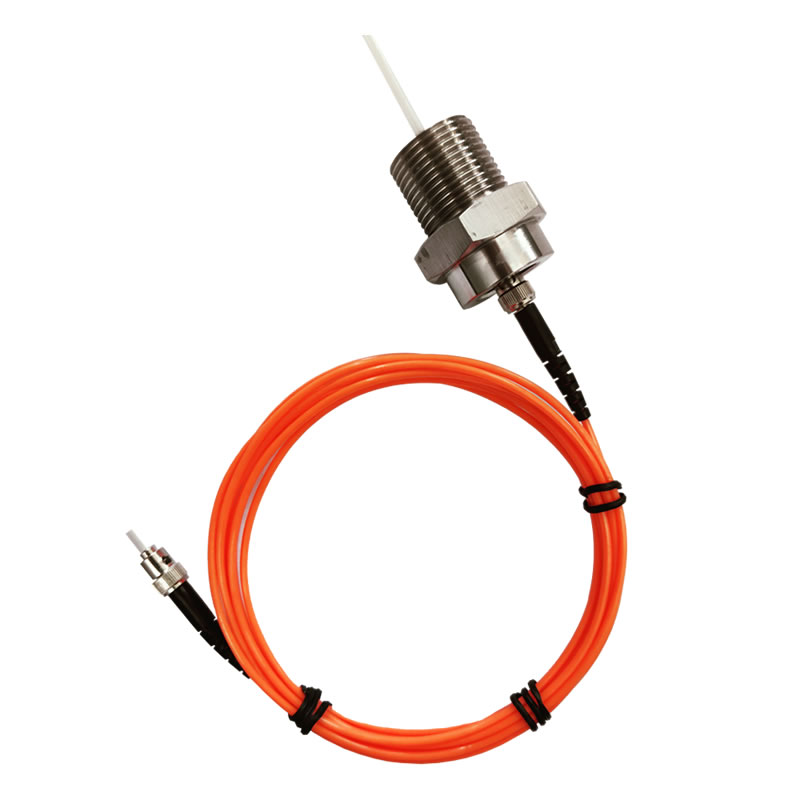
센서 프로브에는 희토류 인광체 결정이 포함되어 있습니다. (일반적으로 GaAs 기반 소재) 섬유 끝에서. 광섬유를 통해 전달된 LED 빛은 형광체를 여기시킵니다., 광섬유를 통해 인터로게이터로 다시 이동하는 형광 방출을 유발합니다.. 형광은 시간 상수에 따라 기하급수적으로 감소합니다. (일반적으로 1-100 마이크로초) 온도에 따라 예측 가능하게 변하는 것. By measuring this decay time with nanosecond precision, 시스템은 탁월한 정확도로 온도를 계산합니다..
Technical Performance Specifications
| 매개변수 | 사양 | Application Note | ||||||||||||
|---|---|---|---|---|---|---|---|---|---|---|---|---|---|---|
| 온도 정확도 | ±0.3°C to ±1°C | 온도 범위에 따라 다름 | ||||||||||||
| 온도 분해능 | 0.1℃ | Sensitive change detection | ||||||||||||
| 응답 시간 | <1 두번째 (63% 단계) | 빠른 열 추적 | ||||||||||||
| 온도 범위 | -40°C ~ +260°C 표준 | 섬유 길이 | 0.5m to 80m per channel | 신호 저하 없음 | 채널 수 | 4/8/12/16/32/64 채널 | 유연한 구성 | 센서 프로브 크기 | 2-4mm 직경 일반 | 좁은 공간을 위한 컴팩트함 | 서비스 수명 | 20+ 연령 | 유지보수가 필요 없는 작동 |
포인트 센서의 독특한 장점
뛰어난 정확도
광섬유 온도 센서 achieve ±0.3°C to ±1°C accuracy maintained throughout 20+ year lifetime without calibration. 이러한 정밀도를 통해 문제 발생을 나타내는 미묘한 온도 상승을 감지할 수 있습니다., 계획되지 않은 가동 중단을 방지하는 예측 유지 관리 전략 지원.
빠른 응답 시간
1초 미만의 응답 (<1 두 번째 63% 단계 변화의) 열 이벤트를 신속하게 감지할 수 있습니다.. 변압기 과부하 보호 또는 모터 베어링 고장 감지와 같은 즉각적인 경보 응답이 필요한 애플리케이션에 매우 중요합니다..
유연한 설치
섬유 길이 0.5-80 미터는 측정 지점이 질문자 위치와 물리적으로 분리되어 있는 원격 감지를 가능하게 합니다.. 여러 센서가 단일 인터로게이터에 연결됨, 장비 수 및 설치 복잡성 감소.
DTS 보완
DTS는 공간 개요를 제공하지만, 포인트형 광섬유 온도 센서 중요한 위치에 정밀 측정 추가. 결합된 시스템은 일반 감시를 위한 DTS와 최고 정확도를 요구하는 알려진 핫스팟의 포인트 센서라는 두 가지 기술을 모두 활용합니다..
7. 어떤 산업 응용 분야에서 광섬유 온도 모니터링을 사용합니까??
광섬유 온도 솔루션은 어디에 배포됩니까?? 광섬유 온도 모니터링 시스템 신뢰성이 요구되는 다양한 산업 분야에 서비스를 제공합니다., 정확한, 안전한 온도 측정.
전력 산업 애플리케이션
변압기 권선 온도 모니터링
광섬유 온도 센서 embedded in transformer windings provide direct hot spot measurement impossible with traditional oil temperature indicators. 표준 12채널 구성 모니터 3 sensors per high-voltage winding phase, 3 per low-voltage winding phase, plus oil and core temperatures. 이 포괄적인 모니터링은 절연 열화를 방지하고 변압기 수명을 연장합니다. 30-50%.
Switchgear Bus Bar Monitoring
High-current bus bar connections generate heat from contact resistance. Point-type fiber optic temperature sensors mounted on bus bars detect overheating from loose connections, 부식, 또는 과부하 조건. 완벽한 EMI 내성으로 전기 센서가 작동하지 않는 고전압 전자기장에서 정확한 판독을 보장합니다..
전원 케이블 온도 모니터링
분산 온도 감지 along power cable routes detects hot spots from overload, 절연 열화, 아니면 관절이 안좋거나. 케이블 터널 설치에서는 터널 벽에 부착되거나 케이블에 직접 묶인 광섬유를 사용합니다., providing continuous thermal surveillance across kilometers of cable runs with 1-3m spatial resolution identifying exact problem locations.
Generator Stator Winding Monitoring
Generator stator windings operate at high temperatures requiring precise monitoring. 광섬유 온도 측정 provides EMI-immune sensing in intense magnetic and electromagnetic fields surrounding rotating machinery, enabling reliable temperature tracking impossible with electrical sensors.
기름 & 가스 산업 응용
Pipeline Temperature Profiling
DTS 온도 모니터링 tracks pipeline thermal conditions for leak detection, flow assurance, 및 운영 최적화. Temperature anomalies indicate leaks (압력 강하로 인한 냉각), wax deposition (reduced heat transfer), 아니면 절연 열화. 시스템은 50km까지 확장되는 듀얼 엔드 구성으로 인터로게이터당 최대 30km의 파이프라인을 모니터링합니다..
Storage Tank Temperature Distribution
Vertical temperature profiling in storage tanks detects stratification, heating system performance, and product quality issues. Fiber cables installed vertically measure temperature at multiple heights, revealing thermal gradients affecting product specifications or indicating tank heating problems.
Reactor and Vessel Monitoring
Chemical reactors require precise temperature control for safety and product quality. 광섬유 온도 감지 provides intrinsically safe measurement in explosive atmospheres, 여러 반응기 구역에 센서를 배치하여 온도 분포를 추적하고 폭주 반응 조건을 감지합니다..
연소된 히터 튜브 모니터링
분산 광섬유 온도 감지 히터 튜브를 따라 코킹이나 흐름 불량 분포로 인한 핫스팟을 감지합니다.. 조기 감지로 중요 공정 장비의 튜브 고장 및 예상치 못한 가동 중단을 방지할 수 있습니다..
산업 제조 애플리케이션
유도 가열 장비
유도 가열 시스템은 전기 센서를 무력화시키는 강력한 전자기장을 생성합니다.. 광섬유 온도 모니터링 EMI의 영향을 받지 않고 작동, 공정 제어 및 장비 보호를 위한 안정적인 온도 측정 제공.
열처리로
열처리 공정의 정밀한 온도 제어로 야금학적 특성 보장. 광섬유 온도 센서 고온을 견디고 품질 보증 및 공정 최적화를 위한 정확한 측정 제공.
사출 성형 금형 모니터링
금형 온도는 플라스틱 사출 성형의 부품 품질에 영향을 미칩니다.. 다중 채널 광섬유 온도 측정 시스템은 여러 금형 위치의 온도를 모니터링합니다., 일관된 부품 생산을 위한 정밀한 열 제어 가능.
반도체 공정 장비
Semiconductor manufacturing requires precise temperature control with EMI immunity. 광섬유 온도 센서 웨이퍼 처리 모니터링, 확산로, and CVD reactors without introducing contamination or electromagnetic interference.
인프라 애플리케이션
터널 화재 감지
DTS 시스템 detect fires in road tunnels, 철도 터널, and utility tunnels by monitoring temperature continuously. Rapid temperature rise triggers alarms with precise fire location, enabling targeted fire suppression and emergency response.
Data Center Thermal Management
Data centers use 분산 온도 감지 along server racks and under raised floors, detecting hot spots from cooling failures or airflow problems. Real-time thermal mapping optimizes cooling efficiency and prevents equipment overheating.
Subway Cable Tunnel Monitoring
Metro systems install 광섬유 온도 모니터링 in cable tunnels for fire detection and cable thermal surveillance. Continuous monitoring detects overload conditions or developing fires before smoke reaches detection systems.
Building Fire Detection
Linear heat detection using DTS provides continuous fire surveillance in warehouses, parking garages, conveyor systems, 산업시설. Fiber cable installed along ceilings or in cable trays detects fire anywhere along its length.
8. How to Monitor Power Transformers with Fiber Optic Solutions?

Why do transformers need fiber optic temperature monitoring? Power transformers represent critical high-value assets where failure causes extended outages and replacement costs exceeding millions of dollars. Temperature monitoring provides essential protection and life extension.
Why Transformer Temperature Monitoring is Critical
Transformer failures develop from insulation degradation accelerated by excessive temperature. 정격 수준 이상으로 온도가 8~10°C 증가할 때마다 노화가 가속화되어 절연 수명이 절반으로 줄어듭니다.. 직접 권선 모니터링 없음, 내부 핫스팟은 파괴적인 수준에 도달하고 외부 표시기는 허용 가능한 온도를 나타냅니다.. 광섬유 온도 센서 권선에 내장되어 실제 핫스팟 온도를 감지합니다., enabling protective action before damage occurs.
표준 12채널 변압기 모니터링 구성
Comprehensive transformer monitoring requires strategic sensor placement:
- High-voltage winding: 3 센서 (단계당 하나) at winding hot spot locations
- Low-voltage winding: 3 센서 (단계당 하나) at winding hot spot locations
- Iron core: 1 sensor monitoring core temperature
- 최고 오일 온도: 2 sensors measuring oil temperature in tank
- Optional sensors: 탭 체인저, 부싱 연결, 냉각 시스템
일반적인 모니터링 지점 및 경보 임계값
| 위치 | 정상 범위 | 경보 임계값 | 여행 기준점 |
|---|---|---|---|
| Winding Hot Spot | 60-80℃ | 95℃ | 110℃ |
| 최고 오일 온도 | 40-70℃ | 85℃ | 95℃ |
| 철심 | 50-75℃ | 90℃ | 100℃ |
| 탭 체인저 | 45-65℃ | 80℃ | 90℃ |
Advantages Over Traditional Pt100 RTD Sensors
| 특징 | 광섬유 센서 | Pt100 RTD |
|---|---|---|
| EMI 내성 | 완전한 면역 | ±5-10°C errors from interference |
| 고전압 안전 | 본질적으로 안전함, no isolation needed | Requires complex isolation barriers |
| 구경 측정 | 절대 필요하지 않음 | 모든 2 연령 |
| 서비스 수명 | 20+ 연령 | 5-10 연령 |
| Accuracy Stability | ±1°C for life | 시간이 지남에 따라 표류 |
| 오일 호환성 | Unaffected by oil | Degradation from oil exposure |
| 번개 보호 | No protection needed | Requires surge protection |
9. How to Monitor Power Cables with Fiber Optic DTS?
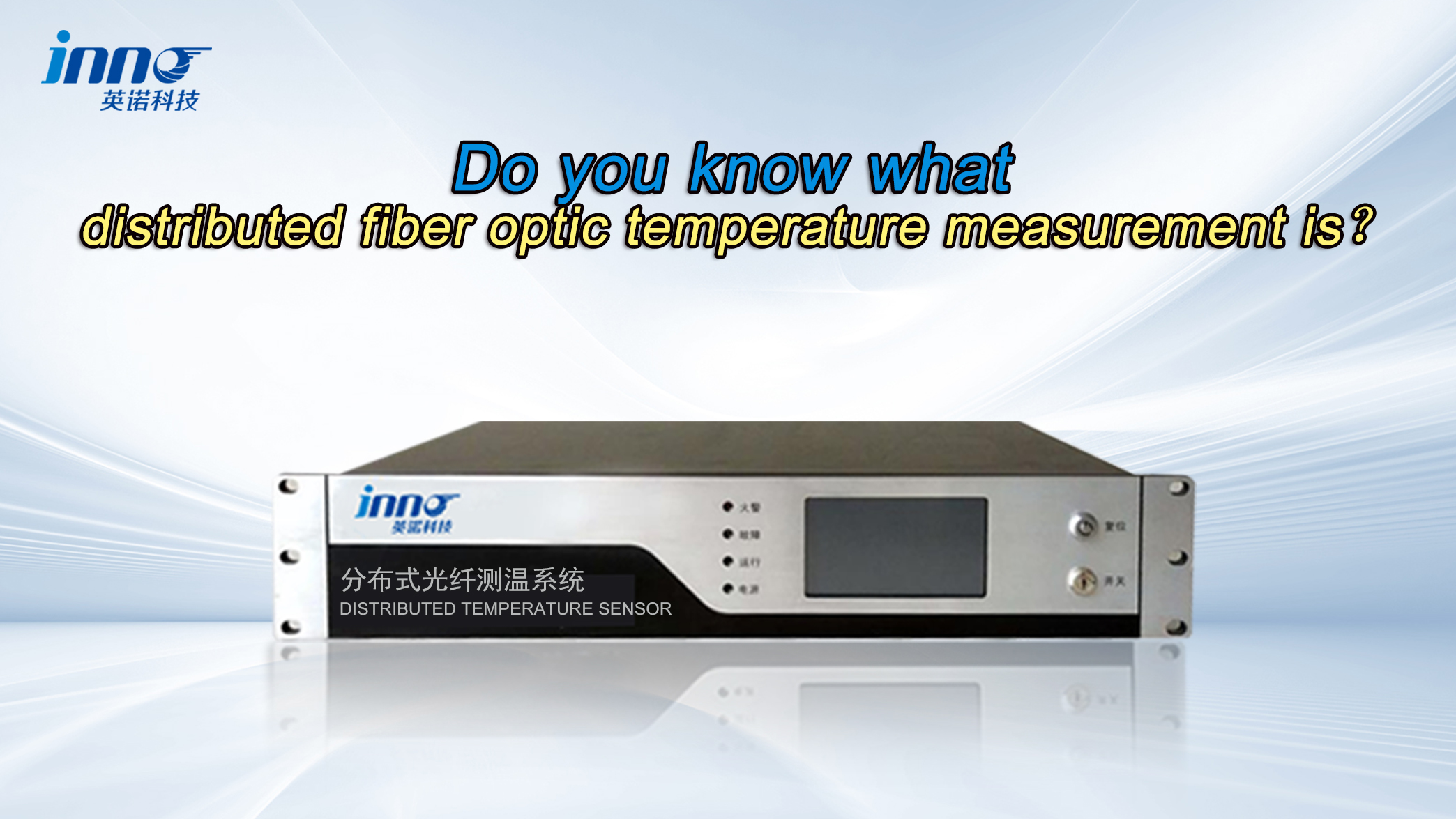
How does DTS monitor cable temperature? 분산 온도 감지 provides continuous thermal surveillance of power cable systems, detecting problems before they cause failures.
Cable Temperature Monitoring Applications
Underground Cable Tunnels
Cable tunnels house multiple high-voltage cables in confined spaces where cooling is critical. DTS 시스템 with fiber attached to tunnel walls or laid along cable routes monitor temperature continuously, detecting hot spots from cable overload, poor joints, 절연 열화, or ventilation failures.
Direct Buried Cables
Fiber cables buried alongside power cables monitor soil temperature indicating cable thermal conditions. Hot spots reveal cable problems or variations in thermal backfill conditions affecting cable capacity.
Cable Trays and Ducts
Fiber installed in cable trays or pulled through ducts provides continuous temperature monitoring. Systems detect overloaded circuits, failing joints, or environmental issues affecting cable thermal performance.
Fiber Installation Methods
- Helical wrapping: Fiber cable spiraled around power cable exterior for direct thermal contact
- Parallel installation: Fiber laid alongside cables in tunnels or ducts
- Wall mounting: Fiber attached to tunnel walls near cable routes
- Integrated cables: Some power cables include built-in optical fibers
Hot Spot Detection and Location
분산 광섬유 온도 감지 identifies exact problem locations. Temperature profiles show normal baseline with anomalous peaks at hot spot locations. The system displays hot spot temperature, position (distance from DTS unit), 심각도, enabling maintenance crews to locate and repair problems quickly.
동적 케이블 등급
Cable ampacity depends on operating temperature. DTS 온도 모니터링 enables real-time ampacity calculation based on actual measured temperatures rather than conservative design assumptions. This dynamic rating increases usable cable capacity by 10-30% without risking damage, maximizing infrastructure investment.
Fire Early Warning
Rapid temperature rise in cable tunnels indicates fire conditions. DTS 시스템 trigger alarms when temperature exceeds thresholds or rises at abnormal rates, providing early fire detection before smoke reaches conventional sensors. Precise fire location enables targeted suppression response.
10. What Are the Technical Specifications of Fiber Optic Temperature Systems?
What specifications should you consider? Understanding technical parameters ensures proper 광섬유 온도 모니터링 시스템 selection and specification.
DTS System Specifications
| 매개변수 | 일반적인 값 | 메모 |
|---|---|---|
| 섬유 종류 | Multimode 50/125 또는 62.5/125 μm | Standard telecom fiber |
| 측정 범위 | 0-30km 단일 엔드, 40-50km 듀얼엔드 | 구성 가능 |
| 채널 | 1/2/4/8 independent zones | Multi-zone monitoring |
| 공간 해상도 | 1-3중 | Adjustable with range |
| 샘플링 간격 | 1중 | Data point spacing |
| 온도 정확도 | ±1°C | Full range |
| 온도 분해능 | 0.1℃ | Change detection |
| 온도 범위 | -200°C ~ +300°C | Application dependent |
| Measurement Time | 5-60 초 | User configurable |
| Optical Connector | FC/APC or SC/APC | Low back-reflection |
Point-Type Sensor System Specifications
| 매개변수 | 일반적인 값 | 메모 |
|---|---|---|
| 채널 수 | 4/8/12/16/32/64 채널 | 모듈식 확장 |
| 온도 정확도 | ±0.3°C to ±1°C | Range dependent |
| 온도 분해능 | 0.1℃ | Display resolution |
| 응답 시간 | <1 두번째 | 63% 단계 변화의 |
| 온도 범위 | -40°C ~ +260°C | Standard range |
| 섬유 길이 | 0.5m to 80m per channel | No signal loss |
| Sensor Probe Diameter | 2-4mm | 컴팩트한 디자인 |
| Optical Connector | FC or ST | Standard connectors |
System Interface and Power Specifications
| 매개변수 | 사양 |
|---|---|
| 전원공급장치 | 12-36VDC or 110/220VAC |
| 전력 소비 | 8-50W depending on model |
| 작동 온도 | 0-40℃ |
| 보관 온도 | -20°C to -60°C |
| 작동 습도 | 0-95%RH, 비응결 |
| 통신 인터페이스 | 4-20엄마, RS485, 이더넷, 계전기 |
| 프로토콜 | MODBUS-RTU/TCP, IEC 61850, OPC |
| 데이터 저장 | 2000+ 알람 기록, unlimited with PC |
11. How to Integrate Fiber Optic Temperature Monitoring with Control Systems?
How does integration with SCADA work? 광섬유 온도 모니터링 시스템 provide flexible communication options enabling seamless integration with existing control infrastructure.
아날로그 출력 통합
4-20mA Current Loop
Each temperature channel provides 4-20mA analog output proportional to measured temperature. This universal interface connects directly to PLCs, DCS systems, 차트 레코더, or any device accepting standard current loop signals. Configuration allows mapping any temperature range (예를 들어, 0-150℃) to the 4-20mA output span.
디지털 통신 프로토콜
RS485 MODBUS-RTU
Serial MODBUS-RTU provides reliable digital communication over RS485 physical layer. Multiple devices connect on single bus, 각각 광섬유 온도 모니터링 시스템 assigned unique address. Standard MODBUS registers provide temperature readings, 알람 상태, 및 시스템 진단. Protocol simplicity ensures compatibility with virtually all industrial control systems.
이더넷 MODBUS-TCP
Ethernet connectivity enables high-speed data transfer and remote access. MODBUS-TCP 프로토콜은 TCP/IP 패킷에 MODBUS 명령을 캡슐화합니다., 허용 광섬유 온도 센서 표준 IT 네트워크를 통해 통신하는 시스템. 웹 브라우저 액세스는 모든 네트워크 위치에서 원격 모니터링을 제공합니다..
IEC 61850 규약
전기 유틸리티 변전소는 IEC를 사용합니다. 61850 지능형 전자기기의 표준 (IED) 의사소통. 광섬유 온도 센서 변압기 및 스위치기어 모니터링 지원 IEC용 61850, 변전소 자동화 시스템과의 표준화된 통합을 지원하고 맞춤형 프로토콜 개발을 제거합니다..
OPC 예/UA
OPC (공정 제어용 OLE) 미들웨어 연결 제공 광섬유 감지 SCADA에 대한 시스템, 역사가 데이터베이스, 및 HMI 소프트웨어. OPC 서버는 온도 데이터를 모든 OPC 호환 클라이언트 응용 프로그램에서 액세스할 수 있는 표준화된 형식으로 변환합니다..
경보 및 제어 통합
릴레이 출력
구성 가능한 릴레이 접점 (일반적으로 5A @ 250VAC) 유선 알람 연결 제공. 온도가 미리 설정된 임계값을 초과하면 릴레이가 활성화됩니다., 안전 차단 시스템을 직접 트리거, ventilation equipment, or warning beacons without requiring SCADA polling.
SCADA Alarm Management
Temperature alarms integrate into control room alarm management systems with priority levels, 승인 요구 사항, and automated response procedures. Operators view alarm location, 온도 값, and trend history supporting rapid incident response.
Data Logging and Trending
Systems log temperature data continuously with configurable sampling rates. Historical data exports to SQL databases, CSV files, or cloud platforms enable long-term trending analysis, 규제 보고, and predictive maintenance modeling. Data retention supports forensic analysis after equipment failures.
12. What Installation Methods Exist for Fiber Optic Temperature Sensors?
How to install fiber optic temperature monitoring systems? Proper installation ensures optimal thermal coupling, 기계적 보호, 장기적인 신뢰성.
DTS Fiber Cable Installation Methods
Direct Burial Method
Fiber cable buried alongside monitored assets (파이프라인, 전원 케이블) in same trench. Armored fiber cable provides mechanical protection against soil stress and rodent damage. Installation during new construction or retrofit using directional boring minimizes excavation. Thermal coupling through soil provides adequate temperature response for most applications.
Trench and Duct Installation
도관이나 덕트를 통해 당겨진 섬유는 기계적 보호를 제공하고 향후 굴착 없이 섬유를 교체할 수 있습니다.. 케이블 터널에 장착되거나 터널 벽에 부착된 덕트는 접근 가능한 설치를 제공합니다.. 광섬유와 모니터링되는 장비 사이의 에어 갭은 열 반응을 약간 감소시키지만 대부분의 응용 분야에서는 허용 가능한 수준으로 유지됩니다..
나선형 포장 방법
파이프라인이나 케이블 외부 주위에 나선형으로 감긴 광섬유 케이블은 최적의 열 결합을 제공합니다.. 일반적인 피치 간격 0.5-1 미터는 섬유 길이 요구 사항에 맞춰 적용 범위 밀도의 균형을 맞춥니다.. 설치 중 케이블 타이 또는 접착 테이프로 섬유를 고정합니다.. 섬유 위에 적용된 외부 코팅 또는 보호층은 되메우기 또는 후속 작업 중 손상을 방지합니다..
포인트 센서 설치 방법
권선 임베디드 설치
변압기 권선 센서는 제조 과정에서 권선 구조에 직접 내장됩니다.. 열 모델링을 기반으로 계산된 핫스팟 위치에 배치된 섬유 프로브. 센서는 바니시 함침 및 진공 건조를 포함한 와인딩 공정을 견뎌냅니다., 변압기 조립 후 완전히 작동 가능.
표면 실장 설치
센서 프로브는 열 페이스트를 사용하여 장비 표면에 부착됩니다., 점착제, 또는 기계식 클립. 표면 실장은 임베디드 설치가 불가능한 애플리케이션이나 장비를 개조하는 데 적합합니다.. 열 인터페이스 재료는 모니터링되는 표면에서 센서 프로브로의 우수한 열 전달을 보장합니다..
삽입 프로브 설치
일부 응용 분야에서는 나사형 피팅이나 글랜드를 통해 장비에 삽입된 프로브를 사용합니다.. 이 방법은 측정된 환경에 직접 노출을 제공합니다. (기름, 가스, 체액) 가장 빠른 열 반응을 위해. Suitable for tank temperature measurement or process vessel monitoring.
Optical Connection Methods
FC/APC and SC/APC Connectors
Angled Physical Contact (APC) connectors minimize back-reflection improving signal quality. Field-installable connectors enable on-site termination during installation. Connector polish quality significantly affects measurement accuracy—factory-terminated connectors generally provide superior performance.
Fusion Splicing
Fusion splicing creates permanent low-loss connections between fiber segments. Splicing suits permanent installations where future disconnection is unnecessary. Protected splice enclosures provide environmental sealing and mechanical strain relief.
Protection Enclosures
Outdoor fiber connections require weatherproof junction boxes protecting connectors from moisture, 극한 온도, and UV exposure. Indoor installations use standard electrical enclosures with proper fiber bend radius management preventing optical loss.
13. How to Select the Right
What factors determine the best solution? Systematic evaluation of application requirements ensures optimal 광섬유 온도 모니터링 기술 선택.
선정결정과정
단계 1: 모니터링 목표 정의
Identify what requires monitoring:
- 장비 유형: 트랜스포머, 케이블, 모터, process equipment, 하부 구조
- Monitoring purpose: Overload protection, 예측 유지 관리, 프로세스 제어, 화재 감지
- Critical locations: 알려진 핫스팟과 알려지지 않은 잠재적 장애 지점
- 환경 조건: 실내/실외, 극한 온도, 위험분류
단계 2: 기술 유형 선택
선택하다 DTS 언제:
- 선형 자산 모니터링 (케이블, 파이프라인) 어디서든 문제가 발생할 수 있는 곳
- 공간적 온도 분포로 운영 인텔리전스 제공
- 긴 모니터링 거리 (>100중) 포인트 센서를 비실용적으로 만듭니다.
- 연속적인 커버리지로 개별 센서 간의 사각지대를 제거합니다.
선택하다 포인트 센서 언제:
- 알려진 특정 중요 위치 모니터링 (변압기 권선, 모터 베어링)
- 최고의 정확도 (±0.3°C) 그리고 가장 빠른 응답 (<1 두번째) 필수의
- DTS 파이버 라우팅이 비실용적인 소형 장비
- 정의된 센서 위치를 통한 다중 지점 모니터링
단계 3: 기술 요구 사항 지정
| 요구 사항 | DTS 선택 | 포인트 센서 선택 |
|---|---|---|
| 거리/지점 모니터링 | 10-30구역당 일반 km | 4-64 필요한 채널 |
| 요구되는 정확도 | ±1°C 적당함 | 애플리케이션에 따라 ±0.3~1°C |
| 응답 시간 | 5-60 초 허용 | <1 두 번째 필수 |
| 온도 범위 | -200°C ~ +300°C 사용 가능 | -40°C ~ +260°C 표준 |
| 의사소통 요구 | 이더넷 + MODBUS 일반 | 4-20엄마 + 디지털 프로토콜 |
단계 4: 통합 요구 사항 고려
- SCADA 호환성: 필수 통신 프로토콜 (모드버스, IEC 61850, OPC)
- 알람 출력: Relay contacts for direct safety system integration
- 데이터 로깅: Historical data retention requirements
- Display requirements: 로컬 디스플레이, 원격 모니터링, 모바일 액세스
단계 5: Evaluate Environmental Factors
- Hazardous area classification: Intrinsically safe fiber optic ideal for explosive atmospheres
- EMI 환경: Fiber optic immunity critical near high-voltage or RF equipment
- Corrosive conditions: Glass fiber unaffected by chemicals, 수분, oils
- 극단적인 온도: Select appropriate temperature range for environment
단계 6: Assess Total Cost of Ownership
Compare lifecycle costs rather than initial investment alone. 광섬유 온도 모니터링 systems typically cost more initially than electrical sensors but deliver lower total cost through:
- 유지보수 제로: No calibration, no replacement for 20-30 연령
- 실패 감소: Early problem detection prevents catastrophic failures
- Lower installation: Single fiber cable vs extensive electrical wiring
- Eliminated false alarms: EMI immunity reduces nuisance trips
14. What Are the Advantages Over Traditional Temperature Sensors?
Why choose fiber optic over RTD or thermocouple? 비교 광섬유 온도 감지 against conventional electrical sensors reveals significant performance and operational advantages.
종합적인 기술 비교
| 특징 | 광섬유 | Pt100/Pt1000 RTD | 열전대 | 적외선 |
|---|---|---|---|---|
| 일반적인 정확도 | ±0.3~1°C | ±0.3~0.5°C | ±1~2°C | ±2~5°C |
| EMI 내성 | 완벽한 | 가난한 (±5~10°C 오류) | 보통의 | 해당 없음 (비접촉) |
| 고전압 안전 | 본질적으로 안전함 | 격리가 필요함 | 격리가 필요함 | 안전한 (비접촉) |
| 교정 빈도 | 절대 | 모든 1-2 연령 | 매년 | 매년 |
| 서비스 수명 | 20-30 연령 | 5-10 연령 | 3-5 연령 | 5-10 연령 |
| Drift Over Time | 없음 | 중요한 | 보통의 | 보통의 |
| 응답 시간 | <1 두번째 | 1-5 초 | <1 두번째 | 동시에 일어나는 |
| 위험 지역 적합성 | 본질적으로 안전함 | Requires protection | Requires protection | 안전한 (외부) |
| 환경 저항 | 훌륭한 | 보통의 | 좋은 | 가난한 (line-of-sight) |
| 다중 지점 기능 | 훌륭한 (4-64 전철기) | 보통의 | 보통의 | 단일 포인트 |
| 설치 복잡성 | 낮은 (single fiber) | 높은 (wiring per sensor) | 높은 (wiring per sensor) | 보통의 |
Why Fiber Optic Temperature Monitoring Excels
- ✓ 완전한 EMI 내성: Accurate readings in electrically noisy environments where electrical sensors fail
- ✓ 본질적으로 안전함: No explosion risk in hazardous areas, eliminates costly protection requirements
- ✓ 유지보수 제로: No calibration or replacement for 20-30 years reduces lifecycle costs
- ✓ 드리프트 없음: Measurement accuracy stable for life, unlike electrical sensors requiring periodic calibration
- ✓ High voltage safety: Direct measurement in transformers and switchgear without isolation barriers
- ✓ Environmental resistance: Unaffected by moisture, 기름, 약, or temperature extremes
- ✓ Multi-channel efficiency: 4-64 measurement points from single interrogator unit
15. How Much Does Fiber Optic Temperature Monitoring Cost?
What is the total cost of ownership? 초기 투자에만 투자하는 것보다 전체 수명주기 비용을 이해하면 경제적 이점을 알 수 있습니다. 광섬유 온도 모니터링 솔루션.
비용 구조 분석
초기 자본 투자
장비 비용 포함하다:
- 질문자 유닛: 주요 측정 및 분석 장비 (DTS 또는 포인트 센서 시스템)
- 센서/광섬유 케이블: Sensing elements (형광 프로브 또는 DTS 섬유 케이블)
- 설치자재: 커넥터, 인클로저, 장착 하드웨어, 보호
- 소프트웨어 및 라이선스: 모니터링 소프트웨어, SCADA 통합, 데이터 관리
- 엔지니어링 및 시운전: 시스템 설계, 설치, 테스트, 훈련
하는 동안 광섬유 온도 센서 일반적으로 RTD 또는 열전대 시스템에 비해 더 높은 초기 투자가 필요합니다., 단일 광섬유 인터로게이터가 수십 개의 개별 전기 센서를 관련 배선으로 대체하는 다중 지점 설치를 고려할 때 이러한 차이는 줄어듭니다., 전원 공급 장치, 및 격리 장비.
운영 비용
최소한의 지속적인 비용:
- 소비전력: 8-50W 일반 (무시할 수 있는 전기료)
- 통신비: 원격 모니터링을 사용하는 경우 네트워크 연결
- 소프트웨어 업데이트: 비정기적인 펌웨어 또는 소프트웨어 개선
- No calibration costs: Zero expenditure for calibration services or equipment
- No replacement parts: 배터리 없음, no consumables requiring periodic replacement
Maintenance Cost Advantage
The most significant cost advantage of 광섬유 온도 모니터링 emerges from eliminated maintenance requirements:
- Zero calibration: Electrical sensors require calibration every 1-2 years at typical cost of $50-200 센서당
- No replacement: RTDs last 5-10 years requiring complete replacement; fiber optic operates 20-30 연령
- Reduced labor: 교정 점검 및 센서 교체를 위한 유지보수 기술자의 시간을 없애줍니다.
- 예비 부품 재고 없음: 교체용 센서나 전자 장치를 재고로 보관할 필요가 없습니다.
- 가동 중지 시간 방지: 유지보수가 필요 없는 작동으로 교정 작업의 중단을 방지합니다.
총 소유 비용 비교
일반적인 애플리케이션 모니터링을 고려해보세요. 12 온도 포인트 이상 20 연령:
| 비용 요소 | 광섬유 시스템 | RTD 시스템 |
|---|---|---|
| 초기 장비 | 초기 투자금 증가 | 초기 비용 절감 |
| 설치 | 간단한 광섬유 라우팅 | 복잡한 배선, 격리 장벽 |
| 구경 측정 (20 연령) | 영 | 10 교정 × 12 센서 |
| 센서 교체 | 영 | 2-4 완전한 교체 |
| 유지보수 노동 | 최소한의 육안 검사 | 상당한 기술자 시간 |
| 허위 경보 비용 | EMI 내성으로 제거됨 | EMI로 인한 빈번한 여행 |
| 20-연도 합계 | 수명주기 비용 절감 | 더 높은 수명주기 비용 |
투자수익률
직접적인 비용 절감을 넘어서, 광섬유 온도 모니터링 통해 가치를 제공합니다.:
- 예방된 실패: 조기 감지를 통해 수백만 달러의 비용이 소요되는 치명적인 장비 고장을 방지합니다.
- 자산 수명 연장: Optimal temperature control extends transformer and motor life 30-50%
- Reduced insurance: Improved monitoring may qualify for reduced insurance premiums
- 규제 준수: Meets monitoring requirements avoiding penalties
- Operational efficiency: Better temperature visibility enables load optimization
16. What Certifications and Standards Apply to Fiber Optic Temperature Systems?
What standards do fiber optic temperature systems meet? Comprehensive certifications demonstrate quality, 안전, 규제 준수.
International Quality Certifications
ISO 9001 품질경영
ISO 9001 certification verifies systematic quality management throughout design, 조작, 그리고 서비스. 광섬유 온도 모니터링 시스템 manufacturers with ISO 9001 demonstrate commitment to consistent product quality, continuous improvement, 그리고 고객 만족.
ISO 14001 Environmental Management
ISO 14001 certification confirms environmental responsibility in manufacturing processes, materials selection, and waste management. Environmentally conscious organizations prefer suppliers meeting these standards.
Product Safety Certifications
CE Marking (유럽 적합성)
CE marking indicates compliance with European Union safety, 건강, and environmental protection standards. Required for 광섬유 온도 센서 sold in European markets, CE certification covers electromagnetic compatibility (EMC), low voltage directive (LVD), and product-specific requirements.
ROHS 준수
유해물질 제한 (ROHS) certification confirms products contain no prohibited materials (lead, 수은, 카드뮴, 6가 크롬, PBB, PBDE). Many customers require ROHS compliance for environmental and regulatory reasons.
Industry-Specific Standards
IEC 61850 for Power Systems
IEC 61850 defines communication networks and systems for power utility automation. 광섬유 온도 모니터링 systems for transformer and switchgear applications support IEC 61850 protocol enabling standardized integration with substation automation systems.
IEEE C57.116 Transformer Monitoring
IEEE C57.116 provides guidelines for transformer thermal monitoring including sensor placement, 정확도 요구 사항, and system performance. Compliance ensures 변압기용 광섬유 온도 센서 meet utility industry expectations.
NFPA 72 Fire Alarm Code
NFPA 72 establishes requirements for fire alarm and emergency communication systems. DTS 시스템 used for fire detection in tunnels and buildings comply with NFPA 72 performance criteria for linear heat detection.
Intrinsic Safety and Explosion Protection
ATEX Certification (유럽)
ATEX (ATmosphères EXplosibles) certification approves equipment for use in explosive atmospheres in European Union. 광섬유 온도 감지 systems achieve intrinsic safety without active protection, qualifying for ATEX Zone 0 (continuously explosive) 애플리케이션.
IECEx Certification (국제적인)
IECEx provides international certification for equipment in explosive atmospheres. 광섬유 온도 센서 gain IECEx approval based on inherent safety—glass fiber contains no electrical energy source capable of ignition.
클래스 I 부문 1 (북아메리카)
North American hazardous location classification recognizes intrinsically safe 광섬유 온도 모니터링 for Class I Division 1 areas where ignitable concentrations of flammable gases may exist under normal operating conditions.
Factory Testing and Documentation
Comprehensive testing validates system performance:
- Temperature accuracy verification: Calibration testing across full temperature range
- 환경 테스트: 온도 순환, 습기, 진동 저항
- EMI 내성 테스트: Verification of immunity to electromagnetic interference
- 절연 테스트: High voltage isolation verification for electrical safety
- Communication protocol testing: 모드버스, IEC 61850, OPC interface validation
- Reliability testing: Accelerated life testing predicting long-term performance
Complete test reports and certification documentation accompany each system delivery.
17. 광섬유 온도 솔루션에 사용할 수 있는 사용자 정의 옵션?
광섬유 온도 솔루션을 맞춤화하는 방법? 유연한 사용자 정의가 가능합니다. 광섬유 온도 모니터링 시스템 고유한 애플리케이션 요구 사항을 충족하기 위해.
하드웨어 사용자 정의 옵션
채널 수 및 구성
- 포인트 센서 시스템: 4, 8, 12, 16, 32, 또는 64 정확한 모니터링 지점 요구 사항과 일치하는 채널
- DTS 시스템: 1, 2, 4, 또는 8 다중 파이프라인 또는 다중 케이블 모니터링을 위한 독립 구역
- 하이브리드 시스템: 두 기술을 모두 활용하는 결합된 DTS 및 포인트 센서
- 모듈식 확장: 변화하는 요구 사항에 따라 성장하는 현장 확장 가능 시스템
섬유 길이 및 온도 범위
- 포인트 센서 섬유: 채널당 0.5m ~ 80m의 맞춤형 길이
- DTS 모니터링 거리: 1~30km 애플리케이션에 최적화된 구성
- Extended temperature range: 표준 범위를 넘어서는 극한 온도에 대한 맞춤형 교정
- 특수 섬유 유형: 고온섬유, 기갑 케이블, 특수 코팅
Communication Interface Customization
- Protocol selection: MODBUS-RTU, 모드버스-TCP, IEC 61850, OPC, 프로피버스, DNP3
- 아날로그 출력: 4-20mA quantity and range configuration
- Relay configuration: Custom relay count, contact ratings, 알람 로직
- Network options: 이더넷, WiFi, 4G/LTE cellular for remote locations
소프트웨어 맞춤화
User Interface and Display
- Custom dashboards: Application-specific display layouts and graphics
- Alarm configuration: 다중 수준 임계값, 상승률 경보, custom logic
- 보고 도구: Automated reports matching customer requirements
- Language localization: Interface translation for international deployments
Data Management Features
- 데이터베이스 통합: Custom SQL database schemas and queries
- 클라우드 연결: Integration with customer cloud platforms or IoT systems
- API development: Custom APIs enabling third-party application integration
- Data export formats: Specific file formats for downstream analysis tools
OEM and Private Label Services
제조업체는 시스템 통합업체 및 장비 제조업체에 OEM 서비스를 제공합니다.:
- 맞춤형 브랜딩: 회사 로고, 그림 물감, 제품 이름
- 수정된 인클로저: 맞춤형 패널 컷아웃, 장착 구성, 커넥터 위치
- 통합 솔루션: 대형 장비 시스템에 온도 모니터링 내장
- 완벽한 솔루션 개발: 고유한 애플리케이션을 위한 엔지니어링 지원
- 유연한 볼륨: 프로토타입 수량부터 생산 실행까지
응용 분야별 엔지니어링
엔지니어링 팀은 특수한 요구 사항을 지원합니다.:
- 열 모델링: 변압기 또는 모터에 대한 최적의 센서 배치 계산
- 설치 디자인: 파이버 라우팅 계획, 보호 방법, 연결 전략
- 통합 엔지니어링: SCADA 인터페이스 개발, 제어 논리 프로그래밍
- 성능 최적화: 특정 애플리케이션 특성에 대한 구성 조정
- 인증 지원: Assistance obtaining required certifications for specific markets
18. 자주 묻는 질문
What is fiber optic temperature monitoring?
광섬유 온도 모니터링 uses optical fiber and light-based measurement principles to detect temperature. Two technologies exist: 분산 온도 감지 (DTS) providing continuous monitoring along fiber length up to 30km with 1-3m spatial resolution, 그리고 point-type fluorescence sensors offering discrete high-precision measurement (±0.3~1°C) at specific locations. Both technologies provide complete EMI immunity, 본질 안전, and maintenance-free operation for 20-30 연령.
How does fiber optic temperature sensing work?
광섬유 온도 감지 uses two distinct principles. DTS 시스템 analyze Raman scattering—backscattered light intensity changes with temperature, enabling continuous measurement along entire fiber using OTDR time-resolved analysis. 포인트 센서 measure fluorescence decay time in rare-earth phosphor materials at fiber tip—decay time changes predictably with temperature, providing precise measurement independent of component aging or environmental factors.
What accuracy can fiber optic sensors achieve?
Point-type fiber optic temperature sensors achieve ±0.3°C to ±1°C accuracy with 0.1°C resolution depending on temperature range. 분산 온도 감지 systems achieve ±1°C accuracy across their full measurement range. Both maintain stable accuracy throughout 20-30 year service life without calibration because measurement depends on fundamental physical properties unaffected by aging, 환경 노출, or component drift.
What temperature range do fiber optic sensors cover?
광섬유 온도 측정 systems cover extreme ranges: DTS from -200°C to +300°C for applications including cryogenic monitoring, standard industrial equipment (-40°C ~ +150°C), and high-temperature processes. Point sensors typically cover -40°C to +260°C standard range with extended ranges available. Single sensor technology spans these ranges without multiple sensor types or special configurations required.
Do fiber optic temperature sensors require maintenance?
아니요, fiber optic temperature sensors require absolutely no maintenance 그들의 전반에 걸쳐 20-30 년 서비스 기간. The optical sensing principle depends on fundamental physical properties that don’t change over time—factory calibration remains accurate indefinitely. Glass fiber is chemically inert and doesn’t degrade from moisture, 기름, or chemical exposure. Solid-state interrogator electronics have no moving parts, 배터리, or consumables requiring replacement. This maintenance-free characteristic eliminates calibration costs, 운영 비용 절감, and ensures continuous reliable operation.
광섬유 온도 센서는 얼마나 오래 지속됩니까??
광섬유 온도 모니터링 시스템 안정적으로 운영 20-30 몇 년 동안 성능 저하 없이. Glass fiber is chemically stable and mechanically robust. Rare-earth phosphor materials in point sensors maintain consistent fluorescence properties indefinitely. Interrogator electronics use solid-state components with long operational life. Unlike electrical sensors requiring replacement every 5-10 연령, fiber optic systems typically remain in service throughout the entire life of monitored equipment.
Can fiber optic sensors work in high voltage environments?
예, 광섬유 온도 센서 excel in high-voltage applications because glass fiber provides complete electrical isolation. Sensors embedded directly in transformer windings at 500kV+ operate safely without isolation barriers, grounding requirements, or surge protection. The optical measurement principle eliminates electrical connection between high-voltage measurement points and low-voltage control equipment, providing inherent safety impossible with electrical sensors.
What is the difference between DTS and point sensors?
DTS (분산 온도 감지) provides continuous temperature measurement along entire fiber length (최대 30km) with data every 1-3 미터, 케이블 및 파이프라인에 이상적. 포인트 센서 measure temperature at discrete locations (4-64 채널) with higher accuracy (±0.3°C) and faster response (<1 두번째), ideal for transformers and equipment. DTS suits linear assets; point sensors suit equipment with known critical locations.
How to choose between distributed and point sensing?
선택하다 DTS when monitoring linear assets where problems could occur anywhere (전원 케이블, 파이프라인), when spatial distribution provides operational intelligence, or when monitoring distances exceed 100m making point sensors impractical. 선택하다 포인트 센서 when monitoring specific known locations (변압기 권선, 모터 베어링), when highest accuracy (±0.3°C) 그리고 가장 빠른 응답 (<1 두번째) 필수, or when monitoring compact equipment where DTS fiber routing is difficult.
어떤 통신 프로토콜이 지원되나요??
광섬유 온도 모니터링 시스템 다양한 산업용 프로토콜 지원: 4-20mA 아날로그 출력 보편적인 호환성을 위해, RS485 MODBUS-RTU for serial communication, 이더넷 MODBUS-TCP for network integration, IEC 61850 for utility substation automation, OPC 예/UA for SCADA systems, plus relay outputs for direct alarm connections. Most systems include all interfaces enabling flexible integration with existing infrastructure.
How to install fiber optic temperature sensors?
DTS fiber cable 모니터링되는 자산과 함께 직접 매장을 통해 설치, 도관 또는 케이블 트레이에 배치, 또는 파이프/케이블을 나선형으로 감싸는 것. 포인트 센서 제조 과정에서 변압기 권선에 삽입, 열 페이스트를 사용하여 장비 표면에 장착, 또는 나사형 피팅을 통해 삽입. FC/APC 또는 SC/APC 광 커넥터는 안정적인 연결을 제공합니다.. 설치는 일반적으로 애플리케이션의 복잡성에 따라 몇 시간에서 며칠 내에 완료됩니다..
광섬유 온도 모니터링을 사용하는 산업 분야?
광섬유 온도 모니터링 다양한 산업 분야에 서비스 제공: 전력 유틸리티 (변압기, 케이블, 개폐 장치), 석유와 가스 (파이프라인, 정유소, 저장 탱크), 산업 제조 (모터, 용광로, induction heating), 데이터 센터 (열 관리), 운송 (터널 화재 감지, 지하철 케이블), 반도체 (process equipment), 그리고 하부 구조 (건물 화재 감지, 지역 난방).
광섬유 센서는 본질적으로 안전합니까??
예, 광섬유 온도 센서 유리섬유에는 전기 전도체가 포함되어 있지 않기 때문에 본질적으로 안전합니다., 열이 발생하지 않는다, produces no sparks, 가연성 가스나 먼지를 발화시킬 수 없습니다.. 이러한 고유한 안전성은 위험 분류 구역에 대한 시스템 자격을 부여합니다. (클래스 I 부문 1, ATEX 존 0, IECEx) 고가의 방폭 인클로저 없이. Installation in explosive atmospheres requires no special protection beyond basic mechanical safeguards.
How does EMI immunity benefit fiber optic sensors?
완벽한 EMI 내성 eliminates measurement errors and false alarms from electromagnetic interference. 고전압 장비가 있는 환경에서, 가변 주파수 드라이브, 용접, or radio transmitters where electrical sensors produce ±5-10°C errors or complete failure, 광섬유 온도 센서 maintain accurate readings. This immunity reduces false alarms, eliminates troubleshooting electrical noise issues, and ensures reliable monitoring in electrically hostile industrial environments.
What certifications do fiber optic temperature systems have?
광섬유 온도 모니터링 시스템 carry comprehensive certifications: ISO 9001 품질 관리, ISO 14001 environmental management, CE마킹 for European conformity, ROHS compliance for environmental safety, ATEX/IECEx for explosive atmosphere approval, IEC 61850 protocol compliance, and application-specific standards like IEEE C57.116 for transformers or NFPA 72 for fire detection. Complete test reports document performance validation.
19. Who Is The Leading Manufacturer of Fiber Optic Temperature Solutions?
Who manufactures the best fiber optic temperature monitoring systems? 경험자 선발 광섬유 온도 모니터링 solution provider ensures successful implementation and long-term reliability.
복주 혁신 전자 과학&테크(주), 주식회사.
푸저우 혁신 전문적으로 광섬유 온도 감지 기술, delivering complete monitoring solutions for power, 산업의, and infrastructure applications since 2011.
회사개요
- 확립된: 2011 – ~ 위에 13 years specialized experience in fiber optic sensing
- 집중하다: Exclusive dedication to fiber optic temperature and sensing technologies
- 위치: Liandong U 곡물 네트워킹 산업 단지, 푸저우, 푸젠성, 중국
- 인증: ISO 9001, ISO 14001, CE, ROHS, 본질 안전 승인
- Market presence: 전력 전반에 걸쳐 수천 건의 성공적인 설치, 석유/가스, 및 산업 부문
핵심 역량
- 기술 전문성: DTS와 포인트형 형광센싱 기술에 대한 깊은 이해
- 완전한 제품 라인: DTS 시스템 (1-8 채널), 포인트 센서 시스템 (4-64 채널), 하이브리드 구성
- 적용 경험: 변압기를 위한 검증된 솔루션, 케이블, 파이프라인, 산업 장비, 하부 구조
- 맞춤화 기능: 엔지니어링 팀은 고유한 요구 사항에 맞는 맞춤형 솔루션을 개발합니다.
- 제조 품질: 포괄적인 테스트와 품질 관리를 갖춘 현대적인 생산 시설
- 기술지원: 사전 판매 상담을 제공하는 숙련된 엔지니어, 설치 지원, 그리고 배송 후 서비스
- 글로벌 서비스: 아시아 전역에 설치한 국제 프로젝트 경험, 중동, 유럽, 아메리카
제품 포트폴리오
- DTS 온도 모니터링 시스템: 케이블용 분산 감지, 파이프라인, 터널, 경계 보안
- 포인트형 형광센서: 4-64 변압기용 채널 시스템, 개폐 장치, 모터, 산업 장비
- 하이브리드 시스템: 포괄적인 모니터링을 위한 결합된 DTS + 포인트 센서
- 감지 케이블: 다양한 환경을 위한 표준 및 특수 광섬유 케이블
- 소프트웨어 플랫폼: 심상, 놀라운, 데이터 관리, SCADA 통합
- 부속품: 커넥터, 인클로저, 설치 하드웨어, 예비 부품
푸저우 혁신을 선택하는 이유?
- 전문적인 초점: 13+ 광섬유 온도 솔루션을 독점적으로 개발한 수년
- 입증된 신뢰성: 수천 건의 설치로 시스템 성능과 수명을 검증
- 기술적 깊이: Engineering team understanding both optical physics and practical applications
- 유연한 맞춤화: Ability to modify standard products or develop unique solutions
- 품질 제조: ISO 9001 certified processes ensuring consistent product quality
- Responsive support: Technical assistance from inquiry through installation and ongoing operation
- 경쟁력 있는 가치: Direct manufacturer pricing with quality matching international standards
- 장기적인 파트너십: 지속적인 지원과 부품 가용성을 보장하는 설립된 회사
20. How to Contact for Fiber Optic Temperature Monitoring Solutions?
How to get consultation for temperature monitoring? 복주 혁신 전자 과학&테크(주), 주식회사. 초기 문의부터 시스템 시운전, 지속적인 운영까지 포괄적인 지원 제공.
완벽한 솔루션 서비스
Partnership includes comprehensive support:
- 기술상담: Application engineers analyze requirements and recommend optimal solutions
- 시스템 설계: Engineering team develops configurations meeting specific needs
- Custom development: Tailored solutions for unique applications or integration requirements
- 설치 지원: On-site or remote assistance during system deployment
- 시운전: 시스템 시작, 테스트, 성능 검증, 및 최적화
- 훈련: 효과적인 시스템 활용을 보장하는 운영자 및 유지 관리 교육
- 기술지원: 시스템 수명주기 전반에 걸쳐 지속적인 엔지니어링 지원
- 예비 부품: 필요한 경우 신속한 교체를 보장하는 포괄적인 재고
- 시스템 업그레이드: 기술 발전에 따른 소프트웨어 업데이트 및 하드웨어 개선
글로벌 프로젝트 경험
Fuzhou Innovation이 성공적으로 배포되었습니다. 광섬유 온도 모니터링 시스템 세계적인:
- 중국: 국가 전력망 및 중국 남부 전력망용 전력 변압기, 산업 모니터링
- 동남아시아: 유틸리티 및 산업 시설을 위한 변압기 및 케이블 모니터링
- 중동: 석유 및 가스 파이프라인 모니터링, 전력 인프라 감시
- 유럽: 산업 온도 모니터링, 지역난방 시스템
- 아메리카: 전원 케이블 모니터링, 변압기 온도 감시
Fuzhou Innovation과 파트너십을 맺어야 하는 이유?
- 전문적인 전문성: 13+ 수년간 광섬유 온도 감지에만 집중
- 검증된 기술: 수천 건의 성공적인 설치로 신뢰성 검증
- 완벽한 솔루션: 하드웨어, 소프트웨어, and engineering services from single source
- 맞춤형 유연성: Tailored systems meeting unique application requirements
- 품질 약속: ISO 9001 manufacturing with comprehensive testing
- Technical excellence: Experienced engineering team providing responsive support
- 경쟁적 포지셔닝: 최적의 가치를 제공하는 직접 제조업체
- 장기적인 안정성: Established company ensuring ongoing partnership and support
연락처 정보
복주 혁신 전자 과학&테크(주), 주식회사.
확립된: 2011
주소: Liandong U 곡물 네트워킹 산업 단지, No.12 Xingye West Road, 푸저우, 푸젠성, 중국
이메일: web@fjinno.net
왓츠앱: +86 135 9907 0393
위챗 (중국): +86 135 9907 0393
QQ: 3408968340
핸드폰: +86 135 9907 0393
문의과정
단계 1: 초기 연락
- 이메일로 연락하기, 왓츠앱, or phone with your temperature monitoring requirements
- Describe application (변압기, 케이블, 파이프라인, 산업 장비)
- Specify monitoring objectives (과부하 보호, 예측 유지 관리, 프로세스 제어)
- Share environmental conditions and integration requirements
단계 2: 기술상담
- Receive detailed system proposal with recommended technology (DTS vs point sensors)
- 기술 사양 검토, 성능 특성, integration approach
- 고유한 애플리케이션에 대한 사용자 정의 요구 사항 논의
- 해당 지역의 인증 및 규정 준수 이해
단계 3: 견적 및 기획
- 장비에 대한 포괄적인 견적을 받아보세요, 설치 지원, 시운전
- 프로젝트 타임라인 검토, 배송 일정, 지불 조건
- 보증 범위 및 지속적인 지원 조항을 명확히 합니다.
- 기술 사양 및 시스템 구성 마무리
단계 4: 시스템 배포
- 완전한 문서와 테스트 인증서가 포함된 장비 수령
- 숙련된 엔지니어링 팀이 설치 지원 제공
- 시스템 시운전 및 성능 검증 테스트
- 운영자 교육 및 인계 문서
단계 5: 지속적인 지원
- 운영 질문 및 최적화에 대한 기술 지원
- 소프트웨어 업데이트 및 시스템 개선
- 예비 부품 가용성 및 신속한 교체 서비스
- 시스템 효율성을 보장하는 장기적인 파트너십
정보 요청
연락하다 푸저우 혁신 오늘은 그 방법을 논의하기 위해 광섬유 온도 모니터링 시스템 중요한 장비를 보호할 수 있습니다., optimize operations, 전력에 대한 포괄적인 열 감시를 제공합니다., 산업의, 석유/가스, 전 세계적으로 인프라 애플리케이션.
부인 성명
이 기사에 제공된 정보는 일반적인 정보 제공의 목적으로만 제공됩니다.. 정확성과 신뢰성을 보장하기 위해 노력하는 동안, 복주 혁신 전자 과학&테크(주), 주식회사. 완전성에 대해 어떠한 보증이나 진술도 하지 않습니다., 정확성, 또는 여기에 포함된 정보의 신뢰성.
기술 사양, 성능 특성, 특정 요구 사항에 대한 애플리케이션 적합성을 검증해야 합니다.. 제품 사양은 지속적인 개선으로 인해 예고 없이 변경될 수 있습니다. 광섬유 온도 모니터링 솔루션 그리고 광섬유 감지 시스템.
이 기사는 전문적인 엔지니어링 조언을 구성하지 않습니다.. 온도 모니터링이 필요한 중요한 애플리케이션용, 자격을 갖춘 엔지니어와 상담하고 적절한 시스템 설계를 수행하십시오., 테스트, 그리고 검증. 설치는 해당 전기 규정에 따라 교육을 받은 직원이 수행해야 합니다., 업계 표준, 안전 규정.
표준에 대한 참조, 인증, 일반적인 지침을 위해 규정이 제공됩니다.. 온도 모니터링 요구 사항은 장비 유형에 따라 다릅니다., 애플리케이션, 관할권, 및 산업 부문'”verify applicable requirements with relevant authorities and standards organizations.
하는 동안 광섬유 온도 감지 시스템 기존 모니터링 기술에 비해 상당한 이점을 제공합니다., 적절한 시스템 설계, 센서 설치, 안정적인 작동을 위해서는 통합이 필수적입니다.. 애플리케이션별 지침 및 맞춤형 솔루션에 대해서는 당사 기술팀에 문의하세요..
Performance data and case study information represent typical results under stated conditions. Actual performance may vary based on equipment characteristics, 환경 조건, 설치 품질, 및 작동 매개변수.
Third-party trademarks, 제품 이름, and company names mentioned are property of their respective owners and are referenced for informational purposes only.
© 2025 복주 혁신 전자 과학&테크(주), 주식회사. 모든 권리 보유.

광섬유 온도 센서, 지능형 모니터링 시스템, 중국의 분산광섬유 제조업체
 |
 |
 |