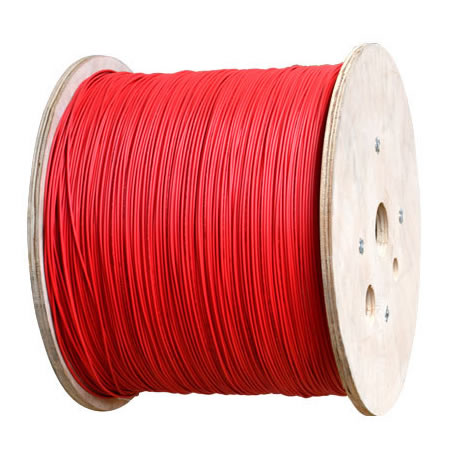
INNO 광섬유 온도 센서 ,온도 모니터링 시스템.
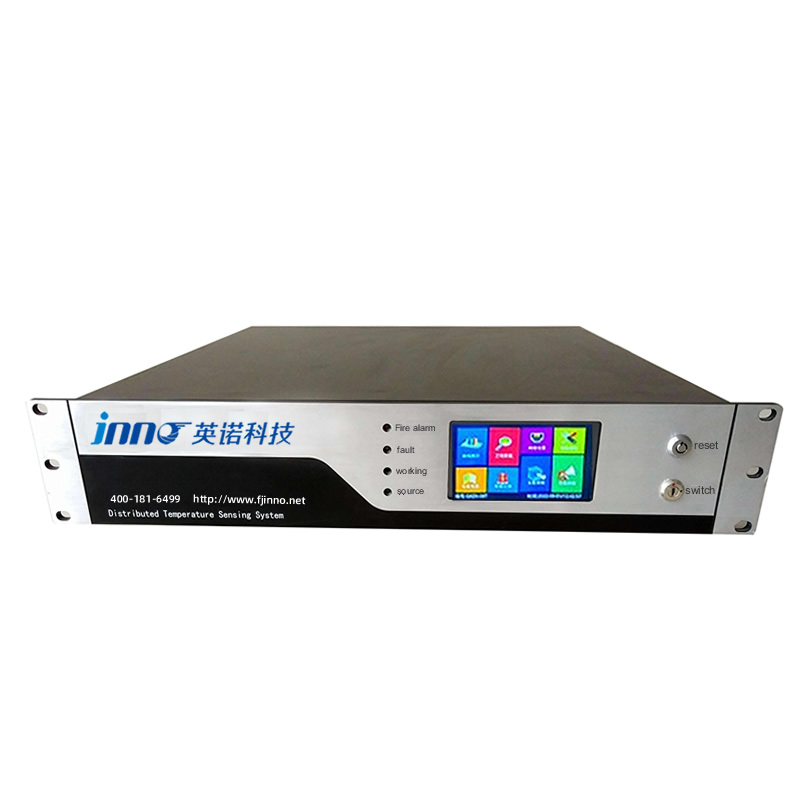
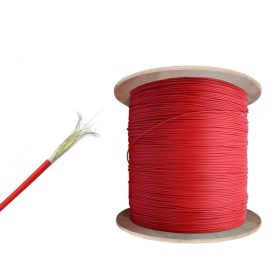

The distributed fiber optic temperature measurement system adopts advanced optoelectronic technology, 통신 기술, microprocessor technology, 디지털 온도 감지 기술, and uniquely designed low-temperature, strong electric field, and humid environment operation technology. It can monitor the temperature in different environments separately, detect accident hazards early, and minimize losses. 동시에, it can also provide a large amount of online monitoring data, providing reliable basis for operators to comprehensively understand the operation of heating pipelines.
그만큼 분산 광섬유 sensing temperature analyzer is the main body of the DTS distributed fiber optic temperature measurement system. 광섬유 온도 측정 호스트는 신호 획득을 담당합니다., 신호 처리, 데이터 분석, 과열 경보, 네트워크 전송 및 전체 시스템의 기타 기능. 광주파수 발생기로 구성되어 있습니다., 스위칭 전원 공급 장치, 마이크로프로세서, 네트워크 인터페이스, 등., 광전변환 및 정보처리의 핵심소자입니다..
완전히 분산됨: DTS는 누락 없이 몇 초 만에 전체 광섬유 케이블을 따라 전체 온도 분포를 감지할 수 있습니다..
장거리 모니터링: 단일 모드 및 다중 모드 모니터링 호스트, 최대 길이는 40 킬로미터.
전자기 불활성: 온도 측정 광섬유는 석영으로 구성됩니다., 전기적으로 절연된, 전기적 간섭을 받지 않음, 그리고 전자파를 방출하지 않습니다, making them particularly suitable for various complex and strong electrical environments.
본질 안전: The temperature sensing element is a temperature measuring optical fiber, and the average power of the optical signal transmitted internally is at the micro watt level; 본질 안전
정확한 포지셔닝: The positioning accuracy reaches ± 1M.
Quick response: Single channel scanning time less than 3 초
The temperature measurement of DTS is most based on the spontaneous Raman scattering effect. After high-power narrow pulse laser pulse LD is incident on the sensing fiber, the laser interacts with the fiber molecules, producing extremely weak backscattered light. The scattered light has three wavelengths, namely Rayleigh, 안티 스톡스, 그리고 스톡스 라이트: anti Stokes is temperature sensitive, is signal light; Stokes is temperature insensitive, is reference light. The backscattered signal light from the sensing fiber passes through the splitter module WF and the isolated Rayleigh scattered light again. It passes through the temperature sensitive anti sokes signal light and the temperature insensitive Stokes reference light, and is received by the same detector (APD). The temperature can be calculated based on the ratio of the two light intensities. The determination of the position is based on the optical time-domain reflection OTDR technology, which uses high-speed data acquisition to measure the echo time of the scattered signal and determine the fiber position corresponding to the scattered signal.
Distributed fiber optic temperature measurement application scenarios

Introduction to Distributed Fiber Optic Temperature Measurement System for Cable Trenches and Cables
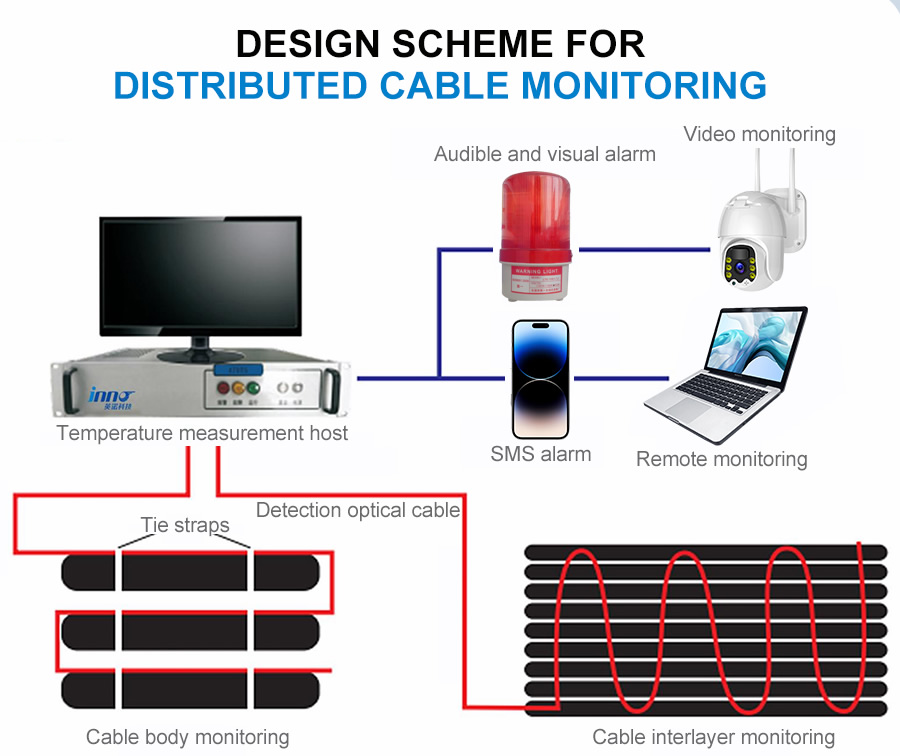
분산 광섬유 온도 측정 시스템은 복잡한 환경에서 케이블 온도 정보와 변화를 적시에 얻을 수 있습니다.. 온도 측정 시스템은 하나 이상의 모니터링 지점과 경보 온도 지점을 설정할 수 있습니다.. 환경의 케이블 온도에 비정상적인 상황이 있는 경우, 케이블 온도에 비정상적인 변화가 있습니다., 케이블 온도가 설정 온도에 도달하거나 초과하는 경우, 케이블의 온도 곡선이 워크스테이션 시스템에 표시됩니다., 온도 측정 시스템은 언제든지 PLC에 경보 정보를 보냅니다.. 각종 감시지점의 지시를 받은 후, the PLC’s internal program can control the environment of the cables based on the set temperature data. It can open the exhaust system, automatically close the fire doors, prevent the spread of fires, and ensure that the entire system is in a safe and controlled environment.
Application of Distributed Fiber Optic Temperature Measurement in Pipeline Temperature Monitoring
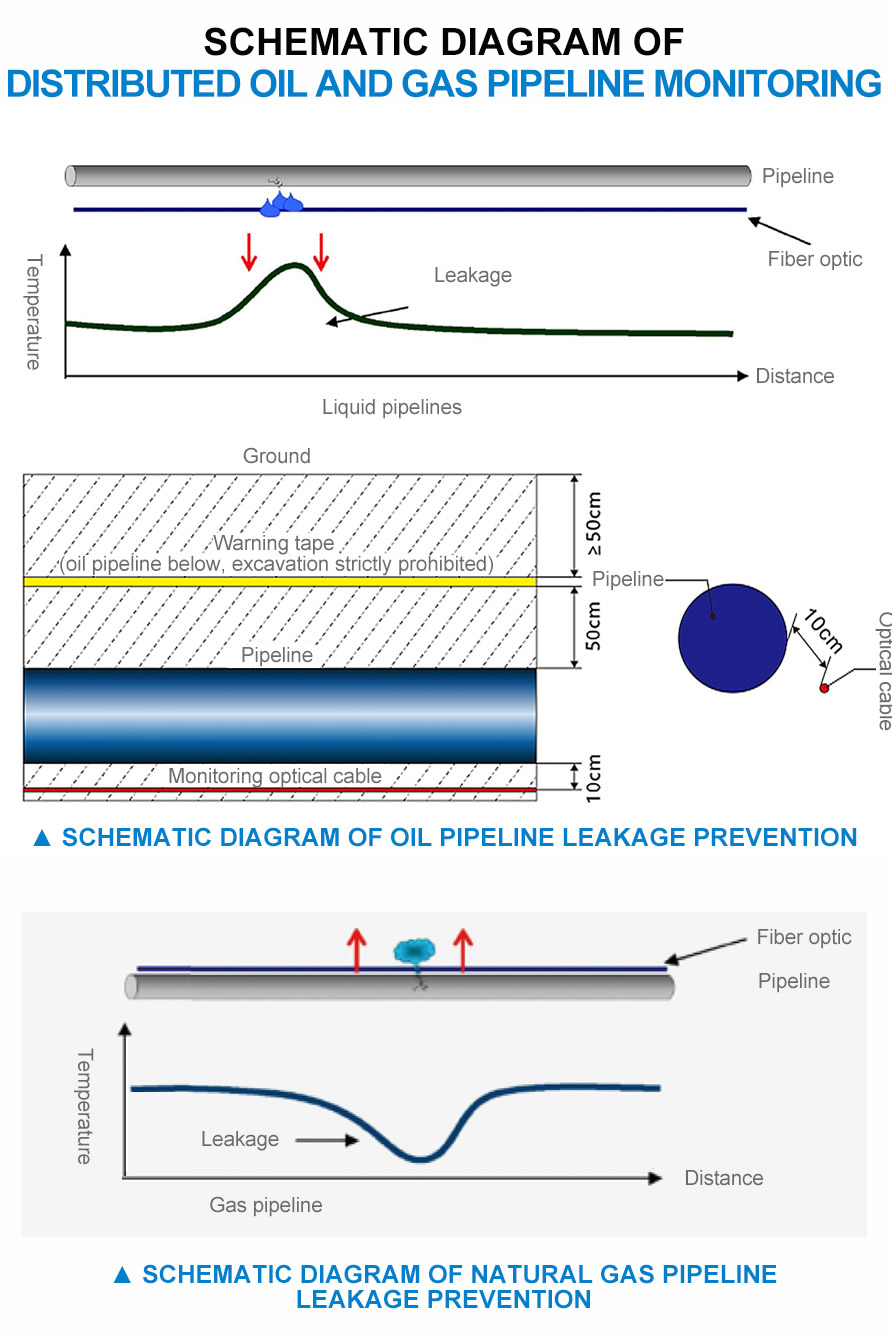
The entire fiber in the distributed Raman fiber optic temperature measurement system serves as both a data signal transmission medium and a temperature detection along the pipeline to achieve comprehensive monitoring of the pipeline. The alarm detection at each point can achieve any combination of three methods: 일정한 온도, 차등 온도, and temperature uniformity, ensuring the reliability of the alarm. 그러므로, a reasonable fiber optic installation method provides reliable guarantees for the normal operation of the entire fiber optic temperature measurement system. The installation method of optical fibers varies for different functions of conveying pipelines.
Application of Distributed Fiber Optic Temperature Measurement System in Oil Tank Monitoring

Temperature monitoring of oil storage tanks
In oil storage tanks, temperature monitoring is crucial due to the characteristics of oil and changes in the storage environment. The traditional temperature monitoring method requires a large number of temperature sensors to be placed in the storage tank, 비용 낭비를 초래할 뿐만 아니라, 오류나 유지보수의 어려움 등의 문제도 있음. 분산형 광섬유 온도 측정 시스템을 채택하여, 전체 저장 탱크의 내부 온도를 모니터링하려면 광섬유 케이블 하나만 저장 탱크에 묻어 있으면 됩니다.. 이는 비용 절감뿐만 아니라, 모니터링의 정확성과 신뢰성도 향상됩니다..
정유공장 온도 모니터링
정유공장에는 다수의 고온 장비와 파이프라인이 있습니다., 온도를 실시간으로 모니터링하는 것이 매우 중요합니다.. 기존 온도 모니터링 방법을 사용하려면 다수의 센서를 설치해야 합니다., 센서의 유지보수 및 교체도 매우 어렵습니다.. The distributed fiber optic temperature measurement system can monitor the internal temperature of the entire refinery by burying a fiber optic cable, which not only greatly reduces the use of sensors, but also improves the accuracy and reliability of temperature monitoring.
Application of distributed fiber optic bus duct temperature monitoring

The distributed fiber optic temperature measurement system has a real-time monitoring and warning mechanism for dense bus ducts, which improves energy efficiency, ensures power supply safety, improves management efficiency and saves costs, and adapts to complex application environments to ensure the stability and safe operation of the power system.
The distributed fiber optic temperature measurement system consists of temperature measurement fiber optic cables, temperature measurement host, 게이트웨이, system platform, 등. The fiber optic temperature measurement host and communication management machine are installed in the monitoring room, and the temperature sensing fiber optic cables are laid along the surface of the bus duct. The cover plate at the connection of the bus duct ensures that each connector can measure the temperature of the cover plate. The data of the fiber optic temperature measurement host is uploaded to the system platform through the communication management machine.