 INNO光ファイバー温度センサー ,温度監視システム.
- 光ファイバー警報システムは、侵入を検出するための連続感知要素として標準の光ケーブルを使用します。, 振動, 最大距離にわたる音響イベント 100 キロメートル.
- DASの (分散型音響センシング) ファイバーに沿って完全な音響波形を捕捉します, 詳細な音の分類とイベントの識別を可能にする.
- DVSの (分散型振動センシング) 振動の強度と位置を検出します, 境界侵入検知のためのコスト効率の高いソリューションを提供.
- DAS はより高い感度を提供します, より広い周波数応答, DVS と比較して豊富なデータ出力.
- DVS は導入が簡単です, 必要な処理能力が少なくて済む, フェンスや境界アプリケーションでの基本的なアラームのトリガーに適しています。.
- どちらのテクノロジーも電磁干渉の影響を受けません, 感知経路に沿って電力を必要としない, 正確なイベント位置特定によるリアルタイム監視を実現します。.
- Choosing between DAS and DVS depends on the required detection resolution, 予算, 環境, and the complexity of threat classification needed.
目次
- 1. What Is a Fiber Optic Alarm System
- 2. How DAS (分散型音響センシング) 作品
- 3. How DVS (分散型振動センシング) 作品
- 4. Key Differences Between DAS and DVS
- 5. Typical Applications of Fiber Optic Alarm Systems
- 6. How to Choose Between DAS and DVS
- 7. Installation and Deployment Considerations
- 8. Advantages and Limitations of Fiber Optic Alarm Systems
- 9. よくあるご質問 (FAQ)
1. とは何ですか Fiber Optic Alarm System

ある fiber optic alarm system is a security monitoring solution that uses optical fiber cables as distributed sensors to detect physical disturbances along their entire length. Unlike conventional electronic alarm systems that rely on discrete sensors placed at fixed points, ある 分散型光ファイバーセンサー turns every meter of the cable into an active sensing element. This means a single fiber cable can monitor perimeters, フェンス, パイプライン, 数百メートルから数百メートル以上の距離にわたる重要なインフラストラクチャ 100 キロメートル - すべて単一の尋問ユニットから.
動作原理はファイバー内の後方散乱光の分析に基づいています。. 侵入などの外部事象が発生した場合, 振動, またはケーブル付近で圧力変化が発生する, ファイバー内に微小な外乱を引き起こし、反射光信号の特性を変化させます。. 制御側の問い合わせユニットは、これらの変化をリアルタイムで測定します。, イベントの正確な場所を決定する, 事前定義されたしきい値を超えた場合にアラームをトリガーします.
光ファイバー警報システムが人気を集めている理由
銅線を使用した従来の警報システム, 赤外線ビーム, またはマイクロ波バリアが電磁干渉の影響を受けやすい, 落雷, と環境悪化. ある 光ファイバー侵入検知システム 光ファイバーは誘電体であり、光を運ぶため、これらの脆弱性は完全に排除されます。, 電流ではありません. これにより、センシング ケーブルは本質的に EMI の影響を受けなくなります。, 情報提供依頼, そして雷ダメージ. かつ, 光ファイバーシステム自体は電磁署名を生成しません, 侵入者によって事実上検出されないため、高セキュリティの設置に最適です。.
2. How DAS (分散型音響センシング) 作品
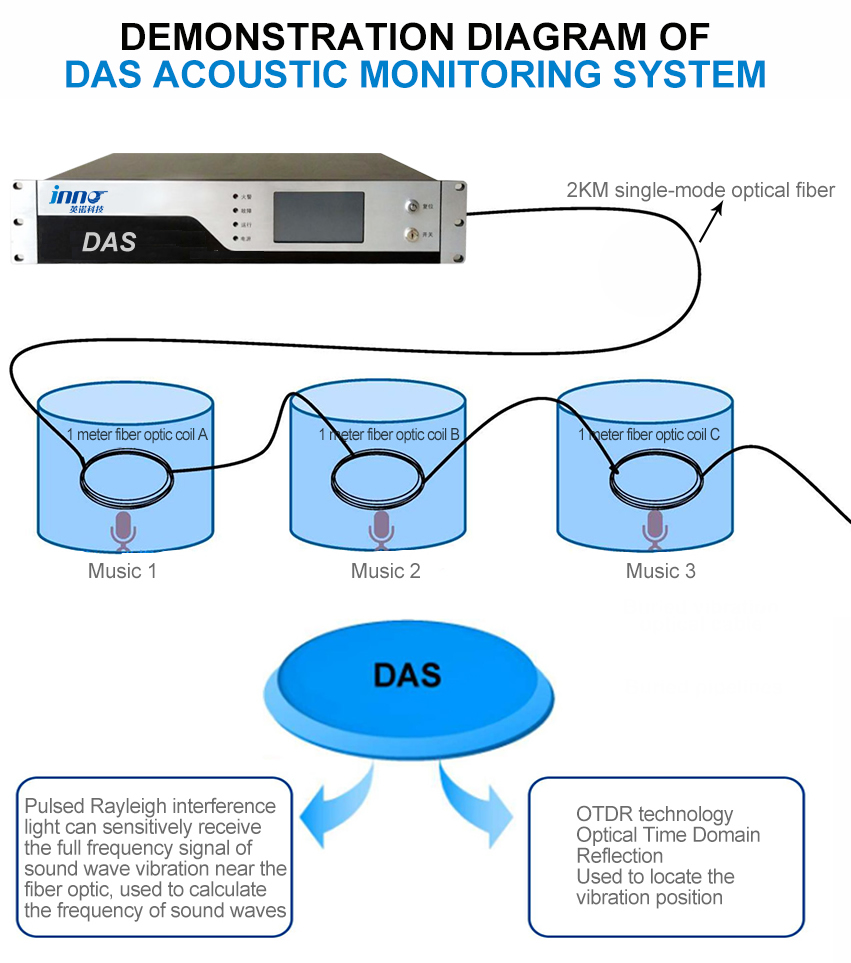
DASの (分散型音響センシング) 標準のシングルモード光ファイバーを数千の仮想マイクのアレイに変換する、高度な光ファイバーセンシングテクノロジーです。. システムは短い注入によって機能します, コヒーレントなレーザーパルスをファイバーに送り込み、ケーブル上のあらゆる点から戻ってくるレイリー後方散乱光の位相を分析します。.
位相感応型 OTDR 原理
DAS システムでは、次のような技術が使用されます。 phase-sensitive optical time-domain reflectometry (Φ-OTDR). As the laser pulse travels down the fiber, naturally occurring impurities in the glass scatter a tiny fraction of the light back toward the source. When an acoustic wave or vibration hits the fiber, it causes localized strain that shifts the phase of this backscattered light. By comparing successive phase measurements at each point along the fiber, the DAS interrogator reconstructs a full acoustic waveform — capturing not just whether an event occurred, but the actual sound signature of the event.
Key Capabilities of DAS Technology
ある DAS fiber optic sensing system typically offers a frequency response ranging from sub-hertz to several kilohertz, spatial resolution as fine as 1 メーター, and sensing distances up to 50–100 km depending on the interrogator model. DAS は真の音響データを取得するため、, パターン認識アルゴリズムを使用した高度な信号分類が可能になります. これは、システムがフェンスに沿って歩いている人物を区別できることを意味します。, 近くの道路を走行する車両, ケーブルをブラッシングする動物, 実際の切断や登攀の試み - 誤警報率を大幅に削減.
3. どうやって DVSの (分散型振動センシング) 作品

DVSの (分散型振動センシング) 密接に関連していますが、技術的にはより単純な光ファイバー監視テクノロジーです. それのように, DVS は光ファイバー内のレイリー後方散乱に依存します。. しかし, 戻り光の正確な位相を測定して音響波形を再構築するのではなく、, DVS は主に後方散乱信号の強度変化を分析します。.
強度ベースの検出アプローチ
近くで振動イベントが発生した場合 光ファイバーセンシングケーブル, 後方散乱光の干渉パターンを変化させます, 対応する位置で信号強度の変動を引き起こす. ザ DVS尋問ユニット これらの強度の変化をリアルタイムで監視し、外乱の位置と大きさを特定します。. DVS は完全な音響波形をキャプチャしませんが、, 確実に存在を検出します, 位置, 振動イベントの相対的な強さ.
DVS システムの実用的なパフォーマンス
典型的な DVS境界検出システム の範囲の空間解像度を提供します。 5 宛先 10 最大 40 ~ 60 km の検出範囲を持つメートル. 周波数応答は一般に DAS よりも狭いです, 多くの場合、数百ヘルツに制限されます. DVS は、外乱が発生したことと、それがどこで発生したかを知ることが主な要件であるアプリケーションに非常に効果的です。, 詳細な音響分類を必要としない. これにより実用的になります, 多くの境界セキュリティ シナリオに適した低コストの代替手段.
4. Key Differences Between DAS and DVS

DAS と DVS は両方とも 分散型光ファイバーセンシング技術 同じ基本的な光ファイバーインフラストラクチャを使用する, それらは測定アプローチにおいて大きく異なります, データの豊富さ, さまざまなアプリケーションへの適合性. 特定のセキュリティ要件に適したテクノロジーを選択するには、これらの違いを理解することが不可欠です.
測定方法
最も根本的な違いは、各システムが何を測定するかにあります。. DASは位相を測定します レイリー後方散乱光の, 定量的なものを提供する, ファイバーに沿った音場の線形表現. DVS は強度を測定します 後方散乱光の, 振動活動の定性的な指標を提供します. 実務的には, DAS gives you a waveform you can listen to and analyze, while DVS gives you an alert that something happened.
Sensitivity and Resolution
DAS systems generally offer higher sensitivity and finer spatial resolution than DVS. 高性能 DAS interrogator can achieve 1-meter spatial resolution and detect nano-strain level disturbances. DVS systems typically operate with 5–10 meter resolution and require somewhat larger disturbances to trigger a reliable detection. For applications requiring precise event localization and the ability to classify low-amplitude signals, DAS is the superior choice.
Event Classification and False Alarm Reduction
DAS は真の音響データを取得するため、, it supports advanced event classification algorithms that can differentiate between threat and non-threat events. これは、バックグラウンドノイズが高い環境や、センシングケーブルの近くで良性の活動が頻繁に行われる環境では大きな利点となります。. DVSの, 強度ベースのアプローチにより, 分類機能がより制限されており、複雑な環境では誤警報率が高くなる可能性があります.
システムのコストと複雑さ
DAS 質問ユニットは DVS ユニットよりも複雑で、通常は高価です. 位相復調や波形解析の処理要件も高くなります. 予算が限られているプロジェクトや単純な検出要件があるプロジェクト向け, ある DVS警報システム パフォーマンスとコスト効率の魅力的なバランスを提供します.
周波数応答とデータ出力
DAS システムは広帯域の周波数応答を提供します, たいてい下から 1 Hzまで 10 kHz以上, 幅広い音響現象の検出が可能. DVS frequency response is narrower, typically sufficient for detecting mechanical vibrations but not suitable for capturing detailed acoustic signatures. The data output from DAS is substantially larger, requiring more storage and processing bandwidth.
5. Typical Applications of 光ファイバー警報システム
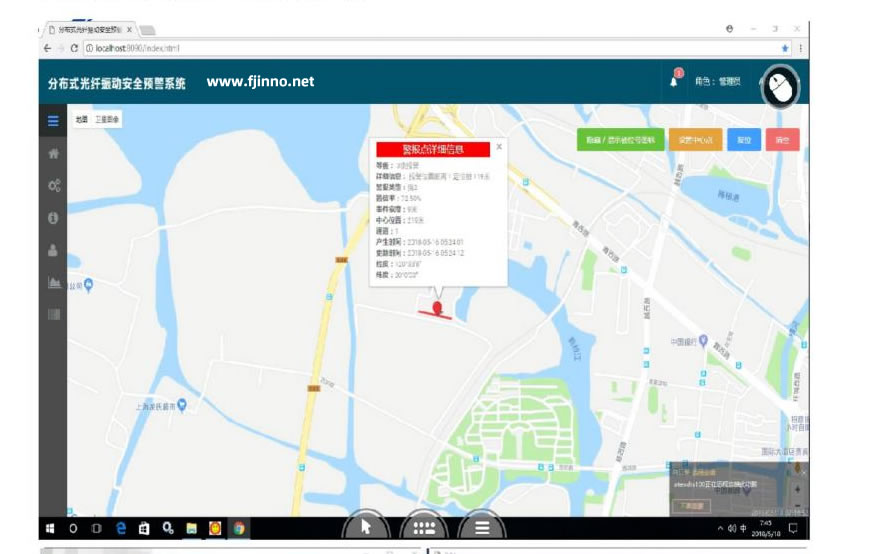
Both DAS and DVS technologies are deployed across a wide range of security and monitoring applications. The choice between them often depends on the specific requirements of each use case.
Perimeter Security and Intrusion Detection
Fiber optic perimeter security systems are widely used to protect military bases, 政府施設, 空港, データセンター, 刑務所, および工業用地. The sensing cable is typically mounted on or buried alongside the perimeter fence. When someone attempts to climb, cut, or breach the fence, the resulting vibrations are immediately detected and located. DAS-based systems excel in this application due to their ability to classify the type of intrusion activity, その間 DVS fence-mounted sensors provide reliable basic detection at lower cost.
Pipeline and Utility Monitoring
光ファイバーパイプライン監視システム use DAS or DVS cables installed alongside oil, 気体, and water pipelines to detect third-party interference, unauthorized excavation, 漏れ, and equipment impacts. DAS is particularly effective here because it can identify the acoustic signature of different types of machinery and activities near the pipeline right-of-way.
Border and Critical Infrastructure Protection
長距離 distributed fiber optic alarm systems are deployed along national borders, railway lines, highway corridors, and around power stations and substations. The ability to monitor tens of kilometers of perimeter from a single point with no active electronics in the field makes fiber optic technology uniquely suited to protecting remote and extended infrastructure.
Telecommunications Cable Security
Fiber optic cables that form part of telecommunications networks can be monitored using DAS or DVS to detect tampering, unauthorized access attempts, or accidental damage from nearby construction activities. This application leverages existing fiber optic cable infrastructure without requiring additional sensing cables.
6. How to Choose Between DAS and DVS
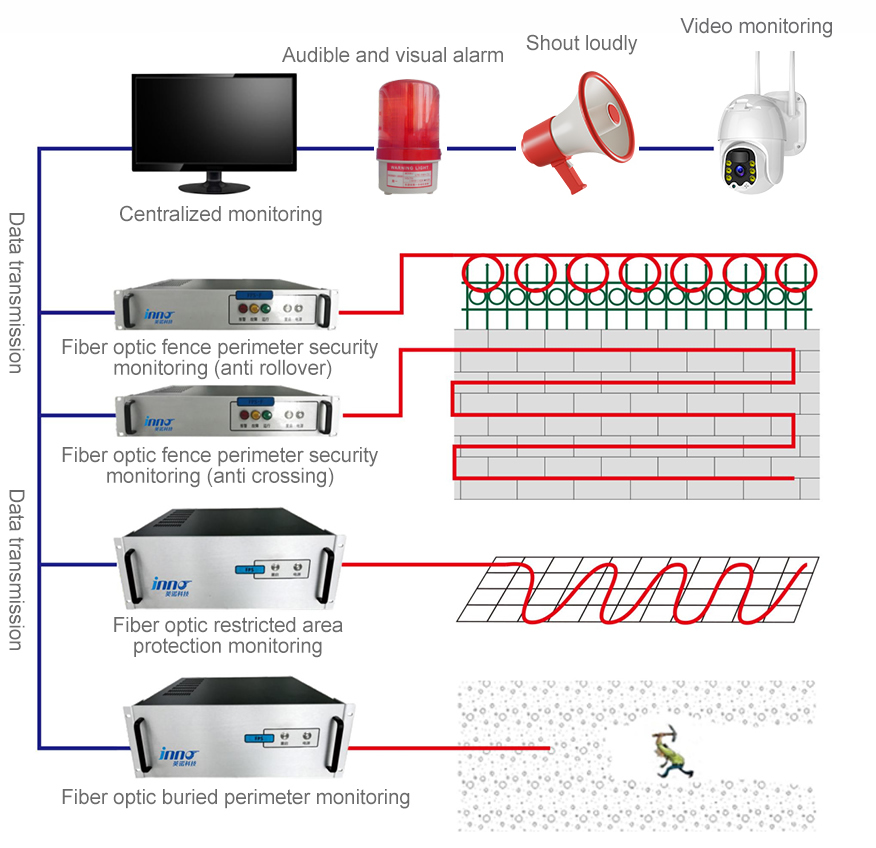
Selecting the right technology for a fiber optic alarm system requires careful evaluation of several factors related to the project environment, パフォーマンスの期待, と予算の制約.
Define Your Detection Requirements
Start by determining what types of events you need to detect and whether event classification is important. If you need to distinguish between different intrusion types — such as walking, 掘る, 車両の動き, and cable cutting — a DAS-based alarm system with acoustic classification capability is the appropriate choice. If your primary need is simple zone-based alerting when any significant vibration occurs, ある DVSシステム will meet the requirement effectively.
Consider the Operating Environment
In environments with high background noise from traffic, industrial machinery, or weather, DAS provides better false alarm filtering due to its waveform-level analysis. In quieter, more controlled environments such as fenced compounds or indoor facilities, DVS can perform well without the added complexity of acoustic processing.
距離と解像度のニーズを評価する
を超える非常に長い監視距離の場合 50 km またはメートルレベルの空間精度の要件, 一般に DAS がより適したテクノロジーです. 下の周囲が短い場合 20 5 ~ 10 メートルの位置特定精度が許容できる km, DVS は実用的で経済的なソリューションを提供します.
予算と総所有コスト
尋問ユニットは最も重要なコスト要素です. DAS ユニットは前払い料金が高くなります, ただし、誤報が減り、検証作業負荷が軽減されるため、長期的な運用コストが削減される可能性があります。. DVS ユニットは初期費用が安く、メンテナンスが簡単です, 予算重視のプロジェクトにとって魅力的です.
7. Installation and Deployment Considerations
適切な設置は、あらゆる製品のパフォーマンスにとって非常に重要です。 分散型光ファイバー警報システム. 計画および導入フェーズでは、いくつかの重要な要素に対処する必要があります。.
Cable Selection and Routing
Both DAS and DVS systems can operate with standard single-mode 光ファイバーケーブル, although purpose-designed sensing cables with enhanced sensitivity coatings or ruggedized jackets are recommended for outdoor and buried installations. The cable route should be planned to maintain good acoustic coupling with the ground or structure being monitored while avoiding excessive exposure to environmental noise sources.
Mounting Methods
フェンス取り付け用途向け, ザ 光ファイバーセンシングケーブル is typically attached directly to the fence fabric using cable ties or specialized clips at regular intervals. For buried applications, the cable is placed in a sand bed at a depth of 20–40 cm to ensure reliable ground coupling. In some applications, the cable is installed inside existing conduit or duct infrastructure.
Interrogator Placement and Connectivity
ザ DAS or DVS interrogation unit is installed in a secure, climate-controlled location at one end of the fiber route. It connects to the monitoring network via Ethernet or fiber backhaul. 電源, 環境保護, and physical security of the interrogator site should be carefully planned.
Zone Configuration and Alarm Thresholds
インストール後, the sensing fiber is divided into logical alarm zones, each with independently configurable detection thresholds and sensitivity settings. This allows operators to adapt the system to local conditions, reduce nuisance alarms in noisy zones, and increase sensitivity in critical areas. Proper zone tuning during commissioning is one of the most important steps in achieving reliable system performance.
8. Advantages and Limitations of Fiber Optic Alarm Systems

利点
Fiber optic alarm systems offer several compelling advantages over conventional electronic security technologies. センシングケーブルは完全にパッシブです, 現場で電力を必要としない, これによりフィールド電源が不要になります, 電池, またはソーラーパネル. ファイバーは電磁干渉の影響を受けません, 高圧送電線の近くでの展開に適しています, 変電 所, および重工業環境. 単一のファイバーケーブルで非常に長距離を監視できます。 100 km — 1 つの中央尋問地点から, ポイントセンサーソリューションと比較して、機器とインフラストラクチャの量を大幅に削減. システムは継続的に提供します, センサー間に隙間のない分散検出, DAS システムでメーターレベルの精度でイベントのリアルタイム位置特定を実現します。.
制限
限界のないテクノロジーは存在しません. 光ファイバーセンシングケーブル 風などの環境要因に敏感になる可能性がある, 大雨, 温度変動と, バックグラウンドノイズレベルが増加する可能性があり、慎重なしきい値調整が必要になる場合があります。. 尋問ユニットは重要な単一の投資ポイントを表します, 重要な設置については、予備の計画を考慮する必要があります。. ケーブル経路に沿ったファイバーのスプライスとコネクタは信号損失を引き起こす可能性があるため、最小限に抑える必要があります。. かつ, 適切な設置と試運転には専門知識が必要です, 継続的なパフォーマンスは、長期間にわたるケーブルの完全性の維持に依存します。.
9. よくあるご質問 (FAQ)
質問1: 光ファイバー警報システムの最大監視距離はどれくらいですか?
最新の DAS および DVS システムは、800 メートルの距離にわたって光ファイバー ケーブルを監視できます。 40 宛先 100 単一の尋問ユニットから数キロメートル. 正確な範囲は質問器のモデルによって異なります, 繊維の品質, 必要な空間解像度. 非常に長い周囲の場合, 複数のインタロゲータを導入して、全体のカバー範囲を拡大できます。.
質問2: Can fiber optic alarm systems work with existing fiber optic cables?
はい. Both DAS and DVS technologies can operate on standard single-mode fiber optic cables, including spare fibers within existing telecommunications or utility cable infrastructure. しかし, purpose-designed sensing cables may provide better sensitivity and reliability for dedicated security applications.
質問3: How does a DAS system reduce false alarms?
DAS captures the full acoustic waveform of detected events, which allows the system to apply signal classification algorithms. These algorithms analyze the frequency content, 間隔, and pattern of each event to differentiate genuine intrusion attempts from benign activities such as animal movement, 風, and vehicle traffic.
質問4: Is DVS less accurate than DAS?
DVS typically offers coarser spatial resolution than DAS — around 5 宛先 10 meters compared to 1 meter for DAS. しかし, DVS is highly reliable for detecting and locating vibration events. The trade-off is in classification depth rather than detection reliability. For many applications, DVS accuracy is fully adequate.
Q5: What types of threats can a fiber optic perimeter alarm detect?
Fiber optic alarm systems can detect a wide range of threats including fence climbing, fence cutting, digging or tunneling near the cable, walking or running along the perimeter, vehicle approach and impact, and cable tampering. DAS systems can further classify these events by their acoustic signature.
Q6: Do fiber optic alarm systems require power along the sensing cable?
いいえ. The fiber optic sensing cable is entirely passive and requires no electrical power along its length. すべてのアクティブな電子機器はコントロール センターの問い合わせユニットに含まれています. これは、従来の電子警報システムに対する分散型光ファイバーセンシングの最も重要な利点の 1 つです。.
Q7: 光ファイバー警報システムは天候にどのような影響を受けるのか?
強風, 大雨, 雹は、露出したフェンスに取り付けられたケーブルに振動を発生させる可能性があります。, 潜在的にバックグラウンドノイズレベルが増加する. 最新の DAS および DVS システムは、適応フィルタリングとしきい値調整を使用して、気象関連の誤警報を最小限に抑えます。. 埋設ケーブル敷設は地上の気象条件にほとんど影響を受けません.
Q8: DAS および DVS システムを CCTV およびアクセス制御と統合できますか?
はい. ほとんどの光ファイバー警報システムは標準出力インターフェイスを提供し、ビデオ管理システムとの統合をサポートしています。, SCADAプラットフォーム, アクセス制御システム, 集中セキュリティ管理ソフトウェア. アラームが作動したとき, システムは視覚的に確認するために PTZ カメラを自動的にイベントの場所に向けることができます.
Q9: 光ファイバー警報システムにはどのようなメンテナンスが必要ですか?
光ファイバー警報システムはメンテナンスの必要性が比較的低い. 定期的なタスクには、物理的な損傷がないかケーブルルートを定期的に検査することが含まれます。, OTDR を使用したファイバーの接続とコネクタの品質のチェック, インタロゲータのパフォーマンスを検証する, 季節的な環境変化に基づいた警報閾値の見直し.
Q10: 光ファイバーセンシングケーブルは屋外環境でどのくらい持続しますか?
適切なジャケット素材を備えた高品質の屋外定格光ファイバー ケーブルは、耐用年数を考慮して設計されています。 20 宛先 30 年以上. 実際の寿命は環境条件によって異なります, 設置品質, 機械的損傷からの保護. 過酷な環境向けに耐紫外線性および外装ケーブルのオプションが利用可能.
免責事項: この記事で提供される情報は、一般的な情報提供および教育のみを目的としています。. 正確性を確保するためにあらゆる努力が払われていますが、, フジンノ (www.fjinno.net) 完全性に関していかなる保証も表明も行いません, 確実, または特定のアプリケーションに対するコンテンツの適合性. 製品仕様, パフォーマンスパラメータ, 技術的な詳細は特定のモデルによって異なる場合があります, 構成, および動作条件. 読者は、購入や導入を決定する前に、資格のあるエンジニアやシステム インテグレーターに直接相談することをお勧めします。. FJINNOはいかなる損失についても責任を負いません, ダメージ, ここに含まれる情報の使用または依存から生じる結果.

光ファイバー温度センサ, インテリジェント監視システム, 中国の分散型光ファイバーメーカー
 |
 |
 |