 Sensor suhu serat optik INNO ,sistem pemantauan suhu.
- Embedded temperature monitoring systems place sensors directly inside generator stator windings, bantalan, and cores to detect overheating before damage occurs.
- Sensor suhu serat optik fluoresen are fully immune to electromagnetic interference and provide inherent high-voltage insulation, making them the ideal choice for generator internal monitoring.
- Compared with traditional RTDs and thermocouples, fiber optic sensors deliver more stable readings, masa pakai lebih lama, and lower maintenance in strong electromagnetic environments.
- A complete system includes sensing probes, kabel serat optik, A demodulator serat optik, modul tampilan, and monitoring software with multi-channel parallel measurement.
- Applications span hydro generators, steam turbine generators, generator turbin angin, diesel generator sets, and large industrial motors.
Daftar isi
- What Is Embedded Temperature Monitoring of Generators
- Why Generator Temperature Monitoring Is Critical
- Key Monitoring Points Inside a Generator
- How Embedded Generator Temperature Monitoring Works
- Sensor Technologies for Generator Temperature Monitoring
- Fiber Optic vs RTD Sensors for Generator Windings
- System Components of a Fiber Optic Generator Monitoring Solution
- Real-Time Alarms and Hotspot Detection
- Applications Across Generator Types
- FAQs About Embedded Generator Temperature Monitoring
1. Apa Embedded Temperature Monitoring of Generators
Definition and Core Concept
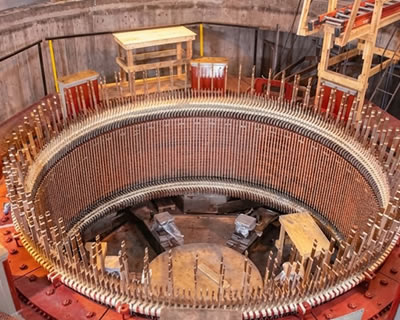
Embedded temperature monitoring refers to the practice of installing temperature sensors directly inside critical locations of a generator — within stator winding slots, rumah bantalan, and core tooth sections — for continuous, pengukuran suhu waktu nyata. Unlike external surface measurements, embedded monitoring captures the true temperature closest to the heat source, giving operators the most accurate thermal picture of the machine’s internal condition.
Why Generators Need Internal Temperature Monitoring
Selama operasi, a generator produces heat from multiple sources. Current flowing through stator windings creates copper losses. Magnetic flux alternating in the core generates iron losses. Friction in bearings produces mechanical heat. If any of these heat sources goes undetected or uncontrolled, the consequences can be severe — accelerated insulation aging, shortened equipment lifespan, and in worst cases, winding burnout or forced outage. Sebuah embedded temperature monitoring system serves as the frontline defense for condition-based maintenance and asset protection.
Industry Standards and Requirements
Pemantauan suhu tertanam adalah praktik standar di industri pembangkit listrik global. Baik di pembangkit listrik tenaga air besar, pembangkit listrik termal, fasilitas nuklir, atau genset diesel terdistribusi, pengukuran suhu belitan terus menerus diperlukan. Standar internasional termasuk IEC 60034 dan seri IEEE C50 secara eksplisit mengamanatkan pemantauan suhu belitan generator untuk mesin di atas peringkat tertentu.
2. Why Generator Temperature Monitoring Is Critical

Kehidupan Isolasi dan Aturan 10 Derajat
Hubungan antara suhu dan masa pakai insulasi mengikuti prinsip umum yang dikenal sebagai aturan 10 derajat: untuk setiap 10 °C kenaikan suhu pengoperasian di atas nilai pengenal, umur insulasi kira-kira terpotong setengahnya. Artinya, meski sederhana, peningkatan suhu yang berkelanjutan dapat secara dramatis memperpendek masa pakai insulasi belitan stator. Tepat, kontinu pemantauan suhu belitan stator adalah cara paling efektif untuk melindungi investasi penting ini.
Mencegah Kegagalan Bencana
Undetected winding overheating can lead to turn-to-turn short circuits, kesalahan tanah, and even fire. Suhu bantalan yang tidak normal sering kali menjadi indikator awal masalah mekanis seperti kegagalan pelumasan, ketidakselarasan, atau keausan bantalan. Dikonfigurasi dengan benar sistem pemantauan kondisi generator dengan sensor tertanam memberikan peringatan sedini mungkin, jauh sebelum kerusakan yang terlihat terjadi.
Dampak Ekonomi dari Pemadaman yang Tidak Direncanakan
Kerugian akibat pemadaman generator yang tidak direncanakan sangatlah besar. Hal ini tidak hanya mencakup biaya perbaikan atau penggantian tetapi juga hilangnya pendapatan akibat gangguan pasokan listrik. Untuk generator skala utilitas, satu kegagalan besar dapat mengakibatkan kerugian ratusan ribu atau bahkan jutaan dolar. Investasi pada sistem pemantauan suhu tertanam yang andal mewakili sebagian kecil dari potensi kerugian akibat satu peristiwa bencana.
Mengoptimalkan Efisiensi Operasional
Di luar perlindungan, temperature data helps plant operators optimize load distribution, adjust cooling system parameters, and plan maintenance schedules more effectively. This data-driven approach improves overall generator availability and operating efficiency while reducing unnecessary maintenance interventions.
3. Key Monitoring Points Inside a Generator
Stator Winding
The stator winding is the single most important monitoring location. Sensor suhu serat optik probes are typically embedded within winding slots, between coil layers, or at the end-winding region to measure copper conductor or insulation temperature. Because temperature distribution across different slots is rarely uniform, multiple sensors are placed to capture the hottest spot reliably.
Stator Core
Core losses generate heat, and localized core overheating may indicate lamination short circuits or insulation degradation between laminations. Sensors embedded in core tooth tips or yoke sections monitor core health and help identify developing problems early.
Bantalan
Rising bearing temperature can signal insufficient lubrication, degradasi minyak, keausan bantalan, or shaft misalignment. Monitoring both guide bearings and thrust bearings is standard practice for generator bearing temperature monitoring in virtually all large rotating machines.
Cooling Medium
Measuring the inlet and outlet temperatures of cooling air or cooling water, along with cooler efficiency, helps determine whether the cooling system is functioning correctly. This information is essential for distinguishing between a generator-side thermal problem and a cooling system deficiency.
Additional Monitoring Points
Depending on the generator type and capacity, additional monitoring may cover collector rings, hydrogen seal areas in hydrogen-cooled generators, and bushing terminals.
4. How Embedded Generator Temperature Monitoring Works
Prinsip Penginderaan Serat Optik Fluoresen
Sebuah sensor suhu serat optik neon works on the principle of fluorescence decay time measurement. The probe tip contains a phosphorescent material. Si demodulator serat optik sends an excitation light pulse through the optical fiber to the probe. The phosphorescent material absorbs this energy and re-emits a fluorescent afterglow signal. The decay time of this afterglow varies precisely with temperature. The demodulator measures this decay time and converts it into an accurate temperature reading. The entire sensing chain is purely optical — no electrical signals are involved at the measurement point.
Signal Transmission Path
Starting from the probe embedded inside the generator winding slot, si serat optik fluoresen is routed along the end winding, exits through a sealed cable gland in the generator frame, and connects to the demodulator installed outside the machine. The demodulator transmits calibrated temperature data via RS485, Modbus, or Ethernet communication to local display units and supervisory software.
Multi-Channel Parallel Monitoring
A single demodulator unit can support multiple sensing channels, simultaneously monitoring temperatures across numerous winding slots, multiple bearings, dan lokasi lainnya. The software platform consolidates all channel data into a unified dashboard for at-a-glance supervision.
5. Sensor Technologies for Generator Temperature Monitoring
Fluorescent Fiber Optic Sensors — The Recommended Choice
Sensor suhu serat optik fluoresen offer a unique combination of advantages for generator applications: kekebalan penuh terhadap interferensi elektromagnetik (EMI/RFI), inherent high-voltage electrical insulation, no power required at the sensing point, compact probe size suitable for embedding in narrow winding slots, toleransi suhu tinggi, extremely long service life, and virtually zero maintenance requirements.
RTD (Detektor Suhu Resistansi)
Platinum RTD seperti PT100 telah menjadi pilihan sensor tradisional pengukuran suhu belitan generator. Meskipun RTD menawarkan akurasi yang wajar, mereka adalah sensor listrik dengan kabel timah logam yang bertindak sebagai antena dalam medan elektromagnetik yang kuat. Kerentanan terhadap interferensi ini mengurangi keandalan pengukuran, dan jalur timah konduktif menimbulkan risiko kerusakan isolasi di lingkungan bertegangan tinggi.
Termokopel
Termokopel digunakan dalam pemantauan generator tetapi menghadapi tantangan interferensi elektromagnetik yang serupa. Akurasi dan stabilitas jangka panjangnya umumnya lebih rendah dibandingkan alternatif serat optik, dan isolasi listrik tetap menjadi perhatian utama pada mesin bertegangan tinggi.
Termografi Inframerah
Kamera inframerah berguna untuk pemindaian suhu permukaan eksternal dan inspeksi visual selama pemadaman pemeliharaan, but they cannot provide continuous embedded measurement inside winding slots. Infrared methods serve only as a supplementary tool.
6. Fiber Optic vs RTD Sensors for Generator Windings

Kompatibilitas Elektromagnetik
The interior of a generator is an extreme electromagnetic environment — strong alternating magnetic fields, tegangan tinggi, and high-frequency harmonics. RTD metallic lead wires pick up interference signals like antennas, degrading measurement accuracy. Sensor suhu serat optik are constructed entirely from non-conductive materials, eliminating this problem at the fundamental level.
Electrical Insulation Performance
Fiber optic sensors provide inherent galvanic isolation. There is no conductive path between the probe and the demodulator. RTD metallic leads in a high-voltage winding environment carry a potential risk of insulation breakdown, requiring additional insulation treatment and ongoing inspection.
Probe Size and Installation Flexibility
Fiber optic probes feature very small diameters, allowing flexible installation in the tight spaces of winding slots. probe RTD, when combined with shielded lead wires and protective sleeves, tend to be bulkier and more difficult to route.
Long-Term Stability and Maintenance
Fiber optic sensors are free from electrochemical corrosion and lead wire oxidation, delivering excellent long-term stability. RTDs operating in high-temperature, high-humidity conditions may experience drift over time and require periodic recalibration.
Ringkasan Perbandingan
| Parameter | Sensor Serat Optik | RTD (PT100) |
|---|---|---|
| Imunitas EMI | Menyelesaikan | Rentan |
| Isolasi Listrik | Inherent full isolation | Requires additional insulation |
| Ketepatan | ±0.5 °C typical | ±0.5 °C typical |
| Ukuran Pemeriksaan | Very compact | Larger with shielding |
| Kehidupan Pelayanan | 20+ Tahun | 10–15 tahun |
| Pemeliharaan | Virtually none | Kalibrasi ulang berkala |
| Total Biaya Kepemilikan | Lower over lifetime | Higher due to maintenance |
7. System Components of a Fiber Optic Generator Monitoring Larutan

Demodulator Serat Optik
Si demodulator serat optik is the signal processing core of the system. It receives optical signals from each sensor channel and outputs calibrated temperature values. Industrial-grade design ensures reliable operation in power plant environments with wide operating temperature ranges and robust communication interfaces.
Fluorescent Fiber Optic Temperature Probe
Si fluorescent fiber optic temperature probe is the sensing element embedded inside the generator. Probes are available in different form factors and temperature ratings to suit various installation requirements, from standard slot embedment to surface-mount configurations.
Fluorescent Optical Fiber Cable
Si serat optik fluoresen cable connects the probe to the demodulator. It is designed to withstand repeated bending, Getaran, and elevated temperatures encountered in generator environments.
Modul Tampilan
A local modul tampilan suhu provides real-time temperature readings at the machine location or in the control room, supporting quick visual checks by operations personnel.
Platform Perangkat Lunak Pemantauan
The software handles data acquisition, trend display, manajemen alarm, pengarsipan data historis, dan pembuatan laporan. It supports integration with plant DCS and SCADA systems via standard communication protocols.
8. Real-Time Alarms and Hotspot Detection

Alarm Mechanism
The system allows independent pre-alarm and alarm thresholds for each monitoring channel. When a temperature exceeds the pre-alarm setpoint, the system issues a warning notification. When the alarm threshold is exceeded, an emergency alarm triggers, which can be linked to generator protection relays for automatic load reduction or trip action.
Deteksi Hotspot
By comparing temperature readings from sensors distributed across different winding slots of the same generator, the system automatically identifies localized hotspots. The emergence of a hotspot may indicate localized insulation degradation, blocked cooling ducts, or local core faults. Lebih awal generator hotspot detection enables targeted maintenance before the problem escalates.
Analisis Tren Kenaikan Suhu
The monitoring software tracks not only absolute temperature values but also the rate of temperature change over time. An abnormal rate of temperature rise — even if the absolute value has not yet reached the alarm threshold — can indicate a developing fault and prompts early investigation.
9. Applications Across Generator Types
Generator Hidro
Large hydro generators operate at low speeds with high pole counts, resulting in large stator diameters and extensive winding lengths. Multiple embedded sensor suhu serat optik are distributed around the stator circumference to capture the full thermal profile.
Steam Turbine Generators
High-speed steam turbine generators in thermal and nuclear power plants demand robust monitoring of both stator winding and hydrogen-cooled environments. Fiber optic sensors excel in these high-voltage, high-EMI conditions.
Wind Turbine Generators
Wind generators face challenging environmental conditions including wide temperature swings, kelembaban, dan getaran. The maintenance-free nature of fiber optic sensors is particularly valuable in remote or offshore wind installations where access is limited.
Diesel Generator Sets and Large Motors
For backup power diesel generators and large industrial motors, embedded temperature monitoring ensures reliable operation during critical duty cycles and extends equipment service life.
10. FAQs About Embedded Generator Temperature Monitoring
Q1: What is embedded temperature monitoring in generators?
Embedded temperature monitoring involves placing sensors directly inside a generator’s stator winding slots, bantalan, and core to measure internal temperatures continuously in real time. This approach captures data at the actual heat source rather than on external surfaces.
Q2: Why are fiber optic sensors preferred over RTDs for generator winding monitoring?
Sensor suhu serat optik fluoresen are completely immune to electromagnetic interference and provide inherent electrical insulation, making them far more reliable than RTDs in the strong electromagnetic environment inside a generator.
Q3: How does a fluorescent fiber optic temperature sensor work?
The sensor probe contains a phosphorescent material that emits a fluorescent afterglow when excited by a light pulse. The decay time of this afterglow changes with temperature. Si demodulator serat optik measures the decay time and converts it to a precise temperature reading.
Q4: What temperature range can fiber optic generator sensors measure?
Typical fluorescent fiber optic sensors used in generators cover a range from −40 °C to +250 °C, which comfortably encompasses the operating temperatures of most generator winding insulation classes.
Q5: How many sensors are typically installed in one generator?
The number varies with generator size and design. A large hydro or steam turbine generator may have 6 ke 24 or more embedded winding temperature sensors, plus additional sensors for bearings and cooling circuits.
Q6: Dapatkah sensor serat optik dipasang pada generator yang sudah ada?
Ya. Sedangkan pemasangan yang paling mudah terjadi pada saat pembuatan atau kemunduran besar-besaran, probe serat optik dapat dipasang kembali selama pemadaman pemeliharaan terjadwal. Ukuran probe yang kecil menyederhanakan pemasangan di ruang sempit.
Q7: Protokol komunikasi apa yang didukung sistem pemantauan?
Sistem standar mendukung RS485, Modbus RTU/TCP, dan komunikasi Ethernet, memungkinkan integrasi langsung dengan platform DCS dan SCADA pabrik.
Q8: Seberapa sering sensor suhu serat optik memerlukan kalibrasi?
Sensor serat optik fluoresen menunjukkan stabilitas jangka panjang yang sangat baik dan biasanya tidak memerlukan kalibrasi ulang sepanjang masa pakainya, yang bisa melebihi 20 Tahun.
Q9: Apa itu deteksi hotspot generator?
Deteksi hotspot generator is the process of identifying localized areas of abnormally high temperature within the stator winding by comparing readings across multiple embedded sensors. Hotspots may indicate insulation deterioration, menghalangi saluran pendingin, or core faults.
Q10: Apakah sistem pemantauan kompatibel dengan jenis generator yang berbeda?
Ya. Sistem pemantauan suhu tertanam serat optik digunakan di seluruh pembangkit listrik tenaga air, steam turbine generators, generator turbin gas, generator turbin angin, diesel generator sets, dan motor industri besar di seluruh dunia.
Penafian: Informasi yang diberikan dalam artikel ini hanya untuk tujuan informasi umum dan pendidikan. Meskipun segala upaya telah dilakukan untuk memastikan keakuratan, Fjinno tidak memberikan jaminan atau pernyataan mengenai kelengkapan atau penerapan konten pada instalasi atau kondisi pengoperasian tertentu. Spesifikasi produk dan kemampuan sistem mungkin berbeda. Untuk panduan teknis khusus proyek dan pemilihan produk, silakan hubungi tim teknik di www.fjinno.net. Semua nama produk dan merek dagang yang disebutkan adalah milik dari pemiliknya masing-masing.

Sensor suhu serat optik, Sistem pemantauan cerdas, Produsen serat optik terdistribusi di Cina
 |
 |
 |