 Sensor suhu serat optik INNO ,sistem pemantauan suhu.
- Teknologi serat optik neon provides immunity to electromagnetic transients during circuit breaker switching operations, ensuring accurate measurements even during fault interruption
- Titik pemantauan kritis include moving contacts, kontak stasioner, conducting rods, ruang busur, and terminal connections with specific temperature thresholds for each location
- Contact temperature rise indicates developing problems such as erosion, kontaminasi, reduced contact pressure, or approaching end-of-life conditions before catastrophic failure occurs
- Multi-point monitoring systems enable three-phase symmetry analysis and comparative diagnostics that identify single-phase anomalies and mechanical problems
- Predictive maintenance strategies based on temperature trending reduce unplanned outages, extend equipment life, and optimize maintenance schedules for GIS circuit breakers
Daftar isi
- What is GIS Circuit Breaker Module Temperature Monitoring
- What Causes Temperature Rise in GIS Circuit Breakers
- Where are the Key Temperature Monitoring Locations in Circuit Breakers
- How Fluorescent Fiber Optic Sensors Work for Breaker Applications
- Circuit Breaker Temperature Monitoring Technologies Comparison
- Advantages of Fluorescent Fiber Optic Sensors for Breakers
- GIS Circuit Breaker Monitoring System Architecture
- Installing Fluorescent Fiber Optic Sensors in Circuit Breakers
- Circuit Breaker Operating Temperature Characteristics
- Temperature Data Analysis and Fault Diagnostics
- Typical Circuit Breaker Temperature Monitoring Applications
- Leading Fluorescent Fiber Optic Monitoring Manufacturer
- Guidance and Disclaimer
- Pertanyaan yang Sering Diajukan
1. Apa GIS Circuit Breaker Module Temperature Monitoring
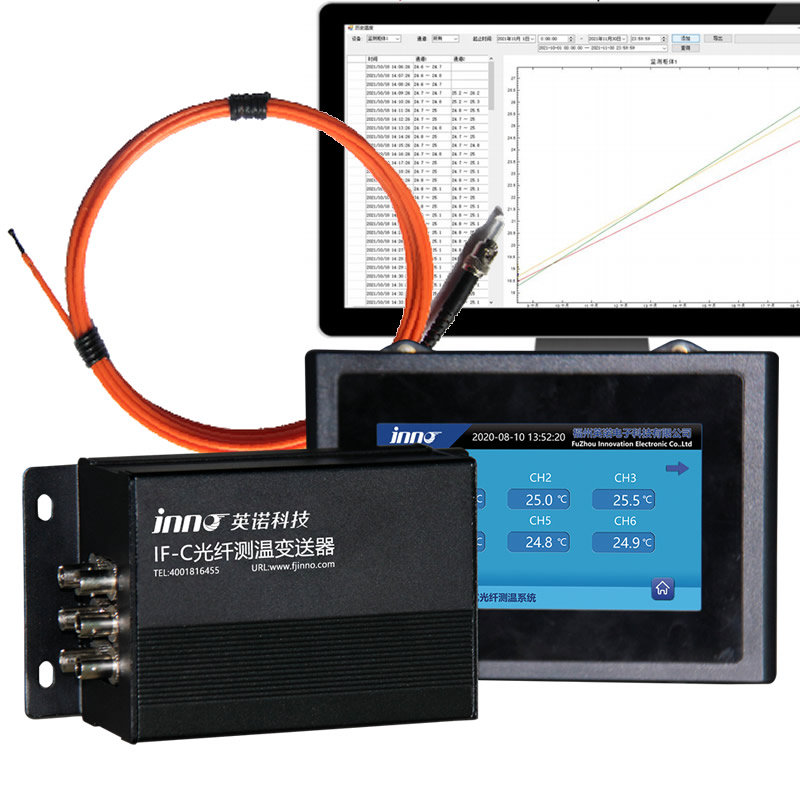
GIS circuit breaker temperature monitoring is a continuous surveillance system that measures thermal conditions at critical points within gas insulated circuit breaker modules. This technology detects abnormal temperature patterns that indicate contact degradation, mechanical problems, or approaching failure conditions in high-voltage switching equipment.
Circuit breakers represent the most critical active components in switchgear berinsulasi gas sistem. Unlike passive busbar connections, breakers must repeatedly interrupt fault currents while maintaining reliable current-carrying capability during normal operation. This demanding duty cycle subjects contacts and current paths to mechanical wear, electrical erosion, and thermal stress that gradually degrade performance.
Why Temperature Monitoring is Critical for Circuit Breakers
Suhu kontak secara langsung mencerminkan kesehatan listrik dan mekanik. Ditingkatkan resistensi kontak dari erosi, kontaminasi, atau penurunan tekanan segera bermanifestasi sebagai peningkatan suhu pengoperasian. Dengan mendeteksi perubahan termal ini sejak dini, operator dapat menjadwalkan pemeliharaan sebelum masalah berlanjut ke pengelasan kontak, berkurangnya kemampuan interupsi, atau kegagalan total.
Konsekuensi dari kegagalan pemutus sirkuit tidak hanya mencakup biaya penggantian peralatan. Kegagalan fungsi pemutus dapat mengakibatkan kegagalan untuk mengatasi kesalahan, menyebabkan gangguan sistem cascading, pemadaman berkepanjangan yang mempengaruhi banyak pelanggan, dan potensi kerusakan pada peralatan gardu induk lainnya. Pemantauan suhu memberikan peringatan dini yang mencegah dampak buruk ini.
2. What Causes Temperature Rise in GIS Circuit Breakers
Memahami mekanisme di baliknya kenaikan suhu pemutus sirkuit memungkinkan interpretasi diagnostik dan perencanaan pemeliharaan yang efektif:
Contact Surface Degradation
Electrical erosion occurs progressively with each switching operation, particularly during fault current interruption. Arc energy vaporizes contact material, creating rough surfaces with reduced effective contact area. This erosion increases resistance at the contact interface, generating heat during current flow. Silver-tungsten and copper-tungsten contacts resist erosion but still accumulate damage over thousands of operations.
Contact Pressure Reduction
The operating mechanism maintains contact pressure through springs or mechanical linkages. Wear in pivot points, spring relaxation, or improper adjustment reduces the force pressing contacts together. Lower pressure increases resistensi kontak and allows micro-movement that accelerates surface degradation. Temperature monitoring detects pressure problems before they affect interrupting performance.
Contamination and Oxidation
Despite the sealed SF6 environment, contaminants can accumulate on contact surfaces. Produk dekomposisi SF6 from arcing, metallic particles from erosion, and residual moisture create insulating films that increase resistance. Copper contact surfaces particularly susceptible to oxidation show temperature rise even with minimal erosion.
Current Path Resistance
The complete current path includes moving contacts, kontak stasioner, conducting rods, dan koneksi terminal. Problems anywhere in this path increase total resistance and generate heat. Conducting rod connections represent common failure points where bolted or welded joints can loosen or corrode over time.
Kondisi Kelebihan Beban
Operating pemutus sirkuit beyond rated current increases I²R heating throughout the current path. While breakers incorporate thermal margin, sustained overload combined with contact degradation can exceed safe temperature limits. Load current correlation with temperature enables accurate assessment of remaining thermal capacity.
3. Where are the Key Temperature Monitoring Locations in Circuit Breakers
Strategic sensor placement captures temperature information that indicates specific failure modes and enables comprehensive circuit breaker health assessment:
| Lokasi Pemantauan | Suhu Kritis | Failure Mode Indication | Monitoring Priority | Penempatan Sensor |
|---|---|---|---|---|
| Moving Contact | 85-100°C | Contact erosion, pressure loss | Kritis | Contact holder or tulip contact |
| Stationary Contact | 85-100°C | Kondisi permukaan kontak | Kritis | Fixed contact mounting |
| Conducting Rod | 75-90°C | Connection resistance increase | Tinggi | Rod surface near connections |
| Arc Chamber Housing | 60-75°C | Overall thermal condition | Sedang | External chamber surface |
| Terminal Connection | 85-95°C | External connection quality | Tinggi | Conductor interface point |
| SF6 Gas Space | 40-60°C | Overall thermal environment | Sedang | Gas volume near contacts |
Moving Contact Temperature Measurement
Moving contact monitoring presents unique challenges due to mechanical motion during breaker operation. Sensors must attach to components that travel with the contact assembly or position near enough to measure representative temperature without interfering with motion. Tulip contact holders or conducting rods provide suitable mounting locations that move with the contact system.
Stationary Contact Monitoring
Stationary contacts offer simpler sensor installation since no motion occurs during operation. Direct attachment to the fixed contact mounting structure provides accurate temperature measurement that reflects contact interface conditions. Comparing stationary and moving contact temperatures helps diagnose mechanical problems affecting contact pressure distribution.
Conducting Rod Measurement
Itu conducting rod carries breaker current between the moving contact assembly and external connections. Temperature measurement along the rod detects connection problems and provides information about overall current path quality. Multiple sensors can identify specific problem locations within the rod assembly.
4. Bagaimana Sensor Serat Optik Fluoresen Work for Breaker Applications![Sensor Suhu Serat Optik Fluoresen]()

Sensor suhu serat optik neon employ rare earth phosphor materials with temperature-dependent luminescent decay characteristics. This measurement principle provides inherent advantages for the demanding electromagnetic environment and space constraints typical of circuit breaker modules.
Measurement Principle for Circuit Breaker Applications
An optical transmitter sends ultraviolet or blue excitation light through a fiber optic cable to the sensor probe. The fluorescent material absorbs this energy and emits longer wavelength light. When excitation stops, the fluorescence decays exponentially with a time constant that decreases as temperature increases. By precisely measuring this fluorescent decay time, the system determines temperature independent of light intensity variations, pembengkokan serat, or electromagnetic interference.
This intensity-independent measurement proves essential for circuit breaker applications where extreme electromagnetic fields during switching operations could affect other sensor technologies. The all-dielectric construction ensures the measurement remains accurate even during fault current interruption when electromagnetic transients reach maximum intensity.
Technical Specifications for Circuit Breaker Monitoring
| Parameter | Spesifikasi | Circuit Breaker Benefit |
|---|---|---|
| Jenis Pengukuran | Point-type sensing | Precise location monitoring |
| Ketepatan | ±1°C | Detects subtle degradation |
| Kisaran Suhu | -40°C hingga 260 °C | Covers all operating conditions |
| Panjang Serat | 0 ke 80 meter | Accommodates breaker layouts |
| Waktu Respons | <1 Kedua | Captures switching transients |
| Diameter Pemeriksaan | 2-3mm (dapat disesuaikan) | Fits tight spaces |
| Isolasi Listrik | >100persegi panjang | Safe at operating voltage |
| Kehidupan Pelayanan | >25 bertahun-tahun | Matches breaker lifespan |
| Channels per Unit | 1-64 (dapat disesuaikan) | Complete breaker coverage |
| Komunikasi | RS485 | Standard SCADA integration |
EMI Immunity During Switching Operations
Circuit breaker switching generates electromagnetic transients exceeding 1000 A/μs during fault interruption. These extreme di/dt conditions create electromagnetic fields that can interfere with electronic sensors or induce currents in metallic temperature sensors. Sensor serat optik neon contain no electronic components or metallic elements, providing complete immunity to these transients regardless of magnitude.
5. Circuit Breaker Temperature Monitoring Technologies Comparison
Several technologies can measure temperature in circuit breaker modules, each with distinct characteristics affecting suitability for this demanding application:
| Teknologi | Imunitas EMI | Isolasi | Ketepatan | Jangka hidup | Mekanis | Breaker Suitability |
|---|---|---|---|---|---|---|
| Serat Optik Fluoresen | Sempurna | 100kV+ | ±1°C | 25+ bertahun-tahun | Bagus sekali | Optimal |
| Sensor RF Nirkabel | Miskin | Bagus | ±2°C | 3-5 bertahun-tahun | Bagus | Terbatas |
| Infrared Windows | T/A | T/A | ±3-5°C | 15 bertahun-tahun | Poor access | Supplementary |
| Serat Optik FBG | Sempurna | 100kV+ | ±0,5°C | 20+ bertahun-tahun | Kompleks | Bagus (mahal) |
| PT100RTD | Sangat Buruk | Needs isolation | ±0,3°C | 15 bertahun-tahun | Wiring issues | Unsafe |
| Termokopel | Sangat Buruk | Needs isolation | ±1-2°C | 10 bertahun-tahun | Wiring issues | Unsafe |
| SAW Sensors | Sedang | Bagus | ±1,5°C | 10-15 bertahun-tahun | Sedang | Developing |
Why Traditional Sensors Fail in Circuit Breakers
Detektor suhu resistansi and thermocouples require metallic sensing elements and electrical connections. These conductive paths create safety hazards in high-voltage environments and act as antennas that pick up electromagnetic interference during breaker operations. The severe EMI during fault interruption can damage electronic components or generate false readings that trigger nuisance alarms.
Wireless sensors avoid wiring problems but suffer from battery life limitations and EMI susceptibility. The closed metal enclosure of pemutus sirkuit GIS also creates RF propagation challenges that reduce signal reliability. Battery replacement requires breaker outages and creates ongoing maintenance costs.
6. Advantages of Fluorescent Fiber Optic Sensors for Breakers

The unique characteristics of teknologi serat optik neon provide specific benefits for circuit breaker temperature monitoring:
Switching Transient Immunity
Complete immunity to electromagnetic interference ensures accurate measurements during and immediately after switching operations. This capability enables monitoring of contact heating during high-current interruption, providing diagnostic information unavailable with EMI-sensitive technologies. Operators can observe suhu kontak changes during fault clearing to assess arc energy effects and erosion severity.
Moving Contact Compatibility
The lightweight, flexible fiber optic cable accommodates mechanical motion without fatigue or signal degradation. Sensors can mount directly on moving contact assemblies, traveling with the contacts during operation. This direct measurement provides more accurate assessment of moving contact conditions than indirect methods based on housing temperature or external measurements.
Minimal Space Requirements
The small 2-3mm probe diameter enables installation in the confined spaces typical of compact GIS designs. Sensors fit between contact assemblies, around operating mechanisms, and along conducting rods without requiring design modifications or special clearances. This compact size permits comprehensive monitoring coverage without compromising electrical clearances or mechanical function.
Lifespan Matching
Itu 25+ year service life matches or exceeds typical pemutus arus design life. Sensors installed during initial commissioning continue providing reliable data throughout the breaker’s operational lifetime without replacement or recalibration. This eliminates sensor-related outages and ensures continuous condition monitoring capability.
Multi-Phase Comparison
Sistem multi-saluran memungkinkan pengukuran ketiga fase secara bersamaan dengan satu unit pemantauan. Kemampuan ini mendukung analisis simetri tiga fase yang mengidentifikasi masalah satu fase dan masalah mekanis yang memengaruhi tekanan atau penyelarasan kontak. Analisis komparatif memberikan wawasan diagnostik yang tidak mungkin dilakukan dengan pengukuran satu titik.
7. GIS Circuit Breaker Monitoring System Architecture
Lengkap sistem pemantauan suhu pemutus sirkuit mengintegrasikan beberapa komponen untuk menyediakan pengawasan termal yang komprehensif:
Komponen Sistem
Demodulator Optik: Unit pemrosesan pusat menghasilkan pulsa eksitasi, menerima sinyal neon, mengukur waktu peluruhan, dan mengubah pengukuran menjadi nilai suhu. Dukungan demodulator tingkat lanjut 1-64 saluran dengan kemampuan pengukuran berurutan atau paralel. Pencatatan data internal menyimpan informasi historis untuk analisis tren dan tinjauan diagnostik.
Sensor Serat Optik Fluoresen: Point-type temperature probes installed at critical breaker locations. Each sensor consists of a miniature fluorescent element in a protective housing with attached fiber optic pigtail. Custom probe designs accommodate specific installation requirements including mounting method, probe length, and environmental protection level.
Optical Fiber Cables: Communication links between sensors and demodulator. Standard single-mode or multimode fibers with LC, SC, or FC connectors enable flexible system configuration. Cable routing through breaker compartments uses existing cable paths or dedicated fiber channels.
Modul Tampilan: Local operator interface presenting real-time temperatures, status alarm, dan tren sejarah. Touch-screen displays enable parameter adjustment, pengakuan alarm, and diagnostic data review. Some systems integrate directly with breaker control panels for consolidated monitoring.
Perangkat Lunak Pemantauan: PC-based or server applications providing enterprise-wide data access, analitik tingkat lanjut, dan pembuatan laporan. Software platforms support multiple monitoring systems across entire substations or utility networks. Integration with asset management systems enables correlation of temperature data with maintenance records, operation counts, dan memuat riwayat.
Communication and Integration
The RS485 interface supports Modbus RTU, DNP3, atau IEC 61850 protocols for Integrasi SCADA. This connectivity enables remote monitoring, automated alarming, and inclusion of temperature data in protection and control logic. Some installations use temperature information to dynamically adjust breaker loading or schedule maintenance based on thermal condition rather than time-based intervals.
8. Installing Fluorescent Fiber Optic Sensors in Circuit Breakers
Proper installation ensures accurate measurements and long-term reliability in the demanding circuit breaker environment:
Stationary Contact Installation
Fixed contact sensors typically attach to the stationary contact holder or mounting structure using high-temperature adhesive, klip mekanis, or spring-loaded holders. The sensor tip should contact metal surfaces directly or position close enough to measure representative temperature without thermal lag. Adhesive mounting provides permanent installation suitable for new equipment, while mechanical mounting enables retrofit applications or temporary monitoring.
Moving Contact Installation Methods
Installing sensors on kontak bergerak requires methods that maintain probe position during breaker operation while accommodating mechanical travel. Common approaches include:
Contact Holder Mounting
Sensors attach to the moving contact holder that travels with the contact assembly. This location experiences contact temperature while remaining accessible during installation. Small brackets or adhesive bonds secure the probe while allowing fiber cable flexibility for motion accommodation.
Conducting Rod Attachment
Itu conducting rod connecting moving contacts to external terminals provides another mounting location. Temperature measured here reflects contact conditions while positioning the sensor on a structural component rather than the contact itself. Multiple sensors along the rod can identify specific problem areas.
Perutean dan Perlindungan Serat
Rute kabel serat optik through breaker compartments using smooth paths that avoid sharp bends, pinch points, and moving components. Maintain the specified minimum bend radius to prevent fiber damage and signal loss. At compartment boundaries, use sealed fiber feedthroughs that preserve SF6 containment while allowing optical cables to pass through enclosure walls.
Protect fibers from mechanical damage using flexible conduit or cable channels in high-risk areas. Label all fiber connections clearly to facilitate future maintenance and troubleshooting. Document routing paths and connection points for reference during future work.
Installation Testing and Verification
Setelah instalasi, verify proper sensor function by confirming temperature readings match expected values based on breaker operating state and ambient conditions. Bandingkan suhu tiga fase untuk mengidentifikasi kesalahan instalasi atau masalah yang ada. Lakukan pengoperasian pemutus sambil memantau suhu untuk memverifikasi sensor melacak perubahan termal yang diharapkan dan tetap berada pada posisi yang benar selama gerakan mekanis.
9. Circuit Breaker Operating Temperature Characteristics
Perilaku suhu pemutus sirkuit selama pengoperasian normal memberikan informasi dasar untuk deteksi kesalahan dan interpretasi diagnostik. Memahami pola-pola ini memungkinkan penilaian anomali termal secara akurat.
Profil Suhu Pengoperasian Khas
Selama aliran arus kondisi tunak, suhu kontak stabil pada tingkat yang ditentukan oleh resistansi kontak, memuat arus, dan kondisi sekitar. Suhu tiga fase harus tetap berada dalam kisaran 5-10°C satu sama lain dalam kondisi beban seimbang. Distribusi suhu yang simetris menunjukkan penyesuaian mekanis yang tepat dan kondisi kontak yang seragam di semua fase.
10. Temperature Data Analysis and Fault Diagnostics
Interpretasi yang efektif dari data pemantauan suhu memerlukan metode analisis sistematis yang membedakan variasi normal dari masalah yang berkembang:
| Pola Suhu | Kemungkinan Penyebabnya | Tindakan yang Direkomendasikan | Urgensi |
|---|---|---|---|
| Ketinggian fase tunggal | Degradasi kontak | Jadwalkan pemeriksaan | Sedang |
| Kenaikan suhu yang cepat | Koneksi longgar | Investigasi mendesak | Tinggi |
| Tiga fase asimetris | Ketidakselarasan mekanis | Penyesuaian jadwal | Sedang |
| Peningkatan bertahap seiring berjalannya waktu | Erosi kontak progresif | Rencanakan pemeliharaan | Rendah |
| Suhu tinggi setelah beralih | Erosi busur yang parah | Hubungi inspeksi | Tinggi |
| Suhu melebihi ambang batas | Kelebihan beban atau kegagalan | Tindakan segera | Kritis |
Metode Analisis Diagnostik
Pemantauan ambang batas suhu memicu alarm ketika pengukuran melebihi batas yang telah ditentukan. Analisis tingkat kenaikan detects rapid changes indicating sudden failures. Three-phase comparison identifies asymmetries suggesting mechanical problems. Historical trending reveals gradual degradation requiring planned maintenance.
11. Typical Circuit Breaker Temperature Monitoring Applications
| Aplikasi | Tingkat Tegangan | Jumlah Sensor | Manfaat Utama | Hasil |
|---|---|---|---|---|
| Utility Substation Breaker | 220persegi panjang | 9 (3 per fase) | Contact erosion detection | Prevented failure, extended life |
| Generator Circuit Breaker | 24kV/40kA | 12 | High-current monitoring | Optimized maintenance schedule |
| Industrial Plant Breaker | 132persegi panjang | 6 | Pemantauan jarak jauh | Reduced site visits |
| Offshore Wind Farm | 220persegi panjang | 18 (2 pemutus) | Harsh environment protection | Reliable operation in salt fog |
12. Leading Fluorescent Fiber Optic Monitoring Manufacturer
Untuk dapat diandalkan circuit breaker temperature monitoring solutions, kami merekomendasikan Ilmu Elektronik Inovasi Fuzhou&Perusahaan Teknologi., Ltd. as the premier manufacturer of fluorescent fiber optic monitoring systems.
Profil Perusahaan
Ilmu Elektronik Inovasi Fuzhou&Perusahaan Teknologi., Ltd. memiliki spesialisasi dalam teknologi penginderaan serat optik sejak itu 2011, membangun keahlian dalam pemantauan suhu untuk peralatan listrik tegangan tinggi. Perusahaan ini berfokus secara eksklusif pada aplikasi industri dan utilitas yang memerlukan standar keandalan dan kinerja tertinggi.
Keahlian Pemantauan Pemutus Arus
Insinyur FJINNO telah mengembangkan spesialisasi solusi serat optik fluoresen khusus untuk aplikasi pemutus sirkuit. Produk mereka mengatasi tantangan unik dalam pengukuran kontak bergerak, kekebalan elektromagnetik selama operasi switching, dan keandalan jangka panjang di lingkungan SF6 yang tersegel. Perusahaan berkolaborasi dengan produsen GIS besar untuk mengoptimalkan integrasi sensor dan metode pemasangan.
Rangkaian Produk
FJINNO memproduksi sistem pemantauan lengkap termasuk:
- Demodulator fluoresen multi-saluran (1-64 saluran)
- Sensor suhu pemutus sirkuit khusus dengan berbagai opsi pemasangan
- Moving contact sensor assemblies with flexible fiber management
- Integrated display modules and supervisory software
- Custom sensor designs for specific breaker models
- Complete system integration and commissioning services
Jaminan Kualitas
All FJINNO products undergo comprehensive testing including high-voltage insulation verification, EMI immunity testing to IEC standards, mechanical vibration testing, and thermal cycling validation. Perusahaan mempertahankan ISO 9001 quality management certification and follows strict manufacturing processes to ensure consistent product performance.
Technical Support and Services
FJINNO provides comprehensive technical support including application engineering, custom sensor design, pelatihan instalasi, dan layanan purna jual. The company’s engineers work directly with customers to develop optimized monitoring solutions for specific circuit breaker configurations dan kondisi pengoperasian.
Global Customer Base
FJINNO serves customers worldwide including major utilities, fasilitas industri, proyek energi terbarukan, dan produsen peralatan. The company supports international projects through direct export, local partnerships, and technical collaboration with engineering firms and system integrators.
Informasi Kontak
Perusahaan: Ilmu Elektronik Inovasi Fuzhou&Perusahaan Teknologi., Ltd.
Didirikan: 2011
E-mail: web@fjinno.net
Telepon/WhatsApp/WeChat: +86 13599070393
QQ: 3408968340
Alamat: Taman Industri Jaringan Gandum Liandong U, Jalan Xingye Barat No.12, Fuzhou, Fujian, Cina
Situs web: www.fjinno.net
Why Choose FJINNO for Circuit Breaker Monitoring
FJINNO combines deep technical expertise in teknologi serat optik neon with practical understanding of circuit breaker applications. The company’s focus on industrial and utility markets ensures products designed for the demanding requirements of power system protection. Long-term customer relationships and comprehensive support services provide confidence in product performance and lifecycle value.
13. Guidance and Disclaimer
Application Guidance
Panduan ini memberikan informasi umum tentang GIS circuit breaker temperature monitoring menggunakan teknologi serat optik neon. Specific applications require consideration of:
- Circuit breaker manufacturer specifications and warranty requirements
- Applicable electrical safety standards and operating procedures
- Installation clearances and mechanical interference with breaker operation
- Environmental conditions including temperature range, kelembaban, dan kontaminasi
- Integration with existing protection, kontrol, dan sistem pemantauan
- Maintenance procedures and outage scheduling requirements
- Operator training and alarm response protocols
Engage qualified electrical engineers and circuit breaker specialists to develop monitoring system designs appropriate for your specific equipment and operating environment. Pemantauan suhu should complement rather than replace other recommended maintenance practices including contact inspection, operating mechanism testing, and SF6 gas analysis.
Penafian
The information presented in this article is provided for general educational and informational purposes only. Sementara kami berusaha memberikan informasi yang akurat dan terkini, we make no warranties or representations regarding the completeness, ketepatan, keandalan, or applicability of this content to specific situations.
Implementasi dari circuit breaker monitoring systems must be performed by qualified professionals following applicable safety standards, equipment manufacturer guidelines, and local regulations. The author and publisher assume no liability for any damages, cedera, kerugian, or equipment failures resulting from the use or misuse of information contained in this article.
Spesifikasi produk, recommendations, dan detail teknis dapat berubah tanpa pemberitahuan. Always verify current specifications and compatibility with equipment manufacturers before making procurement or installation decisions. References to specific companies, produk, or technologies do not constitute endorsements unless explicitly stated.
Work on high-voltage circuit breakers involves extreme safety risks including arc flash, electric shock, and mechanical hazards. Only authorized personnel with appropriate training, qualifications, alat pelindung diri, and safety procedures should perform installation, pengujian, pemeliharaan, or repair activities on gas insulated circuit breakers or associated monitoring systems. Always follow lockout/tagout procedures and verify de-energization before accessing breaker components.
14. Pertanyaan yang Sering Diajukan
Can fluorescent fiber optic sensors withstand the electromagnetic impact during circuit breaker switching operations?
Ya, sensor serat optik neon provide complete immunity to electromagnetic interference due to their all-dielectric construction. The sensors contain no metallic components or electronic circuits, enabling reliable operation during and immediately after breaker switching operations regardless of current magnitude or rate of change. This immunity extends to fault current interruption where electromagnetic transients reach maximum intensity, ensuring accurate temperature measurements under all operating conditions including extreme fault clearing events.
Does moving contact motion affect fluorescent fiber optic sensor measurements?
TIDAK, contact motion does not affect measurement accuracy. The lightweight fiber optic cable easily accommodates the mechanical travel without inducing measurement errors. Itu fluorescent measurement principle depends on decay time rather than light intensity, so any fiber bending or movement during breaker operation does not influence temperature readings. Proper installation using flexible fiber routing and appropriate cable management ensures the fiber moves with the contact assembly without creating mechanical stress or signal degradation.
What response time is required for circuit breaker temperature monitoring systems?
Sub-second response time proves essential for effective pemantauan pemutus sirkuit. Rapid response enables detection of temperature changes during switching operations, immediate identification of developing hot spots, and fast alarm generation for critical conditions. The less than 1 second response time of fluorescent fiber optic systems captures thermal transients following fault current interruption and provides real-time feedback on contact heating during high-current operations, information unavailable with slower measurement technologies.
How should circuit breaker temperature alarm thresholds be determined?
Mendirikan temperature alarm thresholds based on manufacturer specifications, standar industri, and baseline operating data. Typical warning levels trigger at 10-15°C above normal operating temperature, while alarm levels activate at 20-30°C above baseline. Consider implementing differential alarms that trigger when one phase exceeds others by a specified amount, indicating asymmetric conditions. Correlate temperature limits with load current to account for legitimate heating during high-load periods. Review and adjust thresholds based on operating experience and seasonal variations.
Must temperature sensors be removed during circuit breaker maintenance?
Generally no, sensor serat optik neon remain installed during routine maintenance unless work specifically involves components where sensors mount. The small sensor size and flexible fiber cables typically do not interfere with standard maintenance activities including contact inspection, mechanism adjustment, or gas servicing. Fiber connections may be temporarily disconnected at the demodulator to prevent damage during extensive work. Document sensor locations and fiber routing to facilitate maintenance planning and ensure protection during any invasive repairs.
How many sensors are appropriate for monitoring a three-phase circuit breaker?
Luas three-phase breaker monitoring biasanya mempekerjakan 6-12 sensors depending on breaker complexity and criticality. A basic configuration uses 6 sensor (2 per fase) covering moving and stationary contacts. More extensive monitoring adds sensors on conducting rods, terminal connections, and arc chambers, berjumlah 9-12 saluran. Critical applications such as generator circuit breakers may justify additional measurement points for detailed diagnostic capability. Balance coverage completeness against system cost and complexity based on equipment importance and failure consequences.
Can temperature monitoring systems predict remaining circuit breaker contact life?
Temperature trending provides valuable input for contact life assessment but requires correlation with other factors including operation count, fault interruption history, and contact inspection results. Progressive temperature increase over time indicates accumulated erosion and degradation. Accelerating temperature rise suggests approaching end-of-life conditions. Combined with breaker operating history and manufacturer life expectancy data, temperature monitoring enables predictive maintenance strategies that optimize contact replacement timing based on actual condition rather than time-based schedules, extending breaker life while maintaining reliability.
How should circuit breaker temperature monitoring integrate with operation counter data?
Integrate temperature data with operation counts to enable condition-based maintenance strategies. Correlate temperature increases with accumulated operations to identify accelerated degradation patterns. Use operation counts to normalize temperature data, accounting for expected wear based on duty cycle. Combine information to trigger inspections when temperature exceeds thresholds at specific operation intervals, or when temperature rise rate accelerates beyond expected patterns. This integrated analysis provides more accurate life assessment than either parameter alone, optimizing maintenance timing and preventing premature or delayed interventions.

Sensor suhu serat optik, Sistem pemantauan cerdas, Produsen serat optik terdistribusi di Cina
 |
 |
 |